

What is there today
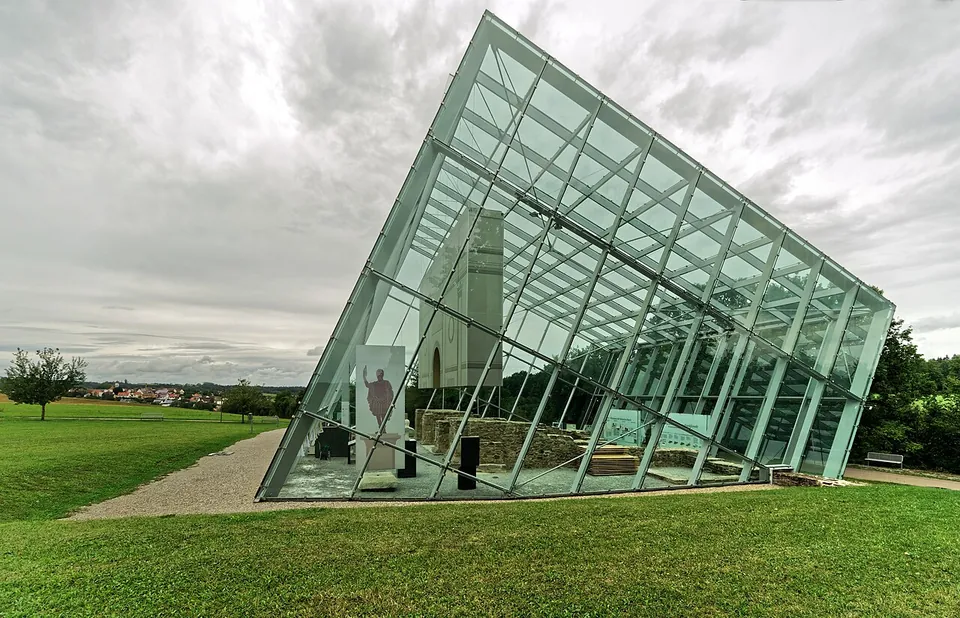
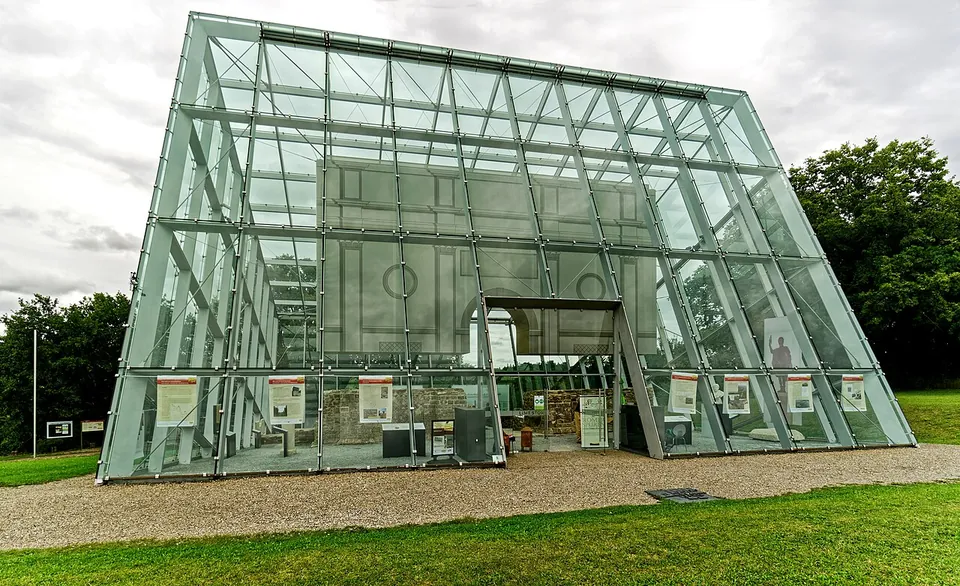
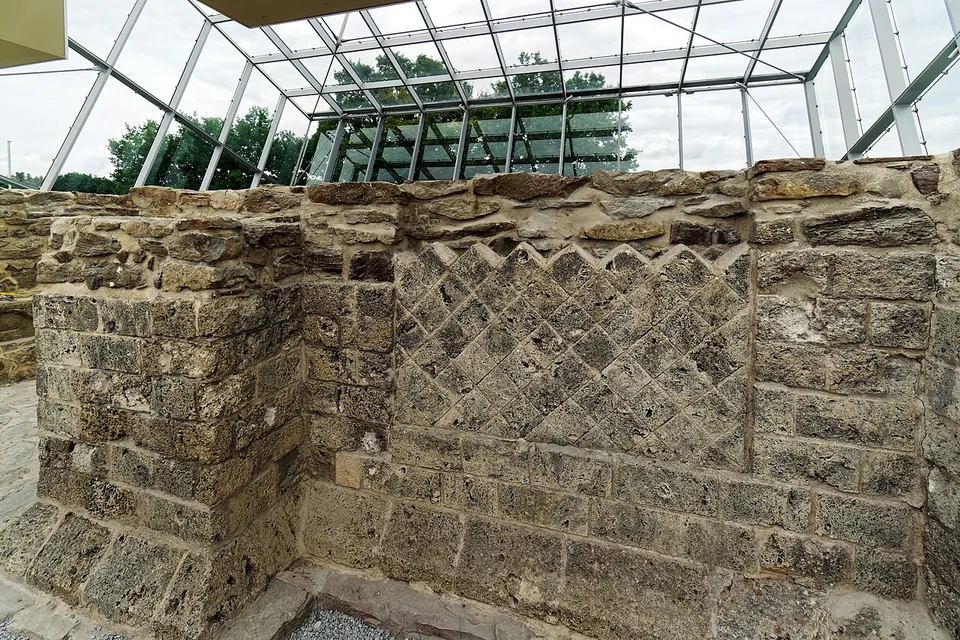
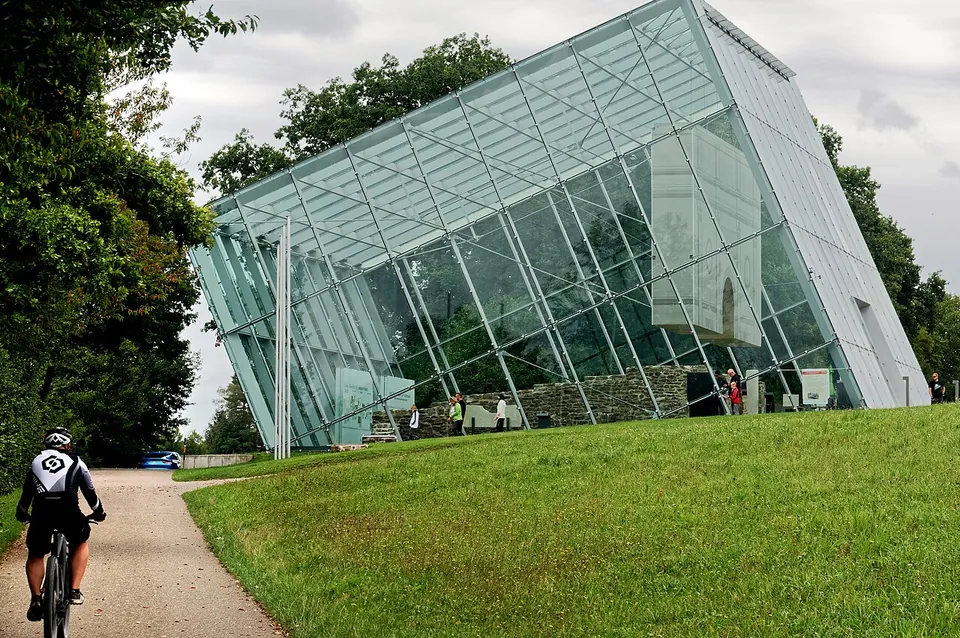
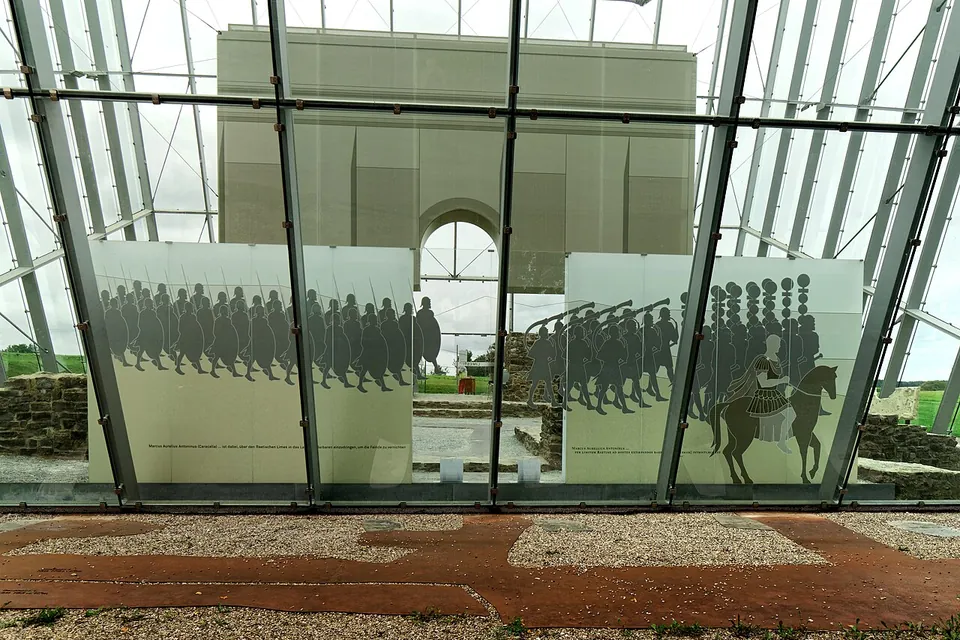
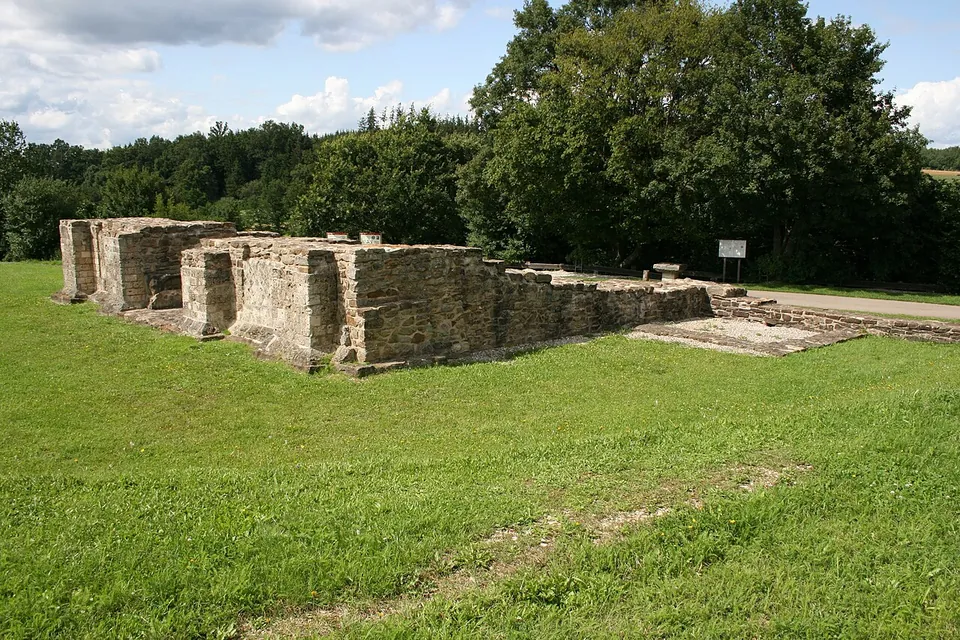
The stone walls of the gatehouse, excavated in 1973–74 and restored for display, now stand inside a glass-and-steel shelter built in 2010. It covers 23 × 21 m and rises to 16 m, a height taken from the presumed height of the Roman gate, so the shelter shows how tall the gate is thought to have stood. Inside, printed fabric screens hang at full size over the surviving stone stumps to suggest what the gate looked like (de.wikipedia). The gate’s showpiece decoration was on its south front: net-patterned masonry (opus reticulatum) set in a recessed frame between projecting pilasters (de.wikipedia). Copies of Roman stone monuments are displayed in the shelter; the fragments of a bronze imperial statue found here are in the Limesmuseum in Aalen, not on site (the operator).
The field and walking path from Schwabsberg to Dalkingen, which follows the line of the Limes, passes just north of the gate (de.wikipedia).
Is it worth the trip?
Yes, if you are following the Limes or are anywhere near Aalen or Ellwangen: entry is free, and this is the one place on the Upper German–Raetian Limes where a border crossing was turned into a monument. Be clear about the scale, though. What is Roman here is the low stone walls of a single building; the drama comes from the modern glass shelter and the fabric reconstruction. It is a short visit, so pair it with the fort at Buch, about 2 km to the south-west, which belongs to the same open-air museum of the Rhaetian Limes (de.wikipedia).
Time it for the season: the shelter is open only from late March to the beginning of November.
Getting there
The gate stands on a hilltop between the villages of Schwabsberg and Dalkingen in the municipality of Rainau, Ostalbkreis (de.wikipedia), about 4 km in a straight line from the centre of Ellwangen. The car park “Parkplatz Limestor” is about 650 m away, the nearest mapped bus stop, “Waldhotel”, about 500 m, and Schwabsberg’s railway halt about 1.2 km, all in a straight line (OpenStreetMap).
Entry is free. In 2026 the shelter opened from 28 March to 1 November, Tuesday to Sunday from 11.00 to 17.00, and every day during the summer school holidays (30 July to 13 September). The Limes-Cicerones lead public tours on Sundays and public holidays (Gemeinde Rainau, read 31 October 2026 — the 2027 dates were not yet out; check before travelling).
Visiting details
- Opening hours
- Tuesday to Sunday 11.00–17.00 from 28 March to 1 November 2026, and daily during the summer school holidays (30 July to 13 September 2026). Closed over the winter; the 2027 season dates were not yet published when checked.
- Tickets
- Free. Public guided tours by the Limes-Cicerones on Sundays and public holidays.
- Parking
- Car park "Parkplatz Limestor" about 650 m from the gate in a straight line (OSM way/218107615).
Before you go
- The remains are inside a glass shelter that is open only in the season above; OpenStreetMap's "24/7" tag on the site is not the operator's.
Hours and prices checked 31 October 2026 on the operator's own site. Confirm before travelling.
History
Excavation found six building phases here (de.wikipedia). Roman soldiers may have first worked on this hilltop around 160, putting up a wattle fence along the frontier and, probably, a wooden watchtower about 5.5 m square. A palisade of oak posts followed; timbers from it near Schwabsberg have been dated by tree rings to 165 or early 166. Later a wooden gatehouse of about 13.3 × 14.5 m was built beside the tower, with a passage running north through it and rooms on either side, perhaps a guardroom and space for handling border traffic. The road it served is thought to have run from the fort at Aalen through Buch into free Germania.
When the frontier was rebuilt in stone under Septimius Severus (193–211), the wooden gatehouse and a later tower on a stone footing were pulled down and a stone gatehouse of 12.6 × 9.3 m was joined to the new Raetian wall. Its south wall was probably demolished in 213, in connection with Caracalla’s Germanic campaign, and replaced by the symmetrical show front with pilasters and net-pattern masonry around a passage about 2.1 m wide. More than 140 fragments of an over-life-size bronze statue in armour were found, most of them in front of this façade. Its size and detail point to an imperial statue; from its style it is older than the gate, made late in Hadrian’s reign or early in that of Antoninus Pius, and was reused here (de.wikipedia).
A fragmentary inscription, the Acta Fratrum Arvalium, says the emperor crossed the Raetian frontier on 11 August 213. Some scholars have linked that crossing with this gate and others have argued against it; one dissenter read the final building as a shrine against the wall rather than a gate, a view that has found no support (de.wikipedia).
The gatehouse, which the guards probably also lived in, burnt down and was never rebuilt. The last coin found here was minted between 231 and 235; the fire has been put either at 233/234 or at 254, when the civilian settlement at Buch also burnt (de.wikipedia).
The first known excavation was in the early 19th century, and Ernst von Herzog visited in 1873. Eduard Paulus excavated again in 1885, and Karl August von Cohausen published the first reconstruction in 1886, but a 1934 survey, made without digging, redrew the site as a small fort, and that version shaped what was published for decades. The State Office for the Protection of Monuments excavated it fully in 1973–74 under Dieter Planck, when the mound of rubble, still 2 m high, was at risk from road works. The restored gate opened to the public in 1975, became part of the Limes World Heritage Site in 2005, and was given its shelter in 2010 (de.wikipedia).
More photographs



Nearby
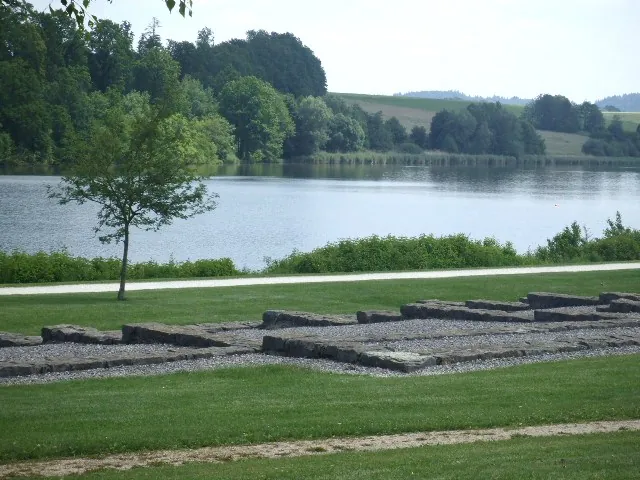
Photo: Veit Feger · Public domain · Commons
2 km · fort · Baden-Württemberg
Castra of Buch
Not much stands, but the site is laid out so that you can read it.
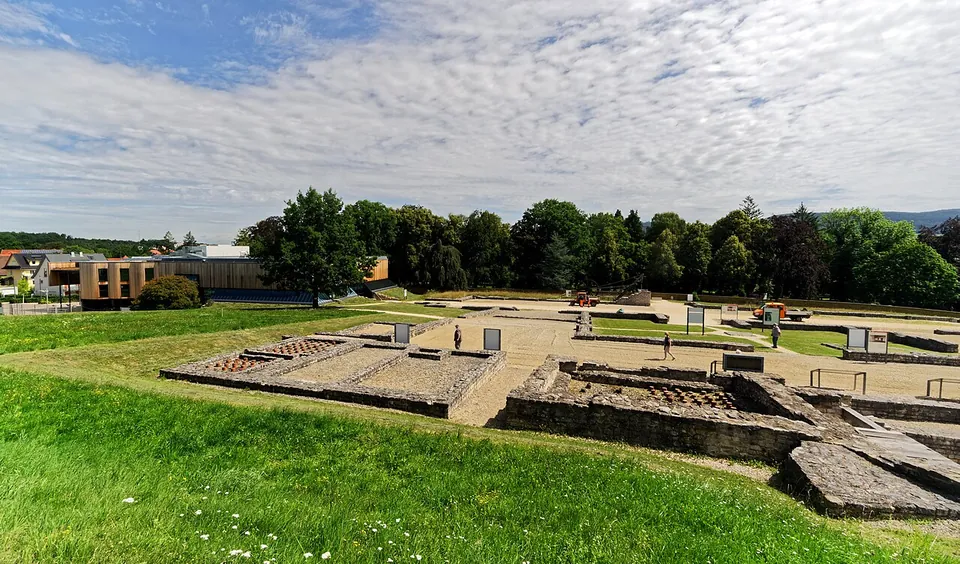
Photo: Holger Uwe Schmitt · CC BY-SA 4.0 · Commons
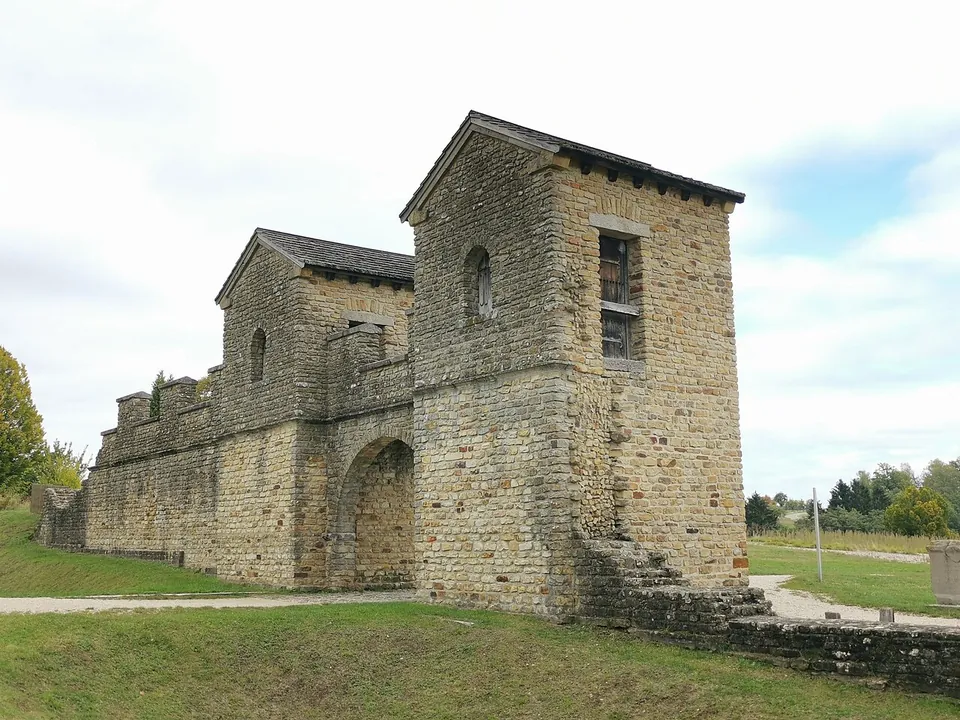
Photo: Z thomas · CC BY-SA 4.0 · Commons
38 km · fort · Baden-Württemberg
Welzheim East Roman Fort
The gate is the thing to see: a twin-towered entrance with a passage 3.6 m wide, rebuilt together with a section of the wall (de.wikipedia).


Straight-line distances.
Sources
Every fact on this page comes from the records below, each used under the licence noted.
| Source | Licence |
|---|---|
| Wikidata Q1746996 | CC0 |
| OpenStreetMap way/51869785 | ODbL |
| Wikipedia (de) — Limestor Dalkingen | CC BY-SA 4.0 |
| Wikipedia (en) — Limes Gate Dalkingen | CC BY-SA 4.0 |
| Gemeinde Rainau — Limestor bei Dalkingen mit den Öffnungszeiten | licence not recorded |