

What is there today
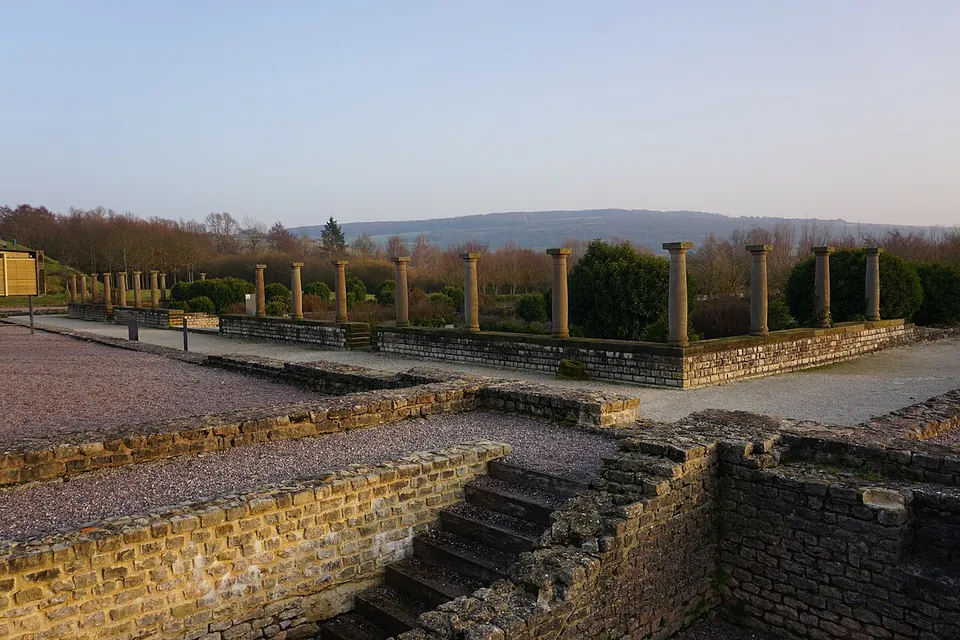
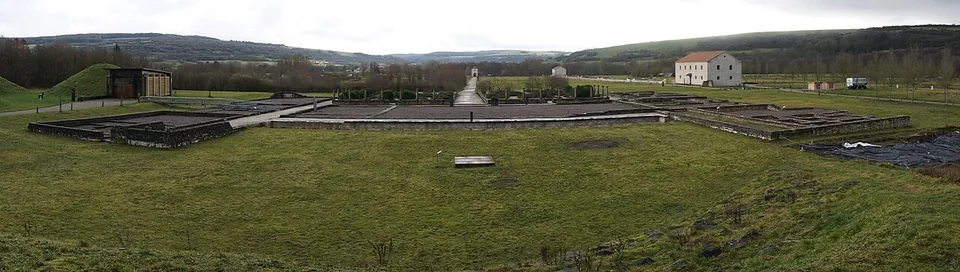
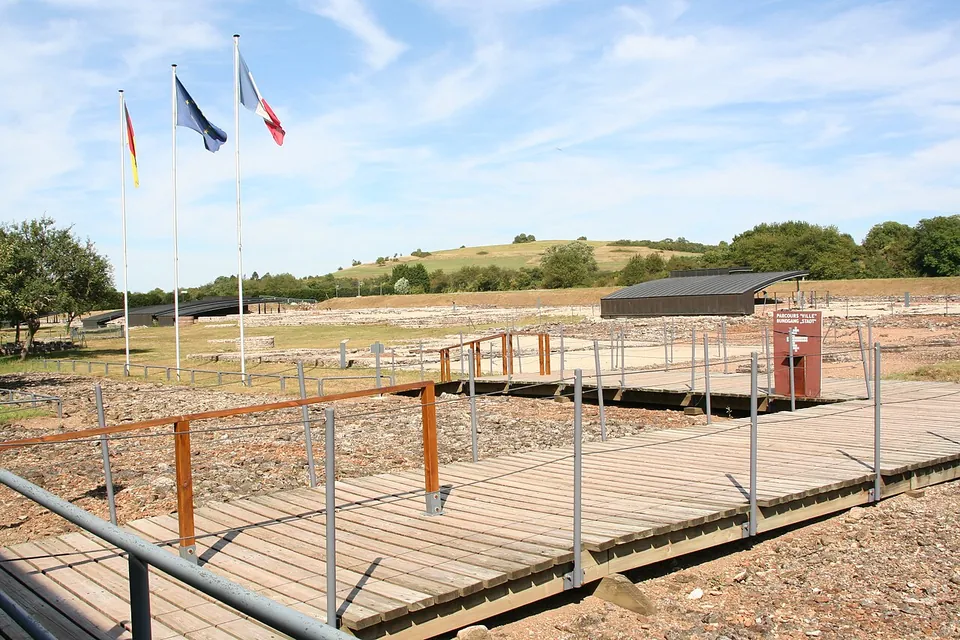
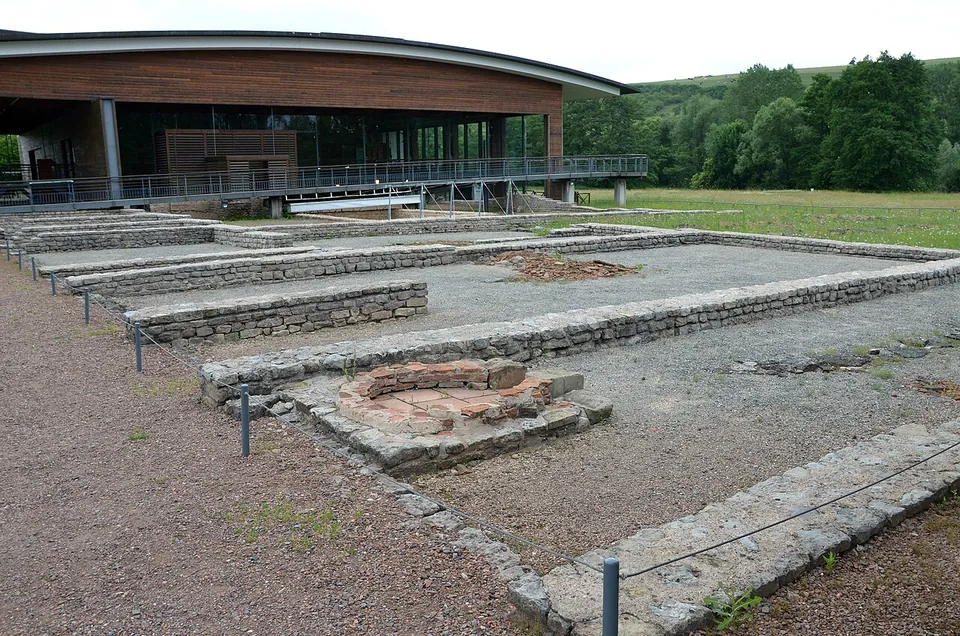
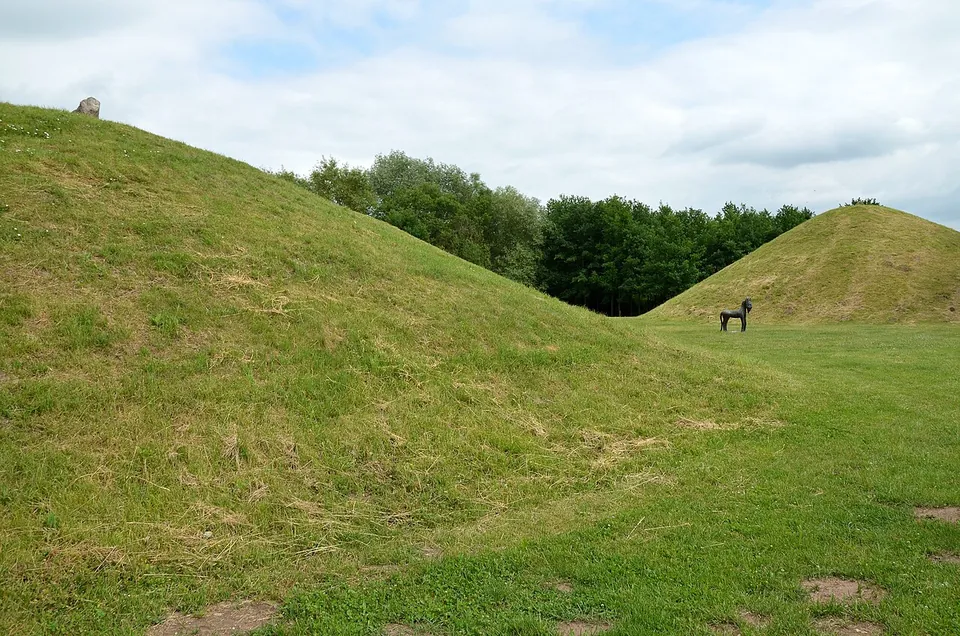
On the German side, the villa is the Roman site. Its main building is laid out at ground level, the rooms filled with gravel so that the plan reads clearly (de.wikipedia), and a viewing mound lets you take in the whole of it (en.wikipedia). Because the remains were very low when they were dug, parts have been rebuilt to give the scale: the gatehouse, the enclosure wall and some of the outbuildings round the great courtyard, modelled on other villas of the region such as Nennig and Borg (fr.wikipedia). One rebuilt outbuilding, the Taverne, is a restaurant with the villa’s exhibition upstairs (de.wikipedia; the operator). Also on the German side are the visitor centre and museum, the Maison Jean Schaub, which covers the valley from the Stone Age to the Romans, and the rebuilt Celtic burial mounds, one of them the walk-in tomb of the “Princess of Reinheim” from about 370 BC (de.wikipedia). That tomb is Celtic, not Roman. The original finds from the German side are in the museum of prehistory in Saarbrücken; the park shows copies (en and fr.wikipedia).
Across the border are the town’s remains: the public baths, kept as consolidated original walls under a protective hall with walkways through it since 1993, and rows of shops on either side of the baths (de.wikipedia; en.wikipedia, “Bliesbruck Baths”). Along the town’s street the craftsmen’s quarters show as foundations and cellars, consolidated but not rebuilt, with a bakery and a potter’s workshop reconstructed in timber and daub, and a garden replanted from plant remains found in the town’s wells (en and fr.wikipedia). An exhibition centre on that side shows finds from the town (de.wikipedia).
Is it worth the trip?
Yes, if you are in Saarland or Lorraine. It is two Roman sites for one visit - a country house and the small town beside it - and you cross a national border on foot to see them, which is the point of the place. It is also cheap: the open-air park is free, and €5 opens everything indoors on both sides.
Be clear about what kind of Roman site it is. At the villa you are reading a ground plan with a few rebuilt buildings around it, not standing ruins, and the baths at Bliesbruck are under cover and open only in season. Come between mid-March and the end of October; in winter you can walk the grounds but the baths, the museum and the tomb are shut.
Getting there
The park is on the border between Reinheim, part of Gersheim in Saarland, and Bliesbruck in the Moselle department, about 15 km from Saarbrücken (fr.wikipedia). Bus 501, the “Biosphärenbus”, stops at “Reinheim Kulturpark”, 30 m from the entrance, every hour and every day of the year; from Saarbrücken take the Saarbahn S1 to Kleinblittersdorf and change to the 501 there (the operator). By car, park free at the Blies bridge, about 150 m from the entrance; the park itself is car-free.
The open-air park, the villa and the Roman town can be visited at any time and cost nothing. The museum areas open from 15 March to 31 October, Monday to Friday 10.00 to 17.00 and at weekends 10.00 to 18.00. A ticket for them is €5, €3.50 reduced, and free up to the age of 16, and it is valid on both sides of the border: the museum, the Celtic tomb, the villa exhibition, the exhibition centre and the baths (europaeischer-kulturpark.de, read 30 October 2026 - check before travelling).
Visiting details
- Opening hours
- The open-air park, with the Roman villa and the Roman town, is open all year round and at any hour. The ticketed museum areas open from 15 March to 31 October, Monday to Friday 10.00–17.00 and Saturday and Sunday 10.00–18.00.
- Tickets
- The open-air park, the villa and the town are free. The museum areas cost €5, or €3.50 for pupils, students, trainees, seniors and groups of 20 or more; free for children and young people up to 16. One ticket covers both sides of the border - the museum "Maison Jean Schaub", the Celtic princess's tomb, the exhibition rooms above the Taverne, the exhibition centre and the baths on the French side.
- Parking
- Free car park at the Blies bridge, for cars and coaches, about 150 m (two minutes' walk) from the entrance at Robert-Schuman-Straße 2, Gersheim-Reinheim; the park itself is car-free (the operator).
- On foot
- About 2 min from the parking
Before you go
- The museum areas, including the baths at Bliesbruck and the Celtic tomb, are closed from November to mid-March; the open-air villa and town can still be walked.
Hours and prices checked 30 October 2026 on the operator's own site. Confirm before travelling.
History
The town at Bliesbruck grew up from about AD 40-50, under Claudius, on the Roman road through Divodurum (Metz) to Augusta Treverorum (Trier) (fr.wikipedia). Its ancient name is not known. Most of its people were craftsmen living in long, narrow houses that doubled as workshops along the street, and at its centre stood a basilica, a monumental fountain and public baths on a Mediterranean model (de.wikipedia). Published estimates of its population at its height range from more than a thousand to about two thousand (fr and de.wikipedia). The baths were in use from the late 1st century to the mid-3rd, and the complex measures 75 by 35 m (en.wikipedia, “Bliesbruck Baths”).
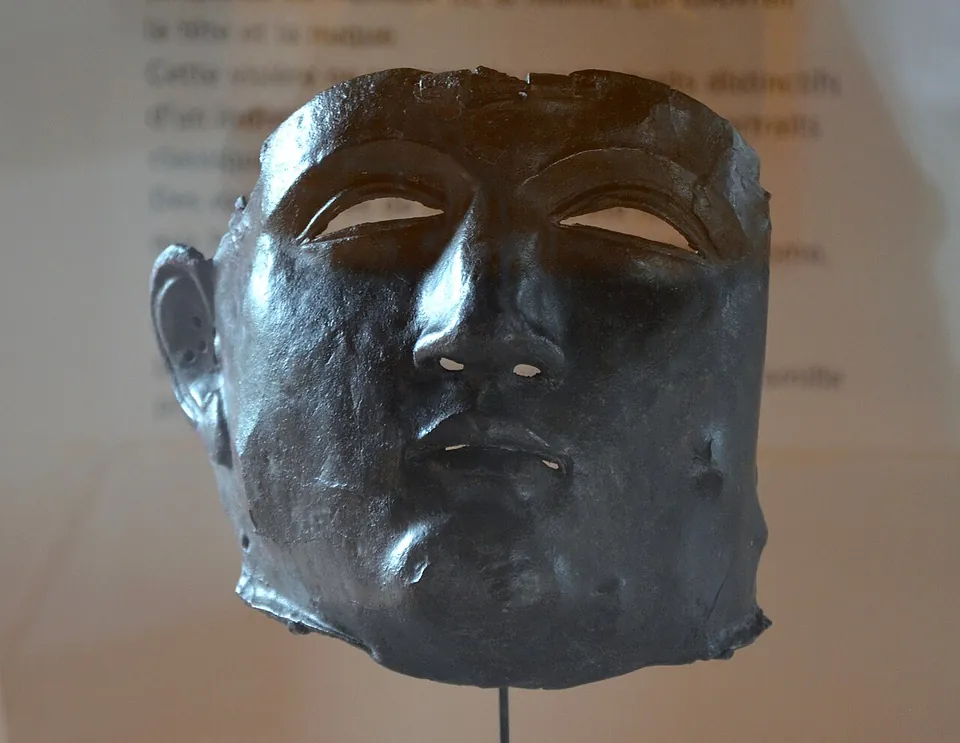
The villa at Reinheim was first built in the second half of the 1st century and reached its greatest size in the early 3rd (fr and en.wikipedia). Published figures for the whole estate range from 7 to almost 10 hectares (de and fr.wikipedia). Its main building, about 80 m across, had two projecting wings, one of them holding a private bath suite, and looked south over a walled courtyard of 300 by 135 m lined with outbuildings and entered through a gatehouse (en and fr.wikipedia). In 2000 excavators found there an iron face mask plated with bronze, most likely the visor of a Roman cavalryman’s helmet (en.wikipedia).
The late 3rd century ended the good years. The craftsmen’s quarters were destroyed, the western one probably in 258 and the eastern one in 273 or 275, most likely in the Germanic raids of those decades; the villa lost its palatial character (fr.wikipedia). It burned in the 4th century and was never rebuilt, while the town lived on in reduced form, with only parts of the baths still in use, until the middle of the 5th century (en and fr.wikipedia).
The villa was first dug into between 1806 and 1809, and those early excavations badly damaged it (de and fr.wikipedia). The town was found in 1971 during gravel quarrying, and in the first years part of it was lost to the diggers; it has been excavated since the late 1970s, and systematic work at the villa began in 1987 (de.wikipedia). The park was founded in 1989 as a joint German-French project and is still run jointly from both sides of the border, the Moselle department on the French side (de and en.wikipedia).
More photographs




Nearby
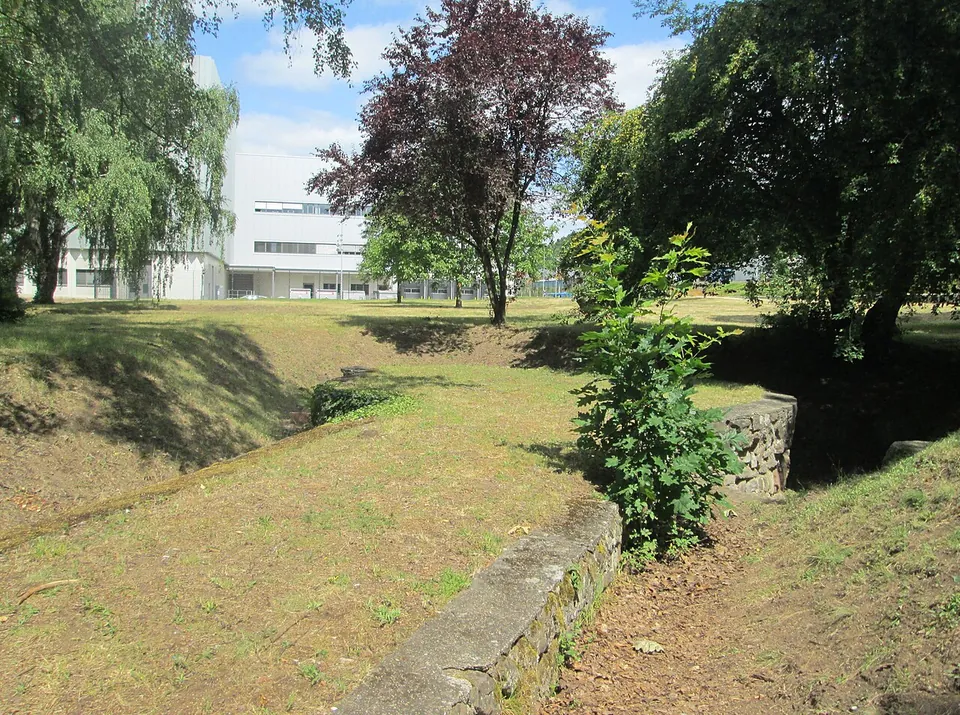
Photo: AnRo0002 · CC0 · Commons
15 km · fort · Saarland
Römerkastell Saarbrücken
Low restored foundation walls in a small park on a street called An der Römerbrücke, in the St. Johann district.
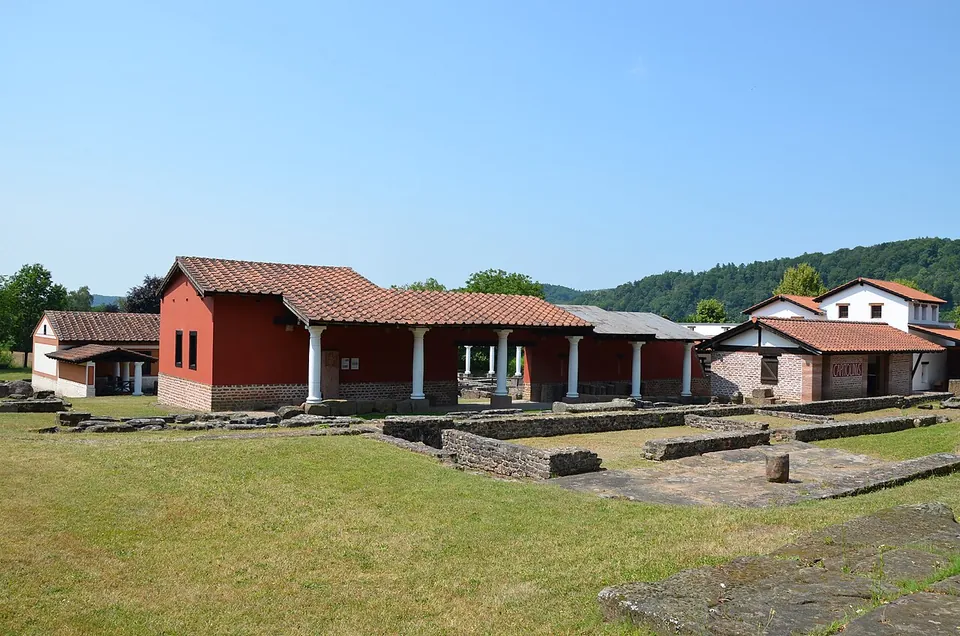
Photo: Carole Raddato from FRANKFURT, Germany · CC BY-SA 2.0 · Commons
19 km · city · Saarland
Schwarzenacker
The town covered 25 to 30 hectares, and about one hectare of it has been excavated (de.wikipedia).
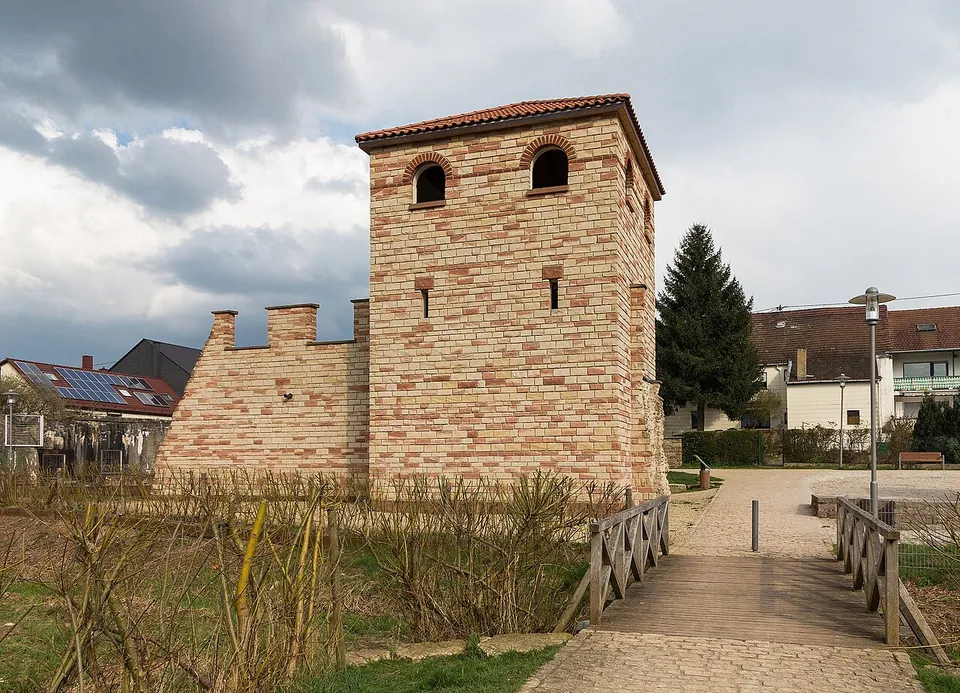
Photo: Amber16 · CC BY-SA 4.0 · Commons
42 km · fort · Saarland
Contiomagus
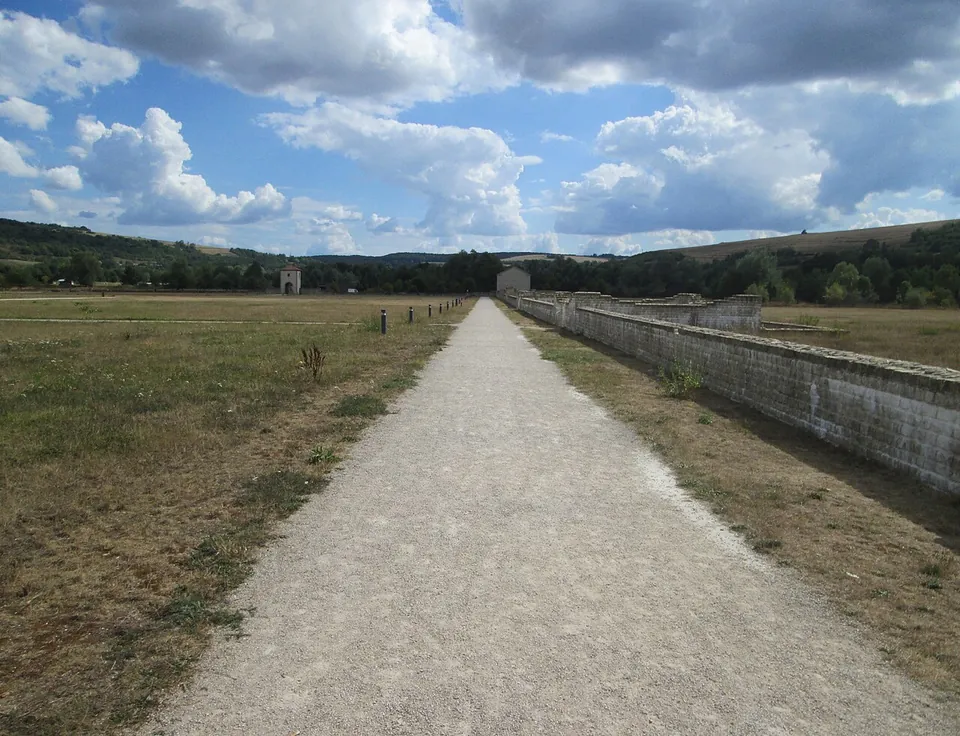
The Römerpark holds a square tower with arched windows and a tiled roof, joined to a short stretch of crenellated wall, set among gravel paths, meadow and a children's playground.


Straight-line distances.
Sources
Every fact on this page comes from the records below, each used under the licence noted.
| Source | Licence |
|---|---|
| Wikidata Q1377888 | CC0 |
| OpenStreetMap node/268127827 | ODbL |
| Wikipedia (de) — Europäischer Kulturpark Bliesbruck-Reinheim | CC BY-SA 4.0 |
| Wikipedia (en) — European Archaeological Park of Bliesbruck-Reinheim | CC BY-SA 4.0 |
| Wikipedia (fr) — Parc archéologique européen de Bliesbruck-Reinheim | CC BY-SA 4.0 |
| Wikipedia (en) — Bliesbruck Baths | CC BY-SA 4.0 |
| Europäischer Kulturpark — opening hours and admission (the operator) | licence not recorded |
| Europäischer Kulturpark — getting there and parking (the operator) | licence not recorded |
| Europäischer Kulturpark — the archaeological park (the operator) | licence not recorded |