

What is there today
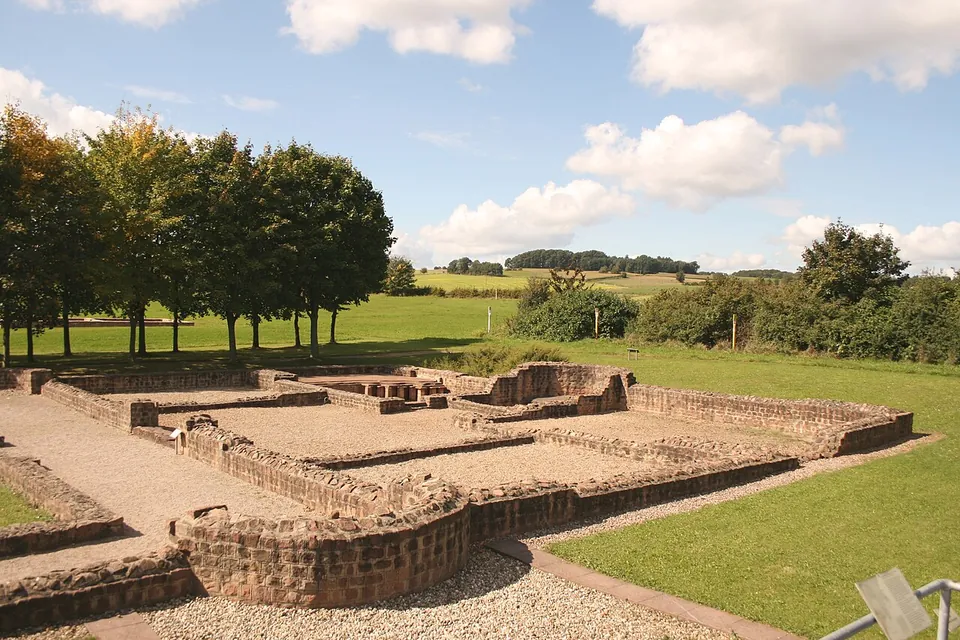
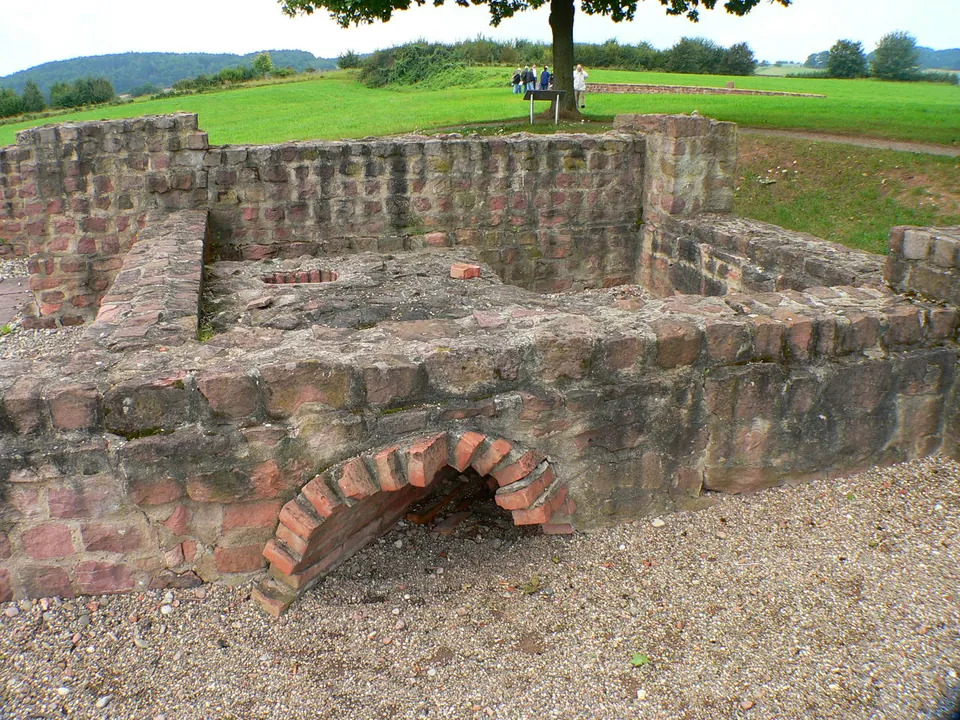
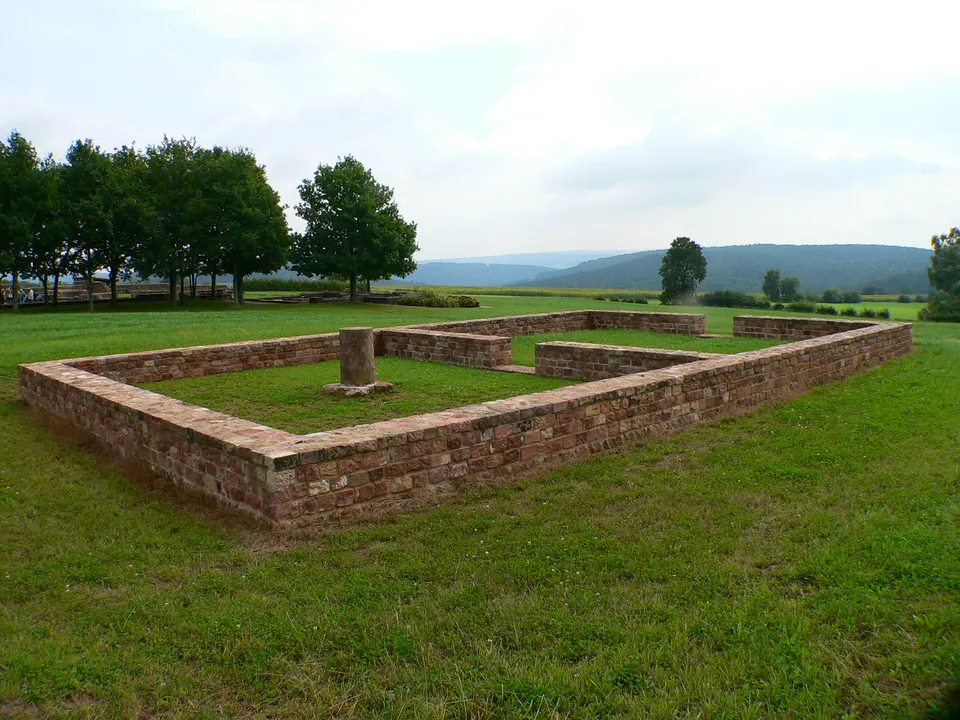
The excavated buildings have been rebuilt on their own foundations to a low height, so the site reads as a plan you walk through rather than as standing ruins (the operator). You see the main house with its rooms and inner courtyard, a bath house with cold, warm and hot rooms and its heating room, a cellar, and a walled sanctuary where a Jupiter column more than 10 m high once stood. Of the wall round the 3.4-hectare yard, the four corners, the gate area and a stretch on the north-east have been partly rebuilt, and a hedge marks the rest of its line (the operator; de.wikipedia).
Some original pieces are in place: the sandstone threshold of the main room was found where it lay and built into the reconstruction, and part of a hypocaust floor heating is rebuilt in the main house (de.wikipedia; the operator). A herb bed beside the service wing shows kitchen herbs chosen with the archaeobotanists of the Hessian state heritage office (de.wikipedia). The relief of three mother goddesses set into one wall is a cast of a stone from another village, not a find from here (the operator). An information centre, opened in 2012, shows the finds, models and a replica of the Jupiter column (the municipality’s flyer).
Is it worth the trip?
If you are in the Odenwald, yes: it is free, open at any hour, and the whole plan of the largest Roman estate known in Hesse can be walked, on a hilltop the municipality describes as looking across the Odenwald to Baden-Württemberg and the Bavarian Spessart. Be clear about what you will see: low rebuilt walls on a lawn, not original masonry standing to any height. It is not worth a long detour on its own, and the finds are only on show on Sunday and public-holiday afternoons from April to October.
Getting there
The site lies on the L 3106 between Brensbach and Höchst im Odenwald, south of Hummetroth; brown signs lead to it from the B 38 and the B 45 (the operator). There is a free car park about 130 m from the remains (OpenStreetMap; the municipality’s flyer).
Without a car it is harder. The bus that serves the site is the BurgenBus, which links the Veste Otzberg, the Haselburg and Burg Breuberg at weekends every two hours, and must be booked in advance (the operator).
The grounds are free and open at all times. The information centre opens from 1 April to 31 October on Sundays and public holidays, 13.00 to 17.00, and is closed from November to March; the association charges for it but does not publish the amount. Guided tours can be arranged with the association, which asks €4 a person; groups can also come on weekdays and in winter by arrangement. A leaflet for a self-guided walk is kept in a box on a tree at the start of the tour (haselburg.de, read 30 October 2026).
Visiting details
- Opening hours
- The grounds are open at all times, all year. The information centre with the finds opens from 1 April to 31 October on Sundays and public holidays, 13.00–17.00, and is closed from 1 November to 31 March; groups can arrange visits on weekdays and in winter.
- Tickets
- Free to the grounds. The association that runs the site asks €4 per person for a guided tour. It says a charge is made in the information centre but does not publish the amount.
- Parking
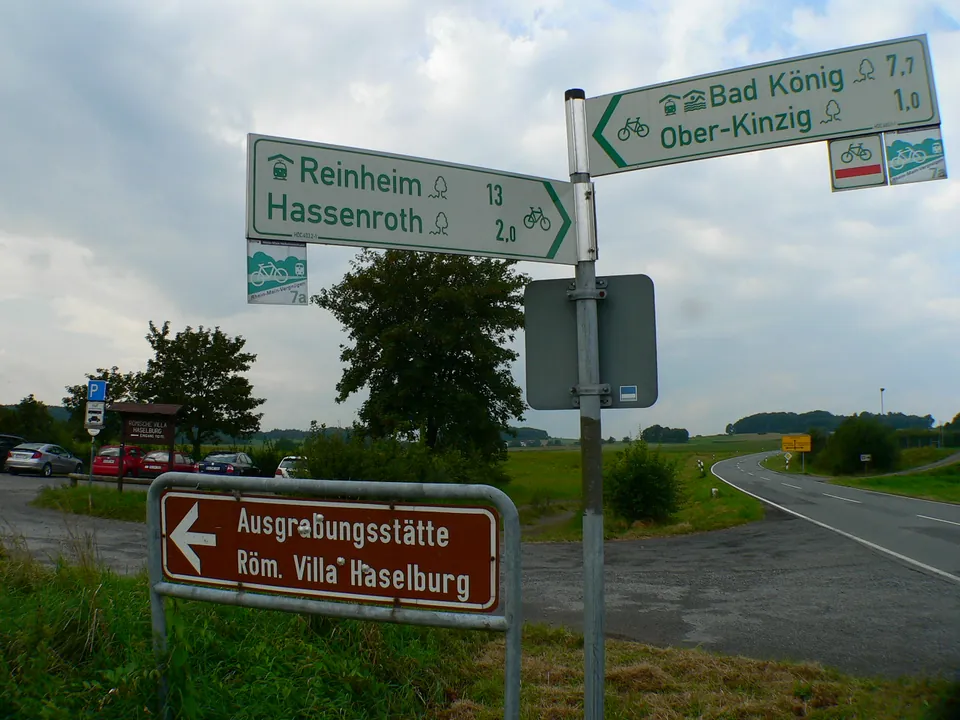
The turn for the car park on the road south of Hummetroth. · Photo: Presse03 · CC BY-SA 3.0 · Wikimedia Commons Free car park about 130 m from the remains (OpenStreetMap way/237145380; free according to the municipality's flyer).

Before you go
- The bus that serves the site is the BurgenBus, a demand-responsive bus that runs at weekends every two hours and must be booked in advance.
- The information centre is closed from November to March; the open-air remains are not.
Hours and prices checked 30 October 2026 on the operator's own site. Confirm before travelling.
History
The estate was founded under Hadrian: the municipality’s flyer gives about 120, the German Wikipedia article a date late in his reign (117–138). It belonged to the territory of the Civitas Auderiensium, governed from Dieburg (de.wikipedia; the flyer). The main house, about 22 by 15 m, was rebuilt and extended several times; its central room had an apse for dining couches, and the apse and the room to its west had underfloor and wall heating. The bath house, 14 by 11 m, is larger than many baths built for whole garrisons in forts. That bath, the large reception room and the sanctuary suggest the owner probably held some office in the administration of the rural district (de.wikipedia).
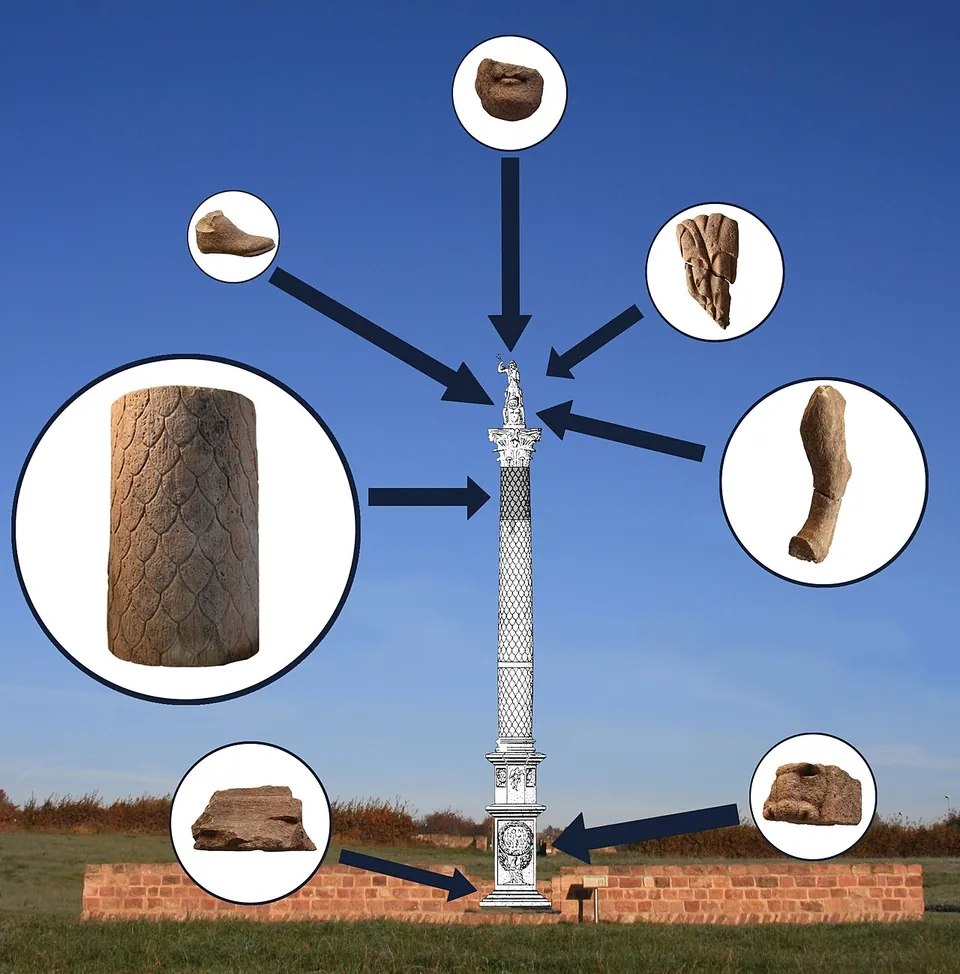
The Jupiter column in the sanctuary was smashed. Why is read differently: the association calls it the destruction of a pagan idol, while the German Wikipedia article takes the small size of the pieces to mean the stone was broken up for reuse. From the fragments, at most 5% of the whole, the column has been reconstructed at more than 10 m, topped by Jupiter riding over a giant (de.wikipedia; the operator). A tile from the floor heating of the main house, found in 1839, carries a scratched note in Latin cursive, “third layer, capital bricks, 375 pieces”, probably a tile-maker’s tally; it is now in the Hessisches Landesmuseum in Darmstadt and counts among the earliest pieces of writing from Hesse (de.wikipedia).
The estate was lived in for about a hundred years (the municipality’s flyer says more than a hundred, de.wikipedia probably no more), and it was abandoned by 260 at the latest, as raids on the frontier grew. Its ruins were used as a quarry, and the hazel bushes that grew on the wall remains gave it its name (de.wikipedia; the flyer). In the early 19th century Johann Friedrich Knapp, investigating for Count Franz I of Erbach-Erbach, took it for a Roman fort; Heinrich Gieß’s excavations of 1880–1886 showed it was a civilian estate. When a gas pipeline was laid through the site in 1979 the walls came to light again, and the pipe was pushed underneath the main house to spare it. The house, bath and cellar were excavated and rebuilt in 1984; the sanctuary and the remaining corners of the yard wall were uncovered in later campaigns up to 1993 (de.wikipedia). A Roman festival is held on the site every year, on the third Sunday of June according to the municipality’s flyer.
More photographs

Nearby
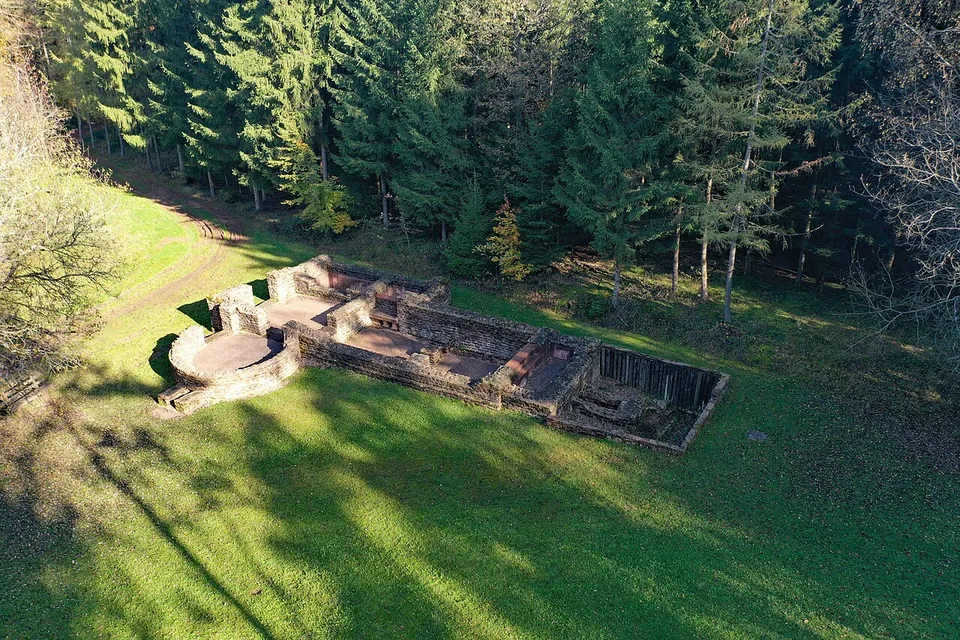
Photo: PaulT (Gunther Tschuch) · CC BY-SA 4.0 · Commons
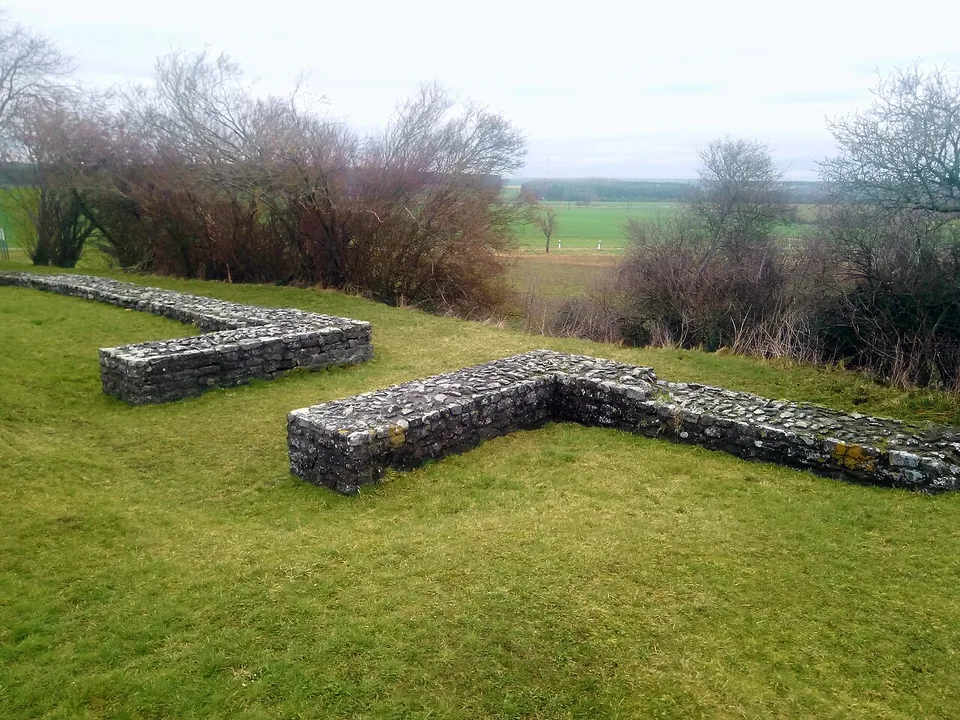
Photo: Granpar · CC BY-SA 4.0 · Commons
32 km · fort · Baden-Württemberg
Kleinkastell Haselburg
Kleinkastell Haselburg is the site of a small Roman fort on the Limes, the frontier of the empire, in open farmland between the villages of Reinhardsachsen and Gerolzahn near Walldürn.
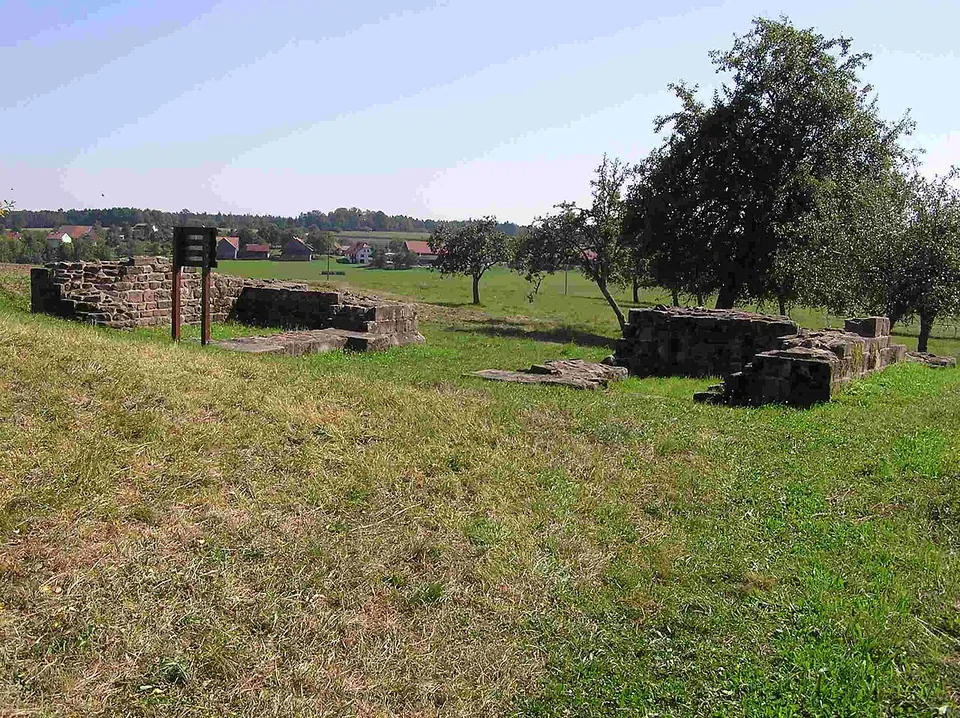
Photo: Schwing · Public domain · Commons
33 km · fort · Baden-Württemberg
Castra of Oberscheidental
The one built thing to look at is the south gate, the porta principalis dextra.


Straight-line distances.
Sources
Every fact on this page comes from the records below, each used under the licence noted.
| Source | Licence |
|---|---|
| Pleiades 346876399 | CC BY |
| Wikidata Q1437169 | CC0 |
| OpenStreetMap way/35940814 | ODbL |
| Wikipedia (de) — Römische Villa Haselburg | CC BY-SA 4.0 |
| Haselburgverein — Villa Haselburg, opening times (the site's own operator) | licence not recorded |
| Haselburgverein — guided tours | licence not recorded |
| Haselburgverein — tour of the site (Rundgang) | licence not recorded |
| Gemeinde Höchst i. Odw. — Haselburg flyer (PDF) | licence not recorded |