

What is there today
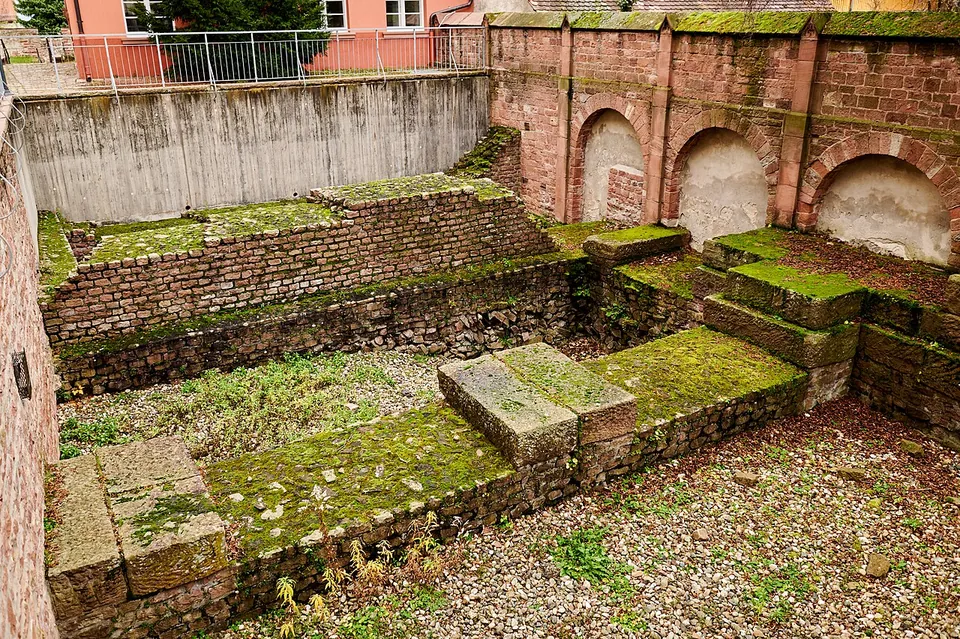
The Roman town lies under the medieval one, so what you see is a series of conserved fragments. The largest is the basilica, the town’s great hall: at 73 × 47 m it is among the largest Roman monumental buildings north of the Alps. The choir of the Gothic church of St. Gallus stands exactly on top of its apse, and the church’s length matches the basilica’s width, which gives a rough sense of its size (de.wikipedia). At Kirchenstraße 30 an excavation window shows part of the basilica (Commons), and information boards on the basilica and the forum stand around the church (OpenStreetMap).
Elsewhere in the old town:
- The fort gate. Part of the main gate of the stone fort, with its double passage and two gate towers, is exposed in an archaeological window at the Sebastianskapelle (de.wikipedia). Its plaque names it as the porta praetoria. The chapel itself has been under restoration in recent years (the operator).
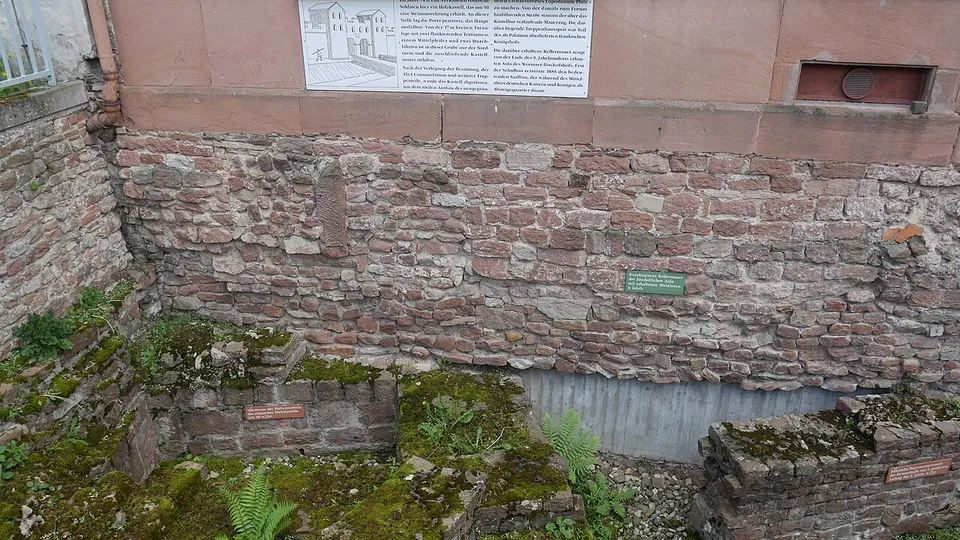
- The forum hall, Metzgergasse. In the basement of a block of flats the museum runs a room with the foundations of the forum’s entrance hall and fragments of painted plaster from a room more than 5 m high in the house of the cavalry commander. From the anteroom you look in through a glass wall; the room itself opens only on group tours. It also holds a reconstruction of a grand doorway whose brass fittings the townspeople hid from plundering Alamanni (the operator); de.wikipedia dates that hoard, found in 1973, to the Limes fall.
- The late Roman fort. Remains of a small fort (burgus) from the reign of Valentinian I were found when the town hall and an underground car park were built, and parts of it are built into the town hall’s west front and the car park (de.wikipedia). The operator calls it the largest surviving and excavated late-antique building in Baden-Württemberg.
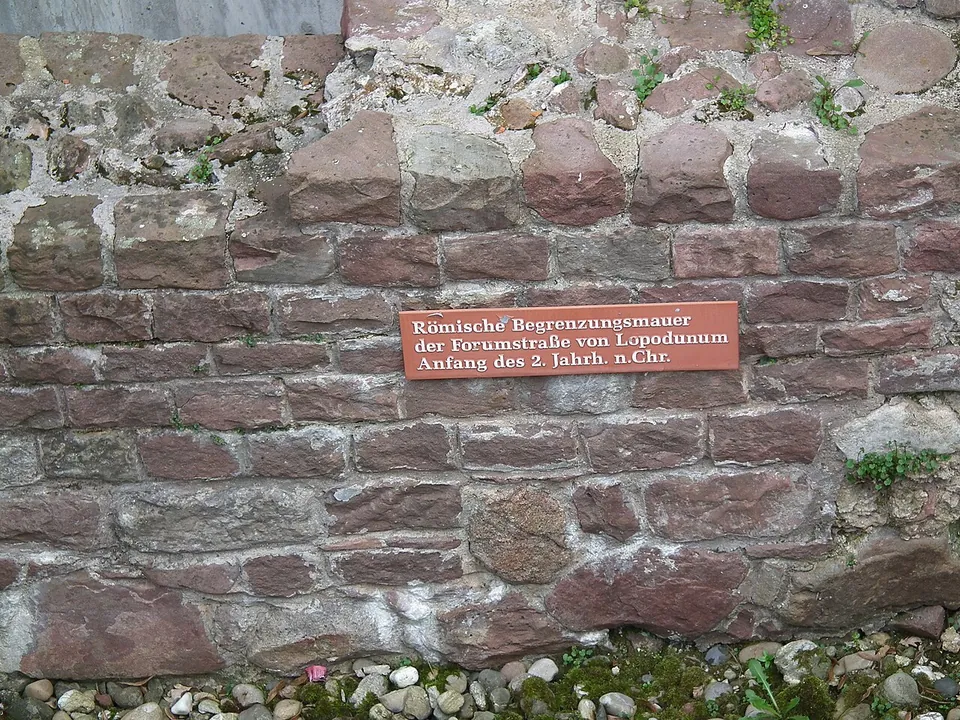
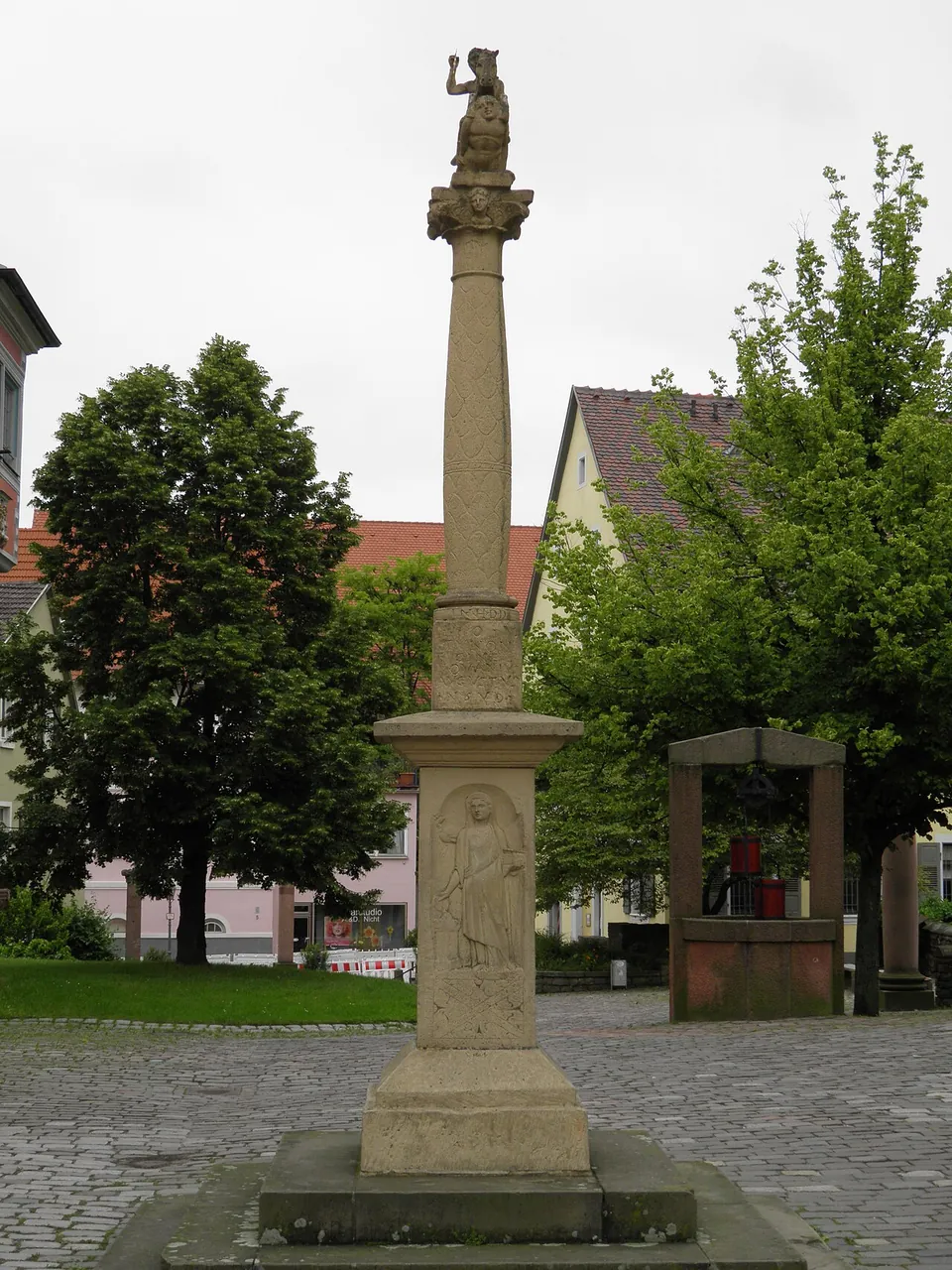
- Smaller pieces. Next to the museum, the walls of a building of Lopodunum are conserved beside the ruin of the medieval town wall (the operator), and small plaques mark other stretches of Roman wall around the town (Commons photographs). A reconstructed Jupiter column stands about 240 m from the basilica (Commons; OpenStreetMap).
The Lobdengau-Museum, about 250 m from the basilica in the former bishops’ residence, covers the town from prehistory onwards; its Roman rooms run from the cavalry fort to the burgus. Its garden has original architectural pieces from Lopodunum, among them a column and merlons from the town wall (the operator).
The Mithraeum
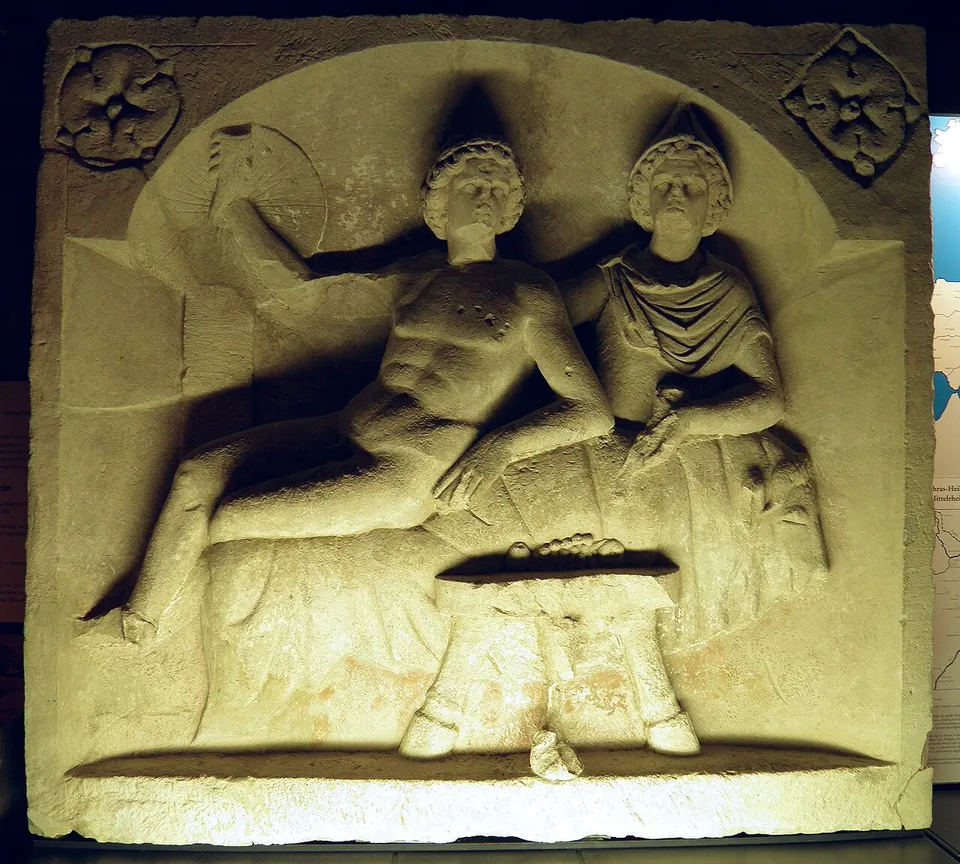
Two buildings in the south of the town are taken to be sanctuaries of Mithras, and one held a relief of Mithras and Sol at their cult banquet (de.wikipedia). The Lobdengau-Museum shows a relief of that scene dated to about AD 130 (Commons file description). No source records anything of the buildings on show today.
Is it worth the trip?
Yes, if you come for the town and plan around the museum. Lopodunum is not a single impressive ruin: it is an old town where Roman foundations surface in several places, and the museum ties them together. On a Wednesday, Saturday or Sunday afternoon you can see the windows, the museum and the town in a few hours, and Heidelberg is about 9 km away. On any other day you get the open-air windows and the boards alone, which is a pleasant walk but thin reward for a long detour. There is no ruin field here: the remains are foundations and wall fragments set into a living town.
Getting there
Ladenburg station is about 700 m from the basilica, and the nearest bus stops are about 260 m away (OpenStreetMap). Drivers will find two free car parks named “An den Kirchen” about 95 m from the basilica window.
The excavation windows are in the streets, and the operator lists no charge for them. The Lobdengau-Museum is open all year on Wednesday, Saturday and Sunday from 14.00 to 17.00, and on eight public holidays at the same hours; it closes from 24 December to 5 January and on the second weekend of September for the Altstadtfest. Admission is €5, reduced €3, and free for children, young people, pupils and trainees up to 25. Groups can book tours outside opening hours, €50 per 45 minutes plus admission (city of Ladenburg, read 31 October 2026; check before travelling).
Visiting details
- Opening hours
- The Roman remains are open-air excavation windows in the old town's streets, for which the operator gives no hours; the forum room in Metzgergasse can be seen through a glass wall from its anteroom by day, and its inner room only on a group tour. The Lobdengau-Museum opens all year on Wednesday, Saturday and Sunday, 14.00–17.00, and on eight public holidays at the same hours; it is closed from 24 December to 5 January and on the Altstadtfest weekend (the second weekend of September).
- Tickets
- The excavation windows carry no charge on the operator's pages. Lobdengau-Museum €5, reduced €3; free for children, young people, pupils and trainees up to the age of 25, and with the Landesfamilienpass or the Museums-PASS-Musées. Group tours outside opening hours are €50 per 45 minutes plus admission.
- Parking
- Two free car parks named "An den Kirchen" about 95 m from the basilica window (OSM way/85270656 and way/162235966).
Before you go
- The museum is open only three afternoons a week (Wednesday, Saturday, Sunday); time a visit for one of them.
- The interior of the Metzgergasse forum room, with the wall painting and the forum hall foundations, opens only on group tours booked through the museum.
Hours and prices checked 31 October 2026 on the operator's own site. Confirm before travelling.
History
Rome built two forts in turn on the high bank of the Neckar in the 70s AD; the cavalry unit Ala I Cannanefatium was probably stationed there, and the turf wall of the later fort was rebuilt in stone around AD 90. Under Trajan the unit was sent to the Dacian wars, and the fort was given up, its walls pulled down and its ditches filled. The settlement was then turned into a planned civilian town, probably in the years after 106, with a forum and basilica laid out over the rear of the abandoned fort. The whole complex measured 130 × 84 m and has no equal in the larger towns east of the Rhine. Whether the basilica was ever finished is still disputed (de.wikipedia).
Lopodunum became the capital of the Civitas Ulpia Sueborum Nicrensium and flourished in the 2nd and early 3rd centuries. Probably around 230 it received a town wall with gates and towers, reconstructed at about 2.7 km long. The town ended with the Limes fall: when the troops were withdrawn in 260 the remaining Roman population seems to have followed them, and Germanic settlers moved in. Around 370, under Valentinian I, Rome built the burgus on the river bank as a landing place that could be reached only from the water. It was given up around 400 (de.wikipedia).
The identification of Ladenburg with the Lupodunum of Ausonius’s poem Mosella goes back to the Palatine historian Marquard Freher, whose short work on it appeared in 1618. Hermann Gropengießer found the stone fort in 1912, and the basilica was excavated in 1911 and 1935 (de.wikipedia).
More photographs


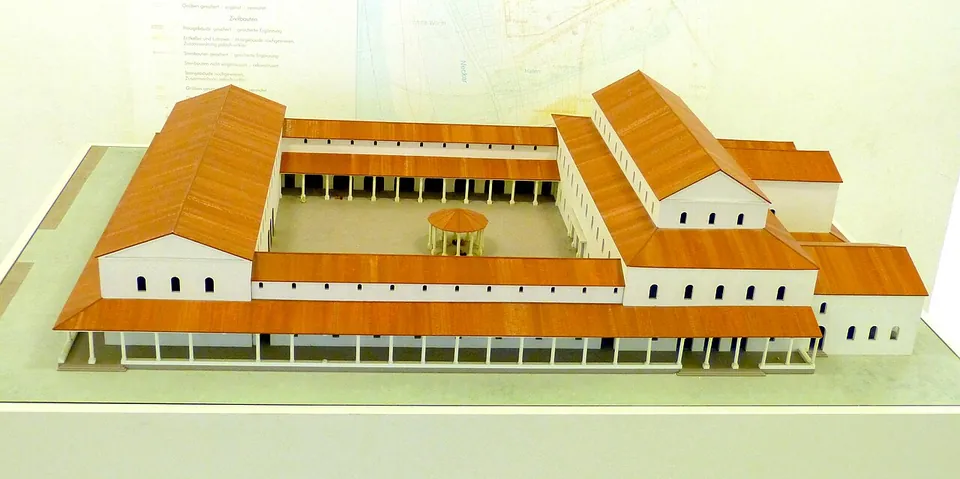

Nearby
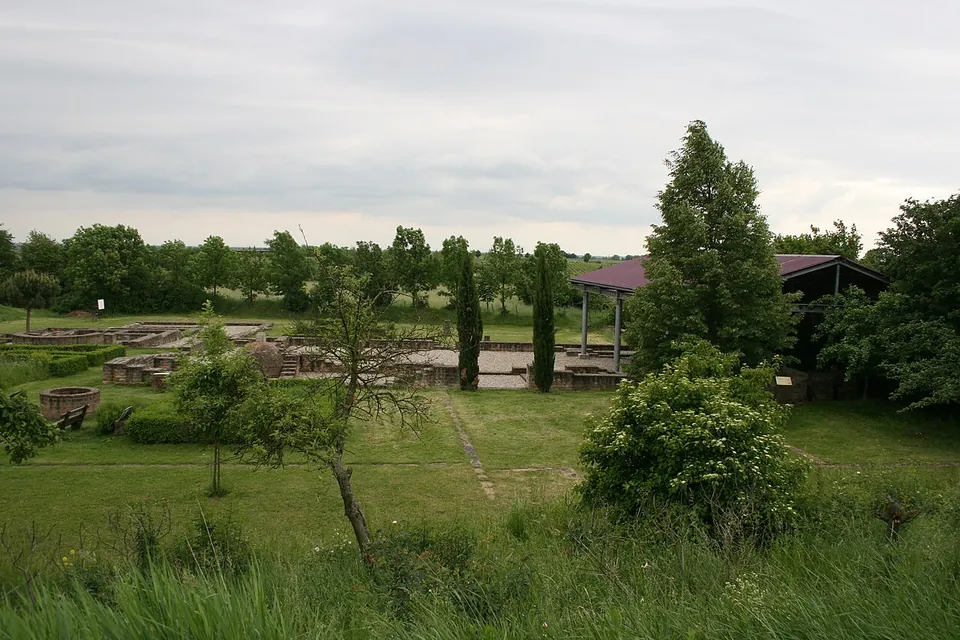
Photo: Haselburg-müller · CC BY-SA 3.0 · Commons
30 km · villa · Rhineland-Palatinate
Villa rustica of Wachenheim
The site covers about 1.5 hectares (de.wikipedia; the operator gives 15,000 m², the same figure).
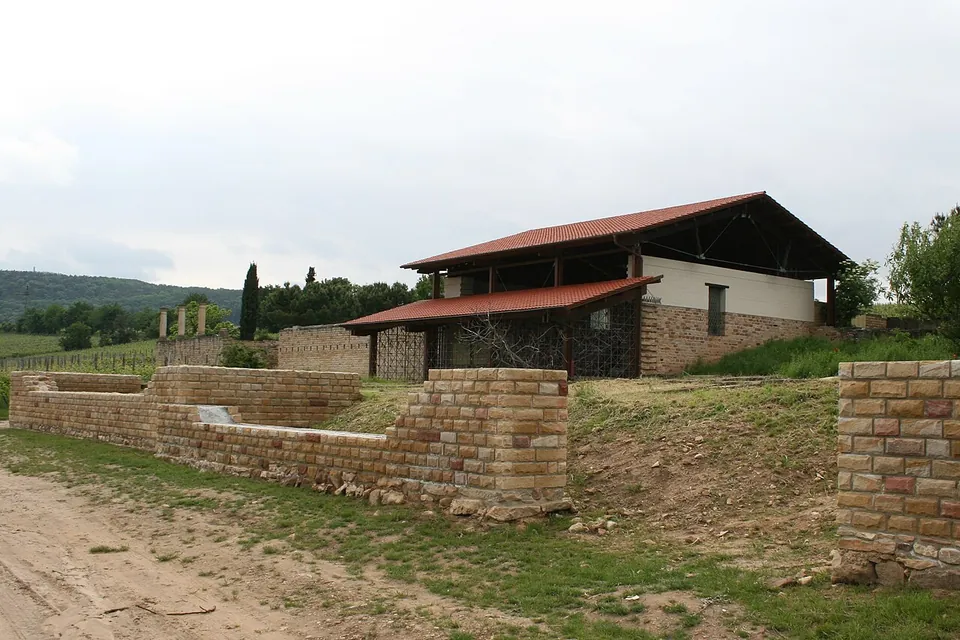
Photo: Haselburg-müller · CC BY-SA 3.0 · Commons
31 km · villa · Rhineland-Palatinate
Villa rustica of Weilberg
What you walk round is an open-air museum, and much of it is reconstruction on original foundations.
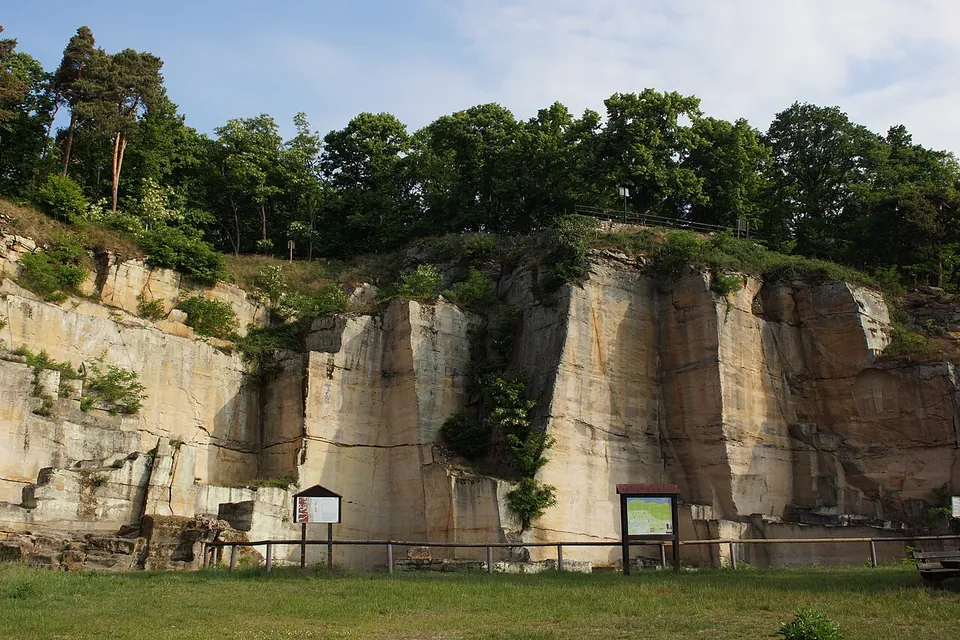
Photo: Maik Riede · CC BY-SA 4.0 · Commons
33 km · quarry · Rhineland-Palatinate
Kriemhildenstuhl
A half-round quarry cut into the hillside about 150 m above the town, cleared almost entirely of the rubble that once filled it (the owner, the Drachenfels-Club).


Straight-line distances.
Sources
Every fact on this page comes from the records below, each used under the licence noted.
| Source | Licence |
|---|---|
| Pleiades 118813 | CC BY |
| Wikidata Q1869794 | CC0 |
| Vici.org 10417 | CC BY-SA (text), CC0 (metadata) |
| Wikipedia (de) — Lopodunum | CC BY-SA 4.0 |
| Wikidata — Mithräum von Ladenburg (Q140421898) | licence not recorded |
| Stadt Ladenburg — Lobdengau-Museum (the operator; hours, prices, open-air sites) | licence not recorded |