

What is there today
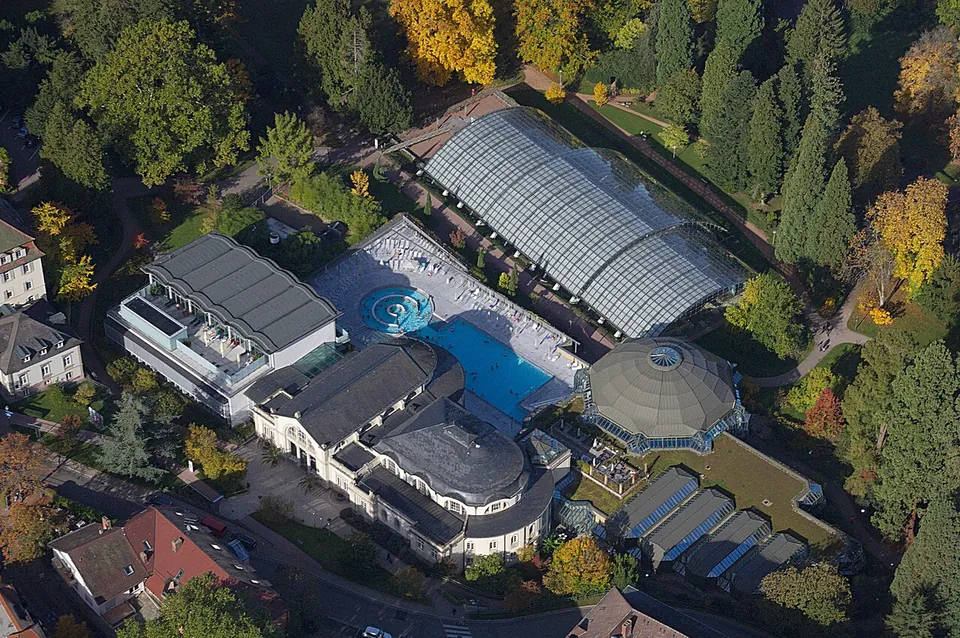
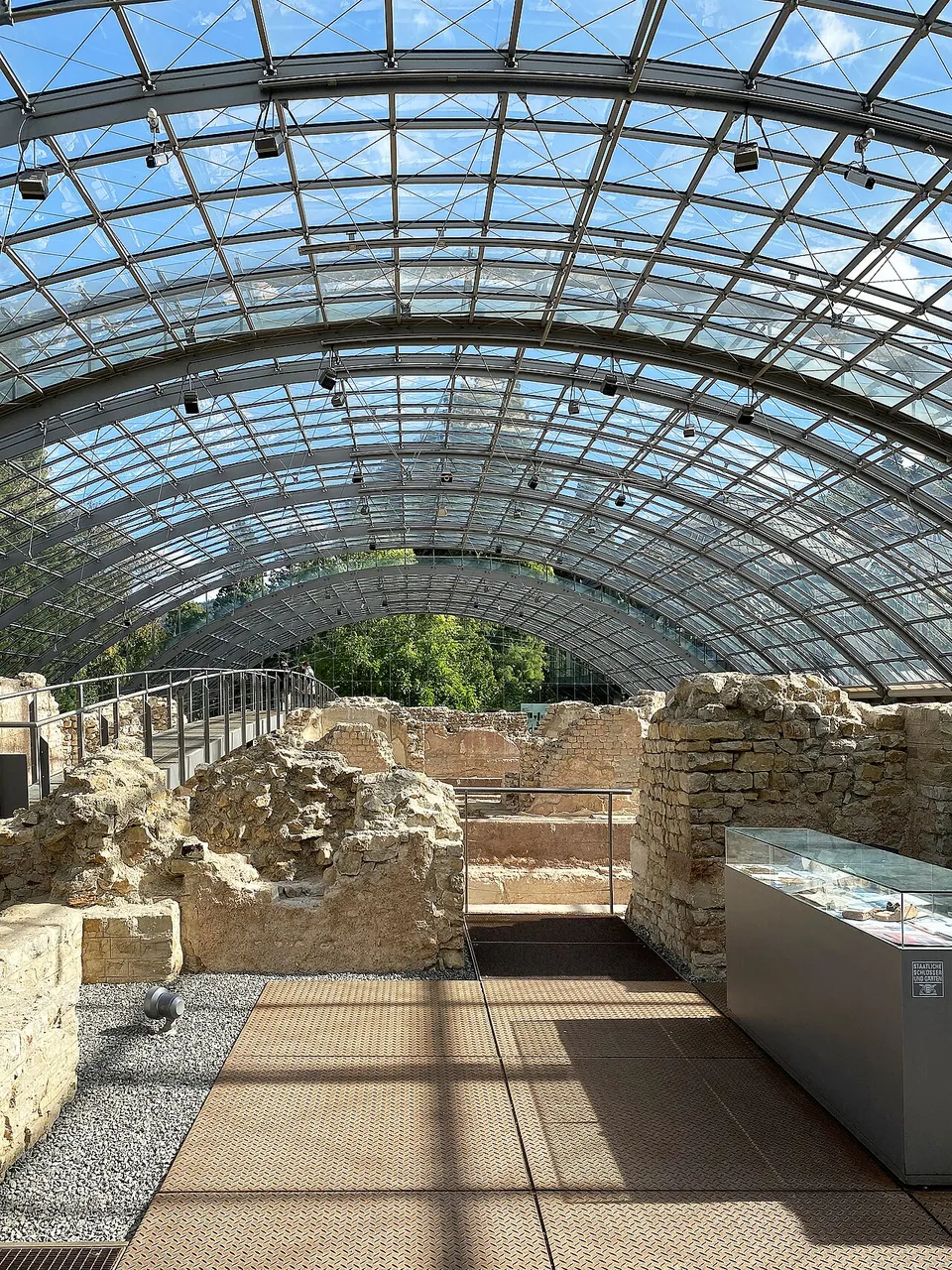
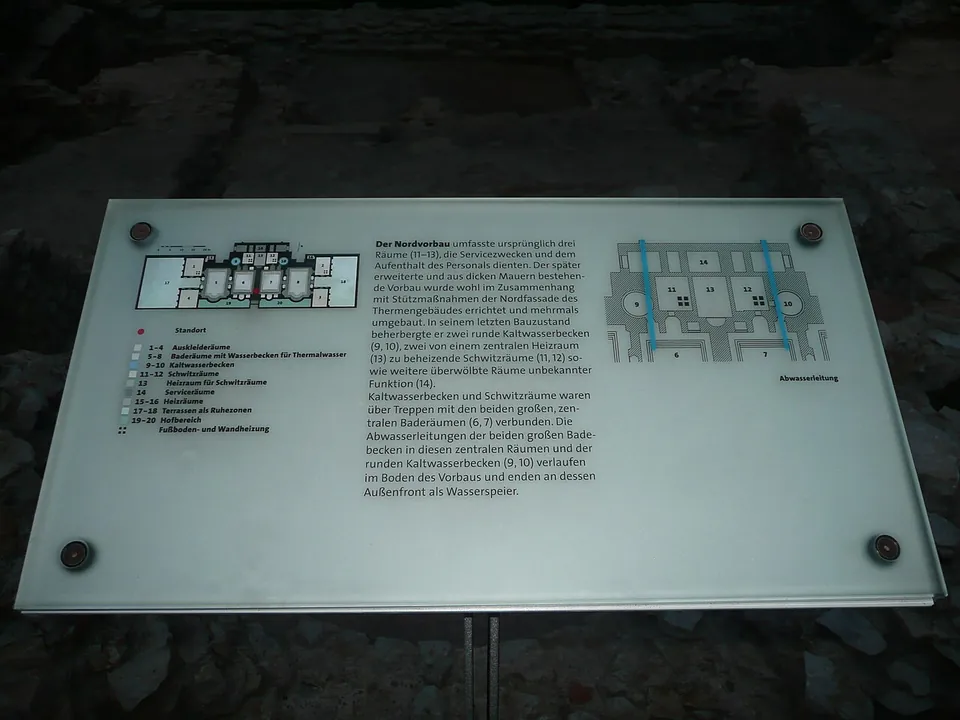
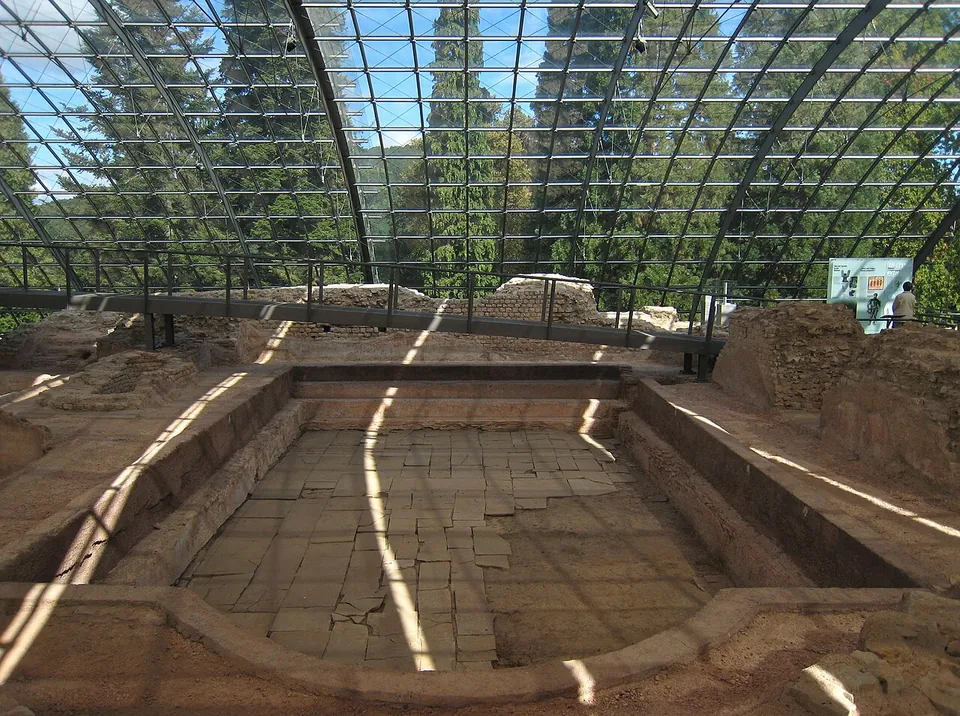
The ruin is the plan of the bath building laid out at ground level: wall stumps and the sunken bathing pools, some lined with limestone slabs (de.wikipedia). The pools for cold and warm water still have their original plastered surfaces (the operator). The building measured at least 93 by 33 m (de.wikipedia; the operator). The first bath building was symmetrical along a north–south axis, with two bathing halls side by side, each with a pool of about 60 m² and roughly a metre deep, so that men and women could bathe at the same time and still apart; a rebuilding added further pools of about 85 m², sweating rooms and two round cold baths (de.wikipedia). The operator calls the symmetrical plan unique in Germany.
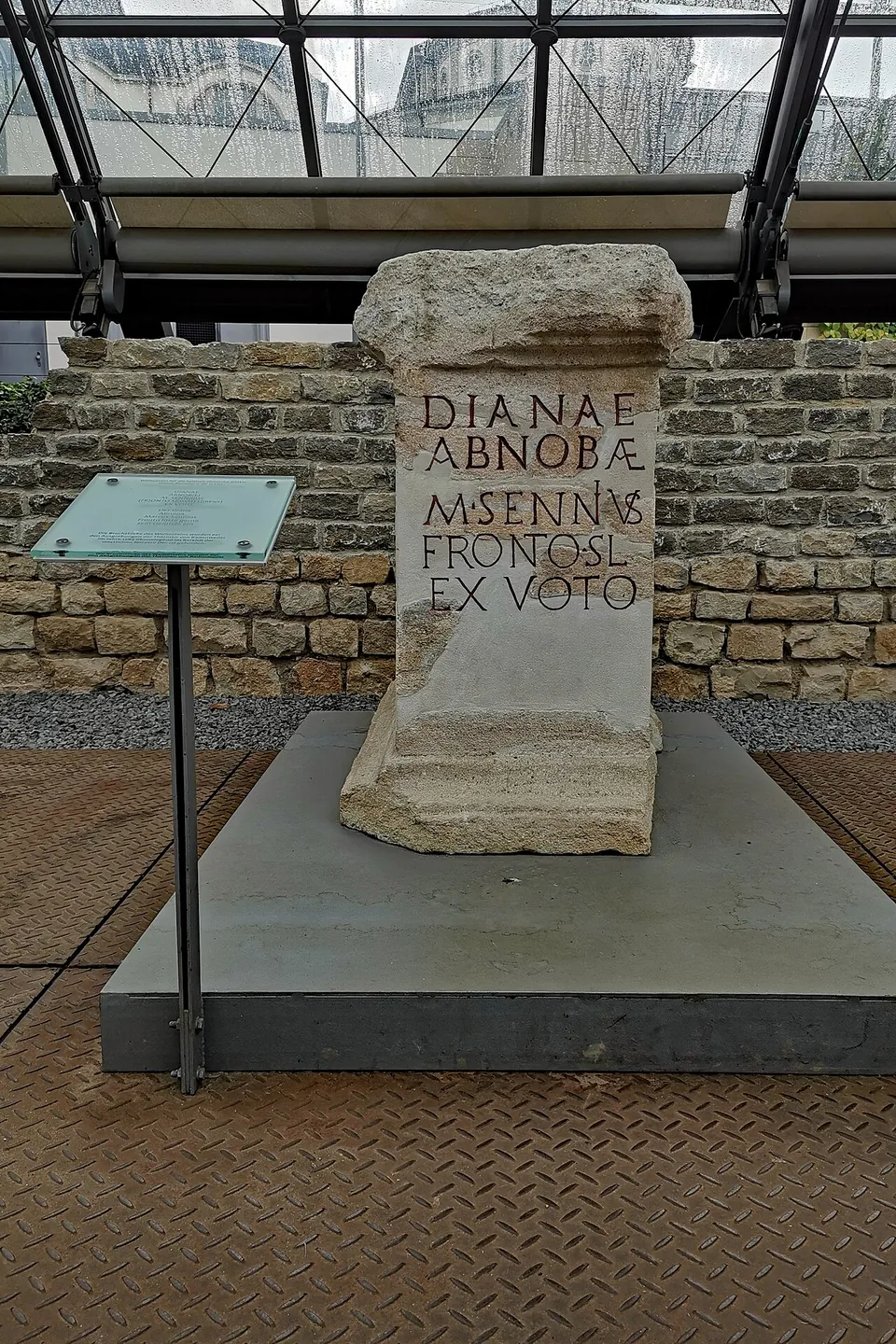
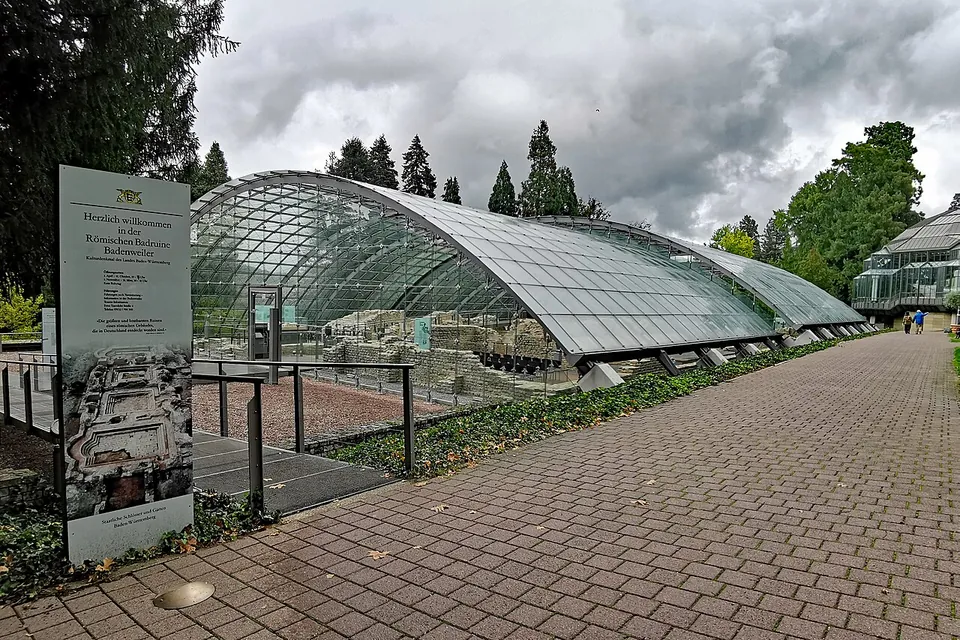
Over it all, since 2001, stands a roof of steel and 1,725 glass panes, designed to span the excavation without internal supports (the operator); walkways lead through the ruin beneath it. A permanent exhibition explains Roman bathing (de.wikipedia). de.wikipedia records an altar to the goddess Diana Abnoba that probably stood in one of the apses of the first building, and an altar with that dedication is displayed in the ruin. Under the building runs a vaulted drainage tunnel, about 140 m long and up to 3.70 m high, that wraps round three sides of it; it was restored with its original stones at the end of the 1990s (de.wikipedia) and can be walked on a guided tour (the operator).
Is it worth the trip?
Yes, if you are anywhere between Freiburg and Basel. de.wikipedia counts it among the best-preserved Roman baths north of the Alps, and the operator calls it the best preserved north of the Alps. What makes it unusually easy to read is the roof: you see the whole building at once, in any weather, on almost any day of the year, for €3.
Know what you are getting, though. These are low walls and empty pools, not roofed halls: the first building’s halls were about 12 m high (de.wikipedia), and what stands today is their lower walls. The drainage tunnel is shown only on a guided tour, so plan around the tour times if it matters to you. And the site is not accessible to wheelchair users. The spring still flows, and the town’s modern thermal baths stand right next door, so the visit pairs naturally with a bathe of your own.
Getting there
The ruin is in the spa park of Badenweiler, a spa town 3.5 km from Müllheim and roughly halfway between Freiburg im Breisgau and Basel (de.wikipedia; OpenStreetMap). Buses run from Müllheim station to Badenweiler (the operator); the nearest mapped stop, Evangelische Kirche, is about 130 m away (OpenStreetMap). By car, there are paid public car parks within walking distance, the nearest mapped one about 150 m away, and coaches and camper vans park free. By bicycle, ride to the Kurhaus and walk the last three minutes (the operator).
It is open every day: 10.00 to 19.00 from 1 April to 31 October, and 10.00 to 17.00 from 1 November to 31 March, closed when there is ice or snow. A ticket is €3, or €2.50 with the spa town’s guest card; reduced tickets are €1.50 (children from six, pupils and students up to 28, people with a disability of 50% or more), a family ticket is €7.50, and children under six go free. The 70-minute guided tour, which goes through the drainage tunnel, runs on Sundays at 11.00 all year and also on Tuesdays at 16.00 from April to October; it needs no booking and costs a second ticket of €2.50, or nothing with the guest card. The operator’s page on the buildings gives Tuesdays and Thursdays from March instead, so check the tour listing before going. Dogs are not allowed, nor are tripods or selfie sticks inside (the operator, read 1 November 2026).
Visiting details
- Opening hours
- Daily 10.00–19.00 from 1 April to 31 October, and 10.00–17.00 from 1 November to 31 March; closed in ice or snow.
- Tickets
- Adults €3, €2.50 with the Badenweiler spa guest card; reduced €1.50 (children from 6, pupils and students up to 28, people with a disability of 50% or more, volunteers); family ticket €7.50; free under 6. Adults count from 15. The 70-minute guided tour through the drainage tunnel is a second ticket of €2.50, free with the guest card; Sundays 11.00 all year, and Tuesdays 16.00 from April to October, no booking needed.
- Parking
- Paid public car parks within walking distance (the operator); the nearest mapped car park is about 150 m away (OSM way/32397372). Free parking for coaches and camper vans.
Before you go
- Not wheelchair accessible, because of the building as it stands (the operator).
- Dogs are not allowed, and tripods and selfie sticks are not allowed inside.
- The drainage tunnel is shown only on guided tours.
Hours and prices checked 1 November 2026 on the operator's own site. Confirm before travelling.
History
People used the springs before Rome: three Celtic coins have been found there. The Roman settlement was founded in the last quarter of the 1st century AD, probably because of the springs; there is no evidence that the army had a hand in it. It was built in terraces into the hillside, at least 450 by 400 m across, with workshops north of the baths, houses to the east, guest lodgings to the west and a temple precinct up the slope to the south. Its Roman name is not recorded; “Aquae Villae”, which turns up in popular literature, is a modern Latinisation of “Badenweiler” (de.wikipedia).
The first bath building dates from the second half of the 1st century. Early in the 2nd century, after the ground had subsided and probably because more people were coming, it was replaced by a larger complex, and the archaeologist Hermann Mylius, working in the 1930s, identified at least seven building phases in all. The spring, 26.4 °C today and delivering about a million litres a day, must have been warmer in Roman times, since the big pools had no furnaces of their own (de.wikipedia).
Most of the population probably left around 260, at the time of the Alamannic raids, but finds from the Merovingian period show that the baths, or parts of them, were still standing and in use into the 8th century (de.wikipedia). In the Middle Ages the dressed stones were taken for houses and above all for Badenweiler castle (the operator). Margrave Karl Friedrich of Baden had the ruin uncovered in 1784, documented and published; de.wikipedia calls this the first excavation and documentation of a Roman building in Germany. A first protective roof was blown down in a storm in 1828; a flat roof followed in 1953, and the glass roof in 2001 (the operator).
The temple up the slope fared worse. Its foundations, found in 1892 when the Protestant church was rebuilt on the site, were mostly destroyed in the building work, and only ten carved architectural fragments were saved; later digs in 1995–1998 traced what was left of its walls (de.wikipedia).
More photographs



Nearby
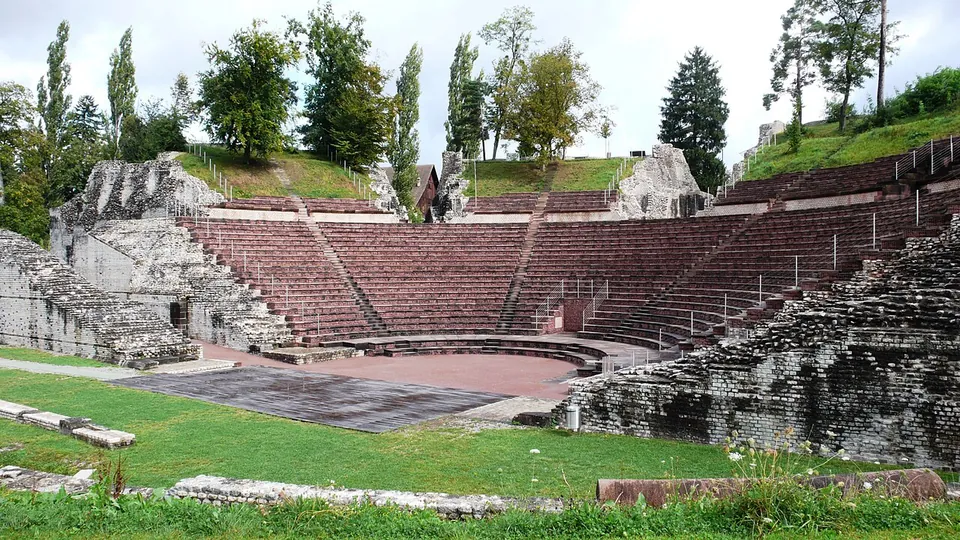
Photo: Guido Radig · CC BY-SA 3.0 · Commons
30 km · city · Liestal District, Basel-Landschaft
Augusta Raurica
The operator lists the open-air site, its protected monuments and an animal park as free, and the open-air site as open around the clock; fr.wikipedia puts the open-air sights at more than twenty.
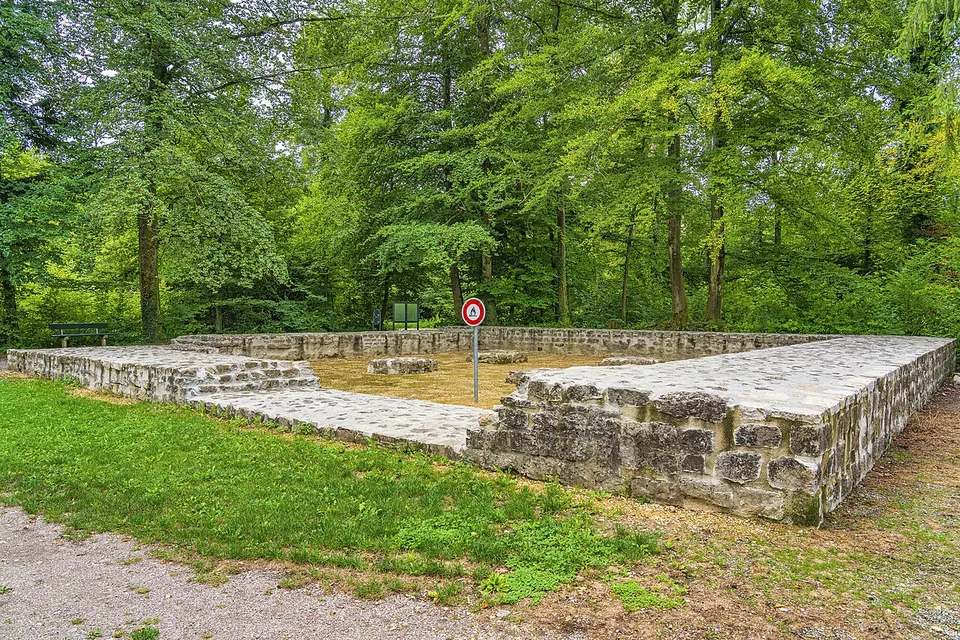
Photo: PantaRhei · CC BY-SA 4.0 · Commons
31 km · fort · Rheinfelden District, Aargau
Burgus of Wallbach-Stelli
Of the three Roman watchtowers known at Wallbach, only the burgus at Stelli has been fully excavated, conserved and partly reconstructed (de.wikipedia).
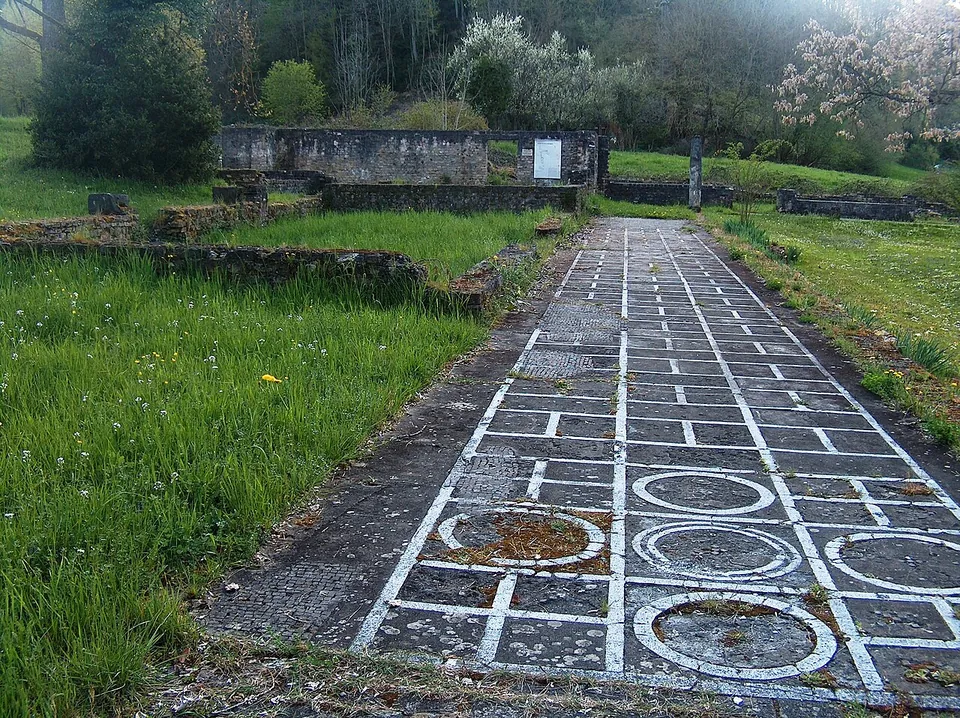
Photo: Umschattiger · CC BY-SA 3.0 · Commons
35 km · villa · Liestal District, Basel-Landschaft
Roman villa of Munzach
The estate measured about 160 by 320 m.


Straight-line distances.
Sources
Every fact on this page comes from the records below, each used under the licence noted.