
What is there today
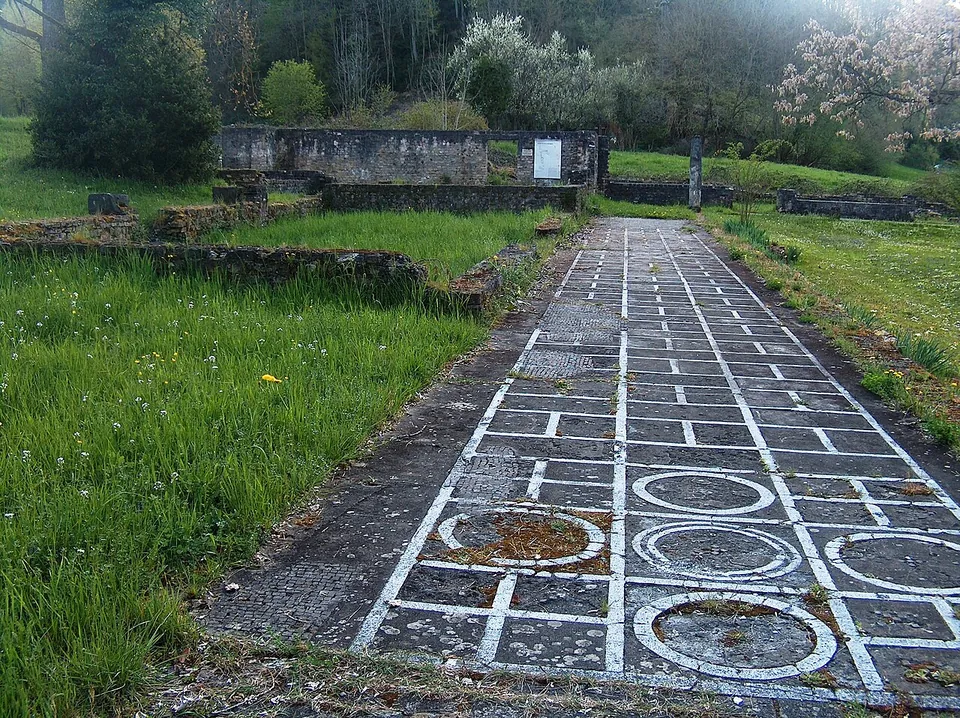
The estate measured about 160 by 320 m. Its main house was long, with at least ten rooms and a portico on the east, and was richly fitted with mosaics; a bath wing with its own portico, halls and working buildings were added at an angle to the east (HLS). The most important of the central buildings are preserved (HLS). A photograph from 2007 shows low conserved walls in a meadow and a long strip of patterned floor along one side (Wikimedia Commons).
Is it worth the trip?
Only if you are visiting Augusta Raurica or Liestal and want to see the countryside that fed the Roman town: the remains are walls at ground level, there is no museum on the spot, and no source publishes visiting arrangements. For most visitors Augusta Raurica is the better use of the day.
Getting there
The bus stop Munzach is mapped about 170 m from the ruins and a car park about 110 m (OpenStreetMap). No source publishes opening times or a charge.
Visiting details
- Opening hours
- No source publishes visiting hours; the remains are outdoors.
- Tickets
- No charge is published or mapped.
- Parking
- A car park about 110 m away (OpenStreetMap, way/256508109).
History
The villa stood where the Bienental and the Röserntal meet, at the edge of the Ergolz valley, an hour’s walk south of Augusta Raurica; it existed from the first half of the 1st century to the 4th century, and was almost entirely excavated by 1974 (HLS). Pleiades dates it from the middle of the 1st century and records that it was sacked around 259. In Roman times it was called Montiacum (de.wikipedia). The national inventory lists the estate together with a medieval settlement and its church of St. Laurentius (KGS 1464).
Nearby
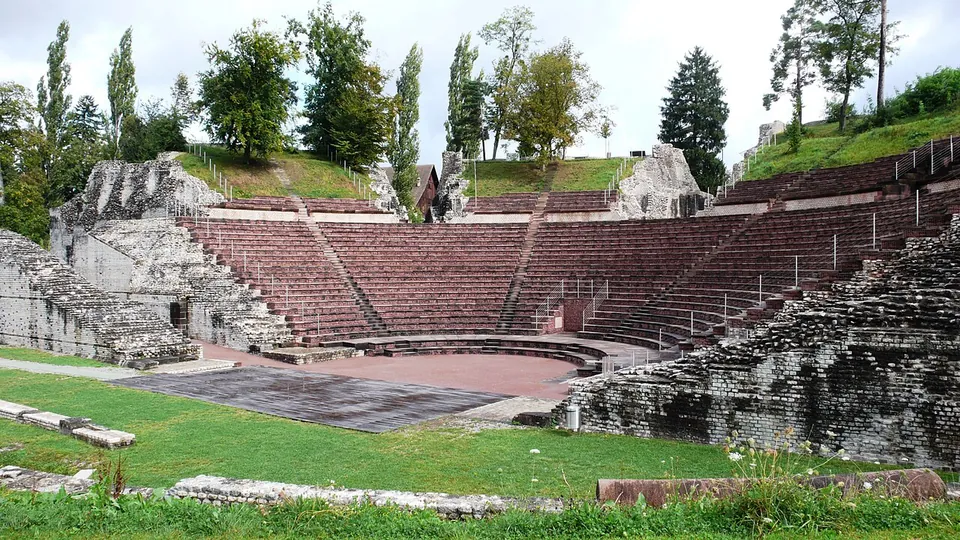
Photo: Guido Radig · CC BY-SA 3.0 · Commons
5 km · city · Liestal District, Basel-Landschaft
Augusta Raurica
The operator lists the open-air site, its protected monuments and an animal park as free, and the open-air site as open around the clock; fr.wikipedia puts the open-air sights at more than twenty.
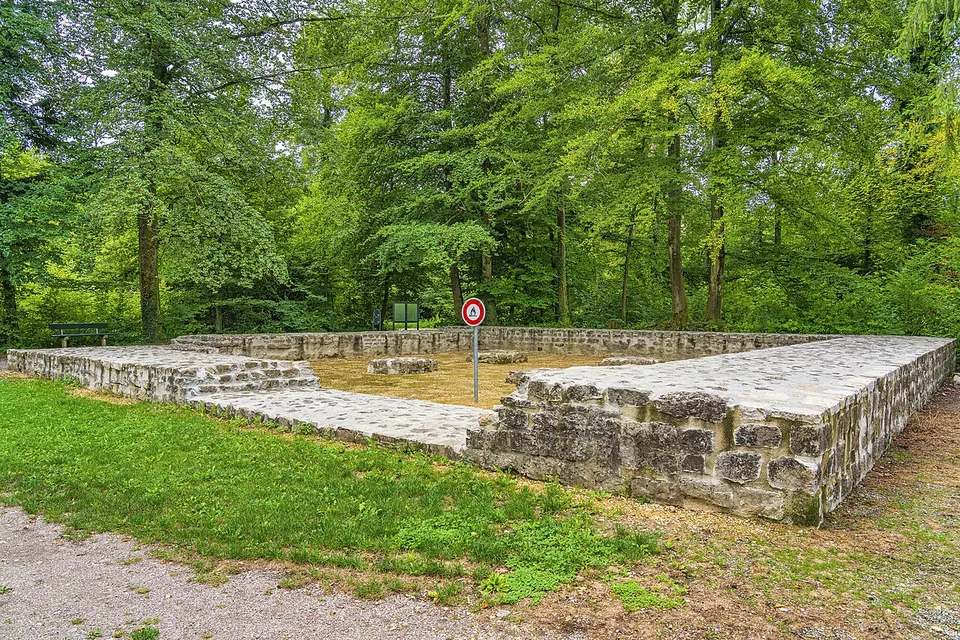
Photo: PantaRhei · CC BY-SA 4.0 · Commons
17 km · fort · Rheinfelden District, Aargau
Burgus of Wallbach-Stelli
Of the three Roman watchtowers known at Wallbach, only the burgus at Stelli has been fully excavated, conserved and partly reconstructed (de.wikipedia).
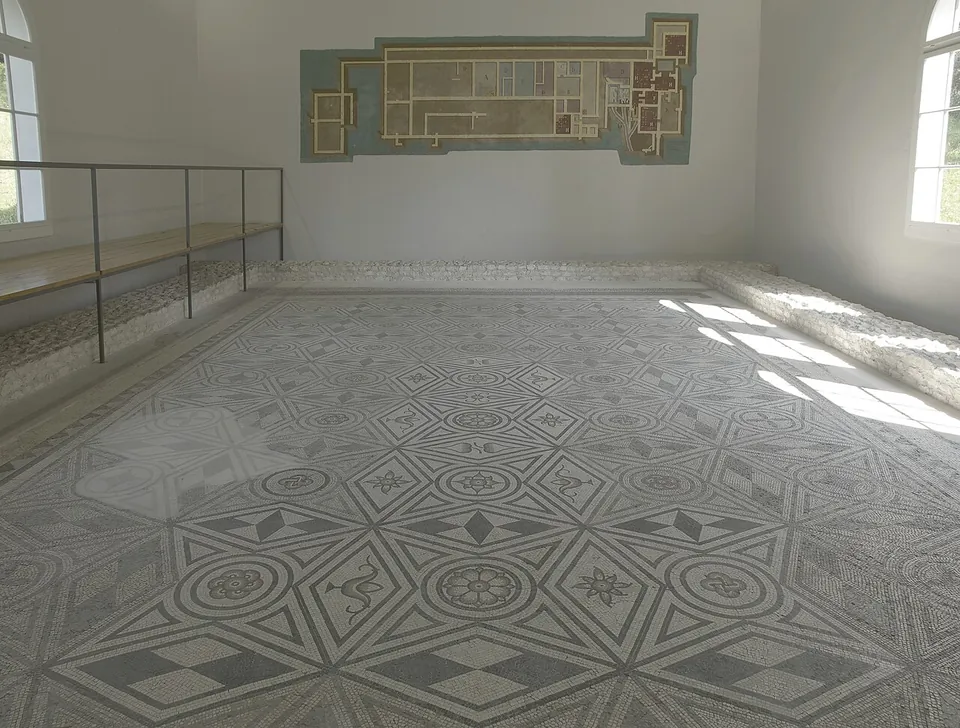
Photo: Minnou · CC BY-SA 3.0 · Commons
29 km · villa · Zofingen District, Aargau
Roman villa of Zofingen
Three well-preserved mosaic floors, with chequerboard, lozenge and trapezoid patterns and floral motifs, are kept visible in two matching classical shelters (Canton of Aargau Denkmalpflege).


Straight-line distances.
Sources
Every fact on this page comes from the records below, each used under the licence noted.
| Source | Licence |
|---|---|
| Pleiades 177561 | CC BY |
| Wikidata Q17041699 | CC0 |
| OpenStreetMap node/2097796902 | ODbL |
| Wikipedia (de) — Villa Rustica (Munzach) | CC BY-SA 4.0 |
| Wikipedia (fr) — Villa romaine de Munzach | CC BY-SA 4.0 |
| Historisches Lexikon der Schweiz — Munzach (Jürg Tauber) | licence not recorded |
| KGS inventory 1464 — Munzach, römischer Gutshof (BABS) | licence not recorded |