What is there today
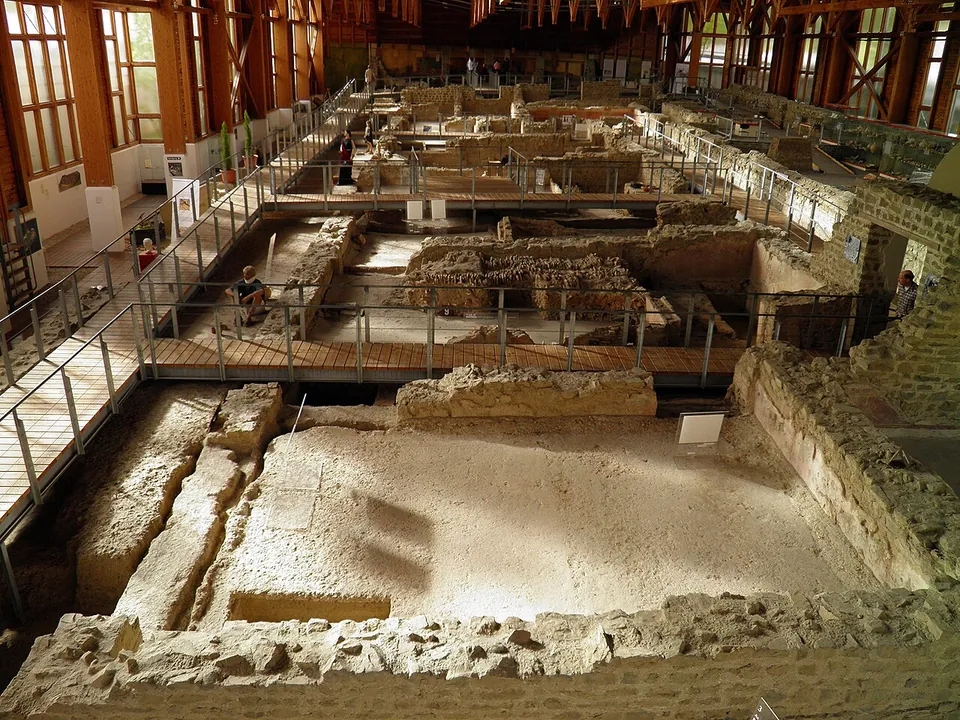
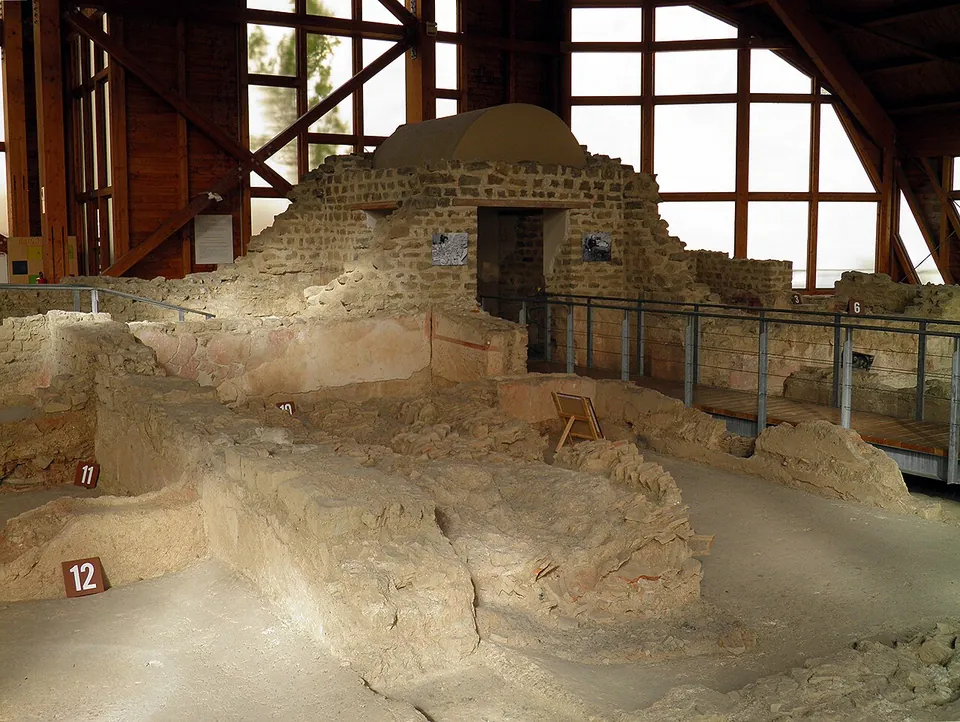
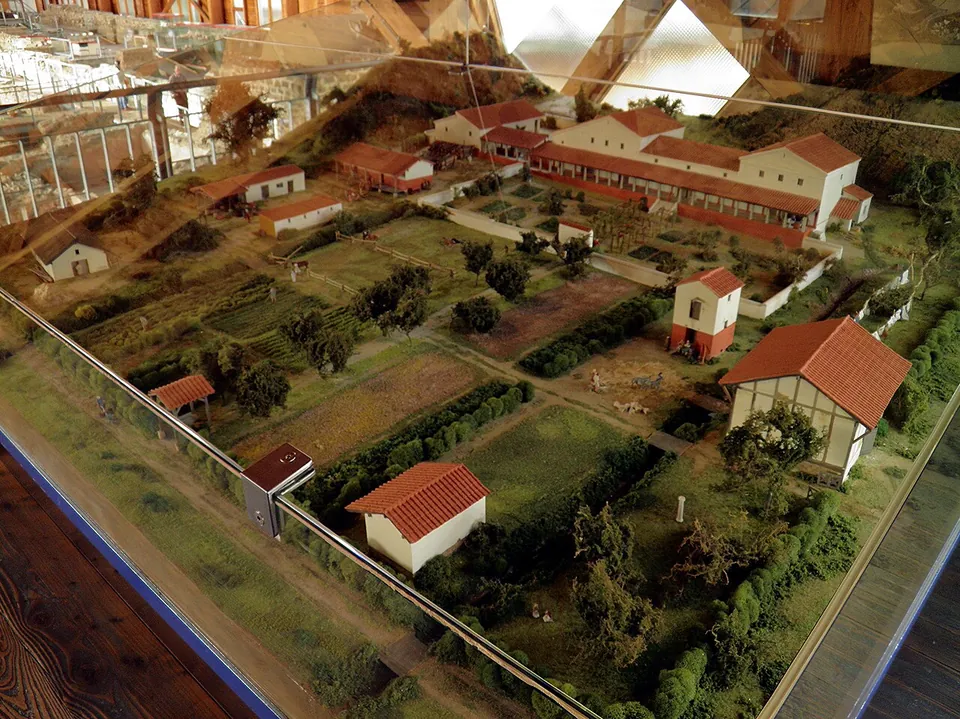
The house is 72 m long and 18 to 20 m deep (de.wikipedia), and walkways take you through and over its rooms. When it was found its walls still stood up to 1.5 m high, and the excavators could trace many of the window openings. What sets the site apart is how much detail survived: unusually well-kept painted plaster, underfloor heating in places in excellent condition, and, from the building’s later life as an inn, a kitchen with its hearth and oven. One small barrel-vaulted room has been rebuilt to its full height with its painted decoration, as an example of what the original evidence allows (de.wikipedia). A model of the whole estate, an audio-visual presentation and changing exhibitions on archaeological themes complete the museum (the operator).
Do not come for mosaics: the excavators did not find a single mosaic tessera anywhere on the site. The floors were stone - polished limestone, slate and marble - and the walls were painted (de.wikipedia). Some of the wall paintings were lifted after the discovery to save them; they are being restored in 2026 and are due to return to the museum afterwards (the operator).
Is it worth the trip?
Yes, if you are in the Ahr valley, and it is worth a short detour from the Rhine: the Ahr meets it about 15 km to the east (de.wikipedia). This is not a ruin field but the conserved interior of a well-to-do Roman house, roofed over, so rain does not spoil it. Its appeal is the domestic detail - painted plaster, heating, the inn’s kitchen - rather than grand architecture. Mind the season: it shuts to individual visitors from mid-November to early March.
Getting there
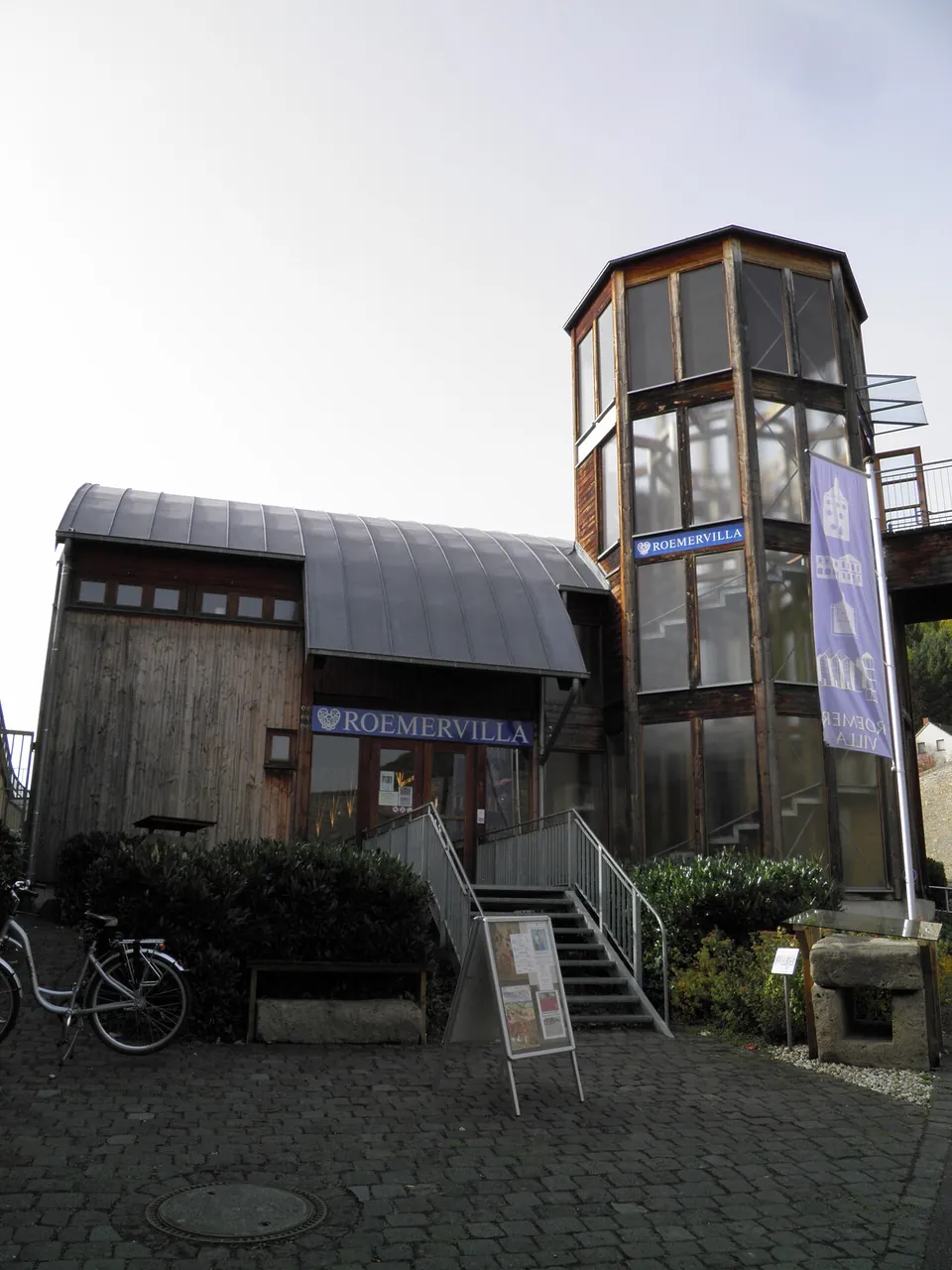
The museum is at Am Silberberg 1 on the north-western edge of Ahrweiler. A car park, Parkplatz Römervilla, is about 110 m away, and the bus stop Ahrweiler Obertor/Am Silberberg about 150 m (OpenStreetMap). The route through the rooms is largely accessible to visitors with disabilities (the operator).
It is open Tuesday to Sunday, 10.00 to 17.00, public holidays included, with last entry 40 minutes before closing. From 16 November 2026 it is closed to individual visitors until early March; groups can still book guided tours in the winter. Admission is €7, €3.50 for pupils, students and severely disabled visitors, €14 for a family, and free under six. Public guided tours run on Wednesdays, Saturdays and Sundays at 14.30 during the season for €3 on top of the ticket, without booking (bad-neuenahr-ahrweiler.de, read 30 October 2026 - check before travelling).
Visiting details
- Opening hours
- Tuesday to Sunday 10.00–17.00, closed Mondays; open on public holidays, Easter Monday and Whit Monday included. Last entry 40 minutes before closing. Closed to individual visitors for the winter from 16 November 2026 until early March; groups can book guided tours during the winter break.
- Tickets
- €7; €3.50 for pupils, students and severely disabled visitors; family ticket €14 (up to two adults with children under 14); under-6s free. Bad Neuenahr-Ahrweiler guest-card and spa-card holders pay €6, GrünCard holders €6.30. Public guided tours on Wednesdays, Saturdays and Sundays at 14.30 during the season, €3 (children up to 16, €2) on top of admission, no booking needed.
- Parking
- Car park "Parkplatz Römervilla" about 110 m from the museum (OSM way/159225945).
Before you go
- Closed from 16 November to early March except for booked group tours.
Hours and prices checked 30 October 2026 on the operator's own site. Confirm before travelling.
History
The first house on the site was built around the middle of the 1st century AD, with a separate bath building whose round sweating room survives in its full plan. In the second half of the century it was pulled down and replaced by a portico villa: a long half-timbered house on a masonry base, its colonnade facing south over the valley; the colonnade was later lengthened by 13 m to the west to reach the bath. Its rooms were painted with candelabra, imitation marble, a cycle of the seasons and circus scenes with charioteers (de.wikipedia).
Around 259/60 the owners cleared the house in an orderly way and apparently never came back; the archaeologists put this down to the growing Germanic raids of the time. Towards the end of the 3rd century the decaying building was repaired as an inn (mansio), used until about 350, with a kitchen, a room taken to be a shop for travellers, a latrine and a staircase whose fallen half-timbered wall preserved the room height of 3.5 m. In the second half of the 4th century metal smelters set up their furnaces across the ruins. Lead slag lay by almost every furnace, and the findings suggest silver ore from the Silberberg was smelted here, although some summaries of the site describe an iron smelter. That phase ended around 400, and scree from the hill slowly buried the site. In the 7th and 8th centuries a Christian cemetery of 32 graves was dug into the rubble over the bath (de.wikipedia).
The house was found on 23 March 1980, when diggers building a slip road for the B 267 cut into Roman walls and carted painted plaster off to the tip. A volunteer for the Koblenz heritage office who happened to be there, Carl-Heinz Albrecht, stepped in, and the work was stopped the next day. The road was rerouted, a protective building put up, and the house excavated in eleven seasons up to 1990 under Horst Fehr (de.wikipedia). It has been open to visitors since May 1993 (the operator).
More photographs
Nearby
11 km · fort · Rhineland-Palatinate
Rigomagus
The Römisches Museum occupies a 15th-century chapel on Kirchstraße.
Photo: Klaus Littmann · CC BY-SA 3.0 · Commons
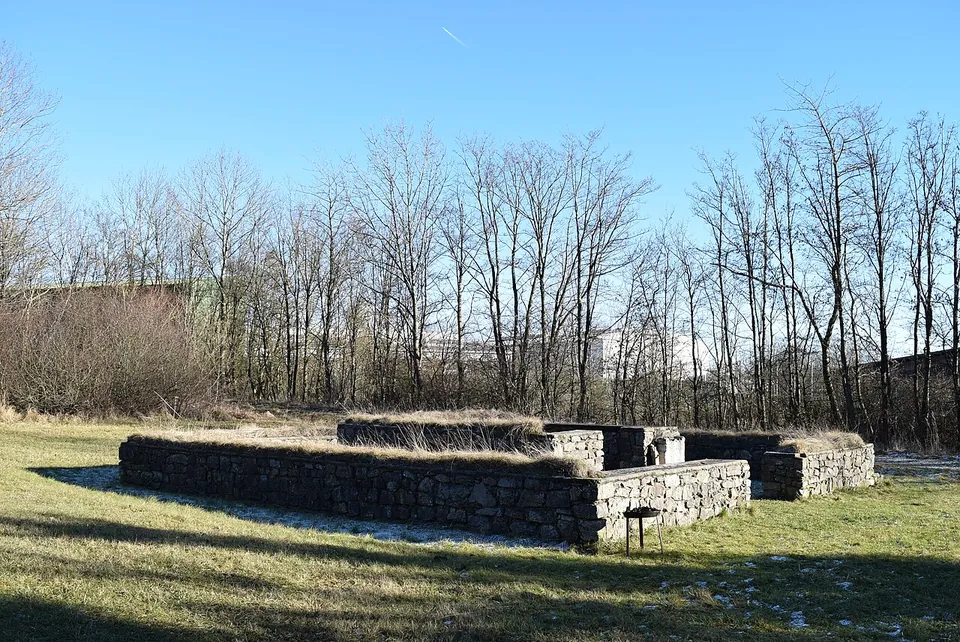
Photo: Marcin-Janek · CC BY-SA 4.0 · Commons
31 km · temple · North Rhine-Westphalia
Tempelheiligtum Zingsheim
Two squares of grey rubble wall, one inside the other.


Straight-line distances.
Sources
Every fact on this page comes from the records below, each used under the licence noted.
| Source | Licence |
|---|---|
| Pleiades 108786 | CC BY |
| Wikidata Q2179672 | CC0 |
| OpenStreetMap way/40804920 | ODbL |
| Wikipedia (de) — Römervilla von Bad Neuenahr-Ahrweiler | CC BY-SA 4.0 |
| Wikipedia (it) — Museum Römervilla | CC BY-SA 4.0 |
| Stadt Bad Neuenahr-Ahrweiler — Römervilla Ahrweiler (hours, prices, tours; the operator) | licence not recorded |