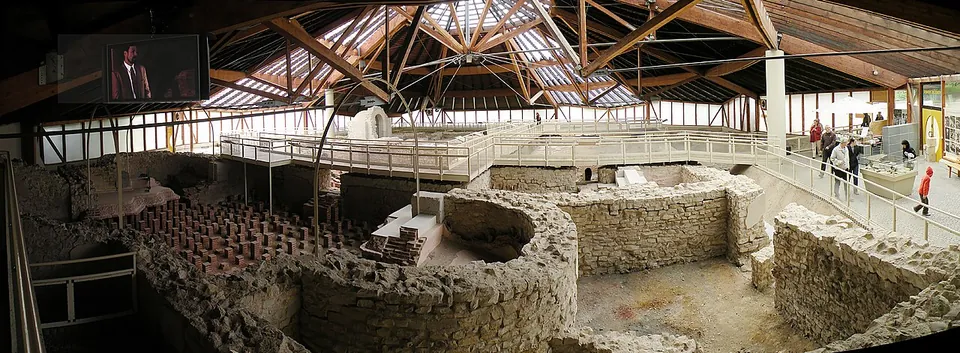


The Römische Thermen in Weißenburg in Bayern are the excavated remains of the large bath house of Roman Biriciana, the frontier post of a cavalry fort and its civilian settlement on the northern border of the province of Raetia, now kept under a tent-shaped roof as a museum (de.wikipedia; the operator). The museum opens only from 15 March to 15 November, Tuesday to Sunday; the operator publishes no hours for the rest of the year, so expect it to be shut from mid-November to mid-March (the operator).
What is there today
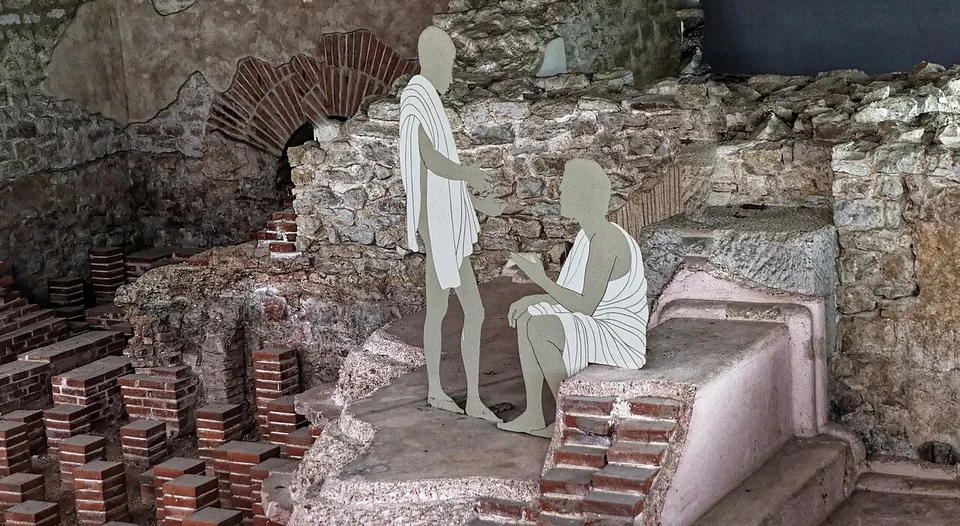
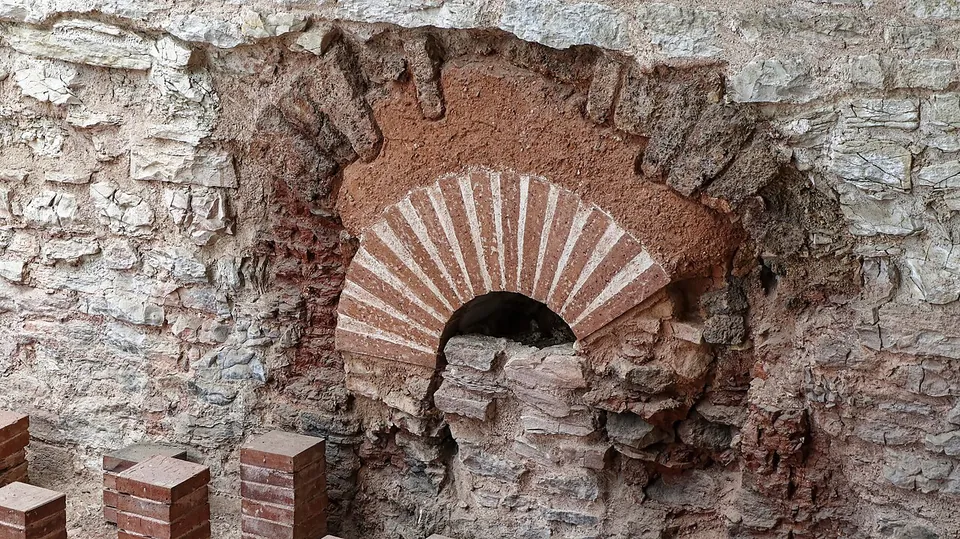
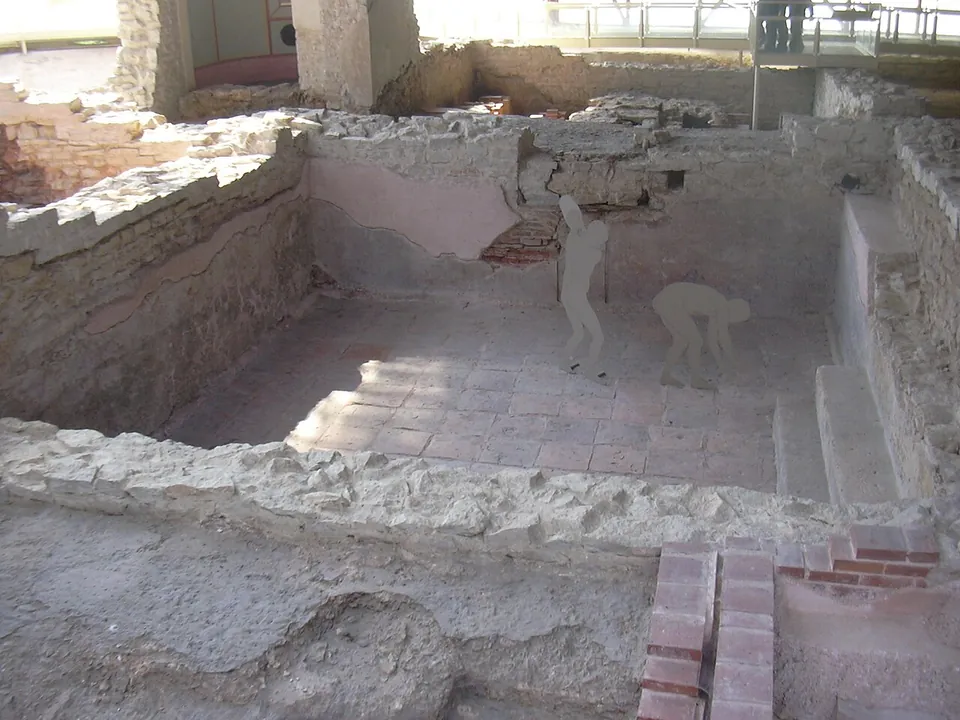
The ruins lie under the protective building, and you see them from a fixed circuit of walkways above them (de.wikipedia; the operator): the walls of the bathing rooms, their pools, and the rows of short brick pillars of the underfloor heating (hypocausts). The core of the bath as it was enlarged around AD 130 can still be followed on the ground (de.wikipedia). The east side is all from the last rebuilding: a sauna, a winter changing room and the large cold room, whose pool of 8.80 by 7.70 m is the biggest in the baths, though only 60 cm deep; its floor of Solnhofen limestone slabs has been partly restored (de.wikipedia).
Not all of it is original. The baths were conserved and partly rebuilt by the Bavarian heritage office in the 1980s (the operator). Original floors survive in the small cold room, laid in brick, and in a later sauna, while the heated floor of the hot room and the cold room belonging to that sauna are reconstructions; of the round sweating room only a few foundation walls stand (de.wikipedia). Modern additions and a graphic guidance system show how the bathing and service rooms were fitted out and used, and plans and reconstructions explain the building phases (the operator). Since 2012 a new entrance building has received visitors, with an information wall and a 20-minute film reconstructing Roman Weißenburg; the operator’s page still carries a note that the film wall was being refurbished and expected back from June 2025 (the operator).
Is it worth the trip?
Yes, if you are anywhere near Weißenburg. The operator counts these among the best-preserved and most important baths in southern Germany, and de.wikipedia among the few that survive on German soil. Everything is under one roof, so the visit works in any weather while it is open.
What makes the day is that the town has three Roman sights. The fort, with its rebuilt north gate, is about 300 m away, and the RömerMuseum in the town centre holds the Weißenburg treasure, which turned up in a garden near the baths in 1979 (de.wikipedia). One €10 ticket covers the baths and the museum (the operator). The one catch is the season: the baths open only from mid-March to mid-November and never on Mondays; between mid-November and mid-March the fort area is open but the baths are not.
Getting there
The baths are on the south-western edge of the town, at Am Römerbad 17a (the operator). From Weißenburg i. Bay. station it is a 5–10 minute walk, and the bus stop “Römische Therme” is about 140 m from the entrance (the operator; OpenStreetMap). Drivers park in the operator’s car park directly at the baths on Gunzenhausener Straße, which also takes coaches; from there the fort is about five minutes on foot (the operator).
The baths open Tuesday to Sunday, 10.00 to 17.00, from 15 March to 15 November; the operator gives no opening hours for the rest of the year. A ticket is €4, reduced €2.50 and €8 for a family of two adults and two children; children up to six go free. The €10 Museumsticket (reduced €6, family €19) gives one visit each to the baths, the RömerMuseum and the ReichsstadtMuseum within a month (museen-weissenburg.de, read 31 October 2026 — check before travelling).
Visiting details
- Opening hours
- Tuesday to Sunday 10.00–17.00, from 15 March to 15 November. Closed on Mondays.
- Tickets
- €4, reduced €2.50, family €8 (two adults and two children aged 6–17, €2 for each further child); children up to 6 free. A €10 Museumsticket (reduced €6, family €19) covers the baths, the RömerMuseum and the ReichsstadtMuseum, one visit each within a month.
- Parking
- The operator's car park is directly at the baths, on Gunzenhausener Straße, with space for coaches; the fort is about five minutes' walk from there. The bus stop "Römische Therme" is about 140 m from the entrance (OpenStreetMap).
Before you go
- The baths are a seasonal museum. The operator publishes opening hours only for 15 March to 15 November, so plan on finding them shut from mid-November to mid-March; the fort area 300 m away is open all year.
Hours and prices checked 31 October 2026 on the operator's own site. Confirm before travelling.
History
The baths were found in March 1977, while a housing estate was being built, and were the largest bath of a fort settlement then known in Raetia. Because of their importance and good state of preservation they were given a temporary roof in 1983, restored by 1985 and finally enclosed in the present protective building (de.wikipedia).
Three building phases have been identified (de.wikipedia). The first bath, a simple row of rooms, went up around AD 90, at the same time as the fort, and little of it remains. Around 130 it was much enlarged with a hot room, two warm rooms, a round sweating room, a cold room, a hall (basilica) surrounded by a portico, and a smithy that made nails, clamps and fittings; its site still shows as a conical hollow. After that building was destroyed, probably in the Marcomannic Wars, a far larger and more luxurious bath of the ring type, 65 by 42.5 m, was built around 180. A ring plan let a bather choose: from the cold pool to the hot room by a short way through a small warm room, or the long way round through the other warm rooms and the sauna.
Some of the pools and floors were lined with polished limestone slabs, the rooms were painted, and glass windows held the heat. They were fired day and night with wood and charcoal, because a building that had cooled down would have taken days to warm again, and it has been estimated that about a hectare of forest had to be cleared each year to keep them running. Hairpins, perfume flasks and pottery found in the two drains that ran through the hall are now in the RömerMuseum (de.wikipedia).
The baths were badly damaged around 230 in the Alamannic raids and given up in 258/59; after that only a few surviving rooms were used, and not for bathing (de.wikipedia). New excavations in front of the baths have shown that they stood in the middle of a densely built settlement (the operator).
More photographs


Nearby
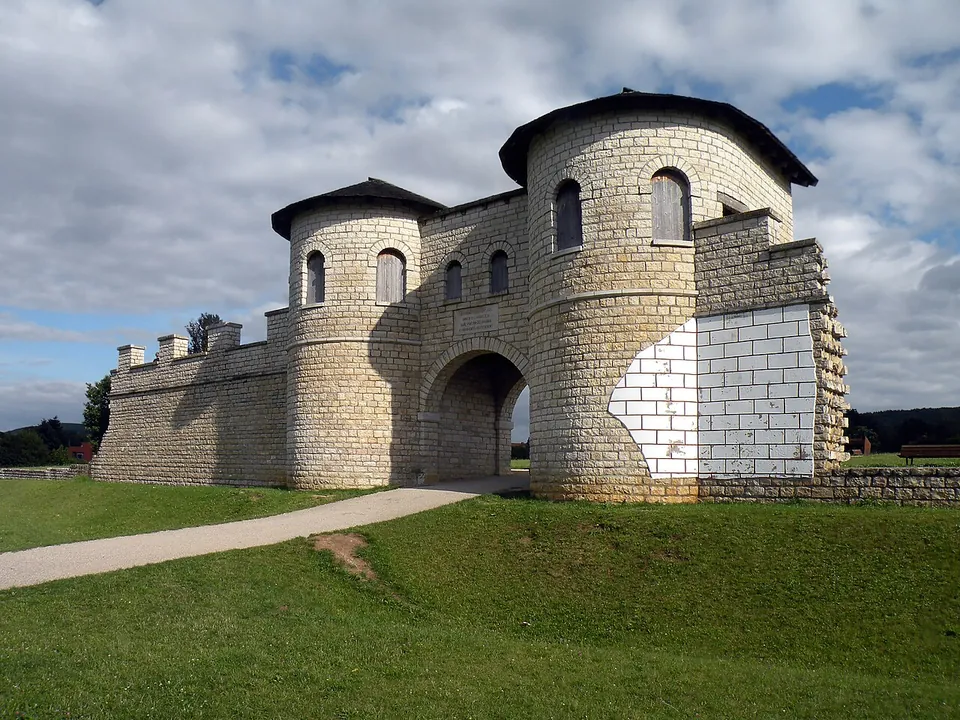
Photo: Vitold Muratov · CC BY-SA 3.0 · Commons
1 km · fort · Bavaria
Weißenburg Roman Fort
The fort's whole area, about 3.1 hectares, is kept free of building as a public park (Deutsche Limeskommission).
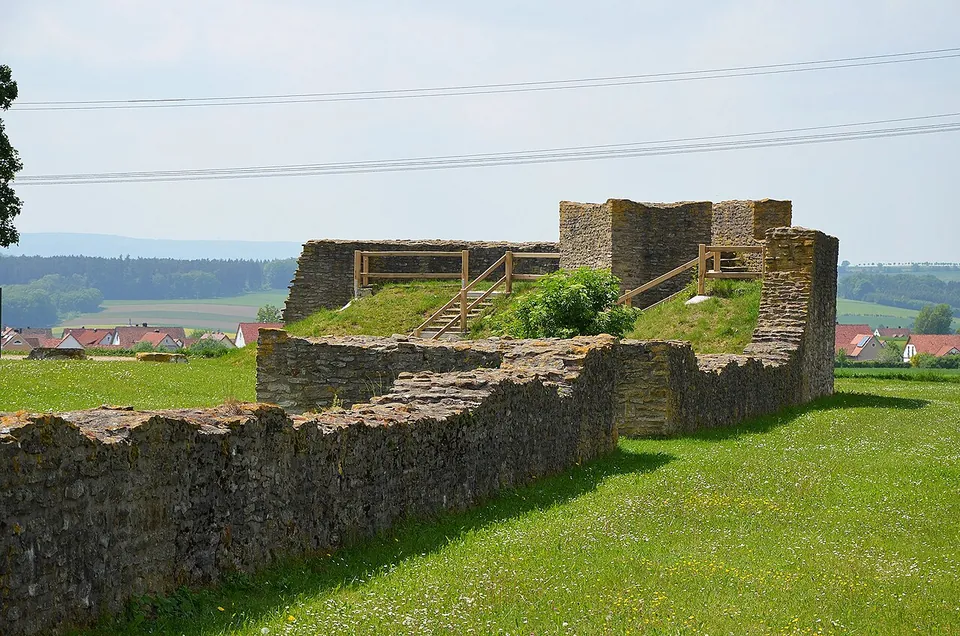
Photo: Carole Raddato · CC BY-SA 2.0 · Commons
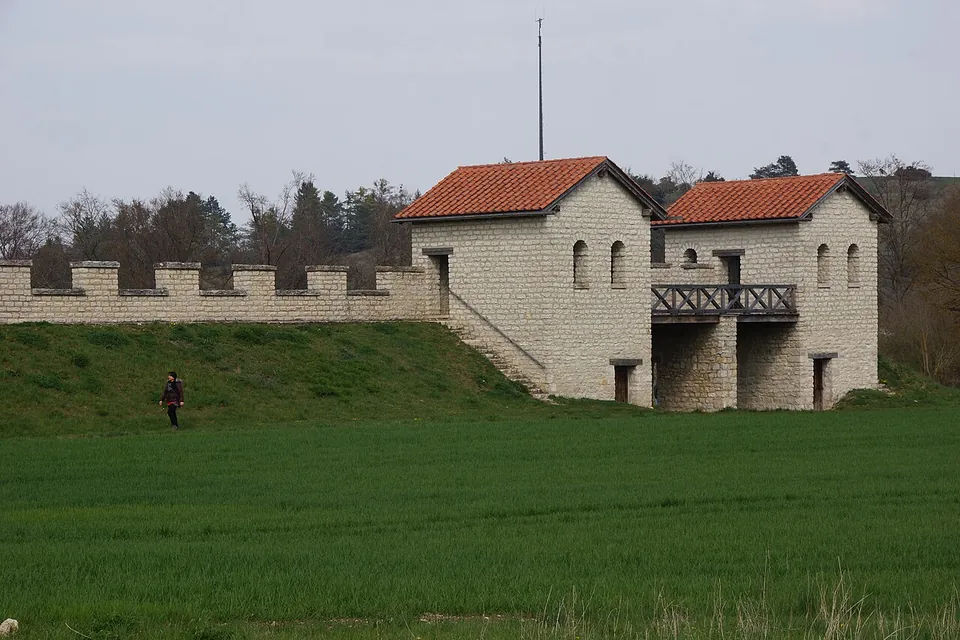
Photo: DALIBRI · CC BY-SA 4.0 · Commons
28 km · fort · Bavaria
Pfünz Roman Fort
The rebuilt north gate, north-west corner tower and stretch of wall are the set piece (de.wikipedia; Naturpark Altmühltal).


Straight-line distances.
Sources
Every fact on this page comes from the records below, each used under the licence noted.
| Source | Licence |
|---|---|
| Wikidata Q638130 | CC0 |
| OpenStreetMap way/31084304 | ODbL |
| Wikipedia (de) — Römische Thermen (Weißenburg) | CC BY-SA 4.0 |
| Wikipedia (de) — Kastell Weißenburg | CC BY-SA 4.0 |
| Wikidata — Bodendenkmal D-5-6931-0224 (Q98260801, the Bavarian register entry for the baths) | licence not recorded |
| Museen Weißenburg — Römische Thermen (the operator) | licence not recorded |
| Museen Weißenburg — opening hours | licence not recorded |
| Museen Weißenburg — admission prices | licence not recorded |
| Museen Weißenburg — getting there and parking | licence not recorded |