

What is there today
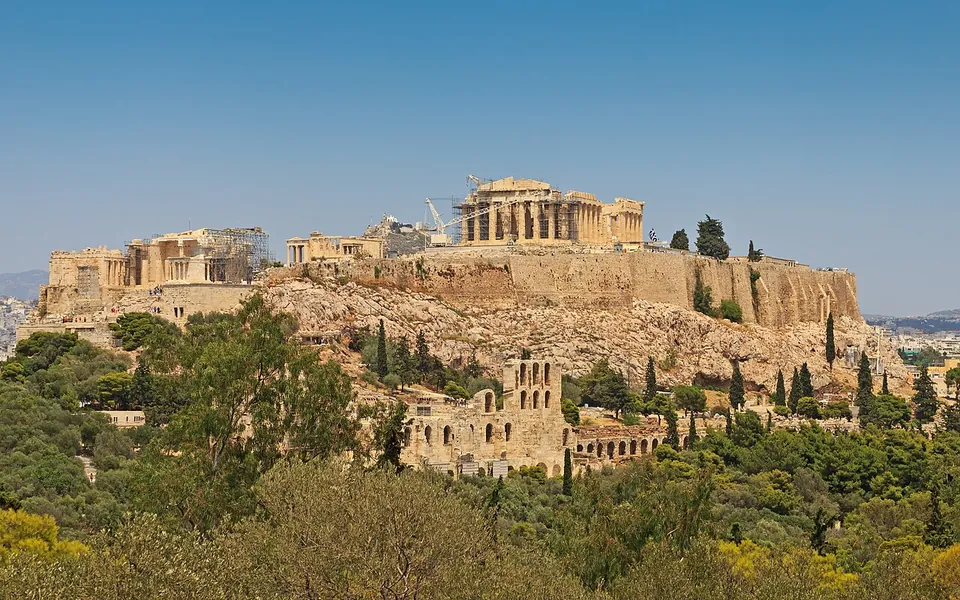
The summit belongs to the 5th century BC. The buildings that stand there - the Parthenon, the Propylaea, the Erechtheion and the Temple of Athena Nike - are the ones Pericles had built (en.wikipedia). The Roman additions are smaller, and you have to know where to look.
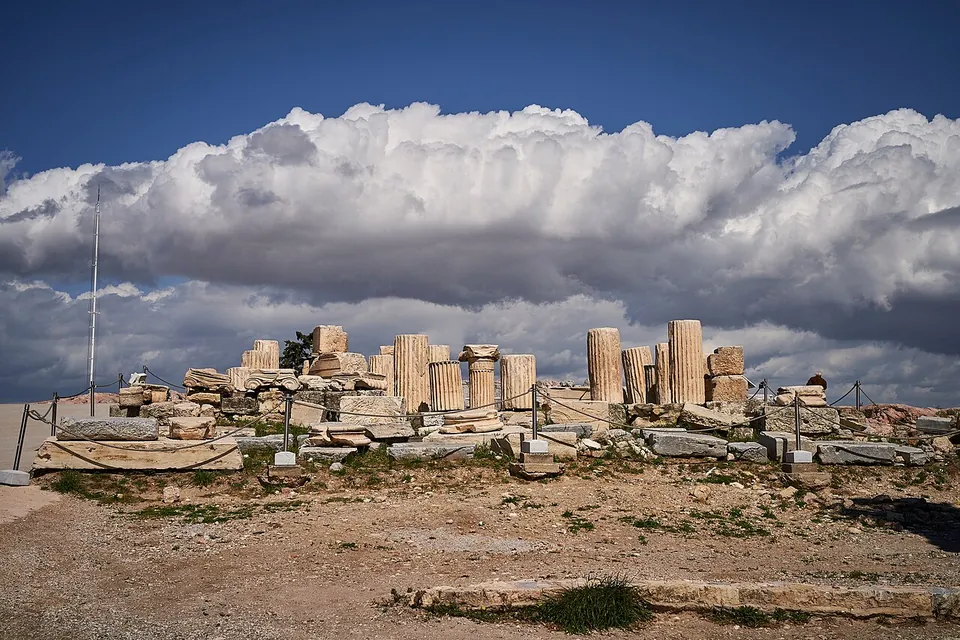
The Temple of Roma and Augustus was a round temple of Ionic columns, built around 19 BC 23 m east of the Parthenon’s eastern entrance and in line with it. It declared the divinity of Rome and the cult of the emperor in the religious heart of the Acropolis, at a time of tension between Rome and Athens; its ruins remain on the summit (en.wikipedia). Pleiades dates it to shortly after 27 BC.
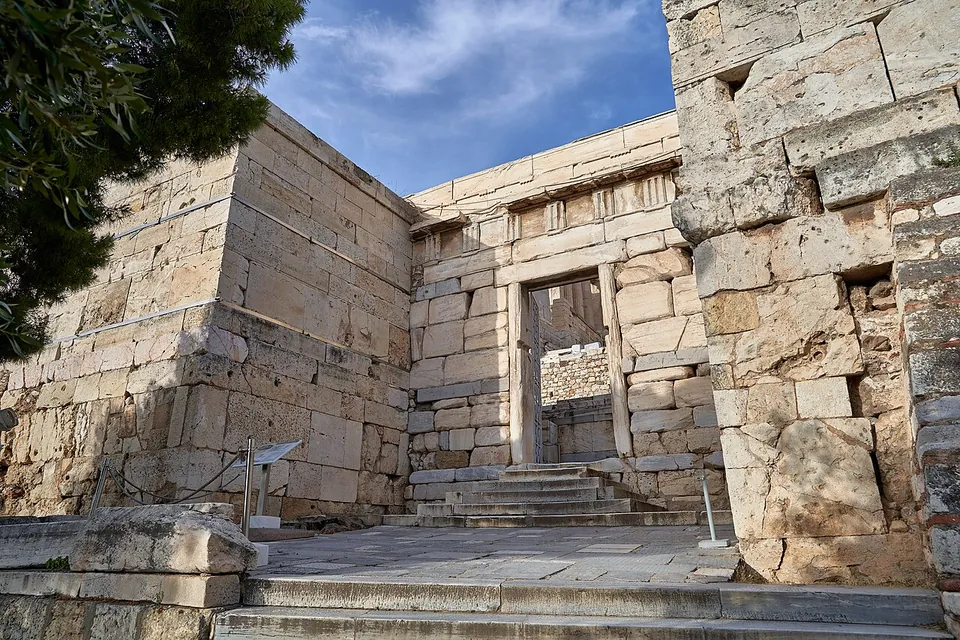
The Beulé Gate mainly serves today as the way out. It was built in the Roman period, almost entirely from the stones of the Choragic Monument of Nikias, a 4th-century BC monument demolished between the 2nd and the 4th century AD, and Nikias’s dedicatory inscription can still be read in its entablature. The gate was part of the wall built round the Acropolis after the Heruli sacked Athens in 267 or early 268 (en.wikipedia).
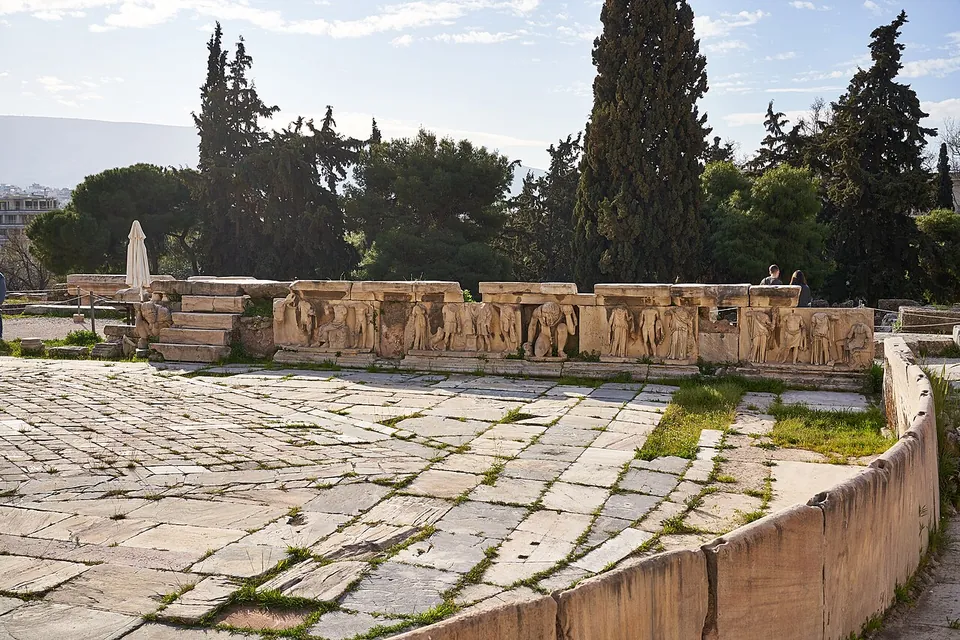
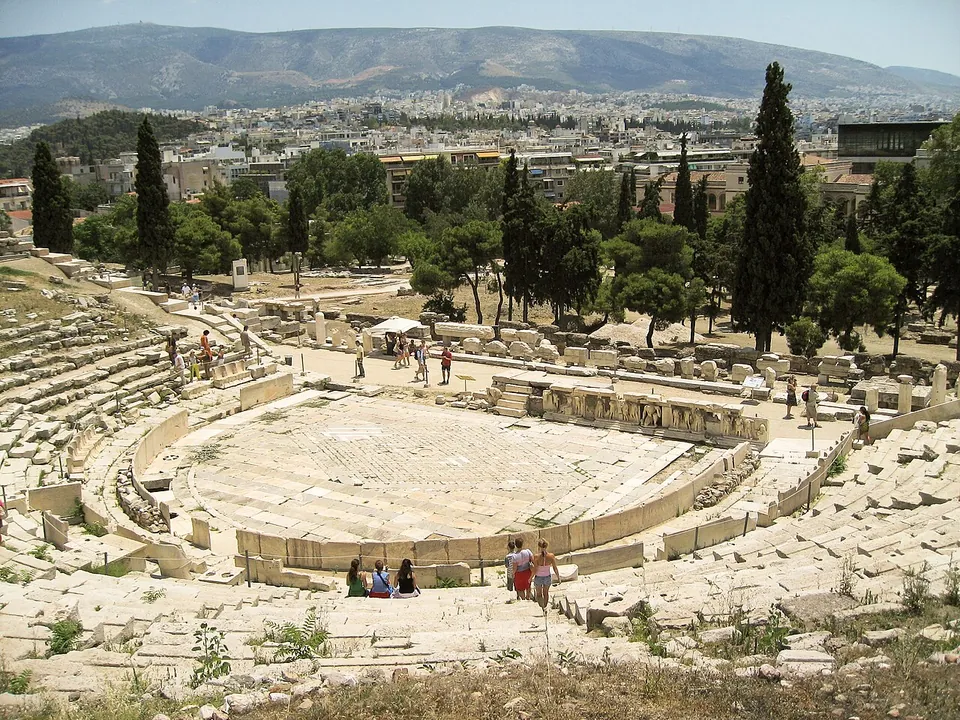
The Theatre of Dionysus on the south slope was in use from the 6th century BC down to the Roman period (en.wikipedia). Its stage front is the Bema of Phaidros, a marble platform of the 2nd century AD by Pleiades’ date, the 3rd by en.wikipedia’s. Its four reliefs of the life of Dionysus, framed by crouching Silenoi, are Roman sculpture of the Hadrianic or Antonine period, moved from an unknown location and rebuilt here by Phaidros, archon of Athens (en.wikipedia).
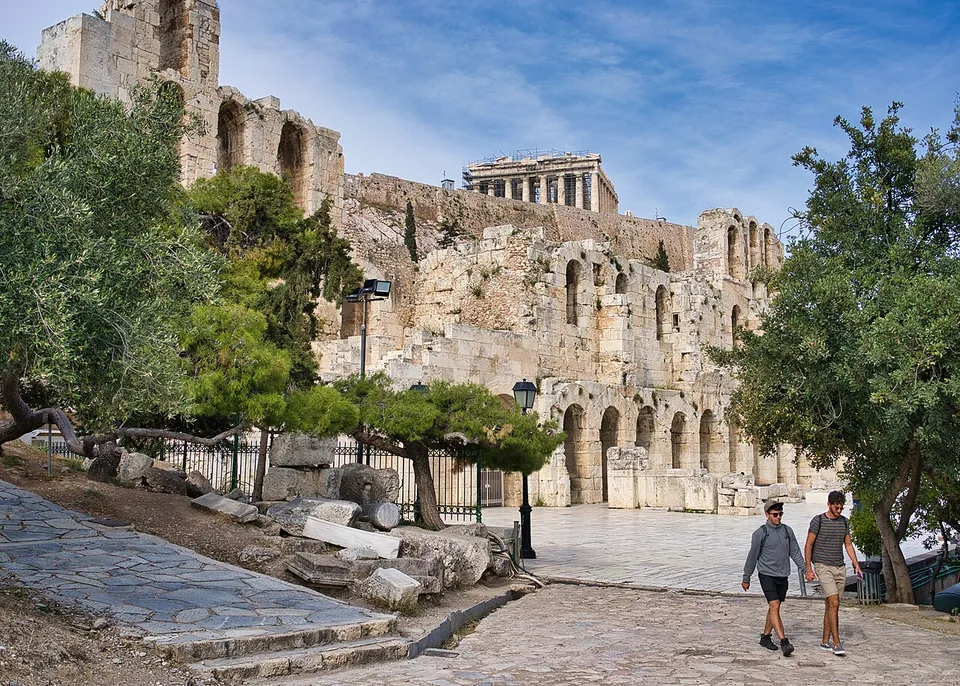
The Odeon of Herodes Atticus, on the south-west slope, was built during the Roman period, between about 160 and 174 (Pleiades), and completed in AD 161 by en.wikipedia’s date; it was renovated in 1950. Herodes Atticus paid for it; it holds 5,000 people, has been used for events again since the 1930s and is the main stage of the Athens Festival (de.wikipedia).
Is it worth the trip?
Yes, though not for Rome first. This is the most visited archaeological site in Greece, with more than 4.5 million visitors in 2024 (it.wikipedia), and what fills the summit is Classical. The Roman layer is a temple you see as ruins, a gate you walk out through, a carved stage front and the Odeon’s arcaded outer wall - details that reward knowing they are there.
Getting there
The Acropolis is 12 minutes on foot from Acropolis metro station (line 2), or can be reached from Monastiraki (lines 1 and 3); bus 230 stops at “Acropolis” (the operator). The main entrance is on the west slope; the south slope, with the Theatre of Dionysus, has its own entrance where Dionysiou Areopagitou meets Thrasyllou Street. A lift on the north side, about 300 m from the exit, takes visitors with reduced mobility up to the summit (the operator).
It opens daily from 08.00. From 1 April to 31 August it closes at 20.00; through September and October closing comes earlier in steps, to 18.00 in the second half of October; from 1 November to 31 March it closes at 17.00. Last entry is 20 minutes before closing, and the site is shut on 1 January, 25 March, 1 May, Easter Sunday and 25–26 December. A ticket is €30, reduced €15, and covers the slopes as well as the summit; entry is free on 6 March, 18 April, 18 May, the last weekend of September, 28 October, and on the first and third Sunday of each month from November to March. Tickets are sold at the site and online at tickets.hh.gr (hh.gr and the Ministry’s site guide, read 9 October 2026 — check before travelling).
Visiting details
- Opening hours
- Daily 08.00–20.00 from 1 April to 31 August, then closing earlier through the autumn (19.30 in early September, 18.00 by late October); 08.00–17.00 from 1 November to 31 March. Last entry 20 minutes before closing. Closed 1 January, 25 March, 1 May, Easter Sunday and 25–26 December.
- Tickets
- €30; reduced €15. Free on 6 March, 18 April, 18 May, the last weekend of September and 28 October, and on the first and third Sunday of each month from November to March. The ticket covers the Acropolis and its slopes, including the Theatre of Dionysus; sold at the site and online at tickets.hh.gr.
- Parking
- Parking is mapped about 230 m from the point (OSM way/193797770, fee=no) and about 250 m (way/294492617, fee=yes).
Hours and prices checked 9 October 2026 on the operator's own site. Confirm before travelling.
History
The hill was inhabited as early as the 4th millennium BC, and the buildings that matter most today were raised under Pericles in the 5th century BC (en.wikipedia). Under Rome, Athens lay in the province of Achaia and was the leading centre of education for the imperial elite (en.wikipedia, Achaia). After the Heruli sacked the city in 267 or early 268, a new wall went round the Acropolis and the hill came to be seen more as a defensive position than as a sanctuary (en.wikipedia, Beulé Gate). Much later, in 1687, the Parthenon and other buildings were badly damaged when gunpowder stored in the Parthenon exploded under a Venetian bombardment (en.wikipedia). The Acropolis has been a UNESCO World Heritage Site since 1987 (de.wikipedia).
More photographs



Nearby
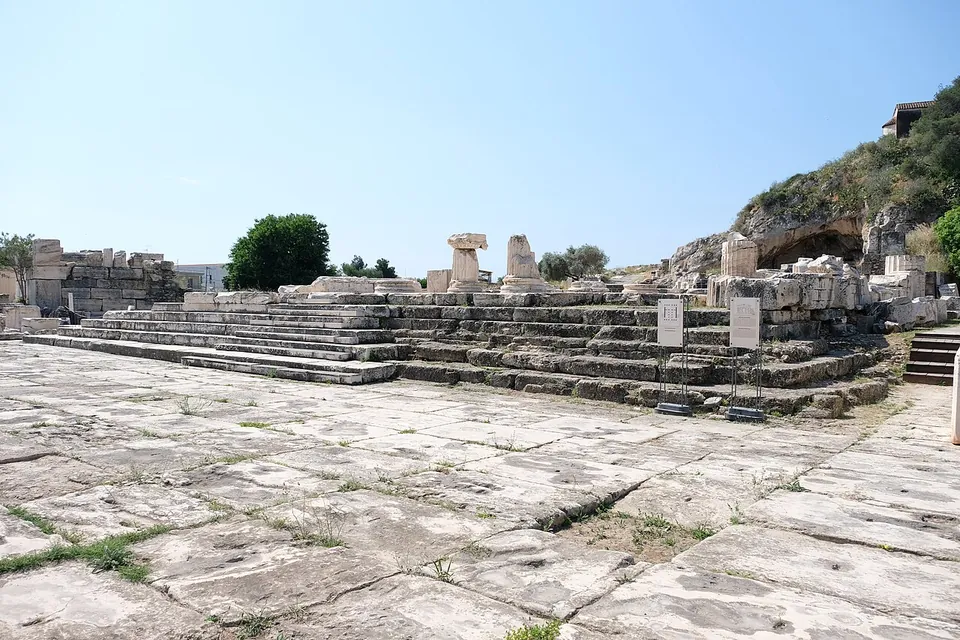
Photo: Davide Mauro · CC BY-SA 4.0 · Commons
18 km · site · West Attica
Eleusis
The visit follows the Processional Road, the end of the Sacred Way from Athens, through the Greater and the Lesser Propylaia to the Telesterion (the operator).

Straight-line distances.
Sources
Every fact on this page comes from the records below, each used under the licence noted.