Photo: A.Savin · CC BY-SA 3.0 · Commons
Athenai, Αθήνα
city · Central Athens, Greece
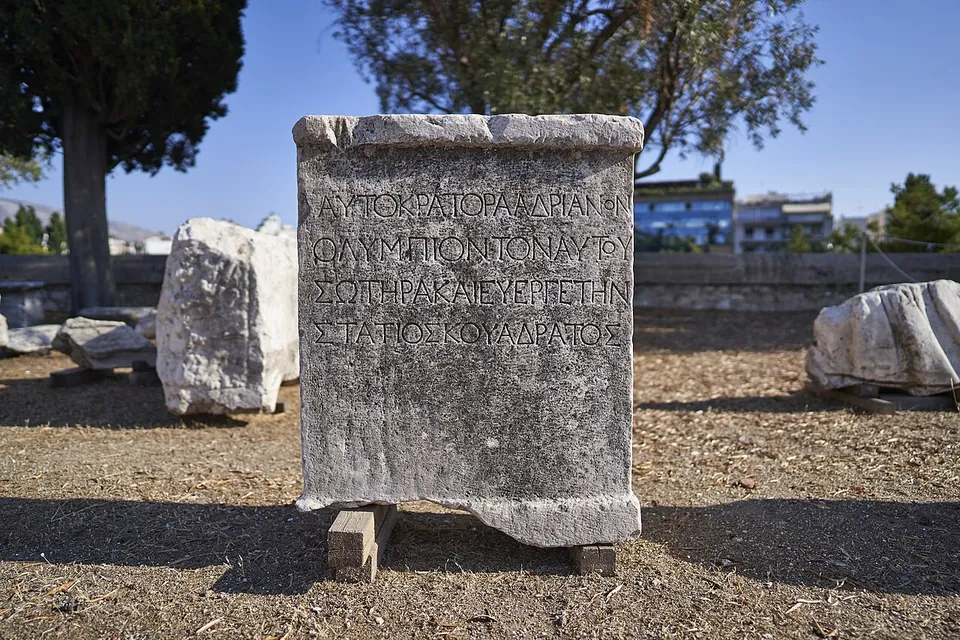
9 places to see, the best preserved and best known first.
Photo: A.Savin · CC BY-SA 3.0 · Commons
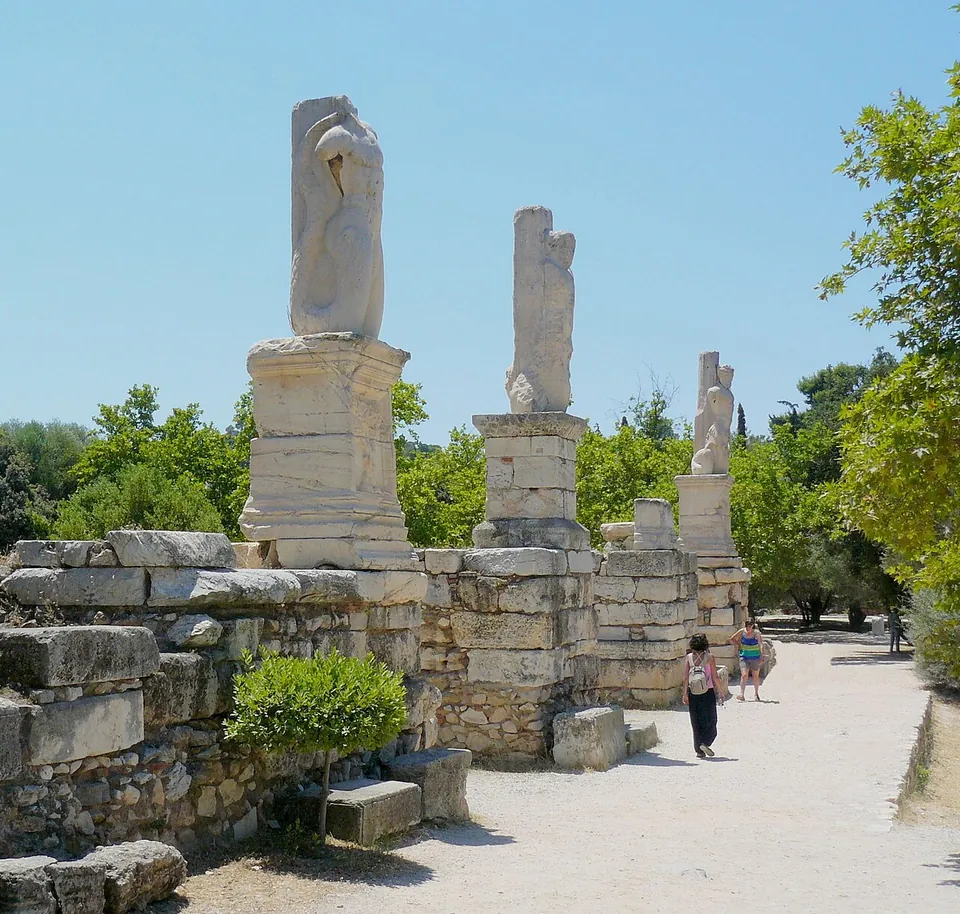
Photo: Janmad · CC BY-SA 4.0 · Commons
city · Central Athens
The Odeon of Agrippa was built about 15 BC in what had been open space in the middle of the Agora, a gift to the Athenians from Marcus Agrippa.
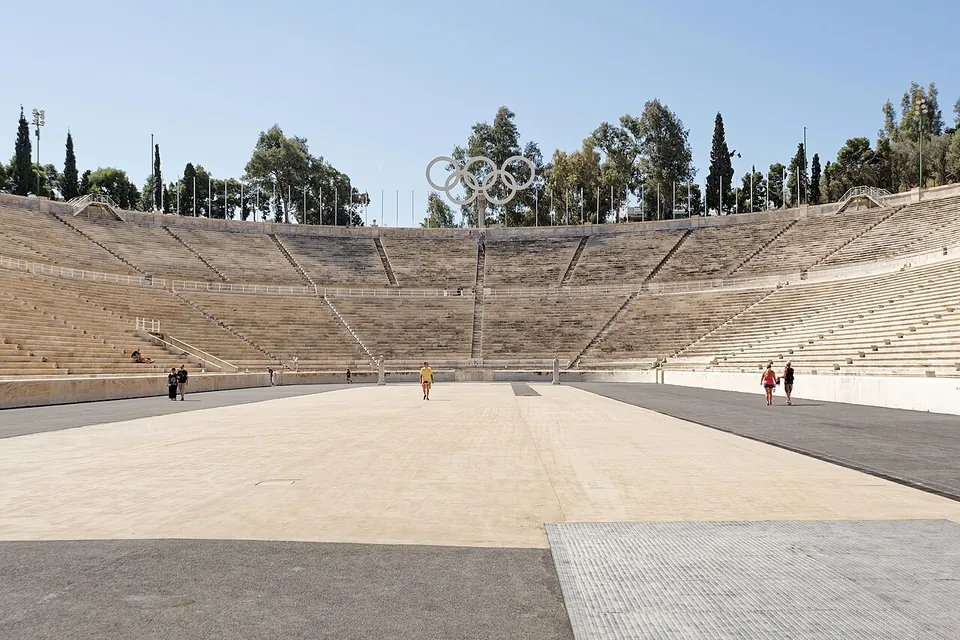
Photo: Jakub Hałun · CC BY 4.0 · Commons
site · Central Athens
A long U-shaped stadium of white Pentelic marble, set in a natural ravine between two pine-covered hills, Ardettos and Agra, in the Pangrati district east of the National Garden (en.wikipedia).
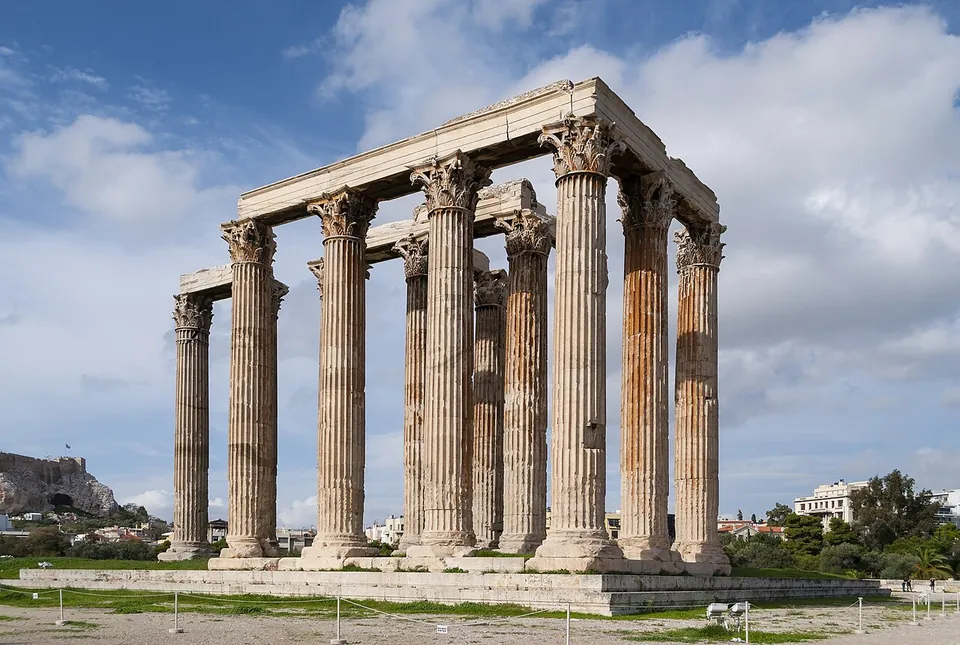
Photo: Ava Βabili · CC BY-SA 4.0 · Commons
temple · Central Athens
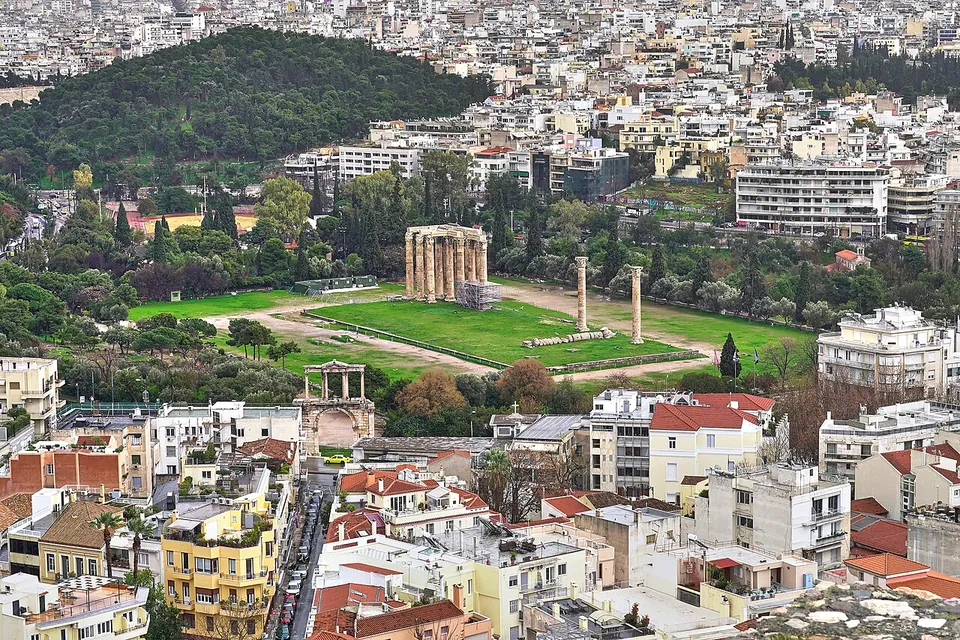
The temple, as Hadrian finished it, was of the Corinthian order and built of Pentelic marble, more than 100 m long and over 40 m wide, with 104 columns about 17 m high: two rows of twenty along each side and three rows of eight at each end (the operator; en.wikipedia; published measurements differ by a few metres).
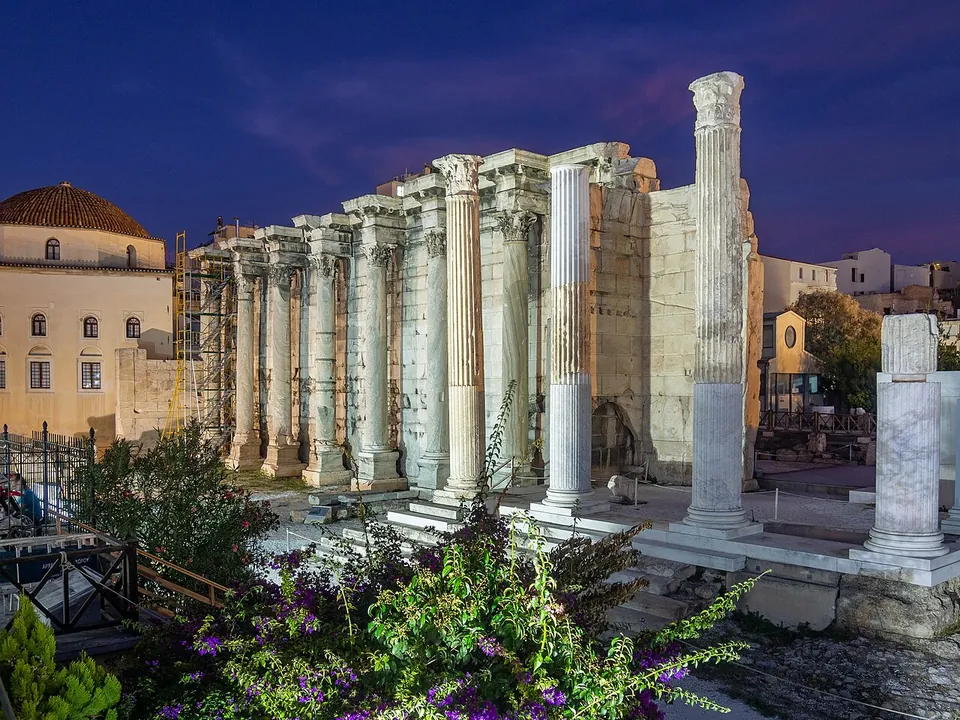
Photo: C messier · CC BY-SA 4.0 · Commons
site · Central Athens
Only the northern wing survives; the southern one has been destroyed completely (the operator).
necropolis · Central Athens
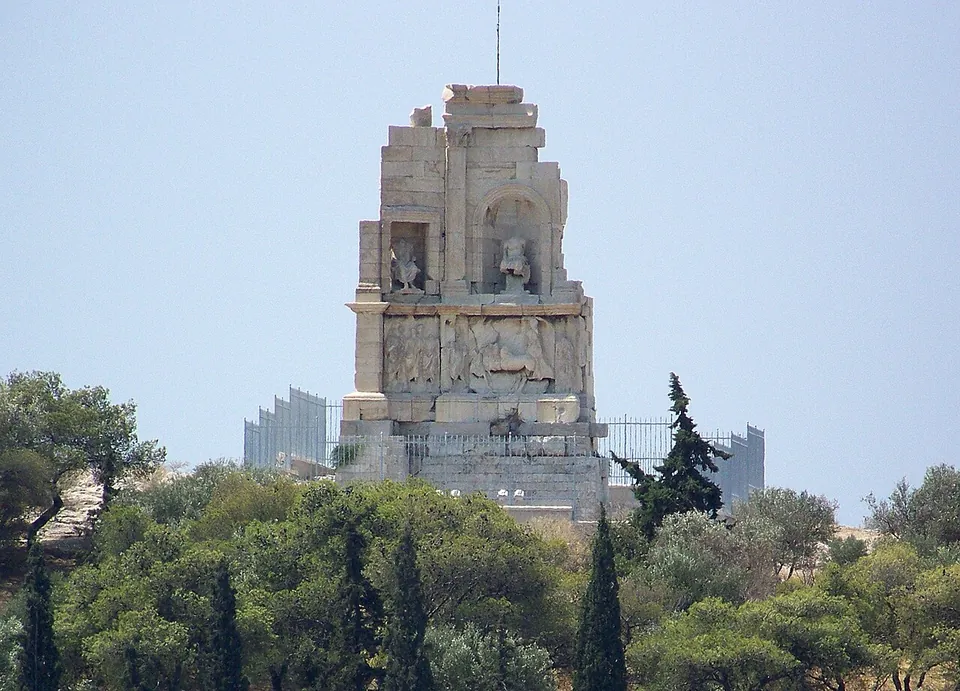
The tomb stands high on its hill and can be seen from far around.
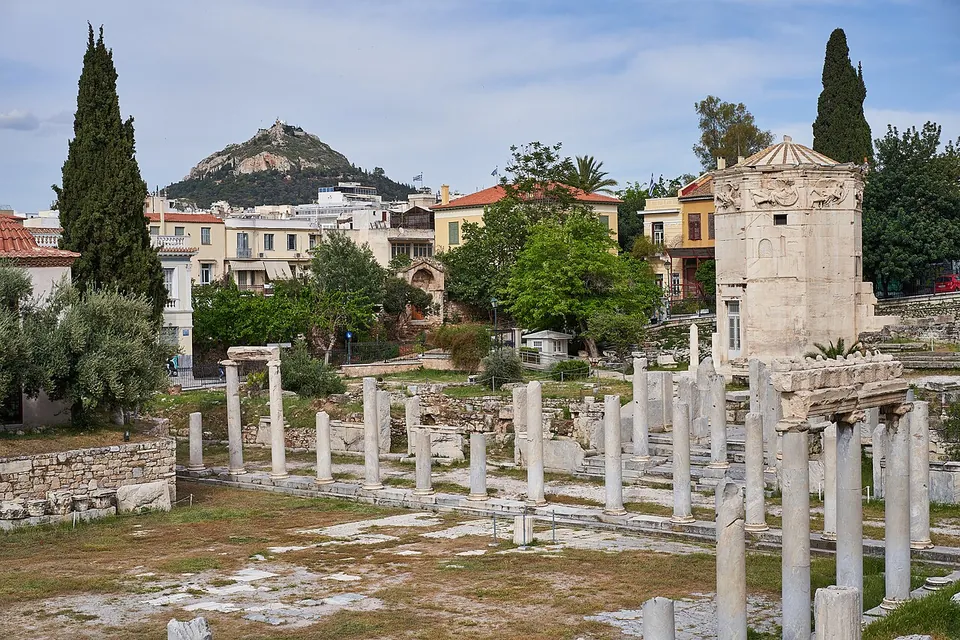
Photo: George E. Koronaios · CC BY-SA 2.0 · Commons
site · Central Athens
The Agora was a large rectangular courtyard surrounded by colonnades, shops and storerooms.
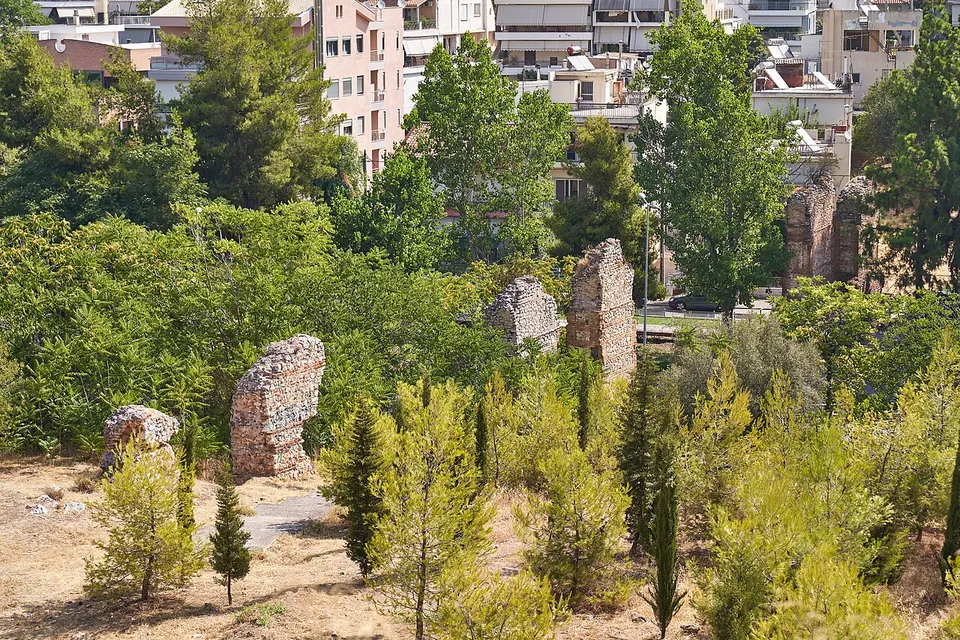
Photo: George E. Koronaios · CC BY-SA 4.0 · Commons
aqueduct · North Athens
The Eleftheroupoli bridge crosses the Podoniftis torrent, which rises on Mount Pentelikon, at the junction of Emmanouil Pappa and Filellinon streets.
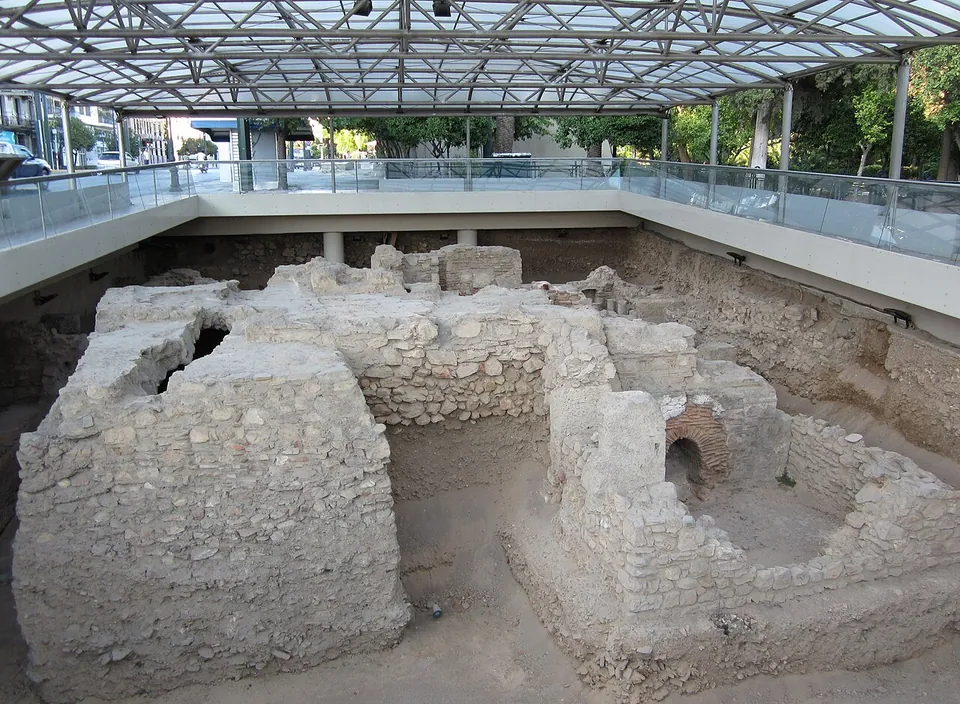
Photo: Tomisti · CC BY-SA 3.0 · Commons
bath · Central Athens
The bath house was so well preserved that the metro's air shaft, which its discovery interrupted, was moved further south so that the remains could stay where they were found.
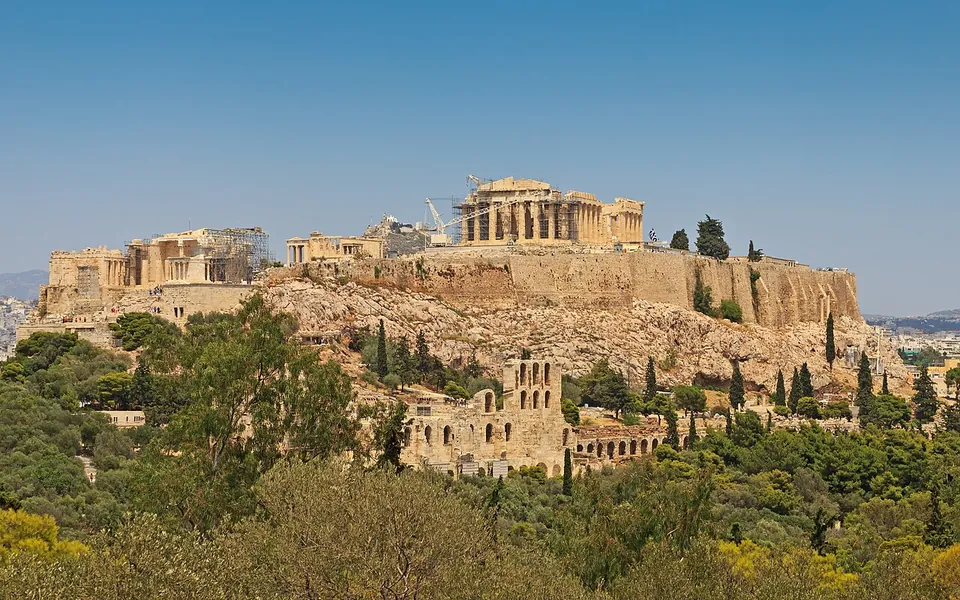
Each stop has its own page. Below the north side of the Acropolis, a few hundred metres apart, lie the Roman Agora, the market built in the Roman era east of the old one (en.wikipedia), with its gate to Athena Archegetis and the Tower of the Winds; Hadrian’s Library, built by the emperor in AD 132 (en.wikipedia), of which the northern wing survives (the operator); and the Ancient Agora, where the general Agrippa gave Athens an odeon in the middle of the square around 15 BC (en.wikipedia). On the Acropolis itself stand the remains of a temple to Rome and Augustus, and on its south-west slope the Odeon of Herodes Atticus, completed in AD 161 (en.wikipedia).
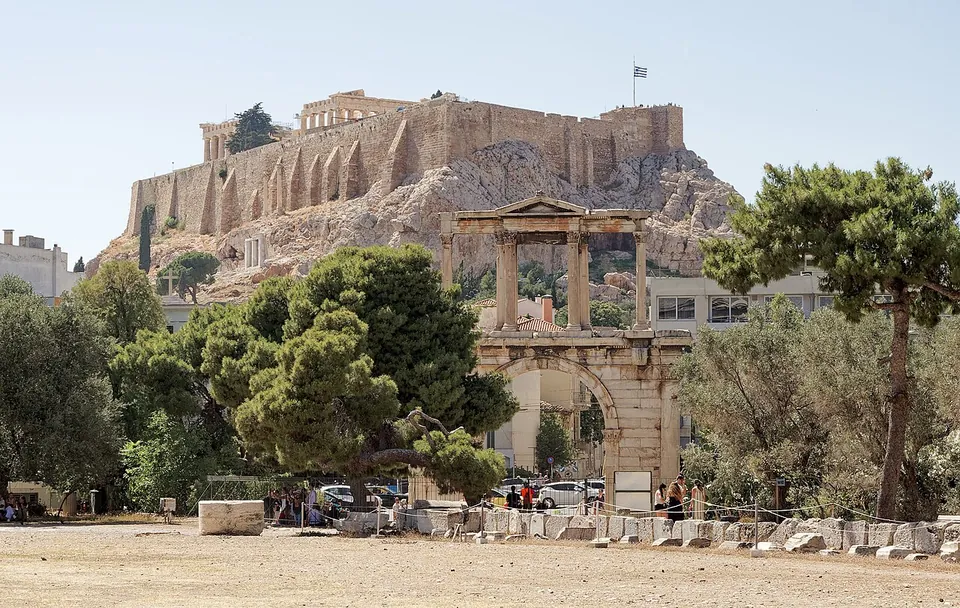
To the south-east, the Temple of Olympian Zeus was begun in the 6th century BC and completed only under Hadrian; 16 of its columns remain (en.wikipedia). Beside it stands the Arch of Hadrian, a gateway probably put up by the citizens of Athens, perhaps for the dedication of the temple precinct in 131 or 132; its two inscriptions name both Theseus and Hadrian as founders of Athens (en.wikipedia). Further east, the Panathenaic Stadium was rebuilt in marble by Herodes Atticus by 144 and held 50,000 people (en.wikipedia). On Mouseion Hill, south-west of the Acropolis, stands the Philopappos Monument, the tomb of Philopappos, a prince of Commagene who died in 116 (en.wikipedia).
Smaller sights fill out the city: excavated Roman baths on Amalias Avenue (the Ministry of Culture), and on Dionysiou Areopagitou Street the plan of Proclus’s House, where the Neoplatonist philosopher lived in the 5th century, marked in the pavement over its reburied remains (the site’s label). In Nea Ionia, about 8 km north, stand the water bridges of two late Roman aqueducts of the 3rd–5th century, once thought to belong to Hadrian’s aqueduct (the Ministry of Culture).
Yes. The Roman Agora, Hadrian’s Library, the Ancient Agora and the Acropolis are all within about 300 m of one another, and the Olympieion is under a kilometre away. But Rome is the second layer here, not the first. The great monuments are Classical, and the Roman ones are often parts of them - a gate, a stage front, a finished temple - so it pays to know what you are looking for.
Athens is the capital of Greece (en.wikipedia). Monastiraki metro station (lines 1 and 3) is two minutes on foot from the Roman Agora and from Hadrian’s Library, and the Ancient Agora is four minutes from Monastiraki Square; Acropolis station (line 2) is 12 minutes from the Acropolis and seven from the Olympieion (the operator).
Each site has its own entrance, hours and ticket. Full prices are €30 for the Acropolis, €20 each for the Ancient Agora and the Olympieion, and €10 each for the Roman Agora and Hadrian’s Library, with reduced tickets at half price; all five are free on the first and third Sunday of each month from November to March, and on a few fixed days a year (hh.gr, read 9 October 2026 — check before travelling).
Rome’s era in Greece began in 146 BC, with the conquest of the mainland (en.wikipedia, Greece in the Roman era). Athens lay in the province of Achaia and stayed a centre of learning, the leading place of education for the imperial elite, rivalled only by Alexandria (en.wikipedia, Achaia; History of Athens).
Emperors and benefactors built in the city. Augustus helped pay for the Roman Agora, built between 19 and 11 BC (the operator). Hadrian, on his third visit, inaugurated his library around 132; the Athenians honoured him as a god, even within the Parthenon (the operator), and in his reign the Temple of Olympian Zeus was finally completed (en.wikipedia). Herodes Atticus, an Athenian Roman senator, gave the city its marble stadium (en.wikipedia) and the Odeon that bears his name (de.wikipedia).
In 267 a Germanic invasion pillaged the Temple of Olympian Zeus, which fell into disuse (en.wikipedia), and damaged Hadrian’s Library, later repaired by the prefect Herculius in 407–412 and built into the city walls (en.wikipedia). Athens remained a city of philosophers into the 5th century, when Proclus led the Neoplatonist school here, in 437–485 (the site’s label).
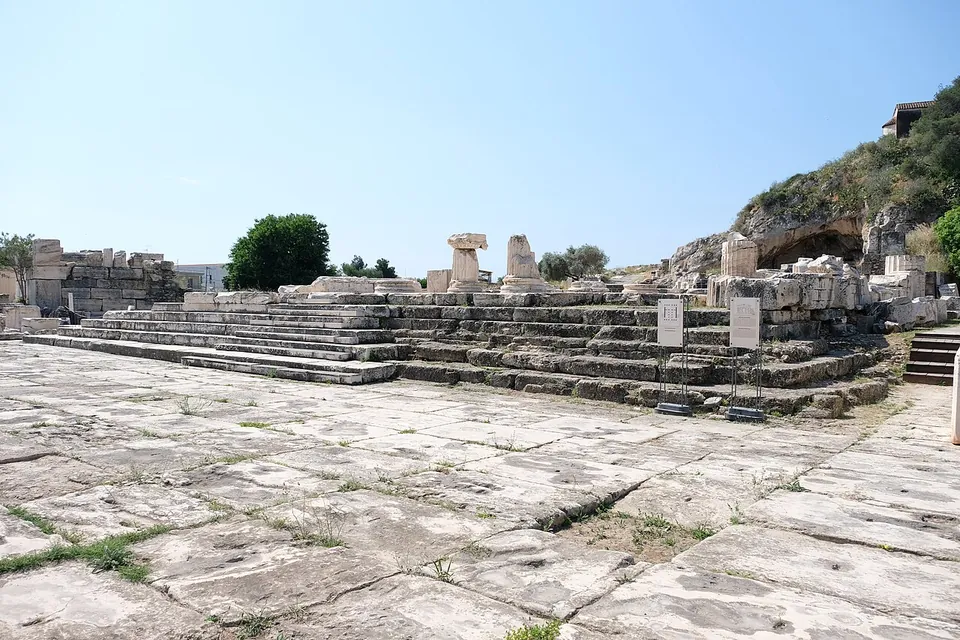
Photo: Davide Mauro · CC BY-SA 4.0 · Commons
18 km · site · West Attica
The visit follows the Processional Road, the end of the Sacred Way from Athens, through the Greater and the Lesser Propylaia to the Telesterion (the operator).
Straight-line distances.
Every fact on this page comes from the records below, each used under the licence noted.