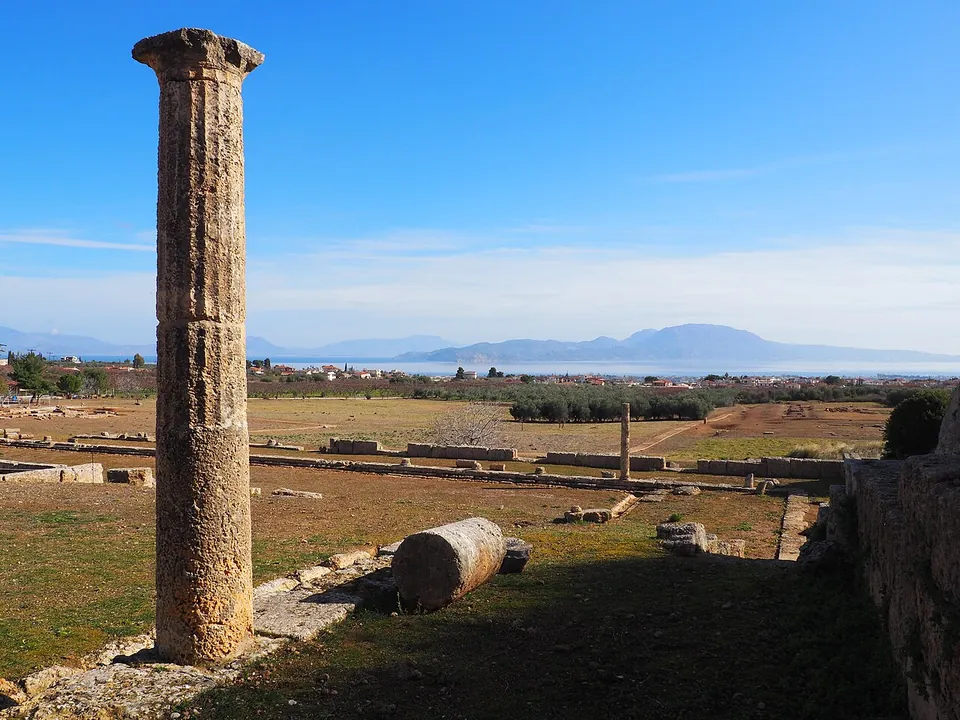
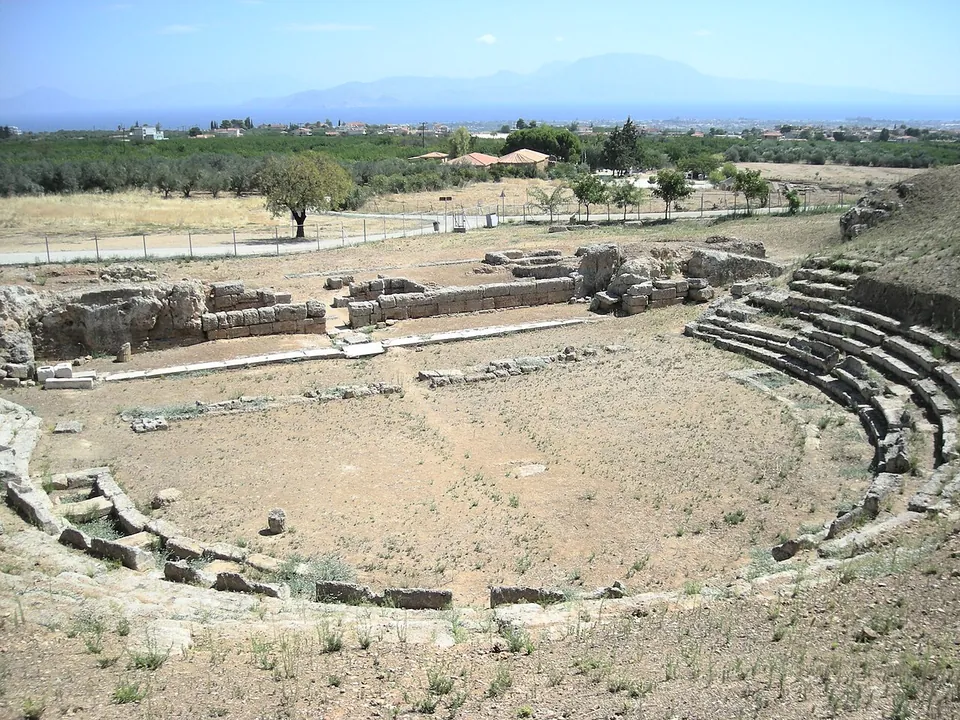


Sicyon was an ancient city of the Corinthia, about 26 km west of Corinth, refounded on a plateau above the plain in 303 BC (Pleiades; the leaflet; en.wikipedia). What has been excavated belongs to the Hellenistic and Roman city: an agora, a gymnasium on two terraces, a large theatre whose stage Rome extended, and a Roman bath house whose walls still stand 4 m high and now hold the museum (the leaflet). The operator calls it one of the best-kept secrets of Corinthia.
What is there today
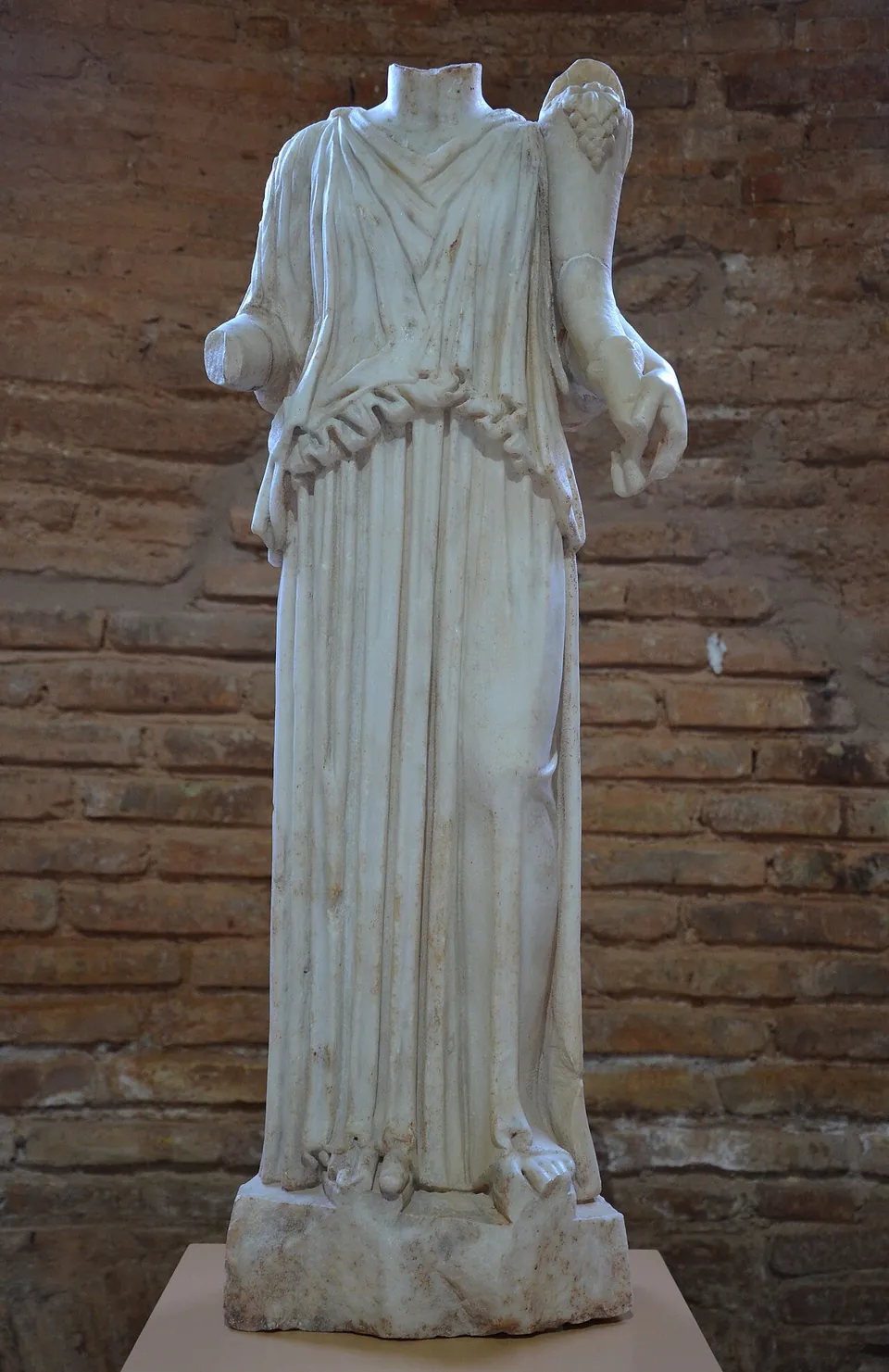
The Roman bath house, north of the agora, was a brick-built public bath, preserved in fairly good condition with walls up to 4 m high. In 1935 Professor An. Orlandos excavated it and restored four of its rooms as the museum (the leaflet). Inside are architectural pieces, grave stelai and inscribed bases from Hellenistic, Roman and early Christian Sicyon, statues of officials and women of the Roman period, and statuettes and reliefs found mostly in the baths and the gymnasium (the leaflet).
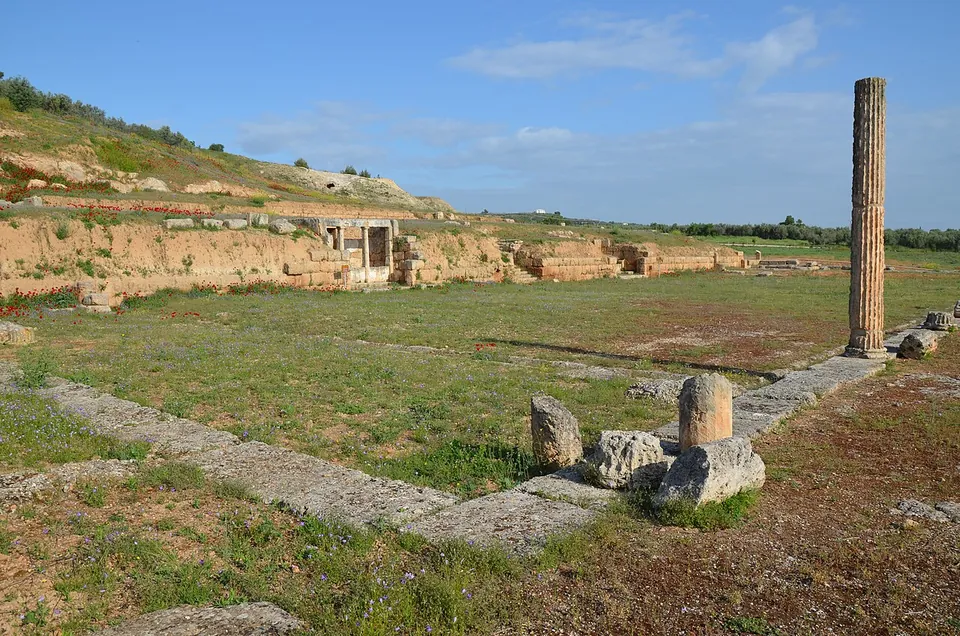
The agora has a long Doric temple of Archaic to Hellenistic date, turned into a basilica in early Christian times, and in its eastern part the council house and a long colonnade of the 4th century BC; in Roman times the council house was converted into public baths and the colonnade repaired (the leaflet). Excavation has also found Roman shops destroyed by an earthquake around AD 400 (en.wikipedia).
The gymnasium, on the lower slopes of the acropolis, is Hellenistic and Roman, built on two terraces joined by three staircases, with two fountain houses set along the retaining wall of the upper terrace (the leaflet).
The theatre, cut into a natural hollow, dates from the end of the 4th century BC. Its two vaulted entrance passages at the edges of the seating are the only ones of their kind in Hellenistic architecture, and in the Roman period it was extended, mainly at the stage building (the leaflet). The stadium, west of the theatre, has not been excavated, but its shape shows in the ground (the leaflet).
Is it worth the trip?
Yes, if you are in Corinthia: the operator calls it one of the region’s best-kept secrets, and the museum inside a Roman bath house, its walls still 4 m high, is the Roman highlight (the leaflet). Tickets are €5 for the site and €5 for the museum, and the city of Corinth is 20 minutes away by car (the operator).
Getting there
The site is a 5-minute walk from the village of Ancient Sicyon (Vasiliko), 10 minutes by car from Kiato and 20 minutes from Corinth (the operator). A car park is mapped about 130 m from the theatre (OpenStreetMap).
It opens daily from April to October: 08.00–18.00 in the first half of April, 08.00–18.30 in the second, 08.00–20.00 from 1 May to 15 September, then closing earlier (18.30 by the second half of October). From 1 November to 31 March it opens 08.30–15.30 and is closed on Tuesdays. Last entry is 20 minutes before closing; it is shut on 1 January, 25 March, 1 May, Easter Sunday and 25–26 December. Tickets are €5 for the site and €5 for the museum, reduced €3 each, and entry is free on 6 March, 18 April, 18 May, the last weekend of September, 28 October, and on the first and third Sunday of each month from November to March (hh.gr, read 9 October 2026 — check before travelling). There are toilets and parking (the operator).
Visiting details
- Opening hours
- Daily, 08.00–18.00 in the first half of April, 08.00–18.30 in the second, 08.00–20.00 from 1 May to 15 September, then closing earlier through the autumn (18.30 by late October); from 1 November to 31 March 08.30–15.30, closed on Tuesdays. Last entry 20 minutes before closing. Closed 1 January, 25 March, 1 May, Easter Sunday and 25–26 December.
- Tickets
- Archaeological site €5, reduced €3; museum €5, reduced €3. Free on 6 March, 18 April, 18 May, the last weekend of September and 28 October, and on the first and third Sunday of each month from November to March.
- Parking
- A car park is mapped about 130 m from the theatre (OSM node/4237609181); the operator lists parking.
Hours and prices checked 9 October 2026 on the operator's own site. Confirm before travelling.
History
Sicyon flourished in Archaic and Classical times and was known for its art: the sculptor Lysippos came from here (Pleiades). In 303 BC Demetrius Poliorcetes razed the old city in the plain and moved it up to the acropolis plateau (en.wikipedia; the leaflet). As a member of the Achaean League it stayed a democracy until Rome dissolved the League in 146 BC; the destruction of Corinth that year gave it new territory and the presidency of the Isthmian games, but by Cicero’s time it was deep in debt, and under the empire it was overshadowed by the restored cities of Corinth and Patras (en.wikipedia). The American School of Classical Studies excavated part of the theatre at the end of the 19th century, and the Archaeological Society of Athens the rest in the 20th (the leaflet).
More photographs

Nearby
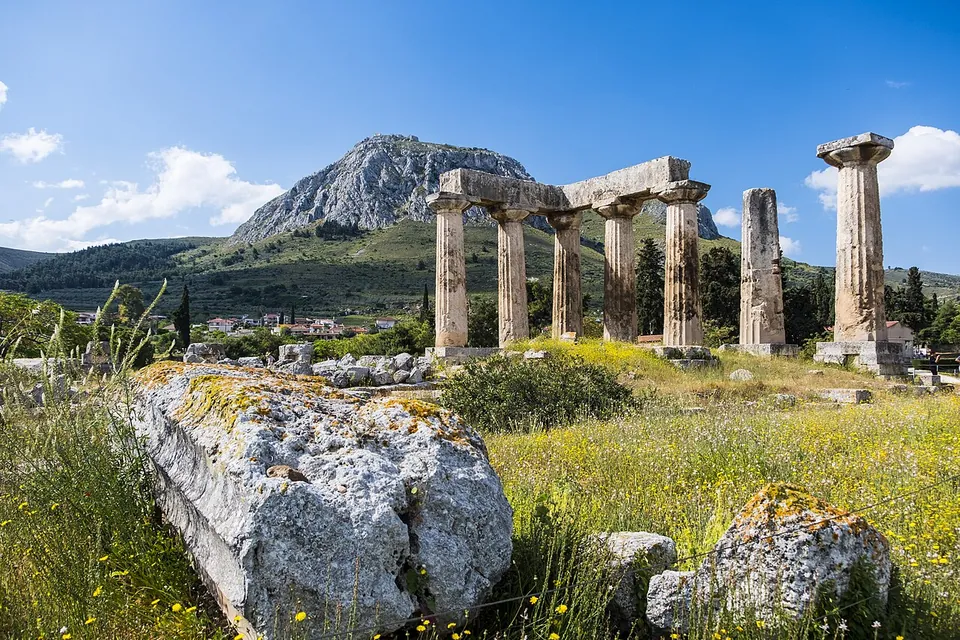
Photo: Davide Mauro · CC BY-SA 4.0 · Commons
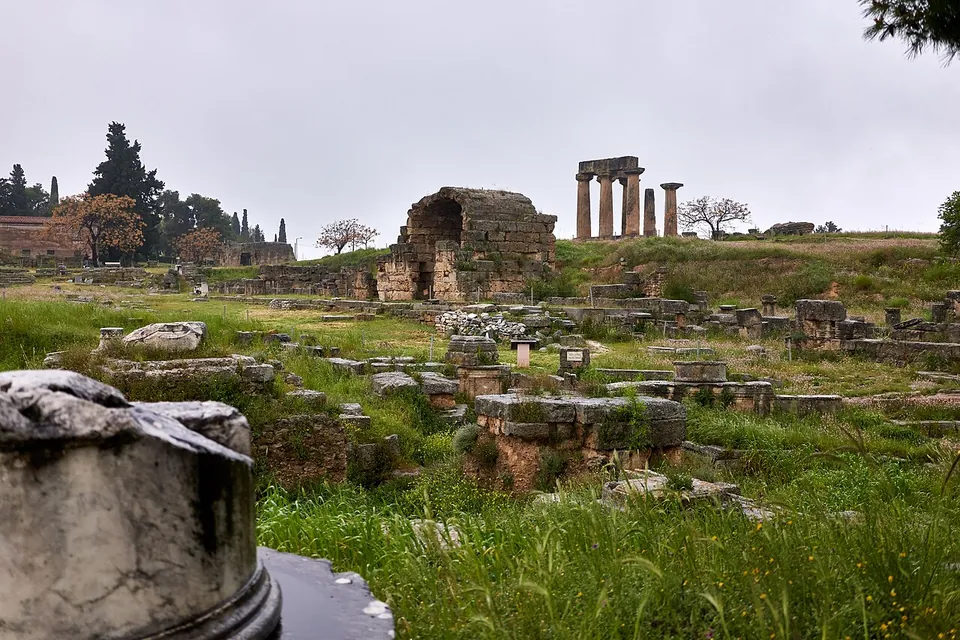
Photo: George E. Koronaios · CC BY-SA 4.0 · Commons
17 km · city · Corinthia
Ancient Corinth
The forum was a huge open space, about 200 m from east to west and 100 m from north to south, laid out along the old Greek South Stoa, which formed its southern edge.
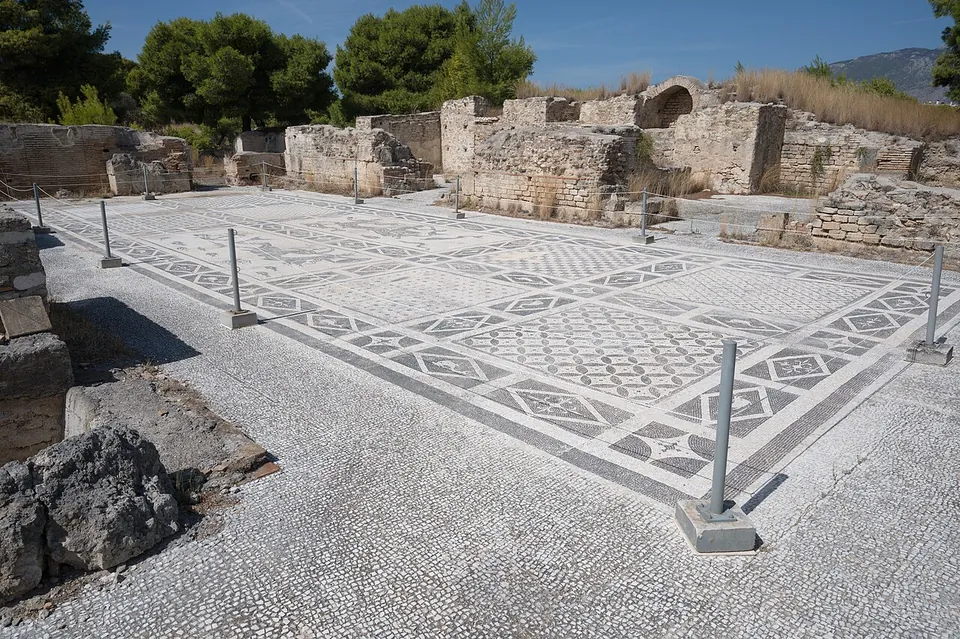
Photo: Zde · CC BY-SA 4.0 · Commons
26 km · site · Corinthia
Isthmia
The Roman baths, on the northern edge of the sanctuary, were built about AD 150 in an area probably used by the athletes, on the foundations of a Classical bath of about 360 BC with a swimming pool 30 m square.


Straight-line distances.
Sources
Every fact on this page comes from the records below, each used under the licence noted.
| Source | Licence |
|---|---|
| Pleiades 570668 | CC BY |
| Wikidata Q368628 | CC0 |
| OpenStreetMap way/254211154 | ODbL |
| Hellenic Heritage (H.O.C.R.E.D., for the Ministry of Culture) — Ancient Sicyon, hours and tickets | licence not recorded |
| Archaeological Receipts Fund (TAP), Ministry of Culture — Ancient Sikyon, site and museum (leaflet) | licence not recorded |
| Wikipedia (en) — Sicyon | CC BY-SA 4.0 |
| Wikipedia (en) — Achaia (Roman province) | CC BY-SA 4.0 |