Corinth was the capital of Roman Achaia, the province of southern Greece. Rome destroyed the old Greek city in 146 BC, and Julius
Caesar refounded it in 44 BC as a Roman colony, Colonia Laus Iulia Corinthiensis, which became the
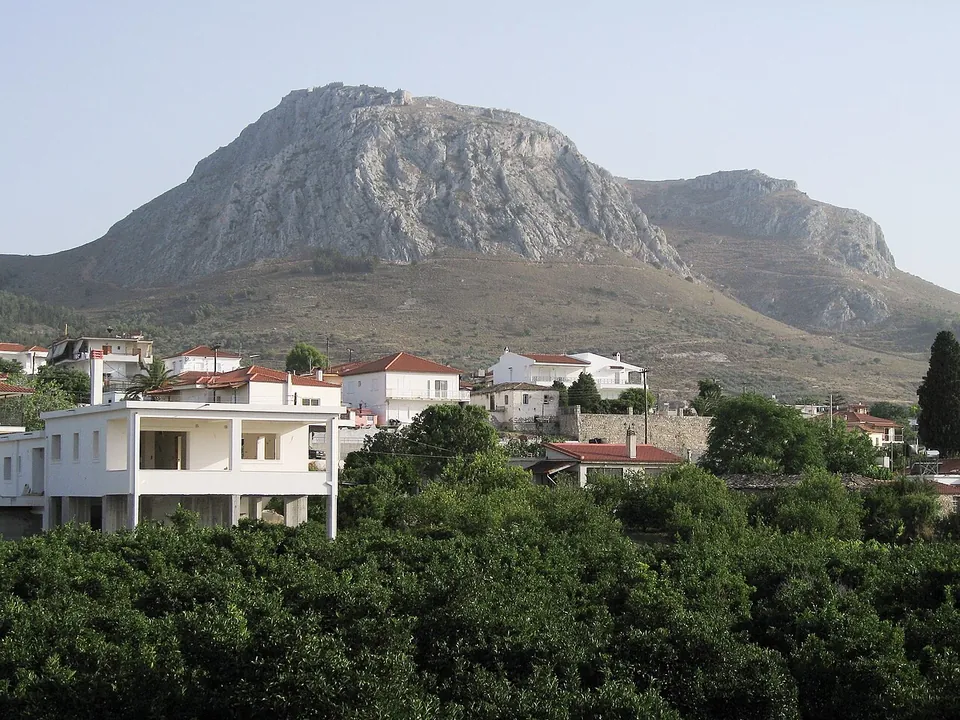
capital of the province of Achaia (en.wikipedia). Its remains lie under and around the village of
Ancient Corinth, beneath the rock of Acrocorinth, about 5 km south-west of the modern city; its port, the
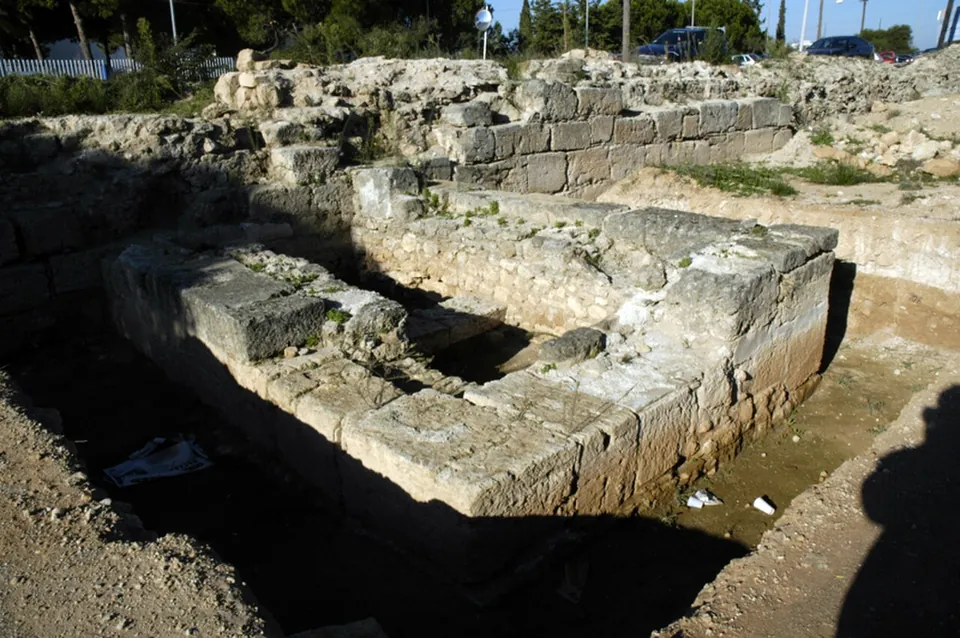
late Roman wall across the Isthmus and the sanctuary of Isthmia both lie within 10 km of the modern city
(OpenStreetMap).
Is it worth the trip?
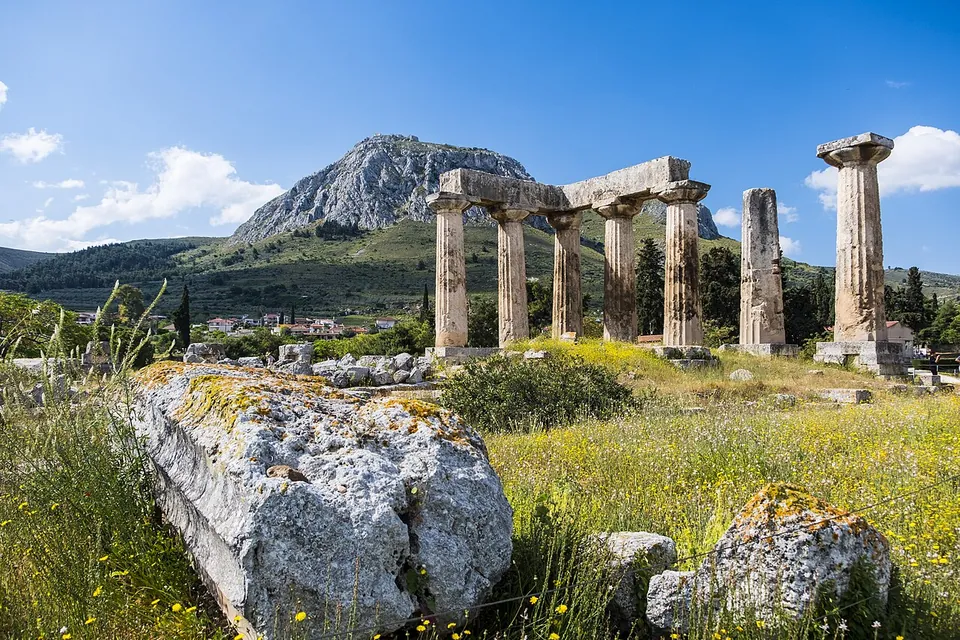
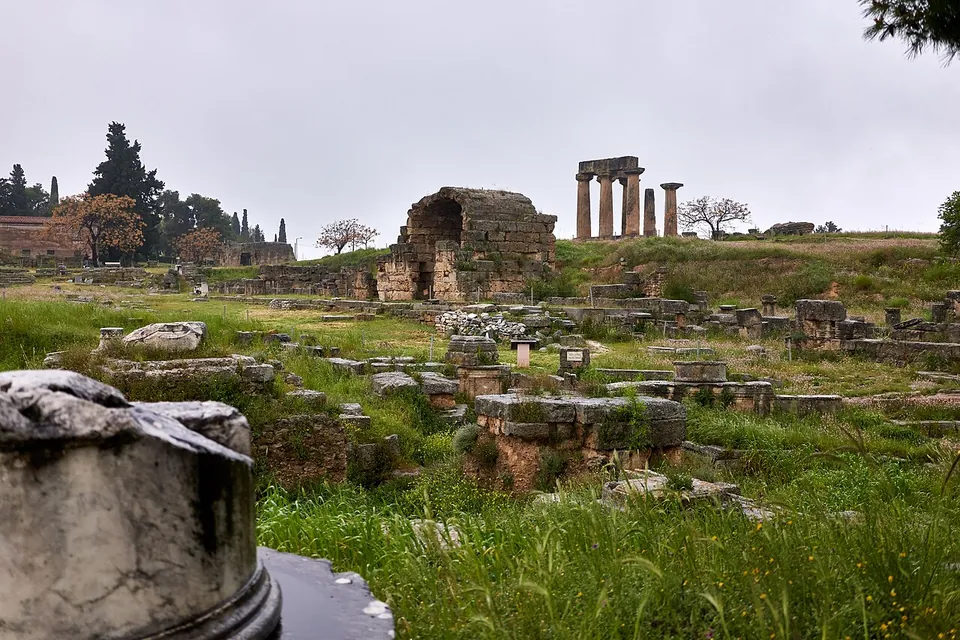
Yes. Ancient Corinth shows a Roman colony in Greece: the excavated centre is the forum of the city Caesar
founded (Pleiades), which grew into the capital of the province and where the apostle Paul lived for
eighteen months (en.wikipedia). The stops are spread over about 10 km, so a car helps; Ancient Corinth
and Isthmia each take about 10 minutes to reach by car from the modern city (the operator).
Getting there
The modern city of Corinth is the base. Ancient Corinth is 10 minutes by car or 20 minutes by intercity
(KTEL) bus from it, and Isthmia, by the Corinth Canal, likewise 10 minutes by car or 20 by KTEL bus (the
operator).
History
Rome declared war on the Achaean League in 146 BC. After the Battle of Corinth the army of Lucius Mummius
took the city and burned it; the men were killed and the women and children sold into slavery, and
Corinth lay largely deserted until Julius Caesar refounded it in 44 BC, shortly before his assassination.
An amphitheatre was built at that time. Rebuilt as a major Roman city, Corinth had a large mixed
population of Romans, Greeks and Jews and was a centre of the imperial cult; Temple E and the Julian
Basilica have both been suggested as places of its worship (en.wikipedia).
The apostle Paul first came here in AD 49 or 50, when Gallio was proconsul of Achaia, and stayed eighteen
months; his two letters to the Corinthians are in the New Testament (en.wikipedia).
Earthquakes in 365 and 375 and Alaric’s invasion in 396 largely destroyed the city. It was rebuilt on a
monumental scale but over a much smaller area, with four churches in the city, another on Acrocorinth and
the great basilica at Lechaion (en.wikipedia). The Hexamilion was raised across the Isthmus in the first
half of the 5th century (en.wikipedia, Hexamilion wall). At the end of the 6th century Slavs raided
Corinth; the city went on declining, and its main settlement moved up to Acrocorinth (en.wikipedia).