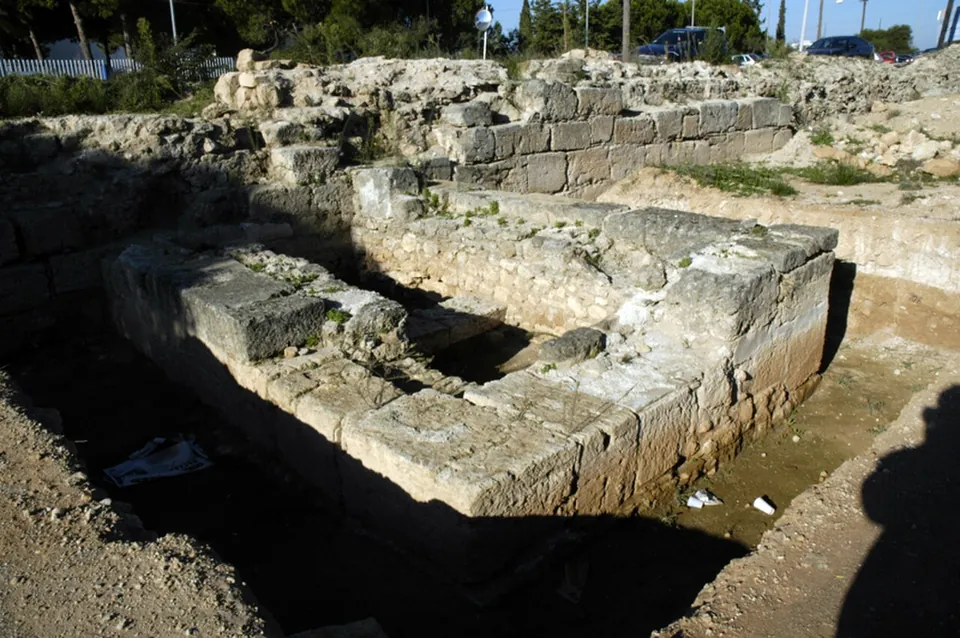
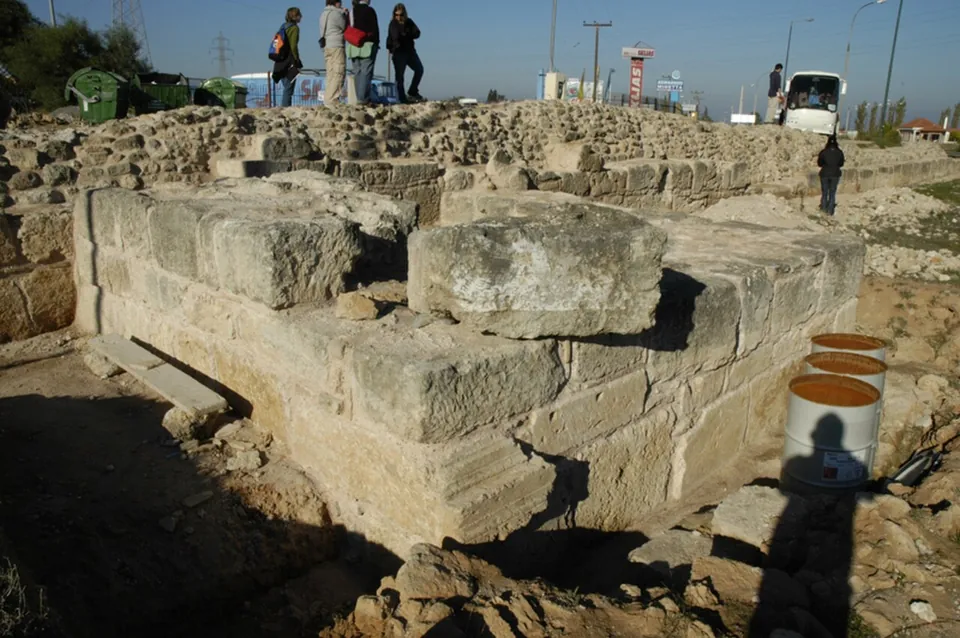
The Hexamilion, the “six-mile wall”, was built across the Isthmus of Corinth between AD 408 and 450, under the emperor Theodosius II, to close the only land route into the Peloponnese against the invaders of the late Roman world. Between 7 and 7.8 km long, 7 m high and 3 m thick, it is in en.wikipedia’s words the largest archaeological structure in Greece; what a visitor finds today are ruined stretches of it near Isthmia.
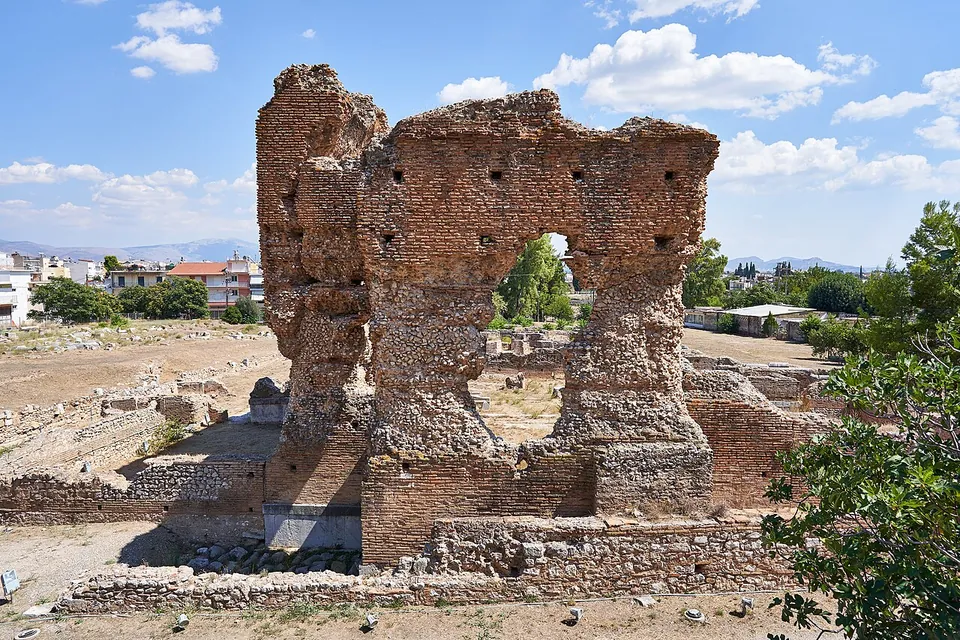
What is there today
The wall ran from the Gulf of Corinth to the Saronic Gulf. It was built with a core of rubble and mortar faced with squared stones, larger and more carefully cut on the northern face than on the southern. Under Justinian it was strengthened to 153 towers, with forts at either end and the fortress at Isthmia, just north-east of the sanctuary of Poseidon (en.wikipedia). OpenStreetMap maps two ruined sections at the eastern end of the Isthmus, about 1 km east of the sanctuary.
So much stone was needed that buildings all around were dismantled for it, and some were built straight into the wall, the Temple of Poseidon at Isthmia among them. Graffiti of two galleys, scratched into the still-wet mortar of its back face near Tower 15, survive from its builders (en.wikipedia).
Is it worth the trip?
As part of a visit to Isthmia, yes; on its own, less so: the remains are ruined stretches beside the roads rather than a continuous wall, and they are best understood with the fortress and the sanctuary next to them (en.wikipedia; the photographs). Entry is free (the Ministry).
Getting there
The mapped sections lie at the eastern end of the Isthmus, about 1 km east of the sanctuary of Isthmia (OpenStreetMap), which has parking and is 10 minutes by car from Corinth (hh.gr).
Visiting details
- Tickets
- Free (the Ministry of Culture's guide).
- Parking
- The sections OpenStreetMap maps lie at the eastern end of the Isthmus, about 1 km east of the sanctuary of Isthmia; no car park or bus stop is mapped at them.
Hours and prices checked 9 October 2026 on the operator's own site. Confirm before travelling.
History
The Greeks had thought of walling the Isthmus since the Persian Wars. The Hexamilion was built in the age of the great invasions, perhaps prompted by Alaric’s attack on Greece in 396 or the sack of Rome in 410. The earthquake of 551 was perhaps the most damaging of those that struck it. In the later 6th or early 7th century the fortress’s gates were hastily walled up, for reasons no source settles, and in 1415 the emperor Manuel II rebuilt the wall against the Ottomans, putting down by force a revolt of local people frustrated by the endless cost of the wall (en.wikipedia).
Nearby
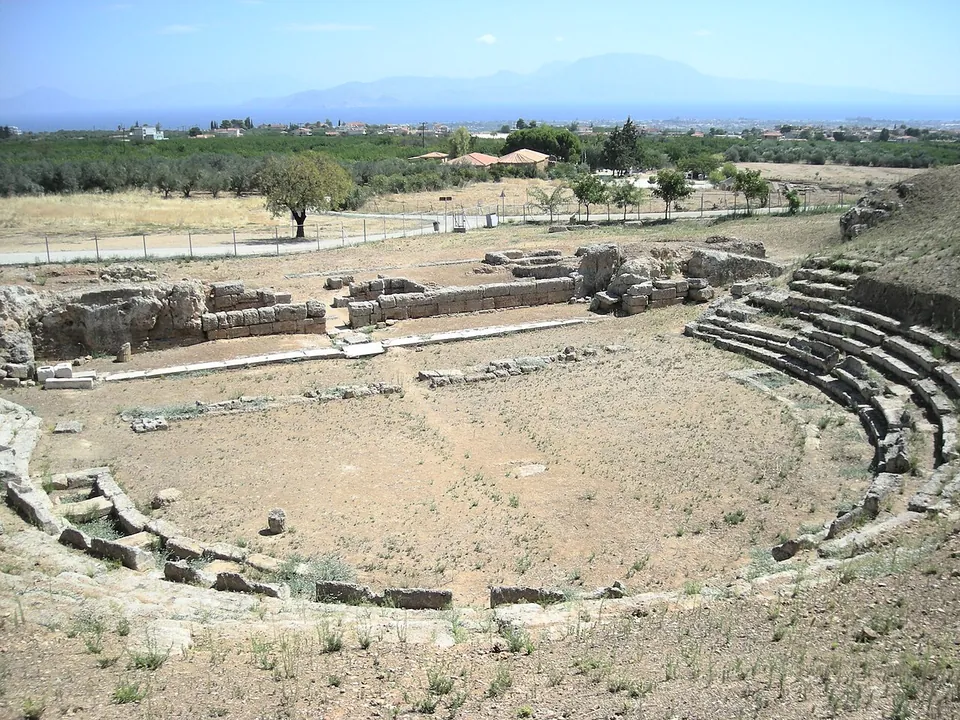
Photo: Future Perfect at Sunrise · Public domain · Commons
27 km · city · Corinthia
Sicyon
The Roman bath house, north of the agora, was a brick-built public bath, preserved in fairly good condition with walls up to 4 m high.
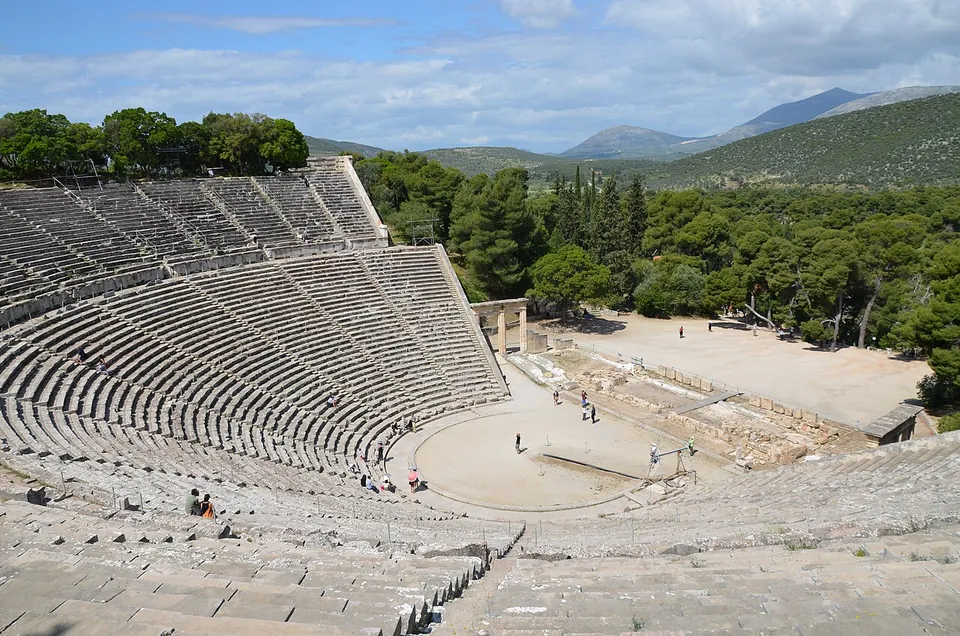
Photo: Carole Raddato from FRANKFURT, Germany · CC BY-SA 2.0 · Commons
35 km · site · Argolis
Sanctuary of Asclepius, Epidaurus
Most of what you see is Greek, from the sanctuary's great building period in the 4th and 3rd centuries BC: the Temple of Asclepius, which once held a gold-and-ivory statue of the god; the Abaton, the colonnade where the healing rituals took place; the Tholos, a round building; the Katagogion, a guest house of 160 rooms; the stadium; and the theatre (the operator).
40 km · city · Argolis
Argos
The theatre, with about 20,000 seats, is among the largest ancient theatres in Greece.


Straight-line distances.
Sources
Every fact on this page comes from the records below, each used under the licence noted.
| Source | Licence |
|---|---|
| Pleiades 242076354 | CC BY |
| Wikidata Q305428 | CC0 |
| OpenStreetMap way/1368072220 | ODbL |
| Ministry of Culture and Sports (Odysseus) — Hexamilion Wall, information | licence not recorded |
| Wikipedia (en) — Hexamilion wall | CC BY-SA 4.0 |
| Wikipedia (en) — Achaia (Roman province) | CC BY-SA 4.0 |