

What is there today
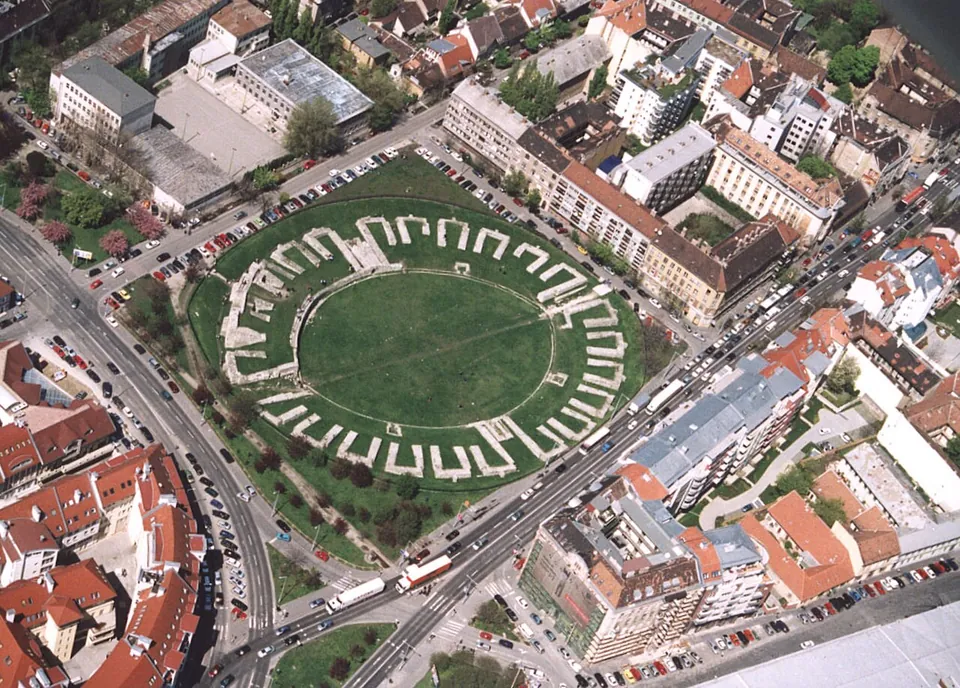
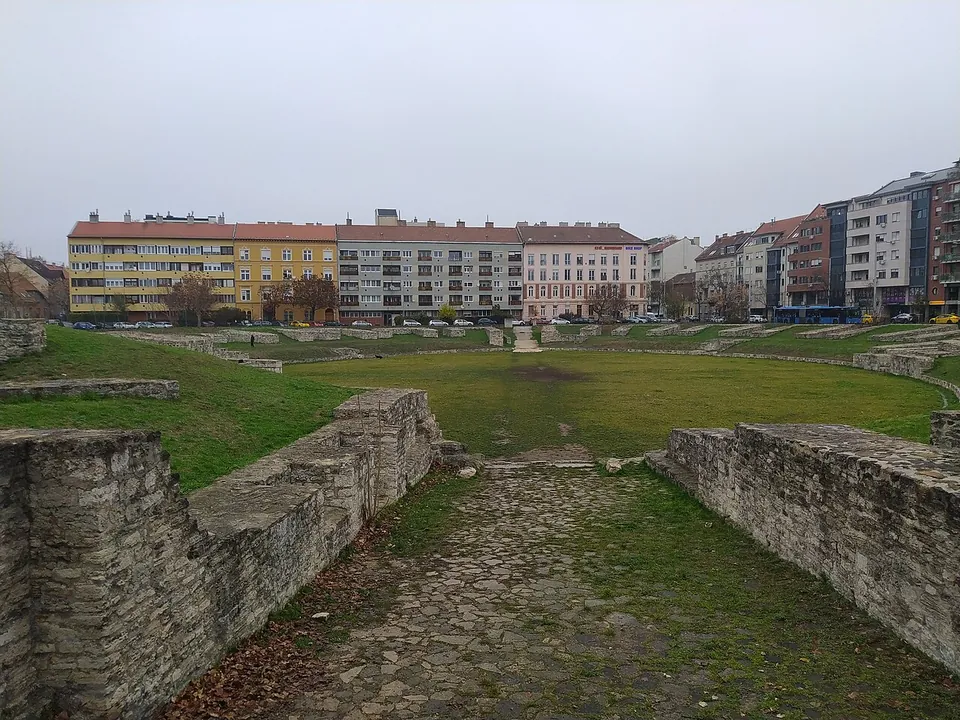
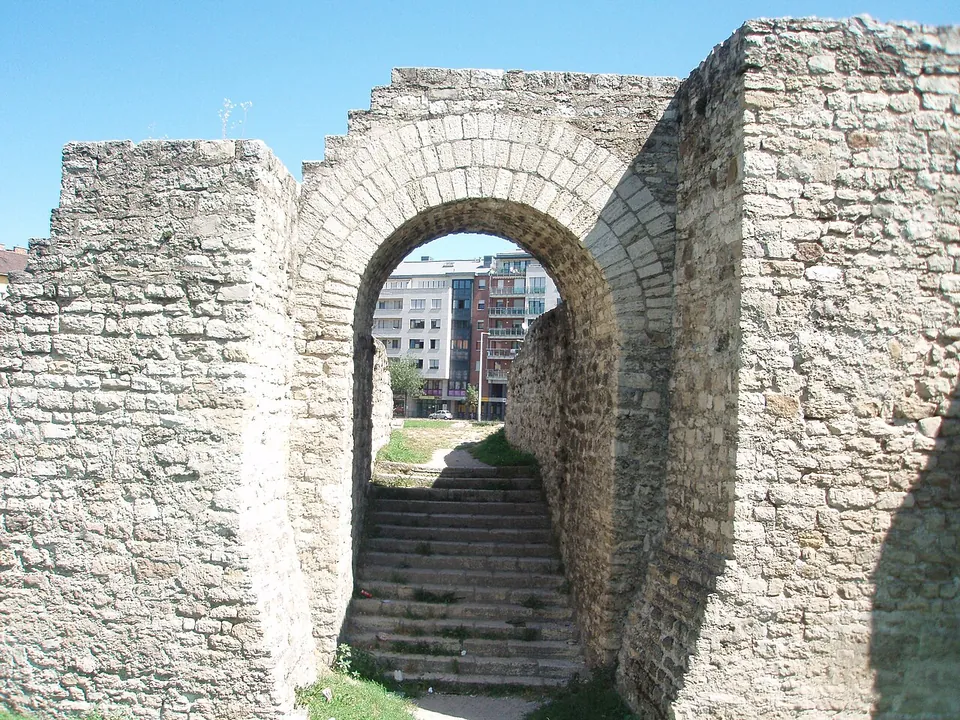
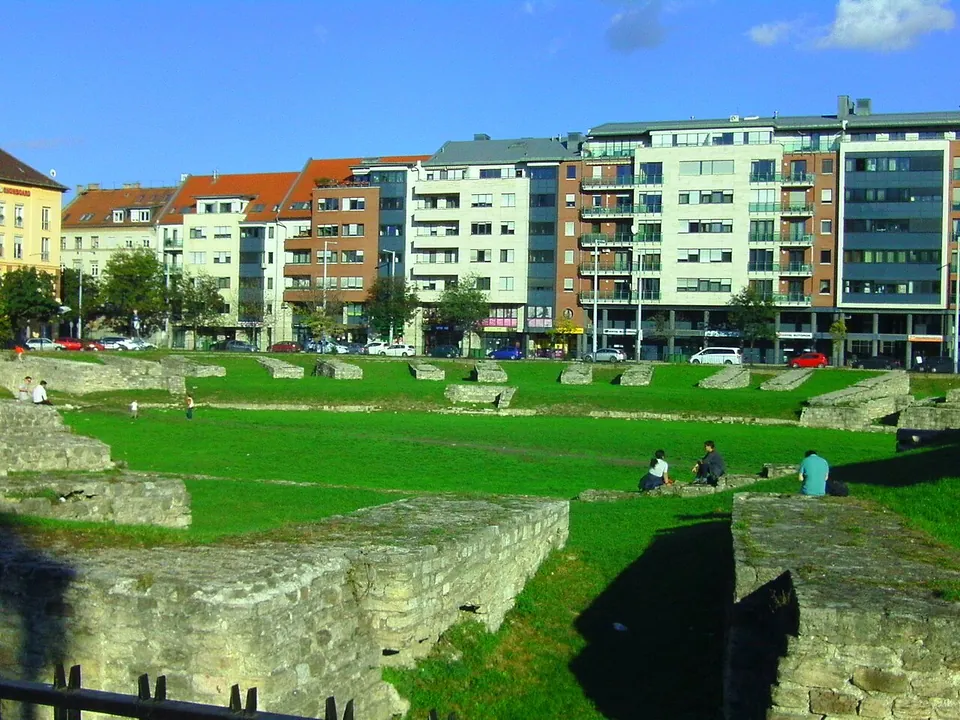
The building measures 131.9 by 108.4 m and is estimated to have held 12,000 to 13,000 spectators (de.wikipedia). What stands now is the stone ring: the outer wall and the short radial walls inside it, around an arena of grass, with vaulted passages and stairs through the walls. The walls were excavated in 1935 and 1940–41 and restored in 1942 (de.wikipedia), so what you see has been restored. The civil town’s amphitheatre, about 4 km north by the Aquincum archaeological park, is the smaller of the two: 86.5 by 75.5 m, for about 6,000 to 7,000 (hu.wikipedia).
Is it worth the trip?
If you are in Budapest and want Roman remains, yes: it is the larger of the city’s two Roman amphitheatres, you can walk into the arena, and no ticket is recorded for it. It is a short stop rather than an outing - an arena of grass ringed by low walls, with apartment blocks on every side - so it pairs best with a visit to the Aquincum Museum’s park further north in the same district.
Getting there
The amphitheatre fills the block between Nagyszombat utca, Pacsirtamező utca, Viador utca and Szőlő utca in Budapest’s 3rd district, south of where the legionary fortress stood (hu.wikipedia). A public transport stop, Nagyszombat utca, is mapped 130 m away, and there is paid street-side parking on the surrounding streets (OpenStreetMap).
No operator publishes opening hours or a ticket: it is not among the sites the Budapest History Museum lists, and the sources describe it as an open-air site (de.wikipedia).
Visiting details
- Tickets
- Free
- Parking
- Paid street-side parking on the surrounding streets, the nearest about 60 m away (OpenStreetMap).
Before you go
- No operator publishes opening hours or a ticket for it; it is an open-air site among housing blocks.
History
The amphitheatre was built around AD 145, in the reign of Antoninus Pius (en.wikipedia; Pleiades); de.wikipedia notes that the date rests on an inscription naming the emperor found nearby, and that its connection with the building is debated. It served the military town that grew up around the legion’s fortress.
In the 5th century it was turned into a fortress, because it stood well placed on a main road, and it remained in use as one in the Middle Ages. At the time of the Hungarian Conquest the building served as the residence of the Magyars’ sacral king, probably Kursan (died 904). It was then forgotten until the excavations of the 1930s and 1940s (de.wikipedia).
More photographs

Nearby
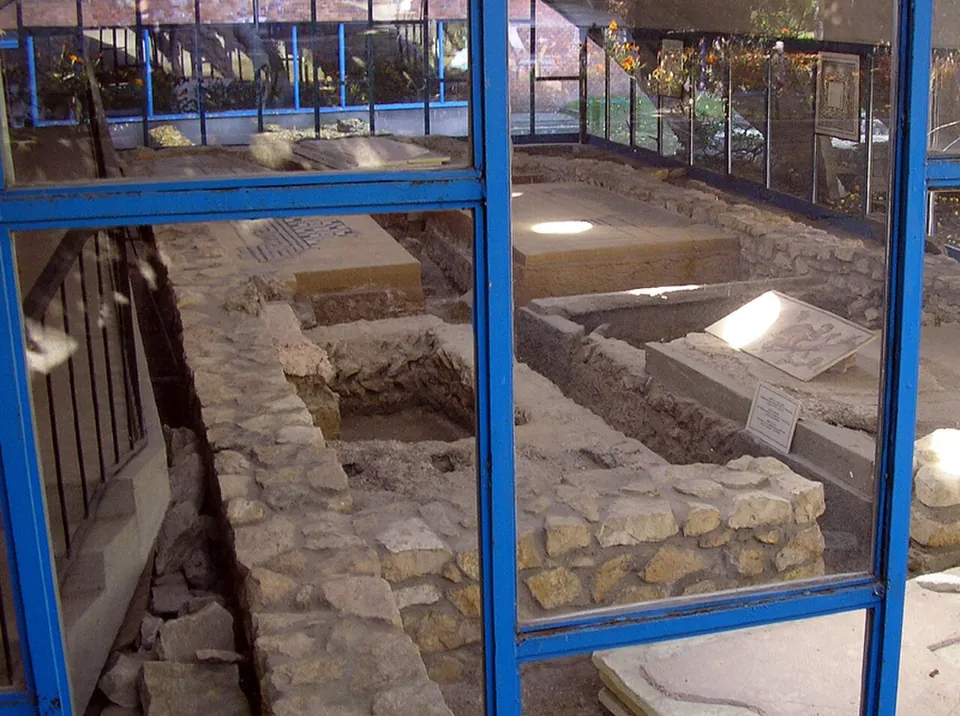
Photo: Vadaro · Public domain · Commons
2 km · villa · Budapest
Hercules villa
Three rooms with mosaic floors are displayed in a large protective building, some with geometric patterns and some with figures, and a separate building shows more mosaics; in the garden are late Roman stone coffin graves (the operator).
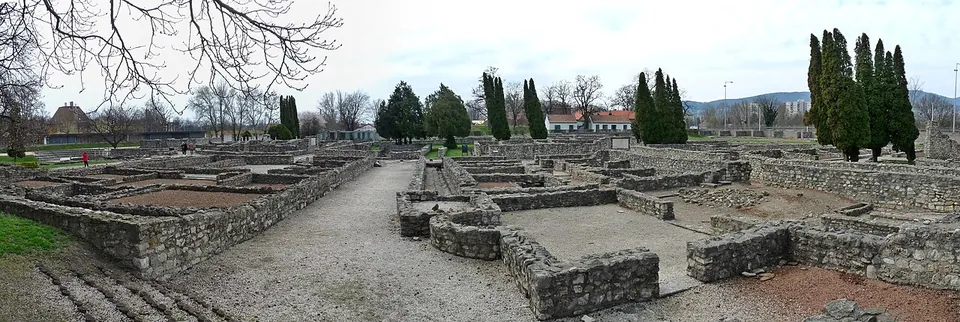
Photo: Fekist · CC BY-SA 4.0 · Commons
4 km · city · Budapest
Aquincum
The park shows public buildings and private houses of the civil town from the 2nd and 3rd centuries AD, in a layout that follows the town's plan (the operator).
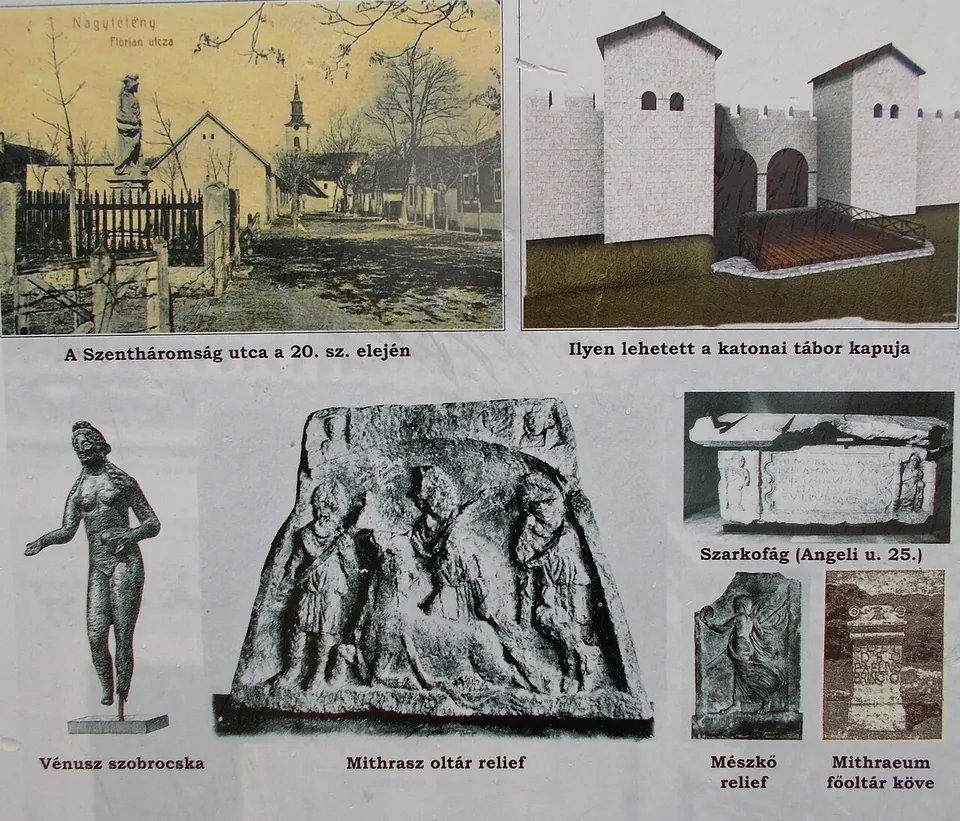
Photo: Globetrotter19 · CC BY-SA 3.0 · Commons
16 km · fort · Budapest
Campona
Of the fort itself, little stands: its ruins were visible for a long time, but today only the stumps of a few wall sections show above ground (hu.wikipedia).


Straight-line distances.
Sources
Every fact on this page comes from the records below, each used under the licence noted.
| Source | Licence |
|---|---|
| Pleiades 379316151 | CC BY |
| Wikidata Q774580 | CC0 |
| Vici.org 4192 | CC BY-SA (text), CC0 (metadata) |
| OpenStreetMap way/401835361 | ODbL |
| Wikipedia (de) — Militäramphitheater von Aquincum | CC BY-SA 4.0 |
| Wikipedia (en) — Aquincum Military Amphitheatre | CC BY-SA 4.0 |
| Wikipedia (hu) — Aquincumi katonai amfiteátrum | CC BY-SA 4.0 |
| Wikipedia (hu) — Aquincumi polgárvárosi amfiteátrum (the civil amphitheatre, for comparison) | CC BY-SA 4.0 |