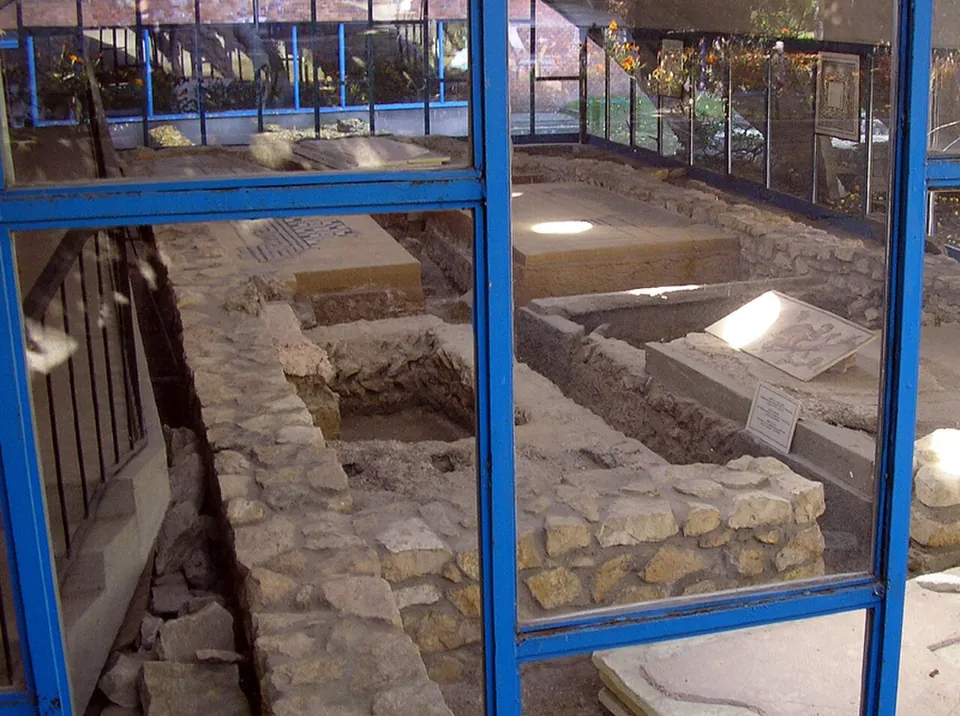
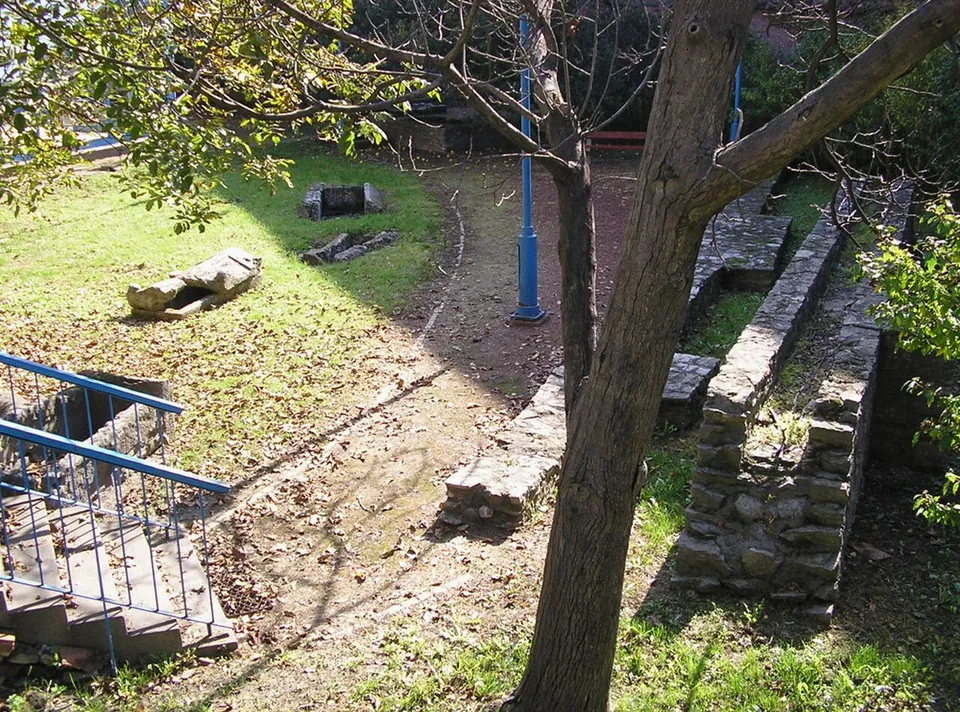


What is there today
Three rooms with mosaic floors are displayed in a large protective building, some with geometric patterns and some with figures, and a separate building shows more mosaics; in the garden are late Roman stone coffin graves (the operator). The ornamental hall has a wine-harvest procession in honour of Dionysus-Bacchus that includes a drunken Hercules and the god’s tigers, and in another room the myth of Hercules and Deianeira, made of about 60,000 small stones. The bath has a mosaic of boxers, with a palm branch for the winner, two strigils and an oil flask (the operator).
Is it worth the trip?
Yes, if you are in Budapest between May and October and want Roman mosaics: these are figure scenes from a Roman house, shown on its site, and the villa is a short trip from the Aquincum Museum and the military amphitheatre, both in the same district. It is small, and it is closed through the winter.
Getting there
The villa is at Meggyfa utca 21 in Budapest’s 3rd district, about 1.8 km from both the Aquincum Museum and the military amphitheatre. The nearest public transport stops, Óbuda, Bogdáni út, are mapped about 150 m away, and there is free street parking about 50 m off (OpenStreetMap).
The villa is open from 5 May to 31 October, Tuesday to Sunday, 10.00 to 18.00, closing at 16.00 once summer time ends; the museum’s general hours page gives the season as starting on 1 April. A ticket is 1,000 HUF, about €2.70, and 500 HUF, about €1.40, for students, young people and pensioners; it is separate from the Aquincum Museum ticket (aquincum.hu, read 4 October 2026).
Visiting details
- Opening hours
- 5 May to 31 October, Tuesday to Sunday 10.00–18.00, closing at 16.00 once summer time ends.
- Tickets
- 1,000 HUF (about €2.70); students, young people and pensioners 500 HUF (about €1.40). Separate from the Aquincum Museum ticket.
- Parking
- Free street parking about 50 m away (OpenStreetMap).
Before you go
- Open only in the summer season; the museum's general hours page gives the start as 1 April, the villa's own page as 5 May.
Hours and prices checked 4 October 2026 on the operator's own site. Confirm before travelling.
History
The house was built in the first half of the 2nd century AD and extended around the turn of the 2nd and 3rd centuries. Its owner was probably one of the elite of the provincial capital (the operator), Aquincum, the seat of the governor of Lower Pannonia (de.wikipedia, Aquincum).
Nearby
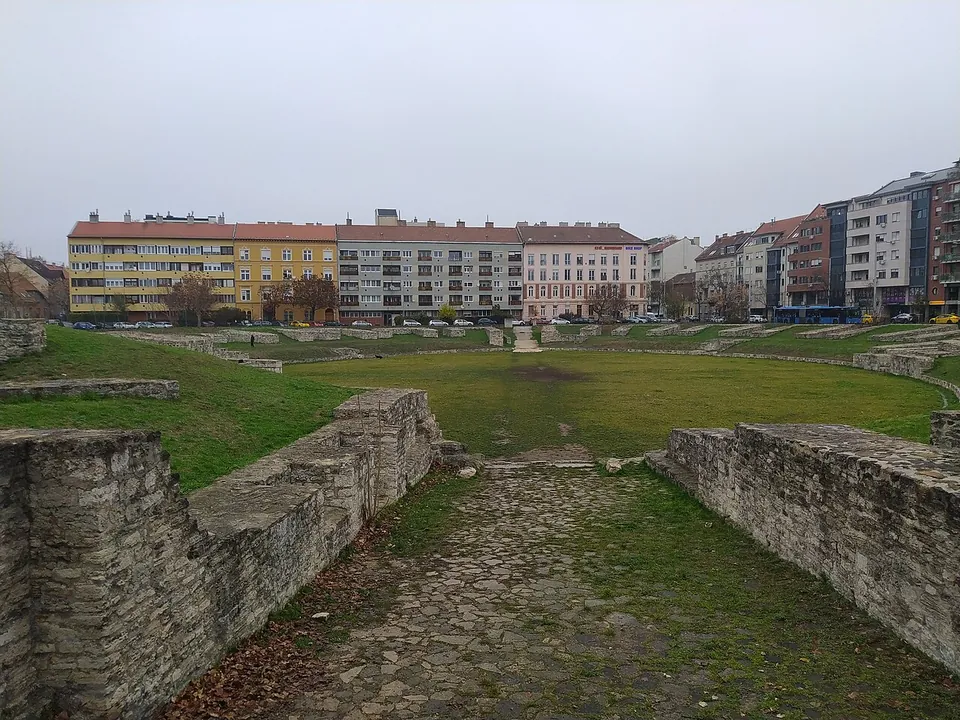
Photo: Envagyokabela · CC BY-SA 4.0 · Commons
2 km · amphitheatre · Budapest
Aquincum military amphitheatre
The building measures 131.9 by 108.4 m and is estimated to have held 12,000 to 13,000 spectators (de.wikipedia).
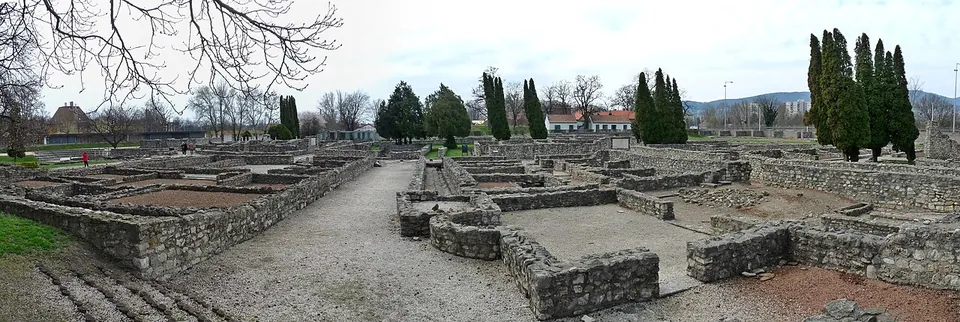
Photo: Fekist · CC BY-SA 4.0 · Commons
2 km · city · Budapest
Aquincum
The park shows public buildings and private houses of the civil town from the 2nd and 3rd centuries AD, in a layout that follows the town's plan (the operator).
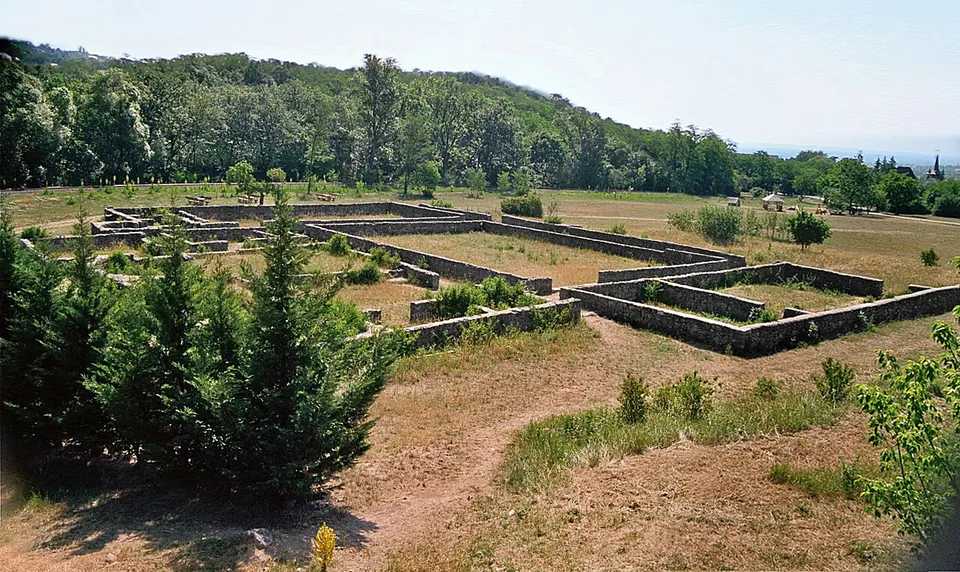
Photo: Mediatus · CC BY-SA 3.0 · Commons
16 km · villa · Pest County
Villa rustica of Szentendre-Skanzen
The foundations of the main building are almost completely exposed and open to visitors; they were conserved between 1981 and 1984 by an international building camp, after years of exposure to the weather (de.wikipedia).


Straight-line distances.
Sources
Every fact on this page comes from the records below, each used under the licence noted.
| Source | Licence |
|---|---|
| Wikidata Q1035447 | CC0 |
| OpenStreetMap way/389092282 | ODbL |
| Wikipedia (hu) — Hercules-villa | CC BY-SA 4.0 |
| Aquincum Museum — Hercules Villa (the operator, Budapest History Museum) | licence not recorded |
| Aquincum Museum — opening hours | licence not recorded |