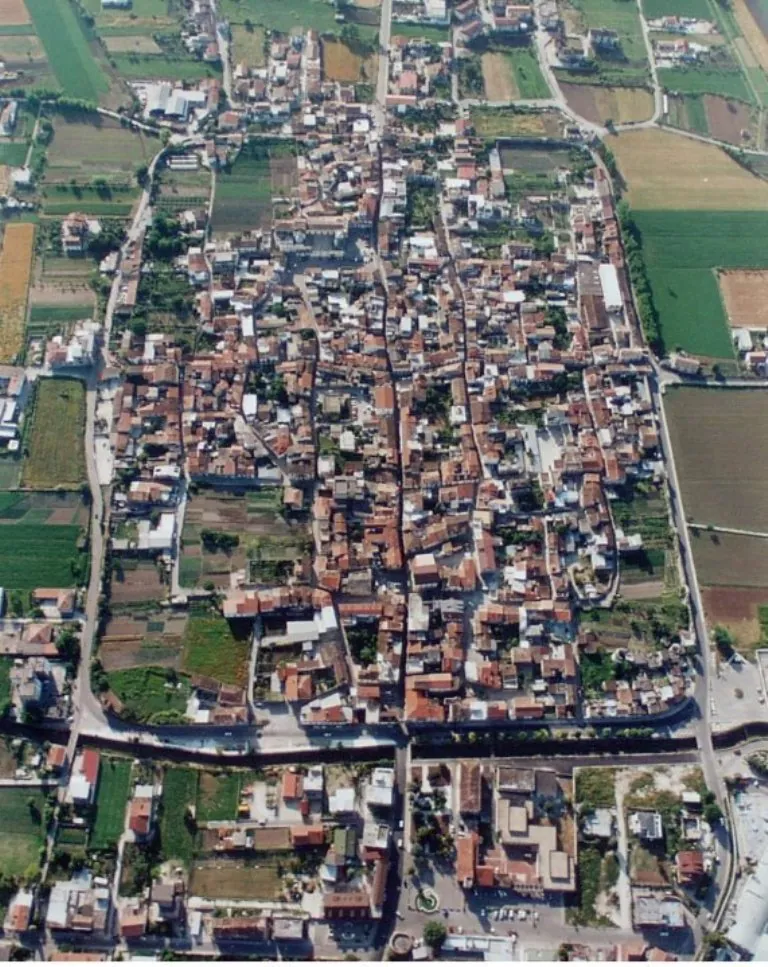
What is there today
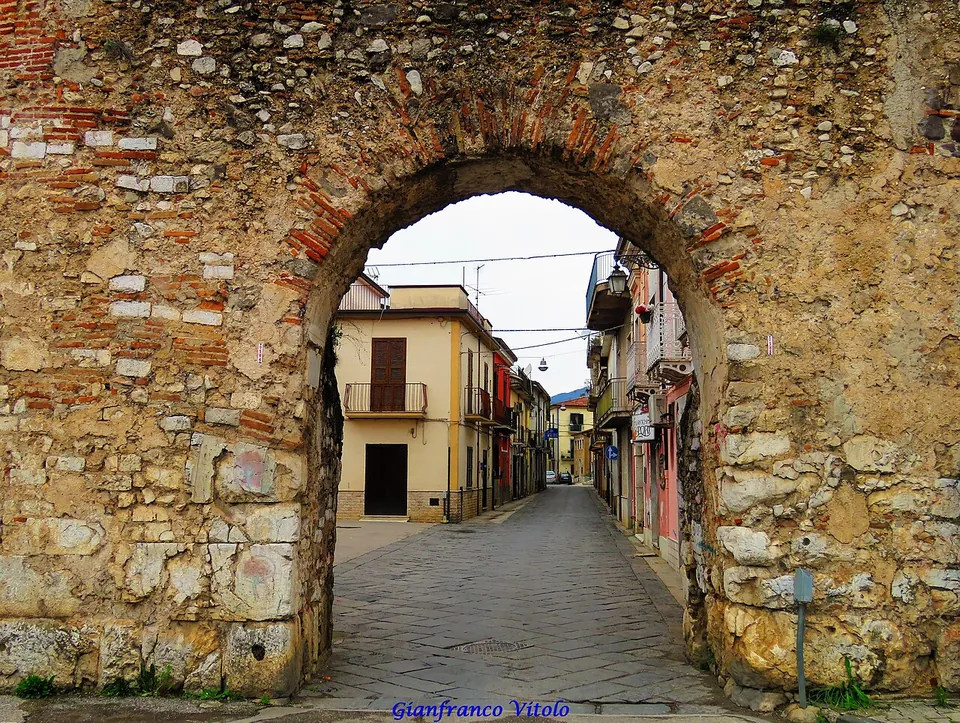
The walls are the main thing. They are in large part preserved and run right round the historic centre, a rectangle of about 540 by 410 m reinforced by small towers, semicircular and rectangular in turn. The main streets of the old town are the Roman decumanus and cardo; they cross at a point still called “il Termine” and lead out through the four gates, known today as Porta Napoli, Porta Roma, Porta Fiume and Porta Piedimonte (it.wikipedia).
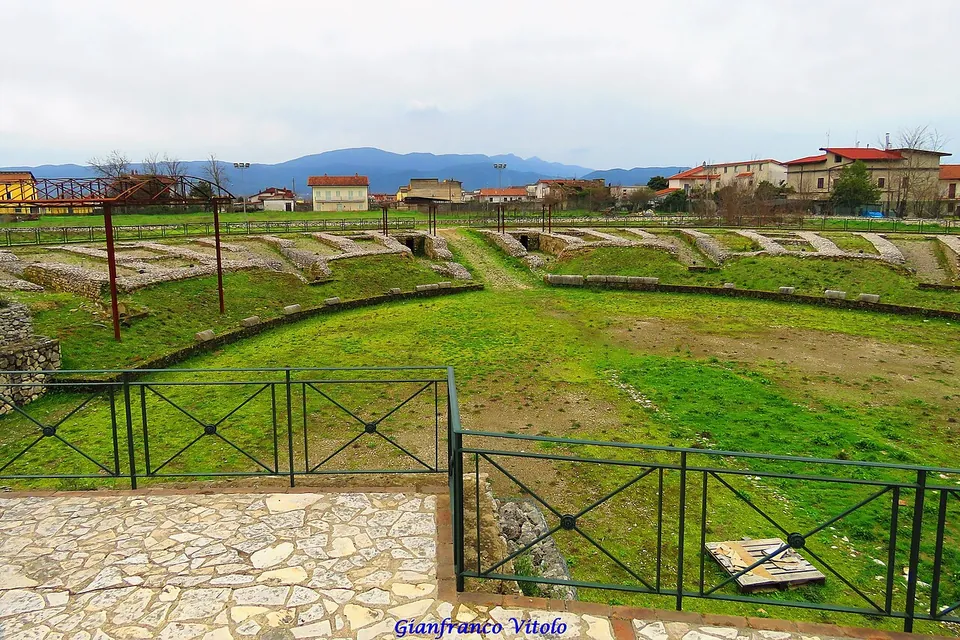
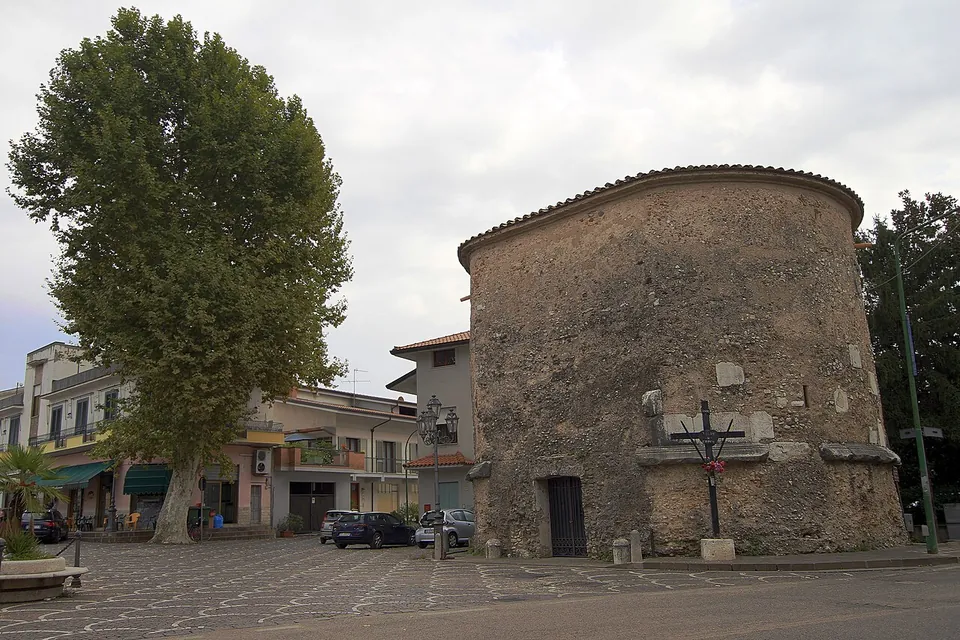
Just outside the walls, the amphitheatre has been brought back to light in recent years. Its arena measures about 70 by 45 m, with a long axis of about 110 m overall, and it is built of opus incertum and opus reticulatum, and it is still partly buried (it.wikipedia). Nearby stands the Mausoleum of the Acilii Glabriones, a Roman tomb attributed to that local family: a squat round tower that became the church of San Giovanni in the Lombard period, belonged to the Order of St John from the 12th century, and is now restored and often used for archaeological exhibitions. The cryptoporticus is an impressive underground building of the Augustan period with aisles (it.wikipedia; Pleiades).
Smaller things are scattered through the town: inscriptions, worked stones and sarcophagi in the Parco delle Pietre in Piazza S. D’Acquisto, an impluvium from a Roman house in the public garden of Piazza della Liberazione, part of the forum visible under the post office in Via Anfiteatro, and remains of the theatre in a private garden in Piazza Vescovado (it.wikipedia). The state archaeological museum, in a modern building just outside the old town, is mostly about the Samnites before Rome, notably the grave goods of the cemeteries at Conca d’Oro and Croce S. Maria; the Roman pieces on show include part of a fresco from a house on the decumanus, excavated in the early 1990s, and black-and-white mosaic floors of the 1st century BC to the 1st century AD (the operator).
Is it worth the trip?
As a stop on the way into the Matese or along the Volturno valley, yes. Walking in at a Roman gate and along streets that still follow the Roman plan, inside walls that still enclose the town, is the reason to stop, and the mausoleum and the amphitheatre are a few minutes apart.
As a long detour, probably not, unless you can time it. The amphitheatre and the cryptoporticus have no published regular opening: they are opened on announced days, such as the European Heritage Days in September and the European Archaeology Days in June, and on other days the amphitheatre is seen from outside its railing, as in the photograph above, and the cryptoporticus not at all. The museum, which would fill the gap, closes at 13.30 on four days a week.
Getting there
Alife lies in the province of Caserta, about 5 km from Piedimonte Matese, reached by the SS 158 along the Volturno valley and the SS 372 Telesina (it.wikipedia). A car park is mapped about 200 m from the amphitheatre, and the museum about 250 m away (OpenStreetMap).
Without a car: Alife has a station on the line from Naples through Santa Maria Capua Vetere to Piedimonte Matese (it.wikipedia), mapped about 430 m from the amphitheatre (OpenStreetMap).
The walls, the gates and the outside of the mausoleum are in public streets and cost nothing. The museum is in Piazza XIX Ottobre. It is closed on Mondays; on Tuesdays and Thursdays it opens 09.00 to 19.30, and on Wednesdays and Fridays to Sundays 09.00 to 13.30, with the last tickets half an hour before closing. A ticket is €5, €2 for EU citizens aged 18 to 25, and free under 18; tickets are sold as e-tickets through the Musei Italiani website or app (Ministry of Culture, read 24 October 2026 - check before travelling).
Visiting details
- Opening hours
- Roman remains in the town: the walls, the four gates and the outside of the mausoleum stand in public streets and squares. The amphitheatre, the cryptoporticus and the mausoleum interior open only on special days announced by the Comune and the Soprintendenza; no regular hours are published. Archaeological museum: closed Monday; Tuesday and Thursday 09.00–19.30, Wednesday and Friday to Sunday 09.00–13.30; tickets on sale until 19.00 or 13.00.
- Tickets
- Streets and the outside of the monuments free. Museum €5; €2 for EU citizens aged 18 to 25; free under 18 and for the other categories exempt by law. Tickets are e-tickets from the Musei Italiani website or app; booking is optional.
- Parking
- A car park is mapped about 200 m from the amphitheatre (OSM way/1466166341).
Before you go
- The amphitheatre and the cryptoporticus are opened only on announced days (European Heritage Days, European Archaeology Days); on other days the amphitheatre can be seen only from outside its railing.
- The museum closes at 13.30 on four days of the week.
Hours and prices checked 24 October 2026 on the operator's own site. Confirm before travelling.
History
Allifae began as an Oscan or Samnite town and struck its own coins in the 4th century BC; where that Samnite town stood is not known (en.wikipedia). It changed hands repeatedly in Rome’s wars with the Samnites: Livy records it taken in 326 BC, taken by storm again in 310 BC, and in 307 BC a pitched battle near the town in which the proconsul Quintus Fabius defeated the Samnite army (en.wikipedia).
After the conquest the town was rebuilt on the regular plan of Roman colonisation. It was first a praefectura without the vote, then a municipium enrolled in the Teretina tribe (it.wikipedia); the Liber Coloniarum records a colony settled there by the triumvirs, and inscriptions confirm its colonial rank (en.wikipedia). Inscriptions also show it remained a place of importance under the Empire, with many new public buildings under Hadrian, and the itineraries place it on the Via Latina, 17 miles from Teanum (en.wikipedia). A surviving fragment of the town’s calendar mentions a circus, of which no trace has been found (it.wikipedia).
The walls belong to the late Republic: it.wikipedia dates them to the age of Sulla in the 1st century BC, and Pleiades puts the circuit in the late Republic on the evidence of its building technique. The town was never abandoned after the end of the Western Empire; its first documented bishop, Clarus, is recorded in 499, and in the Lombard period a castle was built on Roman fortifications (it.wikipedia).
More photographs
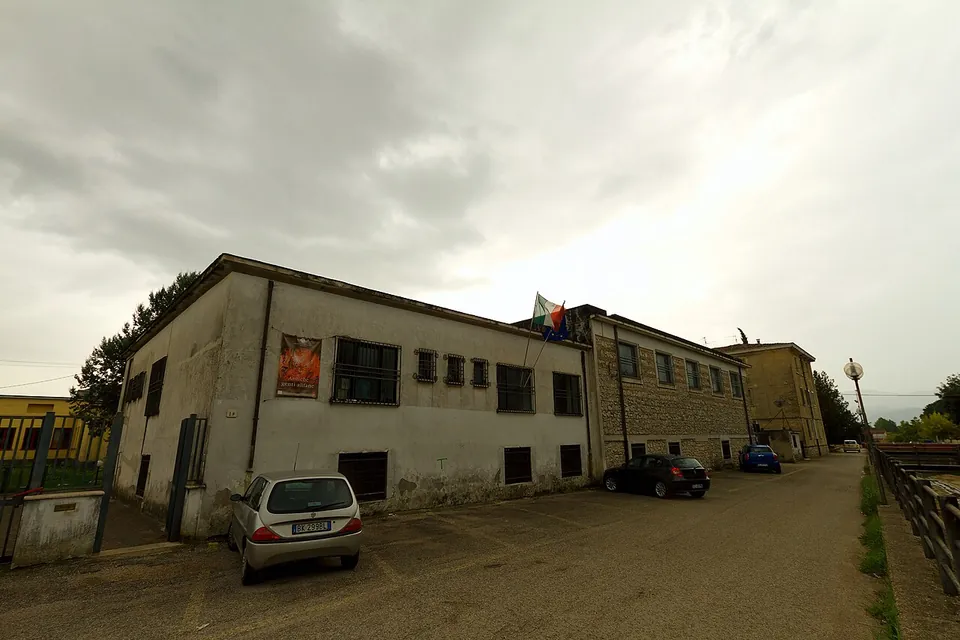
Nearby
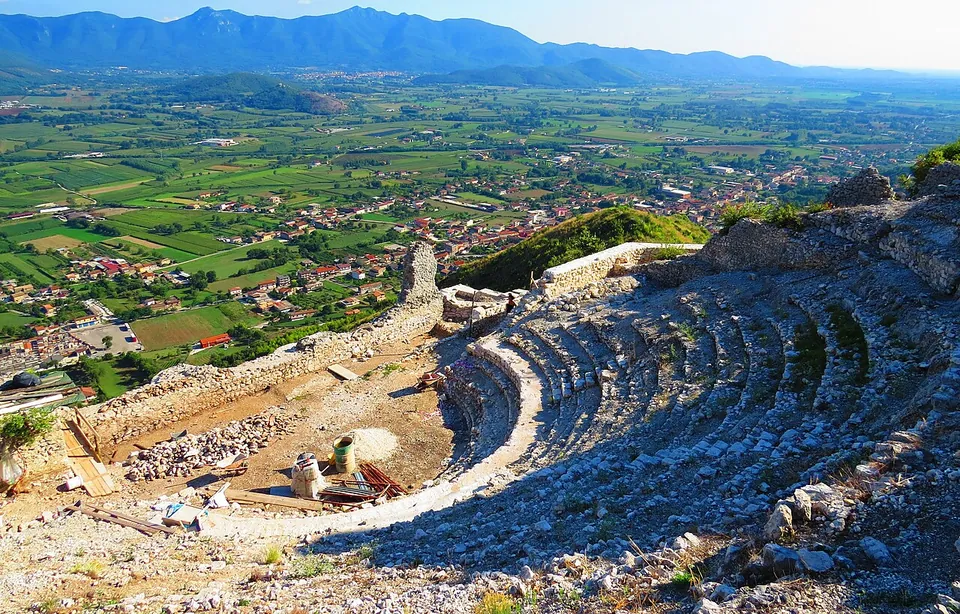
Photo: Gianfranco Vitolo from Sarno (Sa), Italia · CC BY-SA 2.0 · Commons
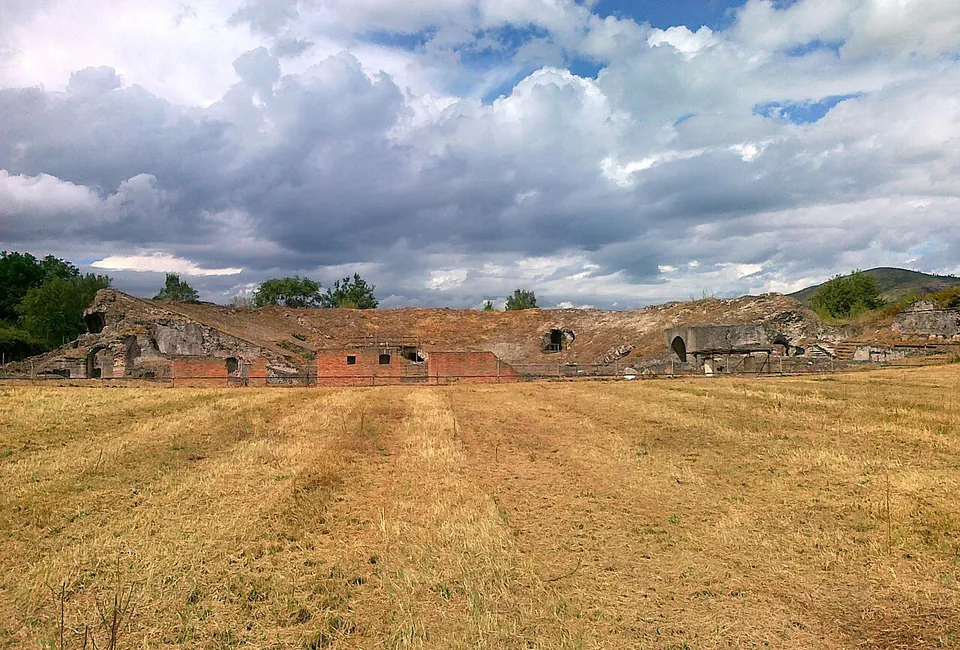
Photo: PietroCifone · CC BY-SA 3.0 · Commons
22 km · city · Campania
Cales
The ancient town survives across its whole extent, though the motorway runs through it, and the Ministry of Culture says plainly that its remains are not easy to read on the ground (cultura.gov.it).
27 km · city · Molise
Saepinum
The walls are the first thing you see: a circuit of about 1,270 m in small-stone net-pattern masonry, punctuated by round towers, enclosing about 12 hectares, with a monumental gate at each end of the two main streets (it.wikipedia).
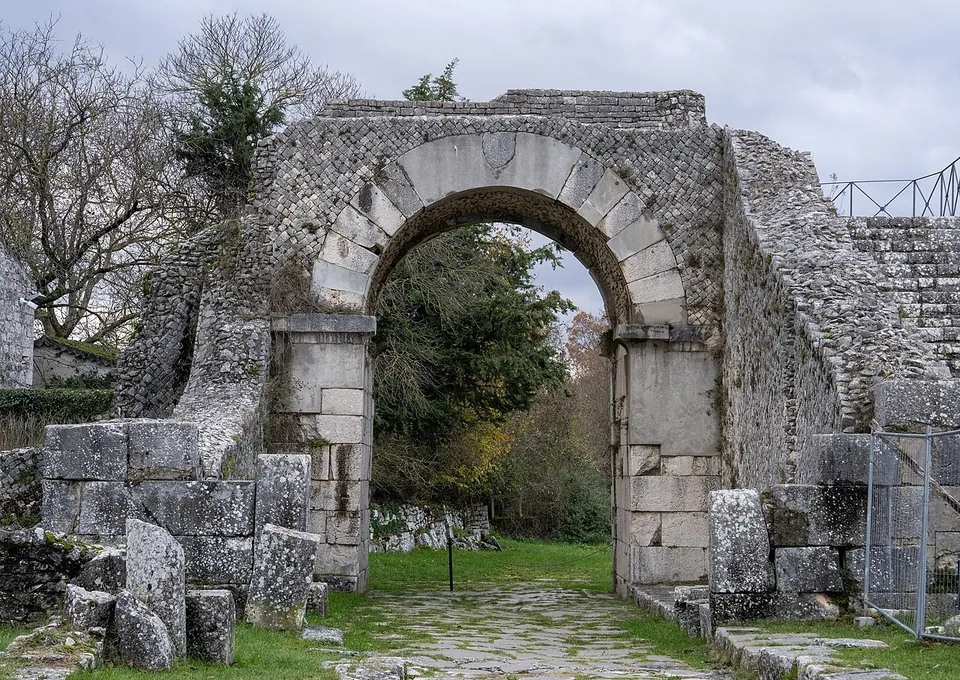


Straight-line distances.
Sources
Every fact on this page comes from the records below, each used under the licence noted.
| Source | Licence |
|---|---|
| Pleiades 432658 | CC BY |
| Wikidata Q3626067 | CC0 |
| Wikipedia (en) — Allifae | CC BY-SA 4.0 |
| Wikipedia (it) — Alife | CC BY-SA 4.0 |
| Wikipedia (it) — Anfiteatro romano di Alife | CC BY-SA 4.0 |
| Pleiades — Allifae amphitheatre | licence not recorded |
| Pleiades — Cryptoporticus at Alife | licence not recorded |
| Pleiades — Porta Napoli (Alife), one of the four gates | licence not recorded |
| Wikidata — Mausoleum of the Acilii Glabriones (Q29901846) | licence not recorded |
| Ministero della Cultura — Museo archeologico nazionale dell'antica Allifae (hours and tickets) | licence not recorded |
| Ministero della Cultura — Museo archeologico nazionale dell'antica Allifae, Carta della qualità dei servizi (2026) | licence not recorded |
| Ministero della Cultura — European Heritage Days 2024 in Alife (special opening of the cryptoporticus, mausoleum and amphitheatre) | licence not recorded |
| Soprintendenza ABAP Caserta e Benevento — press coverage of the European Archaeology Days 2025 in Alife | licence not recorded |