What is there today
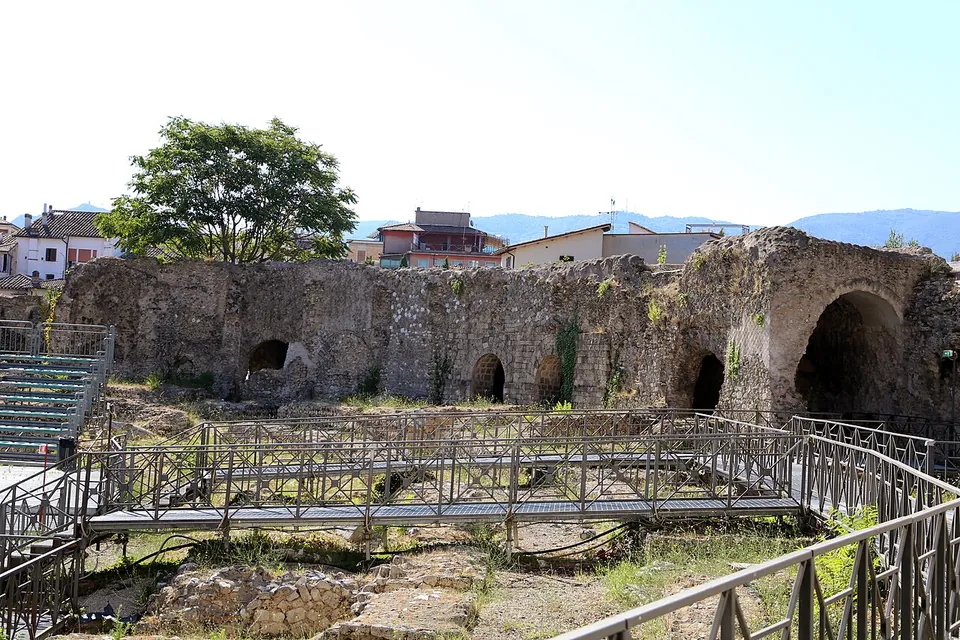
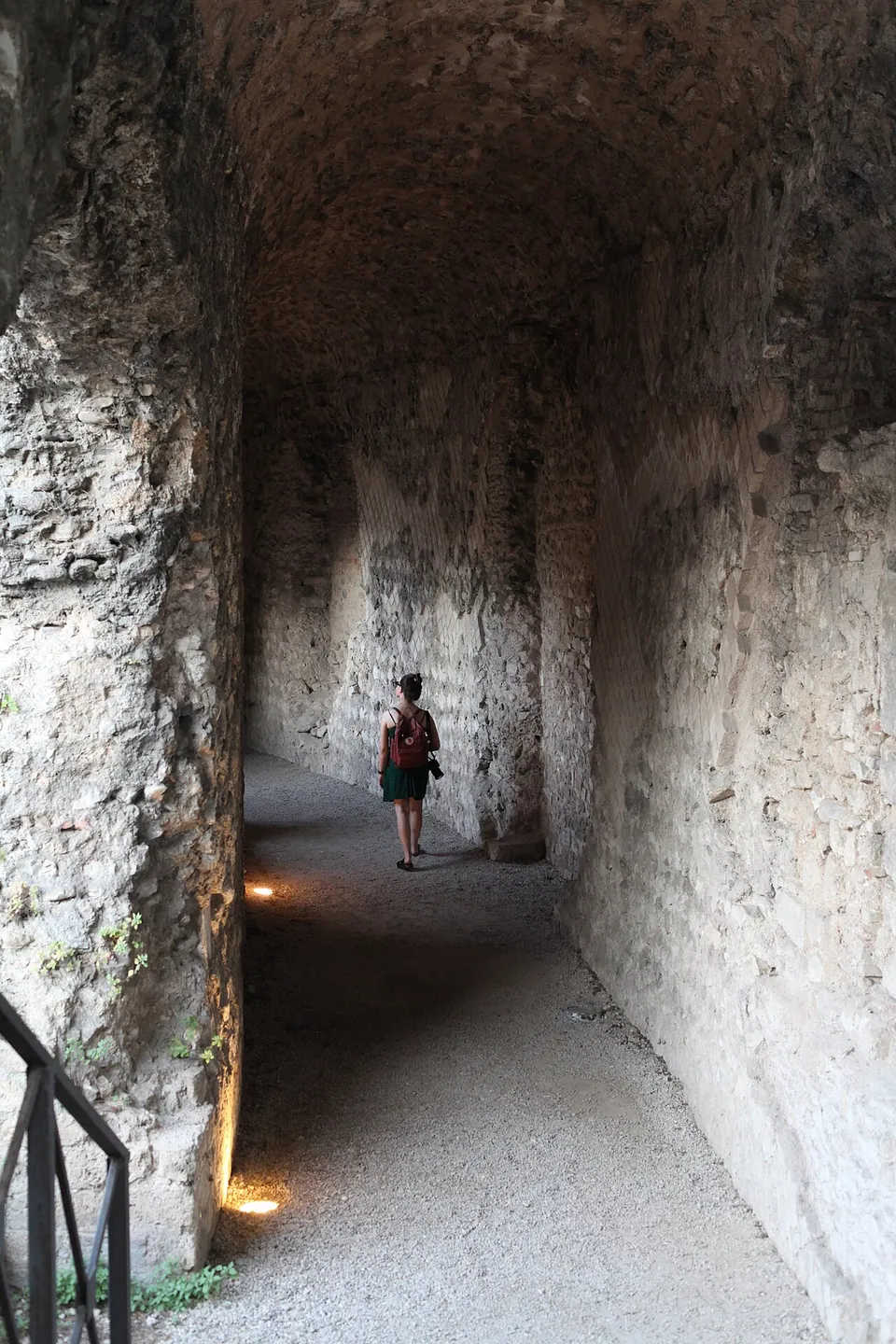
The oval is still easy to read on the ground, about 97.5 by 73 m overall (it.wikipedia). What stands is the ground floor only, in places up to 10 m high (the city’s tourism portal). Long stretches of the outer gallery can be traced, with bays that alternated open and closed, together with part of the inner ring gallery, some of the radial rooms that carried the seating, and the two main entrances at either end of the long axis; inside, the seating has been partly rebuilt (the operator, CAOS). The radial rooms under the inner ring of seating, the podium and its corridor are still underground (it.wikipedia).
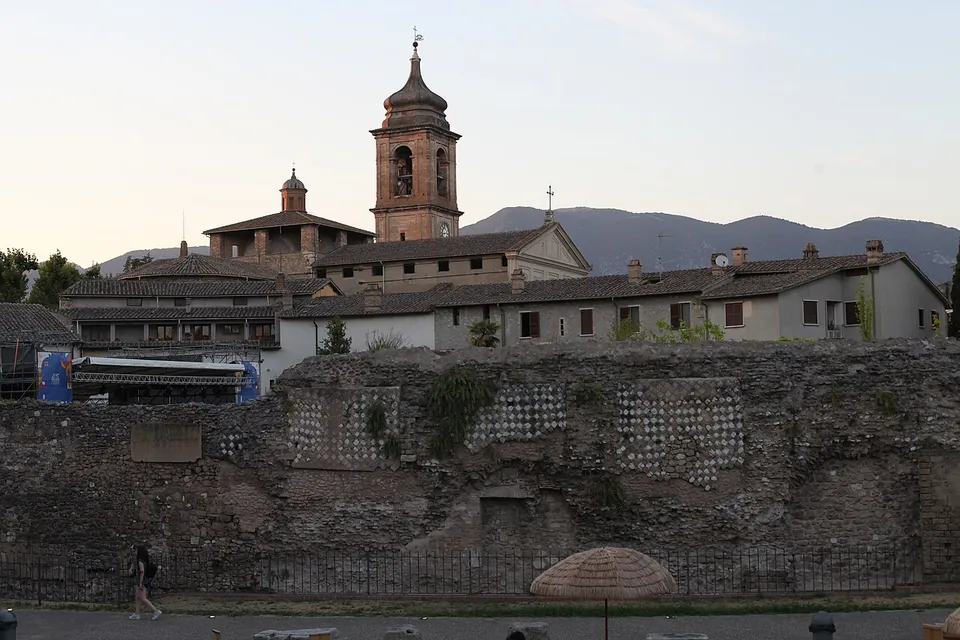
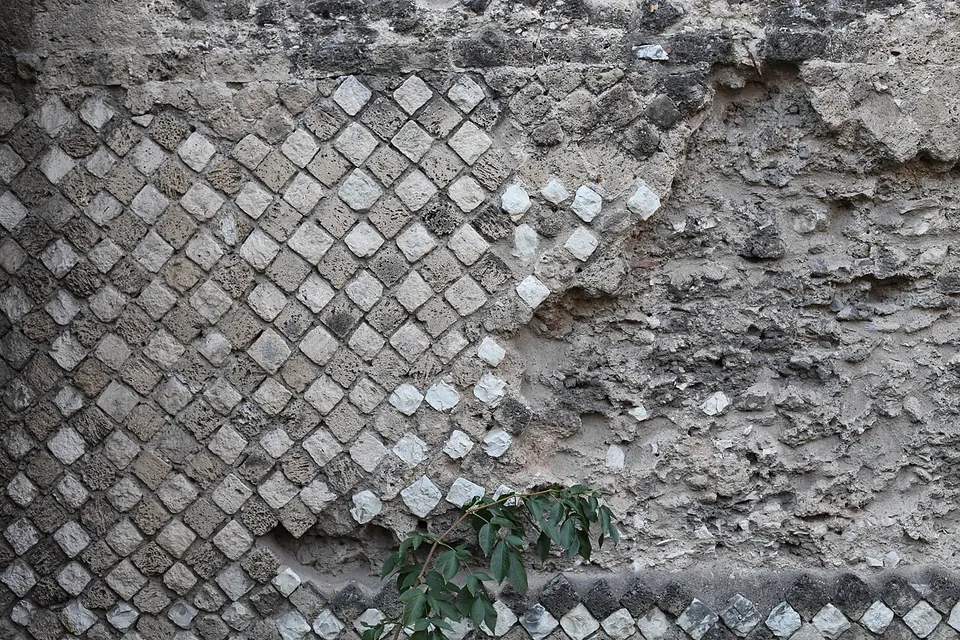
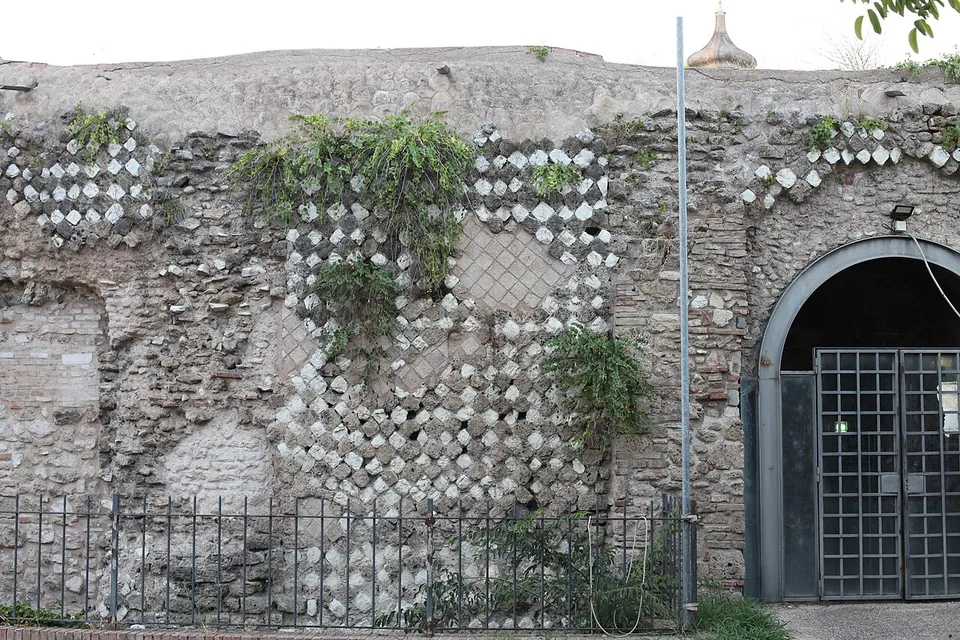
The outer face is the thing to look at: patches of two-coloured opus reticulatum in local stone, probably chosen for the parts of the building most in view (CAOS). The Church of the Carmine and the bishop’s palace grew into the ring over the centuries and still merge with its walls in places (it.wikipedia). A copy of the inscription that gave the amphitheatre its name is fixed on the facade; the original is in the city’s archaeological museum (CAOS).
Is it worth the trip?
If you are in Terni, yes: it is the most substantial Roman thing in the city, and photographs on Commons show long stretches of the outer wall along the street, so the outside can be taken in on a walk past. As a reason to travel to Terni on its own it is modest. This is a ground-floor ring partly swallowed by later buildings, not a standing arena, and the interior opens only for booked visits in a few weekend slots. In summer it is used for live shows and open-air cinema (it.wikipedia, CAOS), which is another way in.
Getting there
The amphitheatre is in Terni’s historic centre, beside the cathedral square (Piazza Duomo) and Via del Vescovado (OpenStreetMap). There is a free surface car park about 180 m away (OpenStreetMap).
Visits are by booking only. The operator’s page for the amphitheatre gives Saturday and Sunday 10.00–13.00 and says it can be visited by booking from Thursday to Sunday; the city’s tourism portal gives weekends 10.00–13.00 in May and 16.00–19.00 from June. Book by e-mail ([email protected]) or by phone (+39 0744 1031864, Thursday to Sunday). The amphitheatre is included in the CAOS museum ticket, €5 or €3.50 reduced, which also covers the modern art museum and the archaeological museum, where the original inscription is shown; residents of Terni go free (caos.museum, read 21 October 2026 — check before travelling).
Visiting details
- Opening hours
- Visits by booking only. The operator's page for the amphitheatre gives Saturday and Sunday 10.00–13.00 and says it can be visited by booking from Thursday to Sunday; the city's tourism portal gives Saturday and Sunday 10.00–13.00 in May and 16.00–19.00 from June. Book by e-mail ([email protected]) or by phone (+39 0744 1031864, Thursday to Sunday).
- Tickets
- €5 (reduced €3.50) for the CAOS museum ticket, which covers the amphitheatre (by booking) together with the modern art museum and the Claudia Giontella archaeological museum. Free for residents of Terni.
- Parking
- Free surface car park about 180 m from the amphitheatre (OSM way/86257029, fee=no).
Before you go
- The interior opens only for booked visits in limited weekend slots; book before you travel.
Hours and prices checked 21 October 2026 on the operator's own site. Confirm before travelling.
History
The amphitheatre stood inside the walls of the Roman town but outside its built-up area, close to the southern gate through which the eastern branch of the Via Flaminia entered the city: a site that made it easy for crowds to come and go (the city’s tourism portal). The building technique, its structure and recent excavations place it in the Julio-Claudian period, part of the programme of public works that monumentalised Interamna (the city’s tourism portal; CAOS dates it to the first decades of the 1st century AD).
The name “Fausto” comes from Faustus Titius Liberalis, a sevir Augustalis, one of the officials of the imperial cult, named in an inscription of AD 32 found in the 15th century (the city’s tourism portal; CAOS calls its findspot uncertain). It was long read as the amphitheatre’s dedication, which is why older accounts date the building to AD 30 or 32 under Tiberius (it.wikipedia, Pleiades). A newer reading of the text makes it a sacred dedication, probably of a monumental altar, unconnected with the amphitheatre (the city’s tourism portal, CAOS). The same inscription dates the beginnings of the settlement that became Terni to 672 BC (CAOS).
For a long time the ruin served as a quarry for building stone and belonged to the bishopric. Houses were built against it through the Middle Ages and later, and were demolished in the 1930s; the Church of the Carmine, a manuscript records, began with an image of the Madonna painted in fresco on the old wall of the amphitheatre (CAOS). A 15th-century drawing shows a second storey with lintelled windows that no longer survives (the city’s tourism portal). Restoration has gone on since the 1970s (it.wikipedia).
More photographs
Nearby
Photo: ImagoAnimae · CC BY-SA 3.0 · Commons
11 km · city · Umbria
Carsulae
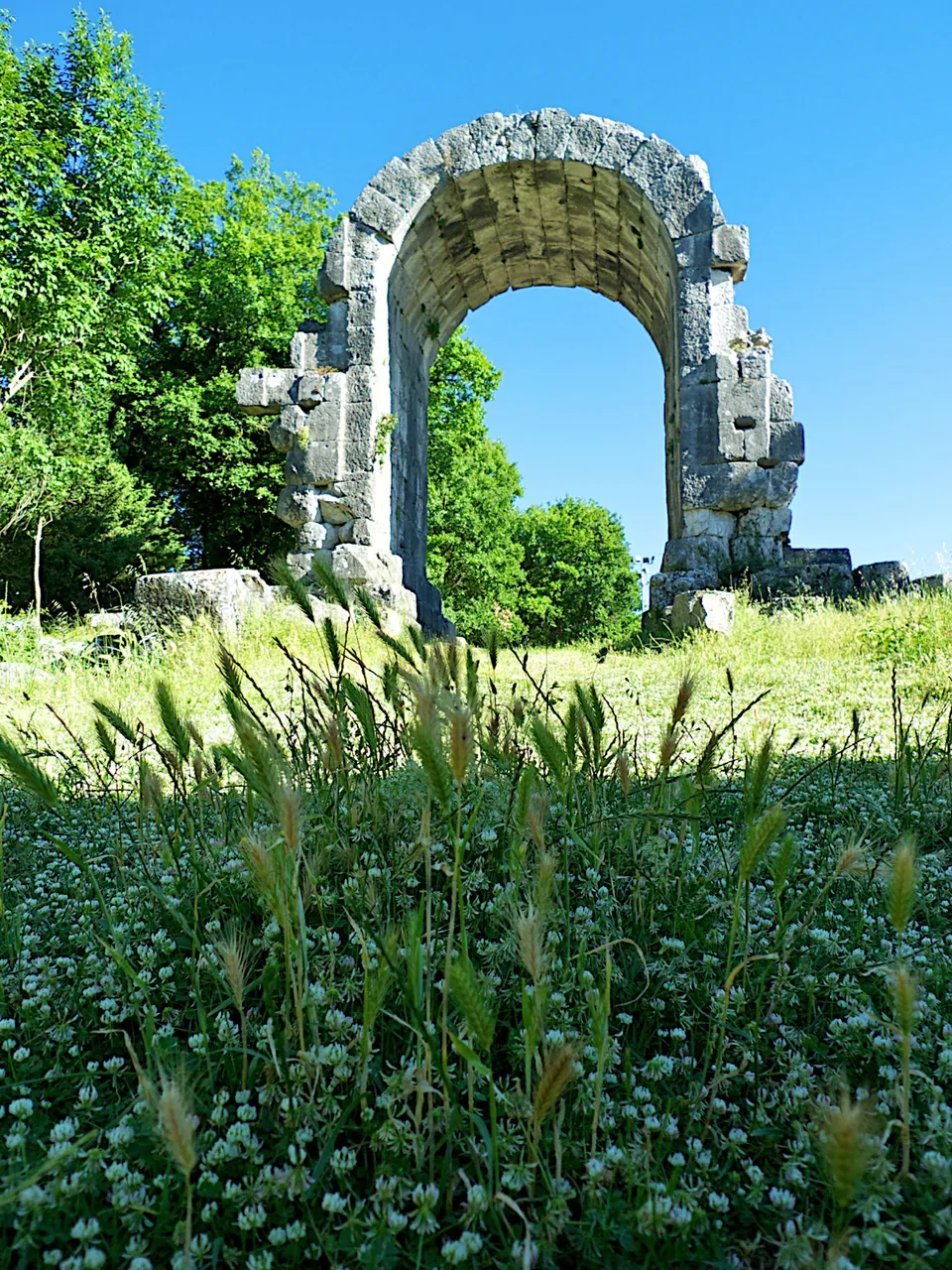
The ticketed area is a fenced expanse of meadow and trees of 22 hectares (it.wikipedia).
Photo: JoJan · CC BY 3.0 · Commons


Straight-line distances.
Sources
Every fact on this page comes from the records below, each used under the licence noted.
| Source | Licence |
|---|---|
| Pleiades 835084118 | CC BY |
| Wikidata Q21208463 | CC0 |
| Vici.org 4232 | CC BY-SA (text), CC0 (metadata) |
| OpenStreetMap way/86257035 | ODbL |
| CAOS, Terni — Anfiteatro Romano (the operator) | licence not recorded |
| CAOS, Terni — tickets and hours | licence not recorded |
| Vivi Terni, tourism portal of the Comune di Terni — Roman Amphitheatre | licence not recorded |
| Wikipedia (it) — Anfiteatro Fausto | CC BY-SA 4.0 |
| Pleiades — Interamna Nahars | licence not recorded |