What is there today
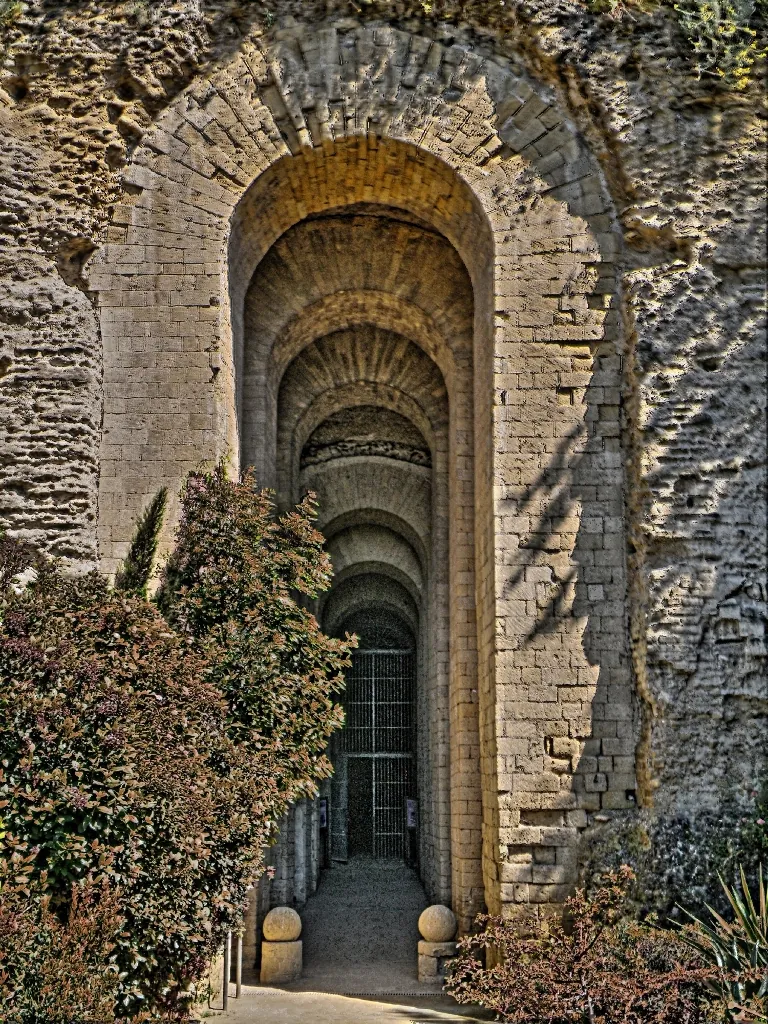
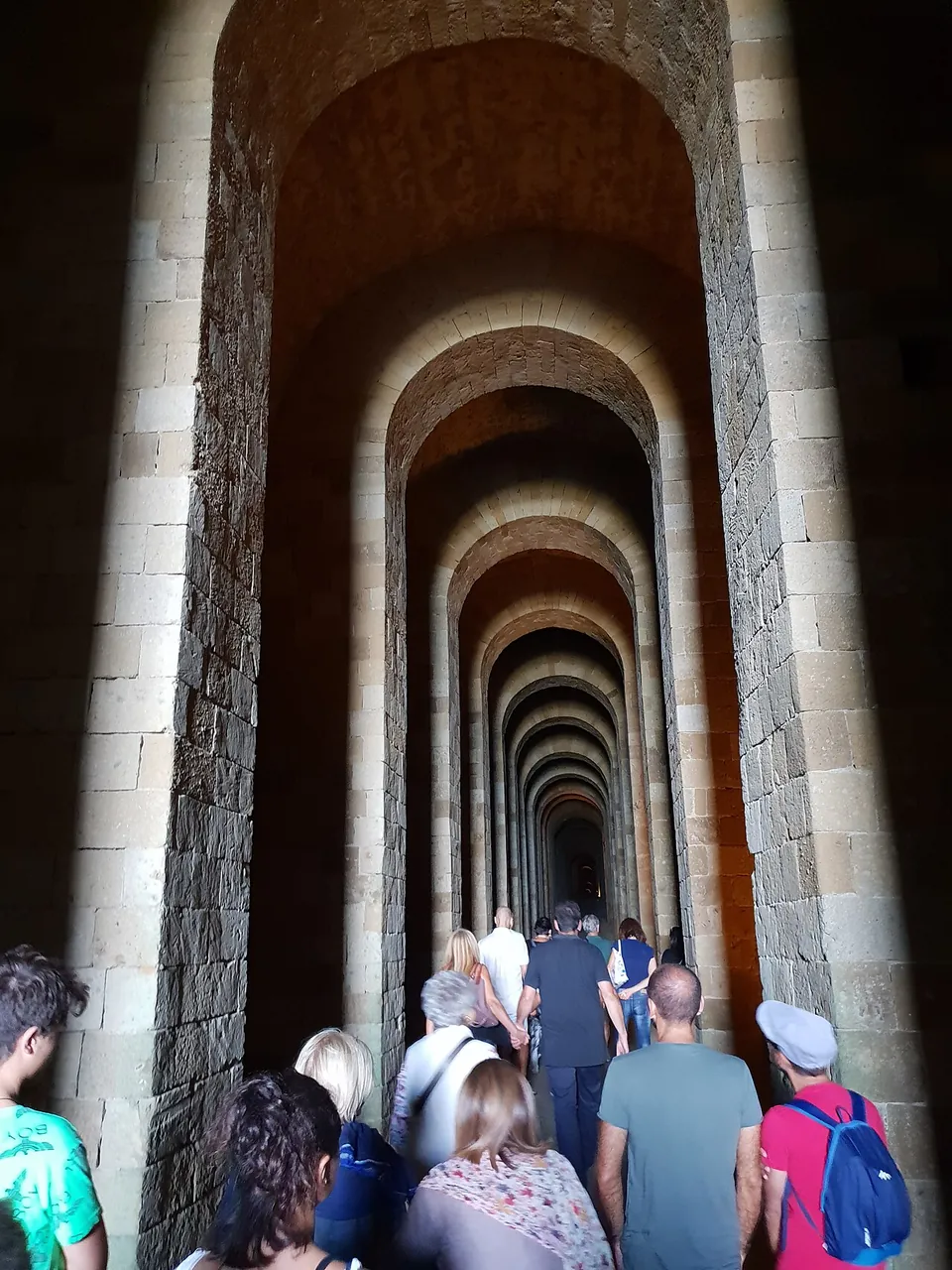
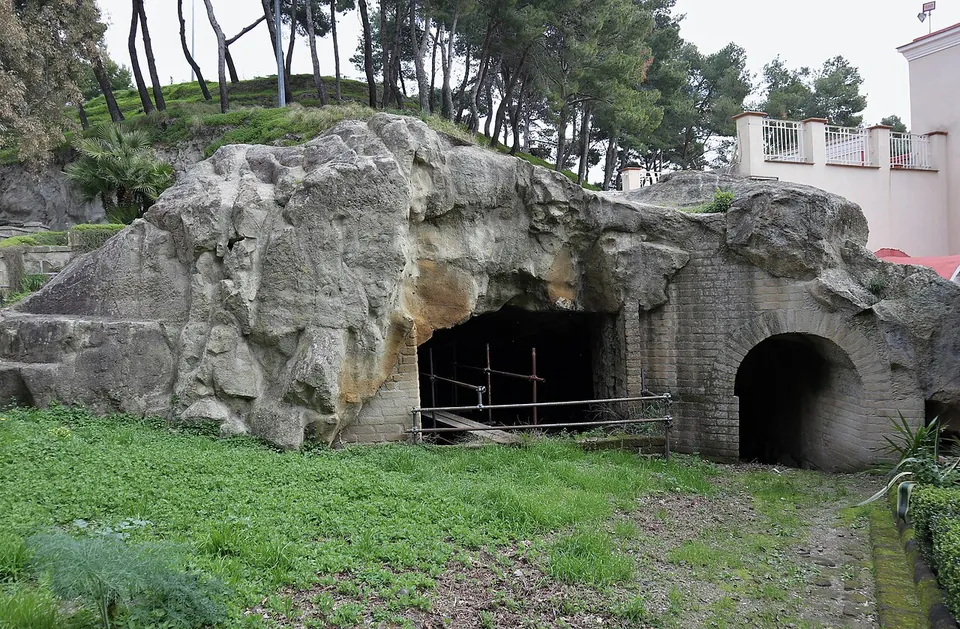
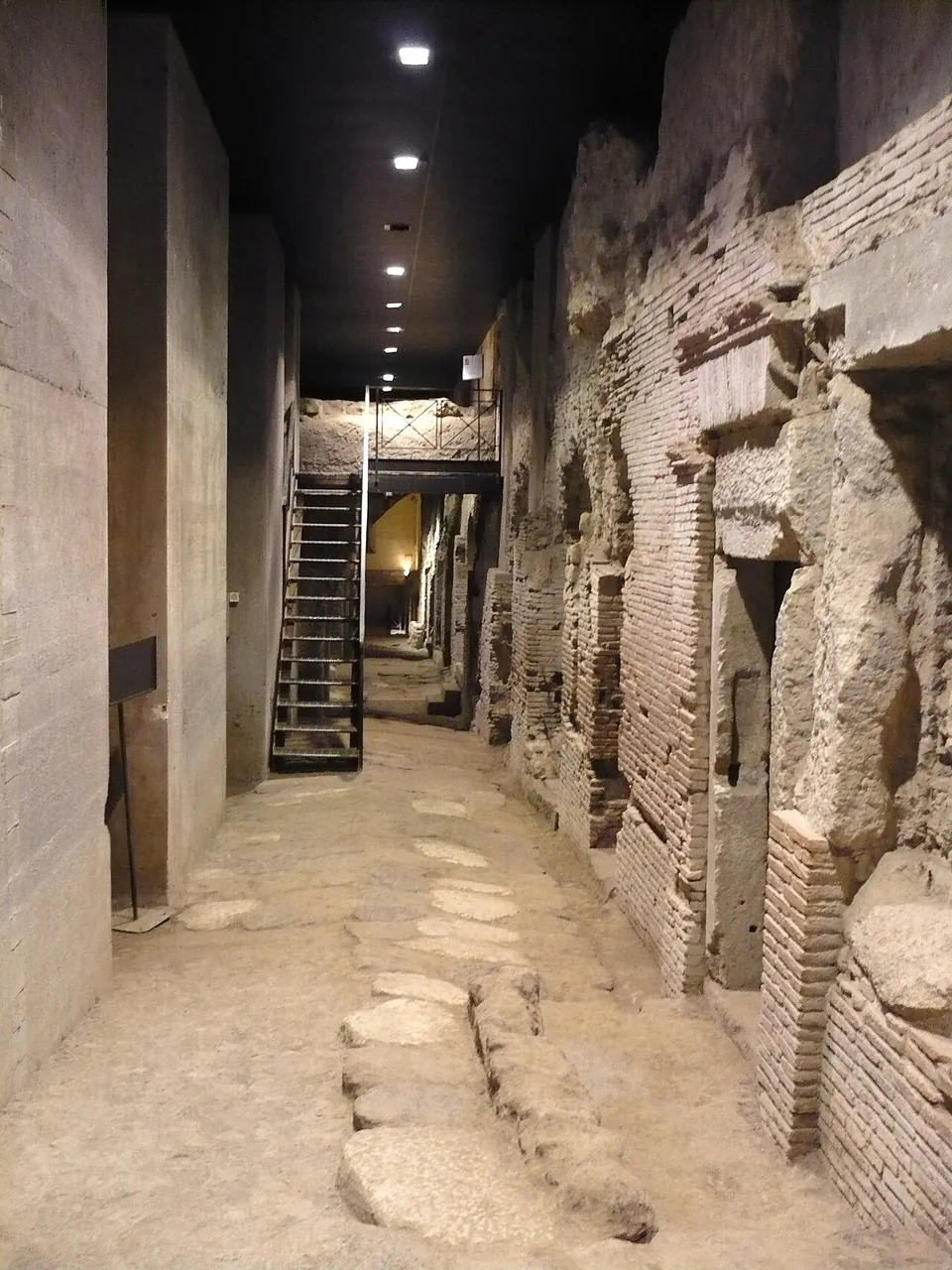
The way in is the visit’s first monument. The Grotta di Seiano is a tunnel about 770 m long, cut through the tuff of the Posillipo hill in the Roman period. It runs east to west in a straight line, though its height and width vary, and three side passages branch off its south wall to openings above the bay that bring in light and air (it.wikipedia). Every visit walks its whole length before coming out into the park on the far side, and on the guided visit the guide explains how it was dug (the operator).
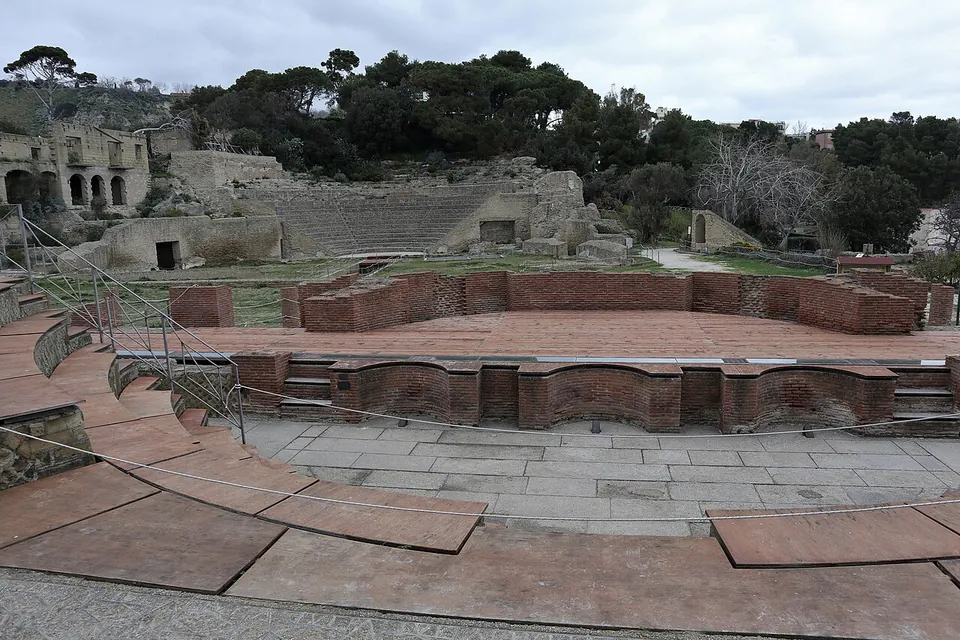
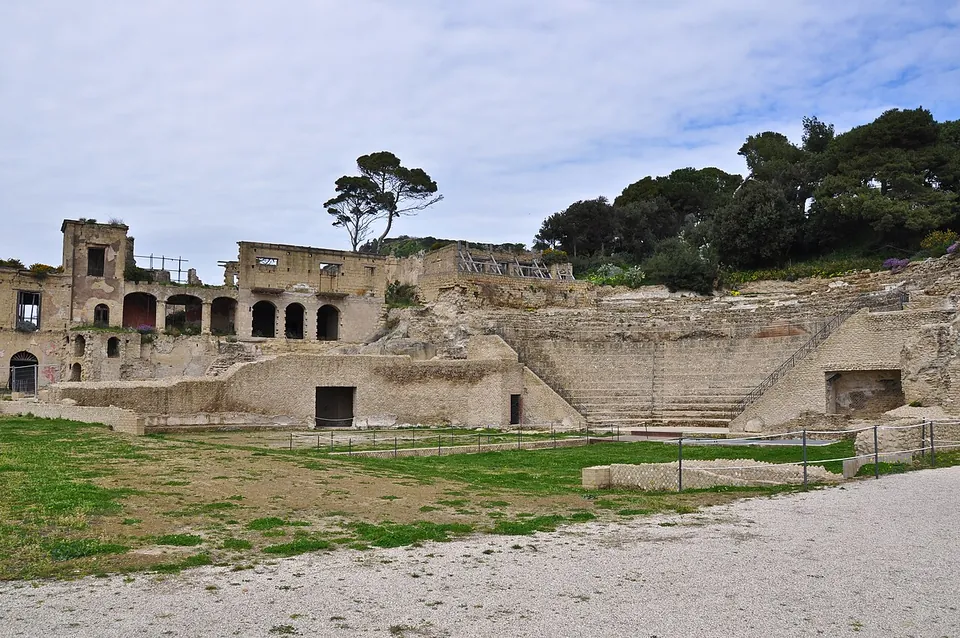
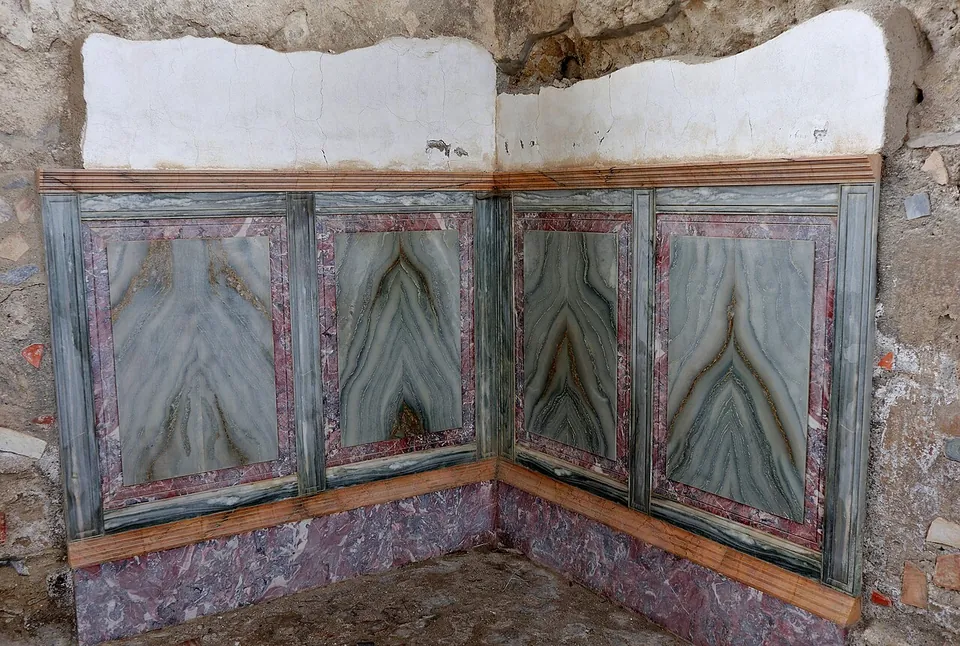
There, on the headland above the bay of Trentaremi, are the theatre with its seating set into the slope, the odeon for smaller performances, and some of the villa’s reception rooms, where traces of the wall decoration survive. In several places you can see the water conduits of an aqueduct, lined with waterproof mortar (it.wikipedia). From the theatre area a path leads to a viewpoint over the islets of the Gaiola and the Scoglio di Virgilio (the operator). The villa reached down to the sea, and its maritime structures now lie under water inside the Parco Sommerso di Gaiola, a marine protected area since 2002, where trips by sea show the submerged remains (it.wikipedia). Information boards stand at the theatre and the odeon (OpenStreetMap).
Is it worth the trip?
When it is open, yes, if you are in Naples. A Roman theatre and odeon on a cliff over the bay, reached by a Roman tunnel nearly 800 m long, is a striking combination, and the escorted entry cost nothing before the closure. It is still not a place to drop in on: there is no walk-in visit, only booked visits that start from the tunnel at fixed times, and the restoration works already left the theatre area only partly open before the park shut (the operator).
For now, though, the honest answer is that you cannot go in. The operator announced the closure from 1 October 2026 without a date for reopening, so check gaiola.org before building a day around it.
Getting there
Every visit starts at the entrance to the Grotta di Seiano, Discesa Coroglio 36, on the Bagnoli side of the hill (the operator). An ANM bus stop, “Discesa Coroglio - Grotta Seiano”, is mapped a few metres from the tunnel mouth, and there are car parks about 150 m away (OpenStreetMap). The theatre itself is about 0.9 km in a straight line from the entrance, on the other side of the hill, and you do not reach it by any other way on a public visit.
Before the closure, visits ran Tuesday to Sunday and had to be booked online at gaiola.org. The escorted entry without a guide left at 09.15, took about an hour and was free. Guided visits, about an hour and a half, left at 11.00 from Tuesday to Friday and at 10.30 and 12.15 on Saturdays, Sundays and holidays, and cost €7 for adults and €4 for children aged 7 to 14, free up to 6. During the works visitors also signed a liability waiver sent with the booking, and the park closed whenever a weather alert was in force (gaiola.org, read 19 October 2026). Expect the arrangements to change when it reopens.
Visiting details
- Opening hours
- Closed to the public from 1 October 2026 for restoration and safety works; the operator gives no reopening date. Until then visits ran Tuesday to Sunday by online booking only - an escorted entry without a guide at 09.15, and guided visits at 11.00 Tuesday to Friday and at 10.30 and 12.15 on Saturdays, Sundays and holidays. The park also closes whenever a weather alert is in force.
- Tickets
- Before the closure the escorted entry was free; a guided visit (about 1 hour 30 minutes) cost €7 for adults and €4 for children aged 7 to 14, free up to 6.
- Parking
- Car parks about 150 m from the Grotta di Seiano entrance on Discesa Coroglio (OSM way/1495677470 and way/1091758684).
Before you go
- Closed from 1 October 2026 for restoration works, with no reopening date published. Check gaiola.org before planning a visit.
- There is no walk-in visit. Entry is on a booked visit that starts at the Grotta di Seiano entrance at a fixed time, so you go round with a guide or an escort.
Hours and prices checked 19 October 2026 on the operator's own site. Confirm before travelling.
History
After the battle of Actium in 31 BC, Vedius Pollio chose the stretch of coast between the Gaiola and the bay of Trentaremi, known as Pausilypon, “relief from pain”, for his retreat. Beside the villa he built the theatre, the odeon, a nymphaeum and a bath complex. When he died in 15 BC the villa passed to Augustus and became a residence of the emperors; Hadrian is named as the last of them to live there (it.wikipedia). Pleiades records Pausilipum as an ancient Graeco-Roman settlement on the Bay of Naples.
The tunnel is named after Sejanus, Tiberius’s prefect, who by tradition had it widened and put in order in the 1st century AD. The first cut is attributed to the architect Lucius Cocceius Auctus, working for Marcus Agrippa some fifty years earlier, to link Pollio’s villa and the other villas of Pausilypon with the ports of Puteoli and Cumae (it.wikipedia; Pleiades notes the attribution to Cocceius as the usual one). It fell out of use and was forgotten until roadworks uncovered it by chance in 1841; Ferdinand II of Bourbon had it cleared and opened, and it became a tourist sight. In the Second World War it served the people of Bagnoli as an air-raid shelter, and war damage and landslides in the 1950s left it abandoned again (it.wikipedia).
The park reopened to the public after restoration in 2009, with the Centro Studi Interdisciplinari Gaiola running the guided itineraries (it.wikipedia). The visits are organised with the Soprintendenza Archeologia, Belle Arti e Paesaggio for the city of Naples (the operator).
A little further along the coast, near Marechiaro, the ruin known as the Palazzo degli Spiriti is described as part of a nymphaeum belonging to the same villa; some read its sunken basins as a fishpond for moray eels (it.wikipedia).
More photographs
Nearby
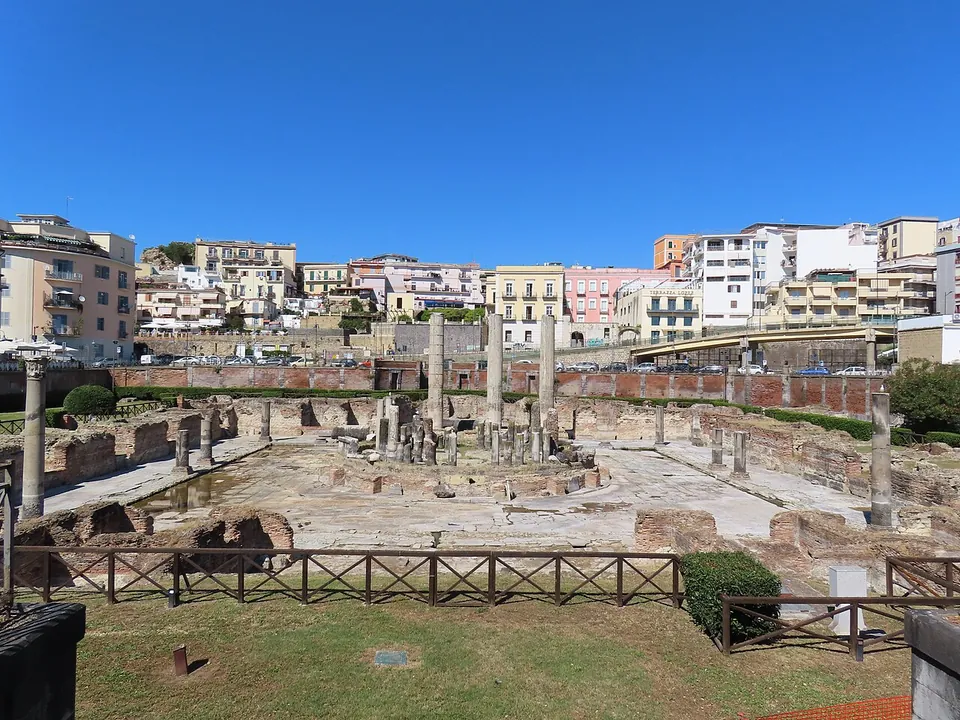
Photo: Superchilum · CC BY-SA 4.0 · Commons
6 km · site · Campania
Macellum of Pozzuoli
The whole plan of the market lies open in a sunken square of about 58 by 75 m, a few steps from the harbour quays in the centre of Pozzuoli (the operator).
6 km · city · Campania
Puteoli – Pozzuoli
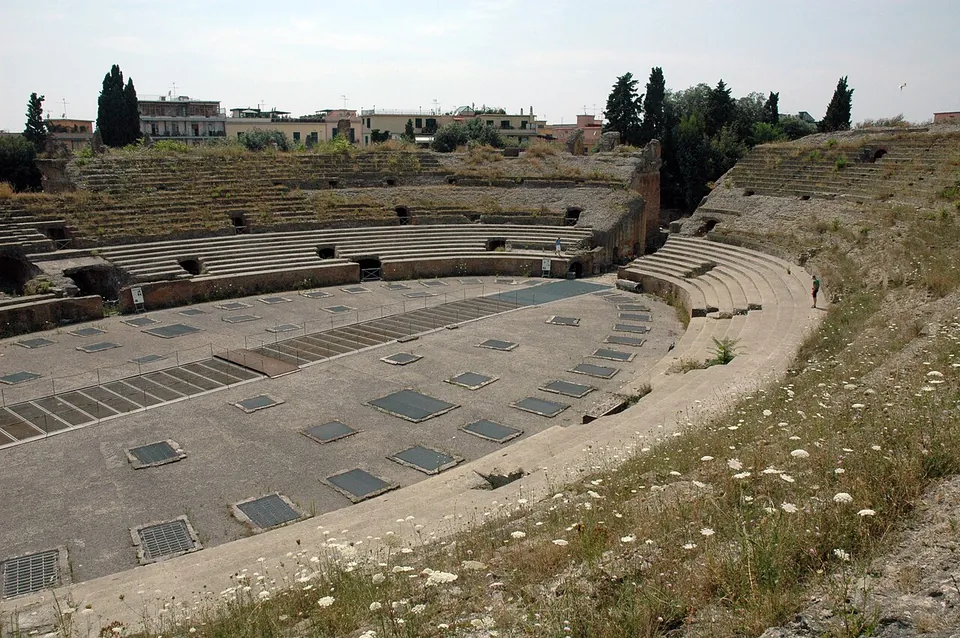
The Flavian Amphitheatre is the set piece: only the Colosseum and the amphitheatre of Capua are larger.
9 km · forum · Campania
Macellum of Naples
The excavation lies under the Gothic church and its cloister, where Neapolis had its forum, the successor of the Greek agora (Scabec; en.wikipedia).


Straight-line distances.
Sources
Every fact on this page comes from the records below, each used under the licence noted.
| Source | Licence |
|---|---|
| Pleiades 184642281 | CC BY |
| Wikidata Q3575454 | CC0 |
| Vici.org 17469 | CC BY-SA (text), CC0 (metadata) |
| OpenStreetMap way/124085716 | ODbL |
| Centro Studi Interdisciplinari Gaiola - Pausilypon (the operator of the visits) | licence not recorded |
| Wikipedia (it) - Parco archeologico di Posillipo | CC BY-SA 4.0 |
| Wikipedia (fr) - Parc archéologique du Pausilippe | CC BY-SA 4.0 |
| Wikipedia (de) - Grotta di Seiano | CC BY-SA 4.0 |
| Pleiades - Odeon at Pausilipum | licence not recorded |
| Pleiades - Grotta di Seiano | licence not recorded |
| Pleiades - Pausilipum | licence not recorded |
| Wikidata - Villa of Publius Vedius Pollio (Q122921193) | licence not recorded |
| Wikidata - Grotta di Seiano (Q1547614) | licence not recorded |