What is there today
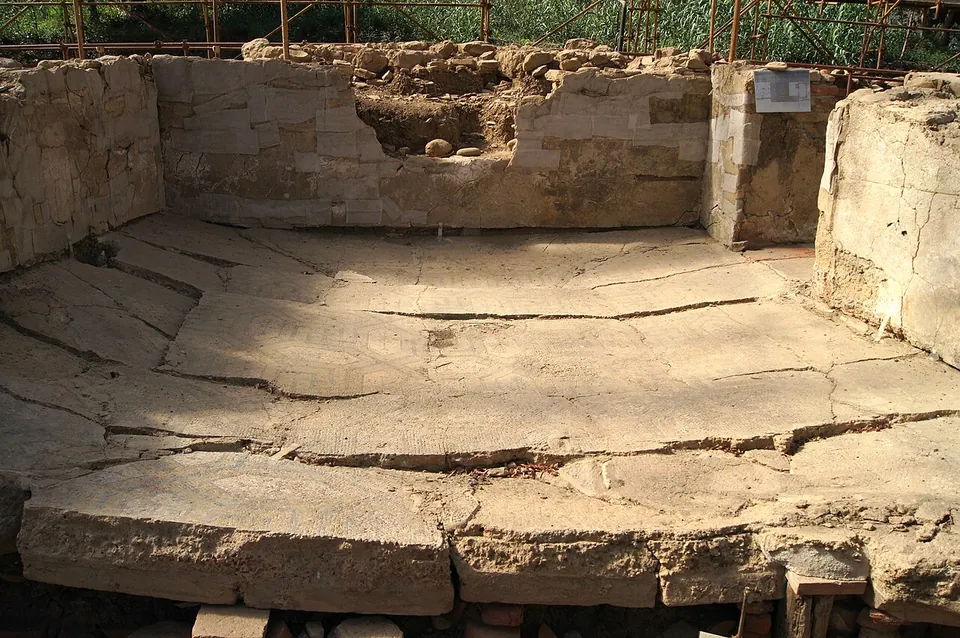
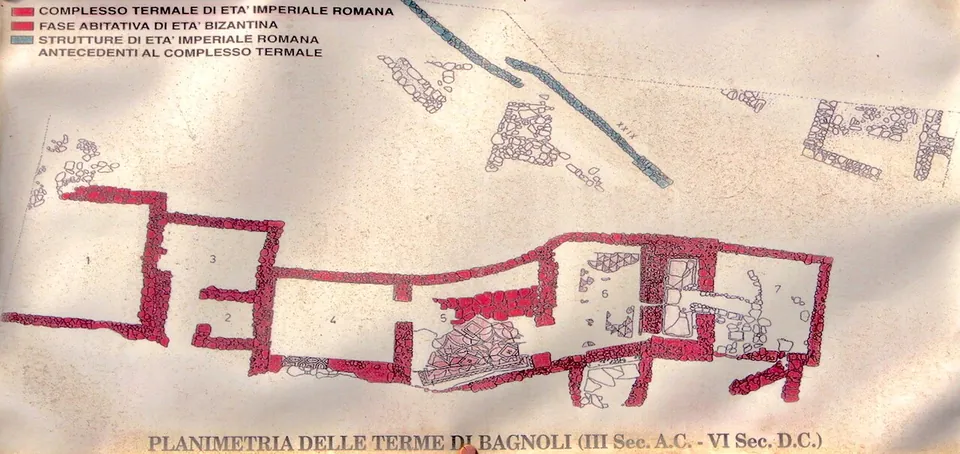
A fenced strip of excavation about 32 m long and 7 m wide (de.wikipedia), holding a row of six rooms (the operator): a cold-bath suite of three rooms, a warm room (tepidarium) and the two rooms of the hot bath (caldarium). The walls of rough local sandstone survive to at most 0.9 m, so this is a plan at knee height rather than standing rooms. What lifts it is the floors: the tepidarium and both caldarium rooms keep geometric mosaics in black and white with red inserts (the operator), whose patterns are close to North African work of the same period (de and en.wikipedia). The rooms were heated from beneath, by hot air under raised floors and in the walls (de.wikipedia), and in one room the mosaic floor has sagged and cracked. Remains of older buildings lie to the south (the operator; de.wikipedia). A selection of the finds from Capo d’Orlando is shown in the town’s Antiquarium Comunale “Agatirnide”, in via del Fanciullo (the operator).
Is it worth the trip?
Not on its own. It is a small site, a single row of rooms, and what survives of the mosaics is geometric pattern, not figured scenes. But if you are already in or near Capo d’Orlando, it is an easy stop: 3 km from the centre, with parking close by and open every day. Pair it with the Antiquarium in town, where the finds are.
Getting there
The site lies in the Bagnoli–San Gregorio district, about 3 km north-east of the centre of Capo d’Orlando, at the foot of the hills near the coast (the operator; de.wikipedia). There is a car park about 180 m away and a pay car park about 270 m away; no bus stop or station is mapped near the site (OpenStreetMap).
It is open every day from 09.00 until one hour before sunset; on Sundays between 1 November and 31 May it closes at 14.00 (Parco archeologico di Tindari, read 19 October 2026). The park’s pages publish no admission price for Bagnoli. The Antiquarium in town opens Tuesday to Saturday, 09.00–13.00 and 14.00–20.00, and is closed on Mondays and Sundays (the operator).
Visiting details
- Opening hours
- Every day from 09.00 until one hour before sunset; on Sundays from 1 November to 31 May, 09.00–14.00 only.
- Tickets
- The operator's pages publish no price for this site.
- Parking
- A car park about 180 m from the site (OSM way/469230305) and a pay car park about 270 m away (OSM relation/16220005).
Before you go
- No bus stop or railway station is mapped near the site; plan on a car, or on the 3 km from the centre of Capo d'Orlando.
- The excavated area is fenced; you visit within the opening hours.
Hours and prices checked 19 October 2026 on the operator's own site. Confirm before travelling.
History
The ground was in use long before the baths. Two bronze coins struck at Syracuse and an amphora of the early 3rd century BC are the oldest finds, and traces of earlier settlement, dated to the early or middle imperial period, lie beneath the baths (de.wikipedia). The baths themselves were built in the first decades of the 3rd century AD, a date given by pottery, coins and the mosaics (de.wikipedia).
What they belonged to is open. English Wikipedia calls them part of a luxurious seaside villa, and the operator probably part of a private residence within a larger Roman settlement; German Wikipedia records two readings, a villa by the sea or a small public bath at a roadside station on the Via Valeria, which joined Messina by way of Palermo to Lilybaion. Against the second, the rooms are low and the baths small; against the first, no structure clearly belonging to a villa has yet been found. The area to the north, where a residence would lie, is built over by modern houses and the state road and has not been dug.
The baths may already have been out of use when the great earthquake of 21 July 365 struck eastern and northern Sicily and probably damaged them badly; a second quake may have followed in the 5th century. In the middle of the 5th century the main rooms were filled in and the furnace room was repaired and used as a kiln for amphorae and plain cooking ware, and the tepidarium became a store; the sherds recovered from it filled more than 700 crates. Production ended in the first decades of the 6th century. In the 7th century the caldarium rooms were repaved and lived in, probably with a small cemetery of five graves about 70 m to the west, until perhaps the beginning of the 8th century, possibly when the Arabs conquered Sicily. Then the vault of the tepidarium fell and earth covered the site (de.wikipedia).
It came to light by chance in 1986, during work on a car park (de and en.wikipedia), and the excavations of 1987 to 1992 were published by Umberto Spigo (de.wikipedia, literature).
Nearby
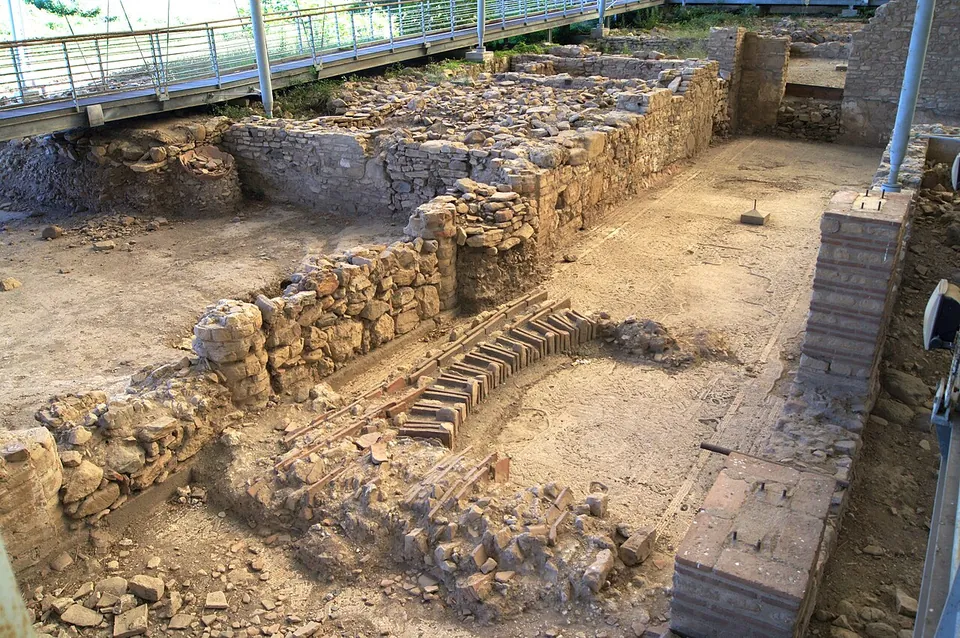
Photo: Rjdeadly · CC BY-SA 4.0 · Commons
18 km · villa · Sicily
Villa Romana di Patti
The explored part is the centre of the house: a courtyard surrounded by a portico (the peristyle), with the living rooms around it (it.wikipedia).
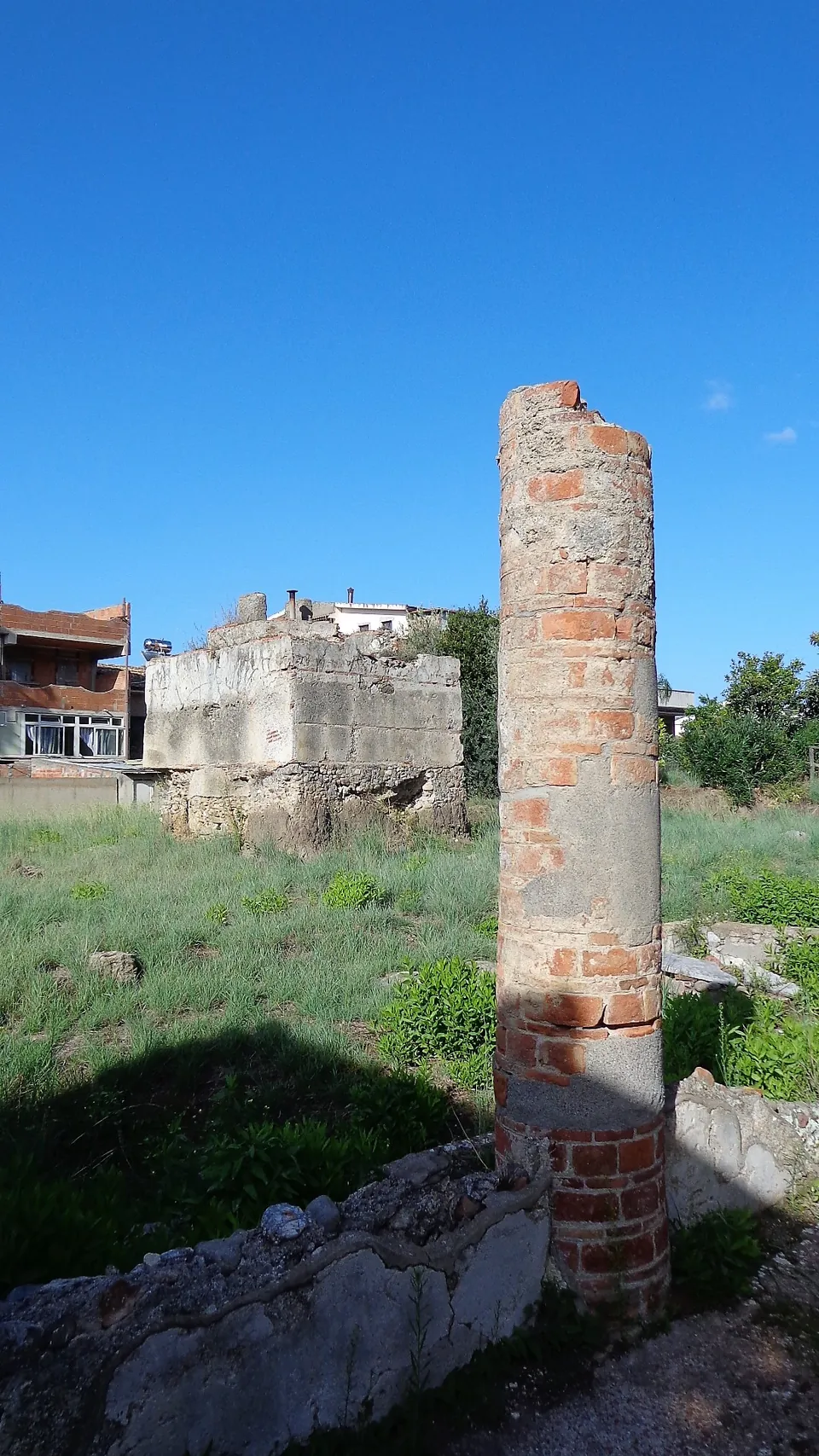
Photo: Effems · CC BY-SA 4.0 · Commons
33 km · villa · Sicily
Roman villa of San Biagio
The house was laid out on a square plan around a courtyard with a portico of eight columns a side, the peristyle (it.wikipedia, de.wikipedia).


Straight-line distances.
Sources
Every fact on this page comes from the records below, each used under the licence noted.
| Source | Licence |
|---|---|
| Pleiades 462108 | CC BY |
| Wikidata Q16613133 | CC0 |
| Vici.org 7180 | CC BY-SA (text), CC0 (metadata) |
| OpenStreetMap way/367073198 | ODbL |
| Parco archeologico di Tindari — Area archeologica di Capo d'Orlando (the operator) | licence not recorded |
| Parco archeologico di Tindari — opening hours of the park's sites (the operator) | licence not recorded |
| Wikipedia (de) — Thermen von Bagnoli | CC BY-SA 4.0 |
| Wikipedia (en) — Villa Romana Bagnoli | CC BY-SA 4.0 |
| Wikipedia (it) — Terme di Bagnoli | CC BY-SA 4.0 |