

What is there today
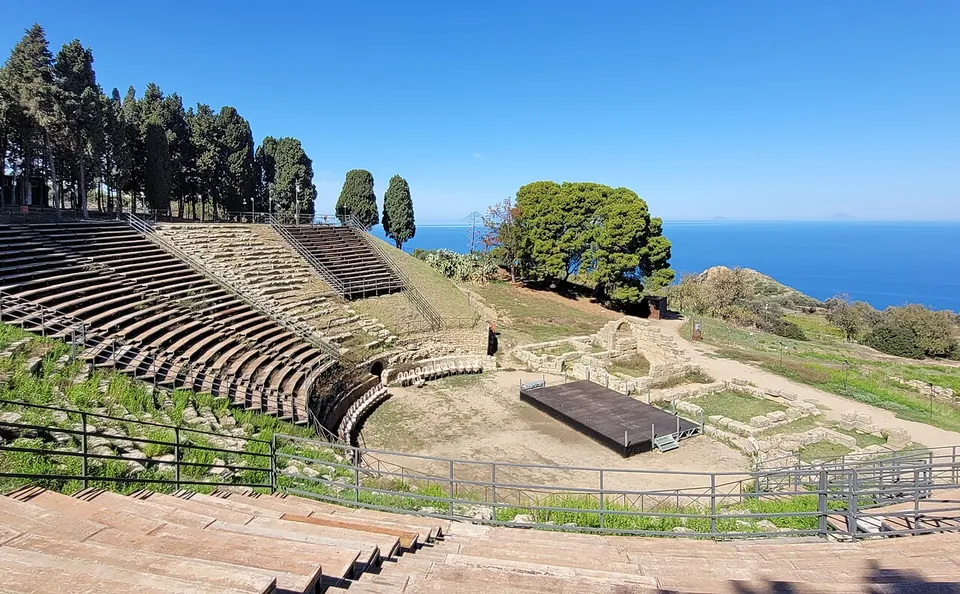
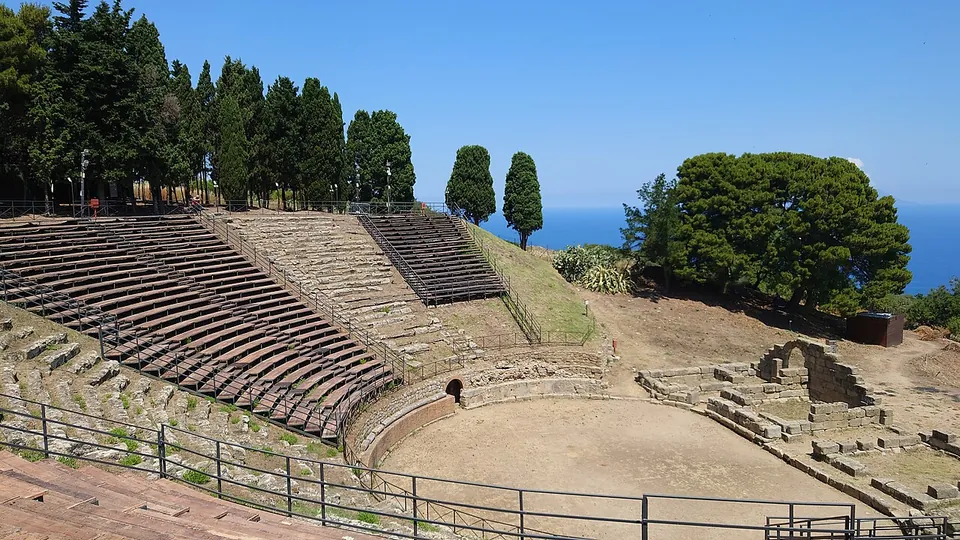
The theatre is the set piece. Its rows of seats were cut into the natural hollow of the hillside for an audience of about 3,000, at the end of the 4th century BC (it.wikipedia) or the beginning of the 3rd (Aditus description); in the Roman period the stage building was rebuilt, the four lowest rows were removed and a wall built round the floor so that it could serve as an arena for games. Of that Roman stage only the foundations and one arch, restored in 1939, remain (it.wikipedia). It is still used: a festival of dance, music and theatre has been held there since 1956 (it.wikipedia).
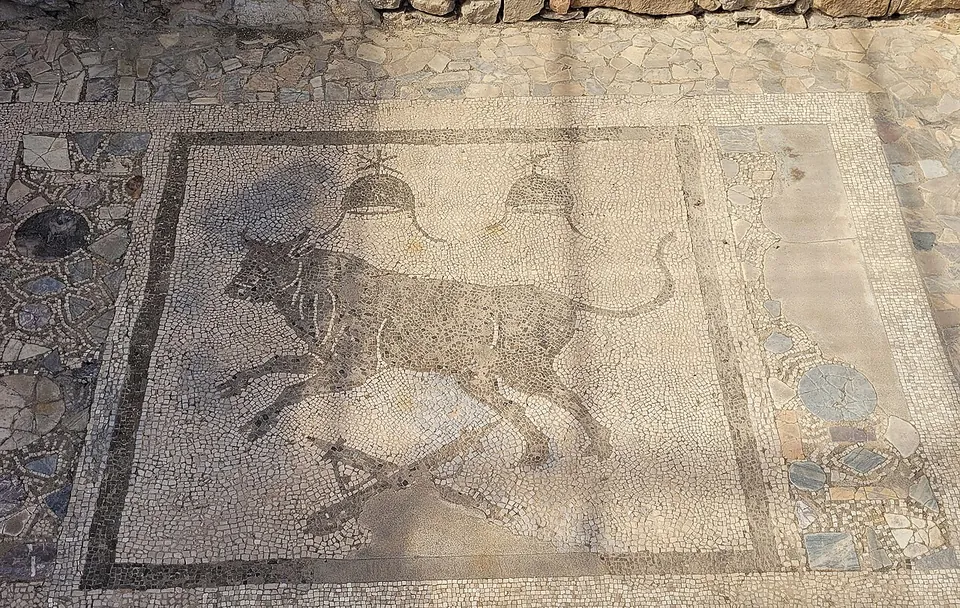
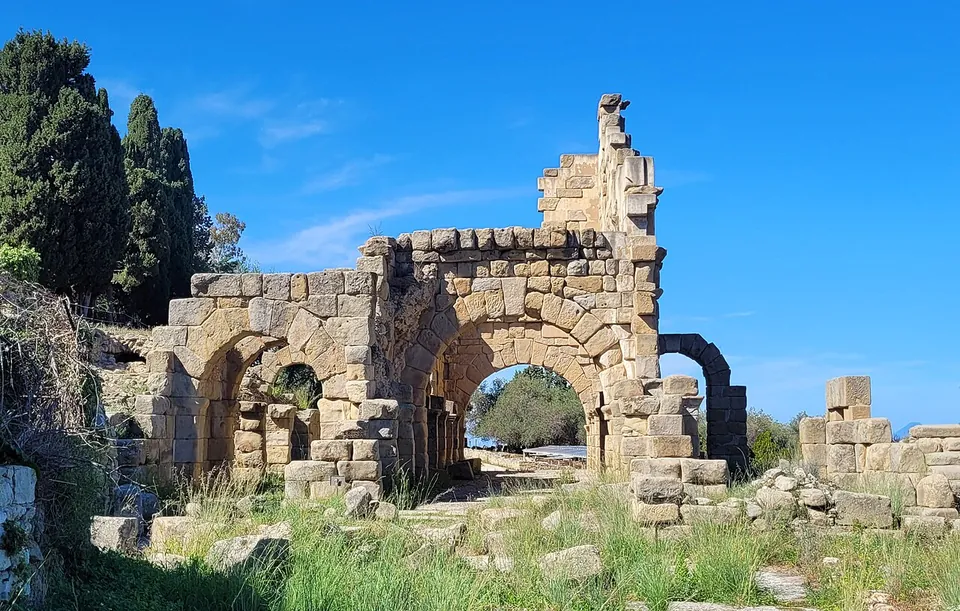
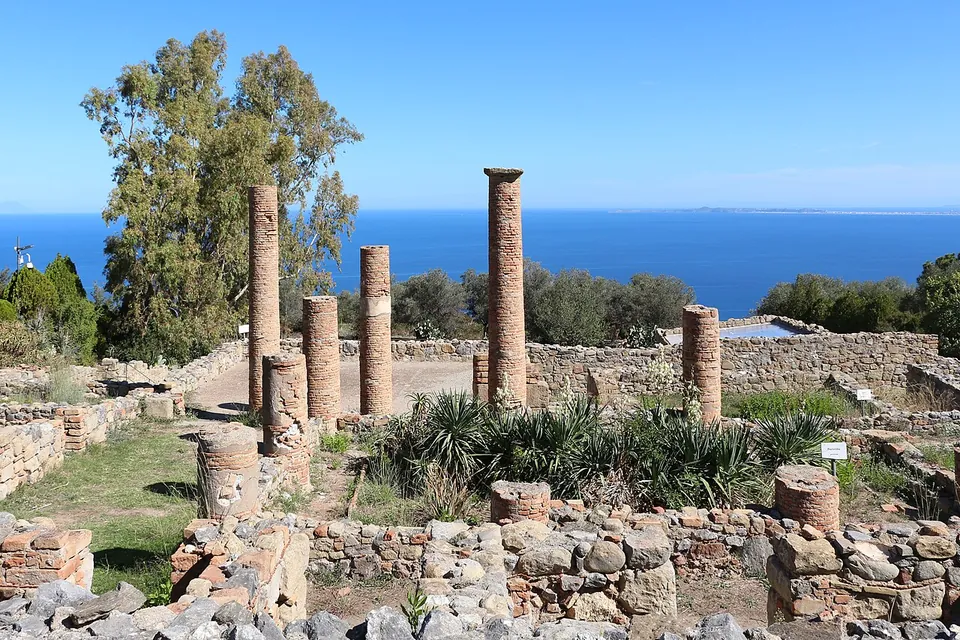
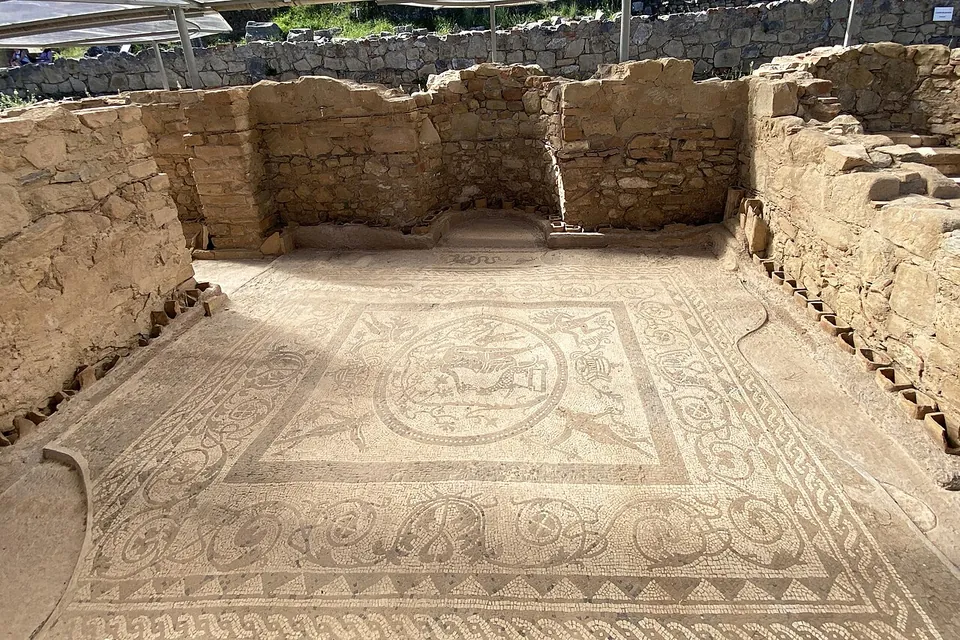
Along the city’s upper main street stands the so-called Basilica, in fact a monumental gateway into the main square: a two-storey building of squared sandstone whose central passage is spanned by nine arches under a barrel vault (it.wikipedia). Its date is uncertain: the 4th century according to it.wikipedia, probably the reign of Augustus according to the Aditus description, which adds that it was damaged in AD 365, repaired and still in use in the 5th century. Between the upper and middle streets a whole city block has been excavated: six shops along the street, and above them, on terraces, two houses with columned courtyards, built in the last two centuries BC on top of earlier houses and remodelled under the empire (it.wikipedia; the Aditus description). Public baths on the upper terrace, of the middle imperial period, keep black-and-white floor mosaics with sea creatures, Dionysiac scenes and the symbols of Tyndaris and of Sicily, dated to the late 2nd or early 3rd century AD (Aditus description). Stretches of the city wall survive round the edge of the plateau (en.wikipedia), and the Antiquarium shows finds from the excavations, among them two winged Victories of the 2nd century BC and a portrait head of Augustus found near the “Basilica” (Aditus description).
Is it worth the trip?
Yes, if you are on the north coast between Messina and Palermo. This is a whole ancient town on a headland rather than a single monument: a theatre with the sea behind the seats, a gateway that still stands two storeys high, houses and baths with their mosaics in place, and the Marian sanctuary on the site of the old acropolis (it.wikipedia). The remains are in fair condition because their sandstone blocks were of little use for later building (it.wikipedia).
Two things to know. The theatre is not large (en.wikipedia; about 3,000 seats), so come for the setting and the town as a whole rather than for the theatre alone. And the city began Greek: the street plan probably dates from the foundation, the wall from the 3rd century BC and the theatre’s seating from the Greek city, while the houses, the baths and the theatre’s arena belong to the town of the Roman period.
Getting there
Tindari is a village of the comune of Patti, about 7 km from the centre of Patti (OpenStreetMap). By car, leave the A20 Messina–Palermo motorway at Falcone coming from Messina, or at Patti coming from Palermo (it.wikipedia). A car park is mapped about 230 m from the site (OpenStreetMap). Without a car, the station for Tindari is Oliveri-Tindari, about 800 m from the Coda di Volpe footpath, which climbs from the lagoons of Marinello at the foot of the promontory to the sanctuary in about two hours (it.wikipedia). en.wikipedia adds that AST buses serve Tindari, but OpenStreetMap maps no stop near the site.
The area is open Tuesday to Sunday and closed on Mondays: 09.00 to 17.30 from 1 to 15 October, 09.00 to 17.00 from 16 to 31 October, with the Antiquarium on the same hours; the operator’s hours for November and the winter were not yet published when its page was read. A ticket is €6, or €3 for EU citizens aged 18 to 25, and free under 18. On the first Sunday of every month entry is free, with tickets issued only at the site. A combined ticket with the Roman villa at Patti, valid for three days, costs €11.20 (reduced €4) (Parco archeologico di Tindari and its ticket office Aditus Culture, read 21 October 2026 — check before travelling, since hours change with the season).
Visiting details
- Opening hours
- Tuesday to Sunday, 09.00–17.30 from 1 to 15 October and 09.00–17.00 from 16 to 31 October; closed Mondays. The Antiquarium keeps the same hours. The operator had not yet published its hours from November when this was read.
- Tickets
- €6, reduced €3 (EU citizens aged 18–25); free under 18, and free for everyone on the first Sunday of the month, when tickets are issued only at the site. A combined ticket with the Villa Romana di Patti, valid for 3 days from the first entry, is €11.20 (reduced €4).
- Parking
- Car park "Parcheggio Tindari" about 230 m from the site's point (OSM way/233937975).
Before you go
- No bus stop or railway station is mapped next to the site. The station for Tindari is Oliveri-Tindari, about 800 m from the Coda di Volpe footpath, which takes about two hours up to the sanctuary.
Hours and prices checked 21 October 2026 on the operator's own site. Confirm before travelling.
History
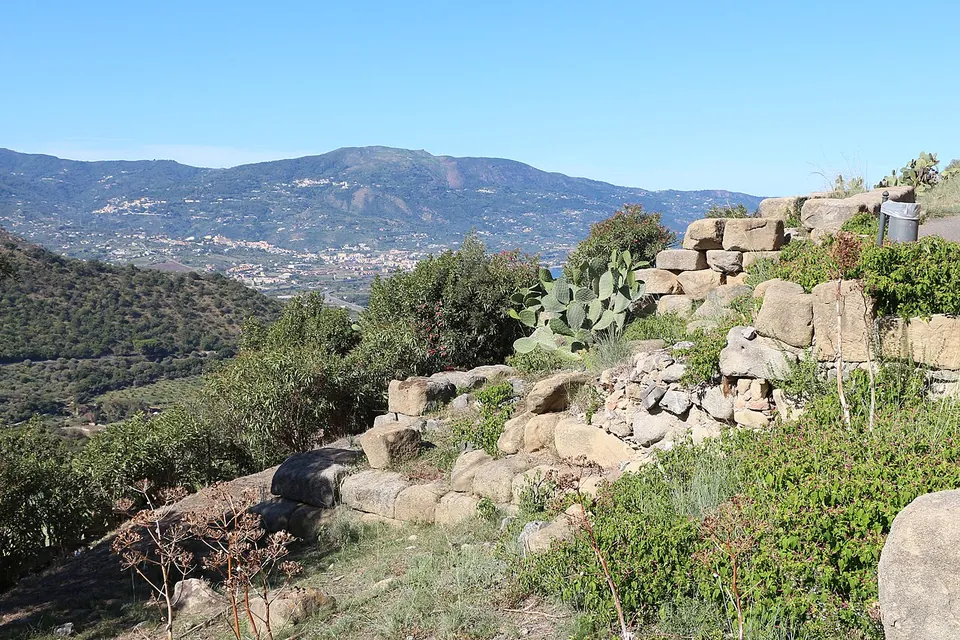
Traces of a Bronze Age settlement have been found under one of the Roman blocks (it.wikipedia). The city itself was founded by Dionysius I of Syracuse in 396 or 395 BC for Messenian exiles, who named it after their patron gods, the Dioscuri, sons of Tyndareus (en.wikipedia). It was laid out on a regular grid: three main streets 8 m wide running along the plateau, crossed at right angles by steeper side streets 3 m wide, with the drains running beneath them (it.wikipedia). The wall, rebuilt in the 3rd century BC on the line of an earlier one, ran for about 3 km (it.wikipedia).
In the First Punic War Tyndaris was at first a Carthaginian base; in 257 BC a Roman fleet fought the Carthaginians off its coast, and after the fall of Panormus in 254 BC the city expelled its Carthaginian garrison and joined Rome (en.wikipedia). Cicero called it a nobilissima civitas, and it suffered at the hands of Verres, who carried off its statue of Mercury (en.wikipedia). In the civil war between Sextus Pompey and Octavian it was one of Pompey’s bases until Octavian’s forces took it (en.wikipedia; it.wikipedia dates its capture to 36 BC). Under Augustus it became the Colonia Augusta Tyndaritanorum (it.wikipedia; the title is known from an inscription, en.wikipedia).
The Roman city suffered a great landslide in the early empire (AD 17, according to it.wikipedia) and earthquakes in the 4th century, one of them in AD 365 (it.wikipedia; Aditus description). Pliny also records that half the city was once swallowed by the sea, at a date no source gives (en.wikipedia). It survived as a bishop’s seat, recorded from 498, passed to the Byzantines in 535 and was taken and destroyed by the Arabs in 836 (en.wikipedia; it.wikipedia). The first excavations were made in 1838–1839; the archaeological superintendencies of Syracuse and Messina dug again in 1960–1964 and in the 1990s (it.wikipedia).
More photographs




Nearby
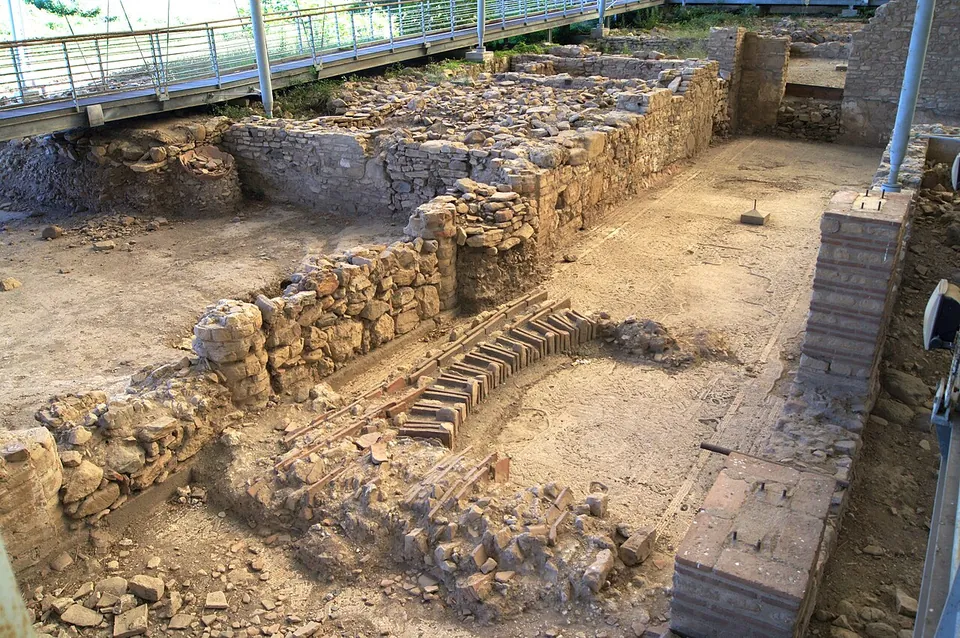
Photo: Rjdeadly · CC BY-SA 4.0 · Commons
6 km · villa · Sicily
Villa Romana di Patti
The explored part is the centre of the house: a courtyard surrounded by a portico (the peristyle), with the living rooms around it (it.wikipedia).
Photo: Effems · CC BY-SA 4.0 · Commons
9 km · villa · Sicily
Roman villa of San Biagio
The house was laid out on a square plan around a courtyard with a portico of eight columns a side, the peristyle (it.wikipedia, de.wikipedia).
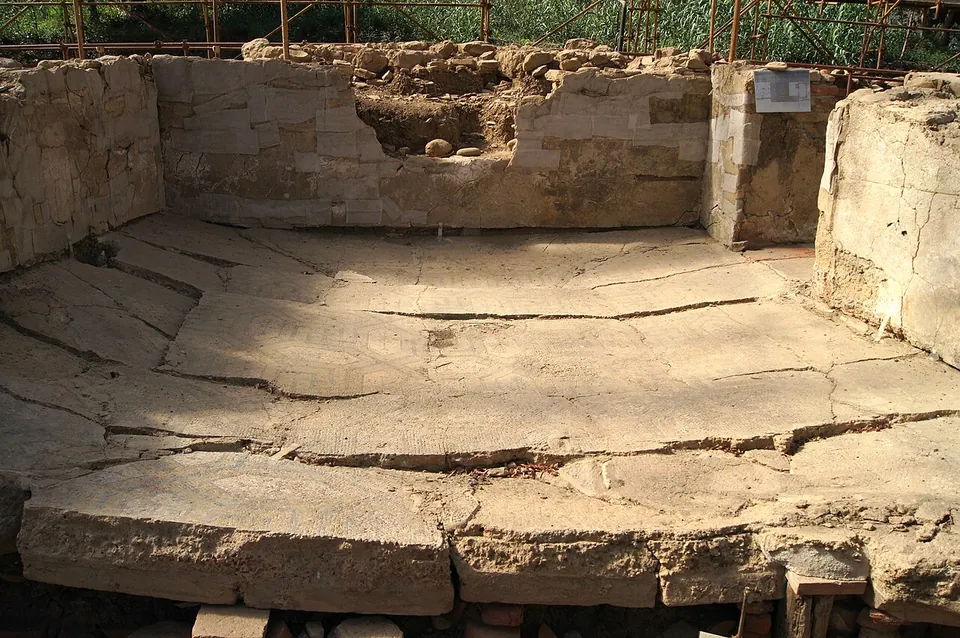
Photo: Rjdeadly · CC BY-SA 4.0 · Commons
24 km · bath · Sicily
Baths of Bagnoli
A fenced strip of excavation about 32 m long and 7 m wide (de.wikipedia), holding a row of six rooms (the operator): a cold-bath suite of three rooms, a warm room (tepidarium) and the two rooms of the hot bath (caldarium).


Straight-line distances.
Sources
Every fact on this page comes from the records below, each used under the licence noted.
| Source | Licence |
|---|---|
| Pleiades 462527 | CC BY |
| Wikidata Q127431480 | CC0 |
| OpenStreetMap way/233937999 | ODbL |
| Pleiades — Greek Theatre of Tindari | licence not recorded |
| Wikidata — Teatro greco di Tindari (Q3826959) | licence not recorded |
| Wikidata — Tindari, the modern village (Q671481) | licence not recorded |
| Wikipedia (it) — Tindari | CC BY-SA 4.0 |
| Wikipedia (en) — Tindari | CC BY-SA 4.0 |
| Wikipedia (it) — Teatro greco di Tindari | CC BY-SA 4.0 |
| Parco archeologico di Tindari — tickets and hours, Area archeologica di Tindari (the operator) | licence not recorded |
| Parco archeologico di Tindari — opening hours of all the park's sites (the operator) | licence not recorded |
| Aditus Culture — Parco archeologico di Tindari (the official ticket office the operator links to) | licence not recorded |