


Photo: Ottantafame · CC BY-SA 4.0 · Commons
city · Lombardy, Italy
1 place to see, the best preserved and best known first.
Photo: Ottantafame · CC BY-SA 4.0 · Commons
Brixia was the Roman town beneath modern Brescia in Lombardy, and its old town keeps what en.wikipedia calls the best-preserved Roman public buildings in northern Italy. Three visits make up Roman Brescia: the forum square with its temple, the Capitolium, and the archaeological park around it; the front of the forum’s basilica a short walk south; and two Roman houses inside the Santa Giulia museum on the same street as the park. It is worth the trip.
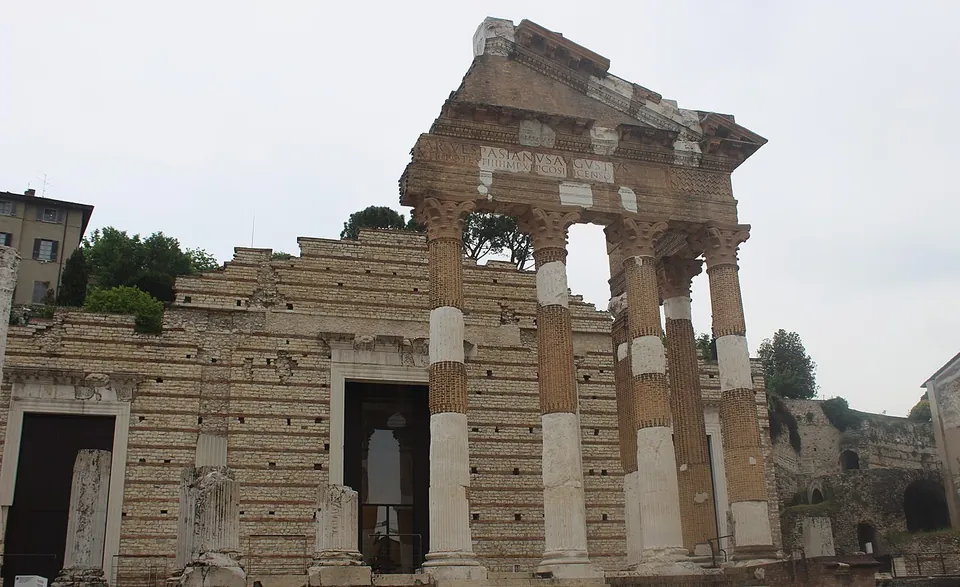
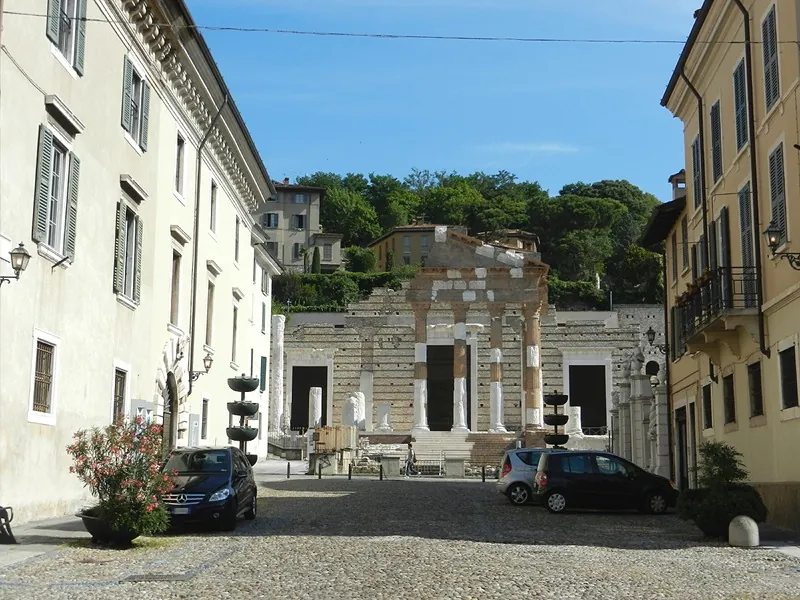
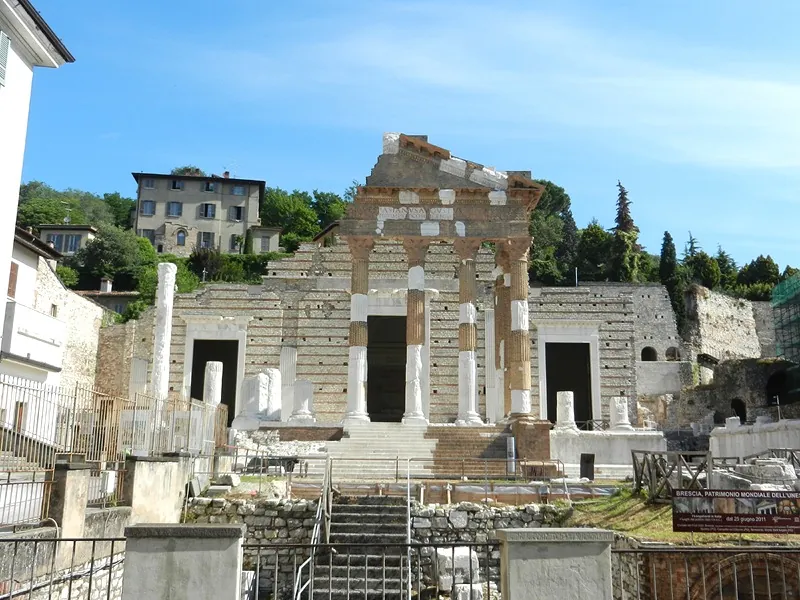
The forum and the Capitolium. Piazza del Foro still follows much of the Roman forum (it.wikipedia), and at its head stands the Capitolium, the temple Vespasian built in AD 73 (Pleiades; it.wikipedia). With the painted halls of an older sanctuary beneath it, the bronze Winged Victory shown inside it and the theatre beside it, now closed while it is excavated (the operator), it is the main reason to come, and it has its own page, with the park’s hours and ticket: Piazza del Foro.
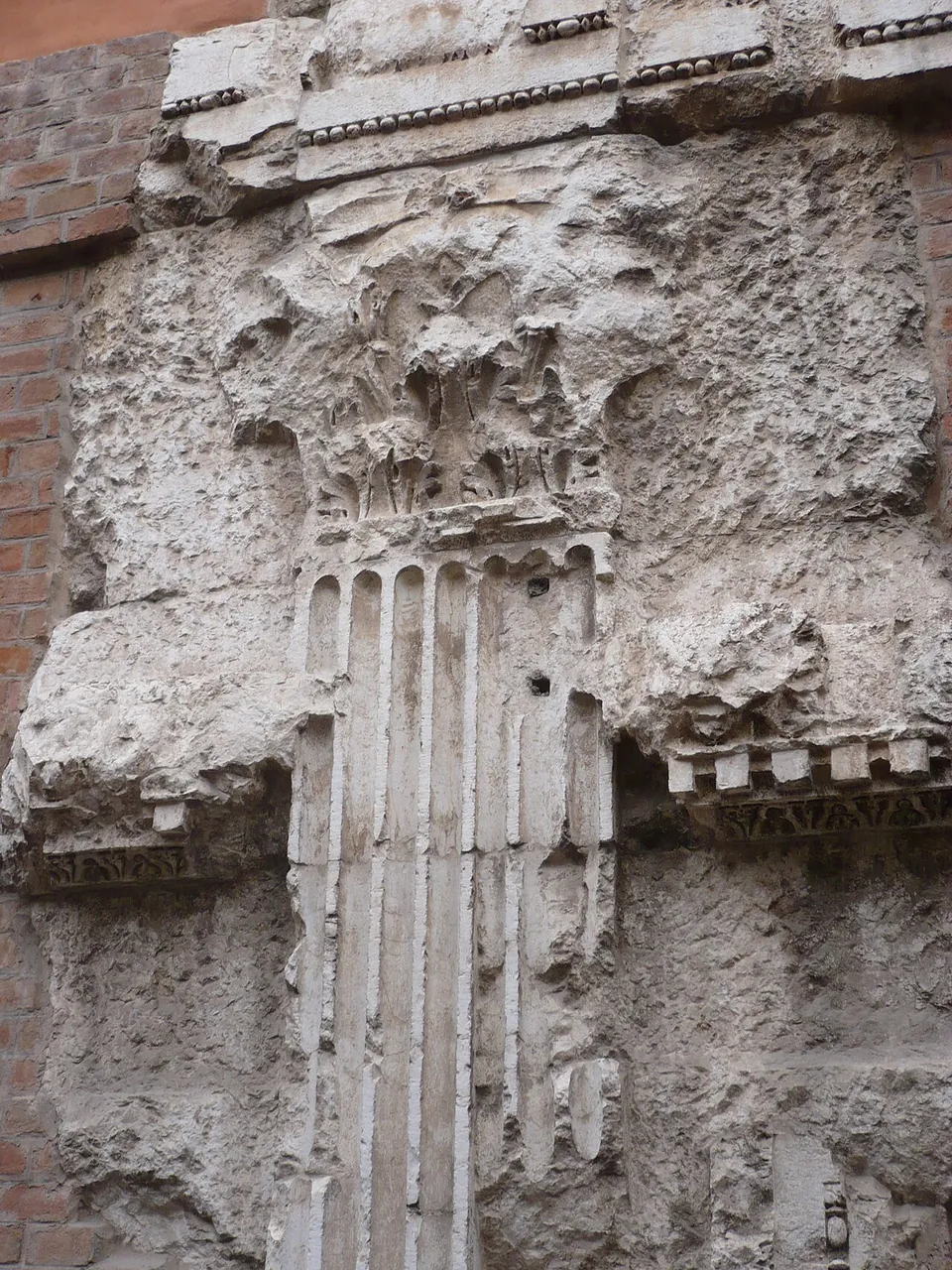
The basilica. South of the temple, the civil basilica closed the other end of the forum. It was a single hall 47.8 by 19.1 m, built in the Flavian period, and its remains stand on Piazza Giovanni Labus, at the back of the ancient building, with carved decoration still visible on the outer walls (it.wikipedia). The excavated interior, in the building that now houses the Soprintendenza, has no published regular hours; the Soprintendenza opens it on announced days (the Ministry of Culture).
The Roman houses at Santa Giulia. In the former kitchen gardens of the monastery of Santa Giulia, now the city museum, two Roman houses were found in 1967–1971, the Domus di Dioniso and the Domus delle Fontane, lived in from the 1st to the 4th century (it.wikipedia). Walkways lead over their mosaic floors, painted walls and underfloor heating, straight on from the museum’s archaeological rooms; it.wikipedia counts them among the best-preserved Roman houses in northern Italy. The museum’s Roman section also holds inscriptions and the bronze portraits found with the Victory (it.wikipedia). The UNESCO Corridor, a free pedestrian route opened in June 2023, links the Capitolium area to Santa Giulia (the operator), so the forum and the houses make one walk.
Yes. A Roman temple you can walk into, with its painted predecessor beneath it, and two Roman houses under a museum roof are reason enough to come, and the city is on the Milan–Venice railway (en.wikipedia). Plan to see both: the one ticket that admits to the archaeological park also covers Santa Giulia. The basilica is a front seen from Piazza Labus unless your visit falls on one of its open days.
Brescia’s main station is on the Milan–Venice railway (en.wikipedia). From it Via dei Musei, where the archaeological park and Santa Giulia stand, is a 20-minute walk, or a ride on the metro to the Vittoria stop and a 10-minute walk (the operator). Via dei Musei is in the restricted-traffic zone, and the operator points drivers to the city car parks, listed on the Piazza del Foro page. The nearest airports are Brescia (20 km), Bergamo Orio al Serio (56 km) and Verona (70 km) (the operator).
Santa Giulia keeps the same opening hours as the archaeological park, and the Integrated Ticket sold for the park covers it too; both are given on the Piazza del Foro page. Santa Giulia and the other city museums without the park are on the €15 Single Ticket (Fondazione Brescia Musei, pages captured 8 and 16 September 2026 – check before travelling, since prices move). The most recent announced opening of the basilica’s interior was on 26 September 2026, free, for the European Heritage Days (the Ministry of Culture).
Before you go
Hours and prices checked 16 September 2026 on the operator's own site. Confirm before travelling.
The Gallic Cenomani made Brixia their capital, and allied themselves with Rome against the other Gallic tribes and against Carthage (it.wikipedia; en.wikipedia). The town became a municipium with Latin rights in 89 BC, and its people received Roman citizenship in 49 BC according to it.wikipedia, 41 BC according to en.wikipedia; in 27 BC it became a Roman colony, Colonia Civica Augusta Brixia (it.wikipedia). Under Augustus and Tiberius it gained an aqueduct, walls and a grid of streets, and from Vespasian onwards its great public buildings (it.wikipedia): the forum was rebuilt with the Capitolium at its head and the basilica at its foot, a story told on the Piazza del Foro page.
In 312 Constantine’s advance against Maxentius met an enemy force at Brixia and drove it back to Verona; Alaric’s Visigoths ravaged the city in 402 and Attila’s Huns sacked it in 452 (en.wikipedia). It was, with Verona, one of the last two cities to hold out for the Goths against Byzantium, falling to Narses only in 561/562 (it.wikipedia).
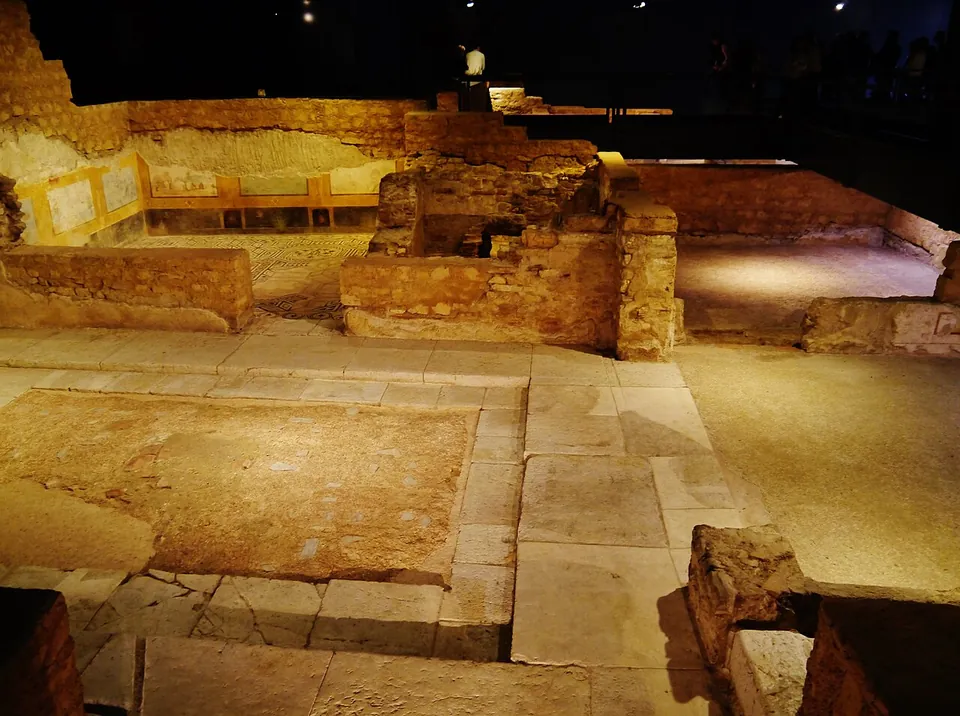
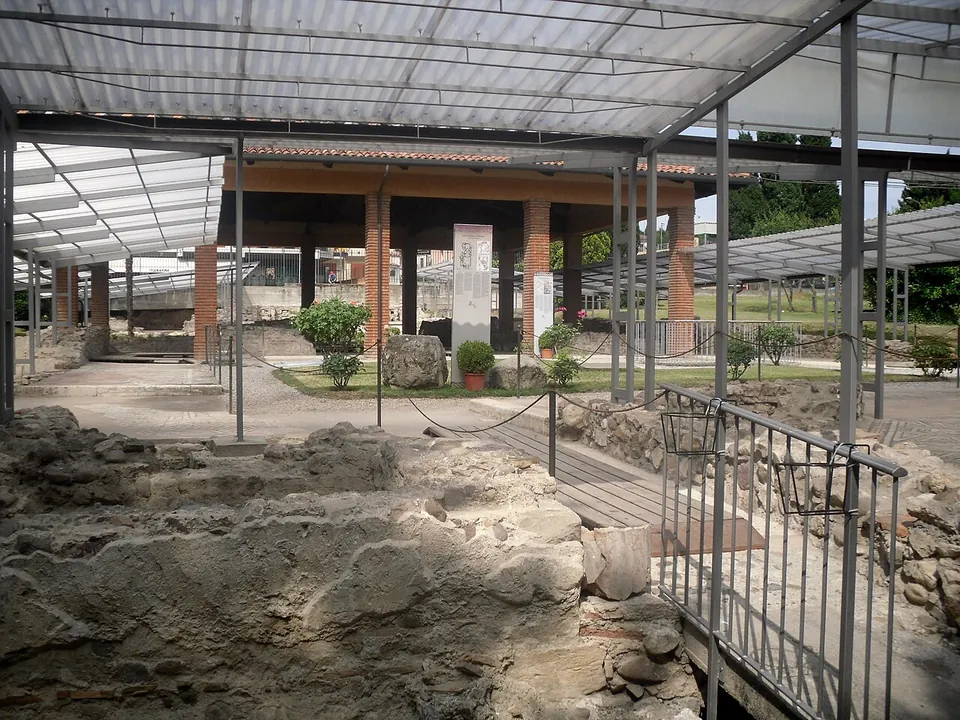
Photo: Imiimane · CC BY-SA 3.0 · Commons
25 km · villa · Lombardy
The excavated villa covers about one hectare, with residential wings and working quarters side by side (the operator).
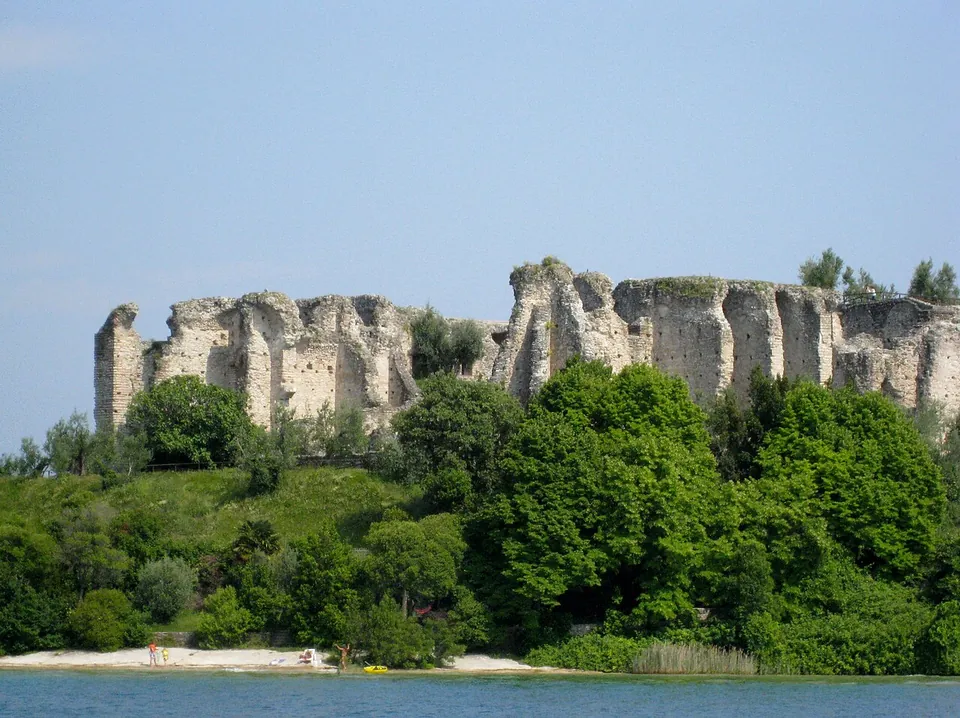
Photo: Agsftw · CC BY-SA 3.0 · Commons
30 km · villa · Lombardy
The villa was a rectangle of 167 by 105 m, with a projecting wing at each short end, built on a sloping rock shelf that the builders cut back and propped up with massive substructures on the north side (it.wikipedia).
Straight-line distances.
Every fact on this page comes from the records below, each used under the licence noted.
| Source | Licence |
|---|---|
| Pleiades 383603 | CC BY |
| Wikidata Q3645136 | CC0 |
| Wikipedia (it) — Brixia (archeologia) | CC BY-SA 4.0 |
| Wikipedia (en) — Brescia | CC BY-SA 4.0 |
| Wikipedia (it) — Capitolium (Brescia) | CC BY-SA 4.0 |
| Wikipedia (it) — Basilica romana di Brescia | CC BY-SA 4.0 |
| Wikipedia (it) — Domus dell'Ortaglia | CC BY-SA 4.0 |
| Wikipedia (it) — Museo di Santa Giulia | CC BY-SA 4.0 |
| Fondazione Brescia Musei — Brixia, Roman archaeological area (hours, tickets, getting there) | licence not recorded |
| Fondazione Brescia Musei — Tickets | licence not recorded |
| Fondazione Brescia Musei — Visit (opening times) | licence not recorded |
| Ministero della Cultura — Apertura straordinaria dell'area archeologica della Basilica romana di Brescia (26 September 2026) | licence not recorded |


