

What is there today
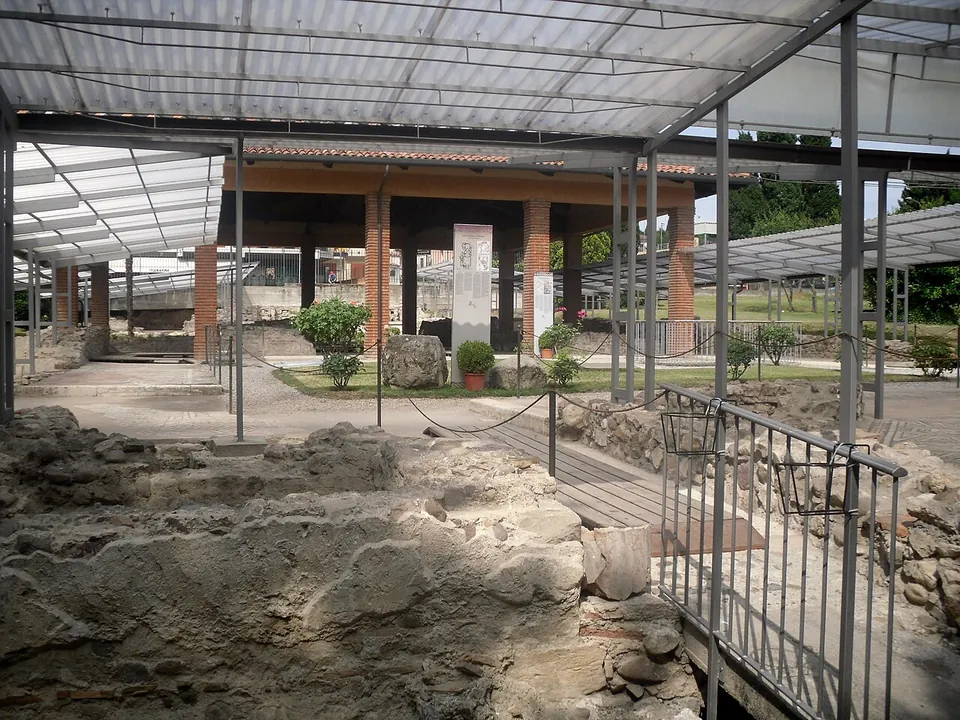
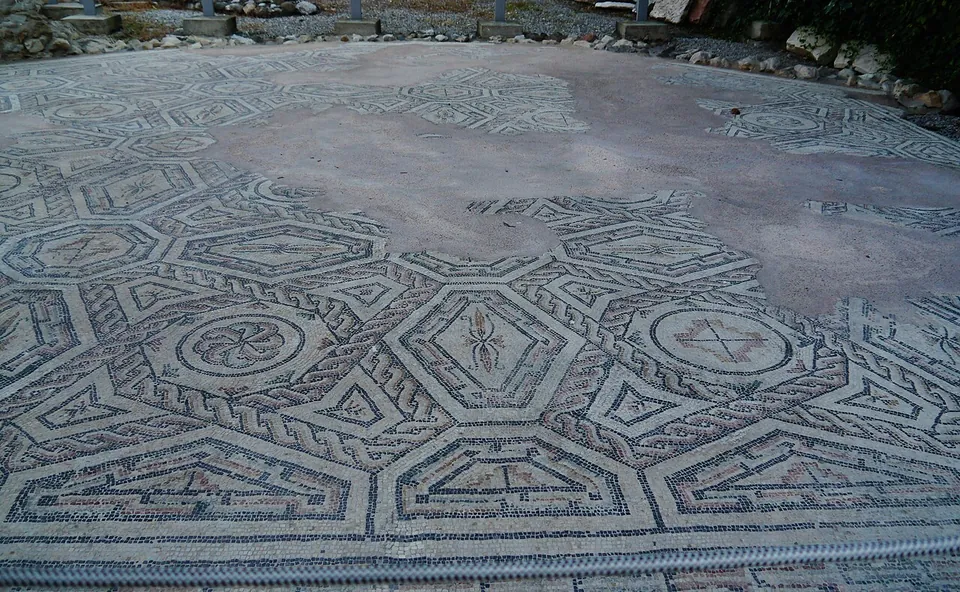
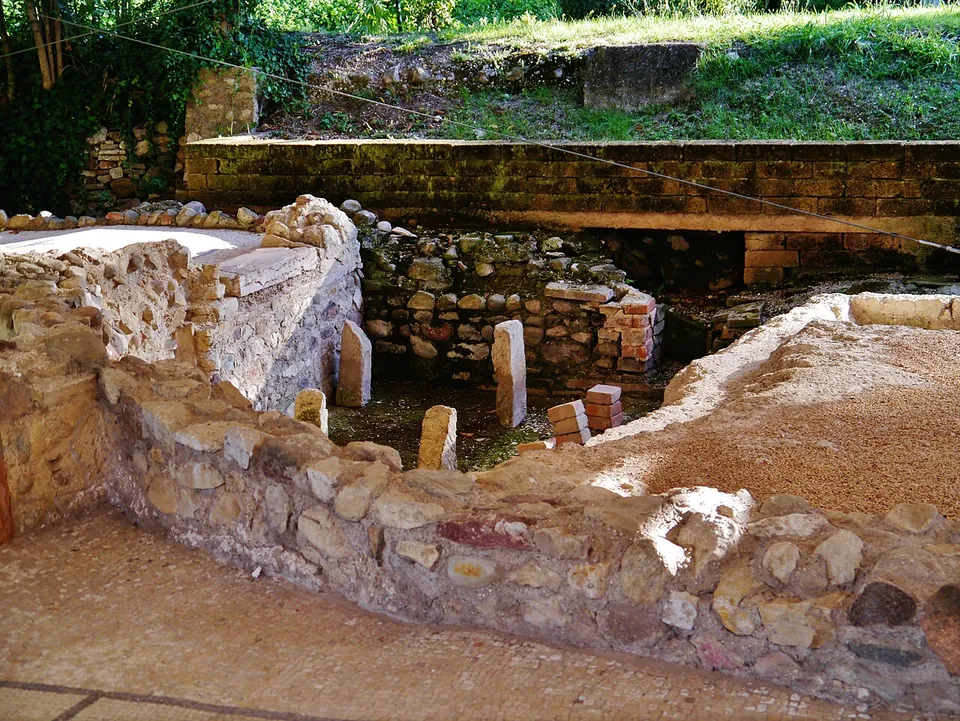
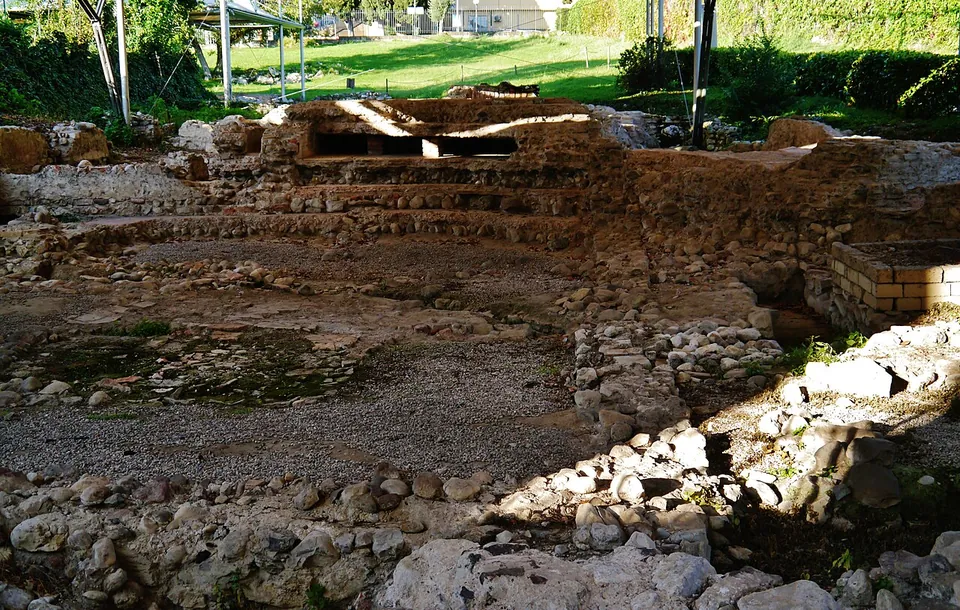
The excavated villa covers about one hectare, with residential wings and working quarters side by side (the operator). Walkways and canopies take you through the excavated sectors. Sector A holds an octagonal vestibule with geometric mosaics, a peristyle that once had more than twenty columns, of which a couple survive, and the three-apsed dining room with the best-preserved floor, where hunting scenes sit in octagons and grape-harvest and fruit-picking scenes in squares. Beyond it lay a garden closed by a fountain with seven niches. Sector B keeps the apse of a large hall with a marble floor and more mosaic rooms; sector C, with marble floors and underfloor and wall heating, was probably the bath suite, and is the most damaged (it.wikipedia). Pleiades singles out mosaic scenes of the Good Shepherd.
The Antiquarium inside the site has three rooms: kitchen and table ware with small bronzes; fragments of the statues that decorated the villa, among them a marble Hercules of the mid-2nd century; and two large panels of fresco fragments from one of the rooms. Among the other pieces are the marble bust of a youth and a late-4th-century glass cup that shows Christ facing a cockerel under a night sky, which the operator reads as the denial of Peter.
Is it worth the trip?
Yes, if mosaics are what you like: this is, in the operator’s words, one of the most important late-antique villas in northern Italy, and it sits in the town centre, a short walk from the station. What stands is low walls and floors, not rooms with roofs, and the excavation covers about a hectare, so it fits inside a day at Desenzano rather than justifying a long journey on its own. It pairs naturally with Sirmione: a combined ticket covers both (see below).
Getting there
The entrance is at Via Crocefisso 22 in the historic centre, near the lake and a few steps from the cathedral. It is a 15-minute walk from Desenzano del Garda station on the Milan–Venice line; by car, leave the A4 at the Desenzano exit, and there is a multi-storey car park close by (the operator). OpenStreetMap also maps a paid surface car park about 130 m from the site and a bus stop, Piazza Cappeletti, about 210 m away.
The villa is open Tuesday to Saturday 9.00–19.30 and Sunday 14.10–19.30, and closed on Mondays, 1 January and 25 December; last entry is half an hour before closing. Sectors B, C and D are not lit, so they can be visited only until 17.00 — arrive by mid-afternoon to see everything. A ticket is €6, or €2 for EU citizens aged 18 to 25, and the national free-entry categories apply. The ticket listing says payment is by card only, while the page’s general details also list cash, so bring a card. A combined ticket at €20, valid for seven days, adds the Grotte di Catullo with its archaeological museum and the Scaliger Castle in Sirmione (Direzione regionale Musei Lombardia, read 21 October 2026 — check before travelling).
Visiting details
- Opening hours
- Tuesday to Saturday 9.00–19.30, Sunday 14.10–19.30, closed Mondays, 1 January and 25 December. Last entry half an hour before closing. Sectors B, C and D are not lit and can be visited only until 17.00.
- Tickets
- €6; €2 for EU citizens aged 18 to 25; free for the categories on the Ministry of Culture's national list. The single-ticket listing says payment is by card only, though the page's general details also list cash. A 7-day combined ticket at €20 adds the Grotte di Catullo and its archaeological museum and the Scaliger Castle in Sirmione.
- Parking
- The operator points to a multi-storey car park close by; OpenStreetMap maps a paid surface car park about 130 m from the site (way/228973787).
Hours and prices checked 21 October 2026 on the operator's own site. Confirm before travelling.
History
The villa was first built at the end of the 1st century BC and went through several building phases; most of what is visible belongs to the first half of the 4th century AD (it.wikipedia), when the house was completely reorganised into separate sectors (the operator). Sector B was remodelled again at the end of the 4th century, which left it a later set of mosaics (it.wikipedia). It was built facing the lake, every room arranged for the view, with jetties, quays and probably fishponds, just north of the Via Gallica, the main road linking Bergomum (Bergamo), Brixia (Brescia) and Verona (the operator).
The owners are not known for certain. The operator suggests the patron of the last phase may have been Flavius Magnus Decentius, brother of the emperor Magnentius (350–353), and that the town’s name may come from his. Pleiades records the Latin name Decentianum.
The villa was found in 1921, when digging for the foundations of a house turned up coloured mosaics; work stopped, the land was expropriated and excavation began. Sector A was restored between 1928 and 1930, by which time its walls and floors had already deteriorated badly. The Antiquarium opened on 19 December 1971, and earth-moving works in the 1970s did the damage to sector C (it.wikipedia).
More photographs

Nearby
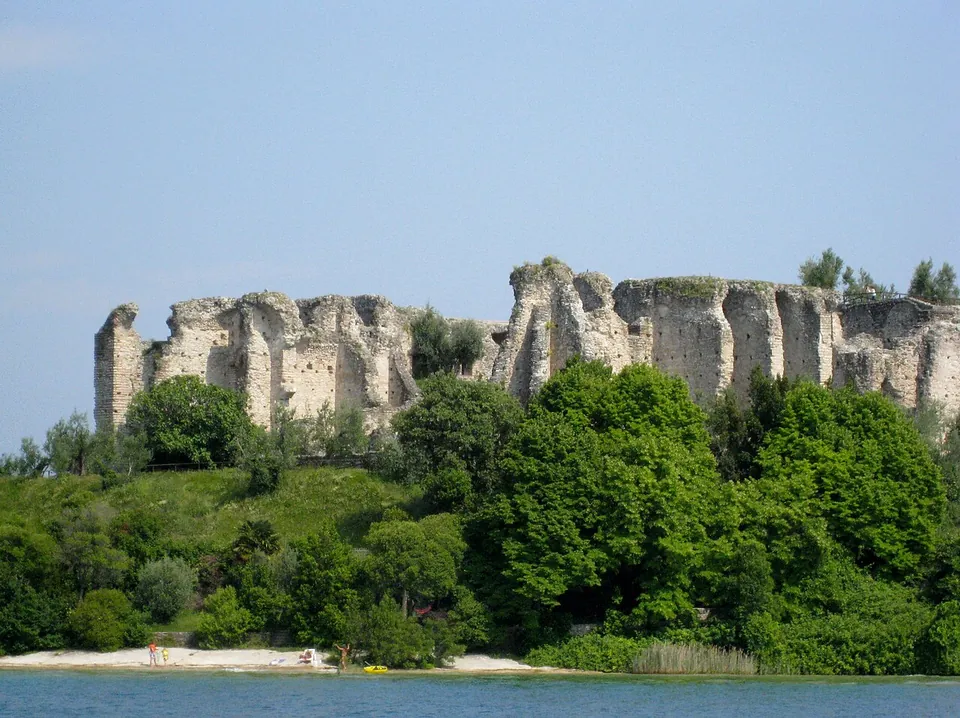
Photo: Agsftw · CC BY-SA 3.0 · Commons
6 km · villa · Lombardy
Grottoes of Catullus
The villa was a rectangle of 167 by 105 m, with a projecting wing at each short end, built on a sloping rock shelf that the builders cut back and propped up with massive substructures on the north side (it.wikipedia).
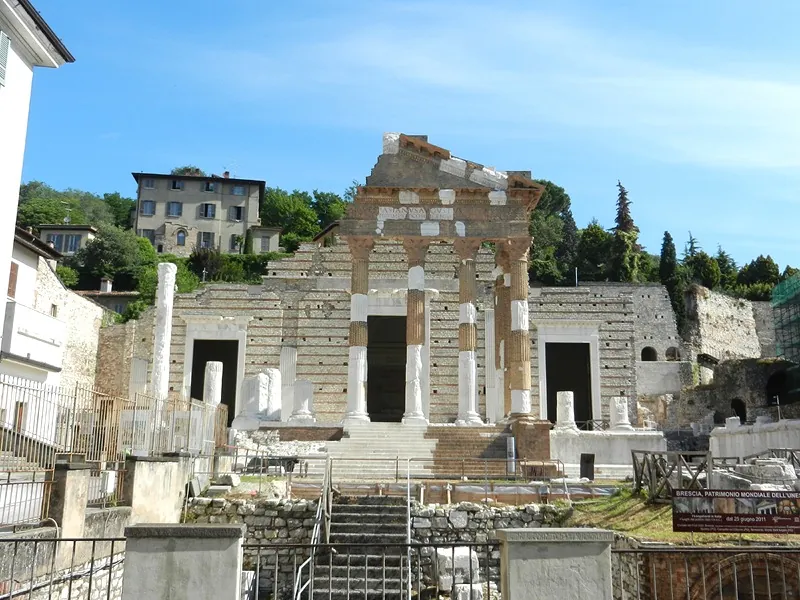
Photo: Geobia · CC BY-SA 3.0 · Commons
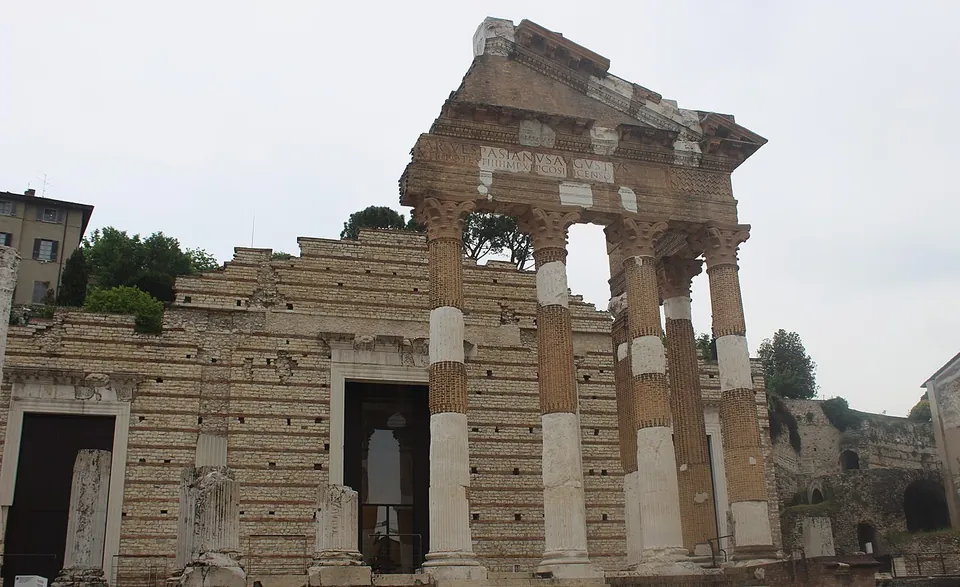
Photo: Ottantafame · CC BY-SA 4.0 · Commons


Straight-line distances.
Sources
Every fact on this page comes from the records below, each used under the licence noted.