What is there today
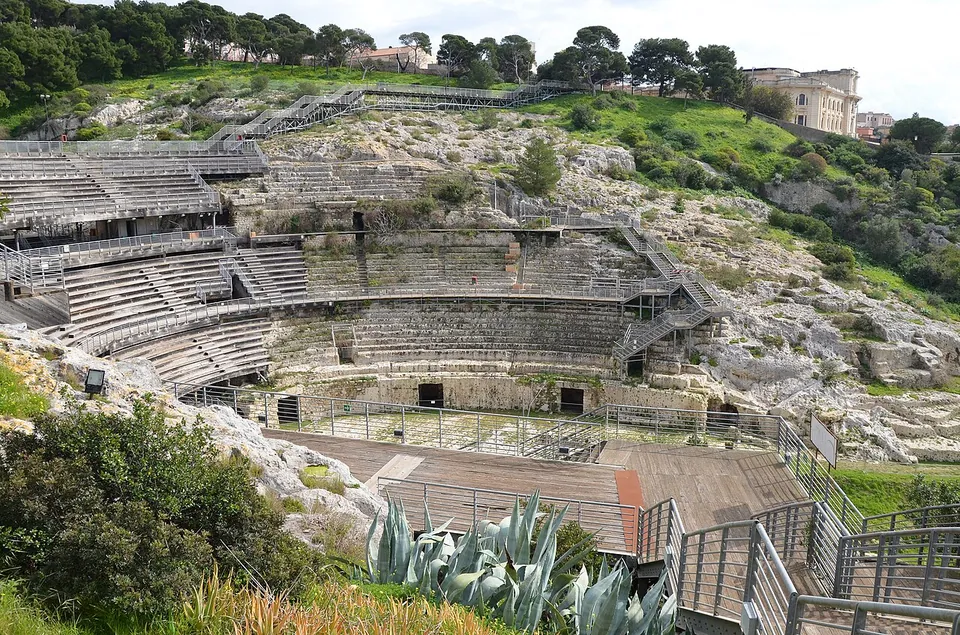
The amphitheatre is the set piece. Most of its seating, the arena and the corridors around it
were carved out of the bedrock on the Buon Cammino hill, the rest built
in local white limestone; published figures put its capacity at 8,000 to 10,000 spectators (en.wikipedia;
the city of Cagliari). Restoration is still under way, so for now you see it from an 80 m
walkway and cannot go down into the arena or the underground passages (the city of Cagliari).
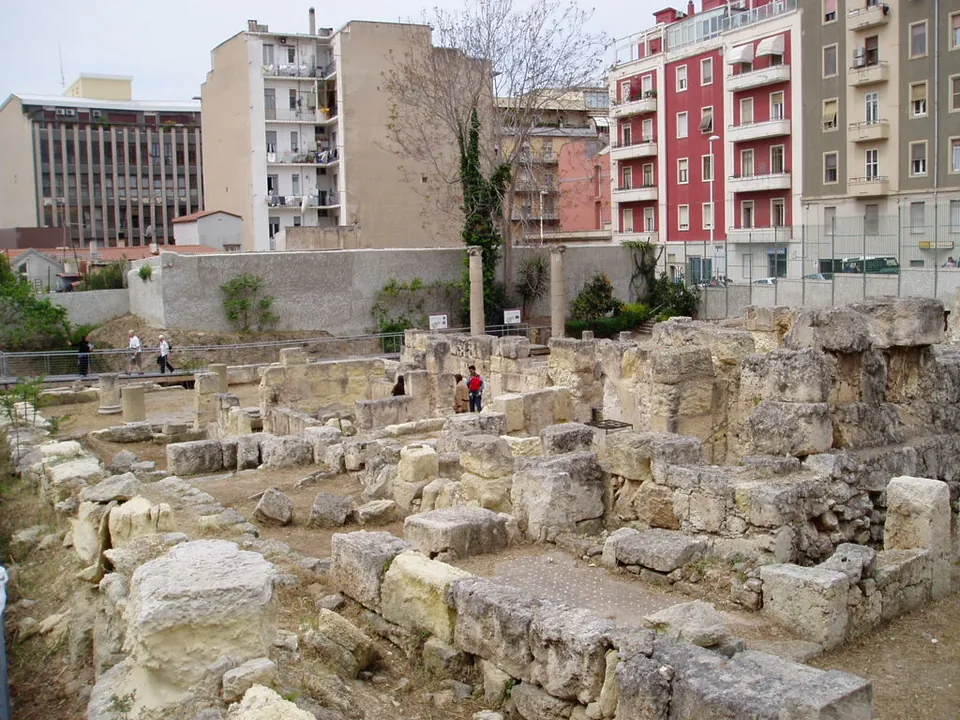
About 600 m from the amphitheatre, in the Stampace quarter, the so-called Villa di Tigellio is not one villa but
three Roman town houses - the House of the Stuccoes and the House of the Painted Tablinum among
them - with a bath building (it.wikipedia; the city of Cagliari). It is temporarily closed.
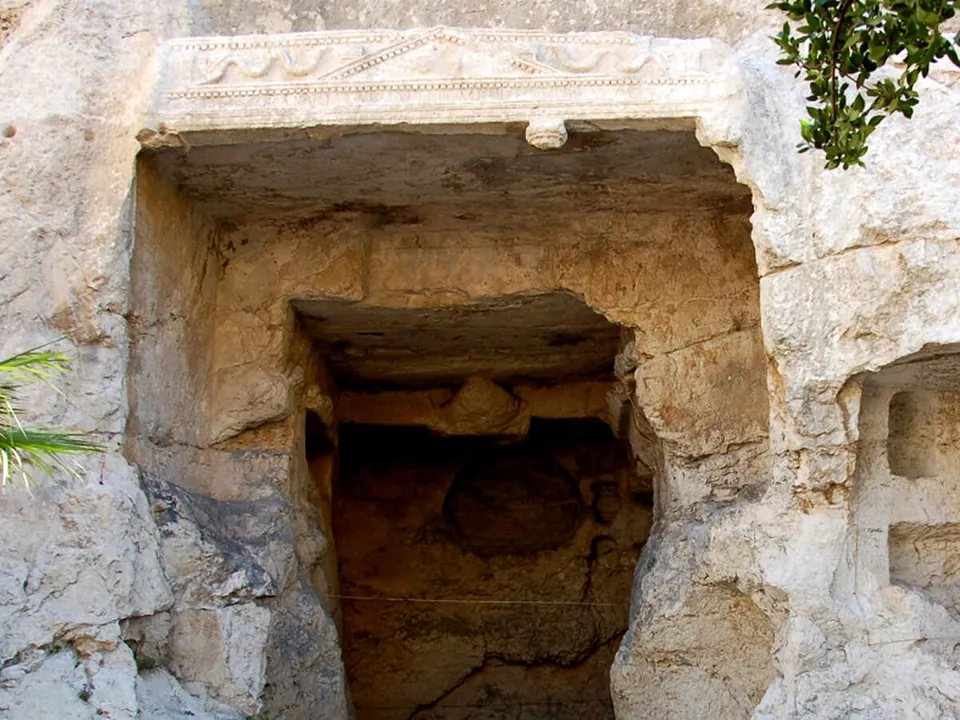
On Viale Sant’Avendrace, beside the Punic and Roman cemetery of Tuvixeddu, the Grotta della
Vipera is the rock-cut tomb the Roman Lucio Cassio Filippo made for his wife Atilia Pomptilla:
a façade that once had two columns (one capital survives) under a pediment carved with two
snakes, which give it its name, and two burial chambers behind. Greek and Latin verses cut into
the walls of the porch tell the couple’s story, but are now barely legible; you see the tomb
from its outer courtyard (it.wikipedia; the city of Cagliari).
Other Roman traces are scattered through the town: rock-cut cisterns, dug since Punic times and
still to be seen in several parts of the city (it.wikipedia), and an underground archaeological
area reached through the Museum of the Treasure of Saint Eulalia, on the museum’s ticket
(en.wikipedia; the city of Cagliari). Sardinia’s most important archaeological museum, the
National Archaeological Museum in the Cittadella dei Musei, holds finds from the Neolithic to the
early Middle Ages (en.wikipedia).
Is it worth the trip?
If you are in Cagliari, yes - give it an afternoon. With an international airport and ferries
from the mainland, the city is an easy place to begin a visit to Sardinia, and the amphitheatre in its rock bowl is a striking thing to
stand over. Be honest with yourself about the rest: for now the amphitheatre is seen only from a
walkway, the Villa di Tigellio is shut, and the Grotta della Vipera opens on set days or by
appointment. Roman Cagliari is a good half-day in a city worth visiting for itself, not a reason
on its own to cross the sea.
Getting there
The Pleiades point for Caralis sits on Piazza Matteotti, the city’s transport hub, with the
railway station and the urban and regional bus stations (en.wikipedia; OpenStreetMap). Trains
run from there to Cagliari-Elmas airport, a few kilometres away, and ARST buses run from the
airport to the bus station on the square; ferries connect the port with Civitavecchia, Naples
and Palermo (en.wikipedia). From Piazza Matteotti the Villa di Tigellio is about 0.6 km, the
amphitheatre about 1.1 km and the Grotta della Vipera about 1.7 km, and the three stops lie
within roughly 1.2 km of one another.
The amphitheatre opens daily, 10.00 to 17.00 from 1 October to 27 April, and 10.00 to 13.00 and
15.00 to 19.00 from 28 April to 30 September, with the ticket office closing half an hour before.
A ticket is €3, or €2 for students under 26, over-65s and groups of 15 or more. The Grotta della
Vipera, also €3, opens on days the city announces (14 to 18 and 20 October 2026, 10.00 to 17.00)
and otherwise by reservation on +39 070 677 7900. An €8 combined ticket, valid for a week, covers
both, along with the Crypt of Santa Restituta, the Elephant Tower and the covered walkway and
Sperone gallery. The Villa di Tigellio charges €2 when it is open (the city of Cagliari, read
18 October 2026 - check before going, since dates and prices change).
History
A Phoenician settlement of the 7th century BC, the city grew under Carthage and
passed to Rome in 238 BC, after the First Punic War (Pleiades; en.wikipedia). The Romans built a
new fortified settlement, the vicus munitus Caralis, east of the Punic town, and the two merged
during the 2nd century BC, perhaps the origin of the plural name Carales (en.wikipedia;
it.wikipedia). In the Second Punic War it was the headquarters of the praetor Titus Manlius
Torquatus, and it served as Rome’s chief naval station on the island; Florus called it urbs
urbium, the capital of Sardinia (en.wikipedia). In the civil war its citizens were the first in
Sardinia to declare for Caesar, and the town became a municipium - in 46 BC, or 38 BC according
to other sources (en.wikipedia; it.wikipedia).
Under the empire it remained the island’s capital and its largest city, linked by road to the
other main towns of Sardinia and supplied with water by aqueducts (it.wikipedia). The
amphitheatre went up in the 1st or 2nd century AD (it.wikipedia; en.wikipedia gives the 2nd).
Ordinary housing lay near today’s Via Roma, richer houses on the slopes of the Marina quarter,
and public buildings have been found to the west of it in Piazza del Carmine (en.wikipedia).
A detachment of the fleet of Misenum was based in the port, and its sailors were buried along
today’s Viale Regina Margherita (it.wikipedia). Salt from the lagoons between Caralis and Quartu
was exported across the empire along with grain and hides (it.wikipedia).
A Christian community is attested by the 3rd century, with a bishop by its end; in the 4th,
Bishop Lucifer of Cagliari was exiled by Constantius II. A few decades before the fall of the
Western Empire the city passed, with the rest of Sardinia, to the Vandals (en.wikipedia). The
amphitheatre fell out of use and from the early Middle Ages served the island’s later rulers
as a quarry; it was bought by the city in the 19th century and excavated under the canon
Giovanni Spano, who also led the first excavations at the Villa di Tigellio (it.wikipedia). The Grotta
della Vipera survived because Alberto Della Marmora stopped its demolition in 1822, when the
royal road from Cagliari to Porto Torres was being built past it (it.wikipedia; the city of
Cagliari).
Nearby
27 km · city · Sardinia
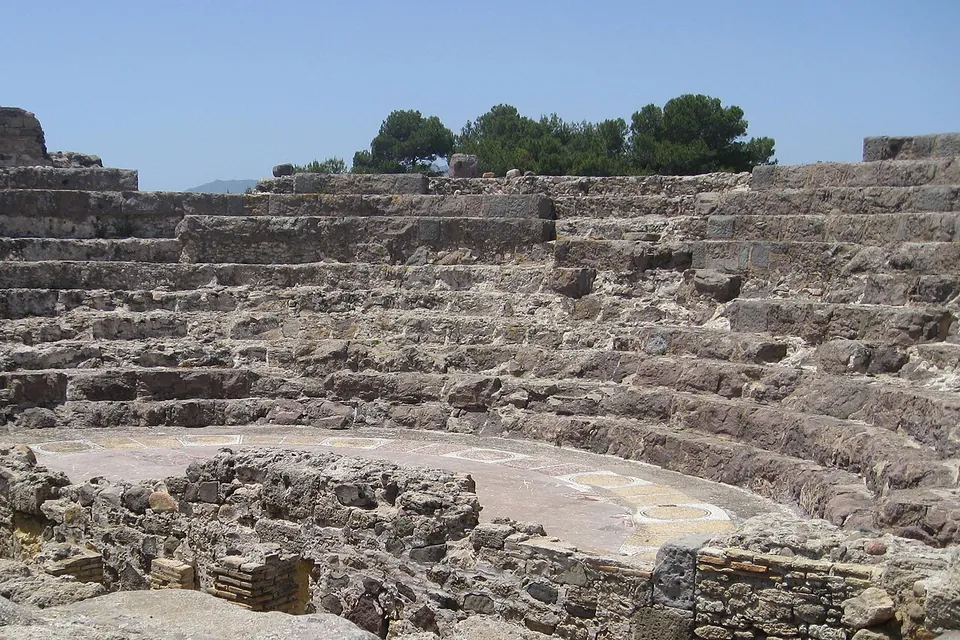
The theatre is the building to see.
Straight-line distances.
Sources
Every fact on this page comes from the records below, each used under the licence noted.