

What is there today
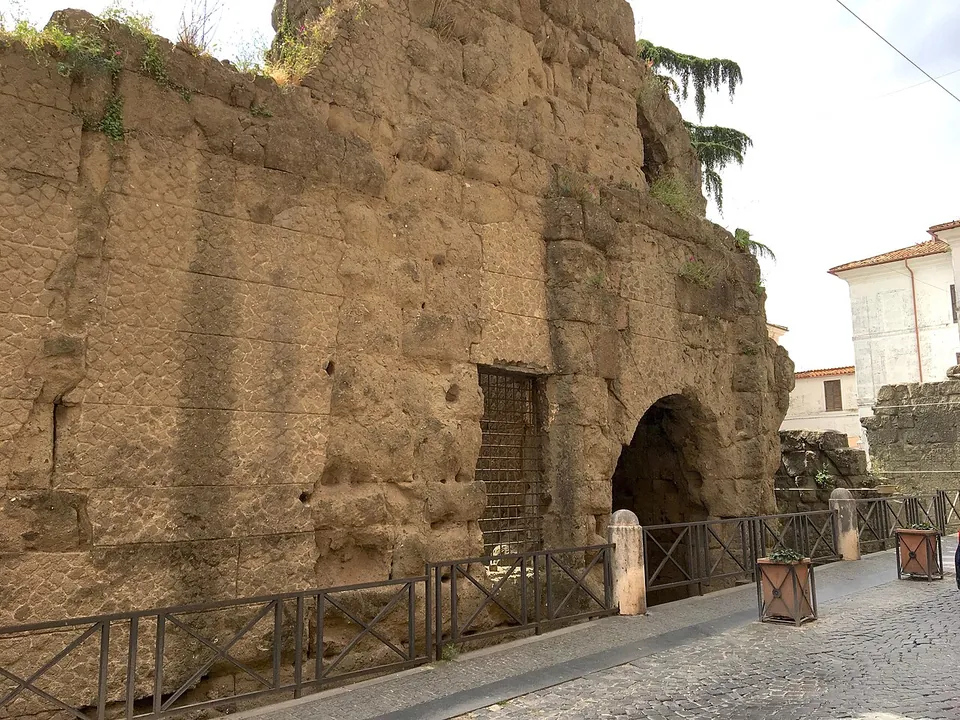
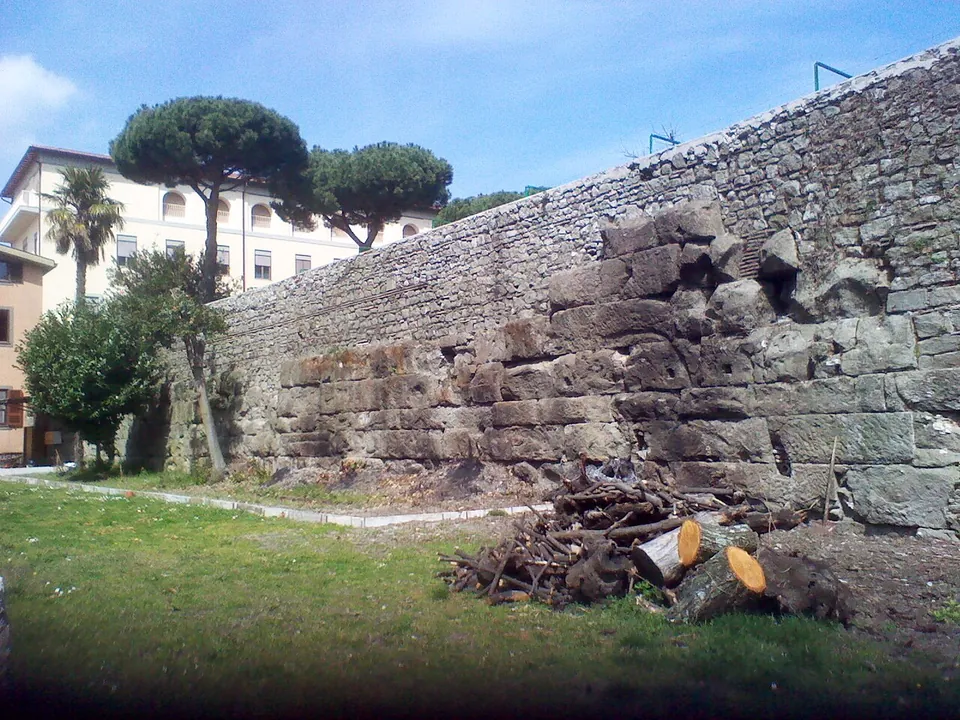
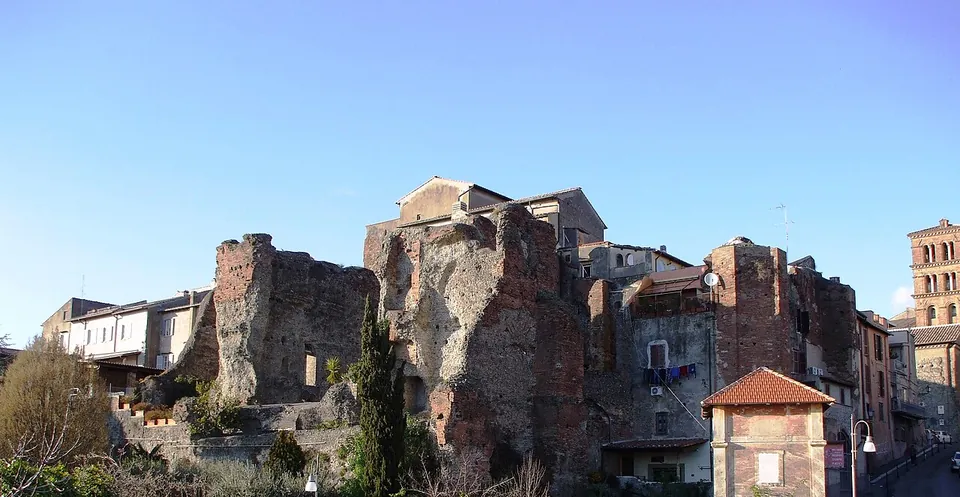
The set piece is the Porta Praetoria, the main gate, which faced the Via Appia. It was hidden inside a later building until an Allied air raid on 1 February 1944 destroyed the building and exposed it. It had three arches flanked by two projecting towers, built of large tufa blocks, and the operator counts it among the largest main gates of any Roman military camp. Published figures put it at 35 to 36 m wide and 12 to 14 m high as it survives (the operator; en.wikipedia). Stretches of the circuit wall of squared peperino blocks survive too, the best on the south-east side, where 142 m are preserved along Via Castro Partico together with the single arch of the Porta Principalis Sinistra (en.wikipedia).
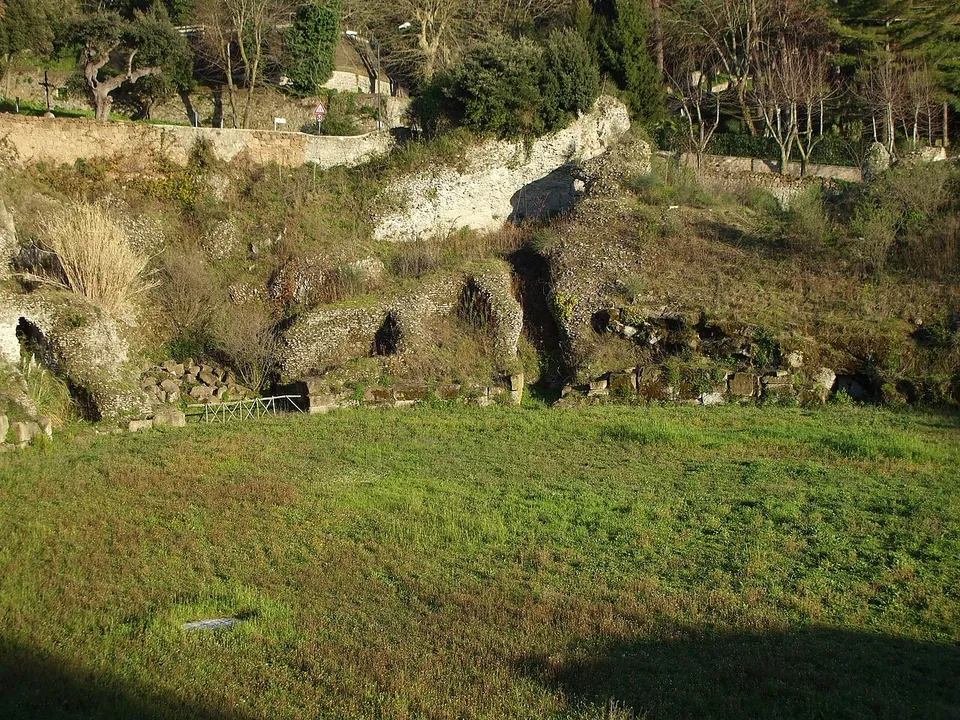
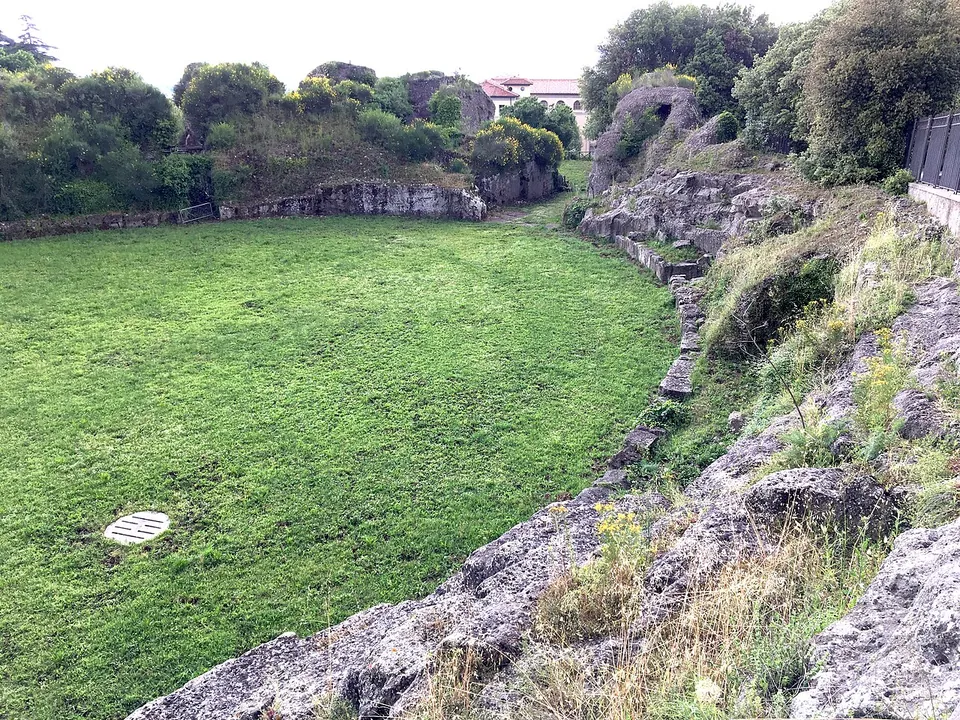
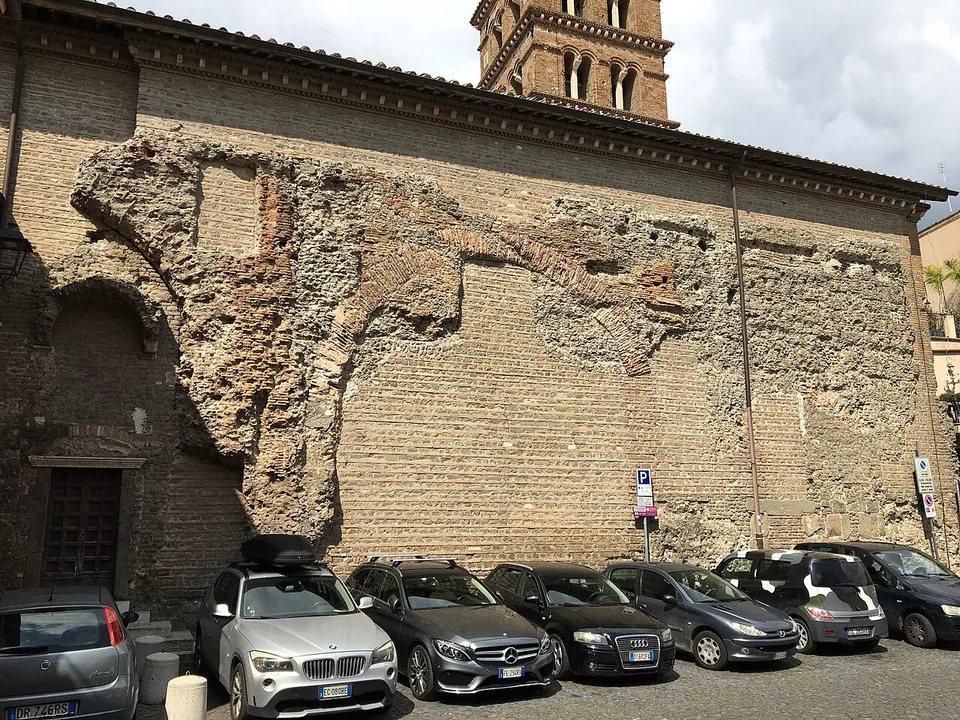
Outside the walls is the amphitheatre, built around the middle of the 3rd century, 113 m long and estimated to have held 15,000 to 16,000 people. Its northern half was carved into the bedrock; the southern half stands on a row of irregular vaulted substructures, above which the place of the imperial box can still be made out. The seating has almost entirely gone, taken for building stone over the centuries (the operator; en.wikipedia). Across the Via Appia, the baths attributed to Caracalla survive inside the houses of the Cellomaio quarter: the church of San Pietro occupies one of their halls, 37 by 12 m (en.wikipedia), and some of their rooms now house the Museo della II Legione Partica (the operator). Under the bishop’s seminary park lie the Cisternoni, a five-aisled cistern cut into the rock that held about 10,000 m³ of water and is still periodically used (en.wikipedia; the operator). The church of Santa Maria della Rotonda is a domed hall of Domitian’s time built like a small Pantheon; it became a bath building when the fortress was built, and its black-and-white mosaic floors of that phase have been uncovered (the operator).
Smaller remains lie nearby: a Roman townhouse, the Domus “delle Entrate” (Pleiades); in the public park of Villa Doria, the ruins of a villa traditionally, but far from certainly, given to Pompey (the operator); and at that villa a tower tomb that local tradition also gives to him (Pleiades).
Is it worth the trip?
Yes, if you like your Roman sites lived in. This is not a fenced archaeological park but a town built on a fortress: a gate more than 12 m high beside the Via Appia, a legion’s amphitheatre at the edge of town, baths inside a church. Together they are one of the largest concentrations of Roman remains in any town of Lazio outside Rome (it.wikipedia).
The honest caveats: much of the fortress is under modern houses and only shows in fragments, and the monuments beyond the street, the amphitheatre and the Cisternoni among them, are in the care of the civic museum, which says a visit starts at the museum and opens mostly in the mornings. Go on a weekday morning and start there.
Getting there
Albano Laziale lies on the Via Appia (Pleiades), about 20 km from Rome (en.wikipedia). Buses stop on Corso Matteotti about 140 m from the point, and there is a car park at Largo Vittorio Marandola about 50 m away (OpenStreetMap), and a public pay car park a little below the Porta Principalis Sinistra (it.wikipedia).
The gate and the walls can be seen from the street. For the rest, the civic museum (Viale Risorgimento 3) says that individual visitors and groups of up to 10 can visit the museum or the town’s monument circuit on their own without booking, by coming to the museum during opening hours: Monday to Saturday 09.00–13.00, and also 15.30–18.30 on Mondays and Thursdays. On Sundays the Museo Civico opens on the first and third Sunday of the month and the Museo della II Legione Partica on the second and fourth, 09.00–13.00. Guided visits must be booked at least a week ahead. The museum does not publish its prices on its own site (museocivicoalbanolaziale.it, read 21 October 2026).
Visiting details
- Opening hours
- The fortress gate and wall stand in public streets. The civic museum, through which the town's monument circuit is visited, opens Monday to Saturday 09.00–13.00, and also 15.30–18.30 on Mondays and Thursdays; on Sundays the Museo Civico opens on the first and third Sunday and the Museo della II Legione Partica on the second and fourth, 09.00–13.00.
- Tickets
- The civic museum does not publish its prices on its own site.
- Parking
- Car park at Largo Vittorio Marandola, about 50 m from the point (OSM way/1102339838); a pay car park lies by the Porta Principalis Sinistra (it.wikipedia).
Before you go
- The remains are scattered through the streets of Albano Laziale rather than gathered in one fenced park, and much of the fortress lies under modern houses.
- The museum's own site does not say which monuments are opened on a given day; individuals and groups of up to 10 need no booking, guided visits must be booked at least a week ahead.
Hours and prices checked 21 October 2026 on the operator's own site. Confirm before travelling.
History
The area was already full of villas of the Roman nobility in the Republic, drawn by the Via Appia, and from 81 Domitian built his great villa nearby at Castel Gandolfo (it.wikipedia). Septimius Severus, who came to power after civil war, temporarily disbanded the Praetorian Guard and brought the Legio II Parthica, raised in 197 for his Parthian war, close to Rome for his own security; the fortress was built in about 198 (en.wikipedia). It was a rectangle with rounded corners and four gates, 1,334 m round and about 9.5 hectares, laid out on a steep slope that gave it a view over the Roman countryside (en.wikipedia).
When Caracalla murdered his brother and co-emperor Geta, the legion refused to accept him as sole ruler; he came to the camp in person and won it back with a 50 per cent pay rise and the baths that carry his name (en.wikipedia; brick stamps of his reign date them, the operator). The amphitheatre followed around the middle of the 3rd century. By the beginning of the 4th century the legion had left for the eastern frontier, and according to the Liber Pontificalis Constantine gave the abandoned barracks to his new cathedral of San Giovanni Battista; Albano grew up on the ruins, which lie mostly between half a metre and two metres below today’s streets (it.wikipedia).
The fortress was identified with Albano from the many inscriptions of the legion found in its cemetery at Selvotta, between Albano and Ariccia (en.wikipedia). Published accounts differ on the date of the Cisternoni: en.wikipedia treats them as the fortress’s great cistern, while the operator reads their masonry as older, probably built for outlying buildings of Domitian’s villa.
More photographs



Nearby
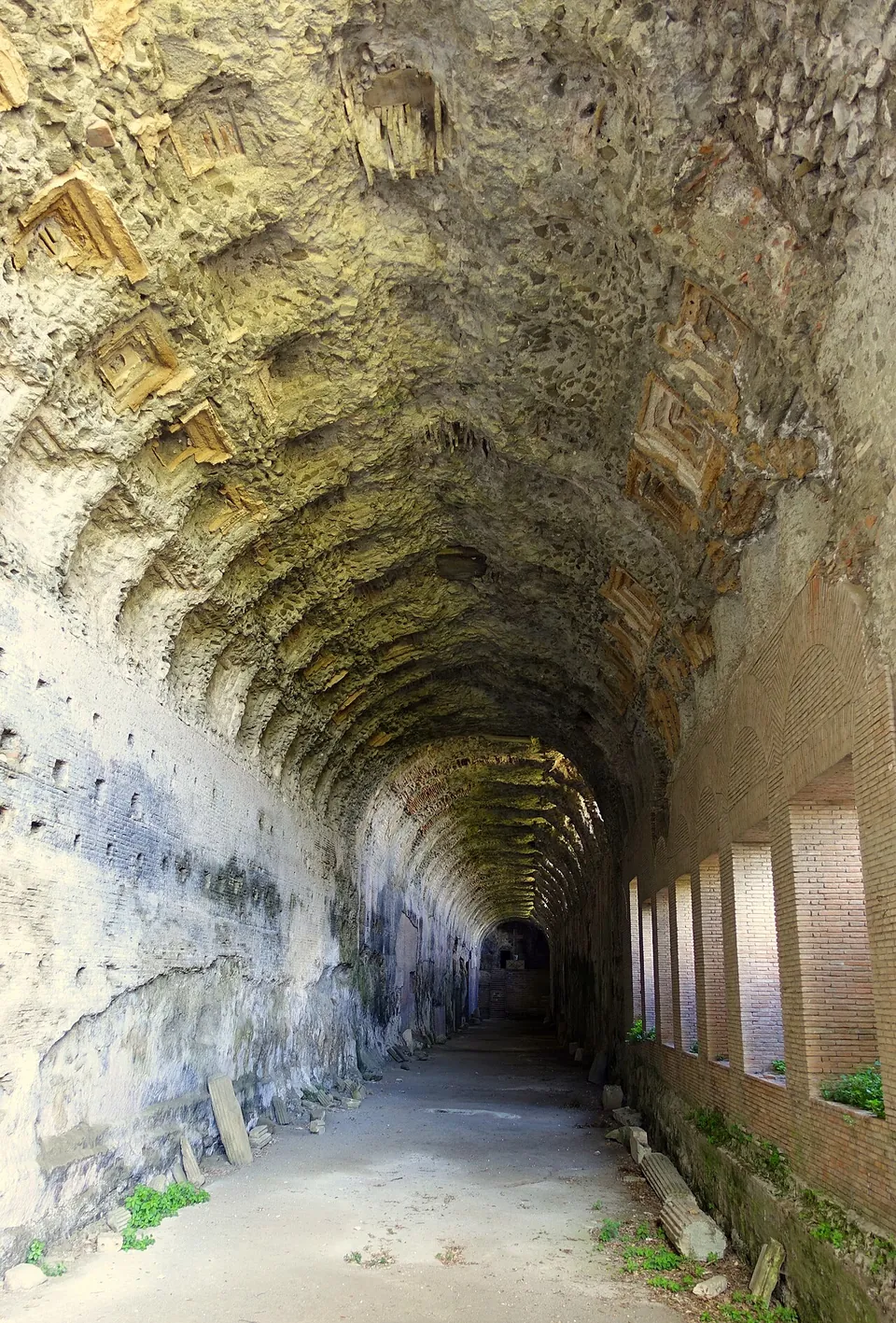
Photo: Daderot · Public domain · Commons
1 km · villa · Lazio
Villa of Domitian
Most of the remains lie inside the Pontifical Villas, an extraterritorial property of the Holy See.
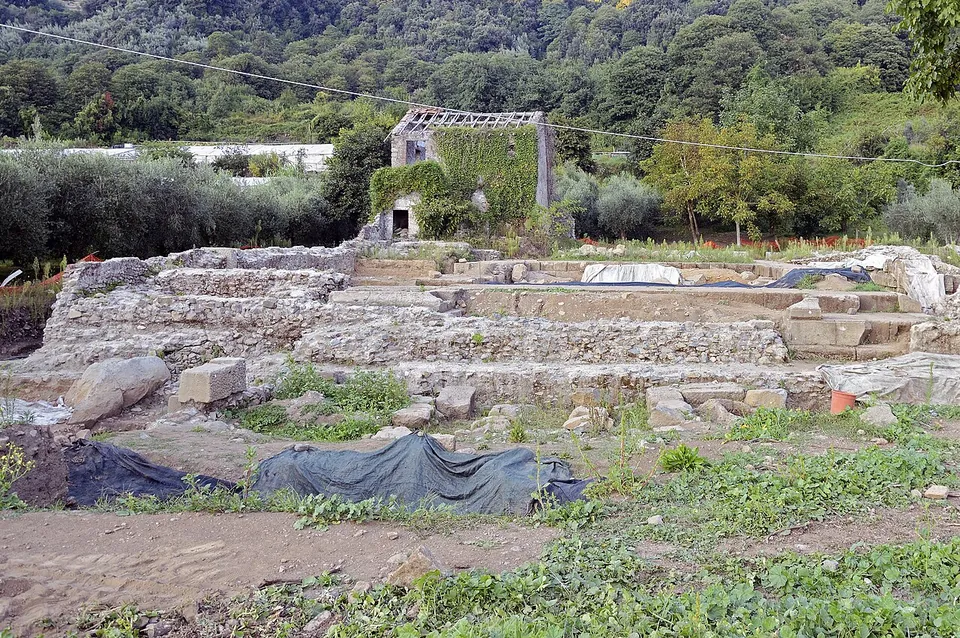
Photo: Livioandronico2013 · CC BY-SA 4.0 · Commons
4 km · temple · Lazio
Temple of Diana at Nemi
The sanctuary stood on a hillside terrace of 200 by 175 m below the modern village of Nemi, held up on the downhill side by triangular substructures and on the uphill side by a massive wall of semicircular niches that probably held statues (en.wikipedia).
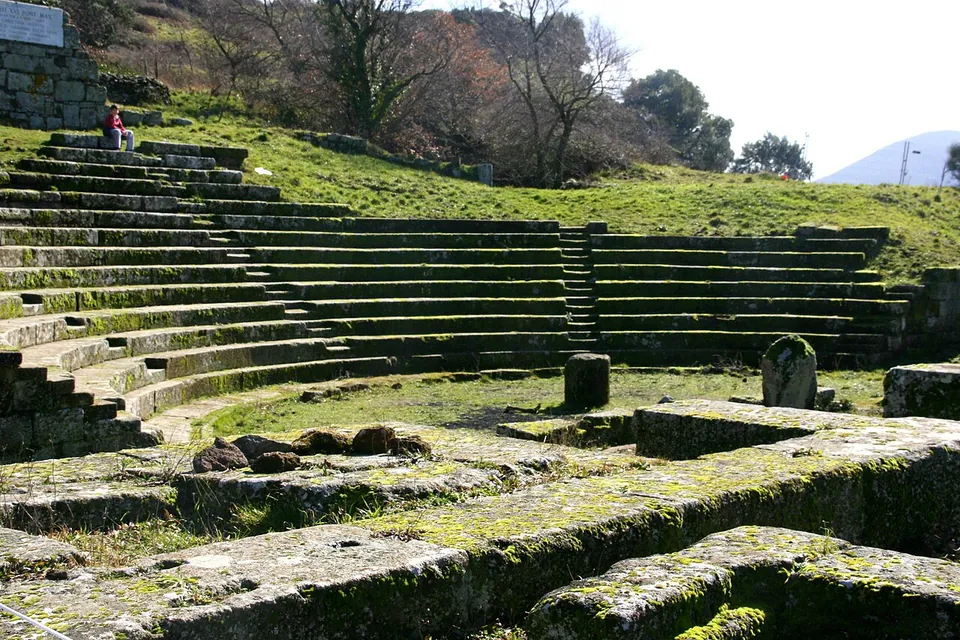
Photo: Luiza Serpa Lopes · Public domain · Commons
9 km · city · Lazio
Tusculum
The visitor route runs mainly through the forum, with the theatre halfway round (the operator).


Straight-line distances.
Sources
Every fact on this page comes from the records below, each used under the licence noted.
| Source | Licence |
|---|---|
| Pleiades 422885 | CC BY |
| Wikidata Q3663109 | CC0 |
| OpenStreetMap node/7142882854 | ODbL |
| Wikipedia (en) — Castra Albana | CC BY-SA 4.0 |
| Wikipedia (it) — Castra Albana | CC BY-SA 4.0 |
| Wikipedia (en) — Roman amphitheatre of Albano Laziale | CC BY-SA 4.0 |
| Wikipedia (it) — Terme di Caracalla (Albano) | CC BY-SA 4.0 |
| Pleiades — Porta Praetoria of Castra Albana | licence not recorded |
| Musei Civici di Albano Laziale — Monumenti (the operator) | licence not recorded |
| Musei Civici di Albano Laziale — Contatti, opening hours (the operator) | licence not recorded |