

The Villa of Domitian is what is left of the emperor Domitian’s country palace in the Alban Hills, about 20 km from Rome (en.wikipedia). Its best ruins stand in the garden of Villa Barberini at Castel Gandolfo, which belongs to the Pope’s estate and can be seen only on a guided tour run by the Vatican Museums.
What is there today
Most of the remains lie inside the Pontifical Villas, an extraterritorial property of the Holy See. The rest are in the towns of Castel Gandolfo and Albano Laziale (it.wikipedia). The villa was built on three narrow terraces, each about 500 m long, on the rim of the crater that holds Lake Albano. Three things are worth the visit:
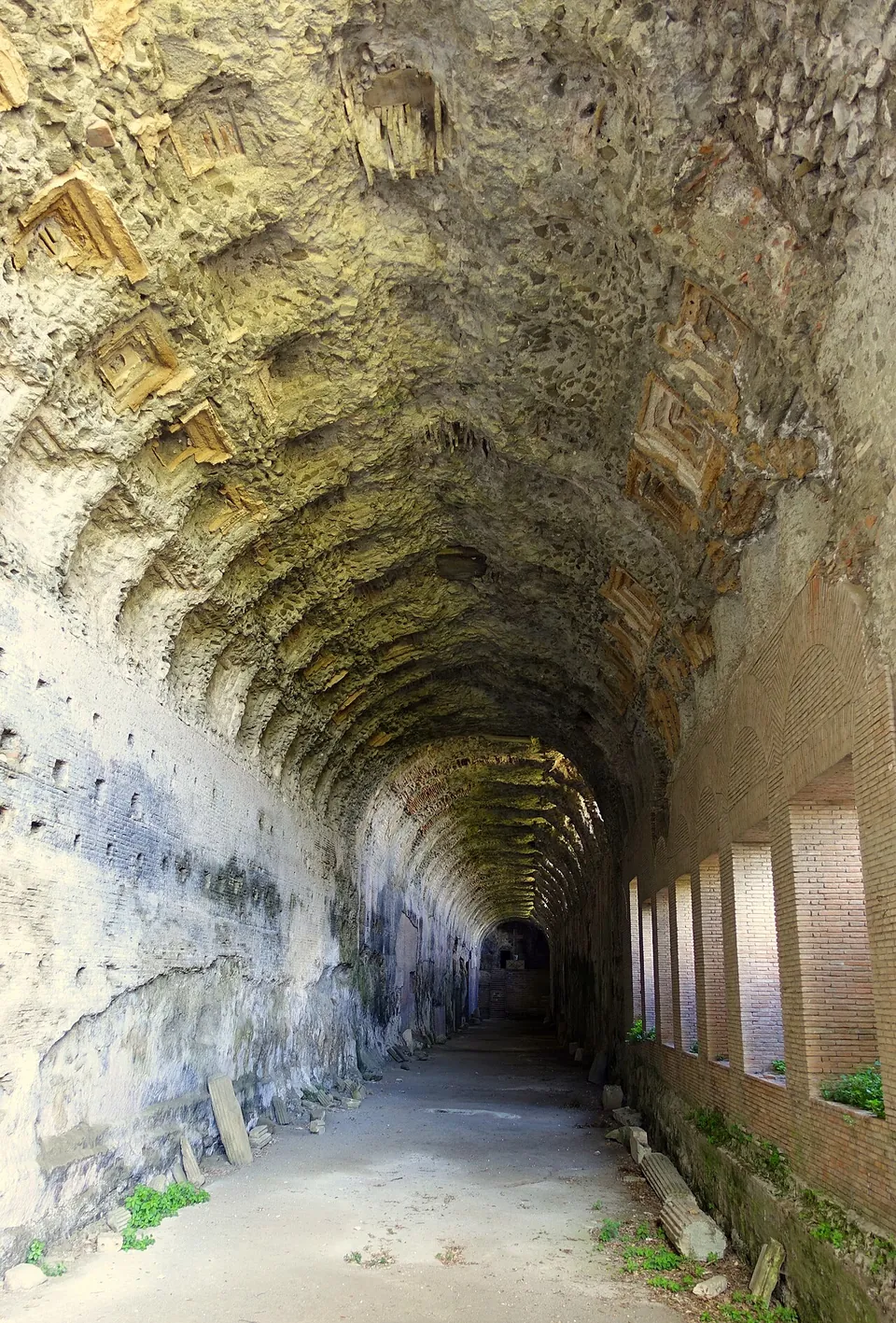
- The cryptoporticus, a vaulted gallery that held up the terrace above it. It once ran the length of the terrace, and the surviving stretch is 120 m long and 7.45 m wide. The vault keeps a few traces of its stucco coffering, and windows along the west side are matched by niches on the east side, which is partly cut from the rock. The ancient floor lay about a metre and a half below today’s (it.wikipedia). The English article calls it probably the largest known cryptoporticus of any villa around Rome.
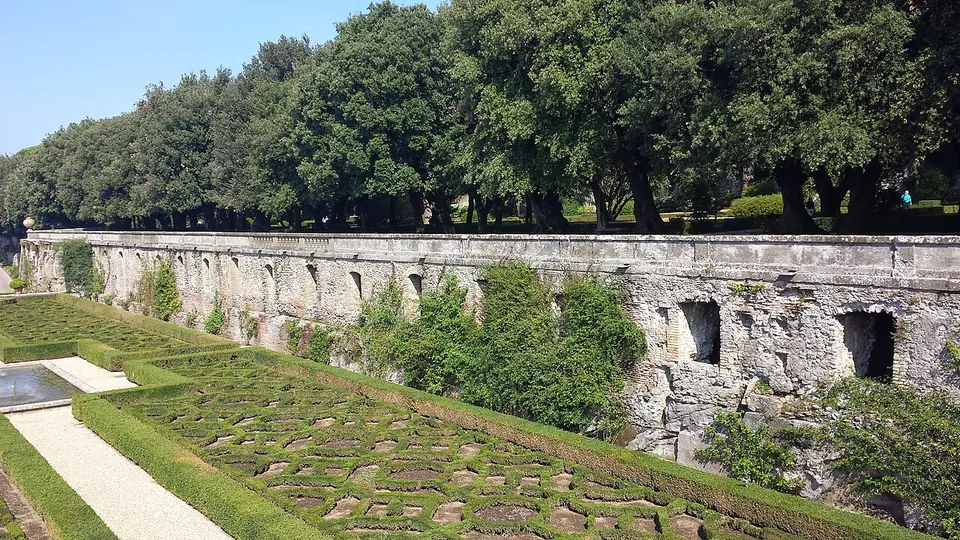
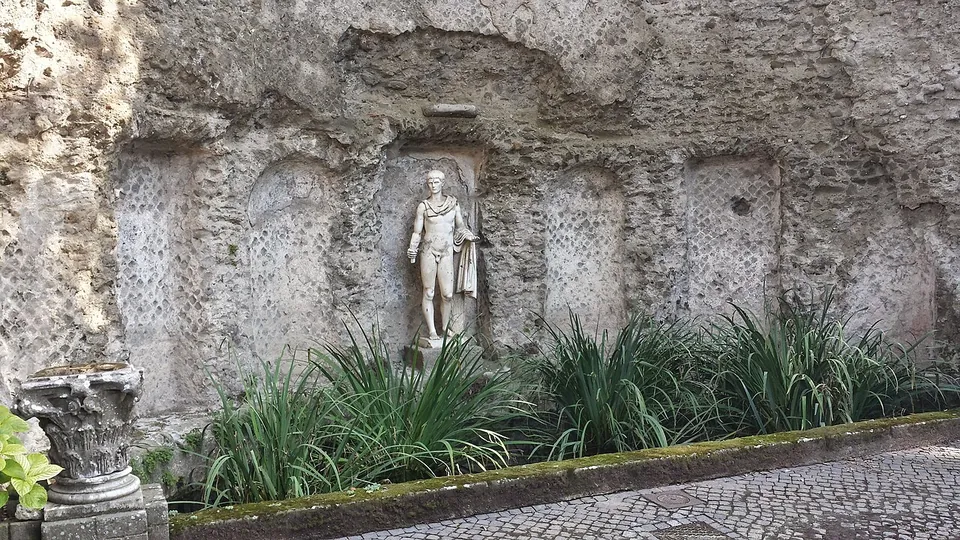
- The Viale dei Ninfei, an avenue under the great retaining wall of the upper terrace. Four fountain recesses (nymphaea) are set into the wall, with seven or thirteen niches each, and patches of their plaster and stone facing survive (it.wikipedia).
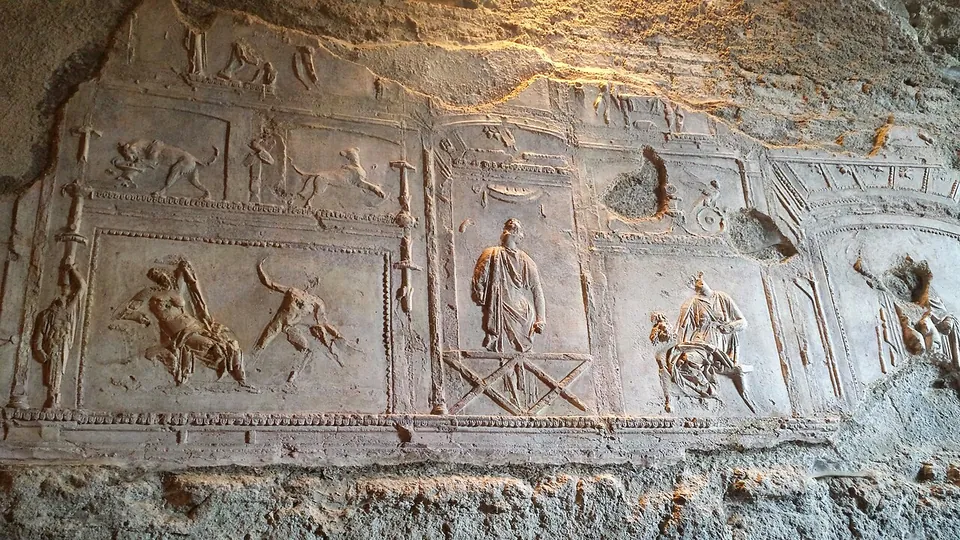
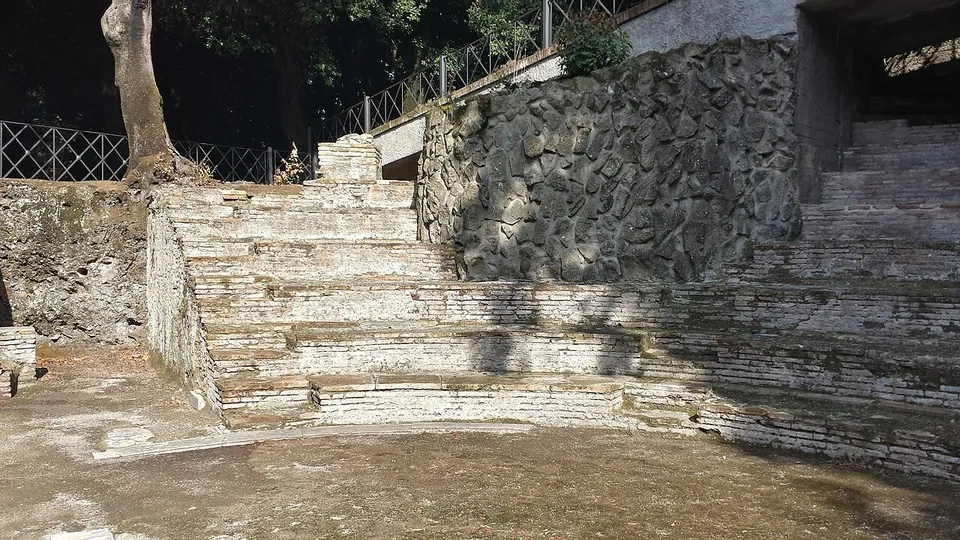
- The theatre, built into the hillside, with an orchestra about 11.8 m across. Its corridor kept a frieze of thirteen stucco panels on theatrical themes, and some of the reliefs are still on the wall. it.wikipedia ranks the frieze among the most important late Flavian decoration, alongside the paintings of Pompeii and Herculaneum. The seating has worn away over time: 22 steps were dug out in 1657, Lanciani saw 11 in 1886 and Lugli 9 in 1918.
The lowest terrace held a large walled space 75 m wide, read as either a circus or a garden in the shape of a hippodrome. An Antiquarium set up in Villa Barberini in 1970 gathers finds that earlier owners had placed around the villa (it.wikipedia), and the Vatican Museums’ guided walk includes it. The palace itself stood where the Propaganda Fide college is now, and its scant remains are largely buried. A 100 m tunnel cut through the rock to a terrace on the lake side of the ridge was cleared in 1910 and then closed again (it.wikipedia).
Is it worth the trip?
If a garden tour is running, yes. You get a 120 m vaulted gallery, a theatre with Flavian stucco reliefs, and a garden that the Vatican Museums say looks out over the whole of Latium to the sea. Book the two-hour guided walk if you can. The one-hour eco-vehicle tour does not let you off along the route, which is a poor way to see a 120 m vaulted gallery.
The catch is access. There is nothing to see from the street, and on 24 October 2026 the Vatican Museums’ list of bookable visits did not include a Barberini Garden tour at all. If it is not offered when you go, the other standing part of Domitian’s estate is the Rotonda in the centre of Albano Laziale. This domed building of Domitian’s time, most probably a nymphaeum, is now the church of Santa Maria della Rotonda (it.wikipedia); see the Castra Albana page for Albano’s other Roman sites.
Getting there
Castel Gandolfo is in the Alban Hills, about 20 km from Rome. The nearest railway stops are on the Rome–Albano line: Villetta is about 470 m in a straight line from the point and Castel Gandolfo station about 1 km. Cotral buses stop on the Via Appia about 500 m away (OpenStreetMap). The Vatican Museums’ information sheets do not give the garden entrance’s address, and they say there is no parking on site.
Visits are booked through the Vatican Museums, whose only official ticket site is tickets.museivaticani.va. Places left on the day can also be bought at the entrance. On the operator’s undated sheets the guided walk through the garden and the Antiquarium costs €26 (reduced €15) and runs Monday to Saturday, subject to the Pontifical Villas’ calendar. The eco-vehicle tour with an audio guide costs €20 (reduced €15). Children up to 5 go free. Neither tour suits wheelchair users, a dress code applies (no shorts, mini-skirts or sleeveless tops), and the route can change at short notice if the Holy See needs the grounds (museivaticani.va, read 24 October 2026). Check before travelling.
Visiting details
- Opening hours
- Guided visits only, booked in advance with the Vatican Museums or bought at the entrance on the day if places are left. The guided walk runs Monday to Saturday, subject to the Pontifical Villas' calendar. The Vatican Museums' list of bookable visits, read on 24 October 2026, showed no Barberini Garden tour, only the Papal Palace and Secret Garden, which is a separate visit. Check that a garden tour is running before you plan the trip.
- Tickets
- Undated information sheets from the operator: €26 (reduced €15) for the two-hour guided walk through the garden and the Antiquarium of Villa Barberini; €20 (reduced €15) for the one-hour tour by eco-vehicle with an audio guide, on which you cannot get off. Children up to 5 go free.
- Parking
- The operator says there is no parking at the site. OpenStreetMap maps a car park about 290 m from the point (way/1546057453), but nothing says whether it is public.
Before you go
- The operator says neither tour suits wheelchair users, and it does not recommend them for visitors with limited mobility.
- A dress code applies: no sleeveless or low-cut tops, shorts or mini-skirts. Only small bags are allowed, and the route can change at short notice if the Holy See needs the grounds.
- The ruins are inside the papal estate and cannot be seen from the street.
Hours and prices checked 24 October 2026 on the operator's own site. Confirm before travelling.
History
The Alban Hills were full of Republican-era villas, among them those attributed to Clodius and to Pompey. By the time of Augustus so many had passed to the emperor that the whole estate was known as the Albanum Caesaris. Tiberius, Caligula and Nero lived in the earlier imperial villa. Domitian (81–96) settled here for good and added a new residential complex in the most panoramic spot, facing both the sea and the lake, with a hippodrome and a theatre. The design was probably by Rabirius, the architect of his palace on the Palatine (it.wikipedia). Giuseppe Lugli estimated that the estate reached up to six square kilometres, about 600 hectares, at this stage. Martial names the villa among Domitian’s favourite retreats, and Suetonius says he practised archery there (en.wikipedia).
After Domitian’s death the villa was rarely used. Some alterations date from the reigns of Trajan and Hadrian, and Marcus Aurelius sheltered here for a few days during the unrest of 175. Decline set in after Septimius Severus stationed the Legio II Parthica in the Castra Albana on the edge of the estate after 197: the soldiers and their families took building material from the villa, and the town of Albano grew up around the camp. The Liber Pontificalis records that Constantine gave the estate to the church of Albano under Pope Sylvester I (314–335). Whether or not the gift was real, the villa fell into ruin and became a quarry. In 1321 the Savelli family allowed it to be stripped, and the marble went by river to Orvieto for the cathedral (it.wikipedia).
From the late 16th century the ruins became picturesque features of patrician villas. In 1631 Taddeo Barberini, nephew of Pope Urban VIII, bought the villa that held the best of them, and the Lateran Treaty of 1929 brought it into the papal estate. Under Pius XI the cryptoporticus and the Viale dei Ninfei were cleared and worked into the redesigned gardens. Lugli’s surveys, published between 1917 and 1922, remain the basis of what is known (it.wikipedia). The villa has never been excavated as a whole and no complete plan exists; the theatre, first dug in 1657, is the only building investigated in recent times (en.wikipedia). The Barberini Garden first opened to booked visitors on 1 March 2014, on Pope Francis’s decision (Vatican Museums).
More photographs


Nearby
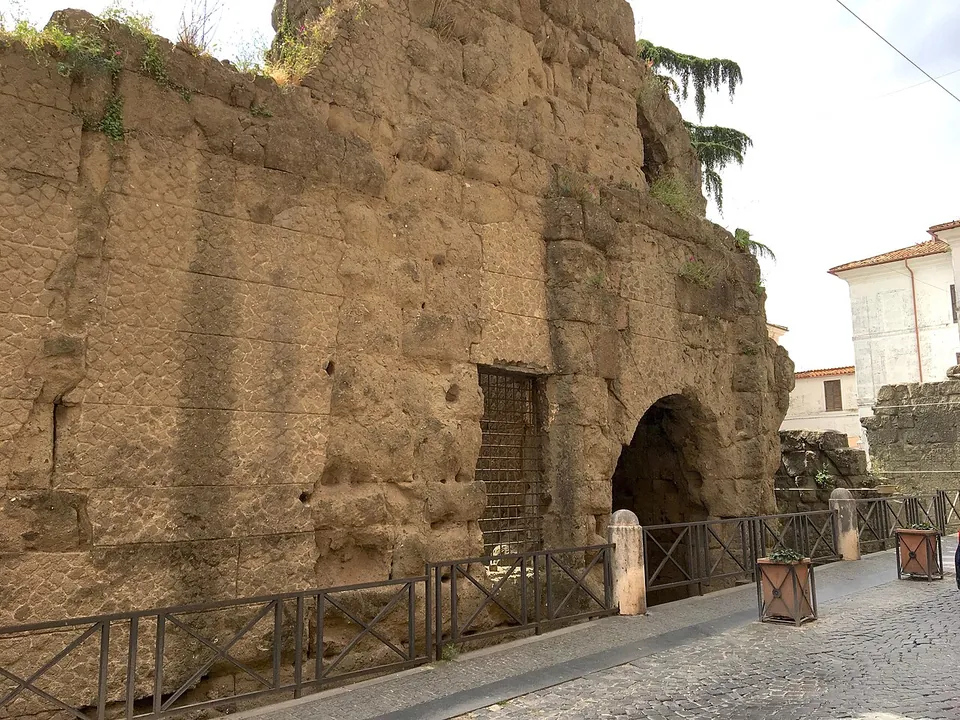
Photo: Rjdeadly · CC BY-SA 4.0 · Commons
1 km · fort · Lazio
Castra Albana
The set piece is the Porta Praetoria, the main gate, which faced the Via Appia.
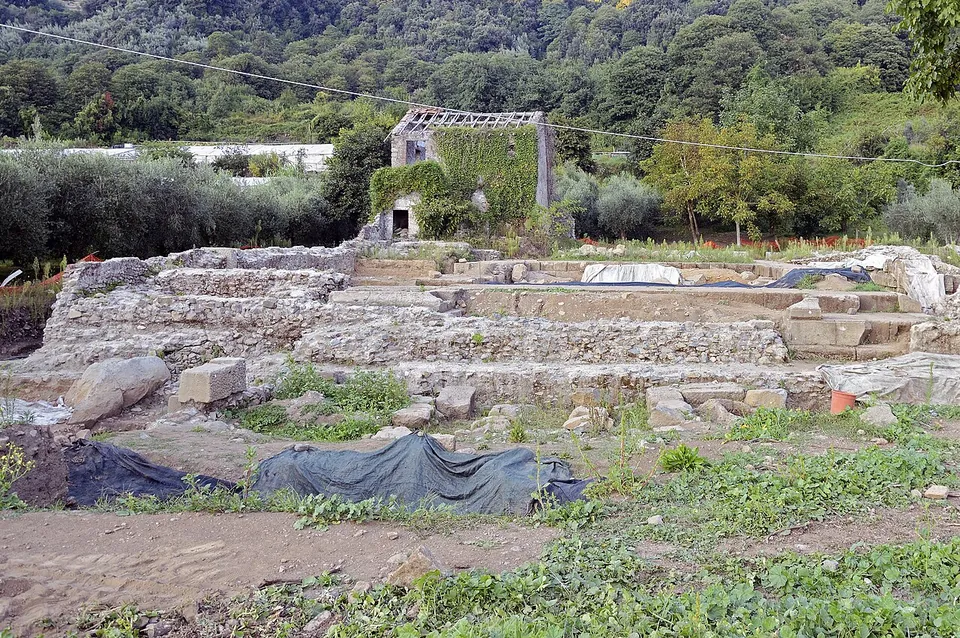
Photo: Livioandronico2013 · CC BY-SA 4.0 · Commons
5 km · temple · Lazio
Temple of Diana at Nemi
The sanctuary stood on a hillside terrace of 200 by 175 m below the modern village of Nemi, held up on the downhill side by triangular substructures and on the uphill side by a massive wall of semicircular niches that probably held statues (en.wikipedia).
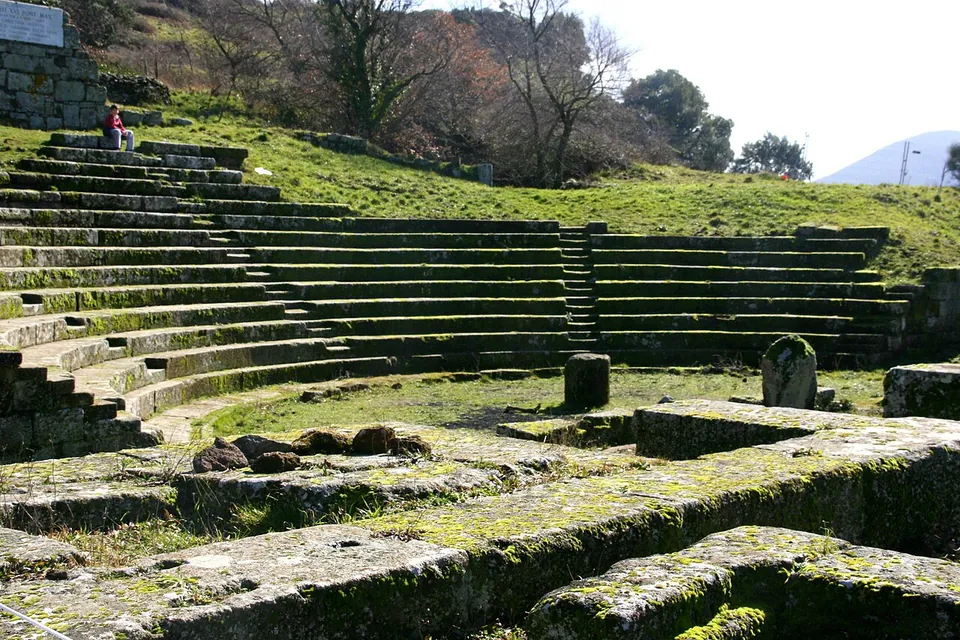
Photo: Luiza Serpa Lopes · Public domain · Commons
8 km · city · Lazio
Tusculum
The visitor route runs mainly through the forum, with the theatre halfway round (the operator).


Straight-line distances.
Sources
Every fact on this page comes from the records below, each used under the licence noted.
| Source | Licence |
|---|---|
| Pleiades 423125 | CC BY |
| Wikidata Q4012729 | CC0 |
| OpenStreetMap node/1604829398 | ODbL |
| Wikipedia (it) — Villa di Domiziano (Castel Gandolfo) | CC BY-SA 4.0 |
| Wikipedia (en) — Villa of Domitian | CC BY-SA 4.0 |
| Wikidata — Cryptoporticus of the Villa of Domitian (Q55117045) | licence not recorded |
| Vatican Museums — guided tour of the Garden and Antiquarium of Villa Barberini (information sheet) | licence not recorded |
| Vatican Museums — tour of the Barberini Garden by eco-vehicle (information sheet) | licence not recorded |
| Vatican Museums — Choose your tour (list of bookable visits) | licence not recorded |
| Vatican Museums — The Pope opens the Gardens of Castel Gandolfo (1 March 2014) | licence not recorded |