

What is there today
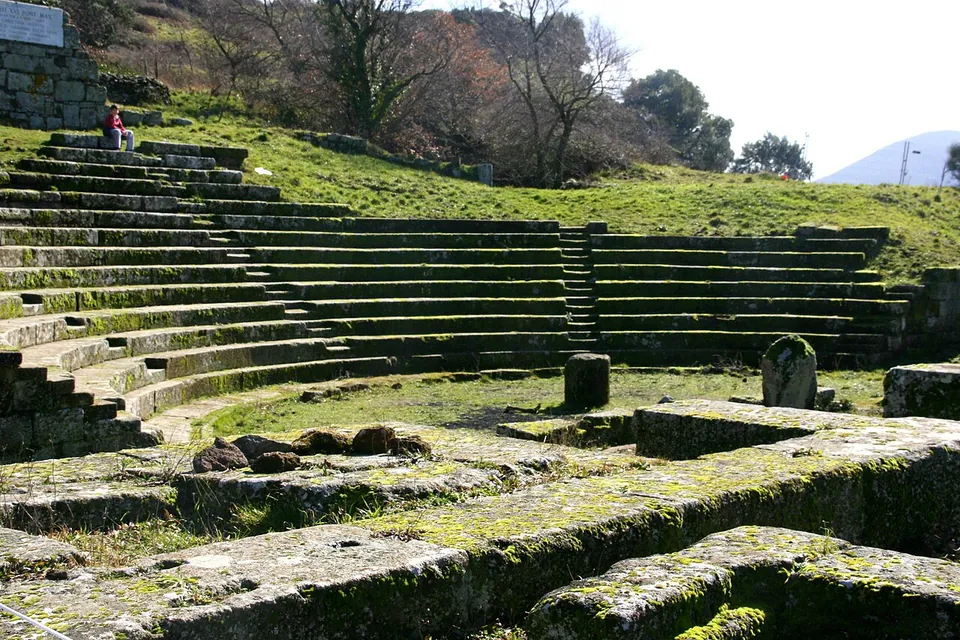
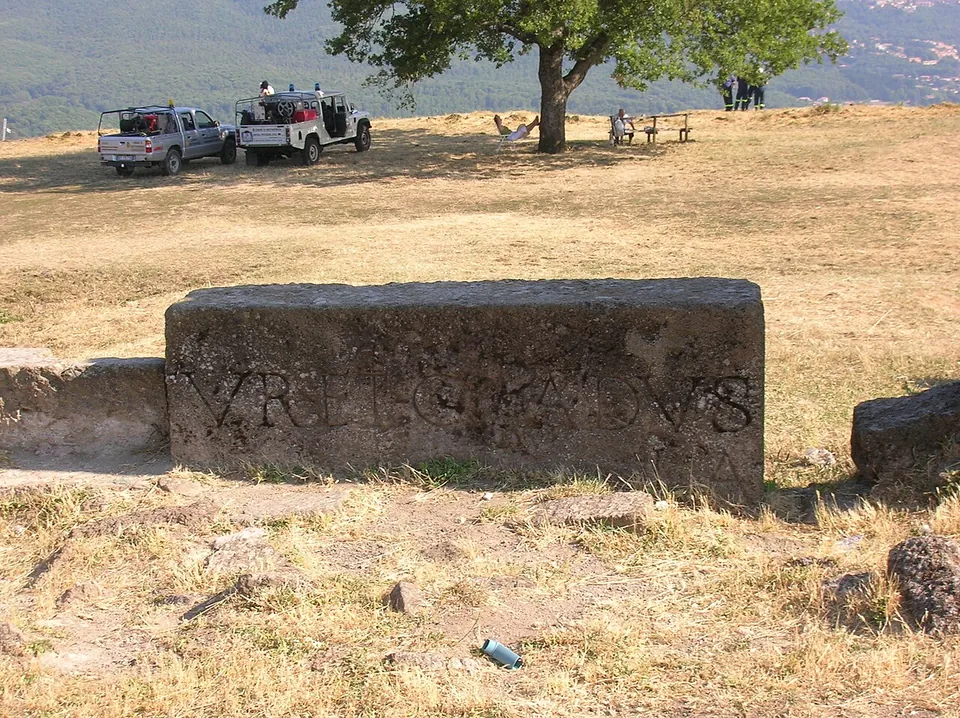
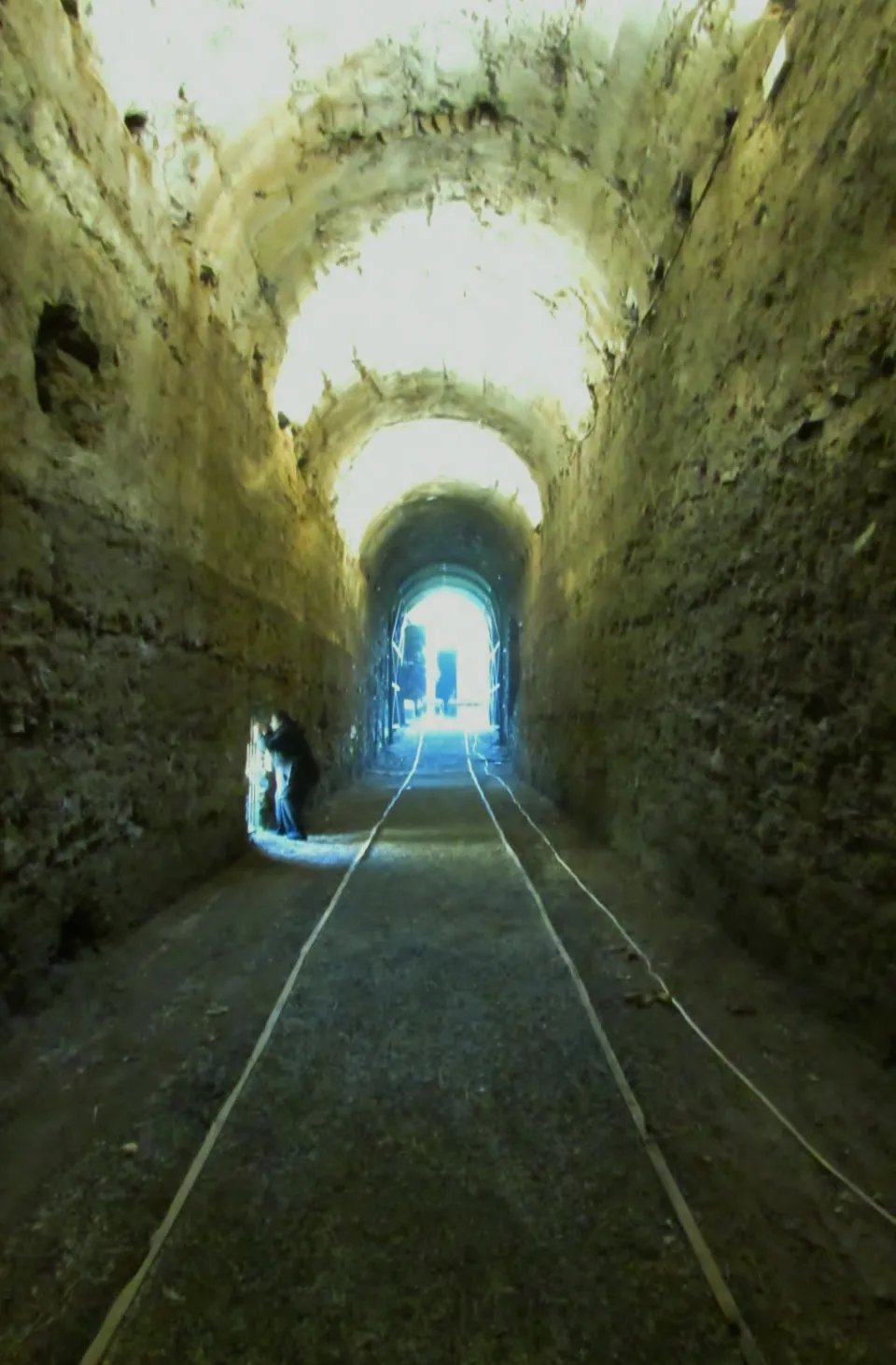
The visitor route runs mainly through the forum, with the theatre halfway round (the operator). The theatre is the best preserved building of the ancient town (it.wikipedia): its lower rows of seats still rest on the natural slope of the hill, and the road to the acropolis was taken through a covered passage, the via tecta, under the edge of its seating (the operator). Around the forum, which measures 55 by 36 m (it.wikipedia), the route passes a small apsed shrine of Mercury with a black-and-white mosaic floor, the stone base of what was almost certainly an archaic temple, a basilica whose column remains are still visible, an archaic fountain and the “Fountain of the Aediles”, which carries the names of two magistrates of 70 BC. A great terrace wall of squared tufa blocks holds up the forum square, and has been one of the classic views of Tusculum since the 19th century (the operator); en.wikipedia gives it as 35 m long and 9 m high.
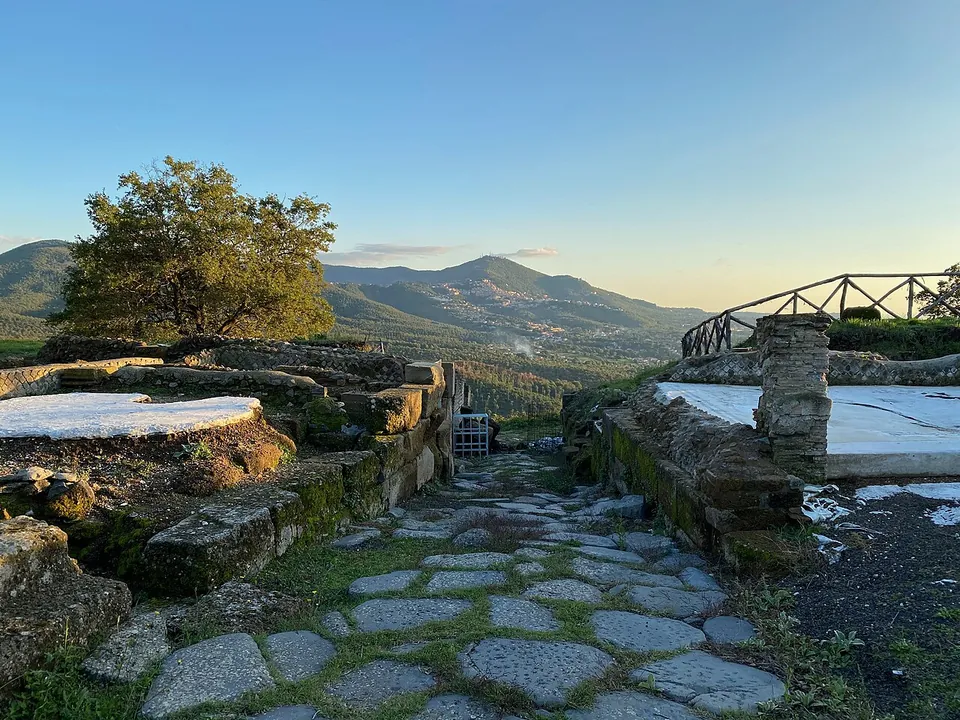
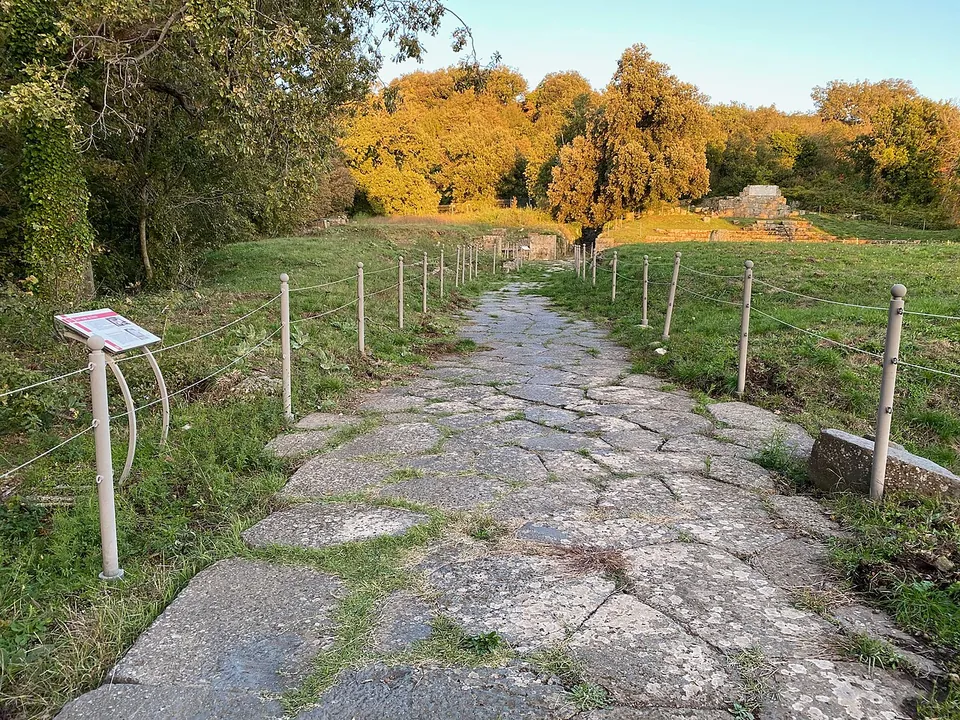
On your own you can carry on along the paved Via dei Sepolcri to the recently excavated Hadrianic baths and the massive substructures of what is now read as an out-of-town sanctuary, and walk up to the acropolis, where the podium of the temple of the Dioscuri lies under the medieval palace of the Counts of Tusculum (the operator). Much of what stands up there is medieval, and an iron cross 19 m high now marks the summit (en.wikipedia). Most of the ancient city, the acropolis and the amphitheatre have not been excavated (en.wikipedia).
Is it worth the trip?
Yes, if you have a car and can come on an open day. The theatre is a real one, seats and all, in a setting high above the Roman Campagna, the forum around it reads as a town centre rather than as scattered stones, and a ticket costs €3. Come for a half-day walk on a hilltop with Roman remains, not for a Pompeii: most of the town is still under the grass.
Two catches. The park opens only at weekends from May to September and on Sundays in spring and autumn, with nothing but booked groups in winter, so check the calendar before you drive up. And no public transport reaches it (the operator).
Getting there
The park is about 3.5 km outside Monte Porzio Catone, 5 km from the centre of Frascati and 6 km from Grottaferrata (the operator). By car, leave the A1 at the Monte Porzio Catone exit and take Via Tuscolo to the summit, or from Grottaferrata follow Via Tuscolana and turn off up Via Vecchia di Tuscolo (the operator).
From May to September it is open on Saturdays and Sundays, 09.30 to 19.30, with guided tours at 10.00 and 16.00; in April and October on Sundays, 09.30 to 18.30; in March and November on Sundays, 09.30 to 13.30, archaeological area only. From December to February it opens only for groups who book. Entry is €3, €2 for children aged 7 to 12 and free under 7; with a guided tour it is €5. A €10 combined ticket, valid for a year, adds the Museo Tuscolano in Frascati and the Museo del Vino and Villa Mondragone in Monte Porzio Catone (tuscolo.org, read 24 October 2026; the hours page was last updated in March 2023, so check before travelling).
Visiting details
- Opening hours
- Open at weekends only, and only in season. May to September, Saturdays and Sundays 09.30–19.30, with guided tours at 10.00 and 16.00; April and October, Sundays 09.30–18.30; March and November, Sundays 09.30–13.30 (archaeological area only). December to February it opens only for groups who book.
- Tickets
- €3; €2 for children aged 7 to 12; free under 7 and for disabled visitors. With a guided tour €5 (children 7 to 12, €2). A €10 combined ticket, valid for a year, also covers the Museo Tuscolano in Frascati, the Museo del Vino and Villa Mondragone in Monte Porzio Catone (announced in March 2025 as a two-year trial).
Before you go
- The park is not served by public transport (the operator); you need a car, or a long walk uphill from Frascati or Monte Porzio Catone.
- Outside the open season the site is open only to booked groups. Information and bookings on +39 391 422 5048 (the operator's line).
Hours and prices checked 24 October 2026 on the operator's own site. Confirm before travelling.
The theatre
Built in the 1st century BC at the foot of the acropolis, the theatre faced the forum like a stage set (the operator; the Ministry of Culture dates it to around 75 BC). Its first decoration was in local tufa; in the first half of the 1st century AD it was rebuilt with a masonry stage building and an enlarged auditorium that held about 2,000 spectators, and given a group of bronze statues of figures from the town’s history (the operator). Statues of Orestes, Pylades, Telemachus, Telegonus and the comic playwright Diphilus are recorded on its stage (it.wikipedia). It came to light in the royal excavations promoted by Queen Maria Cristina, wife of Charles Felix of Sardinia, in the late 1830s, when Luigi Canina dug the theatre area (it.wikipedia; en.wikipedia; Pleiades dates its first excavation to 1839). It is in use again: performances have been staged here since 5 September 2003 (the Ministry of Culture).
The baths
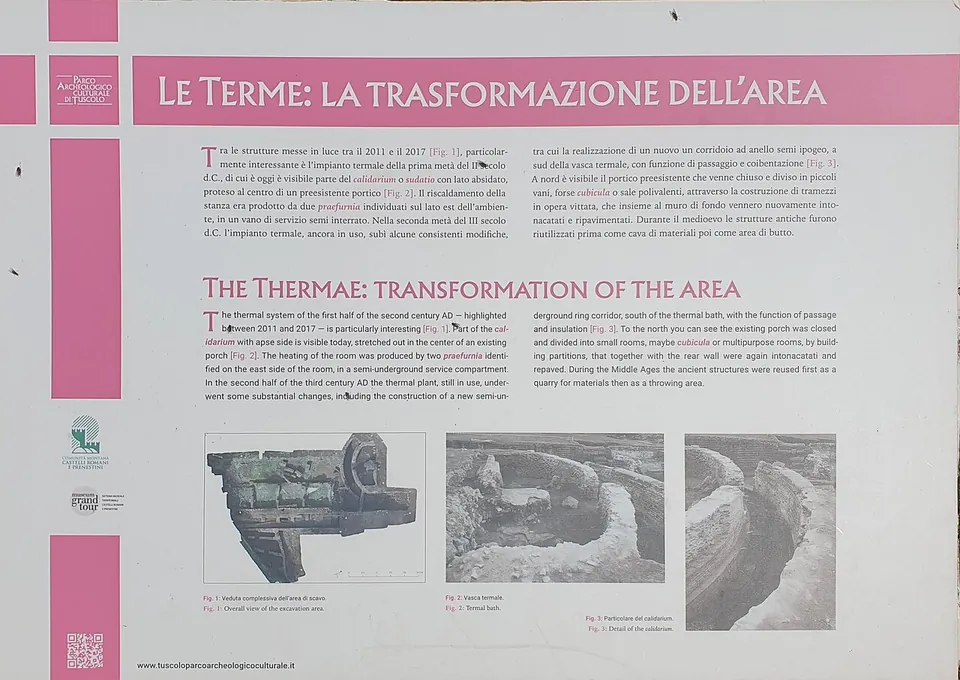
Excavations in the 2010s uncovered a bath building of the first half of the 2nd century AD, laid out across an older portico. Part of its hot room, the caldarium, with its apse, is visible today; it was heated from two furnaces in a half-sunken service room on its east side. The baths were still in use and were altered in the second half of the 3rd century; in the Middle Ages the ruins became first a quarry and then a dump (the park’s information board, which dates the excavation 2011–2017; en.wikipedia puts the discovery in 2015). In 2023 a statue of a maenad was found in the baths and is now shown, restored, in the Museo Tuscolano in Frascati (it.wikipedia).
The amphitheatre
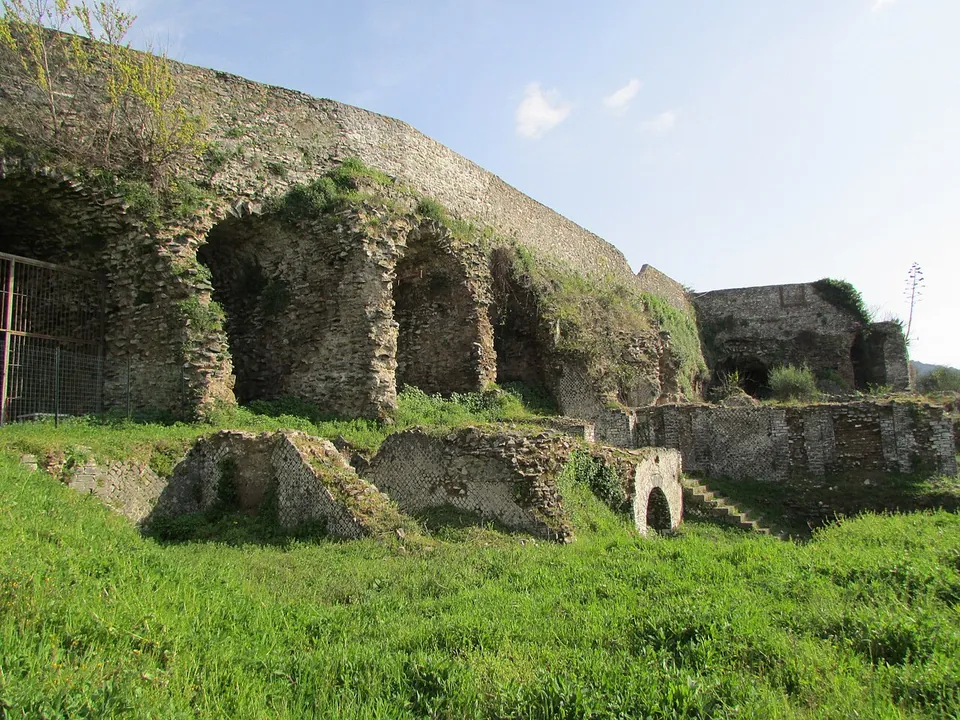
The amphitheatre lies outside the town walls, partly resting on the hillside and partly on masonry substructures. Brick stamps date it to the 2nd century AD, and it held about 3,000 spectators (it.wikipedia). Published measurements differ, from about 73 to 80 m along its long axis (it.wikipedia; the Ministry of Culture). Its main entrances were dug out in 1820 and more of it in 1867, but it has never been systematically investigated, and it is poorly preserved and largely buried (Pleiades; the Ministry of Culture). The operator’s visitor route does not include it.
The Mausoleum of Marcus Coelius Vinicianus
A tomb of the mid-1st century BC (Pleiades), one of the notable tombs along the paved Via dei Sepolcri, which runs from the town to the amphitheatre (it.wikipedia). No source describes what stands of it today.
Barco Borghese
About 2.4 km north-west of the town, in Monte Porzio Catone, a broad rectangular terrace looking towards Rome stands for a third of its area on at least 180 vaulted concrete rooms built in the mid-1st century BC. They are the substructures of a huge platform traditionally attributed to a Roman villa that later became part of a large imperial estate, and one side forms a monumental front. From 1567 the Altemps family turned the terrace into a hunting enclosure, the barco; visits follow an underground route through the vaults, and the complex is still being restored and studied (it.wikipedia). This is a separate visit from the park on Monte Tuscolo, and no operator page publishes its opening times or prices, so ask in Monte Porzio Catone before going.
History
The hilltop was settled in the Iron Age, and ancient tradition gave the town a founder in Telegonus, son of Ulysses and Circe (it.wikipedia). Tusculum was an important city of the Latin League: its Octavius Mamilius, son-in-law of Tarquin the Proud, led the Latin army against Rome at Lake Regillus in 499 or 496 BC and was killed there. Later the town became Rome’s ally, and in 381 BC it surrendered to Camillus without a fight and received Roman citizenship as a municipium (it.wikipedia).
Having taken the Marian side against Sulla, Tusculum saw its territory divided among Sulla’s veterans after 82 BC. By then politically insignificant, it became the place where Rome’s patricians spent the summer, and its countryside filled with villas: Cicero, who wrote the Tusculan Disputations here, Lucullus, Asinius Pollio and Cato the Younger all had one (it.wikipedia). The forum reached its finest state at the start of the imperial period, with building work continuing into the Flavian age; from the 3rd century the forum was abandoned, and by the 4th century the town was in advanced decline (it.wikipedia).
After five centuries of abandonment the hill came back to life in the 10th century as the stronghold of the Counts of Tusculum, a family that produced several popes. Rome’s commune destroyed the town on 17 April 1191, and its stones were carried off (en.wikipedia). Excavation began in the first decade of the 19th century under Lucien Bonaparte, and part of what the royal excavations of 1825–1841 found went to the castle of Agliè in Piedmont, where it is still kept. Since 1994 the Spanish School of History and Archaeology in Rome has dug here with the Comunità Montana Castelli Romani e Prenestini, which owns the site, and their work led to the visitor route opened in 2010 (it.wikipedia).
More photographs




Nearby
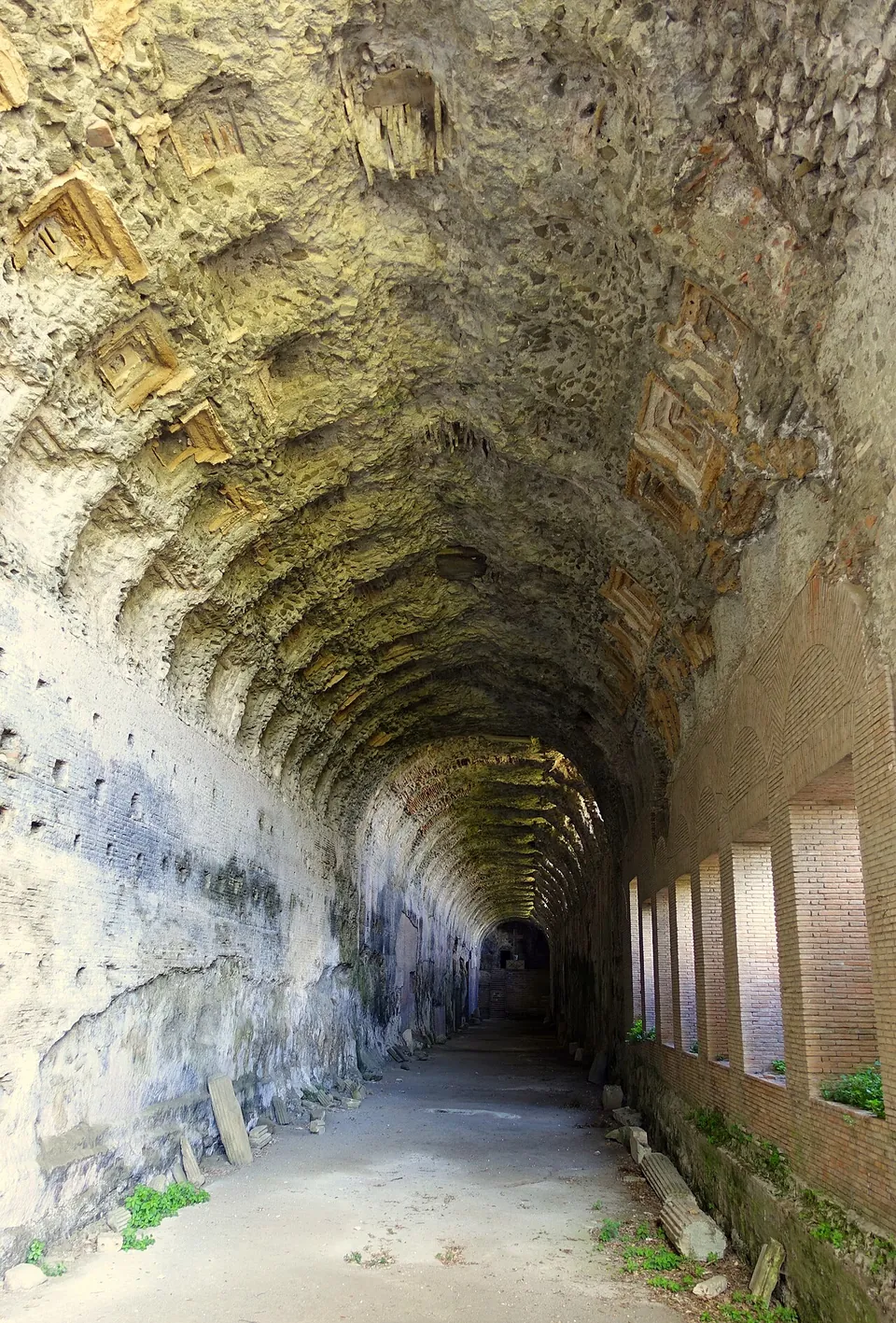
Photo: Daderot · Public domain · Commons
8 km · villa · Lazio
Villa of Domitian
Most of the remains lie inside the Pontifical Villas, an extraterritorial property of the Holy See.
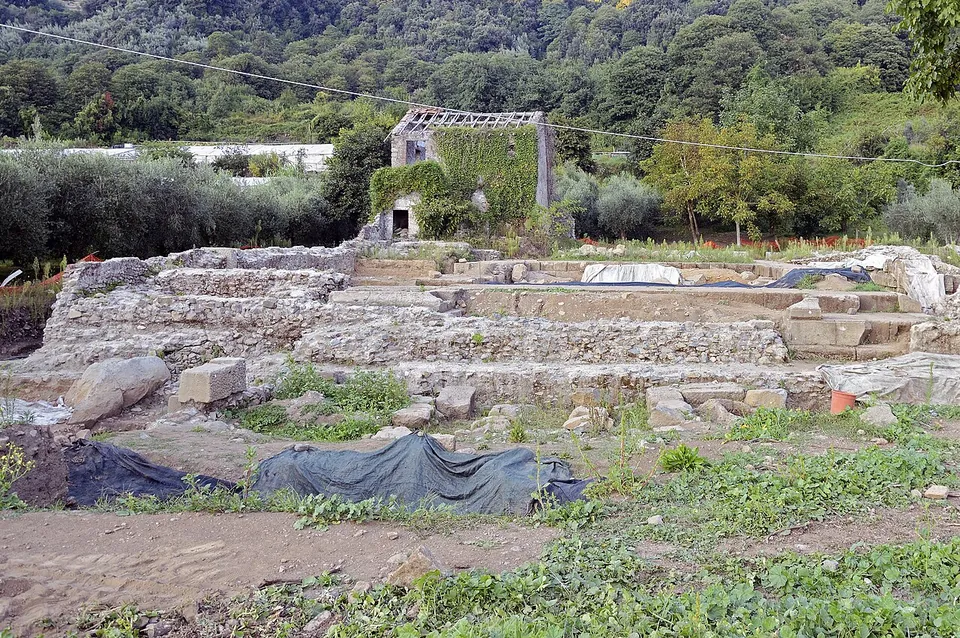
Photo: Livioandronico2013 · CC BY-SA 4.0 · Commons
8 km · temple · Lazio
Temple of Diana at Nemi
The sanctuary stood on a hillside terrace of 200 by 175 m below the modern village of Nemi, held up on the downhill side by triangular substructures and on the uphill side by a massive wall of semicircular niches that probably held statues (en.wikipedia).
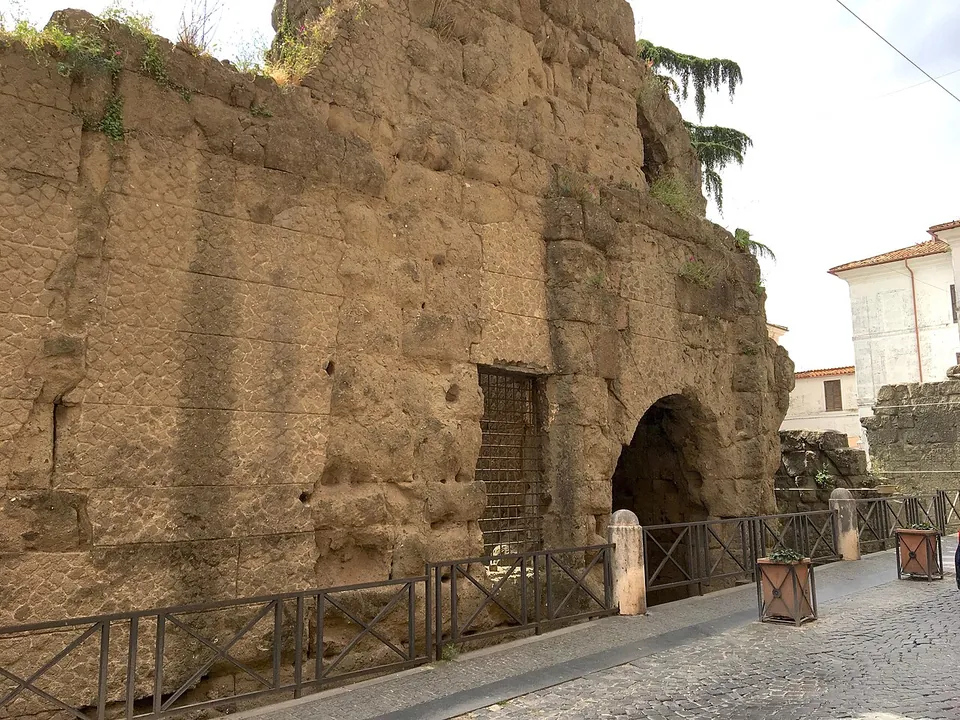
Photo: Rjdeadly · CC BY-SA 4.0 · Commons
9 km · fort · Lazio
Castra Albana
The set piece is the Porta Praetoria, the main gate, which faced the Via Appia.


Straight-line distances.
Sources
Every fact on this page comes from the records below, each used under the licence noted.