

What is there today
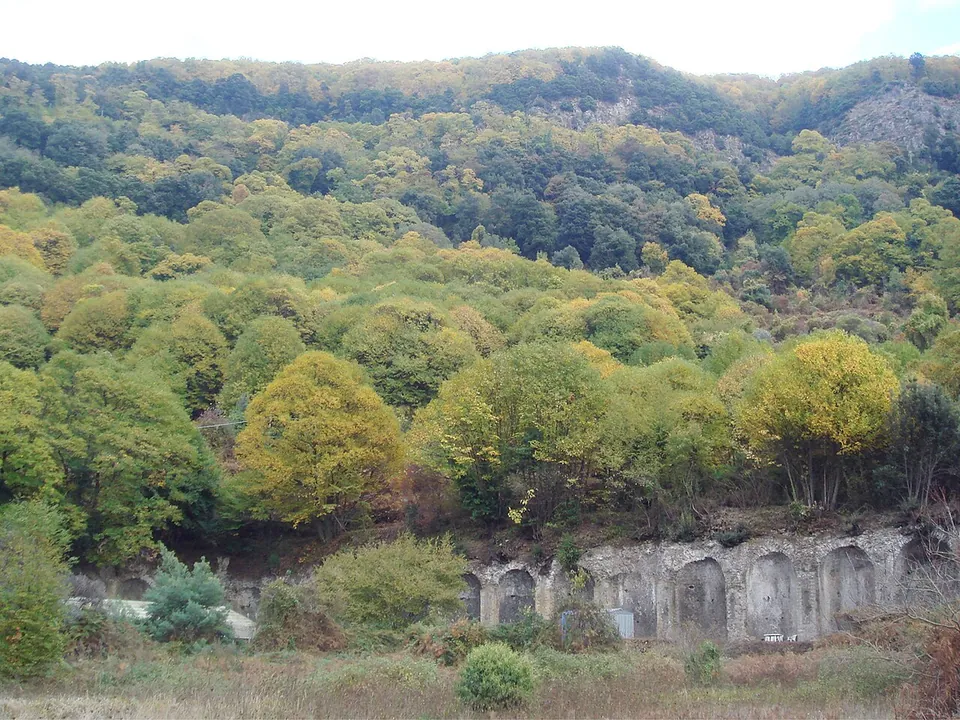
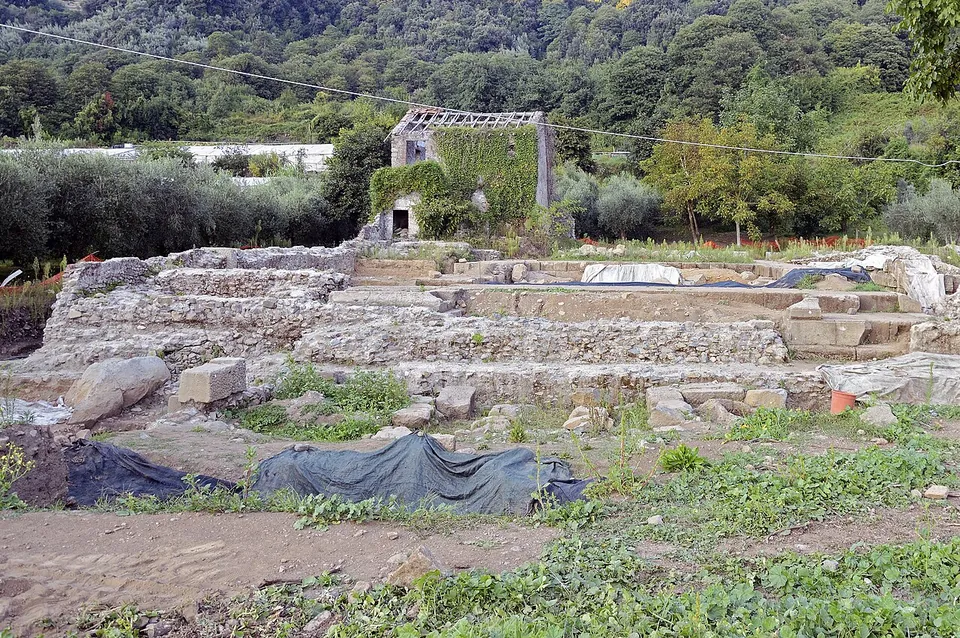
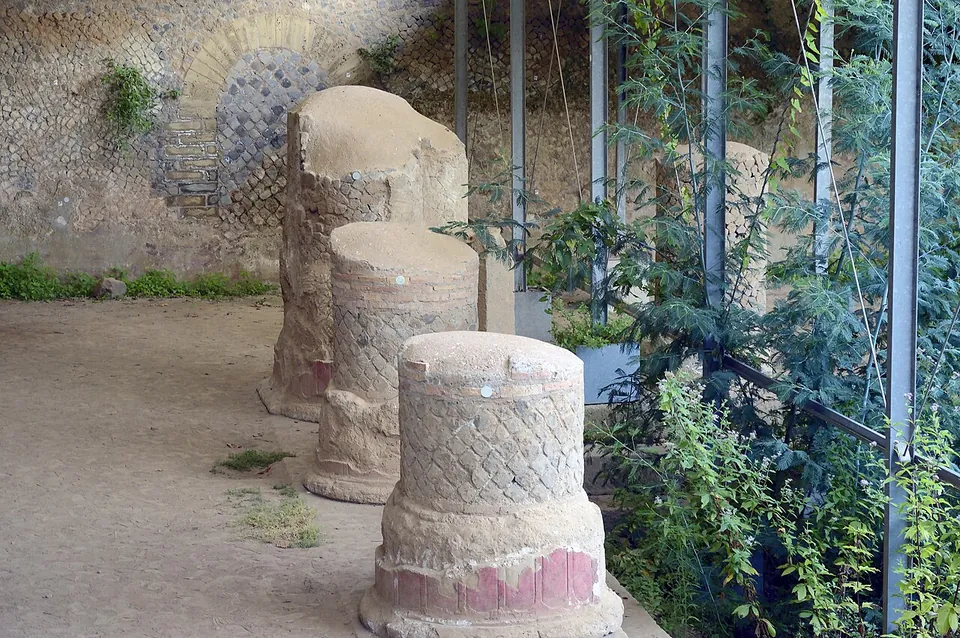
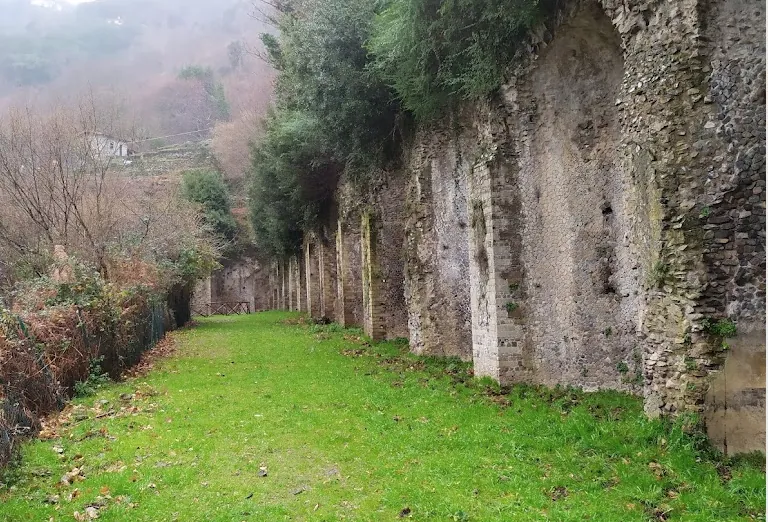
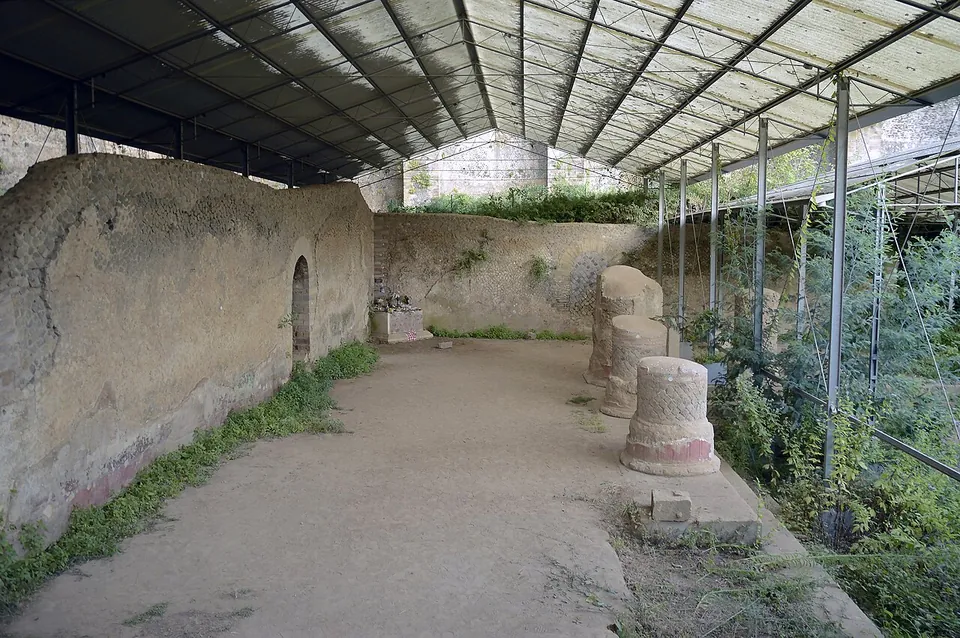
The sanctuary stood on a hillside terrace of 200 by 175 m below the modern village of Nemi, held up on the downhill side by triangular substructures and on the uphill side by a massive wall of semicircular niches that probably held statues (en.wikipedia). The niches are the tallest survivors, rising several metres out of the ground; besides that wall, what can be seen is part of the temple’s porch with at least one votive altar and a few columns (it.wikipedia). Photographs from 2014 show low walls of squared blocks under protective sheeting, and column stumps beneath modern shelters. Most of the sanctuary is still buried (it.wikipedia).
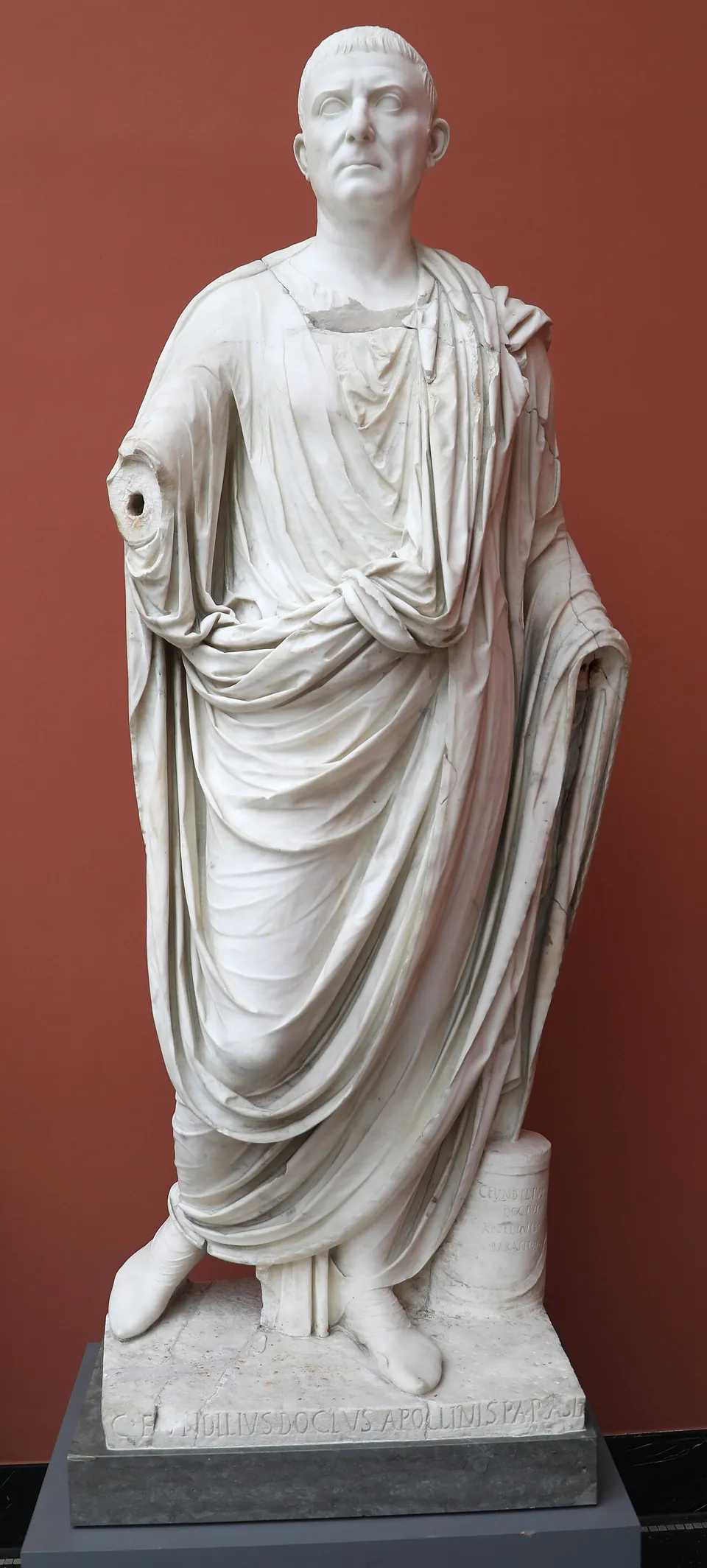
The best of what was found is elsewhere. Statues from the site are scattered across museums, among them the University of Pennsylvania’s museum, the Museum of Fine Arts in Boston, Nottingham Castle and the Ny Carlsberg Glyptotek in Copenhagen (en.wikipedia); other pieces are in the Museum of the Roman Ships at Nemi and, in Rome, at Villa Giulia and the Baths of Diocletian (it.wikipedia).
Is it worth the trip?
Not on its own, as things stand. The ruins are fenced and the excavation area is not open to the public (de.wikipedia; OpenStreetMap), and no operator publishes opening hours or a ticket for it. The way in is a guided opening: the state heritage superintendency for the Rome area (SABAP) led one on 24 September 2023 during the European Heritage Days (the museum’s operator). If you can time a visit to one, the setting — a terrace above a crater lake, under the wooded rim — is the point.
Otherwise, combine the shore with the Museum of the Roman Ships, about 650 m to the west-south-west, which shows votive material from the sanctuary and a stretch of the paved Roman road, the clivus Virbii, that led to it from Ariccia (the operator). Check first: the museum is closed for works until 31 October 2026, and its section on the cults is closed for floor repairs.
Getting there
The site lies on the northern shore of the lake, below Nemi; the nearest larger town is Genzano di Roma, 2.5 km away. For the museum, its operator advises taking the Via Appia to Genzano and dropping down to the lake by the via Diana. Street-side parking is mapped about 240 m from the ruins, and the via del Tempio di Diana passes about 150 m away (OpenStreetMap). No bus stop is mapped near the site, so plan on a car.
There is no ticket for the sanctuary. The museum, when open, runs Tuesday to Sunday from 09.00 to 19.00 (last entry 18.00), and is closed on Mondays, 1 January and 25 December. Entry is €3, reduced €2, and free on the first Sunday of each month, 25 April, 2 June and 4 November (direzioneregionalemuseilazio.cultura.gov.it, read 22 October 2026 — check before travelling).
Visiting details
- Opening hours
- The sanctuary has no regular opening hours and is not open to the public; it is shown only on occasional guided visits, such as the one the Soprintendenza led on 24 September 2023 for the European Heritage Days. The Museum of the Roman Ships, about 650 m along the shore, opens Tuesday to Sunday 09.00–19.00 (last entry 18.00) and is closed on Mondays, 1 January and 25 December, but is shut for works until 31 October 2026.
- Tickets
- No ticket is published for the sanctuary. The Museum of the Roman Ships costs €3, reduced €2, with an annual pass at €15 sold online; entry is free on the first Sunday of the month, 25 April, 2 June and 4 November.
- Parking
- Street-side parking is mapped about 240 m from the site (OSM way/246431479); the via del Tempio di Diana passes about 150 m away.
Before you go
- The excavated area is fenced and not open to the public outside occasional guided visits.
- The Museum of the Roman Ships, which shows finds from the sanctuary, is closed for works until 31 October 2026, and its section on the cults is closed for floor repairs.
- No bus stop is mapped near the site; plan on a car.
Hours and prices checked 22 October 2026 on the operator's own site. Confirm before travelling.
The theatre
The sanctuary had its own baths, a nymphaeum and a theatre, along with rooms for priests, lodgings for pilgrims and cells for offerings (en.wikipedia). Wikidata records an ancient theatre about 200 m from the temple; no source describes what of it can be seen.
History
Worship of Diana at Nemi may go back to at least the 6th century BC (en.wikipedia), and the oldest votive offerings date from the 6th and 5th centuries BC (de.wikipedia). The first monumental temple was built around 300 BC (en.wikipedia; de.wikipedia puts it in the late 4th century BC) and enlarged in later periods; Vitruvius described it as archaic and “Etruscan” in form (en.wikipedia). The sanctuary lay in the territory of Aricia, was held in common by the Latin cities of the Latin League (en.wikipedia), and gave its name to Nemi, from the Latin nemus, the sacred grove (de.wikipedia).
Its priest was the rex Nemorensis, a runaway slave who guarded an oak sacred to the goddess day and night. He held the office until another runaway managed to break a branch from the tree, which opened the fight, killed him and took his place (de.wikipedia). The legends around the cult were the starting point of James George Frazer’s The Golden Bough (de.wikipedia). Each year a three-day festival, the Nemoralia, was held on the Ides of August; records of the 1st century BC describe worshippers coming to the sanctuary with torches and garlands (en.wikipedia). Diana was honoured here as a healer: the finds include anatomical votives — eyes, and a model of the abdominal organs — and votive surgical instruments, offerings more usual at temples of Asclepius (en.wikipedia).
The sanctuary stayed in use until the late imperial age and was abandoned with the coming of Christianity; it was partly stripped of its marbles and decoration, and the woods gradually covered it (it.wikipedia; en.wikipedia). Digging began in the 17th century (en.wikipedia; it.wikipedia names the Frangipani, lords of Nemi), and the later digs were largely the work of amateurs and foreign scholars, which is why most of the finds are now abroad (it.wikipedia). In 1885 the landowner, Prince Filippo Orsini, excavated with the British ambassador in Rome, John Savile Lumley, under an agreement to share the finds (de.wikipedia). Excavations from 1989 to 2009 on the terraces and the nymphaeum were published in 2014 (en.wikipedia, bibliography).
More photographs



Nearby
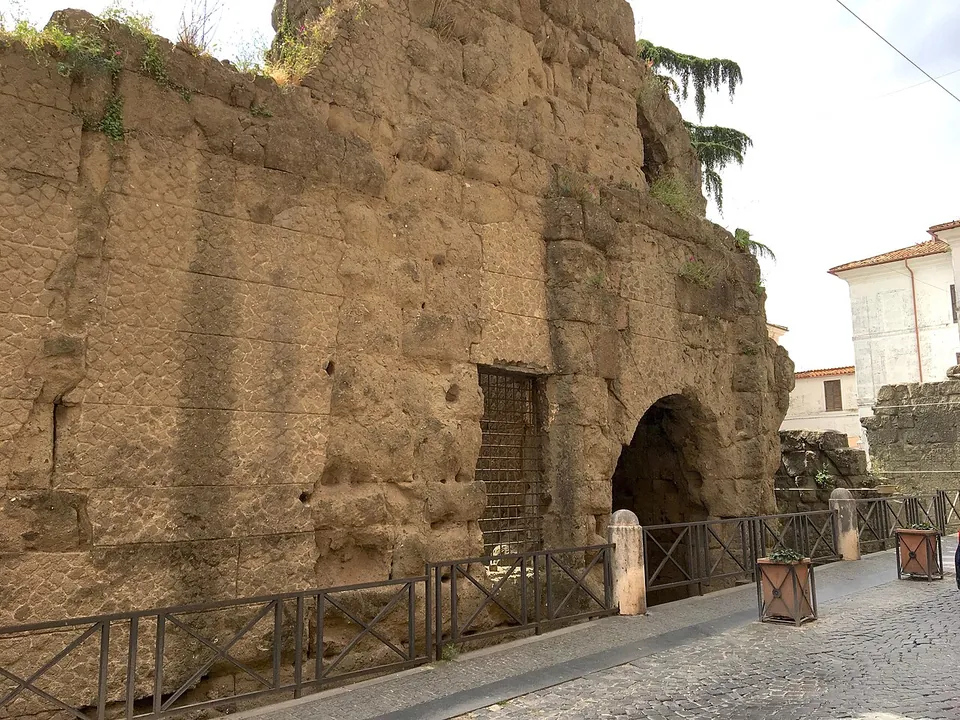
Photo: Rjdeadly · CC BY-SA 4.0 · Commons
4 km · fort · Lazio
Castra Albana
The set piece is the Porta Praetoria, the main gate, which faced the Via Appia.
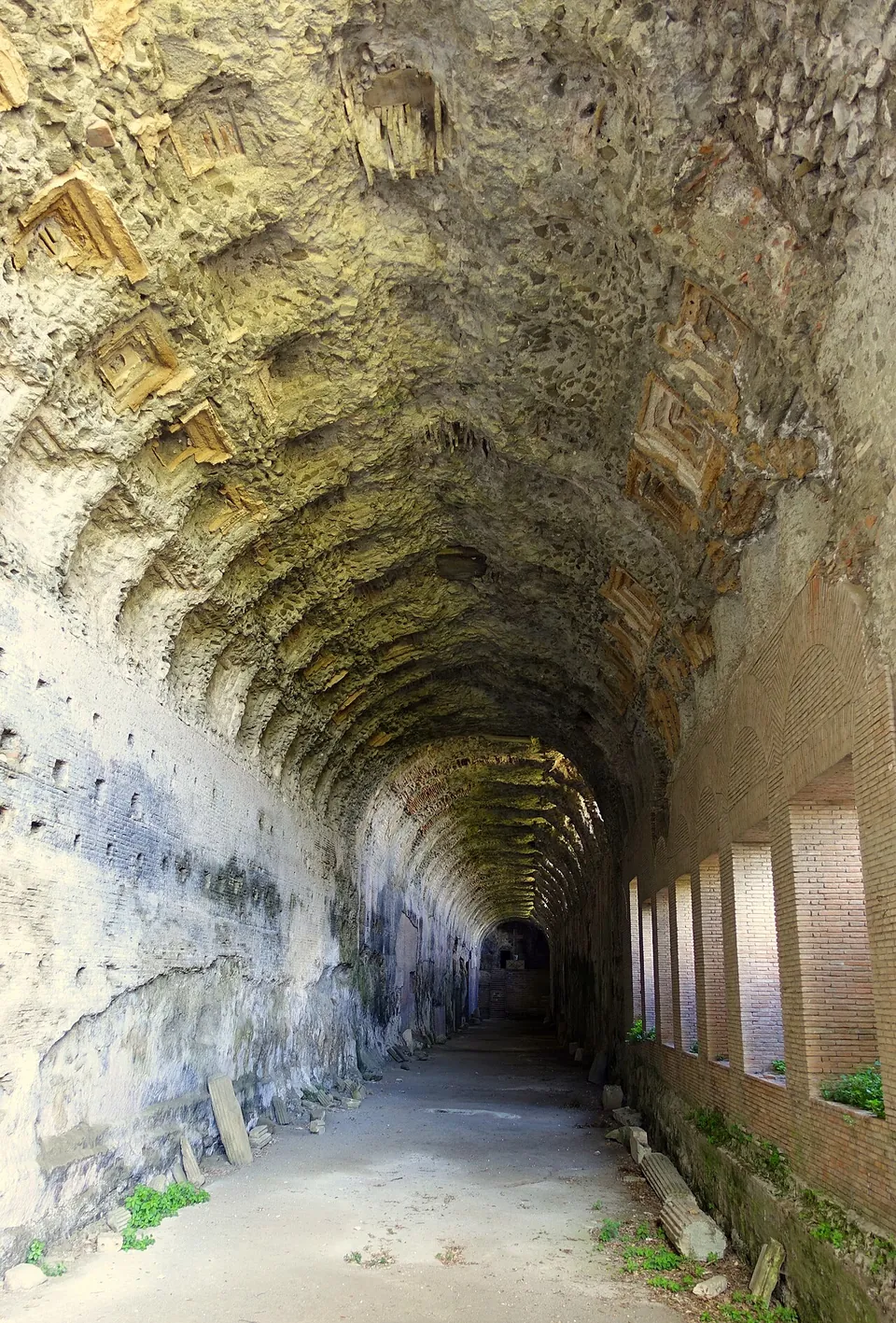
Photo: Daderot · Public domain · Commons
5 km · villa · Lazio
Villa of Domitian
Most of the remains lie inside the Pontifical Villas, an extraterritorial property of the Holy See.
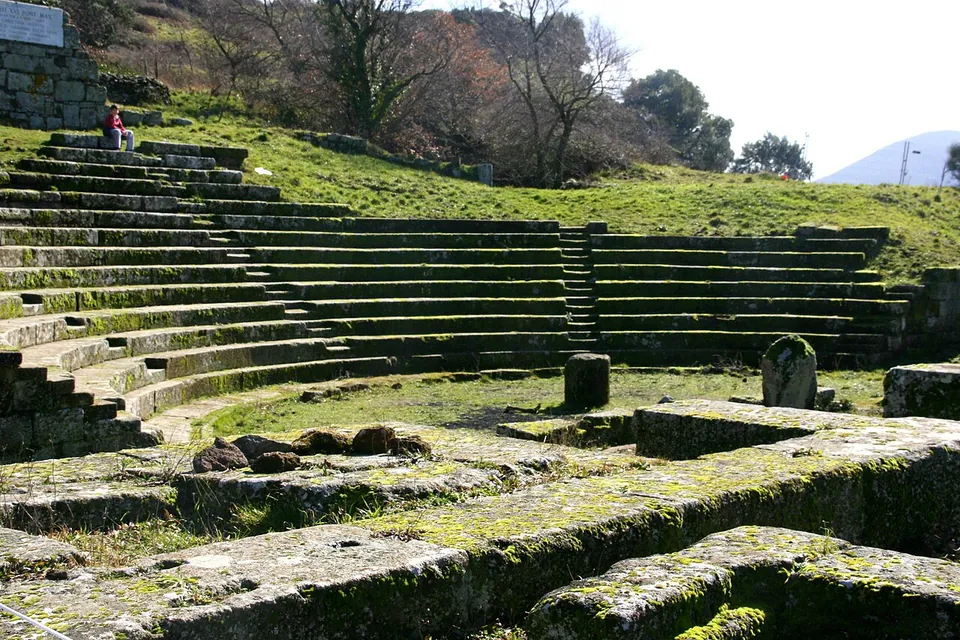
Photo: Luiza Serpa Lopes · Public domain · Commons
8 km · city · Lazio
Tusculum
The visitor route runs mainly through the forum, with the theatre halfway round (the operator).


Straight-line distances.
Sources
Every fact on this page comes from the records below, each used under the licence noted.
| Source | Licence |
|---|---|
| Pleiades 422917 | CC BY |
| Wikidata Q18590113 | CC0 |
| OpenStreetMap way/249131676 | ODbL |
| Wikipedia (en) — Temple of Diana (Nemi) | CC BY-SA 4.0 |
| Wikipedia (it) — Santuario di Diana (Nemi) | CC BY-SA 4.0 |
| Wikipedia (de) — Heiligtum der Diana Nemorensis | CC BY-SA 4.0 |
| Direzione regionale Musei nazionali Lazio — Museo delle Navi romane di Nemi (the museum's operator) | licence not recorded |
| Ministero della Cultura — Museo delle navi romane di Nemi e Santuario di Diana Nemorense | licence not recorded |
| Direzione regionale Musei nazionali Lazio — European Heritage Days 2023 at Nemi (guided visit to the sanctuary) | licence not recorded |
| Wikidata — Nemus Aricinum theater (Q140665988) | licence not recorded |