

What is there today
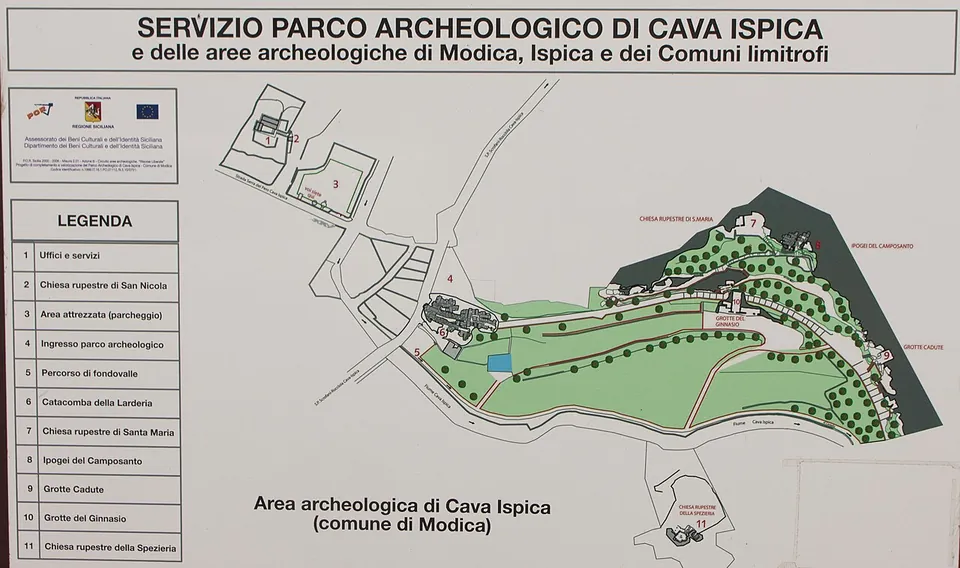
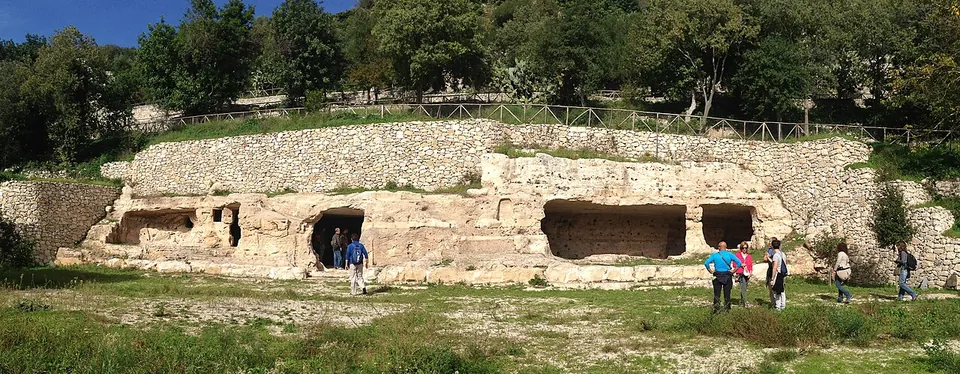
The ticketed archaeological area lies at the Modica end of the gorge. The park’s own map board marks, within the area, the Larderia catacomb by the entrance, the rock-cut church of Santa Maria, the Camposanto burial caves, the collapsed cave dwellings of the Grotte Cadute and the Gymnasium, with the rock-cut church of San Nicola by the offices and the Spezieria across the stream.
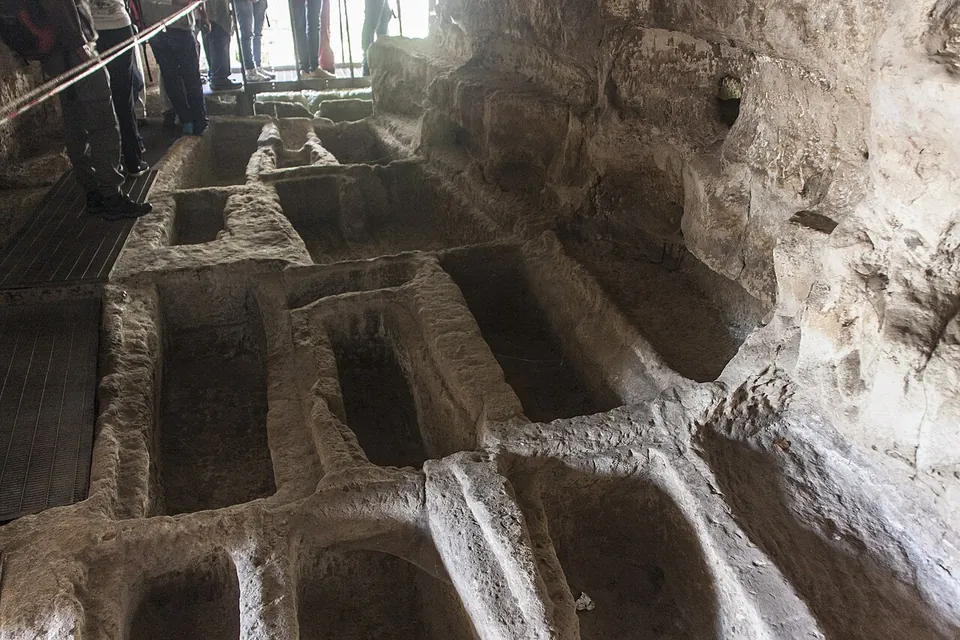
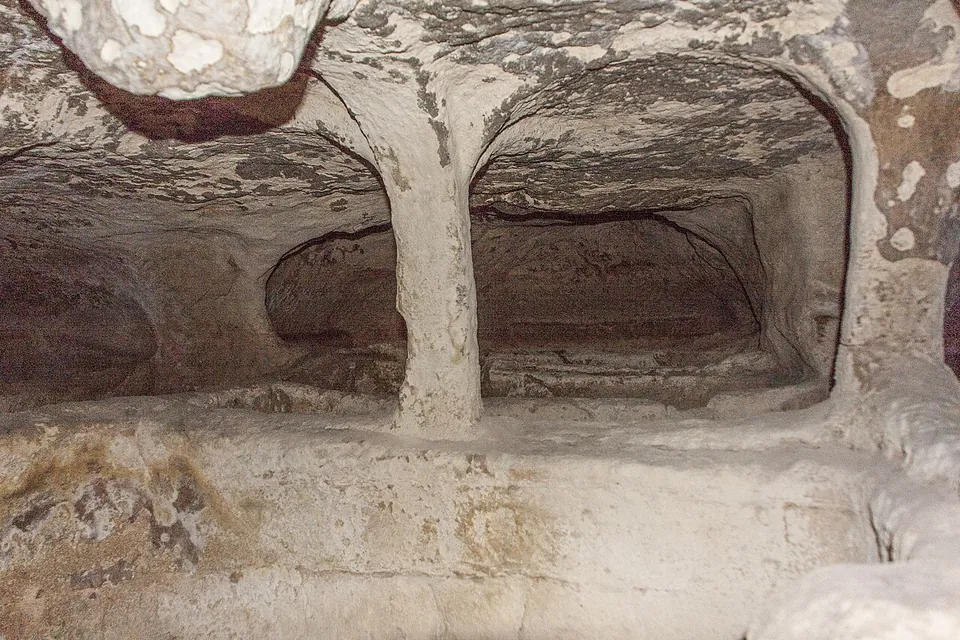
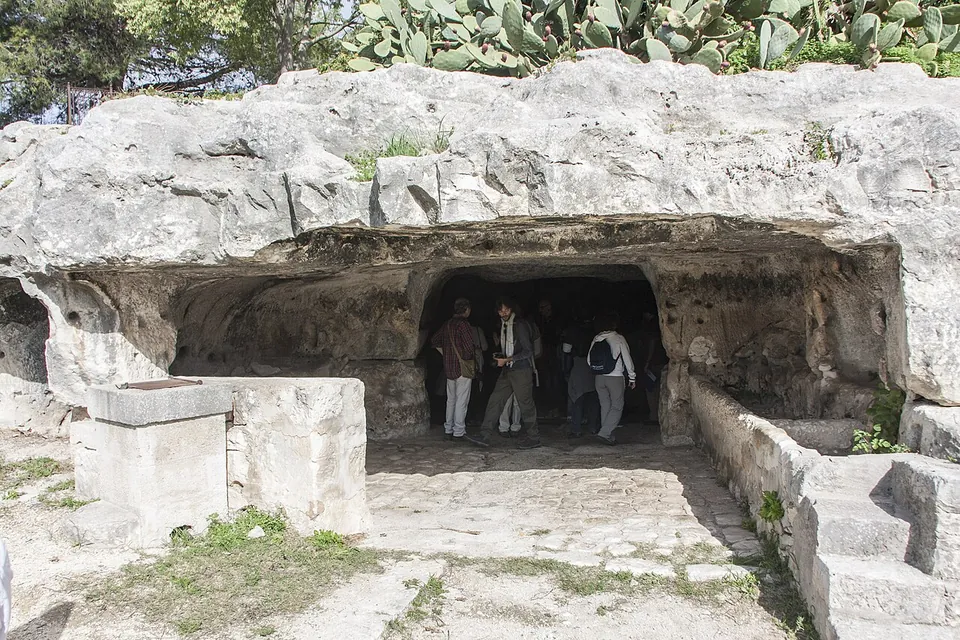
The Larderia is the best known of the area’s many catacombs and the largest in Sicily after San Giovanni in Syracuse, covering more than 500 m². From an entrance hall three corridors run into the rock, the central one for over 40 m: first a passage lined with five tiers of burial niches, then a large chamber where graves are grouped on raised platforms between narrow lanes, and at the far end arched recesses and massive sarcophagi cut into adjoining niches, framed by small columns (it.wikipedia). A minute’s walk from Santa Maria, the Camposanto seems to be a Christian cemetery of the 4th century, with about 60 graves cut into the ground, stacked niches, many rock-cut sarcophagi and a Christian monogram in a roundel at the back of one arched tomb (it.wikipedia).
The Gymnasium, a rock-cut room of the Hellenistic-Roman period uncovered only recently, is two connecting halls with benches along the walls. In the better-preserved left-hand hall Greek letters cut into the rock still mark the seats: PRE for the elders, NEO for the young. It was probably an assembly room for the community (it.wikipedia).
The rock-cut chapel of San Nicola keeps Byzantine-period paintings, among them a bearded Saint Nicholas with his name above his head (it.wikipedia). Elsewhere in the gorge are the ruins of San Pancrati, a small three-aisled Byzantine basilica of the mid-6th century of which parts of the outer walls and apses still stand, the only building in the gorge that is built rather than cut into the rock (it.wikipedia); medieval dwellings several storeys high; and prehistoric rock-cut tombs.
Is it worth the trip?
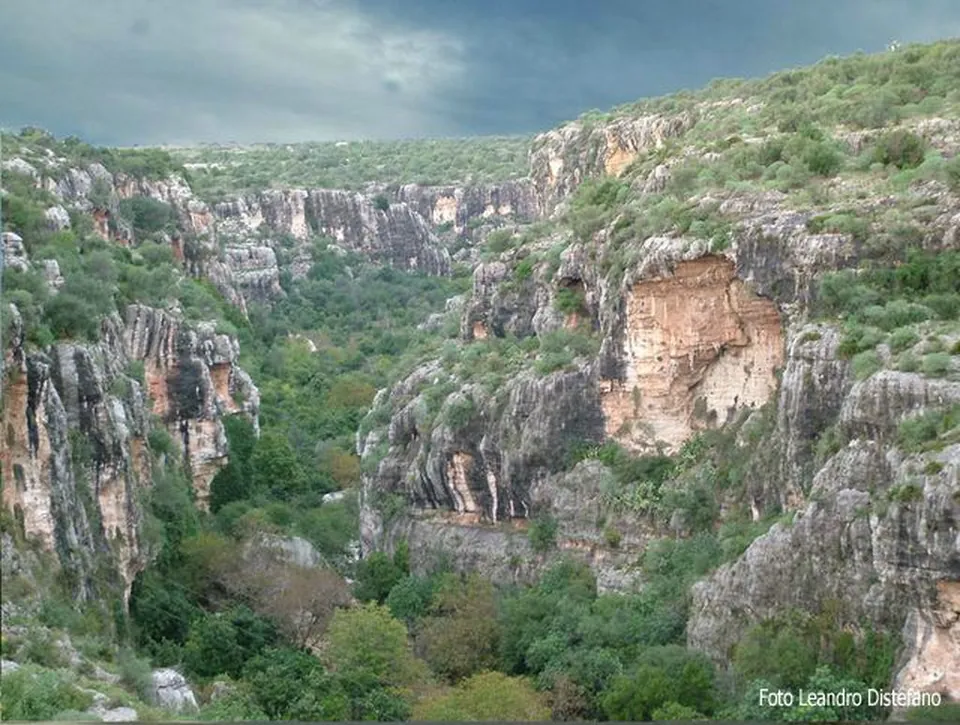
Yes, if you are near Modica, as long as you know what kind of Roman site this is. Do not come for Roman buildings: very little trace of the Romans has survived in the gorge, and what there is blurs into the Byzantine presence that followed (it.wikipedia; the operator says the same). What the Roman era left is the late-antique Christian cemetery, and the Larderia is a real catacomb you can walk through, with its graves still cut into the floor and walls. The setting does the rest: the gorge is about 100 m deep in places and more than half a kilometre wide, overgrown with Mediterranean scrub (it.wikipedia). The Region’s reopening notice of 2020 put the average visit at about an hour.
Getting there
The archaeological area is about 7 km in a straight line from the centre of Modica. The northern part of the gorge is reached from the SS 115 road between Ispica and Modica, about 6 km off it (de.wikipedia). There is a small car park about 120 m from the entrance area, with two more nearby, and a café close to the entrance with toilets for customers (OpenStreetMap). No bus stop is mapped near the site, so plan on a car.
On the operator’s timetable as published in May 2024, the area opened daily from 09.00 to 19.00 (last entry 18.30), with some public holidays mornings only; in the winter of 2023–24, from November to February, it opened mornings only, 09.00 to 13.45. A ticket cost €5, reduced €2.50. These figures date from May 2024, so check before travelling; the Region’s 2020 notice gave +39 0932 771667 for enquiries. The Parco della Forza at the Ispica end of the gorge is a separate site with its own ticket (€3); its remains are those of a castle and of the palace of the Caruso family (15th century) and later the Statella, which the earthquake of 1693 brought down (it.wikipedia).
Visiting details
- Opening hours
- Daily 09.00–19.00, last entry 18.30, on the operator's timetable as published in May 2024; some public holidays were mornings only (09.00–13.30, last entry 13.00). In the winter of 2023–24 (1 November to 29 February) the area opened mornings only, 09.00–13.45, last entry 13.15.
- Tickets
- €5, reduced €2.50 (the operator's tariff as published in May 2024). The Parco della Forza at the Ispica end of the gorge is a separate site with its own ticket, €3, reduced €1.50.
- Parking
- A small surface car park (15 spaces) about 120 m from the entrance area, and two more within 250 m, one of them for customers only (OSM way/70461458, way/487423889, way/1176643437). A café about 120 m away and customers' toilets about 180 m away (OSM node/821879153, node/10932029625).
Before you go
- Hours and prices are the operator's as published in May 2024 and may have changed; the Region's 2020 reopening notice gave +39 0932 771667 for enquiries.
- No bus stop is mapped near the entrance; the site needs a car.
Hours and prices checked 15 May 2024 on the operator's own site. Confirm before travelling.
History
People settled in the gorge early: a necropolis of the Early Bronze Age, around the 22nd century BC, lies above the valley at Calicantone (it.wikipedia). The archaeologist Biagio Pace spread the caves over a couple of millennia, the oldest to the Sicani, but most of them, in his view, are catacombs of early Christianity, such as the Larderia (it.wikipedia). The Larderia is described as early Christian without a closer date; the catacomb of San Marco, at the southern end of the gorge, with more than 250 graves and two canopied tombs, is dated to the 4th and 5th centuries AD (it.wikipedia).
Byzantine rule over Sicily began in 535 with Belisarius’s conquest under Justinian, and monks adapted older caves into chapels and multi-storey rock-cut monasteries; San Pancrati belongs to the middle of the 6th century (it.wikipedia). The gorge has never been studied through a regular excavation campaign, only through partial research, which is why so many of its caves are hard to date (it.wikipedia).
The northern part was lived in until at least the 14th century, when it was abandoned, while the southern end lived on as Spaccaforno until the earthquake of 1693 destroyed it (Regione Siciliana). Its people moved to a new town of the same name, which took the name Ispica only in 1936 (it.wikipedia). Travellers such as Jean Houel and Saint-Non came to see the caves, followed by archaeologists including Paolo Orsi and Biagio Pace (it.wikipedia).
More photographs



Nearby
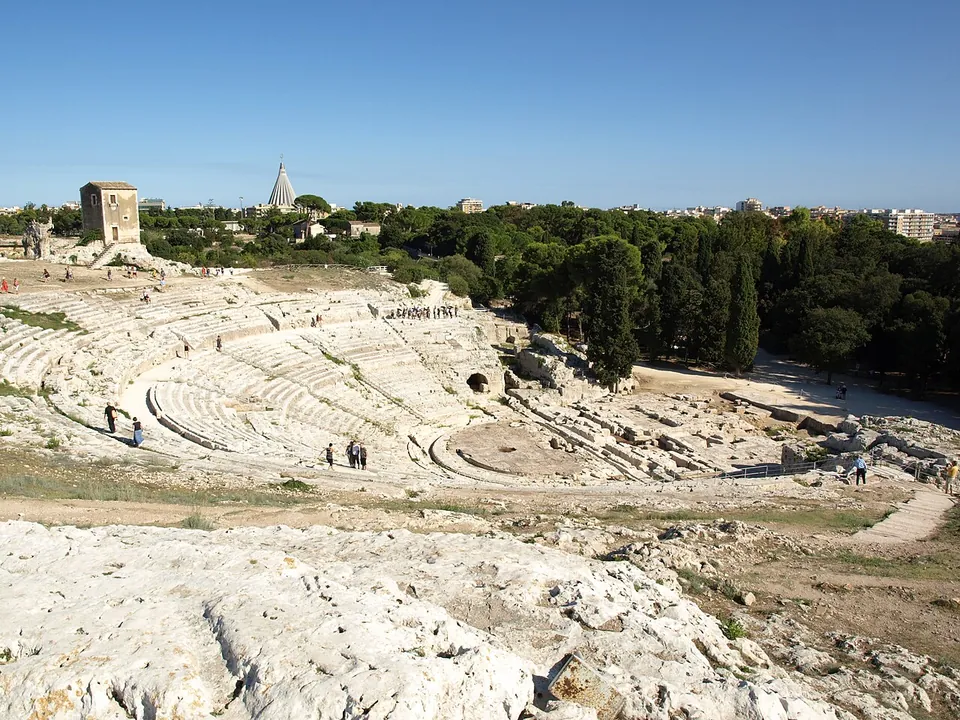
Photo: AlexanderVanLoon · CC BY-SA 3.0 · Commons
Photo: Evan Erickson · Public domain · Commons
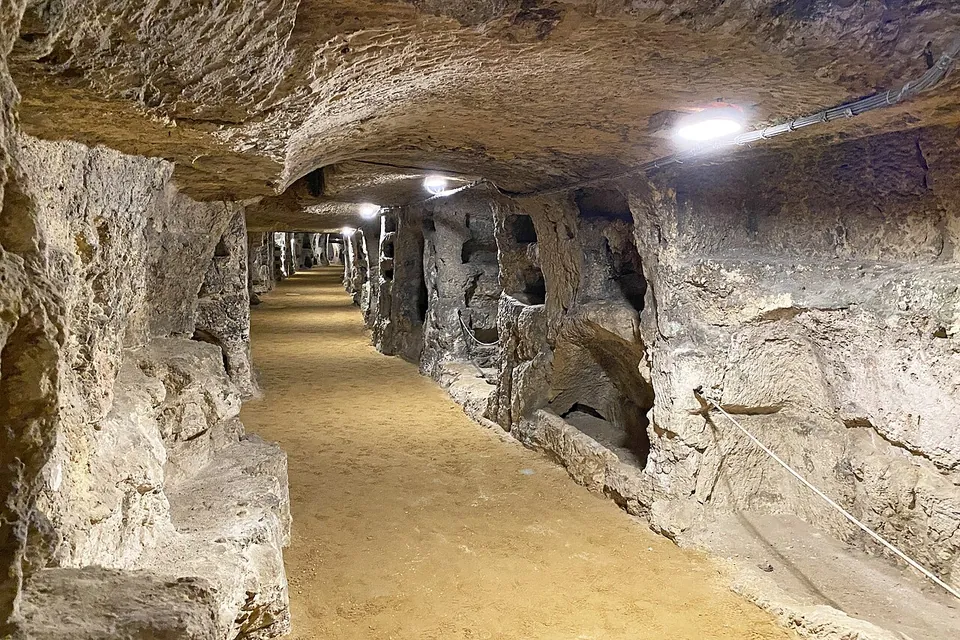
Photo: Bernard Gagnon · CC BY 4.0 · Commons
47 km · necropolis · Sicily
Catacombs in Syracuse
San Giovanni is a cemetery cut entirely into the rock.


Straight-line distances.
Sources
Every fact on this page comes from the records below, each used under the licence noted.