Photo: AlexanderVanLoon · CC BY-SA 3.0 · Commons
Siracusa, Syrakousai
city · Sicily, Italy
2 places to see, the best preserved and best known first.
Photo: AlexanderVanLoon · CC BY-SA 3.0 · Commons
necropolis · Sicily
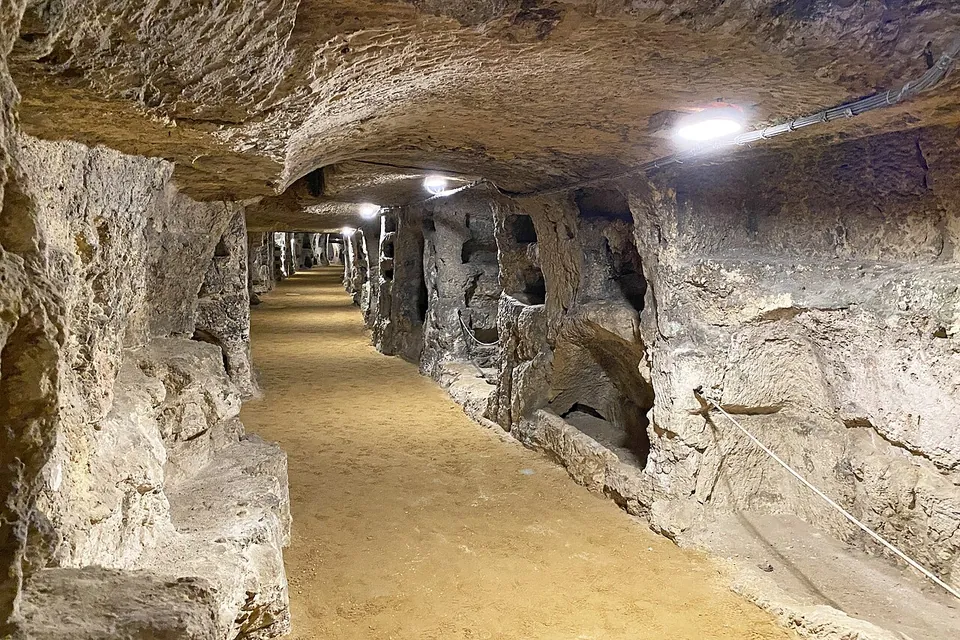
San Giovanni is a cemetery cut entirely into the rock.
Syracusae was the Roman name for Syracuse. Rome took this great Greek city in 212 BC and made it the capital of Sicily, its first province. The Roman city is still there to see in a handful of stops, all within walking distance of one another in the modern town: an amphitheatre, early Christian catacombs, the forum and a temple complex.
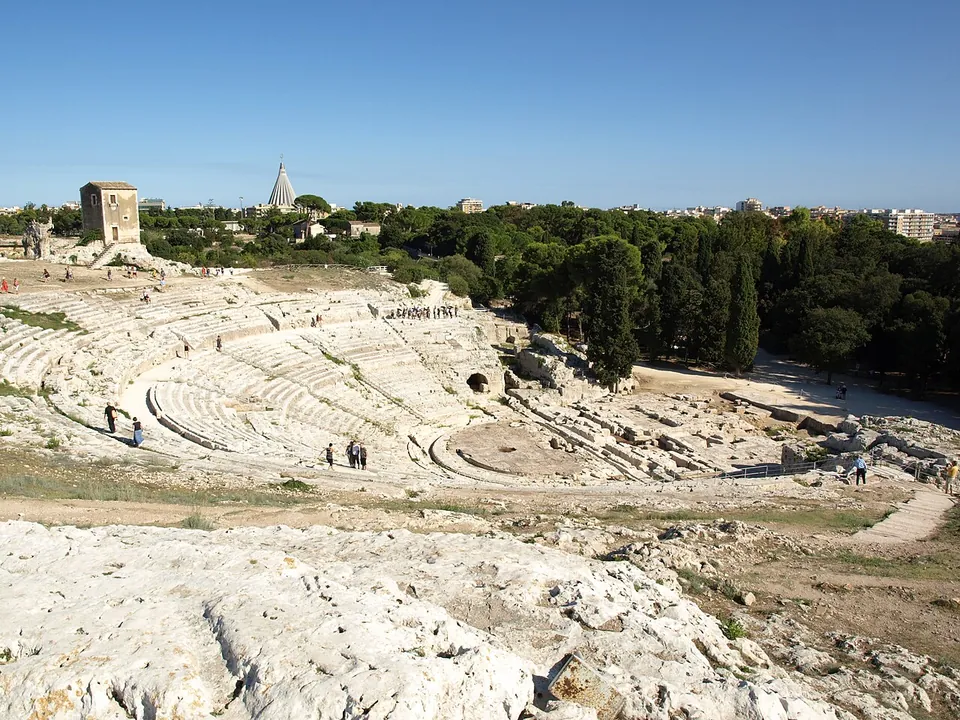
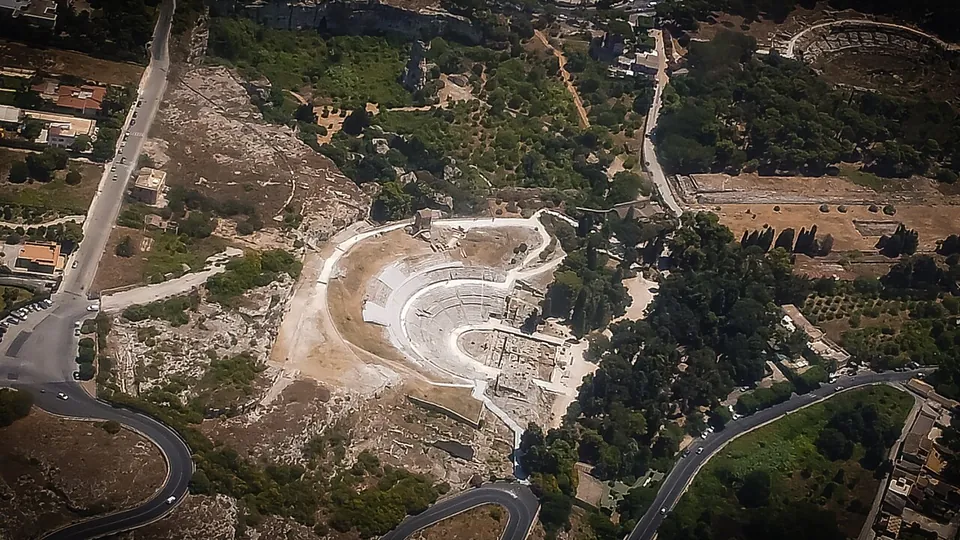
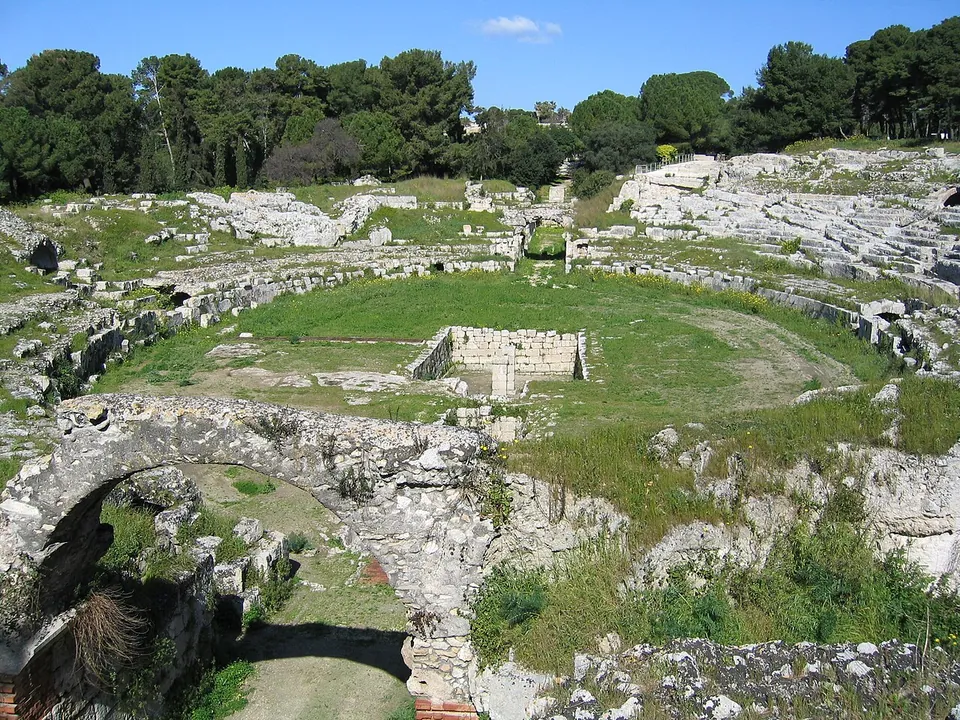
The amphitheatre is the main Roman sight. It is one of the most representative buildings of the early imperial period, largely cut into the rock, about 140 by 119 m, with its arena, podium and the rectangular pit for the machinery used in the shows in the middle still legible. Almost nothing remains of the built upper part (it.wikipedia). It stands in the Neapolis archaeological park, together with the Greek theatre and the stone quarries, and just east of it are the footings of an Augustan arch (see below).
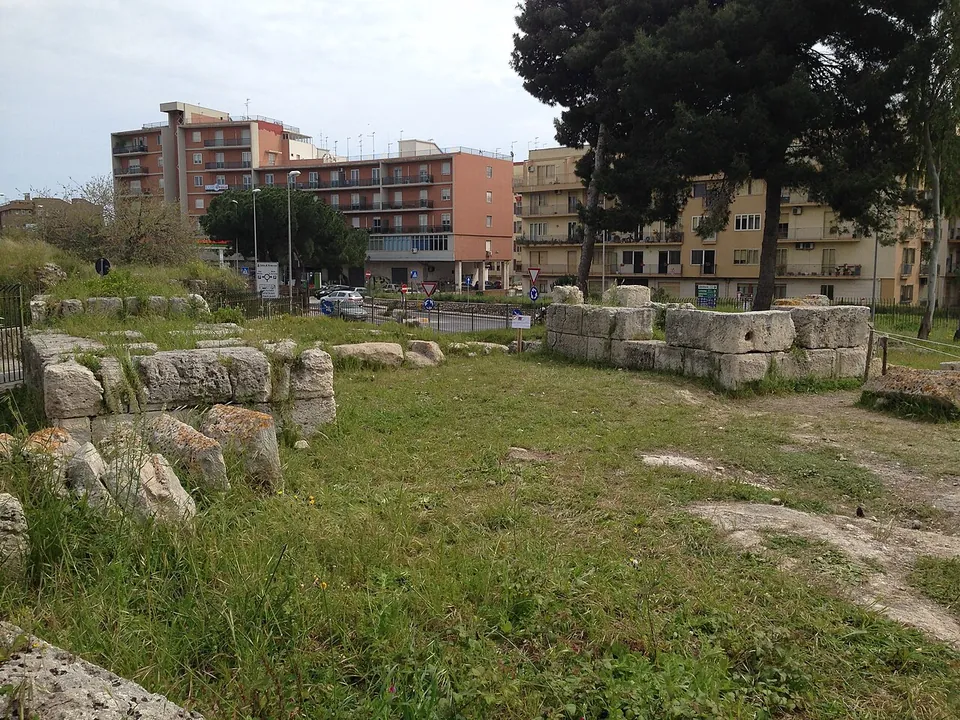
The other stops are smaller. Of the forum, now a public garden known as “i villini”, three re-erected marble columns of an imperial-era portico, a stretch of Roman paved street and a few blocks of the council house remain (it.wikipedia). The so-called Roman gymnasium on the Via Elorina is a 1st-century AD complex with a small temple on a podium, a little theatre and a porticoed courtyard, though what it was for is still debated (it.wikipedia). Underground, the catacombs of San Giovanni, dug between AD 315 and 360 along the line of an older aqueduct, are the one of the city’s catacomb complexes open daily through the season, and Santa Lucia can also be seen on guided tours (Pleiades; the operator). Syracuse’s catacombs are counted among the largest known after those of Rome (de.wikipedia).
Yes, though be clear about what it is. Syracuse is famous for its Greek past: the theatre, the temples, Ortygia. The Roman city is the next layer down, and in most places it is the thinner one. The amphitheatre and the catacombs of San Giovanni are worth a visit on their own. The forum’s columns stand in a public garden between Ortygia and the Akradina district (Pleiades), and the gymnasium is a short stop for anyone already interested. The Neapolis park and the catacombs make a full outing; the forum and the gymnasium are brief additions to it.
Siracusa railway station is on the Messina–Syracuse line (en.wikipedia). All the stops are within a short walk of it: the gymnasium about 200 m, the forum and the arch about 500 m, the Neapolis park about 800 m and the catacombs about 1 km (straight-line distances from the station’s position in OpenStreetMap to each stop’s point).
The Neapolis park costs €14 (€7 reduced) and covers the amphitheatre. The gymnasium costs €4 (€2 reduced). The forum is a public garden. The operator publishes the park’s opening hours one month at a time. In October it is open from 08.30, closing at 18.15 until the 24th and at 17.15 from the 25th, and the ticket office shuts 45 minutes before closing. The Paolo Orsi archaeological museum, which holds several marble statues found on the forum site, costs €10 (€5 reduced). It is closed on Mondays and open 09.00–19.00 from Tuesday to Saturday (Parco archeologico di Siracusa, the operator, read 18 October 2026; check before travelling, since hours change through the year).
Before you go
Hours and prices checked 18 October 2026 on the operator's own site. Confirm before travelling.
Excavations near the amphitheatre in the 1950s uncovered the two piers of a single-bay arch. The excavated layers date it to the reign of Augustus, soon after the Roman colony was founded in 21 BC (it.wikipedia; Pleiades). Above a low plinth, three courses of white limestone blocks survive on both piers, with four blocks of a fourth course on the southern one. The arch was about 10 m wide, 6 m deep and some 13 m high. It was built with a rubble core and a facing of blocks left rough on the outside, and its main front faced east. It stood at the end of an east–west street that probably divided the Akradina district from the Neapolis, a short way east of the amphitheatre’s southern entrance, and may have been a monumental way in to the area in front of it. It was altered at the end of the 2nd or the start of the 3rd century, and again at the end of the 7th, when the floor of the passage was raised and a stairway was built on the east front (it.wikipedia). The same article places the arch within the Neapolis park.
Settlers from Corinth founded Syracuse in 734/3 BC on the island of Ortygia, and from there the city spread onto the mainland (Pleiades). Rome took it in 212 BC after a long siege led by the consul Marcus Claudius Marcellus, in which Archimedes directed the defence and was killed. Its treasures were carried off to Rome, but the city was spared and became the seat of the praetor and capital of Roman Sicily (en.wikipedia). Cicero, who came in the 70s BC to prosecute the praetor Verres, called it the largest and most beautiful of Greek cities. Augustus, having punished it for probably siding with Sextus Pompeius, resettled it with a colony of Roman citizens in 21 BC, though Greek remained the dominant language (en.wikipedia).
Christianity arrived early. The Acts of the Apostles record that Paul spent three days here in 61, and Lucy, later the city’s patron saint, was martyred under Diocletian in 304. The catacombs date from these centuries (en.wikipedia; it.wikipedia). Franks sacked the city around 278–280. Vandals, Odoacer and the Goths followed, and in 535 Belisarius took Syracuse for Justinian. In 663 the emperor Constans II moved his court here, and he was killed in the city a few years later (published dates are 668 and 669). The Arab conquest of 878 ended the city’s primacy in Sicily (en.wikipedia; it.wikipedia). UNESCO added Syracuse to the World Heritage list in 2005 (de.wikipedia).
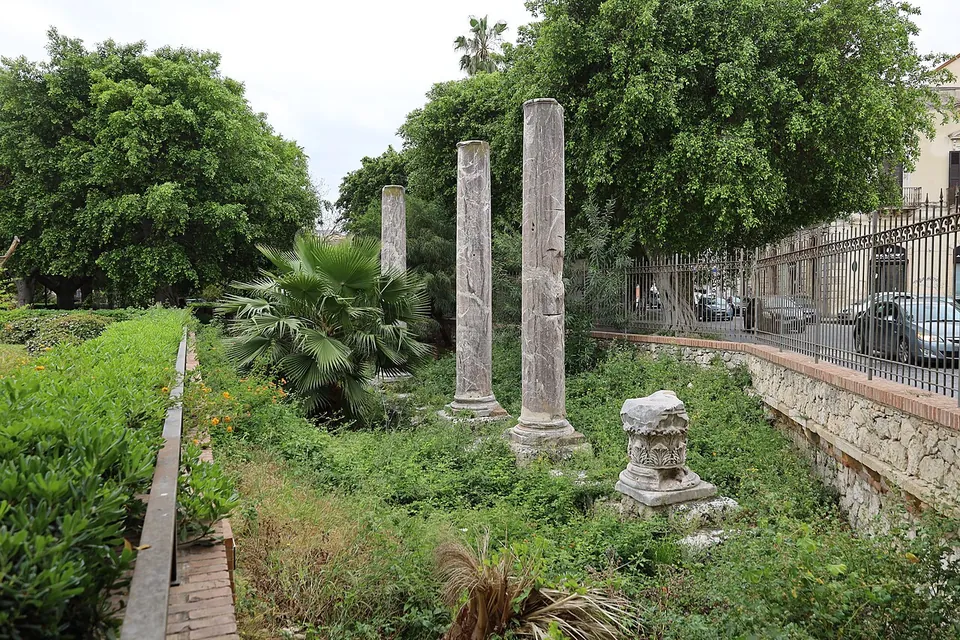
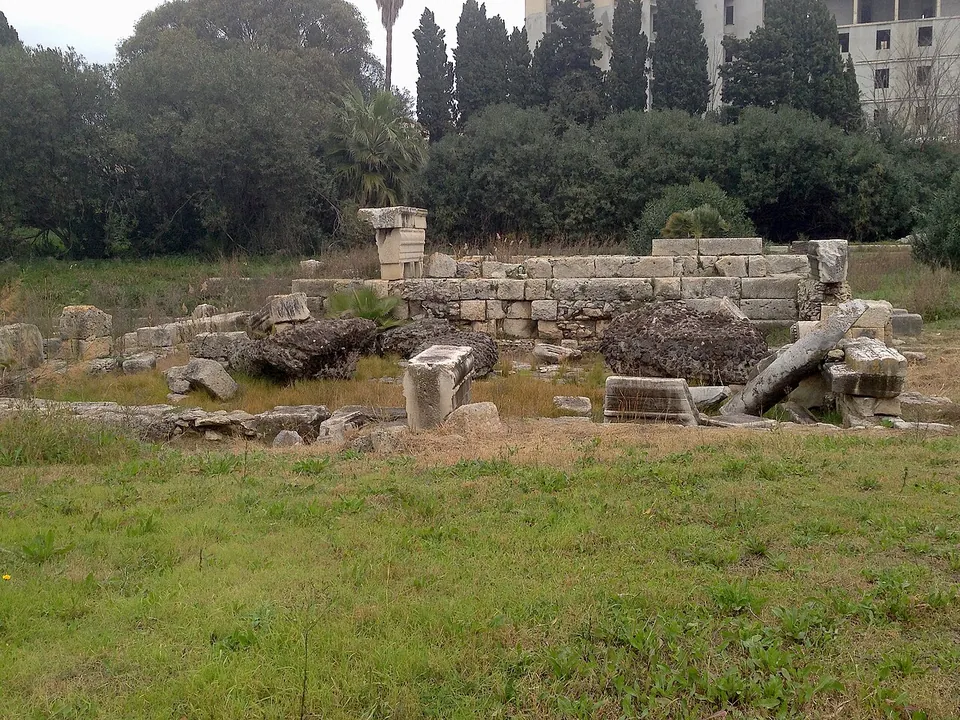
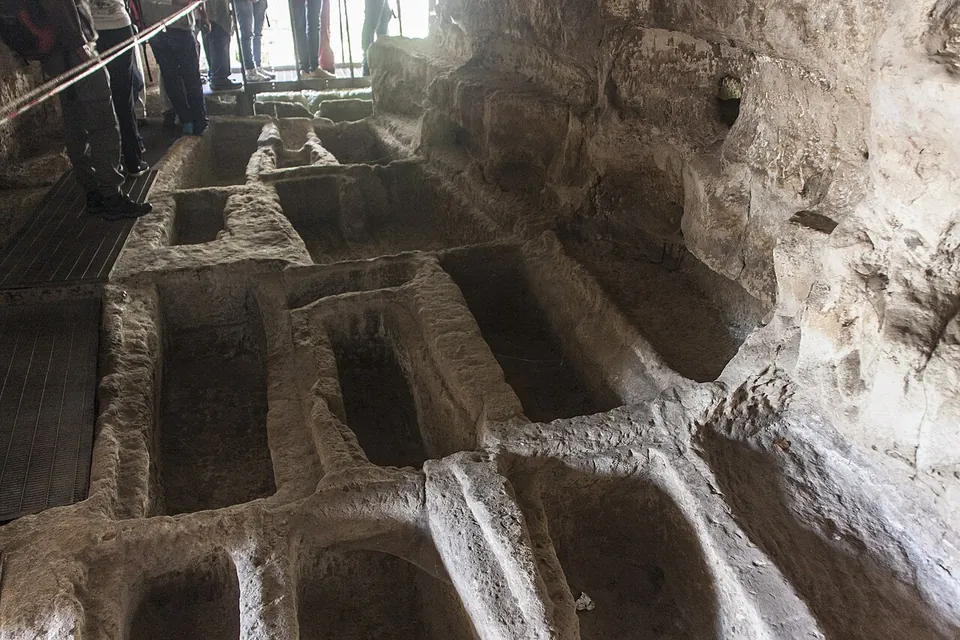
Photo: Davide Mauro · CC BY-SA 4.0 · Commons
46 km · necropolis · Sicily
The ticketed archaeological area lies at the Modica end of the gorge.
Straight-line distances.
Every fact on this page comes from the records below, each used under the licence noted.