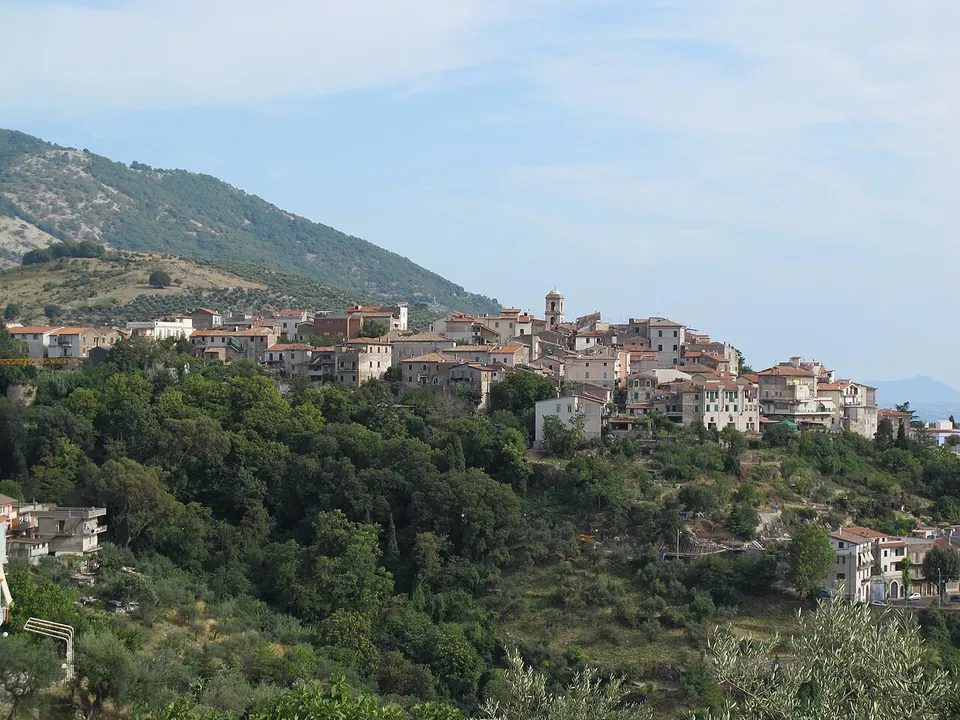


What is there today
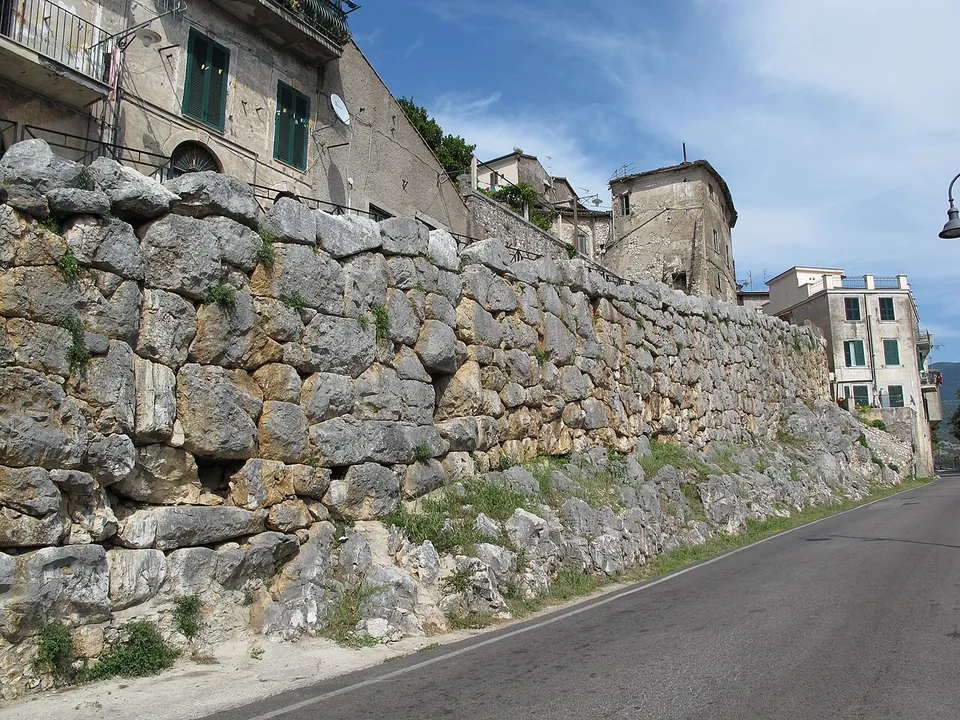
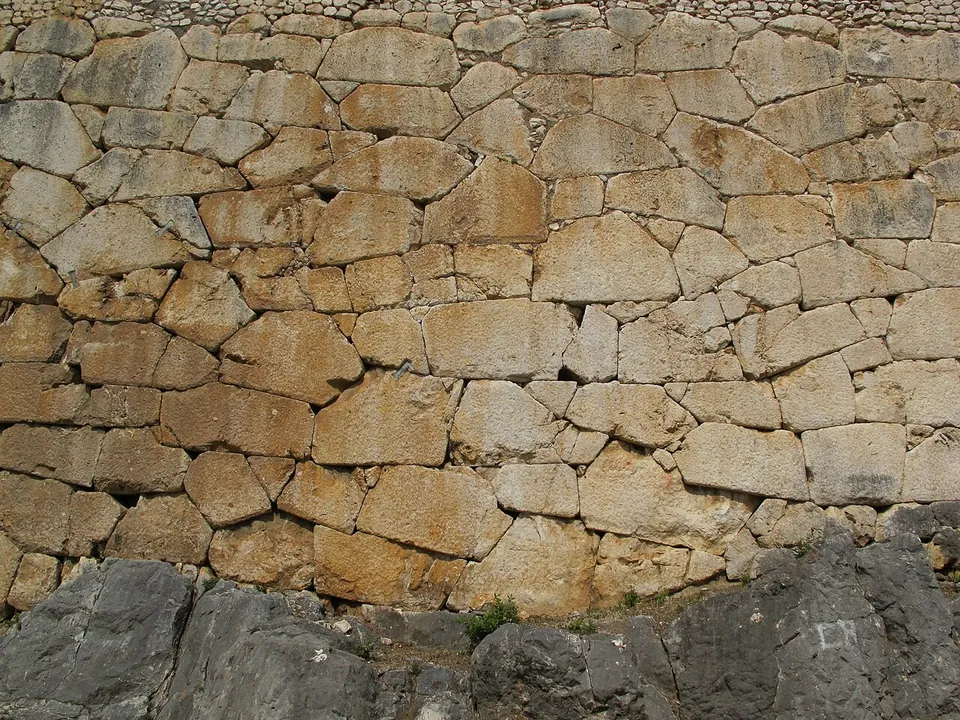
The walls are what the whole town shares. The circuit, about 2 km long (it.wikipedia), is built of huge many-sided blocks fitted to one another, and its first phase is older than Roman rule: it is dated to the 6th–5th centuries BC, and was repaired in later centuries and given round towers, which published accounts date between the late 2nd and the first half of the 1st century BC (it.wikipedia; the tourism site; Princeton Encyclopedia). Inside the circuit, massive terrace walls in the same masonry carry the streets and squares up the hill (Princeton Encyclopedia). The tourism site names Via Don Minzoni just above Sant’Oliva, Via Pelasga, Via della Repubblica and Piazza Pozzo Dorico among the places where they show best, and the best preserved of the four surviving Roman towers is seen from Piazza Signina (it.wikipedia; the tourism site).
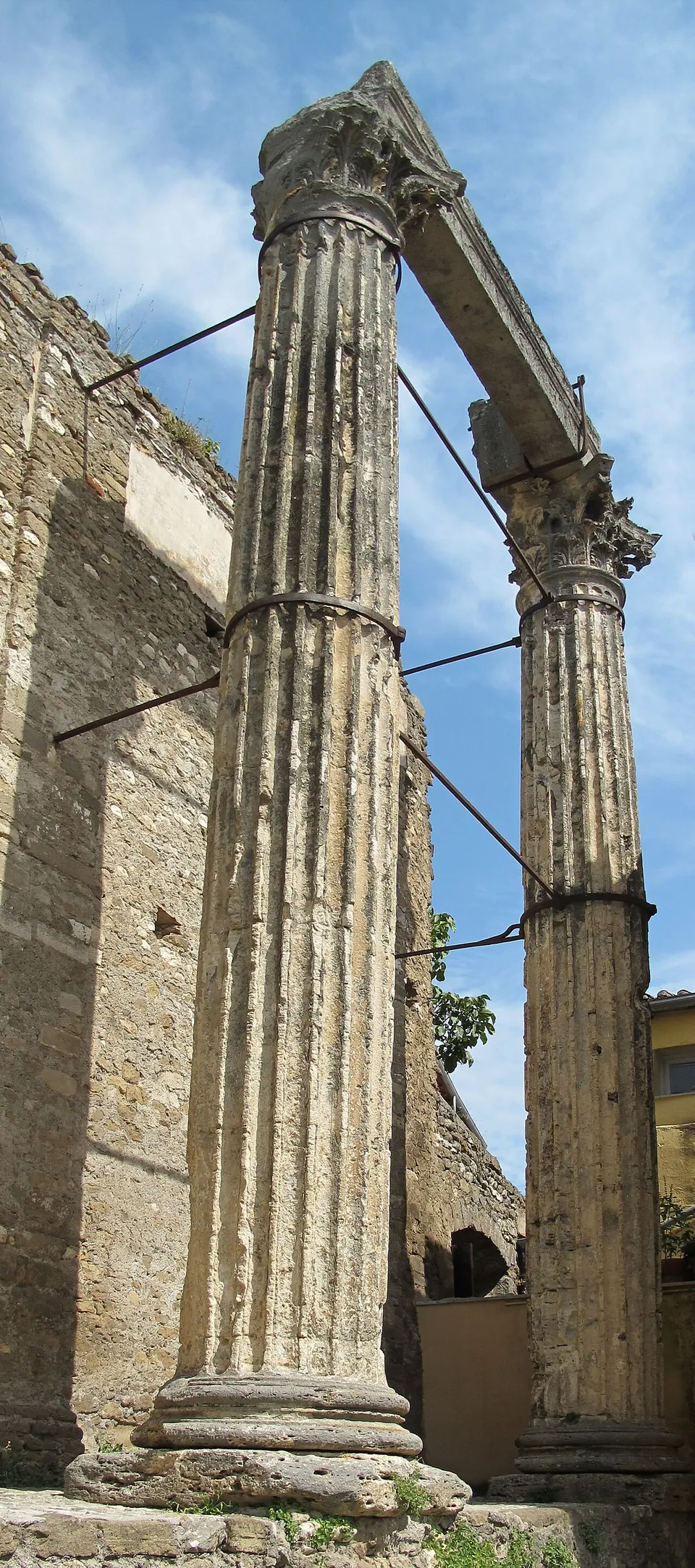
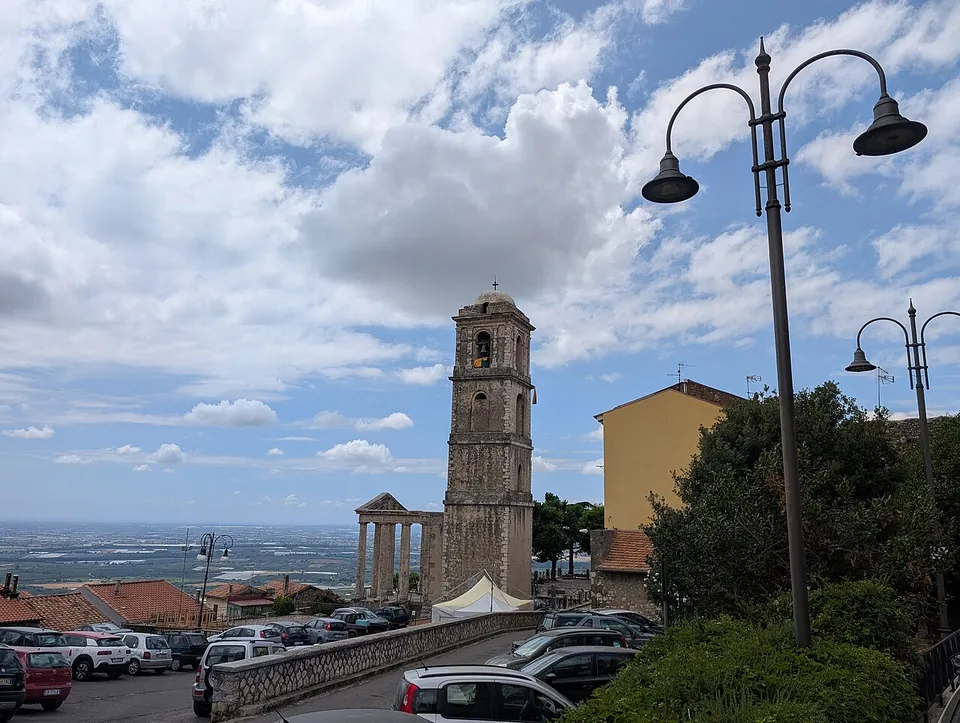
At the top of the town, on the ancient acropolis, the Doric Temple of Hercules still has its front of columns, its entablature and its pediment (it.wikipedia). On Via delle Colonne, where the forum stood, two columns of the Temple of Castor and Pollux still carry their architrave above what is left of the podium (Princeton Encyclopedia; it.wikipedia). Parts of the columns of a third Roman temple, traditionally assigned to Janus, can be seen inside the church of Sant’Oliva, which was built over it in the 12th century (it.wikipedia). Near Porta Ninfina the Ponte della Catena, a single round arch of tufa on limestone bases, still crosses the Fosso della Catena; the tourism site calls it the only Roman bridge visible in Cori. The Museo della Città e del Territorio, in the convent and cloister of Sant’Oliva, holds reconstructions of both temples, fragments of the marble statues of Castor and Pollux, and heads of veiled women found at the Temple of Hercules (the tourism site).
Is it worth the trip?
Yes, if you like your Roman sites in a lived-in town rather than a fenced park. Cori is about 50 km from Rome (the tourism site), and the Temple of Hercules alone, standing over the Pontine plain, justifies the drive. Allow half a day: the temples, a circuit of the walls, the bridge and the museum make a walk rather than a single sight.
Two things to plan around. The town is steep, rising from about 250 m to 403 m above sea level (Princeton Encyclopedia), so the climb from the lower town to the Temple of Hercules is all streets and steps. And the shuttle and buses from the nearest railway station run only on weekdays, while the museum keeps its longest hours from Friday to Sunday: coming by train, Friday is the day when both work.
Getting there
By car, leave the A1 at Valmontone and follow the signs through Artena (22 km from the exit), or leave the Via Pontina at Campoverde and drive through Cisterna di Latina (the tourism site). Car parks are mapped on Piazza Papa Leone XIII in the lower town and on Piazza del Tempio di Ercole next to the temple at the top (OpenStreetMap).
Without a car, take the train from Rome to Cisterna di Latina, about 35 minutes, and then the Caliciotti shuttle from the station forecourt, or a Cotral bus from the start of Via Monti Lepini just past the station, about 20 minutes to Cori; both run on weekdays only. Cotral also links Cori with Rome Anagnina, Latina and Velletri (the tourism site).
The streets, the walls and the bridge cost nothing to see. The museum opens Monday to Thursday 09.00–13.00, and Friday to Sunday 10.00–13.00 and 15.00–18.00; the town publishes no admission price for it, and its hours page lists none for the temples. The church of Sant’Oliva, with its Roman columns, is opened by the Pro Loco on the same square every day 09.30–12.30 and 15.00–18.00, and booking ahead is recommended (scoprirecori.it, read 19 October 2026: check before travelling).
Visiting details
- Opening hours
- The walls, the Ponte della Catena and the columns of the Temple of Castor and Pollux stand in the old town's streets. The Museo della Città e del Territorio opens Monday to Thursday 09.00–13.00, and Friday to Sunday 10.00–13.00 and 15.00–18.00. The church of Sant'Oliva, with Roman temple columns inside, is visited through the Pro Loco on the same square, daily 09.30–12.30 and 15.00–18.00, with booking recommended.
- Tickets
- Walking the old town costs nothing. The town's tourism site publishes no admission price for the museum.
- Parking
- Car parks are mapped on Piazza Papa Leone XIII, about 200 m from the point, and on Piazza del Tempio di Ercole beside the Temple of Hercules at the top of the town (OpenStreetMap).
Before you go
- The shuttle and the Cotral buses from Cisterna di Latina station run on weekdays only, and so does the bus between the upper and lower town (the town's tourism site).
- The town climbs from about 250 m to 403 m above sea level (Princeton Encyclopedia), so the walk from the lower town to the Temple of Hercules is steep, with steps.
Hours and prices checked 19 October 2026 on the operator's own site. Confirm before travelling.
History
Cora was one of the old Latin towns. Livy records it joining Suessa Pometia in an unsuccessful revolt against Rome in 503 BC, and calls both Volscian towns by 495 BC (en.wikipedia). It struck its own silver coins (Princeton Encyclopedia). Livy names it a municipium by 211 BC, though the Princeton Encyclopedia notes it is not known whether he was describing the town’s status in his own day; Italian Wikipedia instead places its elevation to municipium, with Roman citizenship, at the start of the 1st century BC, in the tribe Papiria, and English Wikipedia after the Social War of 90–88 BC.
The two temples belong to that 1st century BC. Two local magistrates, whose names are carved on the lintel of the door, built the Temple of Hercules between 89 and 80 BC (it.wikipedia; the tourism site). Its dedication to Hercules is traditional rather than proven, resting in part on an 18th-century inscription thought to be spurious (the tourism site). Votive finds on the hill go back to the late 4th or early 3rd century BC and cannot be tied to the building of the temple (Princeton Encyclopedia); the tourism site suggests an older building stood there. The Temple of Castor and Pollux, an older sanctuary, was rebuilt in the Corinthian order in the first half of the century, with six columns across its front (Princeton Encyclopedia; it.wikipedia “Templi romani di Cori”; the Italian article on the town gives four). Inscriptions name its gods and the magistrates who paid for the work from the temple treasury (Princeton Encyclopedia; it.wikipedia). The town was caught up in the war between Marius and Sulla (it.wikipedia); the Princeton Encyclopedia says it apparently sided with Marius and was destroyed under Sulla, and that its later history is obscure. Few sources speak of it under the empire (it.wikipedia).
Cori declined steeply in the early Middle Ages (en.wikipedia). The Temple of Hercules owes its preservation to the church of San Pietro built inside its cella, while the Temple of Castor and Pollux disappeared under houses and the church of San Salvatore (it.wikipedia). Giovanni Battista Piranesi engraved the walls and ruins in 1764 (it.wikipedia). Allied bombing in 1944 destroyed San Pietro, whose bell tower still stands behind the temple (it.wikipedia; the tourism site). Porta Ninfina, the one town gate that had kept its ancient form, was destroyed in the Second World War; the gate standing today is a reconstruction of 1984 on the original foundations (it.wikipedia; the tourism site).
More photographs


Nearby
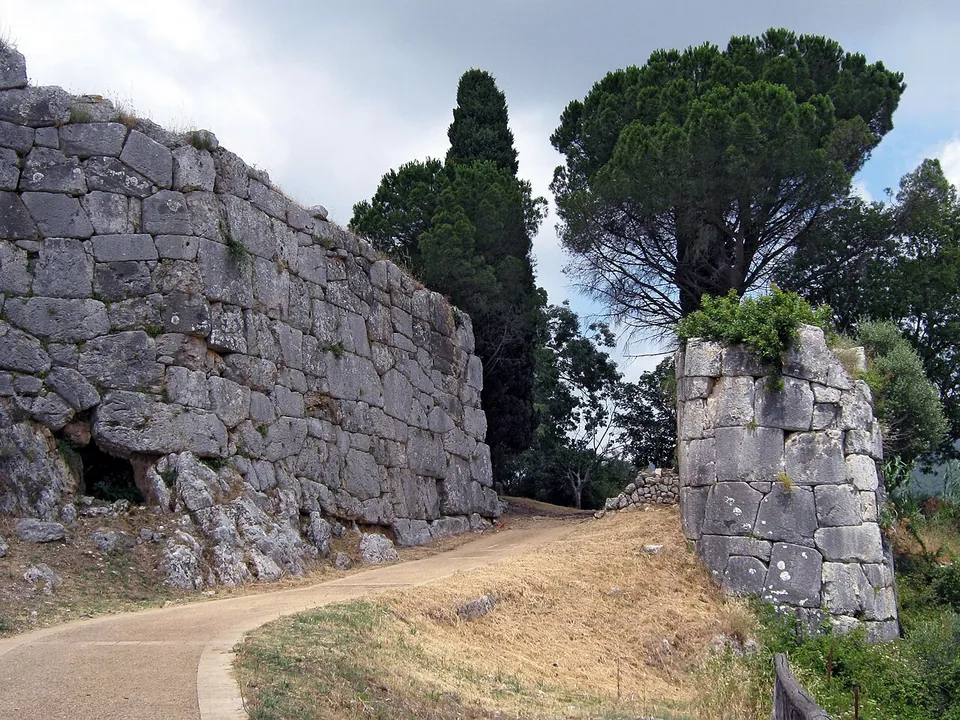
Photo: Kroelleboelle · CC BY-SA 3.0 · Commons
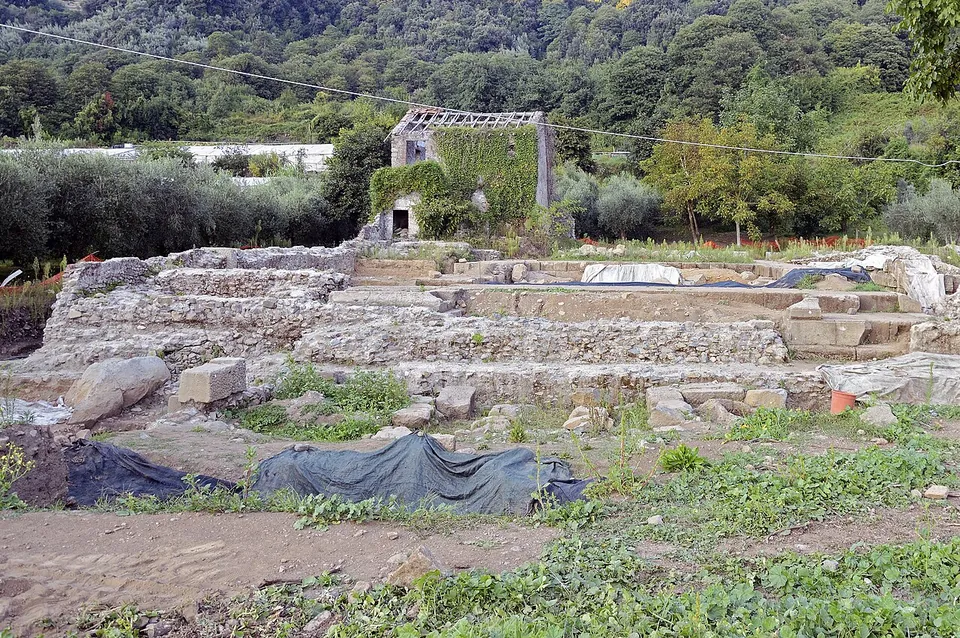
Photo: Livioandronico2013 · CC BY-SA 4.0 · Commons
19 km · temple · Lazio
Temple of Diana at Nemi
The sanctuary stood on a hillside terrace of 200 by 175 m below the modern village of Nemi, held up on the downhill side by triangular substructures and on the uphill side by a massive wall of semicircular niches that probably held statues (en.wikipedia).
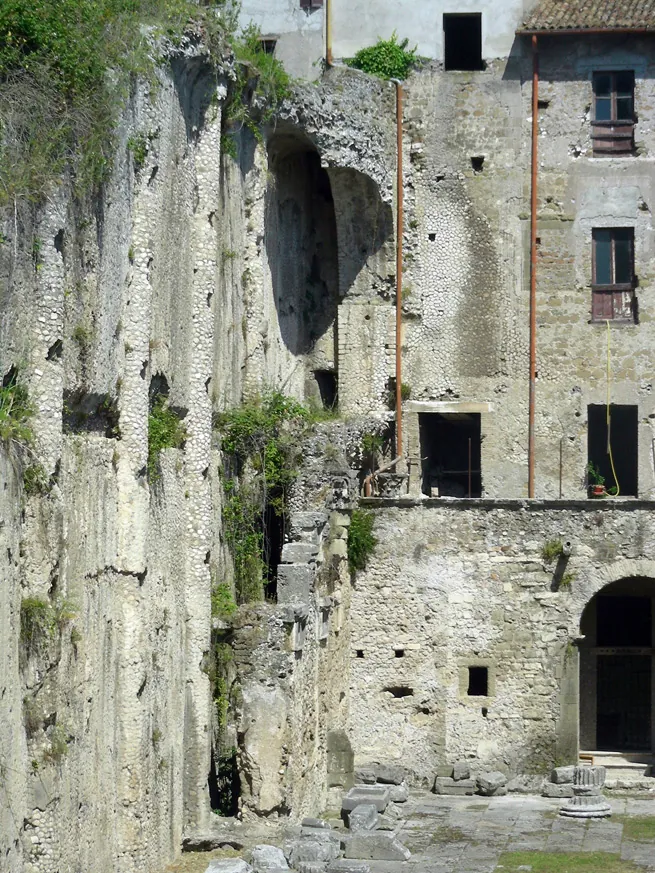
Photo: MM · CC BY-SA 3.0 · Commons
22 km · forum · Lazio
Civic forum of Praeneste
The square follows the ancient forum, and the great buildings of the 2nd century BC stood on the level above it (the operator).


Straight-line distances.
Sources
Every fact on this page comes from the records below, each used under the licence noted.
| Source | Licence |
|---|---|
| Pleiades 422909 | CC BY |
| Wikidata Q16827938 | CC0 |
| Vici.org 61728 | CC BY-SA (text), CC0 (metadata) |
| Wikipedia (en) — Cori, Lazio | CC BY-SA 4.0 |
| Wikipedia (it) — Cori | CC BY-SA 4.0 |
| Wikipedia (it) — Templi romani di Cori | CC BY-SA 4.0 |
| The Princeton Encyclopedia of Classical Sites (1976) — Cora (C. F. Giuliani) | licence not recorded |
| Scoprire Cori (the town's official tourism site) — opening hours of the monuments | licence not recorded |
| Scoprire Cori — how to get to Cori | licence not recorded |
| Scoprire Cori — the walls | licence not recorded |
| Scoprire Cori — Ponte della Catena | licence not recorded |
| Scoprire Cori — the Temple of the Dioscuri | licence not recorded |
| Scoprire Cori — Museo della città e del territorio | licence not recorded |
| Comune di Cori — Il Museo della Città e del Territorio | licence not recorded |