

What is there today
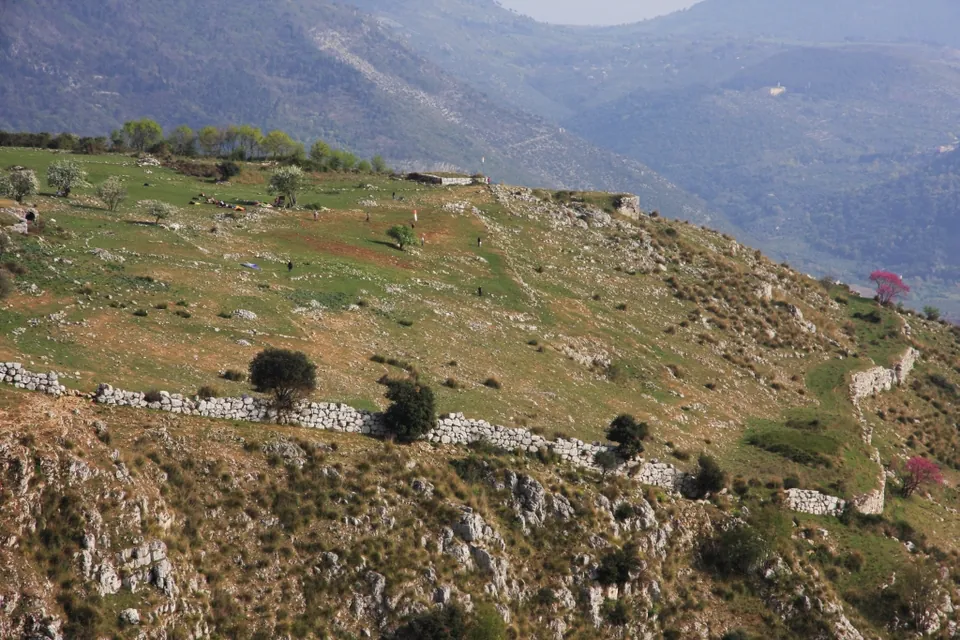
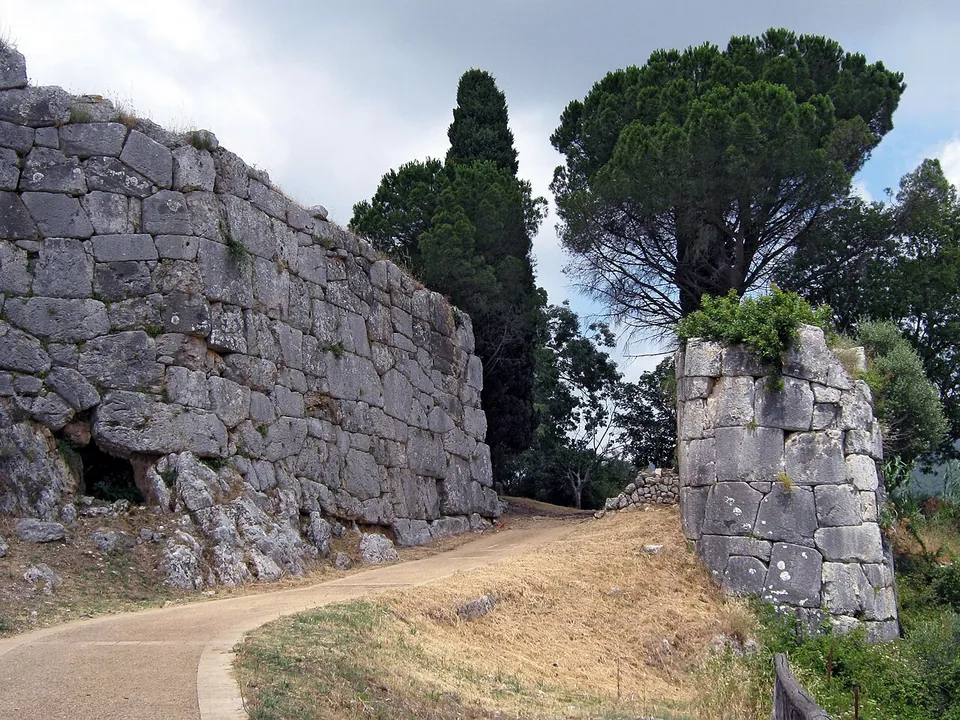
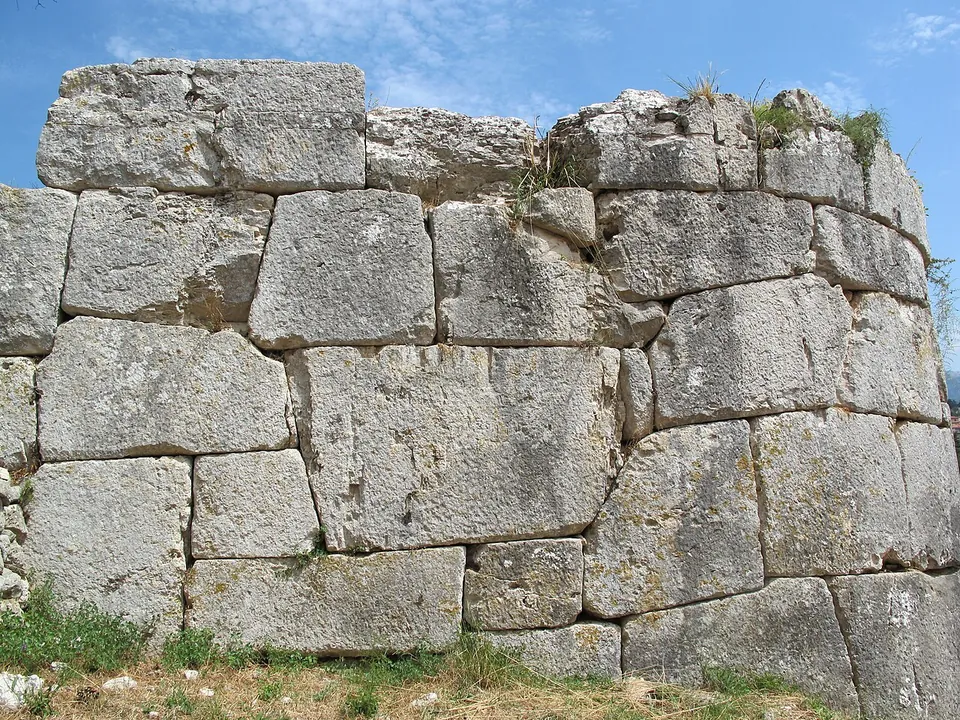
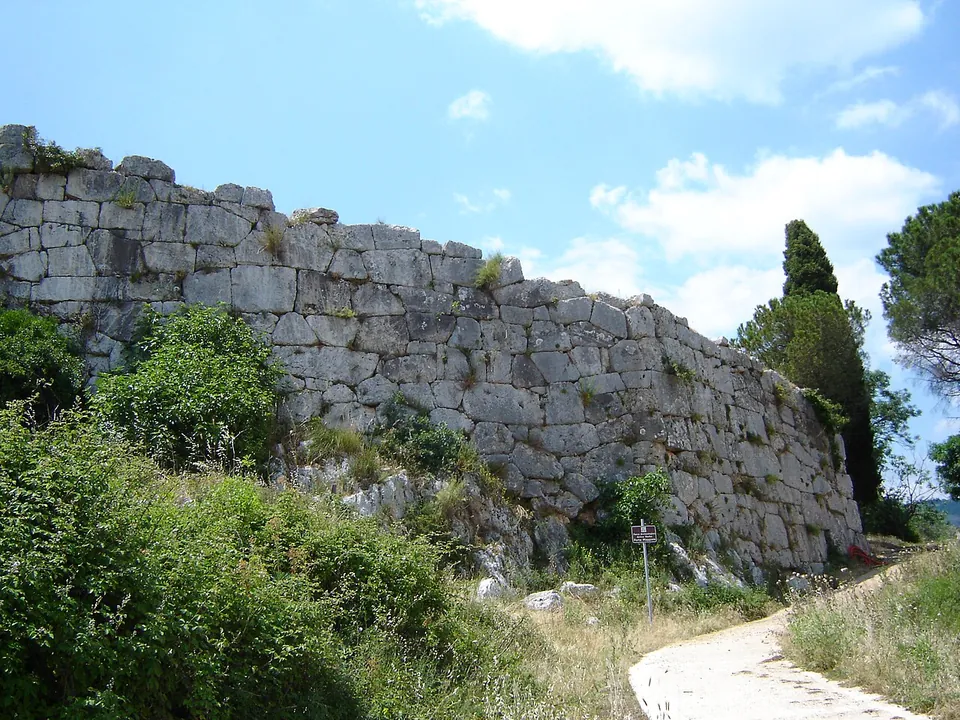
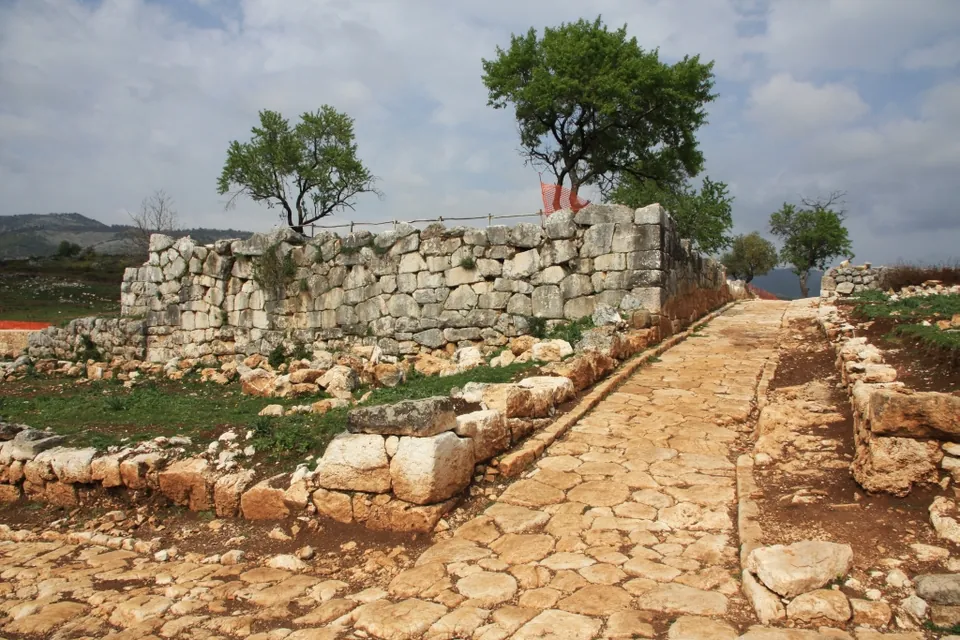
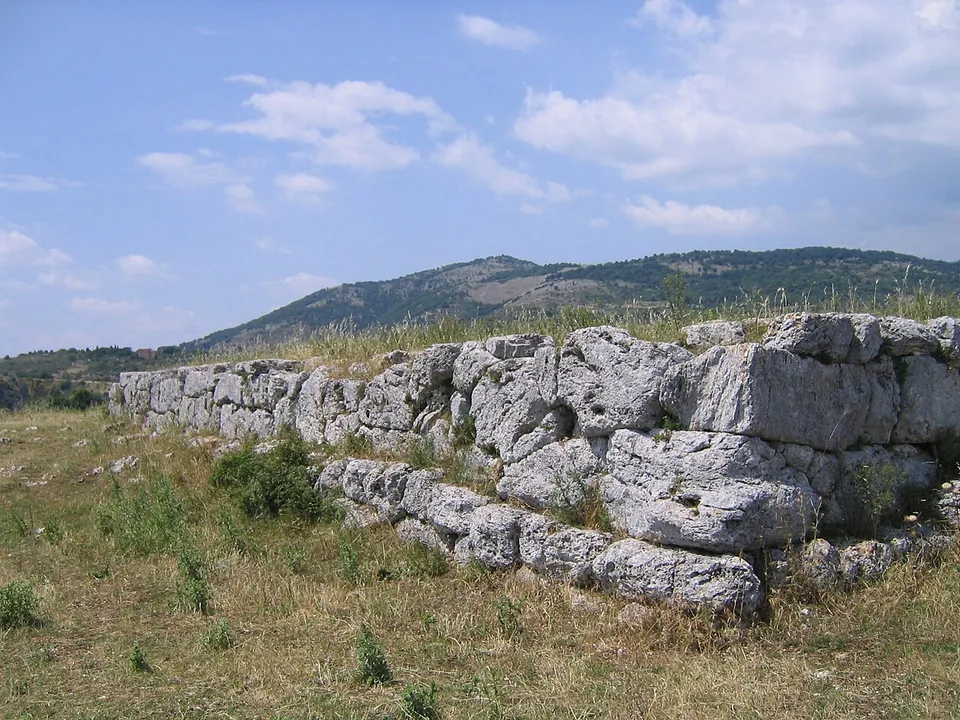
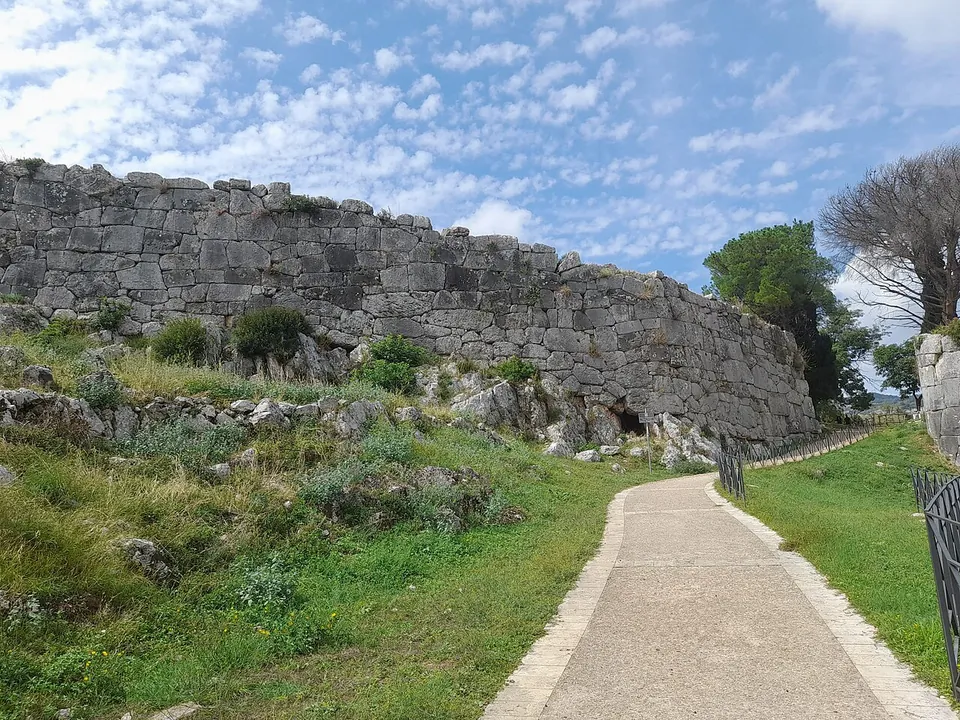
The walls are the reason to come. They are built of huge limestone blocks fitted together without mortar, the technique called polygonal masonry, and they are among the most famous of ancient Italy (the operator). Published figures for the circuit run from 2.2 km to more than 2.5 km, enclosing about 38 hectares (de, en and fr.wikipedia; the operator). You enter through the Porta Maggiore, on the most spectacular stretch, where the walls still stand to their full height of 10 to 12 m; the gate opens between jambs 8 m high, in a recess of the wall defended by a bastion with a semicircular front (the operator). The walls hold up the ground inside rather than standing free above it (en.wikipedia). The circuit has three more gates, the Porta Ninfina, the Porta Signina and the Porta Serrone di Bove, and many small posterns (the operator).
Inside, the plateau is laid out on a grid and stepped into terraces. A paved main street runs through the city, much of it uncovered (the operator); since 2011 the ancient streets have been excavated over large areas, and some foundations of important buildings can already be seen (de.wikipedia). At the centre is a bath complex of the late 2nd or early 1st century BC, with a large oval water basin above it, part of a square room with a barrel vault and a round sweating room buried almost to the spring of its vault (the operator); with the walls and the Porta Maggiore it is the best-preserved part of the city (it.wikipedia). The temples on the two hilltops inside the walls, and the sanctuary of Juno Lucina on the south-western edge, survive as their stone platforms (the operator; it.wikipedia). Several information boards are mapped within 200 m of the gate (OpenStreetMap).
Is it worth the trip?
Yes, if walls on this scale appeal to you. The Porta Maggiore with its bastion and the walls either side are the set piece - it.wikipedia suggests that perhaps no Roman colony keeps so fine and intact a gate - and the paved streets give the plateau the feel of a town plan you can walk. Entry is free and the car park is a few minutes from the gate. Set your expectations for the interior, though: apart from the baths and the terrace walls, the buildings survive as foundations and temple platforms, and an ordinary visit comes without a guide to explain them. The museum in Norma, about 1 km away, has a model of the city and video reconstructions that make the ruins easier to read, but it is shut on Mondays and opens on Sundays only by booking.
Getting there
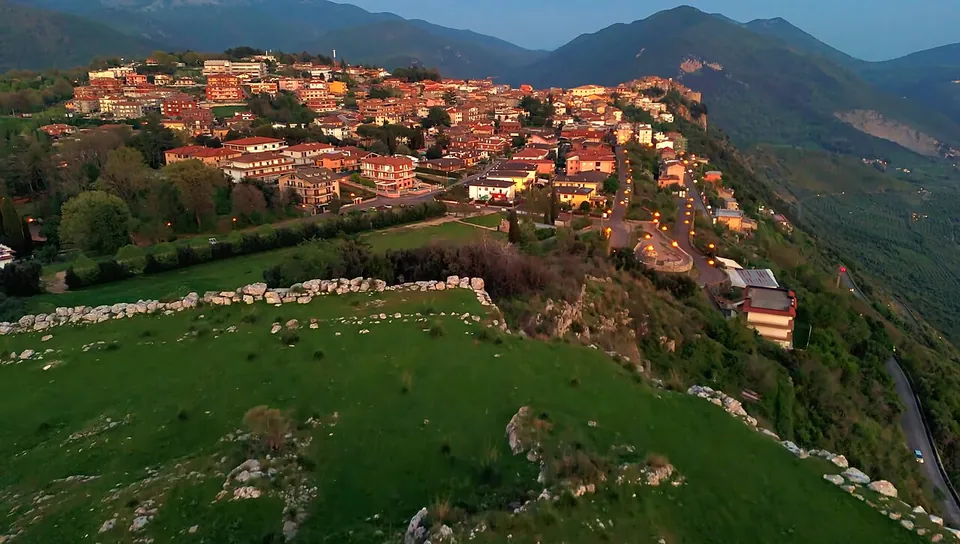
The park lies on the western edge of Norma (de.wikipedia), in the province of Latina (it.wikipedia). A free car park is mapped about 150 m from the Porta Maggiore, with public toilets about 200 m from the gate, and a Cotral bus stop, “Norma | Circ. Antica Norba”, about 250 m away (OpenStreetMap); check Cotral’s timetable before relying on the bus.
Entry is free, without a guide service, and the operator publishes no opening hours for the park. Guided visits are run by the Museo Civico Archeologico for groups of at least ten, booked at least 48 hours ahead; the published rates for school groups are €3 per student for the park and €4.50 with the museum (Comune di Norma, read 21 October 2026).
The Museo Civico Archeologico “A.G. Saggi”, in the old town hall on Via della Liberazione in Norma, opens Tuesday to Saturday 09.00 to 14.00 and 15.00 to 18.00, on Sundays by booking, and is closed on Mondays; a ticket is €2.50, reduced €1.50, free under ten. Opened in 1995 to help visitors understand the ancient city, it tells Norba’s story with a model of the town plan, casts of votive offerings, video reconstructions and full-size reconstructions of a house’s painted room and its kitchen (Comune di Norma). The original finds are divided between this museum and the Museo Nazionale Romano in Rome (it.wikipedia).
Visiting details
- Opening hours
- The operator publishes no opening hours for the archaeological park, which is entered on foot through the Porta Maggiore. The Museo Civico Archeologico in Norma opens Tuesday to Saturday 09.00–14.00 and 15.00–18.00, on Sundays by booking only, and is closed on Mondays; its hours can change around guided visits to the park.
- Tickets
- The park is free, with no guide service. Guided visits of the park, or of the park and the museum, are for groups of at least 10, booked at least 48 hours ahead through the museum; for school groups they cost €3 per student, or €4.50 with the museum. The museum in Norma costs €2.50, reduced €1.50, and is free under 10.
- Parking
- Free car park about 150 m from the Porta Maggiore (OSM node/1315940786), with public toilets about 200 m from the gate.
Before you go
- There is no guide service on an ordinary visit; for a guided visit the museum takes bookings for groups of 10 or more, at least 48 hours ahead.
Hours and prices checked 21 October 2026 on the operator's own site. Confirm before travelling.
The Forum
Above the baths and just below the larger of the two hilltops, the Acropoli Maggiore, the widest of the city’s terraces carries a rectangular open area of about 125 by 63 m that dominates the whole city; it presumably held the forum (the operator). The great rectangular esplanade can still be made out on the ground (fr.wikipedia).
The Minor Acropolis
The hill just south of the Porta Maggiore, bounded by the city wall and its own polygonal terraces, carried two temples whose gods are not known. The larger left a platform of polygonal masonry 22.80 by 12.90 m, with an underground cistern beside it fed by rainwater from the roof; the smaller, 16.50 by 8.16 m, keeps stone steps on its front and was turned into a church in the Middle Ages, with a new floor and many graves. A monumental flight of steps leads down from the hill to the main street (the operator). A postern beside the Porta Maggiore led to this hill (the operator) through a tunnel whose opening, 90 cm wide and 2.3 m high, can still be seen, though it is blocked after 10 m (fr.wikipedia).
History
Norba was a member of the Latin League in 499 BC, and in 492 BC, according to Livy, it received a colony to guard the border against the Volsci; it later served as a fortress watching over the Pontine plain (en and fr.wikipedia). Whether the colony really goes back that far is not settled: de.wikipedia notes that it may date only from the 4th century BC, and the city as it appears today, with its houses and temples, belongs to the 4th and 3rd centuries BC (it.wikipedia). The walls are hard to date; they are usually placed between the middle of the 4th and the early 3rd century BC (fr.wikipedia). In the 4th century BC the Volsci of Privernum plundered the town (de and fr.wikipedia), and in 199 BC Carthaginian hostages were held there (en and fr.wikipedia).
In the civil war Norba took the side of Marius. After the fall of Praeneste, Sulla’s lieutenant Aemilius Lepidus took it through treachery. The historian Appian records that the inhabitants chose to kill one another and set fire to their houses rather than fall into the enemy’s hands, and that the fire, driven by a strong wind, left Sulla’s troops nothing to plunder (the operator). Published dates for the fall are 82 BC or 81 BC (en and fr.wikipedia; the operator). By the 1st century AD Pliny the Elder listed Norba among the vanished cities of Latium (en.wikipedia). In the Middle Ages two of its temples were reused as churches (it.wikipedia).
The first real excavations began in 1901 under Luigi Savignoni and Raniero Mengarelli, resumed in the 1950s with aerial photography that gave a first reconstruction of the city’s plan, and has continued since the late 1980s under Lorenzo Quilici and Stefania Quilici Gigli (fr and it.wikipedia). At the foot of the cliff lie the ruins of Ninfa, a medieval town abandoned because of malaria (en.wikipedia).
More photographs





Nearby
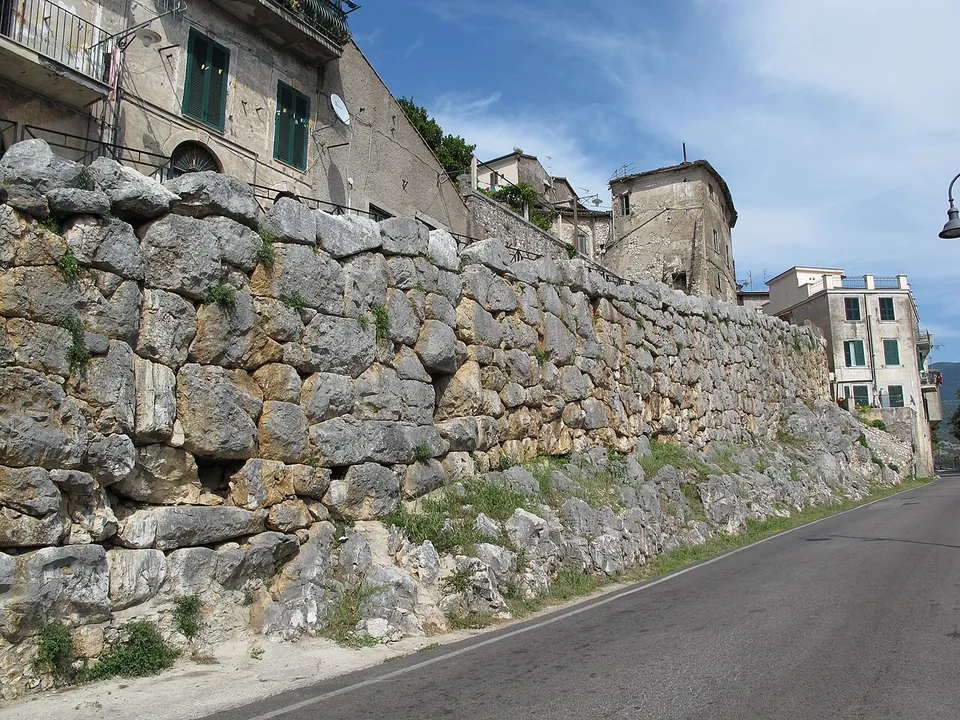
Photo: pietro scerrato · CC BY 3.0 · Commons
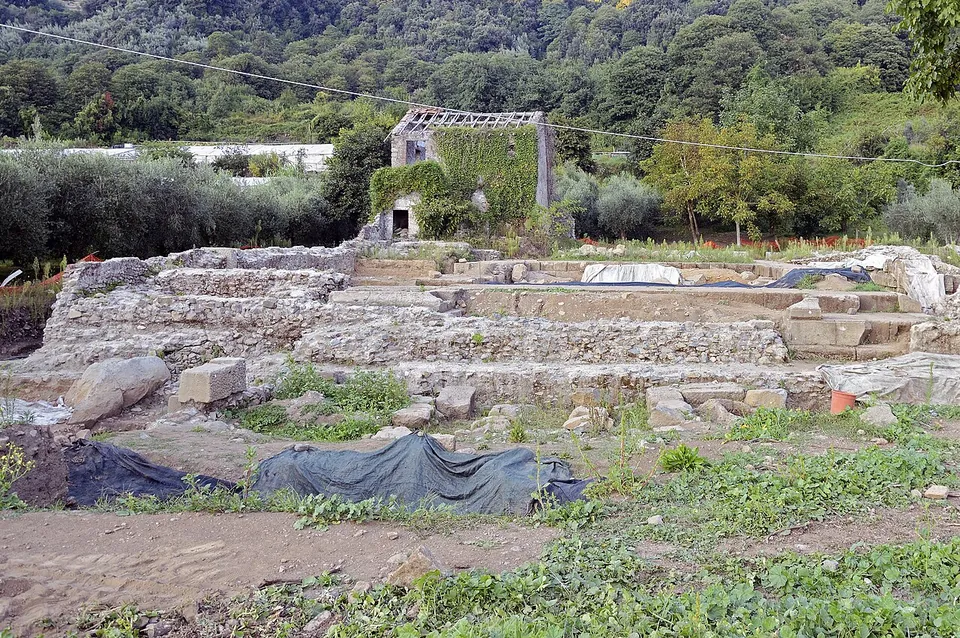
Photo: Livioandronico2013 · CC BY-SA 4.0 · Commons
26 km · temple · Lazio
Temple of Diana at Nemi
The sanctuary stood on a hillside terrace of 200 by 175 m below the modern village of Nemi, held up on the downhill side by triangular substructures and on the uphill side by a massive wall of semicircular niches that probably held statues (en.wikipedia).
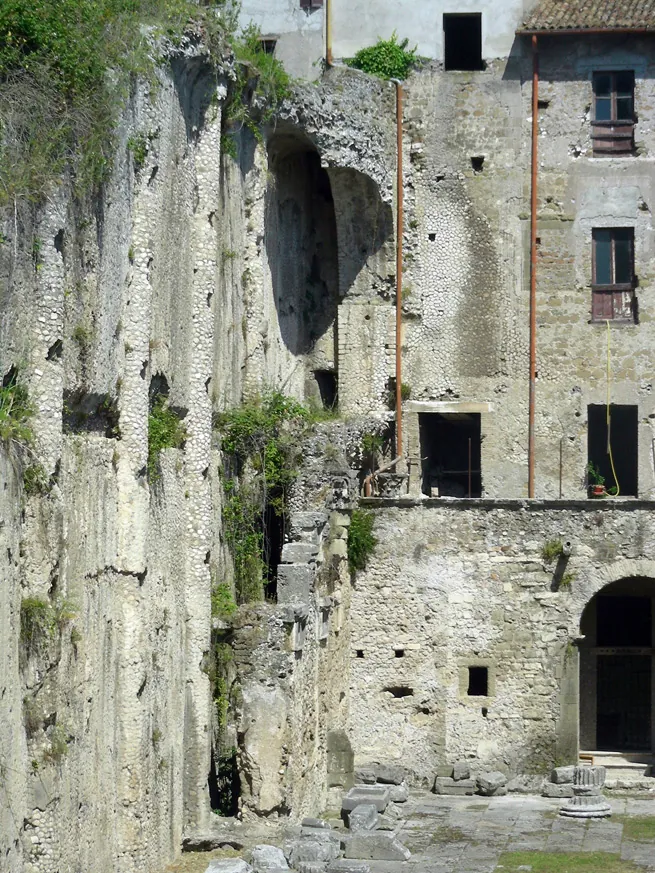
Photo: MM · CC BY-SA 3.0 · Commons
28 km · forum · Lazio
Civic forum of Praeneste
The square follows the ancient forum, and the great buildings of the 2nd century BC stood on the level above it (the operator).


Straight-line distances.
Sources
Every fact on this page comes from the records below, each used under the licence noted.
| Source | Licence |
|---|---|
| Pleiades 422987 | CC BY |
| Wikidata Q2026618 | CC0 |
| Vici.org 11267 | CC BY-SA (text), CC0 (metadata) |
| OpenStreetMap way/130446944 | ODbL |
| Comune di Norma - Parco Archeologico dell'Antica Città di Norba (the operator) | licence not recorded |
| Comune di Norma - Museo Civico Archeologico "A.G. Saggi" | licence not recorded |
| Italia.it (Ministero del Turismo) - Parco Archeologico dell'Antica Norba | licence not recorded |
| Wikipedia (it) - Norba latina | CC BY-SA 4.0 |
| Wikipedia (fr) - Norba | CC BY-SA 4.0 |
| Wikipedia (en) - Norba | CC BY-SA 4.0 |
| Wikipedia (de) - Norba | CC BY-SA 4.0 |
| Pleiades - Forum of Norba | licence not recorded |
| Pleiades - Minor acropolis of Norba | licence not recorded |
| Wikidata - Forum of Norba (Q139969719) | licence not recorded |
| Wikidata - Minor acropolis of Norba (Q139970189) | licence not recorded |