

What is there today
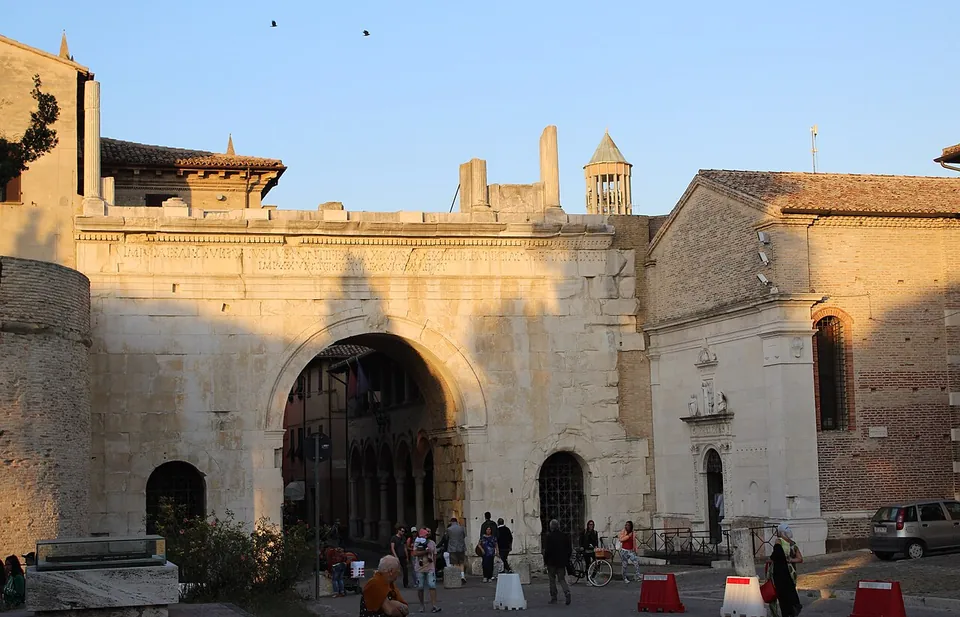
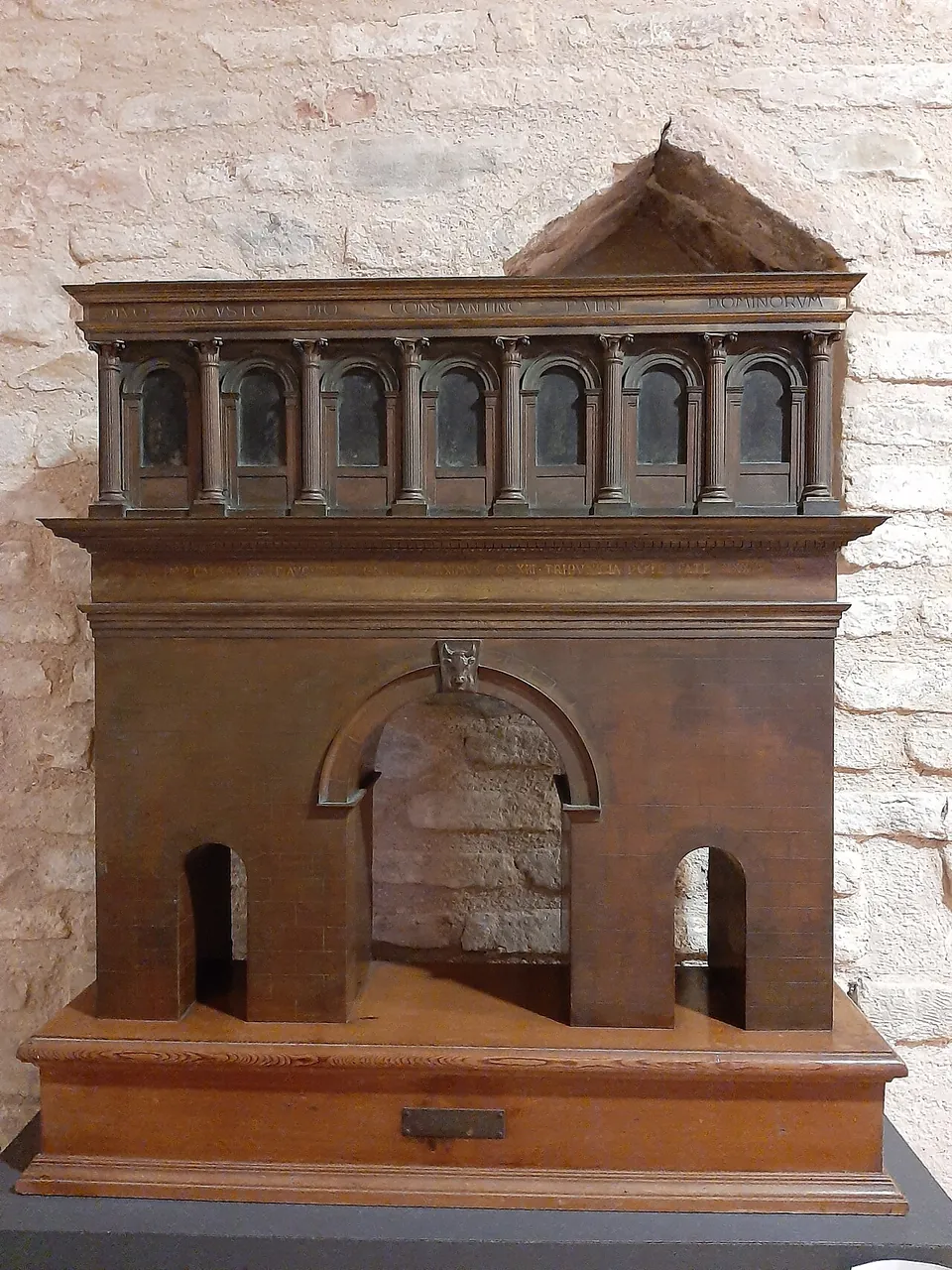
The Arch of Augustus is the set piece. It is a city gate, not an honorary arch: a large central arch for carts and horses and two smaller ones for people on foot, faced with squared blocks of Istrian stone, at the point where the Via Flaminia turned into the town’s main street (it.wikipedia). The inscription on the frieze, its letters cut deep to hold gilded bronze, records that Augustus gave the town its wall. The main body is well preserved. The upper storey, an arcade of seven arched windows between half-columns, was shot away in a siege of 1463, and the keystone’s carved animal head, perhaps an elephant, is no longer recognisable (it.wikipedia, en.wikipedia). The church of San Michele, built against the right-hand side partly from the fallen blocks, carries a Renaissance relief of the gate as it looked before (it.wikipedia, de.wikipedia).
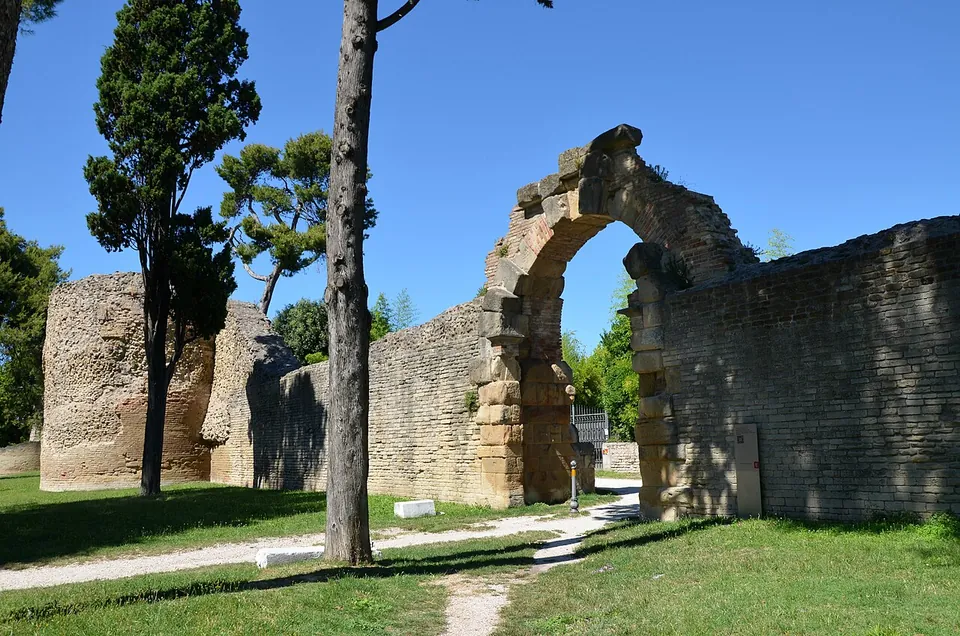
The Augustan walls run north-west from the arch. About two thirds of the circuit survives, in courses of sandstone blocks, with eight of its original twelve round towers and a small Roman gate halfway along, the Porta della Mandria, named after the flocks that went through it to pasture (it.wikipedia).
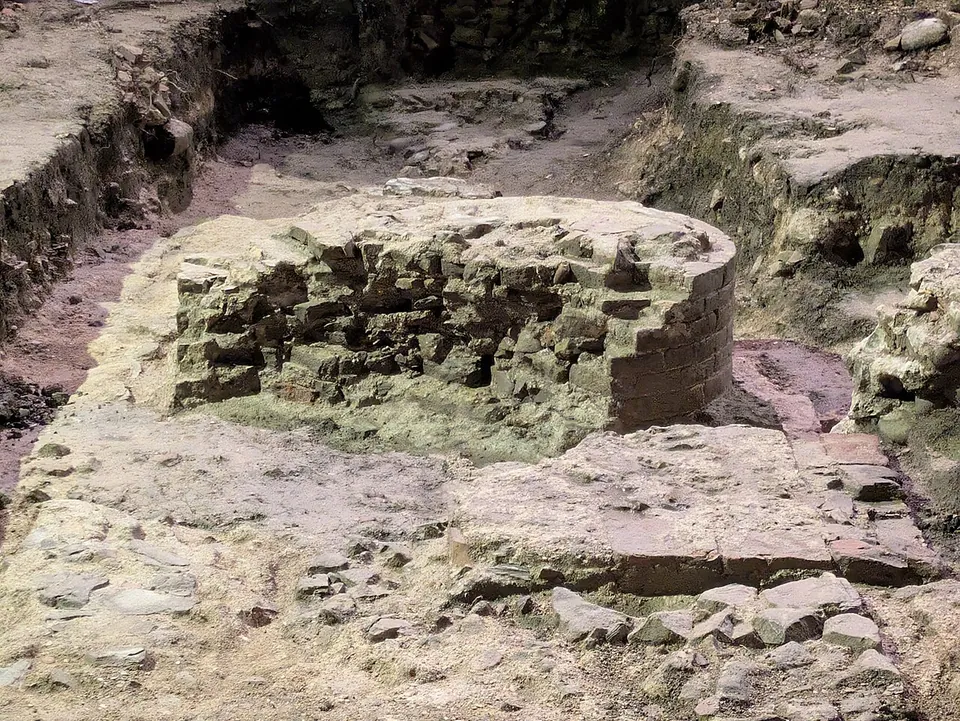
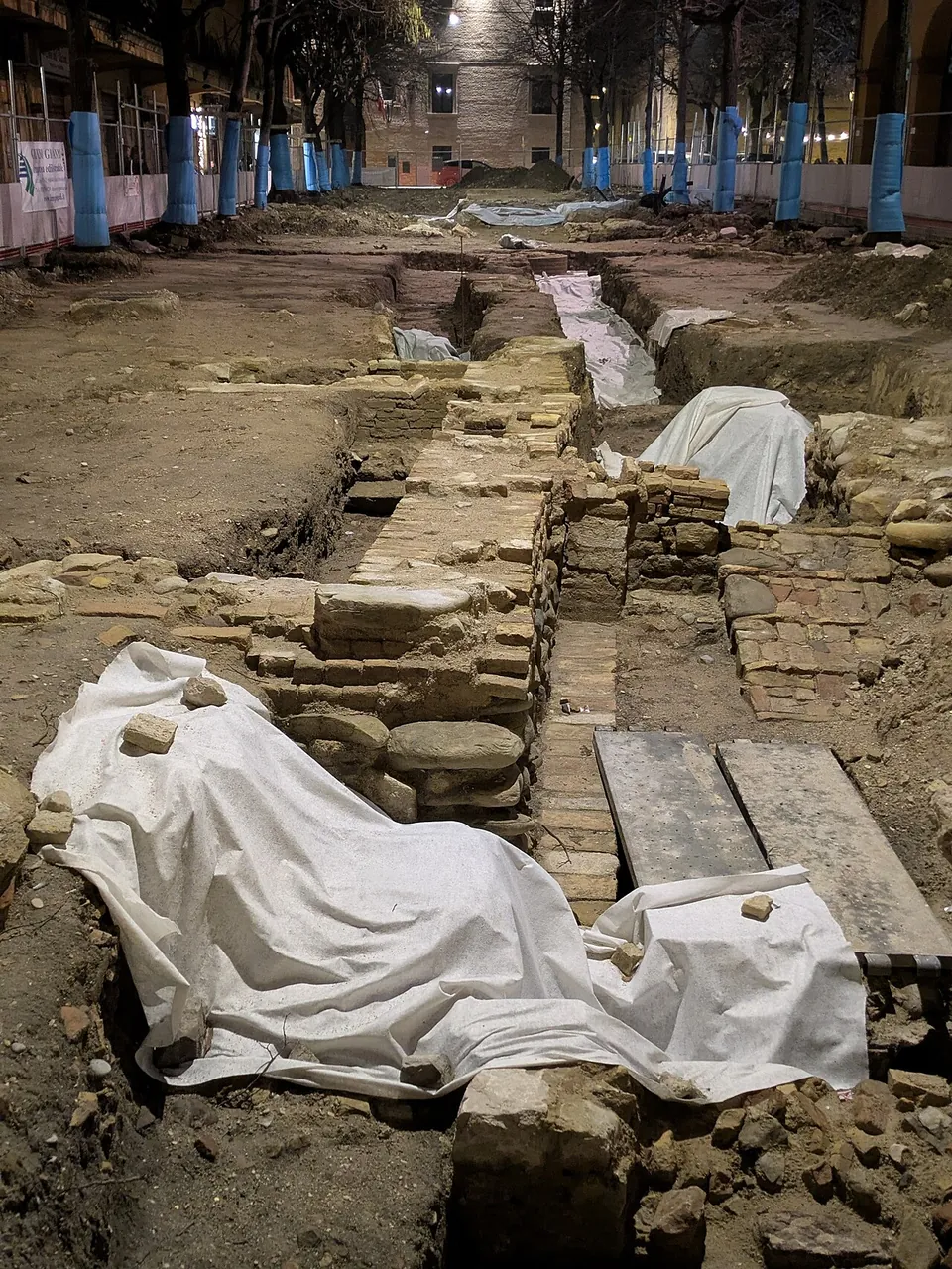
The Basilica of Vitruvius lies about 300 m from the arch, under Piazza Andrea Costa. Vitruvius describes it in Book V of De architectura as a work he designed and saw built (en.wikipedia). It was searched for for centuries and identified only in January 2026: works there turned up four large stone columns about 1.5 m across, and a corner column was then found exactly where a reconstruction of the plan from the treatise predicted it, in the neighbouring Piazza degli Avveduti (Il Post, Finestre sull’Arte). What has been uncovered is the lower part of the building: column bases, a perimeter wall that still carries its plaster, and the layers laid down for the floor (Finestre sull’Arte); published reports differ on whether any of the marble paving itself survives (en.wikipedia, Finestre sull’Arte). The excavation was still in progress when the press reported it, and it is fenced off.
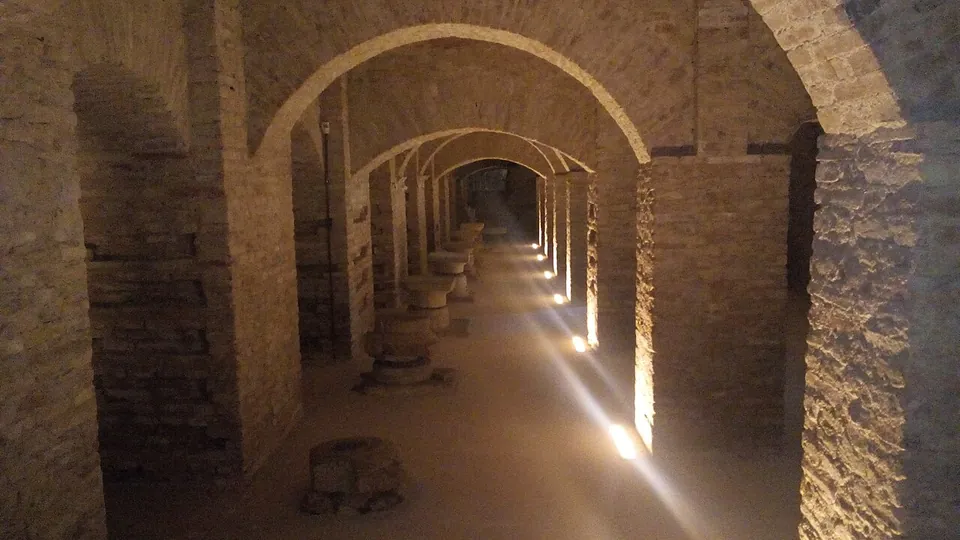
Two more pieces of the Roman town are shown underground on the museum’s walks. Beneath the church of Sant’Agostino lie the walls, small arches, an apse, columns and drains of a large Roman complex that has been read as the temple of Fortuna or as the basilica itself (it.wikipedia). In the basement of the Mediateca Montanari are the remains of the Augusteum, a temple of the imperial cult whose statue of Claudius was found here; three sides of its courtyard portico can be traced from their column bases (it.wikipedia).
Two museums hold the rest. The Museo Archeologico in Palazzo Malatestiano has an archaeological section built on finds from the town and its territory, collected since the 18th century (the operator), and the Museo della Via Flaminia is inside San Michele, beside the arch (it.wikipedia, the operator).
Is it worth the trip?
For the arch, yes, and it costs nothing. It is one of the few Roman monuments that has come down almost whole (it.wikipedia), it is still the way into the old town, and the walls and the Porta della Mandria are a short walk along them. If you are driving the Adriatic coast or taking the train between Bologna and Ancona, Fano is an easy stop of an hour or two.
The basilica is a different proposition. It matters enormously to the history of architecture, but what you see is the base of a building in an active dig, not standing architecture, and you see it only with the museum’s walks. Book one if you are curious about Vitruvius; do not expect a ruin to wander through.
Getting there
Everything lies within about 300 m of Piazza degli Avveduti in the old centre. Fano station, on the line between Bologna and Ancona (it.wikipedia), is about 650 m from the basilica dig, and there are two paid car parks within about 50 m of it and a free one about 160 m away (OpenStreetMap).
The arch and the walls can be seen at any time. The Museo Archeologico is closed on Mondays; from mid-September to mid-June it opens Tuesday and Thursday 09.00–13.00 and 15.00–18.00, Wednesday mornings only, and Friday and Saturday 09.00–13.00 and 15.00–19.00, with Sundays and holidays 10.30–12.30 and 15.00–19.00, and in summer the afternoons run 17.00–20.00. A ticket is €8, €5 for ages 18 to 26, free under 18 and free for everyone on the second Sunday of the month. The Museo della Via Flaminia opens Friday afternoons and weekend mornings and afternoons, for €4, or €10 with the Museo Archeologico (the operator, read 19 October 2026).
The basilica is seen on the walks “Alla scoperta di Vitruvio”, which leave from the Sala Morganti of Palazzo Malatestiano, with up to 30 people each. The full walk, about an hour and three quarters, also takes in Sant’Agostino, the Augusteum and the Via Flaminia museum for €10; a one-hour route to the basilica and Sant’Agostino is €5. In 2026 they ran at weekends and on holidays from 28 March, and in summer also on Wednesday evenings, until 15 September (the operator). No later timetable had been published by mid-October, so ask the museum (+39 0721 887845) before you go.
Visiting details
- Opening hours
- The Arch of Augustus and the Augustan walls stand in the open. The Museo Archeologico in Palazzo Malatestiano is closed on Mondays; from 16 September to 14 June it opens Tuesday and Thursday 09.00–13.00 and 15.00–18.00, Wednesday 09.00–13.00, Friday and Saturday 09.00–13.00 and 15.00–19.00, Sunday and holidays 10.30–12.30 and 15.00–19.00, and from 15 June to 15 September the afternoon sessions run 17.00–20.00. The Museo della Via Flaminia beside the arch opens Friday 15.30–18.30 and weekends and holidays 10.00–12.00 and 15.30–18.30 (17.00–20.00 in the afternoons in summer). Both close on 25 December and 1 January. The Vitruvius basilica excavation is seen only on the museum's guided walks, which ran at weekends and on holidays in spring and summer 2026.
- Tickets
- The arch and the walls cost nothing to see. Museo Archeologico €8, reduced €5 (ages 18 to 26, groups of 15 or more); Museo della Via Flaminia €4, reduced €3; both together €10. Free under 18, and the Museo Archeologico is free on the second Sunday of every month. The guided walk to the basilica, the Sant'Agostino and Mediateca Montanari remains and the Via Flaminia museum is €10 (about 1 h 45 min); a shorter one-hour route to the basilica and Sant'Agostino is €5; free under 18.
- Parking
- Two paid surface car parks about 30 and 50 m from Piazza degli Avveduti, beside the basilica excavation, and a free one about 160 m away (OSM way/173529307, way/173529309 and way/177380014). Fano railway station is about 650 m away (OSM node/9748287368).
Before you go
- The basilica is an active excavation inside a fenced building site, visited only with the museum's walks (up to 30 people each). The operator has published no timetable for the walks after 15 September 2026; ask the museum (+39 0721 887845) before planning around them.
- The English version of the museum's website still shows older, lower prices; the Italian ticket page is the current one.
Hours and prices checked 19 October 2026 on the operator's own site. Confirm before travelling.
History
The town took its name from a shrine of Fortuna, probably built to mark the battle of the Metaurus in 207 BC, when Rome defeated the Carthaginian army and killed its general Hasdrubal, Hannibal’s brother (it.wikipedia). It first appears in the ancient sources in 49 BC, when Julius Caesar took it at the start of his civil war against Pompey (Pleiades, it.wikipedia). Augustus made it a colony, Colonia Iulia Fanestris, and gave it its walls; the arch’s inscription dates the gate to AD 9 (it.wikipedia, en.wikipedia), though one reading of its figures puts it in AD 14, the last year of his reign (de.wikipedia). The basilica is conventionally dated to around 19 BC (en.wikipedia).
Fano lay on the Via Flaminia, the road to Rome, and near it in 271 the emperor Aurelian defeated the Alemanni, ending their march on Rome (Pleiades, it.wikipedia). In the 4th century the gate was restored and given a new inscription on its attic, honouring Constantine, without erasing Augustus’s (it.wikipedia, de.wikipedia). The town was sacked by Attila in 453, and in 538 Vitiges’s Ostrogoths besieged and devastated it before the Byzantine armies rebuilt it (it.wikipedia).
The arch’s later history explains its shape. Cyriac of Ancona studied it and its inscription in the 15th century, and in 1463 the artillery of Federico da Montefeltro, besieging the town’s lord Sigismondo Pandolfo Malatesta, wrecked most of its upper storey; the commune sold the rubble to the confraternity that built San Michele (it.wikipedia, de.wikipedia). The basilica stayed lost: the remains under Sant’Agostino and a large building found in 2023 were each proposed and never confirmed, until the repaving of Piazza Andrea Costa, whose finds were announced on 19 January 2026 (en.wikipedia, Il Post).
More photographs



Nearby
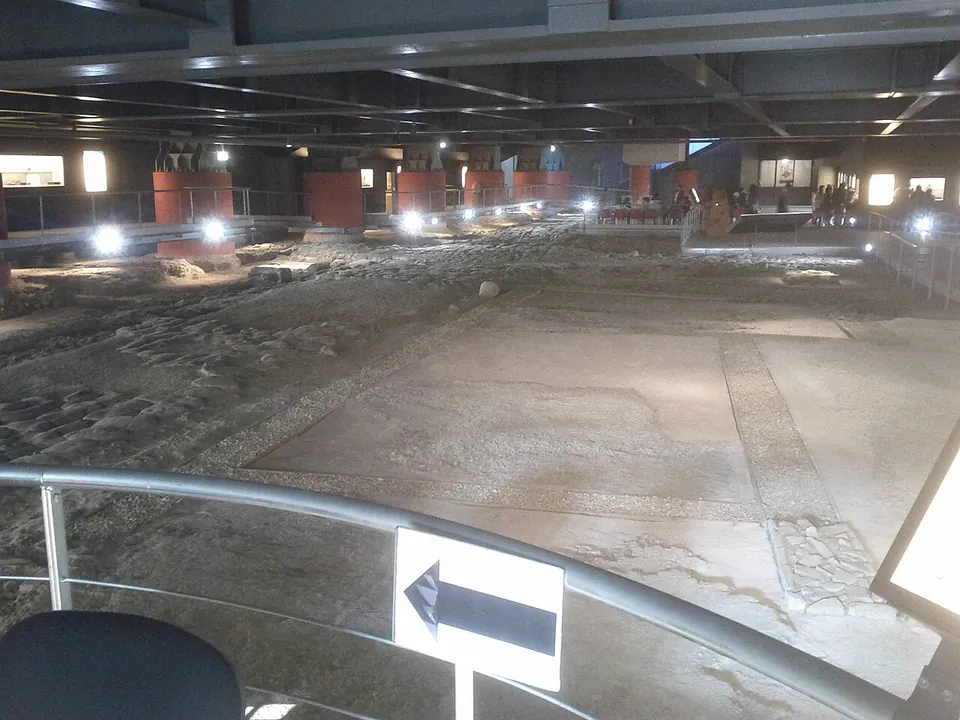
Photo: Accurimbono · CC BY-SA 3.0 · Commons
22 km · city · Marche
Area archeologica la Fenice
You walk a few metres below today's street level, on walkways over the excavated ground.
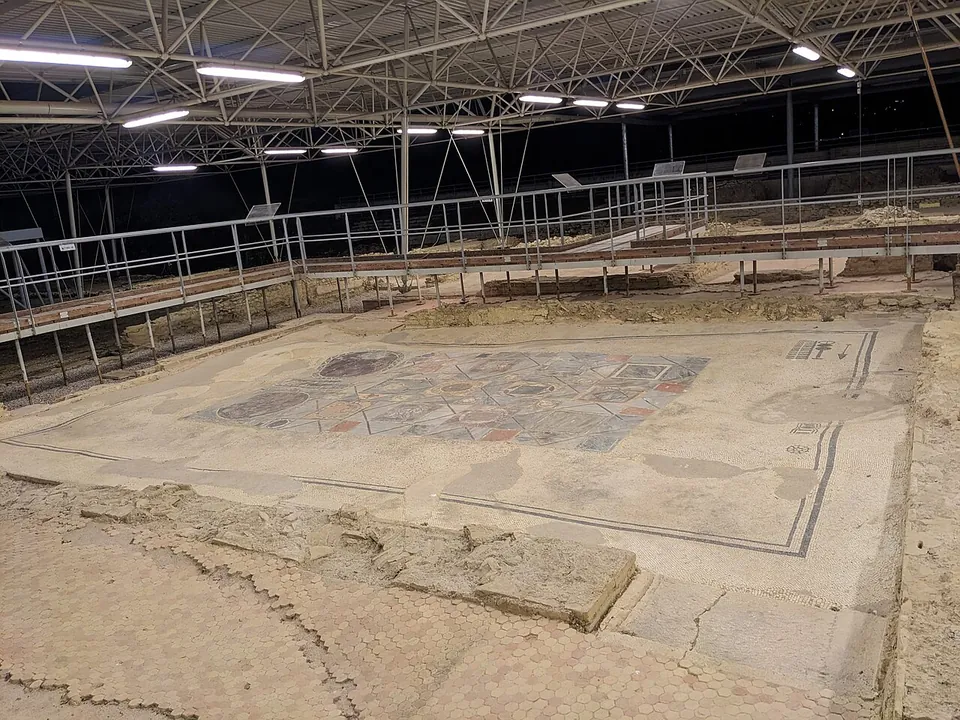
Photo: Accurimbono · CC BY-SA 4.0 · Commons
25 km · town house · Marche
Parco Archeologico di Suasa
The house is big — about 105 by 34 m, some 3,500 m² (the operator; it.wikipedia) — and is presented in the open air, much of it under a modern roof, with raised walkways that let you look down into the rooms (it.wikipedia; en.wikipedia).
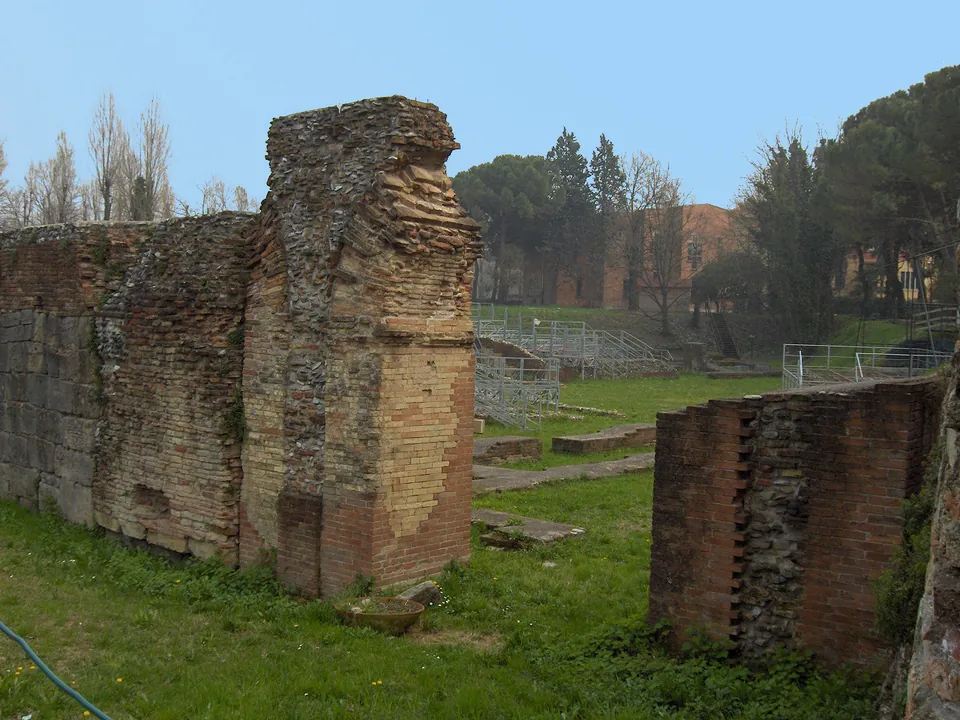
Photo: Georges Jansoone ( JoJan ) · CC BY-SA 4.0 · Commons


Straight-line distances.
Sources
Every fact on this page comes from the records below, each used under the licence noted.