What is there today
Only a small part of the town has been excavated and can be visited; other areas were investigated and covered over again, the forum among them, which lies under a farm (it.wikipedia). What is open is a compact group along the main street.
The theatre
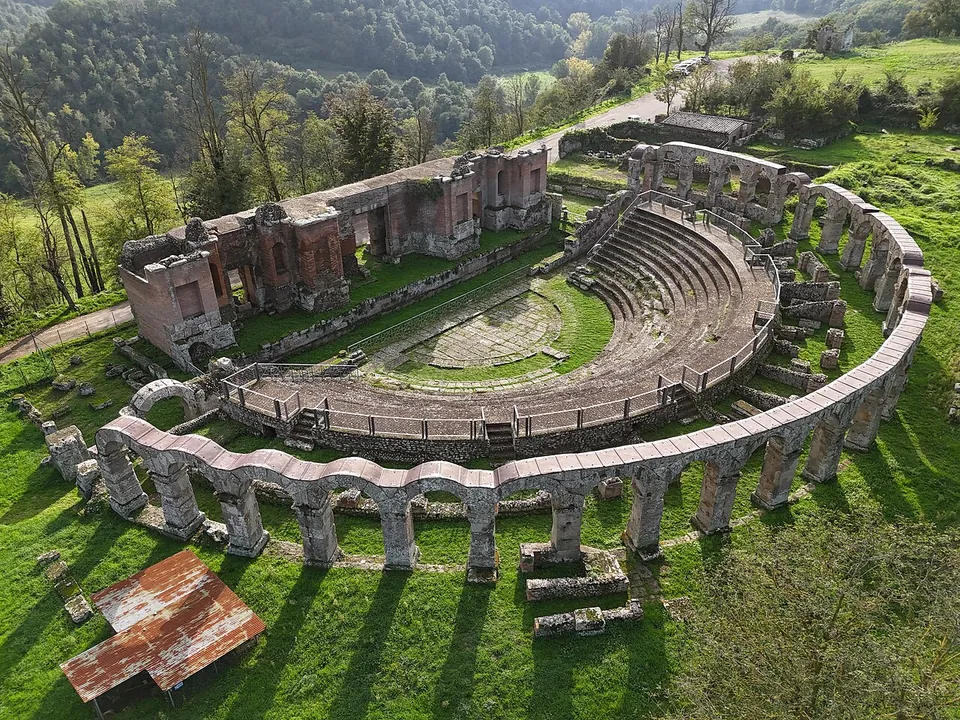
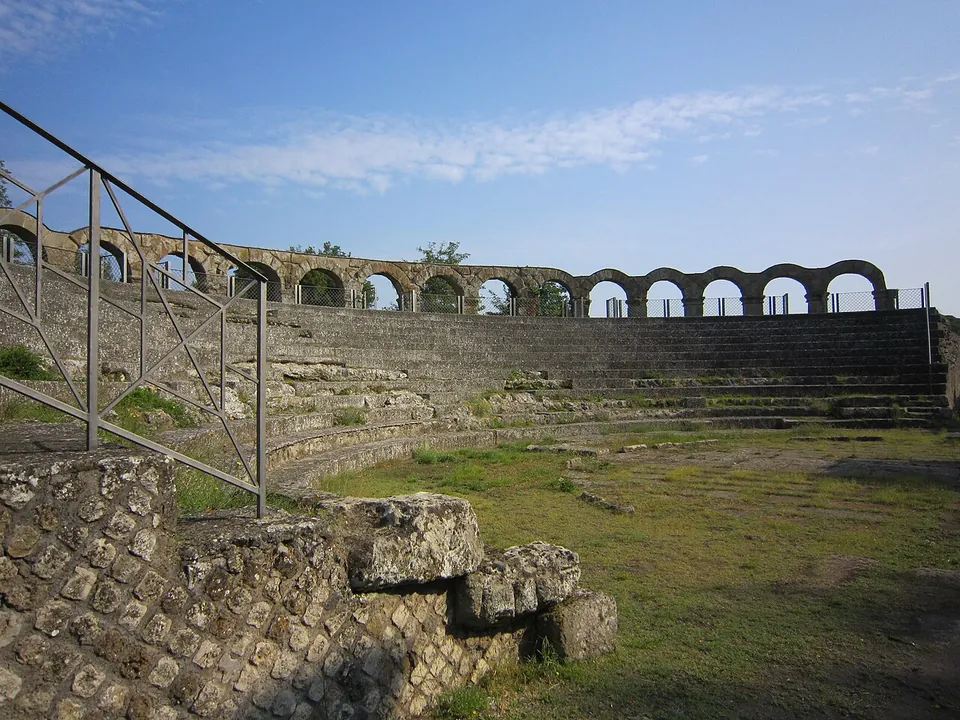
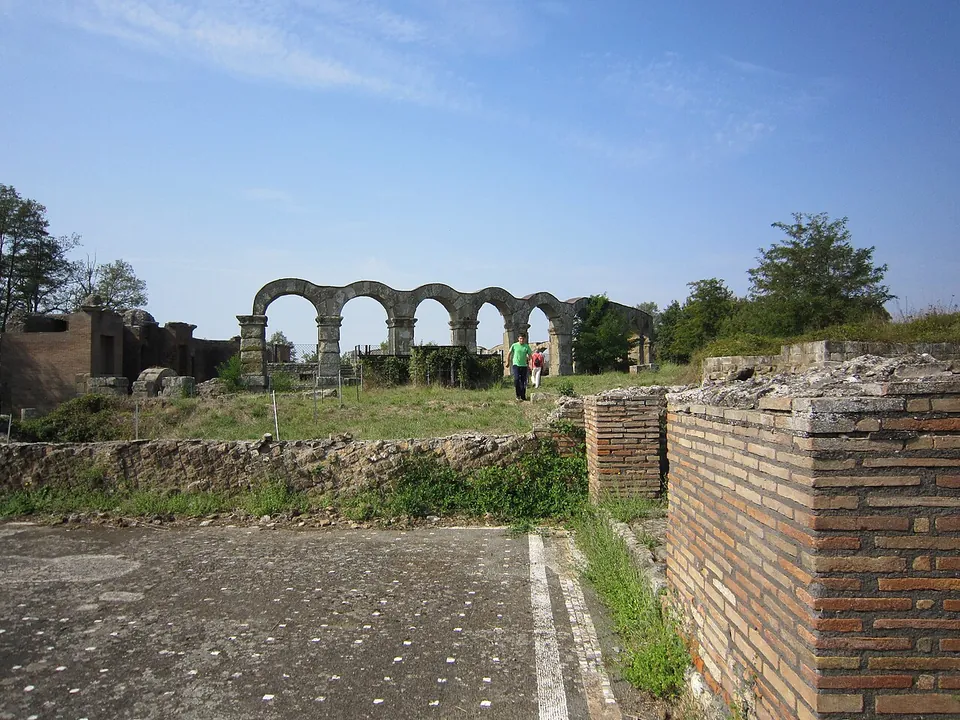
The theatre is the set piece. Its stone tiers are well preserved, the stage area and the remains of the stage front are still visible, and an arcade surrounds the seating (en.wikipedia). Part of that is modern: the seating was restored and partly rebuilt in the 1960s so that audiences could use it again, and where it was restored the original design was not respected (fr.wikipedia), and of the arches round the back some are original and others were raised or wholly or partly rebuilt (Archeotuscia). The seating is about 62 m across (fr.wikipedia), and published figures for its capacity run from about 2,600 to 3,400 spectators. It is still used: plays and concerts are staged here in summer (en.wikipedia; Archeotuscia).
The baths
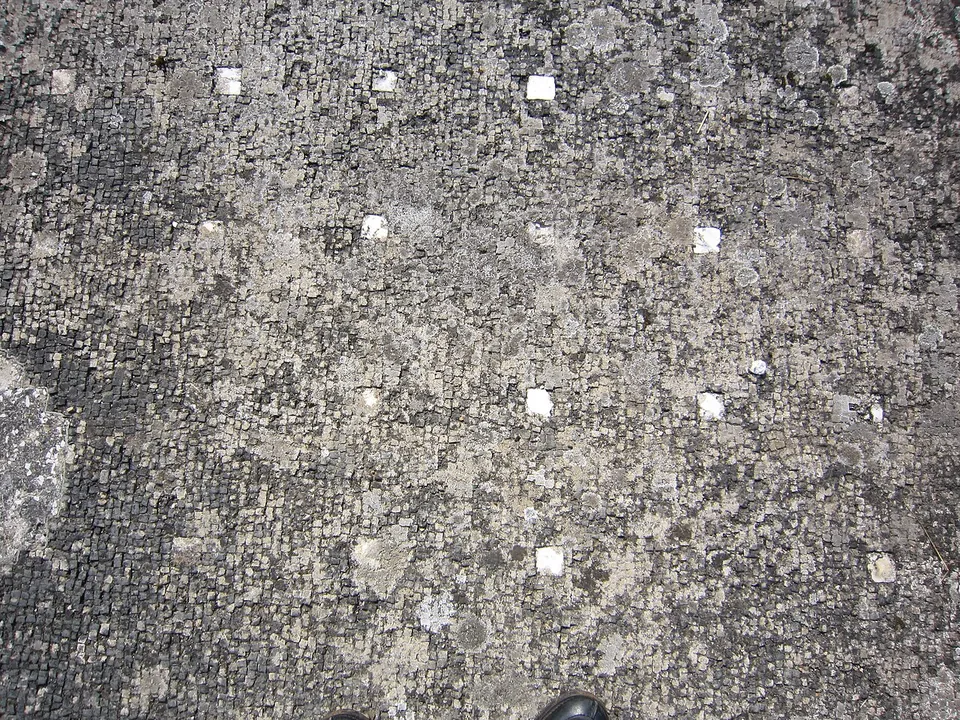
East of the theatre lie the public baths, whose black-and-white mosaic floors are well preserved. The excavated plan includes a swimming pool, two mosaic-floored halls read as changing rooms, and the usual cold, warm and hot rooms (Archeotuscia).
The street and the rest of the town
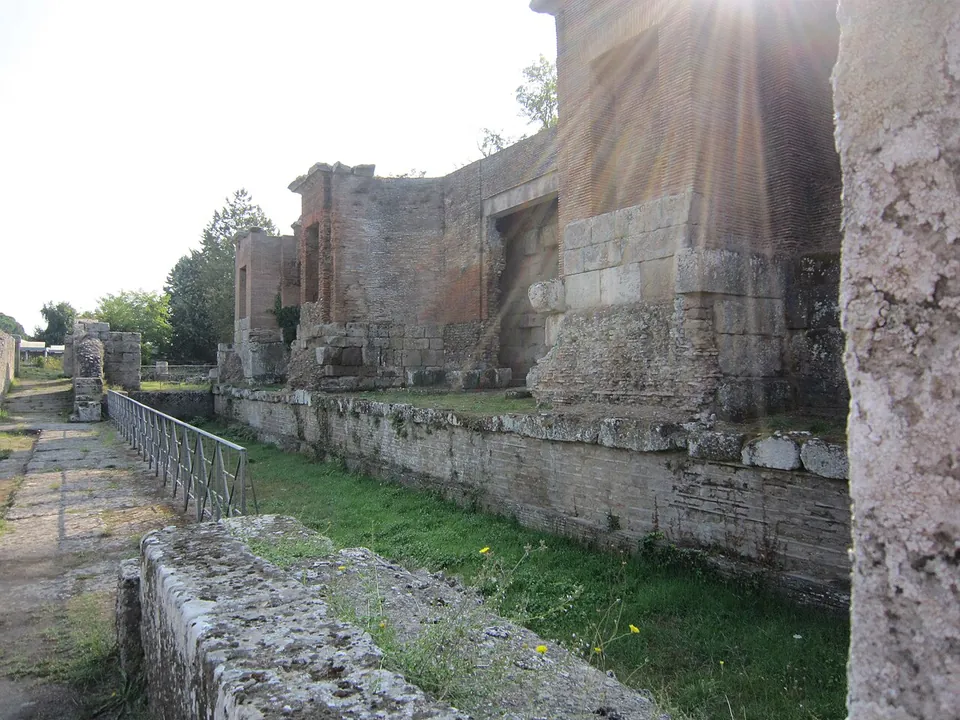
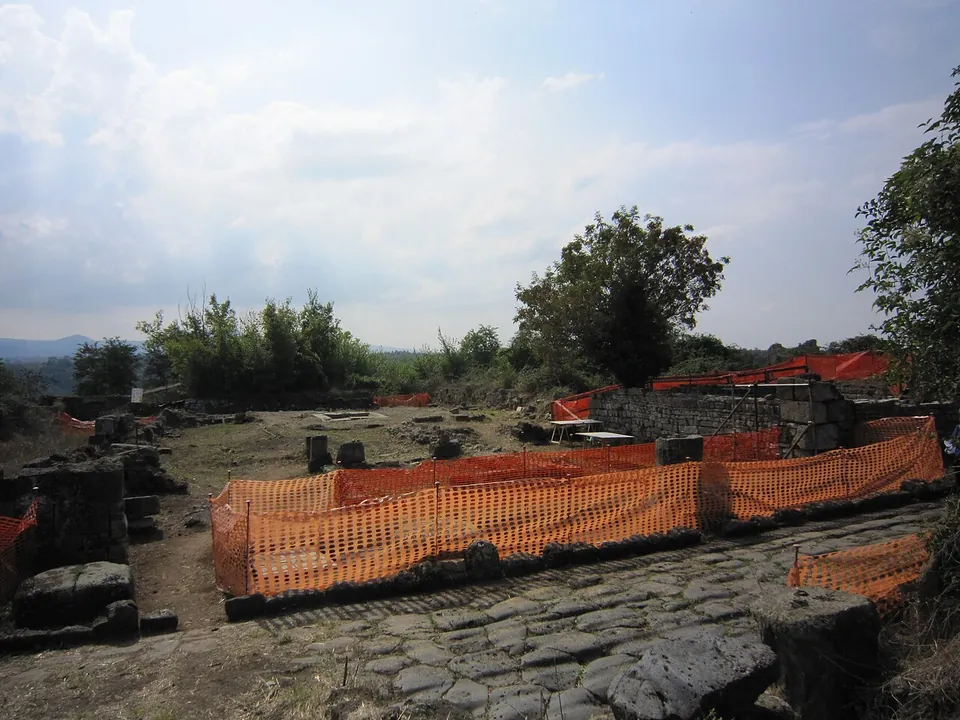
The main street, paved with polygonal blocks of lava, runs east-west through the site; it was the town stretch of the via Ferentiensis, which linked the via Cassia with the Tiber valley (Archeotuscia; it.wikipedia). West of the theatre a house with a central courtyard has been excavated (Archeotuscia). The amphitheatre, towards the east end of the ridge, has never been excavated and is only partly visible (Archeotuscia).
The best of the finds are not here but in Viterbo, in the national museum in the Rocca Albornoz: marble statues of the Muses that stood in the niches of the stage front, a copy of the Pothos of Scopas, and a small wooden model of the theatre (fr.wikipedia; it.wikipedia).
Is it worth the trip?
If you are in Viterbo, yes. The theatre with its arcade is a genuinely handsome ruin in a quiet rural setting, and with the baths and the paved street it makes a compact visit close to town. Pair it with the Rocca Albornoz museum, where the theatre’s statues are.
It is not worth a long detour on its own: the town itself is mostly unexcavated, and part of the theatre you see is modern restoration. The practical catch is the opening times, which are limited and change with the season, so phone before you go.
Getting there
From Viterbo take the provincial road Teverina towards Bagnoregio; at the junction at km 7 turn right where a blue sign points to Ferento, and the site is about 1 km on, with a large car park near it. Cotral buses from Viterbo towards Bagnoregio, and the Francigena bus towards Grotte Santo Stefano, stop at that junction, which leaves a walk of about 1 km (Archeotuscia).
The site is closed on Mondays. The Ministry of Culture lists it as open Tuesday to Friday from 14.30 and at weekends from 10.30, until 19.00; Archeotuscia, the volunteer association that takes bookings for the site, gives shorter, seasonal times, with weekday visits in the afternoon only and closing at 16.30 in autumn and winter. From about 5 July to 20 August visits are by booking only, because of the summer theatre season. Neither publishes an admission price. The number both give is +39 328 775 0233 (cultura.gov.it and Archeotuscia’s Ferento page, read 24 October 2026).
Visiting details
- Opening hours
- Closed on Mondays. The Ministry of Culture gives Tuesday to Friday 14.30–19.00 and Saturday and Sunday 10.30–19.00; Archeotuscia, the volunteer association the Ministry names for bookings, gives shorter seasonal times - in spring and summer Tuesday to Friday from 15.00 or 15.30 to 18.00 or 18.30, at weekends also 10.30–12.30, and in autumn and winter afternoons 14.30–16.30. From about 5 July to 20 August the site opens only by booking, because the theatre hosts its summer season. Phone ahead on +39 328 775 0233, the number both give.
- Tickets
- Neither the Ministry of Culture nor Archeotuscia publishes an admission price; ask when you phone ahead.
- Parking
- A large car park near the site (Archeotuscia).
Before you go
- Opening times vary with the season and the summer theatre programme; phone before you go.
- The nearest bus stop is at the junction on the Teverina road, about 1 km from the site.
Hours and prices checked 24 October 2026 on the operator's own site. Confirm before travelling.
History
Ferentium had an Etruscan predecessor at nearby Acquarossa (en.wikipedia); according to the Ministry of Culture, the Etruscan town on the Pianicara hill arose in the 4th century BC, after Acquarossa had been destroyed at the end of the 6th. The town is first mentioned around 123 BC, in the Liber coloniarum, and became a Roman municipium after the Social War (Pleiades; it.wikipedia). It belonged to the Stellatina tribe and to the seventh region of Italy (en.wikipedia).
The great public buildings came in the early Empire: the theatre, the forum, the baths, the amphitheatre and a shrine of Augustus (it.wikipedia), though published dates for some of them differ, the Ministry putting the baths in the second century AD and Archeotuscia the amphitheatre in the late Republic. An inscription found in the baths area records building work in the forum, among it a temple of Augustus, and elsewhere in the town, paid for by a wealthy citizen, Sextus Hortensius, and a Sextus Hortensius Clarus (Archeotuscia). The dates given for the theatre differ: the early Augustan decades, or the first two decades of the first century AD, with its stage rebuilt and redecorated in the second century (fr.wikipedia; Archeotuscia). The emperor Otho was born here (Pleiades; the Ministry), and the family of Flavia Domitilla, the wife of Vespasian, came from the town (en.wikipedia).
Ferentium became a bishop’s see, and named bishops are recorded from 487 to 649 (it.wikipedia). In the fifth century the theatre was taken into the town’s defences (fr.wikipedia). In the wars of the sixth and seventh centuries the population fell and withdrew west of the old town, and in the seventh century the see moved to Bomarzo (it.wikipedia). The town revived as a medieval commune, with a watchtower built inside the theatre, until Viterbo sacked it in 1170 and destroyed it on the night of 1 January 1172 (it.wikipedia).
Gustaf VI Adolf of Sweden, the “archaeologist king”, worked on the site for several years, and the most recent excavations, between 1994 and 2009, were led by the Tuscia University of Viterbo (en.wikipedia).
More photographs
Nearby
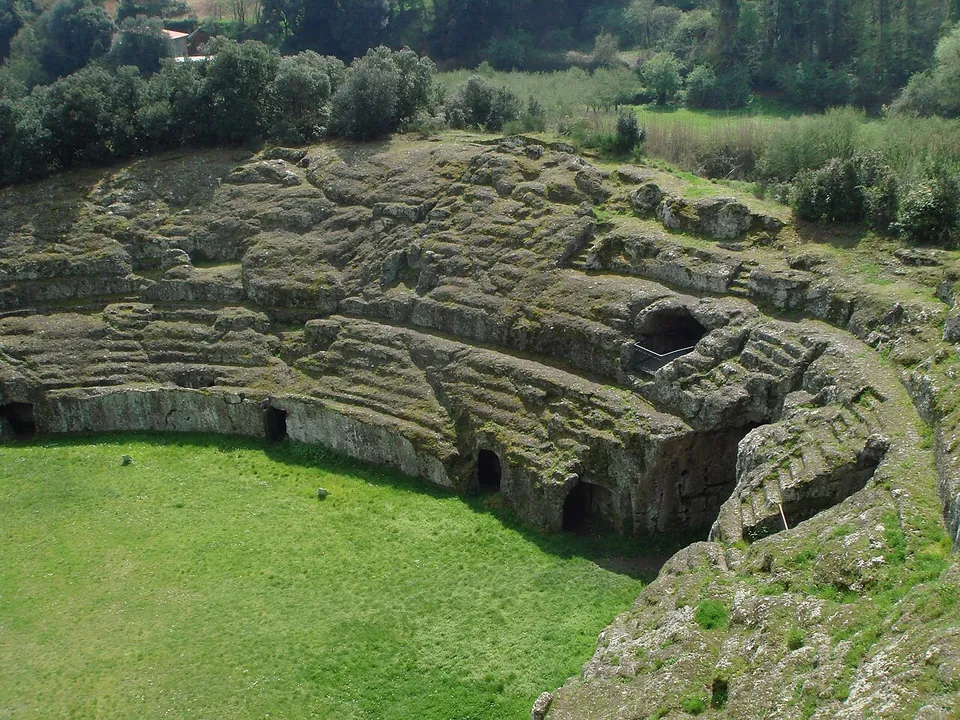
Photo: G.Hagedorn · CC BY-SA 3.0 · Commons
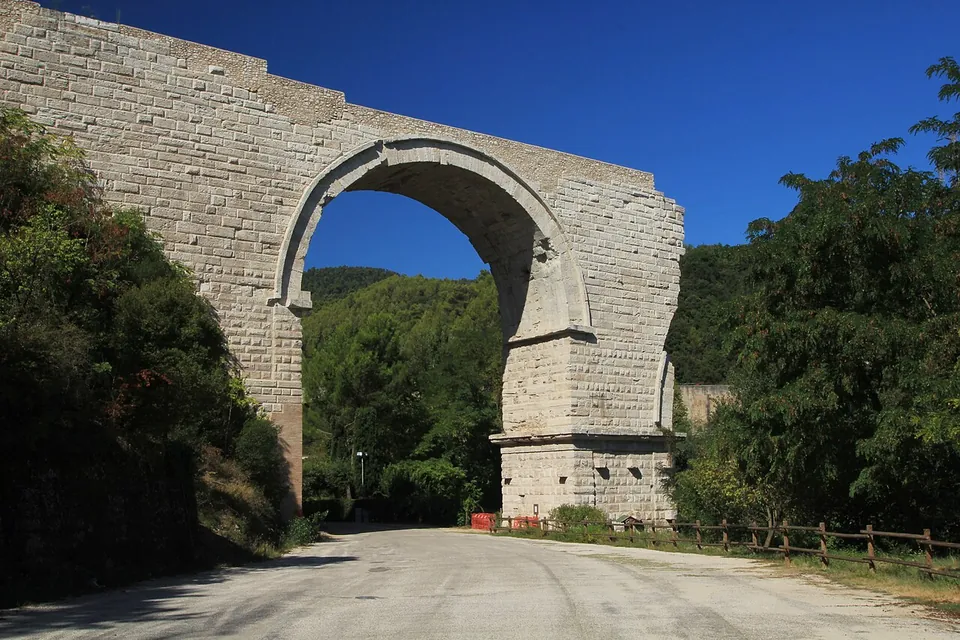
Photo: ImagoAnimae · CC BY-SA 3.0 · Commons
39 km · city · Umbria
Carsulae
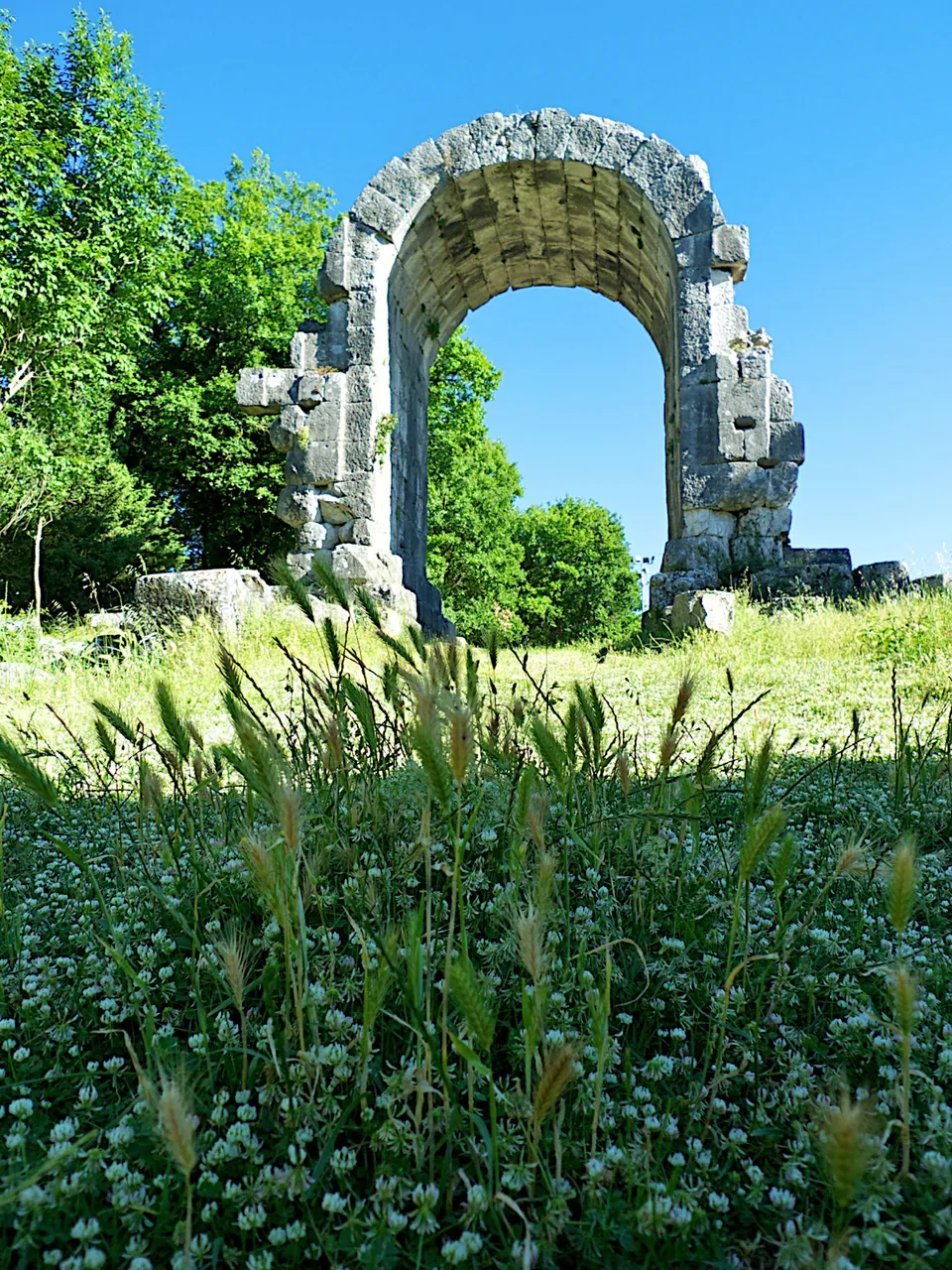
The ticketed area is a fenced expanse of meadow and trees of 22 hectares (it.wikipedia).


Straight-line distances.
Sources
Every fact on this page comes from the records below, each used under the licence noted.
| Source | Licence |
|---|---|
| Pleiades 413132 | CC BY |
| Wikidata Q597347 | CC0 |
| Vici.org 11037 | CC BY-SA (text), CC0 (metadata) |
| OpenStreetMap way/248609705 | ODbL |
| Ministero della cultura — Area archeologica antica città di Ferento (the operator) | licence not recorded |
| Archeotuscia — La città di Ferento (the association that takes bookings for the site) | licence not recorded |
| Pleiades — Roman theatre of Ferentium | licence not recorded |
| Pleiades — Roman baths of Ferentium | licence not recorded |
| Wikidata — Roman theatre of Ferentium (Q55992185) | licence not recorded |
| Wikipedia (it) — Ferento | CC BY-SA 4.0 |
| Wikipedia (en) — Ferentium | CC BY-SA 4.0 |
| Wikipedia (de) — Ferentium | CC BY-SA 4.0 |
| Wikipedia (en) — Ferento Roman Theater | CC BY-SA 4.0 |
| Wikipedia (fr) — Théâtre romain de Ferento | CC BY-SA 4.0 |