

What is there today
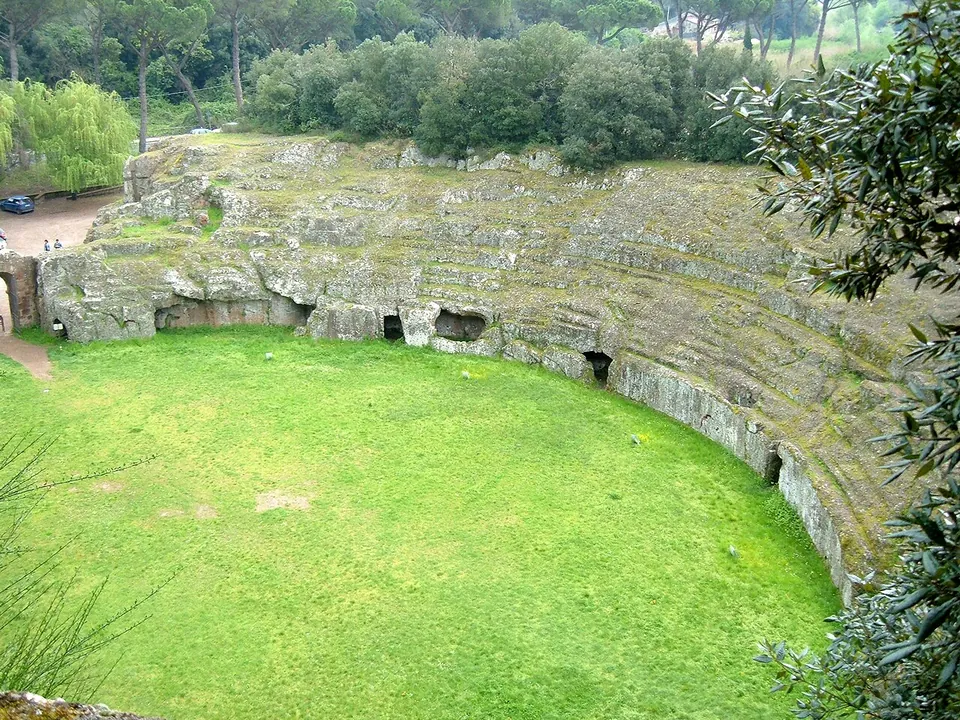
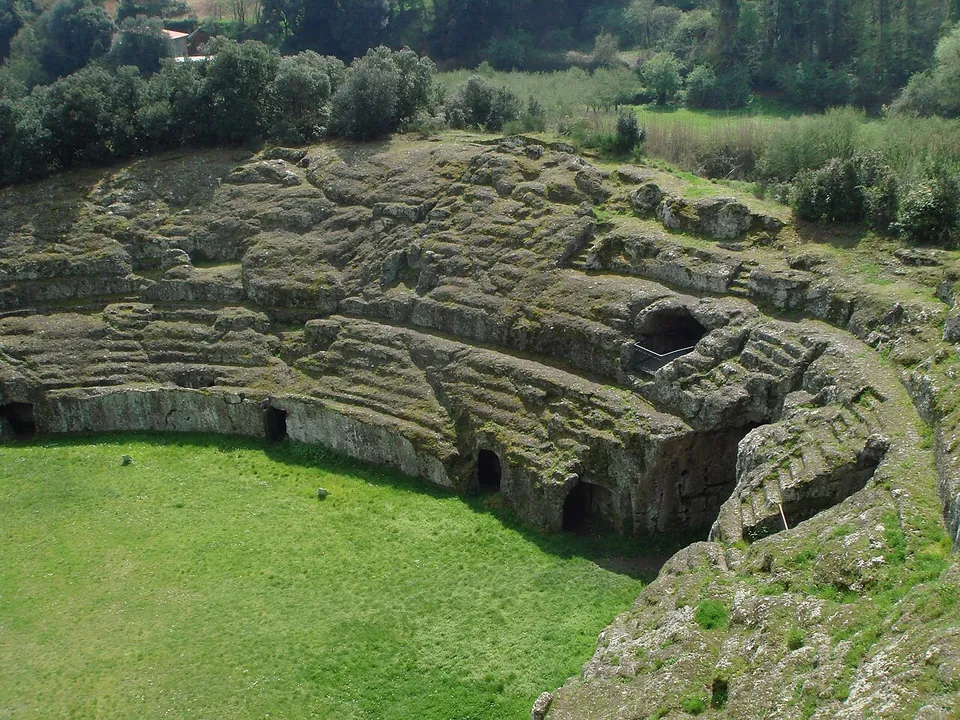
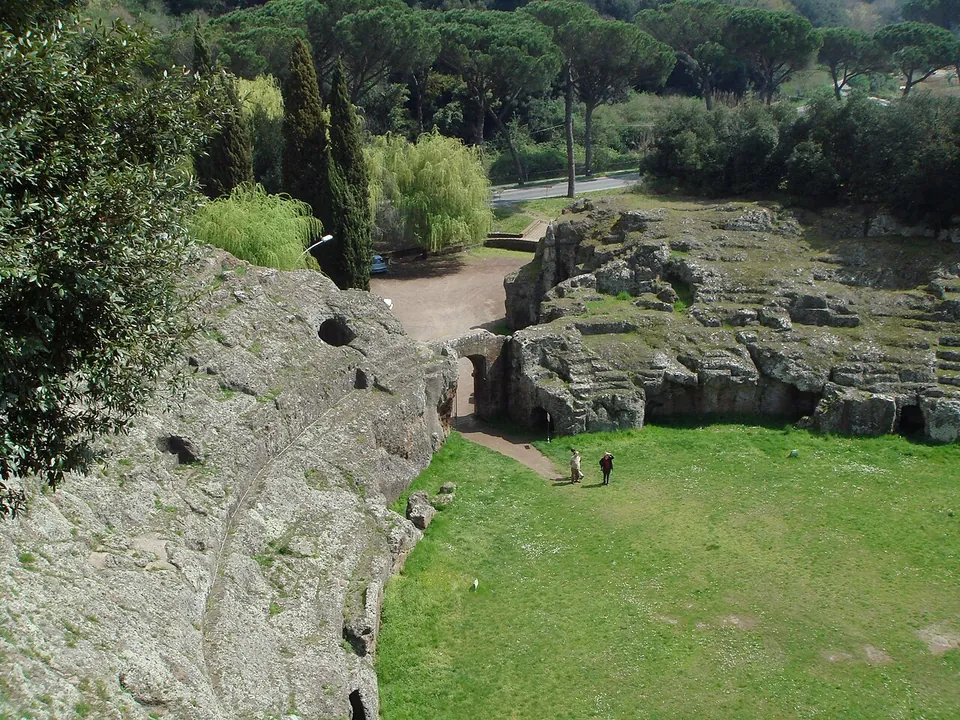
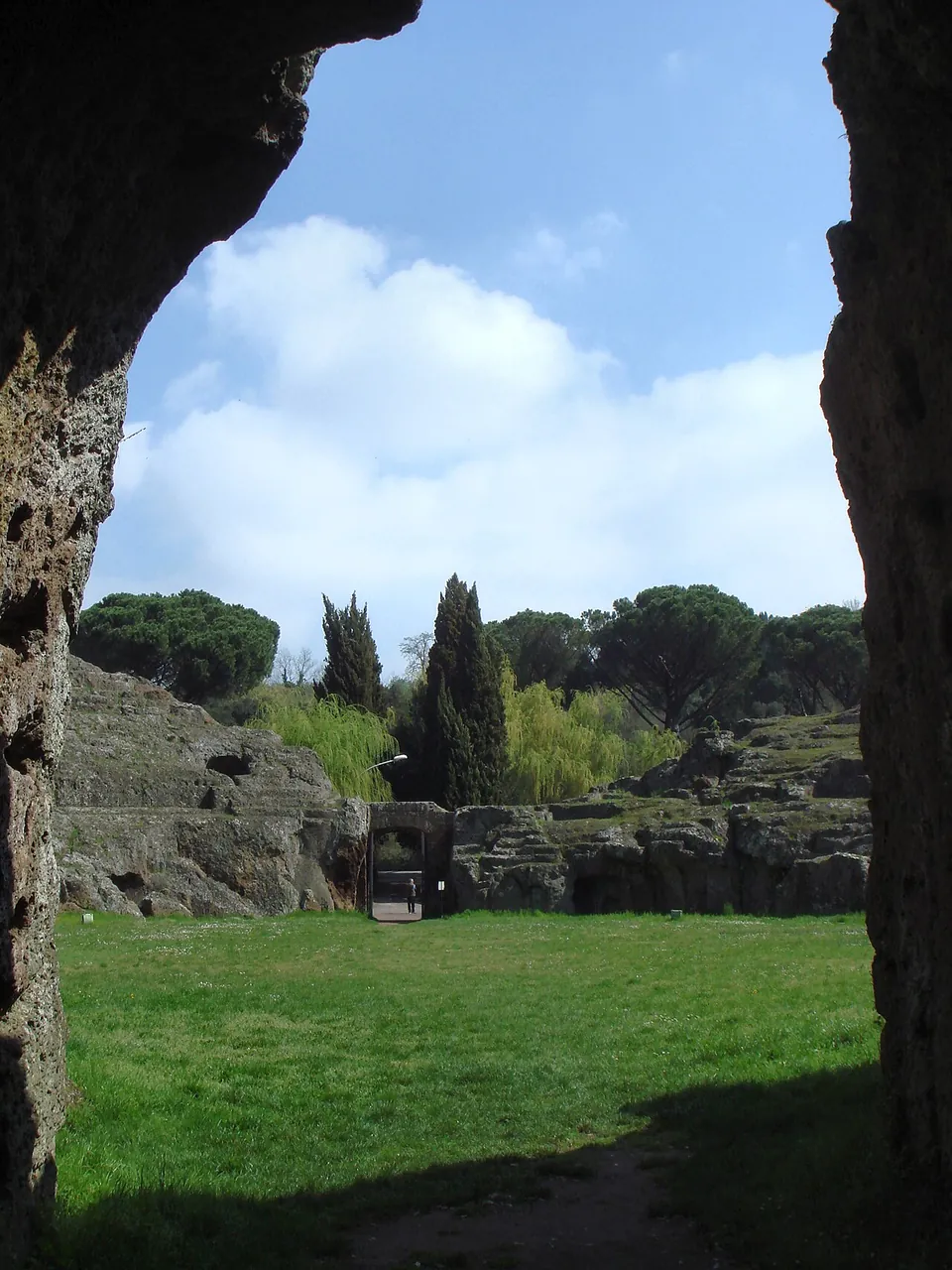
Everything you see is the rock itself. The arena measures 49.6 by 40.8 m, a modest size, and its outline follows the shape of the tuff bank it was cut from. A podium wall separates the arena from the seating, and ten doors along it open into a covered passage cut into the podium, which runs to the two entrances. Above rise three bands of seating divided by walkways; the lowest has a rectangular niche identified as a box of honour, and in the much-worn middle band eight box-like recesses with seats at the back are still clear, each a semicircular niche. Of the two entrances at the ends of the long axis, the one towards the Via Cassia is badly ruined by the collapse of its gallery and seating; on the north side the top of the rock still carries faint traces of Tuscan-order half-columns carved in relief (the Ministry of Culture). Published capacity is more than 9,000 spectators (it.wikipedia).
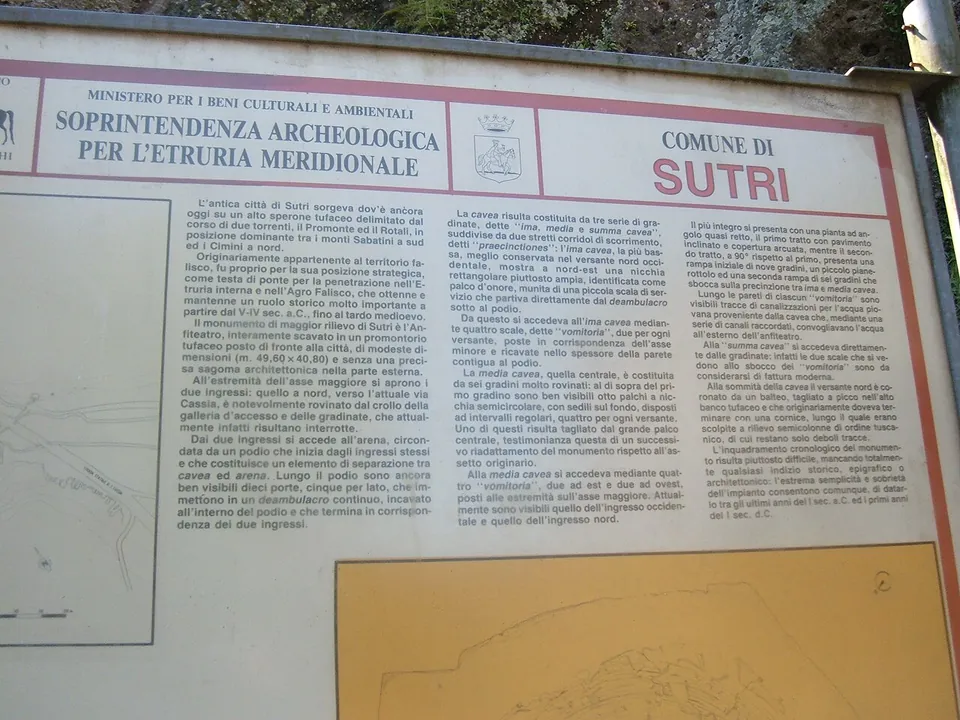
The amphitheatre lies inside the Parco dell’antichissima città di Sutri, at 7 ha the smallest regional park in Lazio (it.wikipedia), and the same ticket can take in two more things within a few hundred metres: an Etruscan necropolis of rock-cut tombs, and the rock-cut church of the Madonna del Parto, thought to have begun as a Mithraeum (en.wikipedia; it.wikipedia; the Ministry of Culture). The photographs from above on this page were taken from the hill of Villa Savorelli beside the amphitheatre, and OpenStreetMap maps two viewpoints within 50 m of it.
Is it worth the trip?
Yes, if you are in northern Lazio or can spare half a day from Rome with a car. A Roman amphitheatre hollowed out of the rock is a different thing from the usual masonry ruin, and here the complete oval is still there, seats and passages included, even where they are much worn. Set expectations on scale: this is a small arena, and its surfaces are weathered rock rather than crisp stonework. The guided visit of the amphitheatre, the front of the necropolis and the Mithraeum takes about 40 minutes (the Ministry of Culture); add the old town on its ridge next door and the morning is well spent.
Getting there
The amphitheatre is on the Via Cassia, facing the town, with a car park about 50 m away (OpenStreetMap). Sutri is reached by the Via Cassia from Rome or Viterbo. There is no practical public transport: the Capranica-Sutri station on the Rome–Viterbo line is about 6 km away, and only occasional school-time buses link it to the town (it.wikipedia).
It is open Tuesday to Sunday, 10.00 to 19.00, with last entry half an hour before closing, and closed on Mondays. The Ministry’s latest notice gives shorter hours from 3 November to 31 March: 16.00 on weekdays (last entry 15.30) and 17.00 at weekends and on holidays (last entry 16.30). A ticket for the amphitheatre alone is €5 with an audio guide, €3 reduced. The full ticket, €10, adds a guided visit to the Etruscan necropolis and the Mithraeum; the Mithraeum takes small groups in timed slots, and only a ticket booked online guarantees a place. Under-12s go free (the Ministry of Culture, read 23 October 2026; check before travelling, since prices and hours move).
Visiting details
- Opening hours
- Tuesday to Sunday 10.00–19.00, last entry half an hour before closing; closed on Mondays. From 3 November to 31 March, Tuesday to Friday 10.00–16.00 (last entry 15.30) and weekends and holidays 10.00–17.00 (last entry 16.30).
- Tickets
- Amphitheatre only €5, audio guide included; €3 reduced and for Via Francigena pilgrims. The full ticket, a guided visit of the amphitheatre, the Etruscan necropolis and the Mithraeum, is €10; €8 for ages 13 to 18, groups of more than 20 and companions of disabled visitors; €6 for pilgrims. A €17 Sutri Pass adds the Museo di Palazzo Doebbing. Free under 12. Only a ticket bought online guarantees a place in the Mithraeum, which is visited in timed groups.
- Parking
- A surface car park is mapped about 50 m from the amphitheatre, beside the Via Cassia (OSM way/215621387), with more parking within 250 m.
Before you go
- No bus stop is mapped near the site. The nearest railway station, Capranica-Sutri, is about 6 km away and linked to Sutri only by occasional school-time buses, so in practice this is a visit by car.
Hours and prices checked 23 October 2026 on the operator's own site. Confirm before travelling.
History
Sutri, ancient Sutrium, held the road into Etruria that became the Via Cassia; it passed to Rome after the fall of Veii, became a Latin colony, and later received a colony of veterans under the triumvirs (en.wikipedia). Nothing historical, epigraphic or architectural dates the amphitheatre itself. The extreme plainness of the design suggests the last decades of the 1st century BC or the first years of the 1st century AD, according to the Ministry of Culture, and Pleiades likewise puts it, probably, in the reign of Augustus; other published datings reach back as far as the late 2nd century BC (it.wikipedia). It was rediscovered only in the first half of the 19th century and dug out between 1835 and 1838 by the people of Sutri (it.wikipedia).
More photographs


Nearby
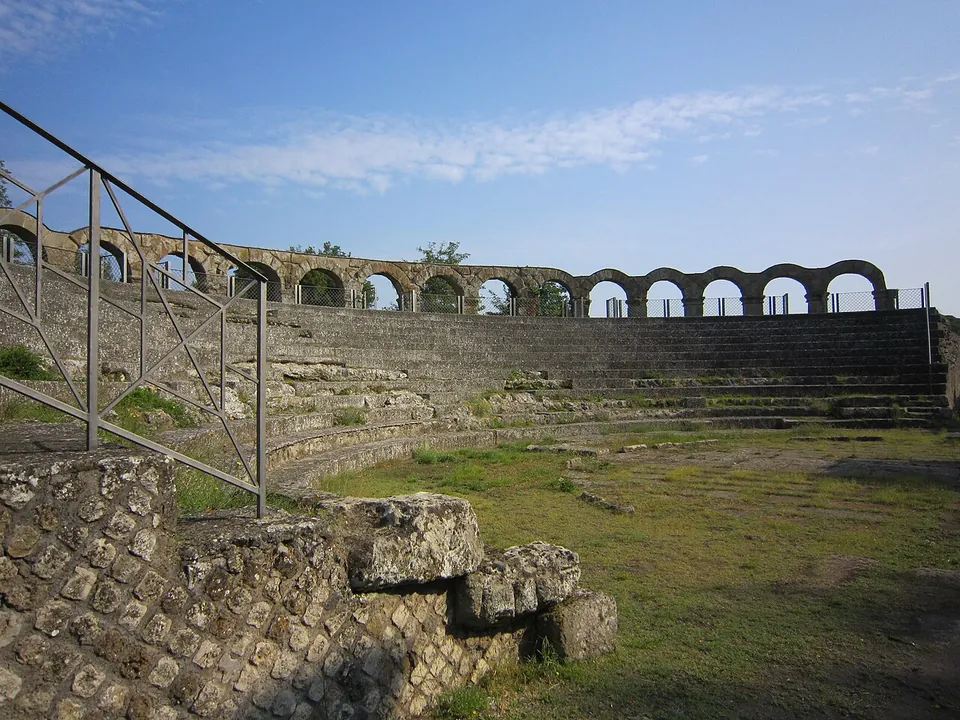
Photo: Carlomorino · CC BY-SA 3.0 · Commons
29 km · city · Lazio
Ferentium
Only a small part of the town has been excavated and can be visited; other areas were investigated and covered over again, the forum among them, which lies under a farm (it.wikipedia).
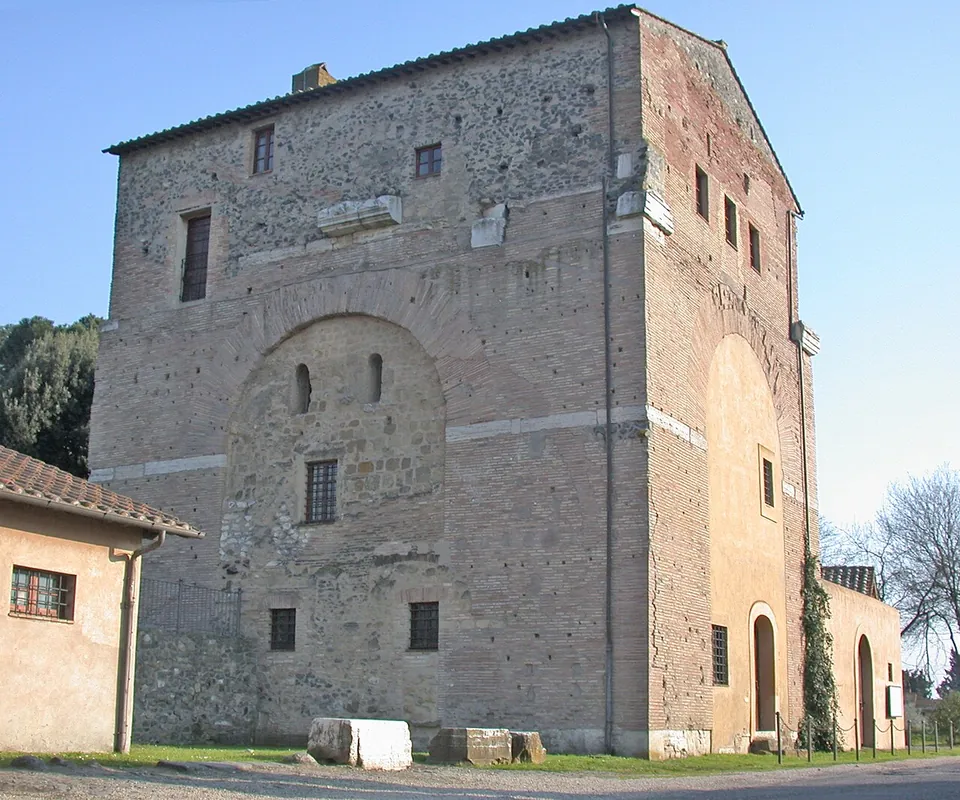
Photo: MM · Public domain · Commons
30 km · arch · Lazio
Arch of Malborghetto
At first sight you see an austere farmhouse rather than an arch (it.wikipedia).
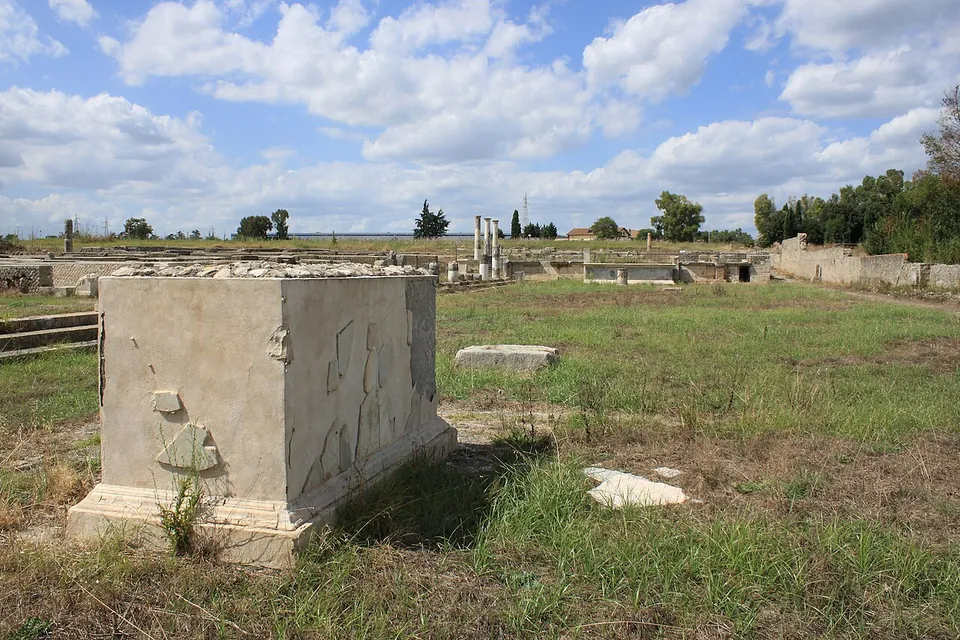
Photo: Rossignol Benoît · CC BY-SA 4.0 · Commons
33 km · city · Lazio
Lucus Feroniae
The forum is the centre of the visit: a long rectangular square with a colonnaded portico down its western side, where the shops opened, some of them paved with mosaics and some marked at the door with a sign of the trade inside (en.wikipedia; it.wikipedia).


Straight-line distances.
Sources
Every fact on this page comes from the records below, each used under the licence noted.
| Source | Licence |
|---|---|
| Pleiades 820932073 | CC BY |
| Wikidata Q3616687 | CC0 |
| Vici.org 4264 | CC BY-SA (text), CC0 (metadata) |
| OpenStreetMap way/421806342 | ODbL |
| Ministero della Cultura — Anfiteatro romano di Sutri (hours and description) | licence not recorded |
| Ministero della Cultura — Apertura festiva a Sutri (tariff, winter hours, booking) | licence not recorded |
| Soprintendenza ABAP per l'area metropolitana di Roma — Anfiteatro (archived copy of 2026-05-19) | licence not recorded |
| Pleiades — Sutrium | licence not recorded |
| Wikipedia (it) — Anfiteatro romano di Sutri | CC BY-SA 4.0 |
| Wikipedia (it) — Parco dell'antichissima città di Sutri | CC BY-SA 4.0 |
| Wikipedia (en) — Sutri | CC BY-SA 4.0 |
| Wikipedia (it) — Sutri | CC BY-SA 4.0 |