What is there today
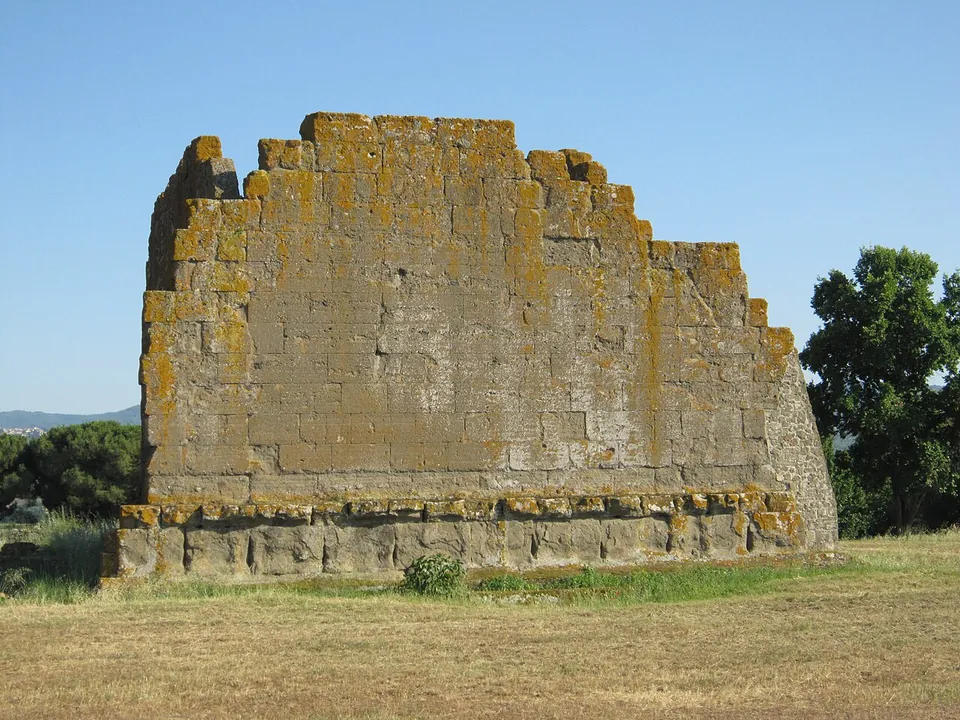
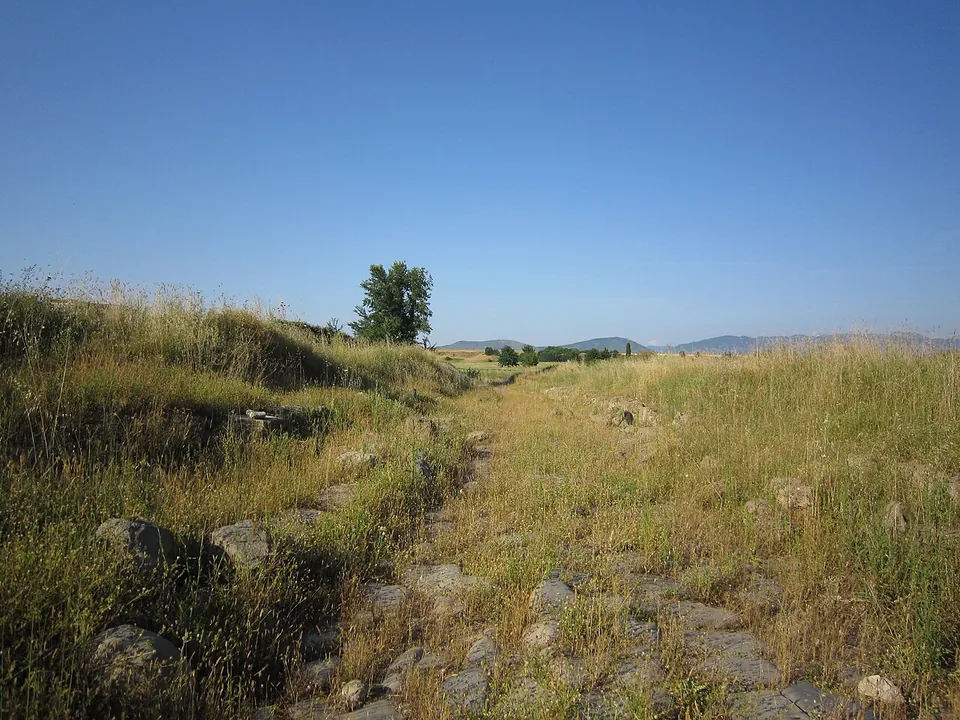
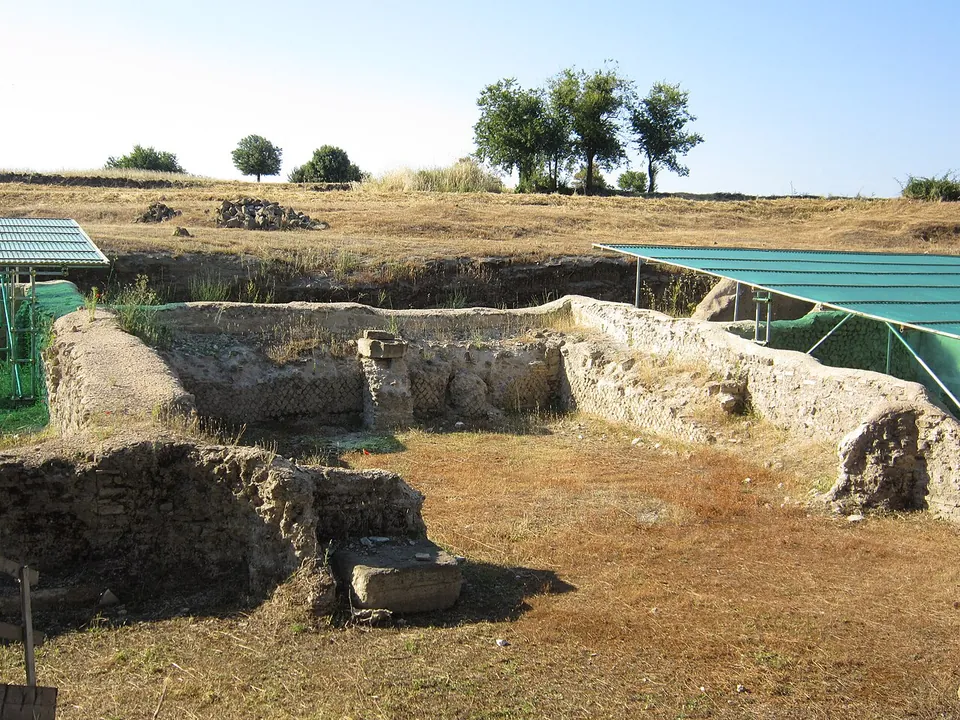
The park the state holds covers about 70 hectares on the southern rim of a volcanic crater whose lake was drained in the 19th century (the operator; en.wikipedia). The route through it runs past the sanctuary of Juno with its theatre, the forum Gavin Hamilton dug at the end of the 18th century, a town quarter with Republican and Imperial buildings, the baths with black-and-white mosaics, and an archaic building on the highest point laid out in three parts like the Regia in the Roman Forum (the operator). The temple is the most conspicuous of all this: its single room, built of the local lapis Gabinus stone, keeps its walls almost complete on a high podium (en.wikipedia, de.wikipedia). Stretches of the ancient Via Prenestina, which was the town’s main street, can be seen (it.wikipedia). Little of the forum may show: it.wikipedia describes it as buried again and known mainly from Hamilton’s account. Inside the city walls on the east side, excavation has also uncovered the so-called Eastern Sanctuary, in use from the 7th to the 2nd century BC (it.wikipedia). The medieval tower of Castiglione on the old citadel and the remains of the church of San Primitivo belong to the town’s later life (the operator).
Is it worth the trip?
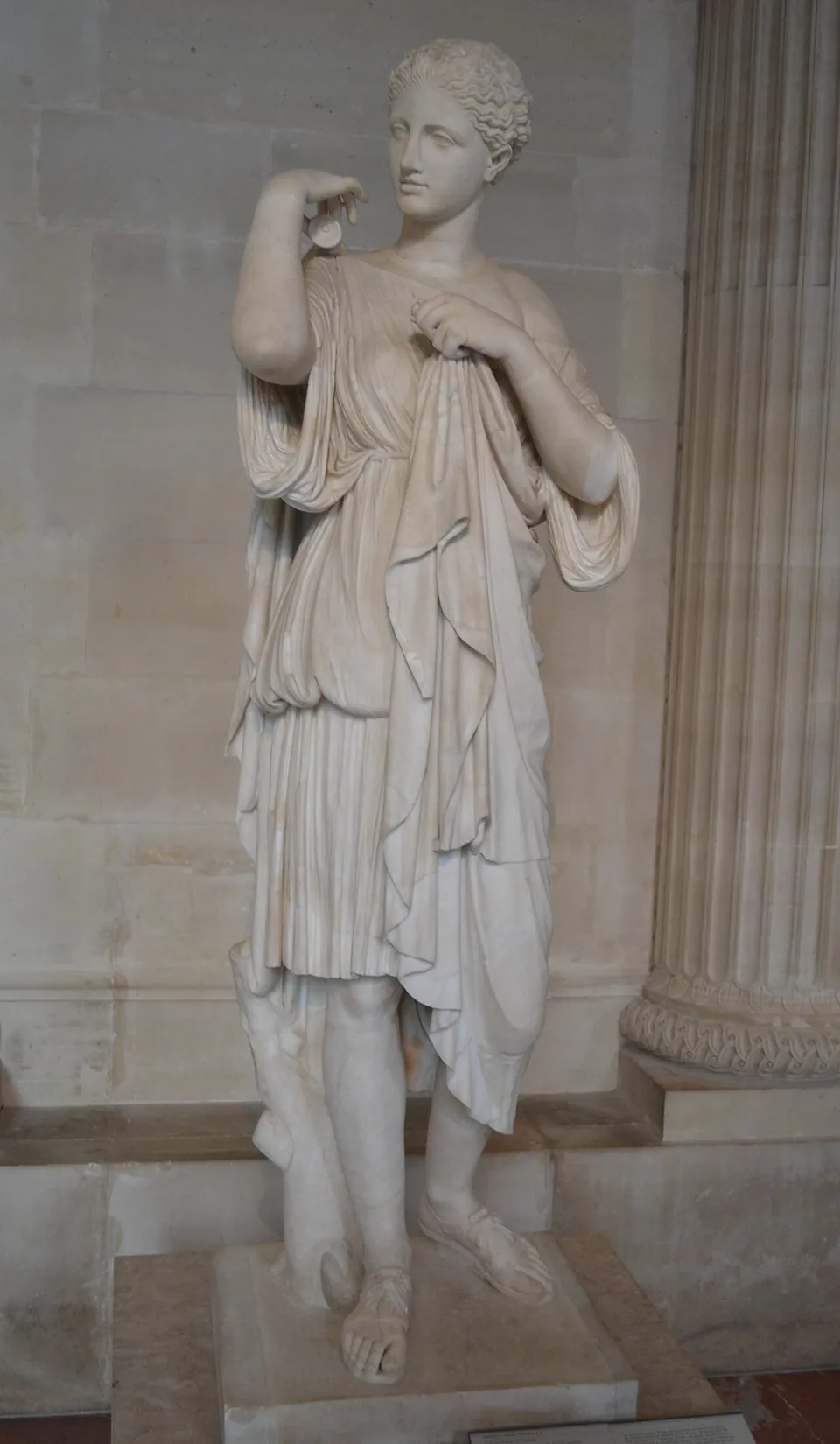
Only if you plan around the gate. The park is normally closed, and in 2026 it opens on set weekend mornings and to booked groups (the operator). On an open day it is free, and it is a rare thing so close to Rome: a whole ancient city in fields, with no modern town on top of it, and a temple whose walls still stand. Beyond the temple, much of what you see is low walls and paving at ground level, so it rewards people who enjoy walking an excavated plan more than people who want standing buildings. Many of the statues found in the forum are in the Louvre, not here.
Getting there
The entrance is on the Via Prenestina Nuova at km 19.3, near Osteria dell’Osa, within the city of Rome (the operator; en.wikipedia). No car park or bus stop is mapped at the site (OpenStreetMap); it.wikipedia mentions bus 052 from Finocchio station on Metro line C.
In 2026 the park is open free and without booking on Saturdays and Sundays from 19 September to 15 November, and on Sunday 6 December, from 09.30 to 13.00 with last entry at 12.00. Organised and school groups of up to 30 can visit at other times on booking, by e-mail at least three days ahead (the operator takes these bookings from licensed tour guides), and individuals can book a guided tour through GetYourGuide, the operator’s partner. The visit is all outdoors: in light rain it goes ahead, but heavier rain can cancel it on the day (Musei e Parchi archeologici di Praeneste e Gabii, read 22 October 2026; dates change, so check the operator’s page before going).
Visiting details
- Opening hours
- Normally closed. In 2026 open on announced weekend days only - Saturdays and Sundays from 19 September to 15 November and Sunday 6 December, 09.30-13.00 (last entry 12.00). Organised and school groups of up to 30 can visit at other times on booking by e-mail at least 3 days ahead, through licensed tour guides.
- Tickets
- Free on the open days, with no booking needed. Guided tours for individuals are booked through GetYourGuide, the operator's partner; their price was not read.
Before you go
- The park is normally closed; outside the announced open days only booked groups get in. Check the operator's calendar before going.
- The whole visit is outdoors; heavy rain can cancel it on the day.
- No car park or bus stop is mapped at the site.
Hours and prices checked 22 October 2026 on the operator's own site. Confirm before travelling.
History
Gabii grew from a string of Iron Age hamlets into a city during the 8th and 7th centuries BC (en.wikipedia); its cemetery at Osteria dell’Osa, with 600 to 700 burials, was in use from the 9th to the 6th century BC (it.wikipedia). Roman legend placed the education of Romulus and Remus here (Plutarch, via en.wikipedia), and told how Sextus, son of the last king Tarquinius Superbus, won the trust of Gabii as a supposed exile and then destroyed its leading men, so that the city submitted without a battle. The treaty that followed was said to be written on the hide of an ox and kept in the temple of Sancus in Rome, where Dionysius of Halicarnassus said it could still be seen in his day (en.wikipedia, it.wikipedia).
Gabii was an ally of Rome after 493 BC. Geophysical survey by the Gabii Project from 2007 found a near-regular grid of streets around the main road, unusual among Latin towns of the period and a sign that the city was planned as a whole (en.wikipedia). The temple of Juno was built between 150 and 100 BC beside a sacred grove that had been worshipped since the 7th century BC (en.wikipedia), and in 2025 excavators found a large basin cut into the bedrock at a crossroads, probably a public fountain of around 250 BC (en.wikipedia).
By the late Republic the town had emptied, partly because its stone quarry, which supplied lapis Gabinus to Rome, ate into the old city, and Cicero called it a small and insignificant place (en.wikipedia). Inscriptions show a revival from the time of Augustus or Tiberius on: the baths were well known, and Hadrian appears to have built a senate house and an aqueduct (en.wikipedia). The baths, found from 2013, date from the Augustan age and were used until at least the 4th century AD; one mosaic shows four chariots around a central figure labelled VICTOR CVSTOR THERMARU (en.wikipedia).
Bishops of Gabii are recorded until the late 9th century, and the site was abandoned around the middle of the 11th (en.wikipedia; the operator). Gavin Hamilton excavated the forum in 1791-92 with the permission of Prince Marcantonio Borghese and found a large group of statues, among them portraits of emperors from Tiberius to Gordian III; they were shown in the Villa Borghese until the collection was sold to Napoleon in 1807, and most are now in the Louvre (en.wikipedia, it.wikipedia, de.wikipedia).
More photographs
Nearby
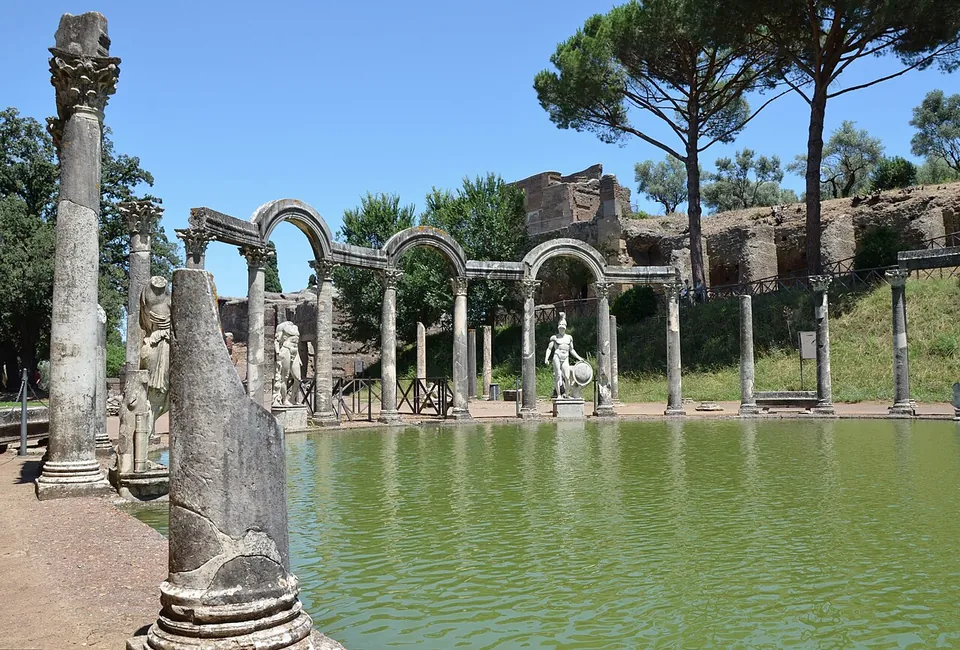
Photo: Carole Raddato from FRANKFURT, Germany · CC BY-SA 2.0 · Commons
8 km · villa · Lazio
Hadrian's Villa
A landscape of ruins among olive trees and cypresses rather than one building.
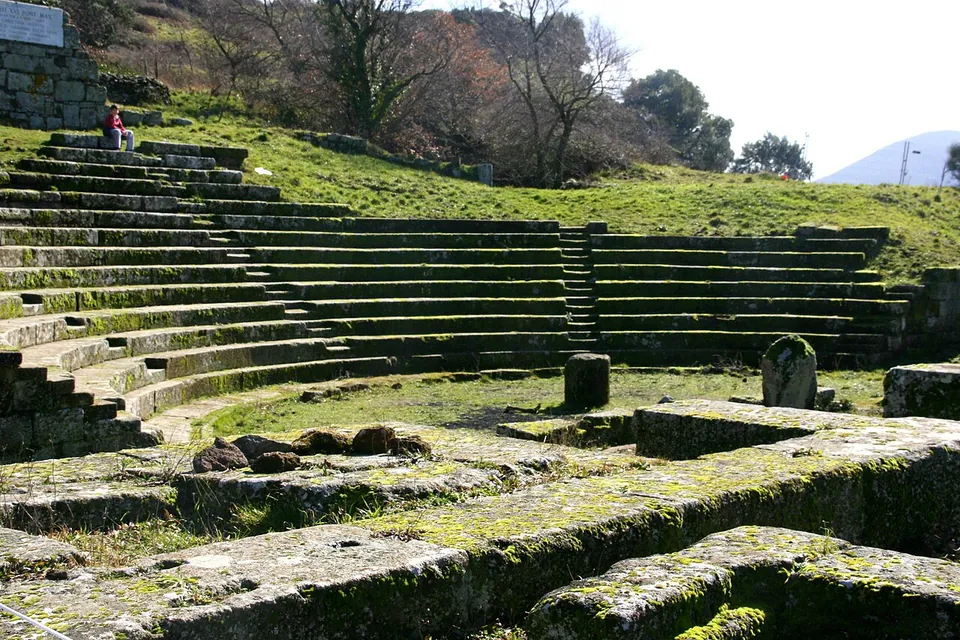
Photo: Luiza Serpa Lopes · Public domain · Commons
10 km · city · Lazio
Tusculum
The visitor route runs mainly through the forum, with the theatre halfway round (the operator).
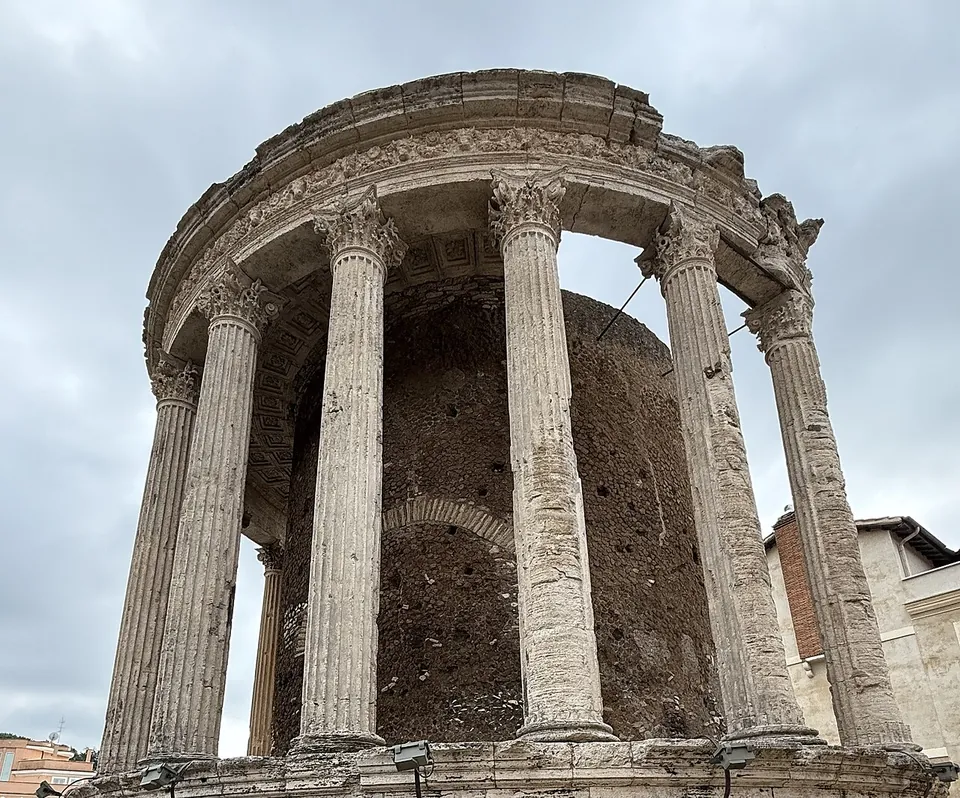
11 km · city · Lazio
Tibur – Tivoli
The postcard view is the acropolis at the east end of the old town, where two small temples stand side by side overlooking the falls and the gorge (en.wikipedia).


Straight-line distances.
Sources
Every fact on this page comes from the records below, each used under the licence noted.
| Source | Licence |
|---|---|
| Pleiades 422932 | CC BY |
| Wikidata Q614510 | CC0 |
| Vici.org 1773 | CC BY-SA (text), CC0 (metadata) |
| OpenStreetMap way/215648073 | ODbL |
| Ministero della Cultura - Parco archeologico di Gabii (opening, booking, address) | licence not recorded |
| Musei e Parchi archeologici di Praeneste e Gabii (the operator) | licence not recorded |
| Turismo Roma - Aperture straordinarie 2026 Parco archeologico di Gabii | licence not recorded |
| Wikipedia (en) - Gabii | CC BY-SA 4.0 |
| Wikipedia (it) - Gabi (città antica) | CC BY-SA 4.0 |
| Wikipedia (it) - Santuario di Giunone | CC BY-SA 4.0 |
| Wikipedia (de) - Gabii (Latium) | CC BY-SA 4.0 |