

What is there today
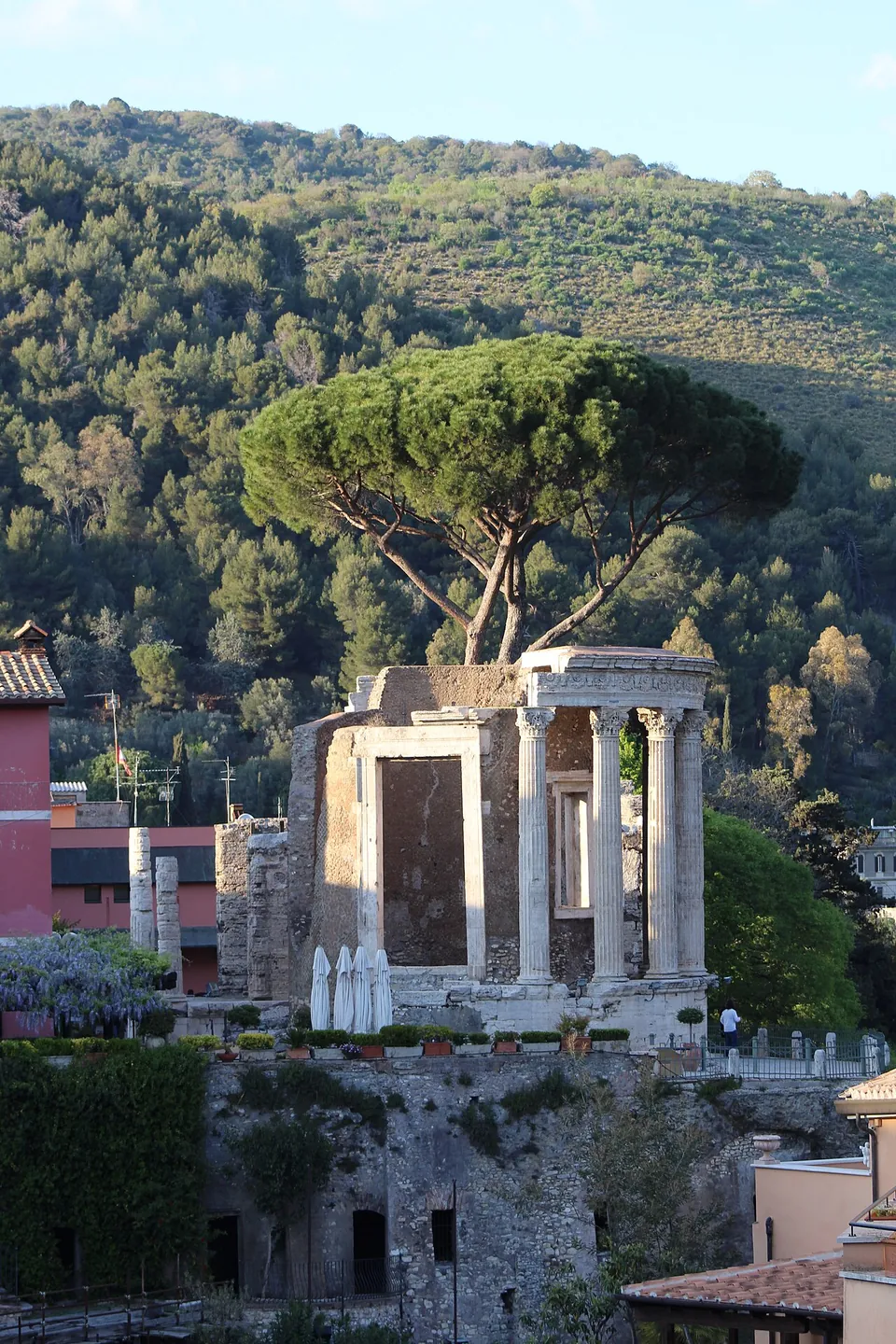
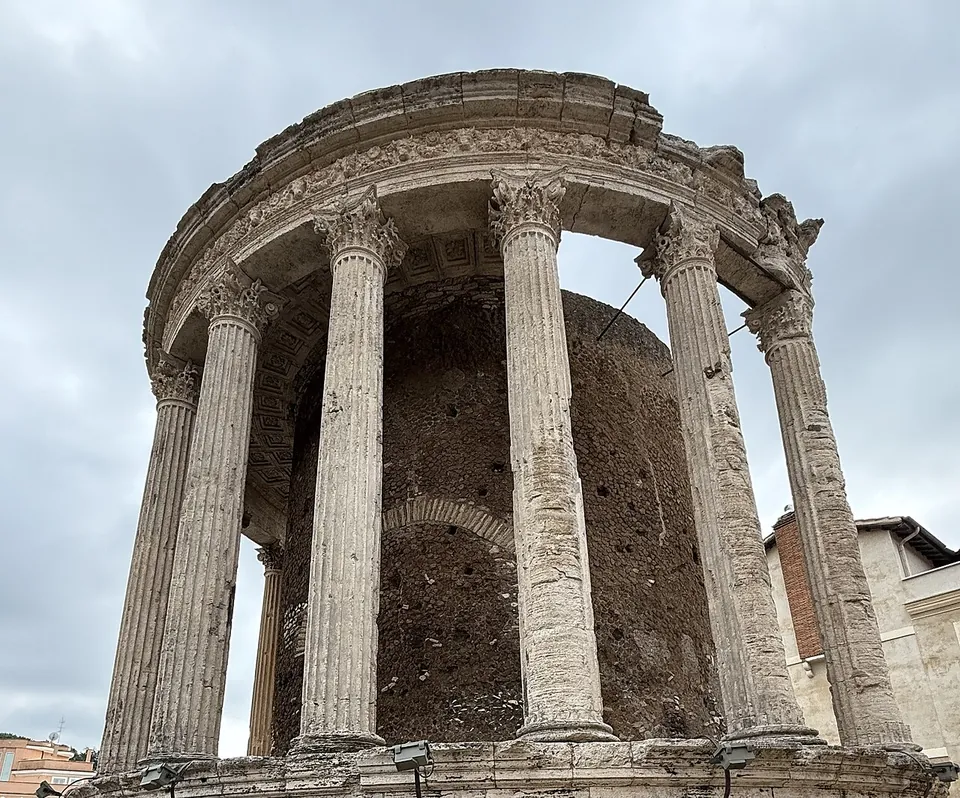
The postcard view is the acropolis at the east end of the old town, where two small temples stand side by side overlooking the falls and the gorge (en.wikipedia). The round one, traditionally called the Temple of Vesta, still has ten of its eighteen Corinthian columns, carrying a frieze of ox skulls and garlands, on a round plan 14.25 m across (it.wikipedia; de.wikipedia). Next to it the rectangular temple, the so-called Temple of the Sibyl, keeps its podium and its side and rear walls up to the height of the capitals (Pleiades). Both are reached through Villa Gregoriana, the park the FAI runs in the gorge below, whose paths also pass the remains of the villa of Manlius Vopiscus and the Grande Cascata, a waterfall of more than 100 m (the FAI).
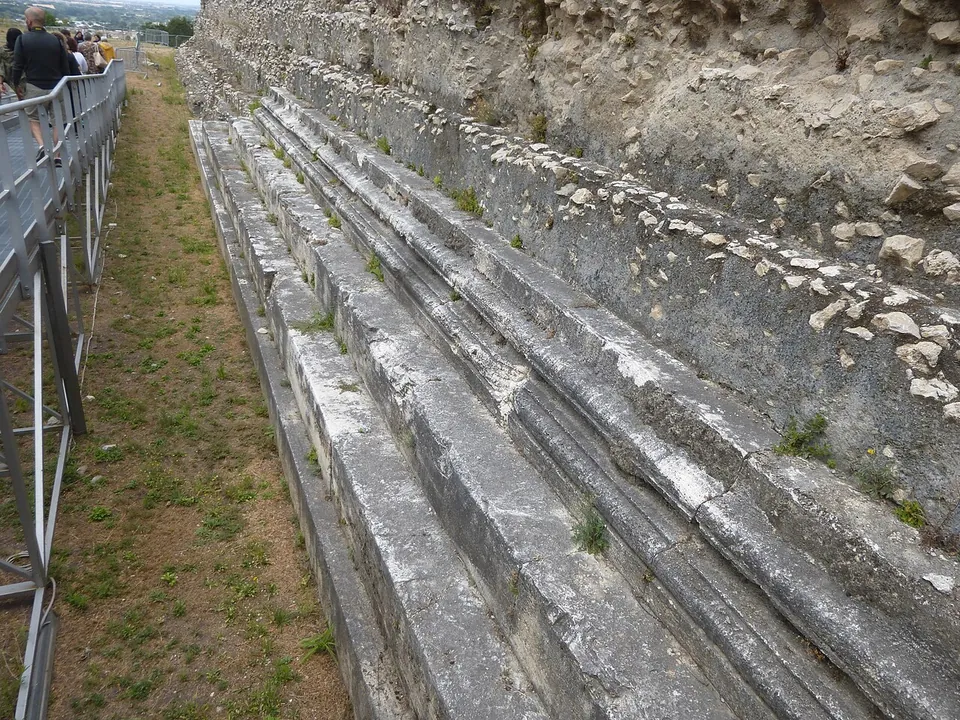
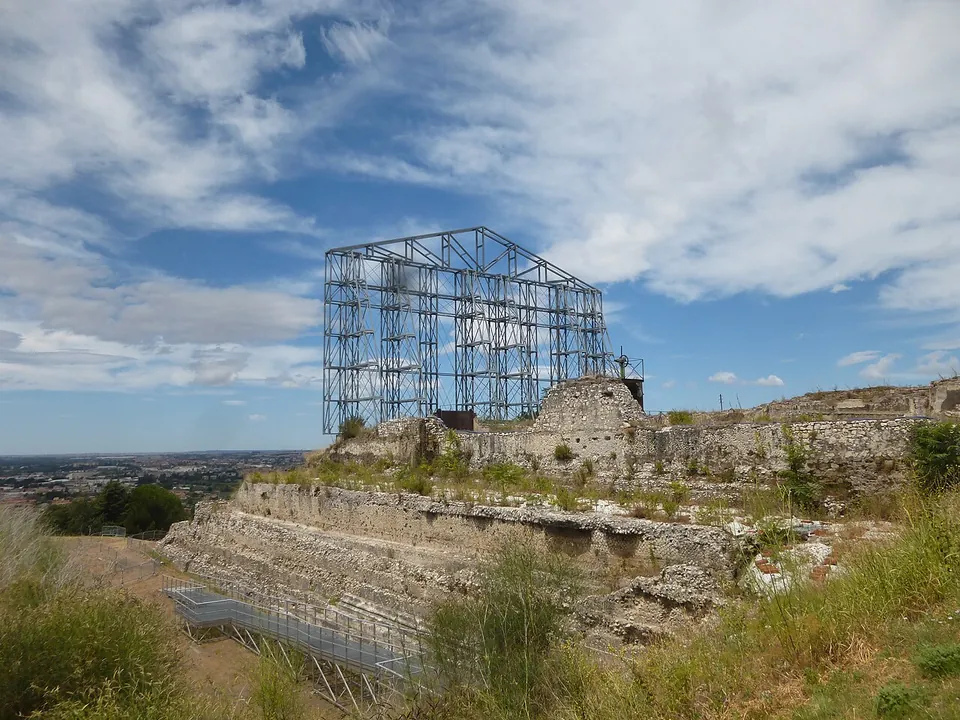
At the other end of the town, about 800 m away, the Sanctuary of Hercules Victor is on a different scale: a platform of vaulted terraces about 188 m long and 140–144 m wide that carried a temple, porticoes and a theatre (Pleiades; it.wikipedia; en.wikipedia). Its substructures drop more than 40 m towards the river, and the old road to Rome ran through them in a covered gallery, the via tecta (it.wikipedia; the operator). After the cult ended the ruins filled with mills, an arms works and foundries, the first hydroelectric plant to send alternating current over a distance, and finally a paper mill, so the visit is industrial archaeology as well as Roman (the operator).
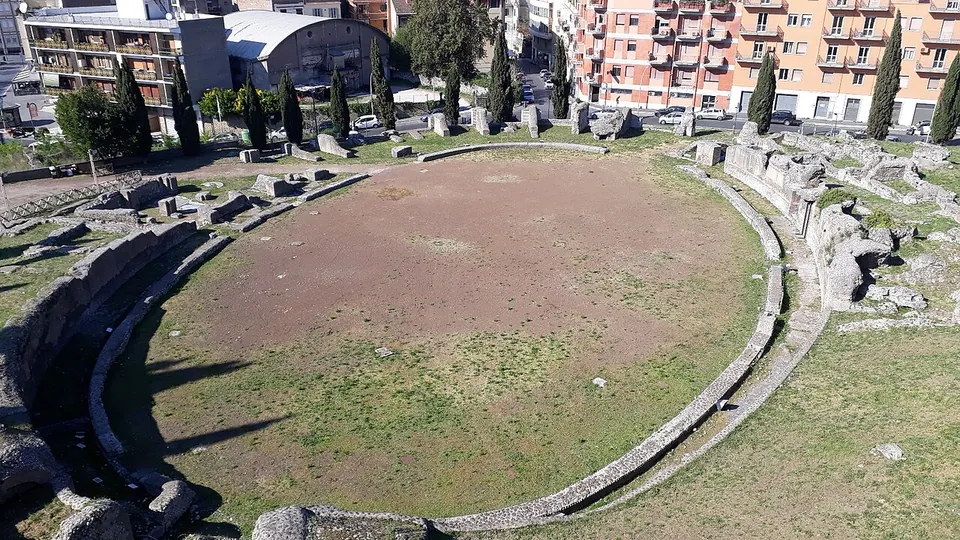
In between lie the forum, under today’s Piazza del Duomo (en.wikipedia), with the Mensa Ponderaria, the town’s public weigh-house, where two marble tables with hollows for the official weights were found (the operator); and the amphitheatre of Blaesus, about 90 by 50 m, beside the Rocca Pia (it.wikipedia).
Is it worth the trip?
Yes, and it is an easy one from Rome. The round temple above the falls has been copied in gardens and buildings from England to California (en.wikipedia), and seeing it at the end of a walk through Villa Gregoriana explains why. The Sanctuary of Hercules Victor is the bigger surprise, a terraced complex the Italian article compares with the sanctuary of Fortuna at Palestrina. The operator reckons an hour for the sanctuary; with Villa Gregoriana that makes half a day, and Hadrian’s Villa, about 3.5 km away and on a page of its own, can fill the other half.
Know what you will not see. The amphitheatre is closed except for events, the Mensa Ponderaria opens on only two Saturday afternoons a month, and the Temple of the Cough can only be seen from outside. Villa Gregoriana is steep, with many steps, and opens only from mid-February to 20 December; the acropolis itself can be reached without steps (the FAI).
Getting there and what it costs
By car, leave the A24 Rome–L’Aquila motorway at Tivoli or Castel Madama and follow the signs for Tivoli and Villa Gregoriana (the FAI). A free car park is mapped about 170 m from the Piazza del Duomo (OpenStreetMap). By train, the FL2 line runs from Roma Tiburtina to Tivoli station (it.wikipedia), about 400 m from the entrance to Villa Gregoriana; Cotral buses run from Ponte Mammolo in Rome (the FAI), run by Cotral (it.wikipedia). The park is entered from Largo Sant’Angelo and left through the exit and bookshop at the round temple. The sanctuary has its own entrance and ticket office at Via degli Stabilimenti 5 (the operator).
Villa Gregoriana costs €10, €3 for ages 6 to 18, and is free up to age 5 and for FAI members; a ticket with a 30-minute introductory guided visit is €14 (the FAI). From 25 October 2026 it opens 09.30–17.00, and through November 09.30–16.30, with last entry an hour before closing; in summer it opens 09.00–19.00. The Sanctuary of Hercules Victor opens every day except 1 January and 25 December, with entry until 18.00 in summer time, 17.30 in the rest of October and 16.00 from November to January. The Villae institute that runs it does not print the price of a single ticket on its site; entry is free on the first Sunday of every month, and the Villae Pass Tivoli covers the sanctuary and the Mensa Ponderaria together with Hadrian’s Villa and Villa d’Este. The Mensa Ponderaria takes groups of at most 16 for 25 minutes on set dates (24 October, 14 and 28 November, 5 and 19 December 2026, 15.00–17.00) (fondoambiente.it and villae.cultura.gov.it, read 20 October 2026: check before travelling).
Visiting details
- Opening hours
- Three operators, three timetables. The two temples on the acropolis stand inside the FAI's Villa Gregoriana park, open in 2026 from 14 February to 20 December: 09.30–18.30 from 31 August to 11 October, 09.30–18.00 from 12 to 24 October, 09.30–17.00 from 25 October to 1 November, 09.30–16.30 through November and 09.30–16.00 from 30 November, with longer hours in spring and summer (09.00–19.00 from 29 June to 30 August); last entry an hour before closing. The Sanctuary of Hercules Victor opens every day except 1 January and 25 December: entry 09.00–18.00 and exit by 19.00 while summer time lasts (to late October), entry 09.00–16.00 and exit by 17.00 from November to January. The Mensa Ponderaria opens only on two Saturday afternoons a month, in guided shifts of at most 16 people; the remaining 2026 dates are 24 October, 14 and 28 November, 5 and 19 December, 15.00–17.00 (last entry 16.30).
- Tickets
- Villa Gregoriana, with the acropolis temples: €10; €3 for ages 6–18 and for residents of Tivoli; €6 for university students up to 25; free up to age 5 and for FAI members; family ticket (two adults and two or more children aged 6–18) €23. With a 30-minute introductory guided visit €14 (€7 for ages 6–18). The Villae institute's site publishes no single-ticket price for the Sanctuary of Hercules Victor or the Mensa Ponderaria; both are free on the first Sunday of every month, on 25 April, 2 June and 4 November, and both are covered by its Villae Pass Tivoli with Hadrian's Villa and Villa d'Este.
- Parking
- A free surface car park is mapped about 170 m from the Piazza del Duomo, and paid ones a little farther (OpenStreetMap). The Sanctuary of Hercules Victor has its own entrance and ticket office at Via degli Stabilimenti 5 (the operator).
Before you go
- The amphitheatre is not open to visitors; it is opened only for concerts, exhibitions and re-enactments.
- Villa Gregoriana opens only from mid-February to 20 December, and its paths are steep, with many steps; the acropolis with the temples can be reached without steps.
- The Temple of the Cough stands on private land and its interior cannot be visited.
Hours and prices checked 20 October 2026 on the operator's own site. Confirm before travelling.
The acropolis temples
The round temple dates from around 100 BC: published dates run from the end of the 2nd to the first half of the 1st century BC (de.wikipedia; it.wikipedia; en.wikipedia; the FAI). An inscription on its architrave names Lucius Gellius as its builder or restorer (en.wikipedia; de.wikipedia). Its high podium is faced with travertine, and its cell has a door and two windows (en.wikipedia; de.wikipedia). Nobody knows whom it served: Vesta, by analogy with the round temple in the Roman Forum, but also Hercules, the Sibyl Albunea and Tiburnus, the hero who gave the town its name, have been proposed (en.wikipedia; de.wikipedia). It survived because it became the church of Santa Maria Rotonda (it.wikipedia; en.wikipedia). Palladio and Serlio studied it, Piranesi engraved it, and it was copied across Europe, from Sir John Soane’s “Tivoli Corner” of the Bank of England to the Mussenden Temple in Northern Ireland, whose builder, the Earl of Bristol, tried to buy the original in 1777 and was refused by Pope Pius VI (it.wikipedia; en.wikipedia).
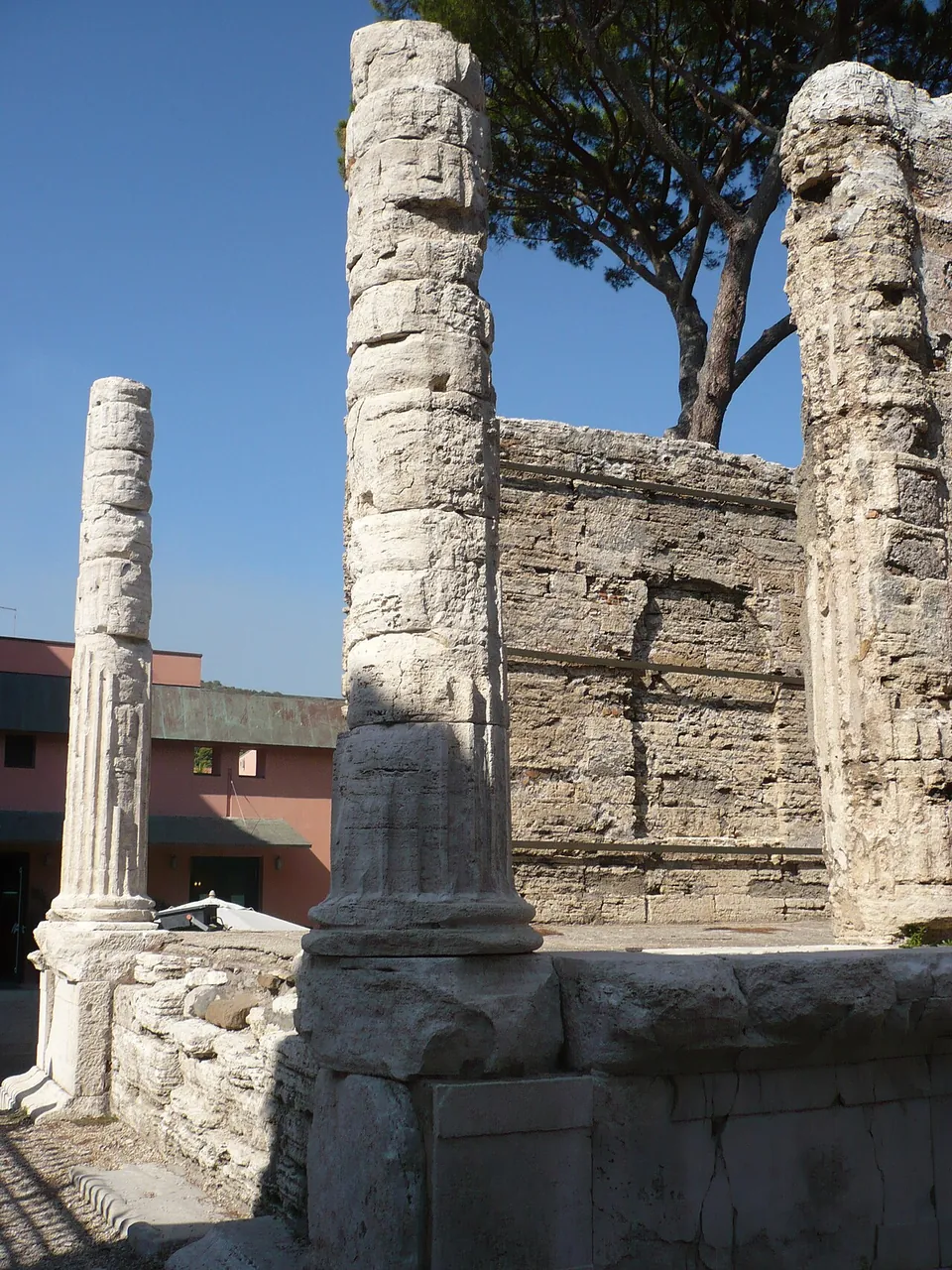
The rectangular temple is a little older, of the 2nd century BC, and was built on a substructure that enlarged the acropolis, still visible on the way down into Villa Gregoriana (it.wikipedia; de.wikipedia; Pleiades). It measures 15.90 by 9.15 m; of the four columns of its front, two survive without their capitals, and half-columns ran along its sides and back (de.wikipedia; fr.wikipedia). Pleiades and the German and French articles read the order as Ionic, the Italian article as Corinthian. Its dedication is just as uncertain as its neighbour’s (the Sibyl, Tiburnus or Hercules), and it too survived as a church, of San Giorgio, recorded from 978 (de.wikipedia; it.wikipedia).
The Sanctuary of Hercules Victor
Hercules was Tibur’s god: the protector of trade and of the herds driven between the Apennines and the Roman plain, which passed through the town (it.wikipedia). The sanctuary was built between the last decades of the 2nd century BC and 82 BC, with later work on the theatre under Augustus, who, Suetonius records, often sat in judgement under its porticoes (it.wikipedia). Excavation suggests two building phases, and the second swept the Via Tiburtina into the complex in its covered gallery (it.wikipedia). The temple stood at the back of a square closed on three sides by two storeys of porticoes and open on the fourth towards the Roman Campagna, raised on a podium 6.50 m high whose moulded travertine facing survives only in a short stretch (it.wikipedia). Of the gallery and the rooms beside it a little more than half survives (it.wikipedia). Restoration was completed in 2011, and since 2016 the site has been run with Hadrian’s Villa and Villa d’Este by the VILLAE institute (it.wikipedia). There are toilets, a small refreshment point and signs at the individual monuments (the operator).
The forum and the Mensa Ponderaria
The weigh-house stood on the forum and probably dates from the time of Augustus; it was found by chance in 1883, and is one of the rare cases where the use of such a room can be identified, thanks to its two marble tables with hollows of different sizes for the official weights (the operator). A room next to it, found in 1920, was probably given to the cult of the emperor. An inscription names the man who fitted it out, the freedman Marcus Varenus Diphilus, a magister of the Herculanei, the rich and powerful college attached to the cult of Hercules (the operator). A curved wall in opus reticulatum behind the apse of the cathedral is thought to belong to the forum (it.wikipedia).
The amphitheatre and the remains along the Aniene
The amphitheatre was built in the 2nd century AD, outside the Republican walls, and was rediscovered only in 1948, when a road was being cut (Pleiades; it.wikipedia). An inscription names its benefactor, M. Tullius Blaesus (en.wikipedia). Its arena measured about 61 by 41 m; published estimates of its capacity range from 2,000 to 6,000 spectators (it.wikipedia; en.wikipedia). Much of it was destroyed to build the Rocca Pia, the fortress Pope Pius II put up in the 15th century (it.wikipedia; en.wikipedia).
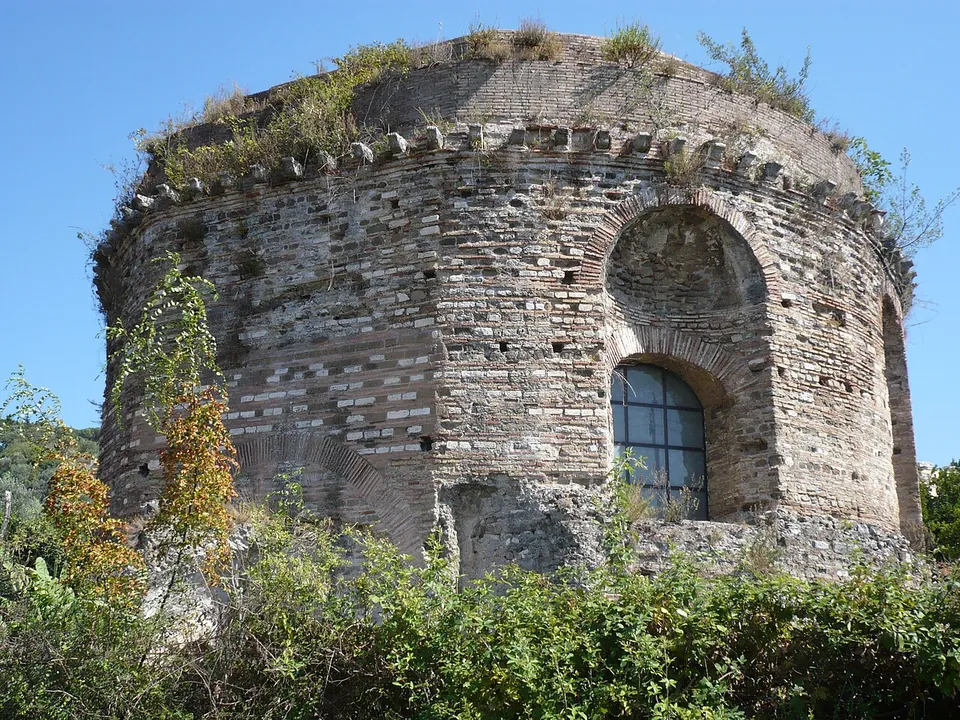
Near the sanctuary, about 250 m away on the old Via Tiburtina, the so-called Temple of the Cough is a round building with a dome more than 12 m across, open at the top like the Pantheon’s (it.wikipedia). It is probably late antique, built on the site of a villa of the 1st century BC, and has been read as a nymphaeum, a temple or a tomb (Pleiades; it.wikipedia). It became a church of the Virgin in the 10th century, and damaged early medieval frescoes survive in its apses. The medieval story that it was dedicated to a goddess of coughs has no foundation; one suggestion derives the name from a tomb of the Tuscia family (it.wikipedia).
Further out are the remains the town’s villas left: the villa that tradition gives to Manlius Vopiscus, whom the poet Statius describes, in the grounds of Villa Gregoriana (Pleiades; the FAI); the so-called villa of Quintilius Varus near the sanctuary of the Madonna di Quintiliolo, whose platform may go back to the 3rd century BC (Pleiades); and, on the right bank of the Aniene, the tomb of Cossinia, a priestess of Vesta, of the 1st century AD, found in 1929 (Pleiades). Its inscription, as transcribed in OpenStreetMap, says she served Vesta for eleven times six years.
History
Tibur claimed to be older than Rome. Cato’s lost Origines told of a founder from Arcadia whose sons drove out the Siculi; the town’s traditional foundation date was 1215 BC, and settlement in the area goes back to the 13th century BC (en.wikipedia; it.wikipedia). It grew at the point where the Aniene drops about 160 m to the plain, on the route that became the Via Tiburtina and the Via Valeria, and it was the seat of the Tiburtine Sibyl (it.wikipedia; en.wikipedia; Pleiades).
At first an independent ally of Rome, Tibur sided with the Gauls in 361 BC and was defeated and absorbed in 338 BC (en.wikipedia). Its Roman citizenship is dated to 90 BC in the English article and to 87 BC, when it became a Roman municipium, in the Italian article on the sanctuary. Under the empire it became a resort of villas for wealthy Romans, Augustus and Maecenas among them, and in the 2nd century AD Hadrian built his villa a few kilometres away (en.wikipedia; it.wikipedia). Zenobia, the captive queen of Palmyra, was given a residence here by Aurelian (en.wikipedia).
The sanctuary’s religious life ended with the laws of Theodosius at the end of the 4th century (it.wikipedia). In the Gothic War Belisarius fortified Tibur in 547 and Totila’s army destroyed it; Totila made the sanctuary his headquarters (en.wikipedia; it.wikipedia). After the war the town became a Byzantine duchy (en.wikipedia).
More photographs




Nearby
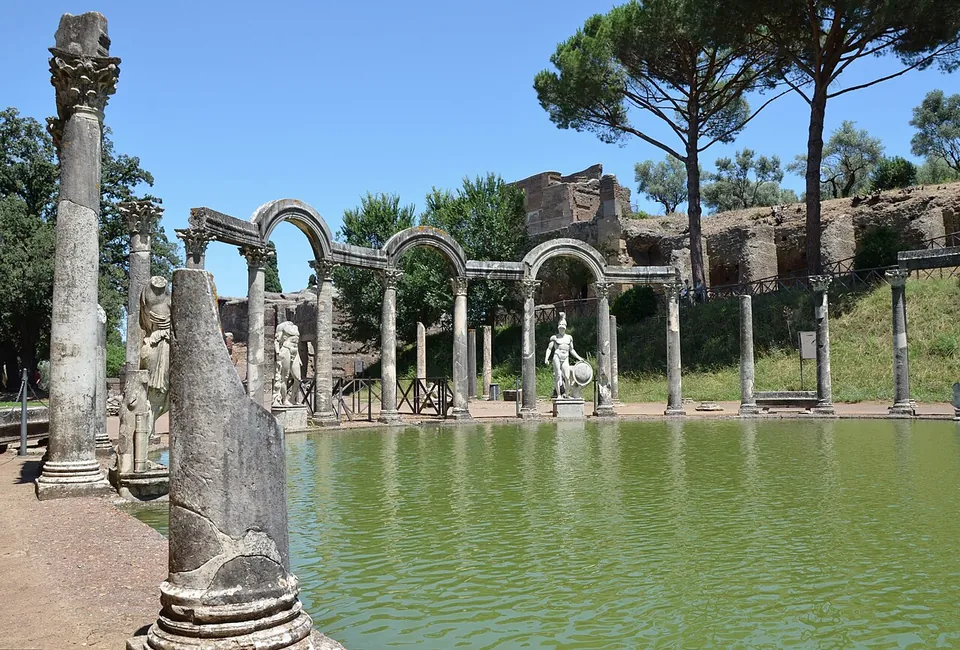
Photo: Carole Raddato from FRANKFURT, Germany · CC BY-SA 2.0 · Commons
3 km · villa · Lazio
Hadrian's Villa
A landscape of ruins among olive trees and cypresses rather than one building.
Photo: Carlomorino · CC BY-SA 3.0 · Commons
11 km · city · Lazio
Gabii
The park the state holds covers about 70 hectares on the southern rim of a volcanic crater whose lake was drained in the 19th century (the operator; en.wikipedia).
Photo: Zanner · Public domain · Commons
16 km · temple · Lazio
Sanctuary of Fortuna Primigenia
The sanctuary was built on the slope of Monte Ginestro as six artificial terraces linked by ramps and stairways (it.wikipedia; fr.wikipedia counts five, dividing them differently).


Straight-line distances.
Sources
Every fact on this page comes from the records below, each used under the licence noted.