The Sanctuary of Fortuna Primigenia is the temple complex that ancient Praeneste built up the hillside of what is now Palestrina at the end of the 2nd century BC: a stack of terraces, ramps and stairways rising to a theatre and a round temple, which the archaeologists Ranuccio Bianchi Bandinelli and Mario Torelli called the largest complex of late Republican architecture in ancient Italy (it.wikipedia; fr.wikipedia). What you walk through today is the shell of that design: massive terrace walls with their arched niches, the ramps, a colonnaded hemicycle, and the theatre steps that now lead into the museum.
What is there today
The sanctuary was built on the slope of Monte Ginestro as six artificial terraces linked by ramps and stairways (it.wikipedia; fr.wikipedia counts five, dividing them differently). The open-air area lies in front of the museum, which occupies the top of the sanctuary (the Ministry of Culture). From the bottom up:
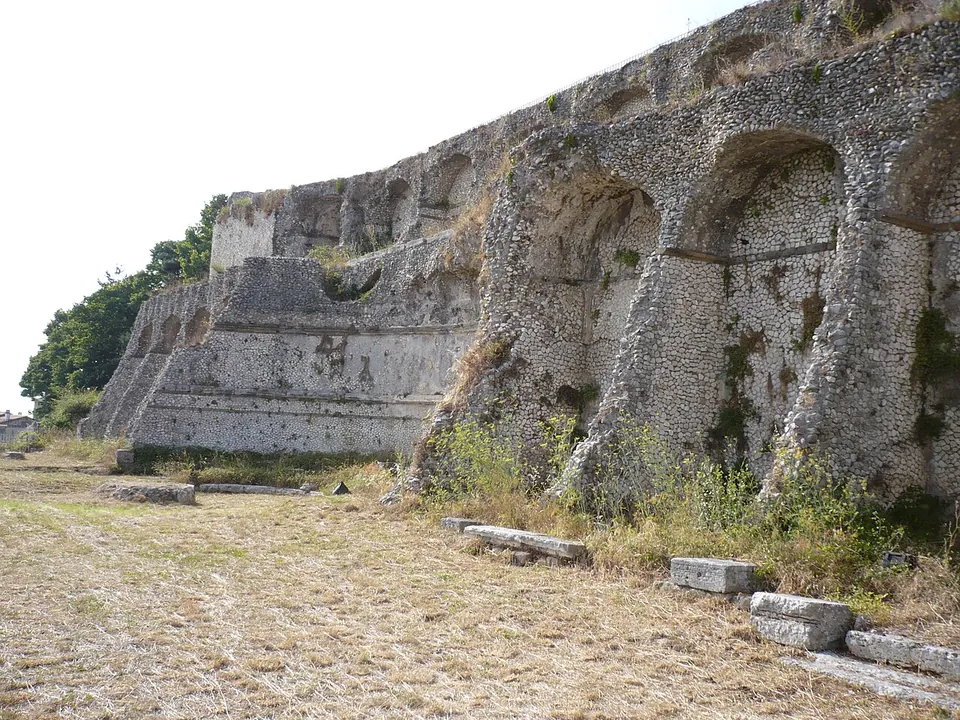
- The lower terraces. The first two were reached from the forum by side stairways and bounded by two huge walls of polygonal masonry; the second had five ritual basins in half-round niches, fronted by columns (it.wikipedia). They were enlivened by many water displays, including fountains made to look like natural caves (en.wikipedia). Published descriptions do not say how much of these lowest levels is open to visitors.
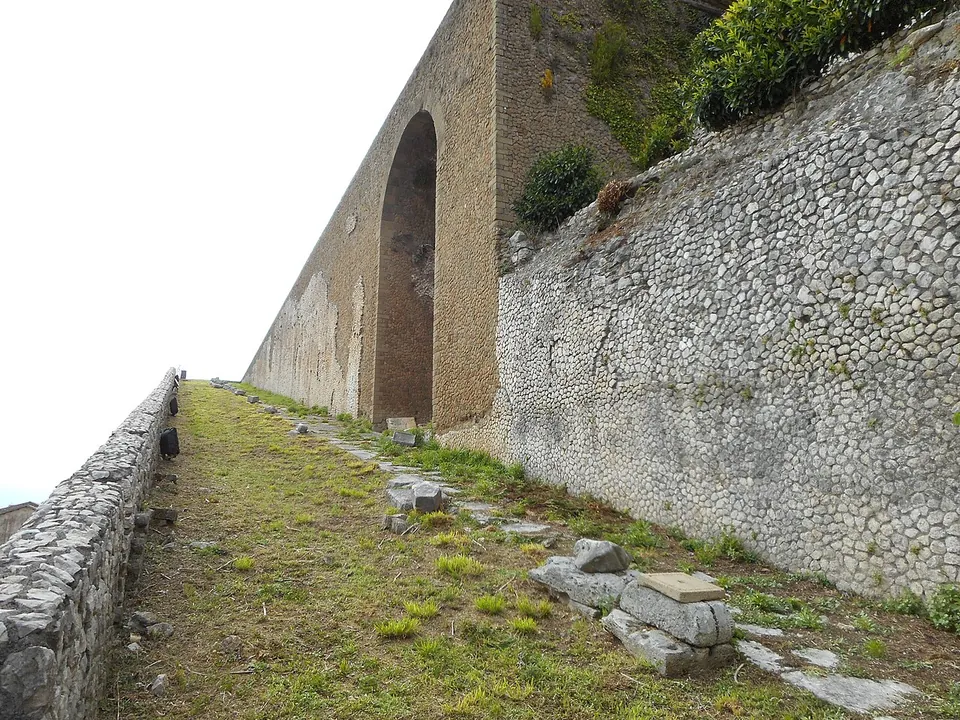
- The ramps. From the third level two monumental porticoed ramps climbed, one on each side of the sanctuary, closed by a wall on the valley side and once half covered by vaults; the Doric capitals of the half-columns inside are tilted to the slope of the ramp (it.wikipedia; fr.wikipedia).
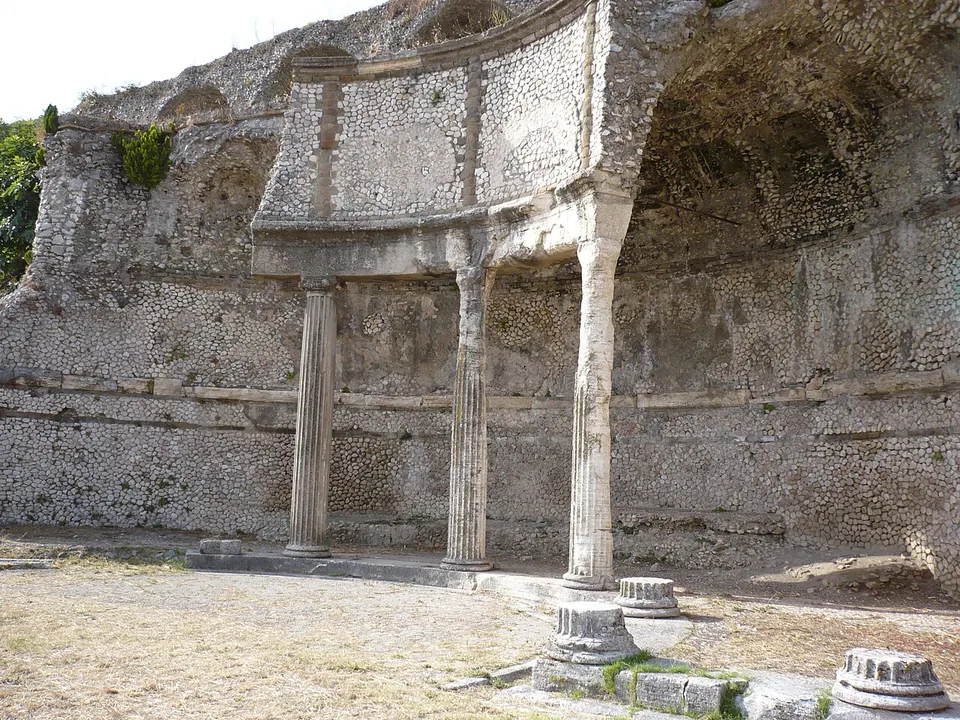
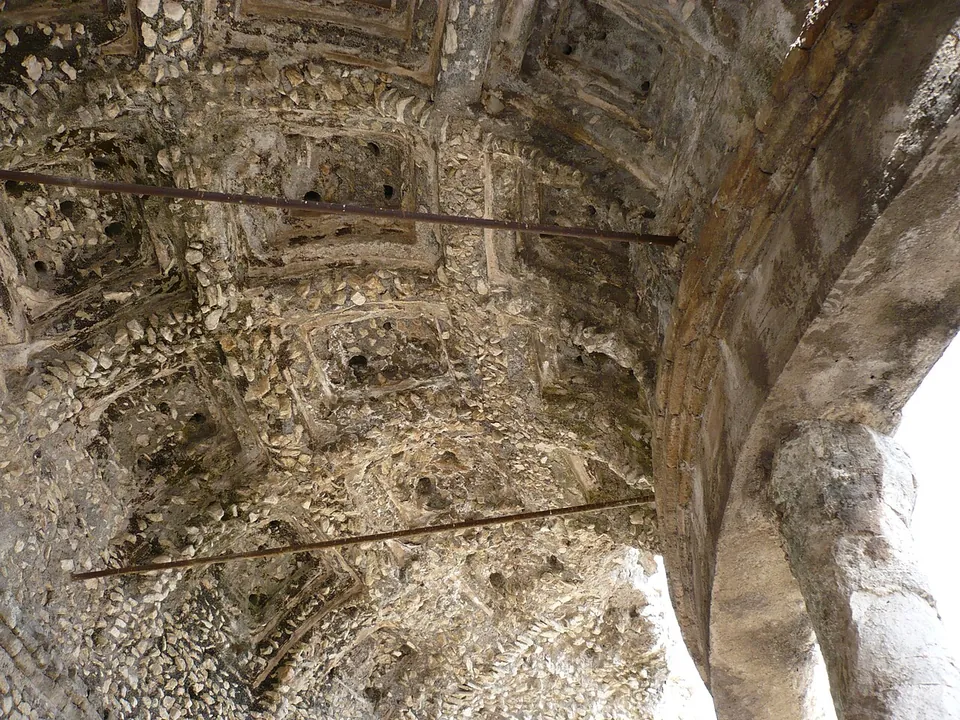
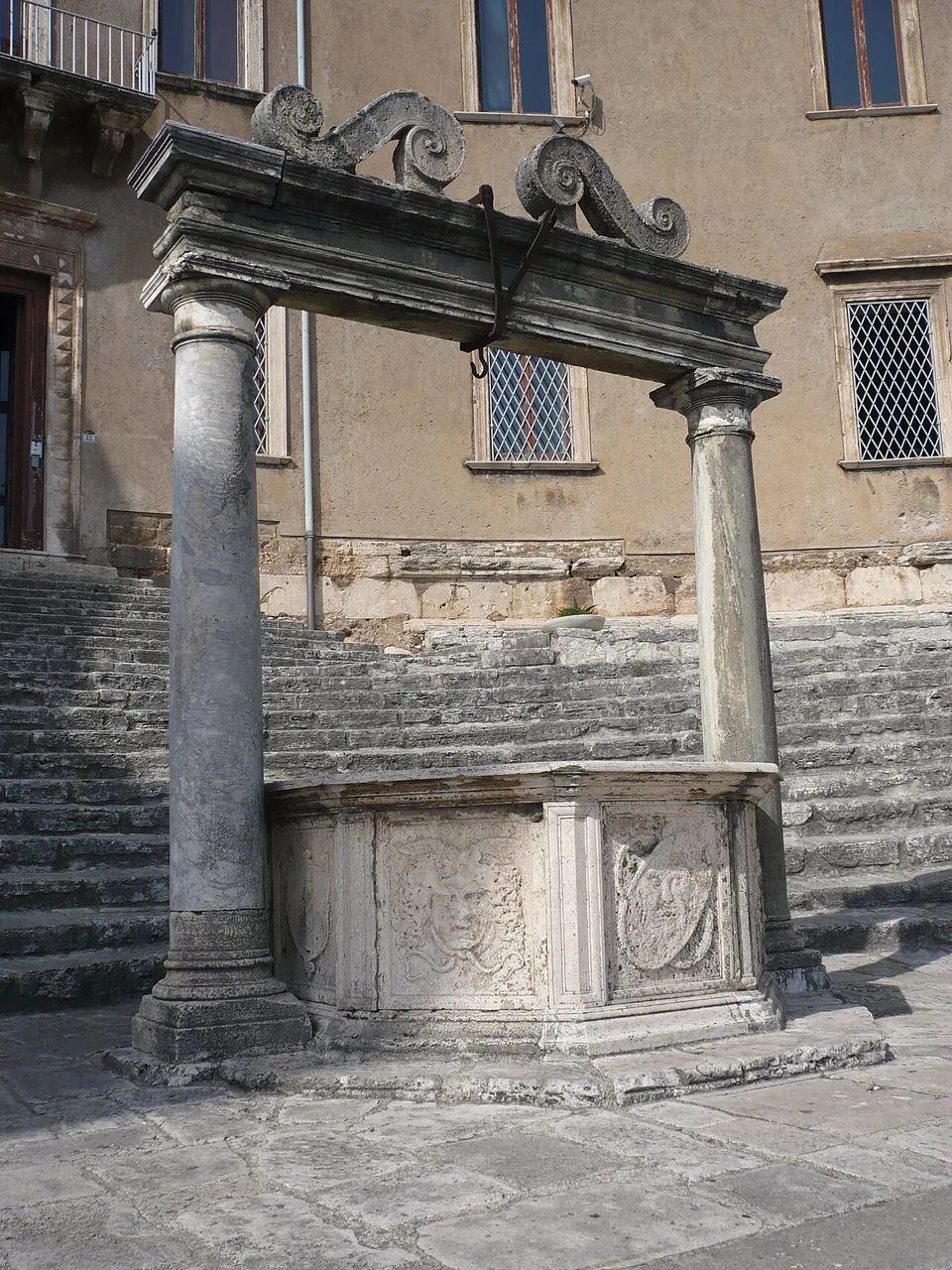
- The Terrace of the Hemicycles. The ramps led to the heart of the oracle: a terrace with an Ionic portico broken by two colonnaded half-round recesses, roofed with coffered vaults and fitted with seats (it.wikipedia). The left-hand one had a base at its centre, perhaps for an offering; the right-hand one framed a small round shrine with a conical roof over a very deep well (it.wikipedia). That well is still preserved, and it may be the one where, Cicero says, a nobleman of Praeneste found the sortes, the wooden lots of Fortuna’s oracle (en.wikipedia). The Ministry calls it one of the most striking terraces in the whole complex.
- The upper terraces. From the middle of that portico a steep stair climbed to the Terrace of the Arches, its back wall lined with Corinthian half-columns framing niches and false doors, and then to the broad Cortina terrace, a U-shaped square once surrounded on three sides by a double Corinthian portico (it.wikipedia). A modern road now cuts across it (it.wikipedia, the museum).
- The theatre and the round temple. At the back of the Cortina terrace rises a theatre-like flight of seats, where the faithful watched sacred performances (the Ministry). It is now the stair up to the museum in Palazzo Colonna Barberini. Under it runs a vaulted gallery, the cryptoporticus, which still keeps some of its Corinthian columns and is now part of the museum, holding sculpture and inscriptions from the town (it.wikipedia, the museum; the Ministry). The small round temple that crowned everything survives only as foundations, shown under a glass floor inside the museum (it.wikipedia, the museum).
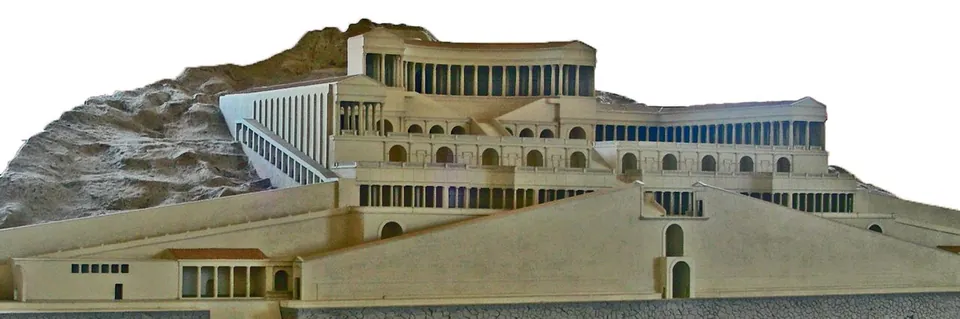
The museum is part of the same ticket. At its entrance a 1:50 model rebuilds the whole sanctuary (the Ministry), and the room on the cult of Fortuna holds a head of the goddess found in the well on the Terrace of the Hemicycles, probably from the cult statue (it.wikipedia, the museum). The Praeneste – Palestrina page covers the rest of the collection, the Nile mosaic among it, and the forum below.
Is it worth the trip?
Yes. This is a whole hillside shaped into one Roman design, the largest of its age in Italy by the archaeologists’ reckoning, and climbing it terrace by terrace is the point of coming. From the theatre at the top the view runs over the Sacco valley to the Alban Hills and the Lepini mountains (the Ministry).
Set your expectations, though. There is no temple to walk into: you see terrace walls, niches, ramps, columns standing in a hemicycle and a great deal of open ground, and the top of the design is a palace begun in the Middle Ages and rebuilt in 1640. The model in the museum is what makes the plan readable, so see it early. The visit is a climb up ramps and stairs, and the sanctuary closes at 16.30 in winter, so do not leave it until the afternoon.
Getting there and what it costs
The sanctuary is in the upper part of Palestrina, about 35 km east of Rome (en.wikipedia); the Praeneste – Palestrina page has the buses and trains. The sanctuary and the museum share an address, Piazza della Cortina (the operator). The nearest mapped bus stop is Via Barberini/Grotte, about 110 m away; there are car parks about 105 m and 130 m from the top, the second of them free, and paid parking on the forum square below (OpenStreetMap).
There is no separate ticket: one €10 ticket, valid two consecutive days, covers the sanctuary, the museum and the forum. EU citizens aged 18 to 25 pay €2 and under-18s go free, as at all Italian state museums, and entry is free for everyone on the first Sunday of each month. Tickets are sold at the museum’s and the forum’s ticket offices, listed as open 09.00–18.00, or online through Musei Italiani. The sanctuary opens Wednesday to Monday, 09.30–18.30 from late March to late October and 09.30–16.30 in winter, with last entry half an hour before closing; it is closed on Tuesdays (the Ministry of Culture and the operator, read 18 October 2026).
Visiting details
- Opening hours
- Wednesday–Monday, closed on Tuesdays. 09.30–18.30 from the last Sunday of March to the last Saturday of October; 09.30–16.30 from the last Sunday of October to the last Saturday of March. Last entry half an hour before closing. The ticket office is listed as open 09.00–18.00.
- Tickets
- No separate ticket: the PRAENESTE ticket covers the sanctuary, the Museo archeologico nazionale Prenestino and the Forum of Praeneste, €10, valid two consecutive days (bought on a Monday, it is valid until Wednesday); €2 for EU citizens aged 18–25; free under 18. Free for everyone on the first Sunday of the month. Sold at the museum and forum ticket offices and online through Musei Italiani. Until 31 October 2026 it also includes the exhibition "Gabii: le origini" on the forum.
- Parking
- Car parks about 105 m (OpenStreetMap way/174935946) and 130 m (way/458673902, free) from the top of the sanctuary; paid parking on Piazza Regina Margherita, the forum square, at its foot.
Before you go
- Closed on Tuesdays (since August 2026), like the museum and the forum.
- The ticket office is listed as closing at 18.00, half an hour before the sanctuary's summer closing time.
- The visit is a climb of ramps and stairways up a hillside.
Hours and prices checked 18 October 2026 on the operator's own site. Confirm before travelling.
History
Finds show that Fortuna was already worshipped here in the 4th–3rd century BC (it.wikipedia). Cicero tells the cult’s own story: a nobleman of Praeneste, ordered in repeated dreams to cut into the rock at a certain spot, found lots of oak carved in ancient letters; at the same time honey flowed from an olive tree where the sanctuary stands, and a chest was made of its wood to hold the lots (fr.wikipedia). Pilgrims did not touch the lots themselves: a child drew them, standing for the infant Jupiter, who was much venerated by the mothers of Praeneste (it.wikipedia). The goddess was Fortuna Primigenia, the “first-born”, shown suckling the infants Jupiter and Juno (en.wikipedia; it.wikipedia), and besides pilgrims seeking answers, mothers came to pray for children (the Ministry).
The monumental sanctuary was long dated to the time of Sulla. In 1953 its first publishers, F. Fasolo and G. Gullini, put it in the middle of the 2nd century BC, and inscriptions have since placed it at the end of that century (it.wikipedia). It was probably paid for by citizens grown rich on the money and labour that Rome’s wars and trade brought from the East (it.wikipedia; en.wikipedia). Its models were probably the great terraced sanctuaries of the Hellenistic world (it.wikipedia names Athena Lindia on Rhodes; en.wikipedia Kos and Delos); what was Roman was the massive use of concrete, which made such daring structures possible (en.wikipedia). Inscriptions in the cryptoporticus record restoration by two local magistrates in Sulla’s time, and Sulla may have added to the sanctuary after settling a colony in the town (en.wikipedia).
The oracle was still consulted in Christian times, until Constantine and later Theodosius I forbade the practice (en.wikipedia). The medieval town grew over the terraces, with the Colonna’s palace on top, rebuilt by Taddeo Barberini in 1640 (it.wikipedia). The bombing of the town centre in 1944 brought the remains back to light (it.wikipedia; en.wikipedia). Architects had been drawing it for centuries before that: Andrea Palladio and Pietro da Cortona proposed reconstructions, and its terraces fed into buildings from Bramante’s Belvedere in the Vatican (1504) to the Vittoriano in Rome (it.wikipedia).
More photographs
Nearby
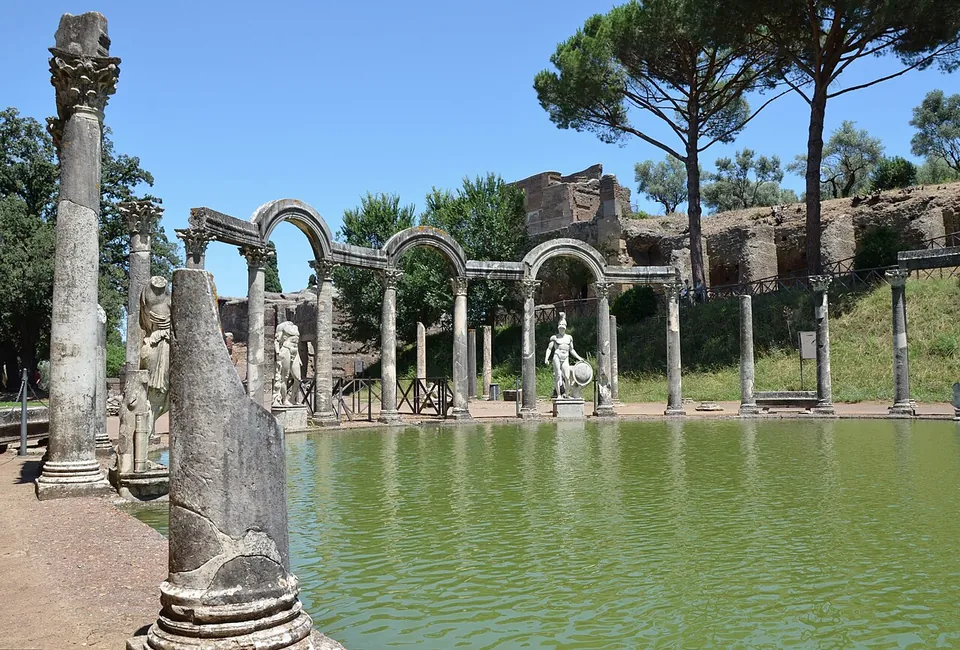
Photo: Carole Raddato from FRANKFURT, Germany · CC BY-SA 2.0 · Commons
15 km · villa · Lazio
Hadrian's Villa
A landscape of ruins among olive trees and cypresses rather than one building.
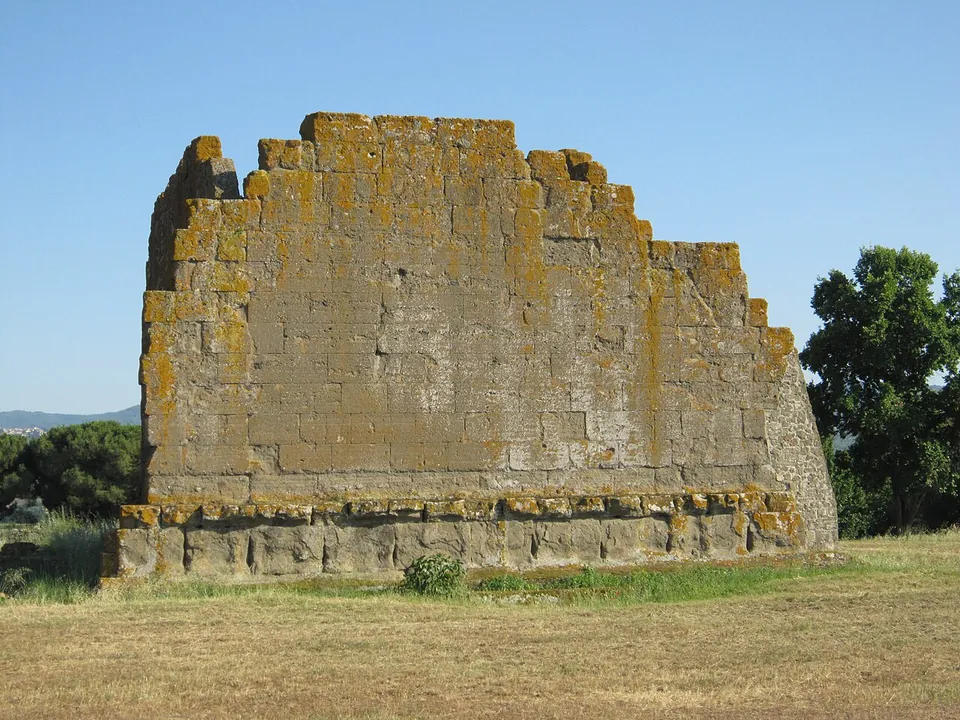
Photo: Carlomorino · CC BY-SA 3.0 · Commons
15 km · city · Lazio
Gabii
The park the state holds covers about 70 hectares on the southern rim of a volcanic crater whose lake was drained in the 19th century (the operator; en.wikipedia).
16 km · city · Lazio
Tibur – Tivoli
The postcard view is the acropolis at the east end of the old town, where two small temples stand side by side overlooking the falls and the gorge (en.wikipedia).


Straight-line distances.
Sources
Every fact on this page comes from the records below, each used under the licence noted.
| Source | Licence |
|---|---|
| Pleiades 7963799 | CC BY |
| Wikidata Q3949669 | CC0 |
| Vici.org 11650 | CC BY-SA (text), CC0 (metadata) |
| OpenStreetMap way/193576987 | ODbL |
| Pleiades — Praeneste | licence not recorded |
| Wikipedia (it) — Santuario della Fortuna Primigenia | CC BY-SA 4.0 |
| Wikipedia (en) — Temple of Fortuna Primigenia | CC BY-SA 4.0 |
| Wikipedia (fr) — Sanctuaire de la Fortuna Primigenia | CC BY-SA 4.0 |
| Wikipedia (it) — Museo archeologico nazionale di Palestrina | CC BY-SA 4.0 |
| Wikipedia (en) — Palestrina, Lazio | CC BY-SA 4.0 |
| Ministero della Cultura — Museo archeologico nazionale Prenestino, Santuario della Fortuna Primigenia e Foro di Praeneste (hours, tickets, description) | licence not recorded |
| Musei e Parchi archeologici di Praeneste e Gabii (the operator's own site) | licence not recorded |
| Ministero della Cultura — free and reduced admission to state museums | licence not recorded |