Hidden gemHub · 2 stops2nd c. BC – 7th c. ADTicketed
Praeneste – Palestrina
Preneste, Πραίνεστος
city · Lazio, Italy
What it is
Palestrina, about 35 km east of Rome, stands on ancient Praeneste, and its Roman reason to come is the Sanctuary of Fortuna Primigenia: a hillside of terraces, ramps and stairways from the end of the 2nd century BC, called the largest complex of late Republican architecture in ancient Italy, with a museum in the palace at its top that holds the Nile mosaic.
What you’ll see
The stops below are grouped by where they are.
Worth the trip?
Yes, if Roman architecture interests you at all. Few places show a Republican building on this scale, a whole hillside shaped into one design; the Nile mosaic is a masterpiece in its own right; and the forum is a short walk below.
Getting there & cost
Palestrina lies about 35 km east of Rome, on the road that took its name, the Via Prenestina (en.wikipedia).Ticketed · One PRAENESTE ticket covers the museum, the sanctuary and the forum, €10, valid two consecutive days (bought on a Monday, it is valid until Wednesday) · checked 17 October 2026Hours, tickets and parking
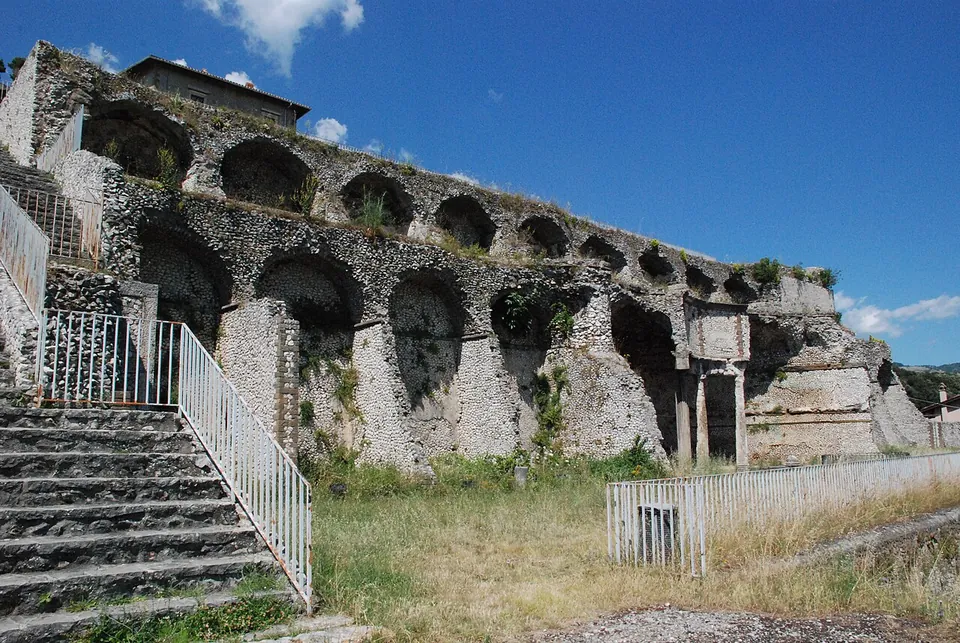
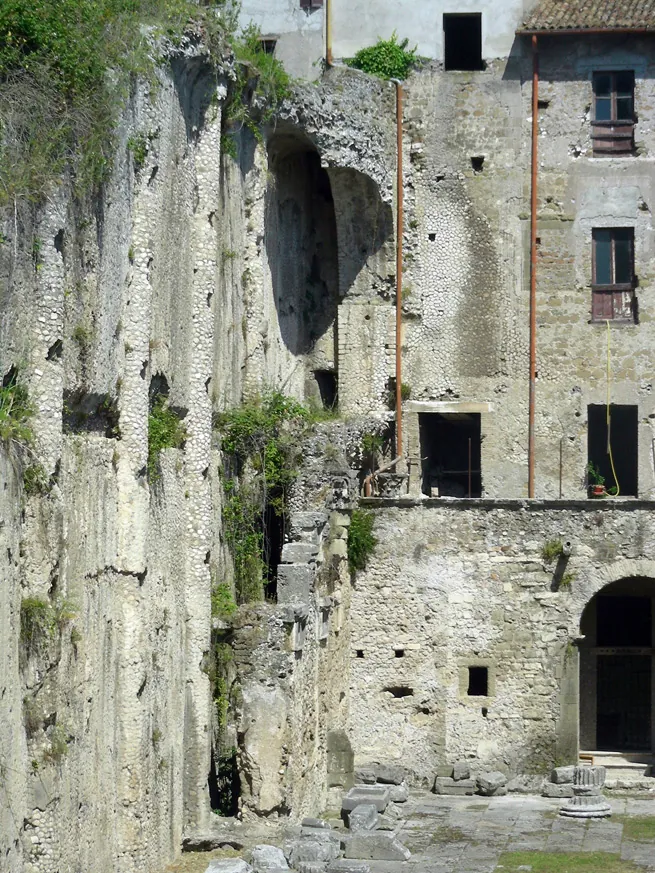
The central stairway of the Sanctuary of Fortuna Primigenia, between its arched terrace walls. · Photo: Camelia.boban · CC BY-SA 3.0 · Wikimedia Commons
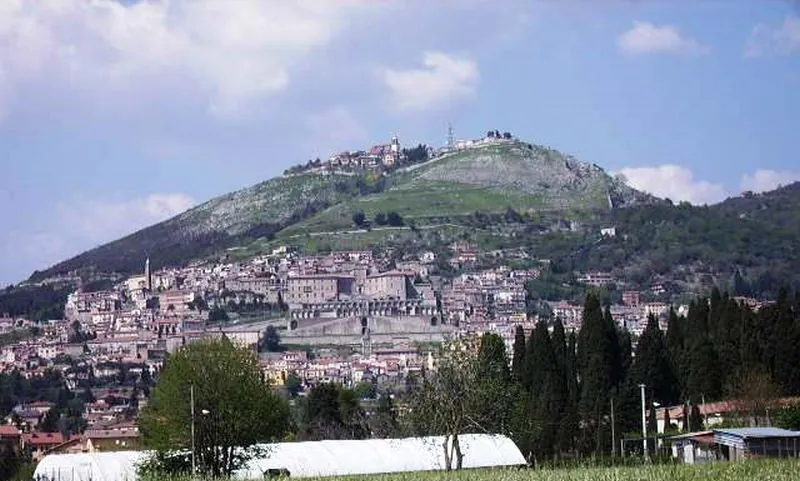
Palestrina from the plain. The town is built over the terraces of the sanctuary of Fortuna. · Photo: rgiannotti1 · CC BY-SA 3.0 · Wikimedia Commons
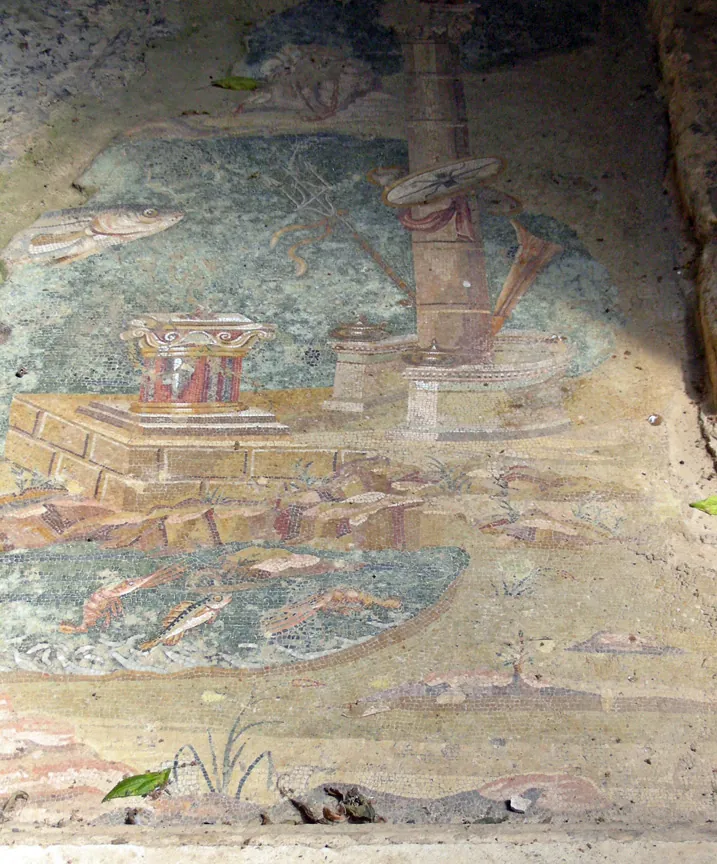
Part of the fish mosaic in the room known as the Cave of the Fates. · Photo: MM · CC BY-SA 3.0 · Wikimedia Commons
The stops
2 places to see, the best preserved and best known first.
The sanctuary was built on the slope of Monte Ginestro as six artificial terraces linked by ramps and stairways (it.wikipedia; fr.wikipedia counts five, dividing them differently).
The square follows the ancient forum, and the great buildings of the 2nd century BC stood on the level above it (the operator).
Ticketed
Palestrina, about 35 km east of Rome, stands on ancient Praeneste, and its Roman reason to come is
the Sanctuary of Fortuna Primigenia: a hillside of terraces, ramps and stairways from the end of
the 2nd century BC, called the largest complex of late Republican architecture in ancient Italy,
with a museum in the palace at its top that holds the Nile mosaic. Below it, on the town’s main
square, are the remains of the Roman forum. One €10 ticket covers all three, and it is valid for
two days.
What is there today
The stops below are grouped by where they are.
The Sanctuary of Fortuna Primigenia and the museum. The sanctuary was built on the slope of
Monte Ginestro as a stack of artificial terraces linked by ramps and stairways; published counts
give six terraces or five, depending on how they are divided (it.wikipedia; en.wikipedia;
fr.wikipedia). The archaeologists
Ranuccio Bianchi Bandinelli and Mario Torelli called it the largest complex of late Republican
architecture in ancient Italy (it.wikipedia). For centuries the medieval town covered it; the
bombing of the town centre in 1944 destroyed the houses built over it and brought the remains back
to light (it.wikipedia). What you walk through today are the massive terrace walls with their
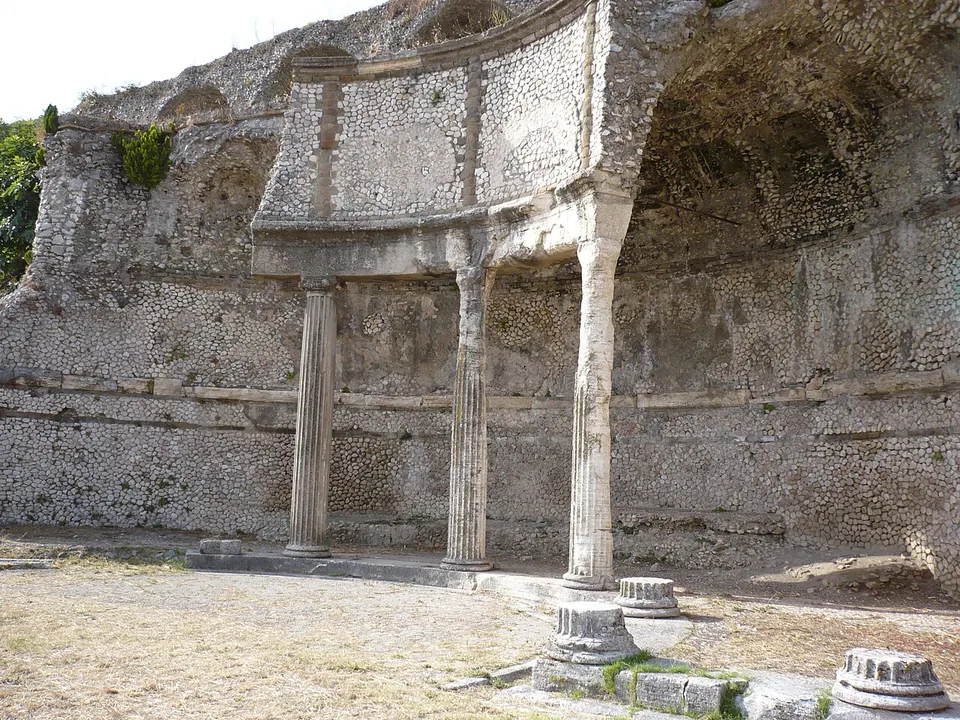
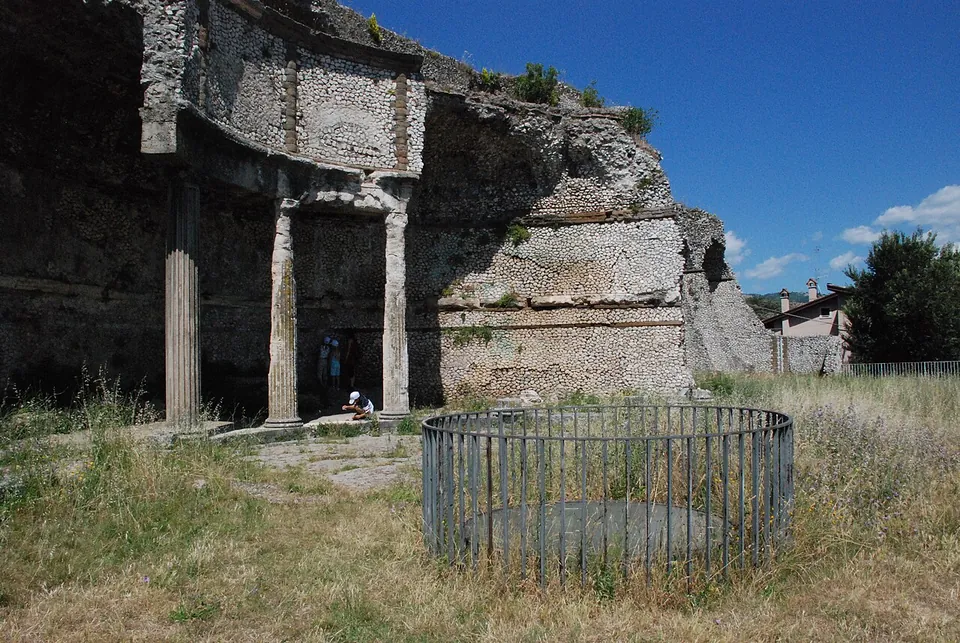
arched niches, the ramps and the central stairway, and the Terrace of the Hemicycles, where two
colonnaded half-round recesses framed the cult: in front of the right-hand one is a well that has
been identified with the one where, Cicero says, a nobleman of Praeneste found the sortes, the
wooden tablets of Fortuna’s oracle (en.wikipedia; it.wikipedia). Above, the broad Cortina terrace
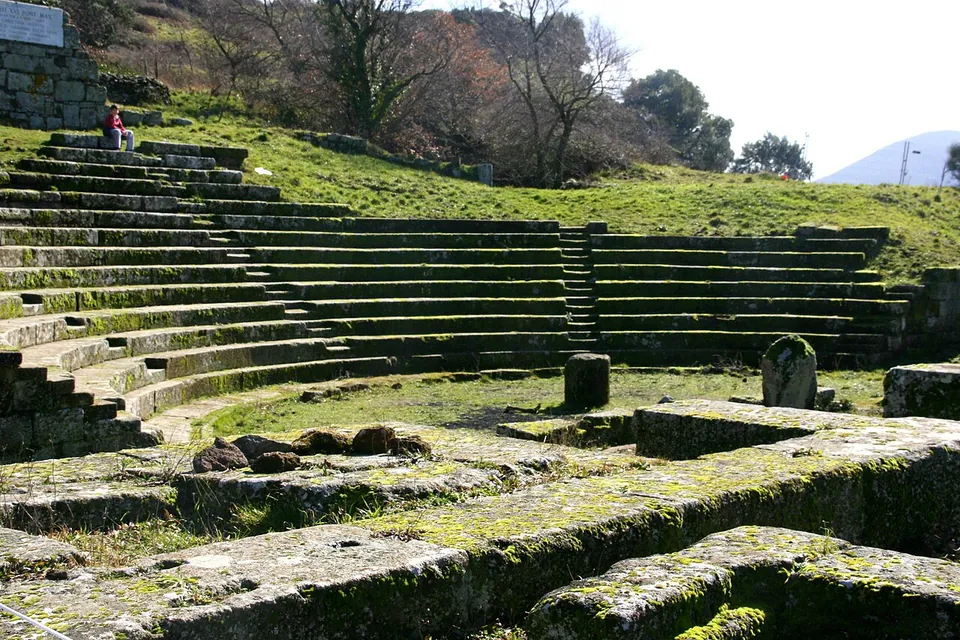
led up to a theatre-like flight of seats crowned by a round temple, of which only the foundations
remain (it.wikipedia).
On top of that theatre stands the Palazzo Colonna Barberini, begun by the Colonna in the 12th
century and rebuilt in 1640, which has housed the Museo archeologico nazionale Prenestino since
1956; the old seating is now the stair up to it, and the foundations of the round temple can be
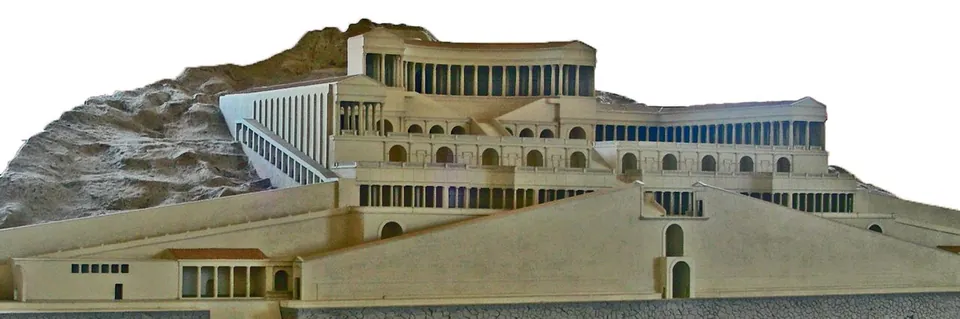
seen under a glass floor inside (it.wikipedia). At the entrance a 1:50 model reconstructs the
whole sanctuary; the collection includes a colossal statue of Isis-Fortuna, the Grimani relief
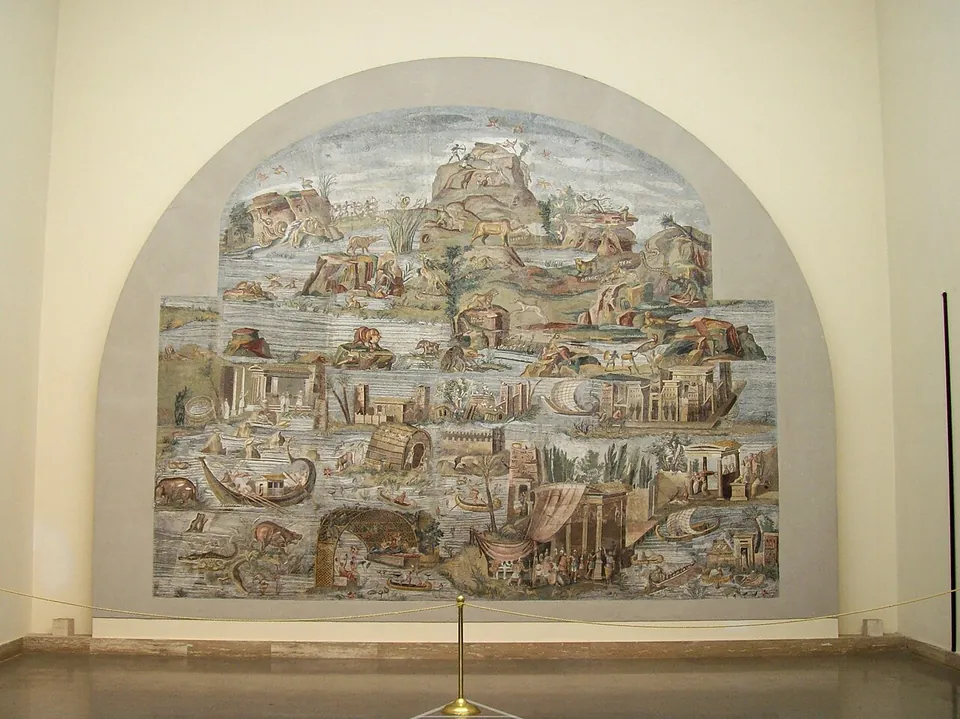
and bronze mirrors and cistae from the town’s tombs, and the top floor holds the Nile
mosaic, a 5.85 by 4.31 m picture of Egypt during the Nile flood, from the source of the river to
the sea, which the Ministry ranks among the largest and most important Hellenistic mosaics to
survive (the Ministry of Culture; it.wikipedia; en.wikipedia).
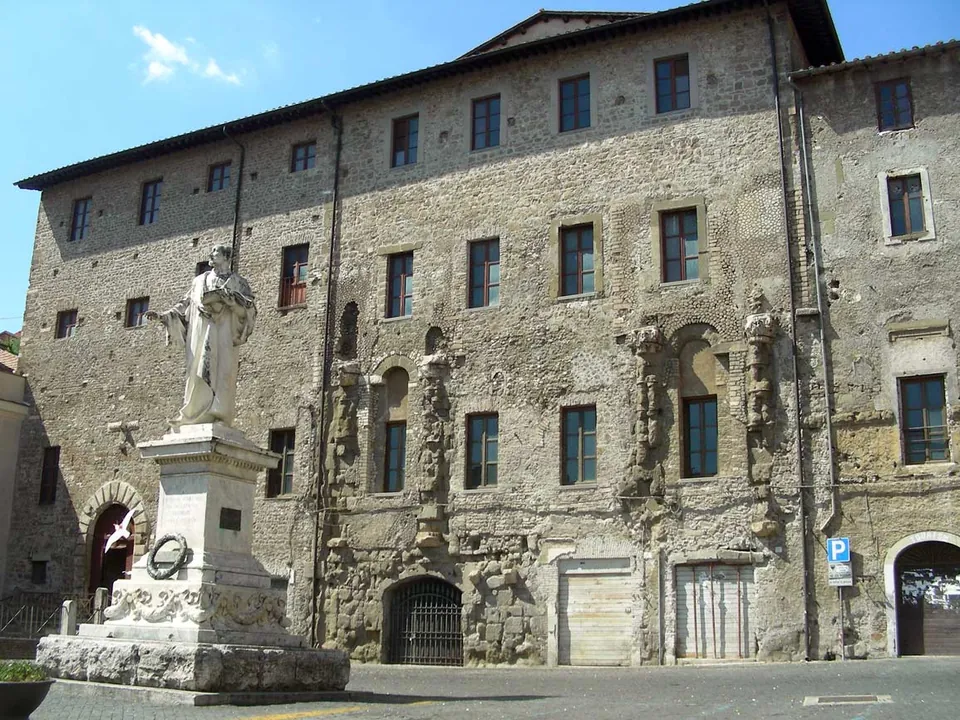
The forum and the Cave of the Fates, on Piazza Regina Margherita. The forum of Praeneste lies
at the town’s main square and under the cathedral of Sant’Agapito, at the foot of the sanctuary,
and was long taken for a “lower sanctuary” before it was recognised as the forum (it.wikipedia).
Its main building was a colonnaded basilica, whose remains are partly built into the front of the
former Seminario; on its western side is the so-called Cave of the Fates (Antro delle Sorti), a
natural cave fitted out as a fountain room, with a mosaic of fish and crustaceans in a seascape,
damaged in the middle because the room was used as a lime kiln in the last century (the Ministry
of Culture; it.wikipedia). The apsed hall on the other side held the Nile mosaic, now in the
museum. On the square itself is the town’s public treasury, with a stretch of the forum’s
original paving and part of a temple of Jupiter of the late 4th century BC built into the
cathedral (the Ministry of Culture).
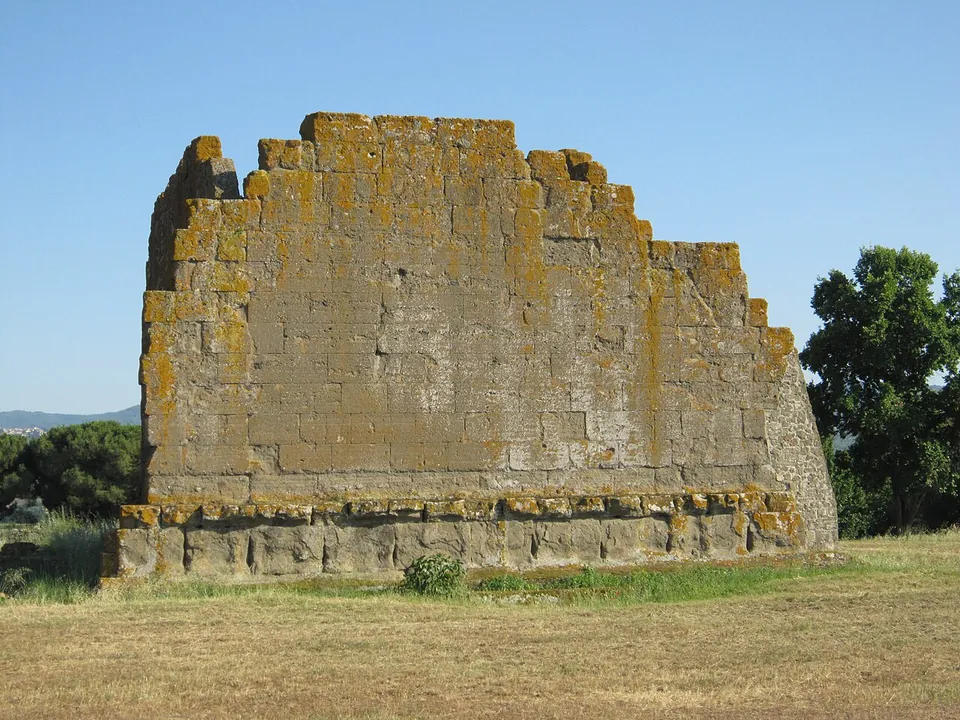
Ponte dell’Ospedalato, 0.7 km from the forum. A Roman bridge near Praeneste, beside the Via
Prenestina Antica (Pleiades; OpenStreetMap). Pleiades records only traces of it, and no visitor
information is published, so it is for enthusiasts only.
Is it worth the trip?
Yes, if Roman architecture interests you at all. Few places show a Republican building on this
scale, a whole hillside shaped into one design; the Nile mosaic is a masterpiece in its own right;
and the forum is a short walk below. One ticket, valid for two days, covers the museum, the
sanctuary and the forum.
Know what you are getting, though. The sanctuary is ruins of terrace walls, niches, ramps and
stairs, not a temple with its roof on, and the town and the Barberini palace sit on its upper
levels, so it is the museum’s model that makes the whole design clear. The forum is pieces inside
later buildings: a facade inside a facade, a mosaic in a grotto. The sanctuary rises up a hillside by
stairs and ramps, so expect to climb.
Getting there and what it costs
Palestrina lies about 35 km east of Rome, on the road that took its name, the Via Prenestina
(en.wikipedia). Interurban buses are run by COTRAL, and rail commuters from Palestrina use the
station at Zagarolo; the old Palestrina station on the Rome–Naples line was abandoned in the 1970s
(it.wikipedia). A COTRAL stop at Porta del Sole is about 150 m from the forum (OpenStreetMap).
The square of the former station is a car park and bus terminus, with escalators up to Porta del
Sole and the old centre (it.wikipedia); there is paid parking on Piazza Regina Margherita itself
(OpenStreetMap).
The museum, the sanctuary and the forum share one ticket, €10, valid two consecutive days; EU
citizens aged 18 to 25 pay €2 and under-18s go free, as at all Italian state museums. Entry is
free for everyone on the first Sunday of each month. All three are closed on Tuesdays. The
museum opens 09.30–19.30, the forum 09.30–19.00, and the sanctuary 09.30–18.30 from late March
to late October and 09.30–16.30 in winter; the ticket office is listed as open 09.00–18.00. Until
31 October 2026 the ticket also covers the exhibition “Gabii: le origini” in the former Seminario.
Tickets are also sold online through Musei Italiani (the Ministry of Culture, read 17 October
2026).
Visiting details
Opening hours
Museo archeologico nazionale Prenestino Wednesday–Monday 09.30–19.30 (last entry 18.30). Sanctuary of Fortuna Primigenia Wednesday–Monday 09.30–18.30 from the last Sunday of March to the last Saturday of October, 09.30–16.30 the rest of the year, last entry half an hour before closing. Forum of Praeneste, with the Cave of the Fates, Wednesday–Monday 09.30–19.00 (last entry 18.00). All three are closed on Tuesdays. The ticket office is listed as open 09.00–18.00, Wednesday to Monday.
Tickets
One PRAENESTE ticket covers the museum, the sanctuary and the forum, €10, valid two consecutive days (bought on a Monday, it is valid until Wednesday); €2 for EU citizens aged 18–25; free under 18. Free for everyone on the first Sunday of the month and on 25 April, 2 June and 4 November. Until 31 October 2026 the ticket also includes the exhibition "Gabii: le origini" in the former Seminario on the forum. Tickets also online through Musei Italiani.
Parking
Paid parking on Piazza Regina Margherita, the forum square, about 30 m from the forum (OpenStreetMap way/204591812, operator Comune di Palestrina); a free car park about 130 m from the sanctuary (way/458673902). The square of the former railway station is a car park and bus terminus, linked to Porta del Sole and the old centre by escalators.
Before you go
All three sites close on Tuesdays (since August 2026).
The ticket office is listed as closing at 18.00, earlier than the sanctuary in summer, the forum and the museum; arrive before 18.00 to be sure of a ticket.
Hours and prices checked 17 October 2026 on the operator's own site. Confirm before travelling.
History
Praeneste was a rich town while Rome was still emerging (en.wikipedia). Burials show the hill was
occupied by the 8th or 7th century BC, and its princely tombs, the Barberini and Bernardini
tombs, held goods from the eastern Mediterranean (en.wikipedia; it.wikipedia; Pleiades). It was one of the strongest of the Latin
towns: it left the Latin League in 499 BC, fought Rome in the 4th century and, after the Latin War
of 340–338 BC, lost part of its territory and became Rome’s ally (en.wikipedia; Pleiades). It was
known for engraved bronze boxes, the cistae, and mirrors made in the 4th century (en.wikipedia;
it.wikipedia).
Its great building age came at the end of the 2nd century BC, when wealth from Rome’s wars and
trade in the East paid for the new forum and for turning the old shrine of Fortuna into the
terraced sanctuary (it.wikipedia; the Ministry of Culture). Older scholarship dated it to Sulla;
inscriptions now place it at the end of the 2nd century, and finds show the cult was already
active in the 4th–3rd century BC (it.wikipedia). The town received Roman citizenship in 90 BC.
In the civil war it sided with Gaius Marius the Younger, who was besieged there by Sulla’s forces
in 82 BC and killed himself when the town fell; Sulla had the men of the town killed and settled a military colony (en.wikipedia;
it.wikipedia; the Ministry’s page dates the sack to 80 BC). He may also have added to the
sanctuary (en.wikipedia).
Under the empire its cool air made it a summer resort for wealthy Romans. Horace ranked “cool
Praeneste” with Tibur and Baiae, Augustus stayed there, Tiberius recovered from an illness there,
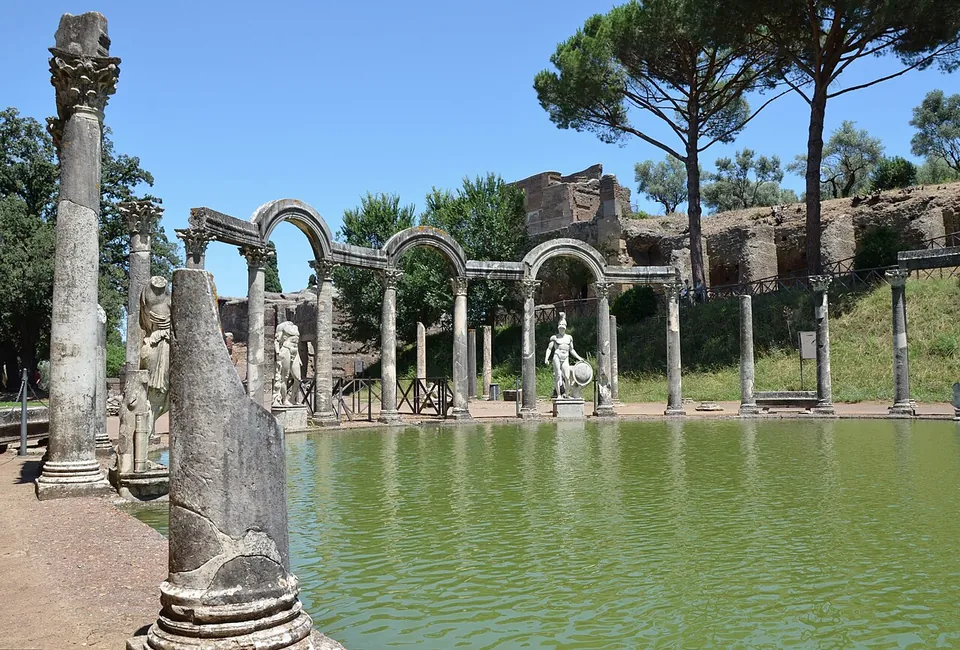
and the remains of an imperial villa linked with Hadrian lie in the plain near the town
(en.wikipedia; the Ministry of Culture). In AD 39 the emperor Caligula named two new legions,
XV and XXII Primigenia, after the town’s goddess (it.wikipedia). The oracle was consulted into
Christian times, until Constantine and then Theodosius forbade the practice (en.wikipedia), and
a bishop of Praeneste is first recorded in 313 (en.wikipedia).
In the Middle Ages the Colonna family held the town and built their palace on the sanctuary’s top
terrace. The town was razed on the orders of Pope Boniface VIII at the end of the 13th century,
destroyed again by the papal commander Giovanni Vitelleschi in 1436 or 1437, and passed to the
Barberini in 1630 (en.wikipedia; it.wikipedia). The Nile mosaic, still in place in the early
16th century, was lifted in the 1620s, cut into pieces, taken to Rome
and brought back to the palace at Palestrina for the Barberini (en.wikipedia; it.wikipedia).
More photographs
A colonnaded half-round recess in the sanctuary's terrace walls. · Photo: Camelia.boban · CC BY-SA 3.0 · Wikimedia Commons
The museum's model of the sanctuary as it may have looked when complete. · Photo: MM · CC BY-SA 3.0 · Wikimedia Commons
The Nile mosaic, found in the forum and now on the top floor of the museum. · Photo: Sergio D'Afflitto · CC BY-SA 3.0 · Wikimedia Commons
Remains of the Roman basilica's facade, built into the front of the former Seminario on the forum square. · Photo: MM · CC BY-SA 3.0 · Wikimedia Commons
The park the state holds covers about 70 hectares on the southern rim of a volcanic crater whose lake was drained in the 19th century (the operator; en.wikipedia).
Photo: Luiza Serpa Lopes · Public domain · Commons