What is there today
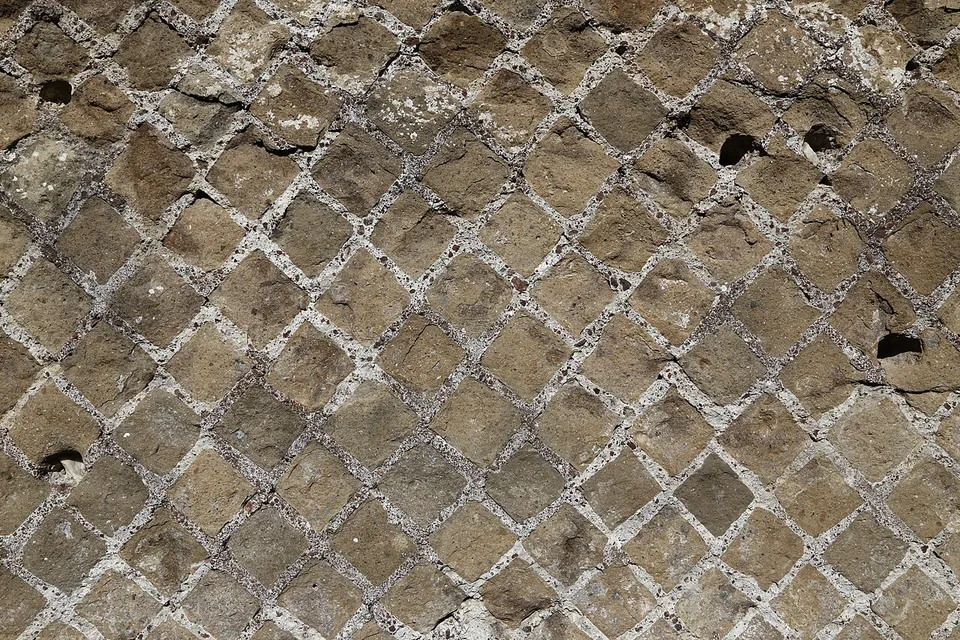
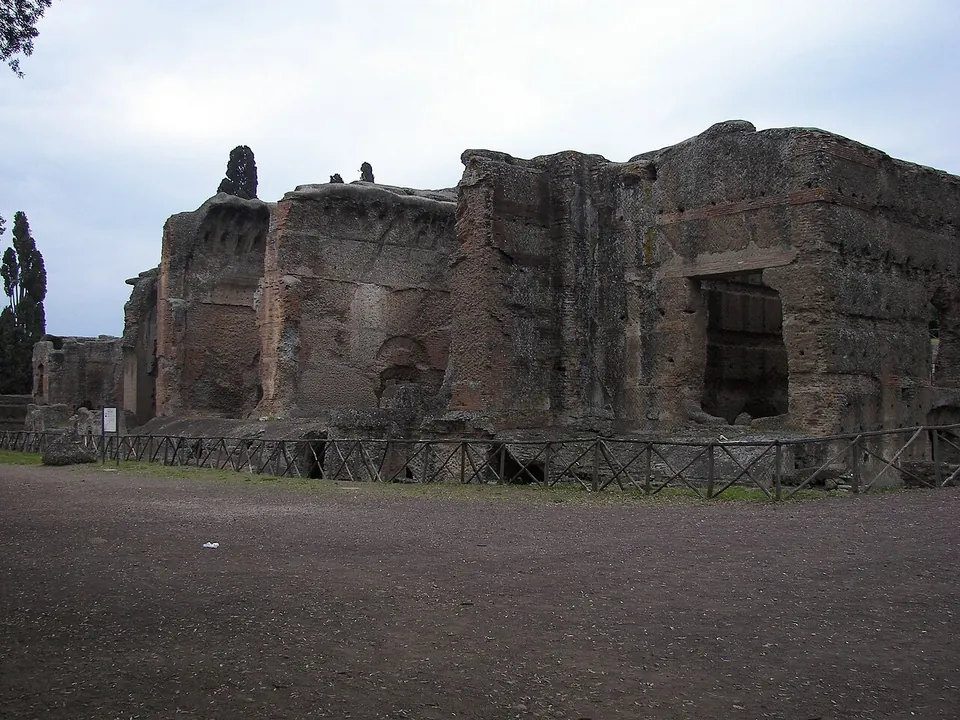
A landscape of ruins among olive trees and cypresses rather than one building. The villa covered at least 120 hectares, of which about 40 are open to visitors (the operator). What stands is the structure stripped of its finish: walls and vaults of brick and concrete, some of them still several storeys high, with the curved halls and domes for which many of its buildings are counted masterpieces of Roman architecture (en.wikipedia). The marble, statues and mosaics went over the centuries: more than 300 major works found here between the 16th and 19th centuries were dispersed to collections and museums across Europe (it.wikipedia).
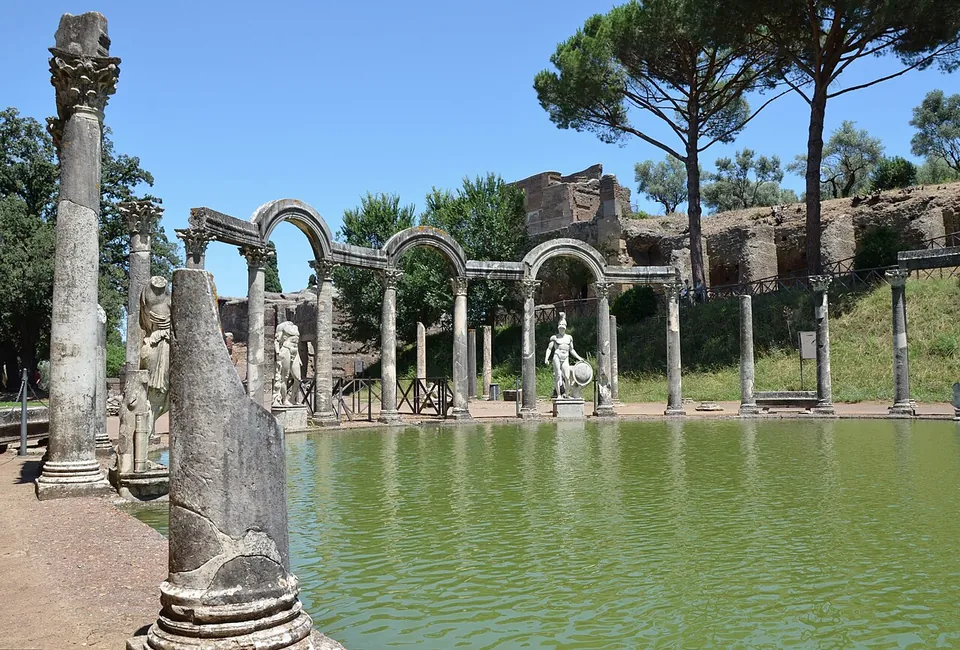
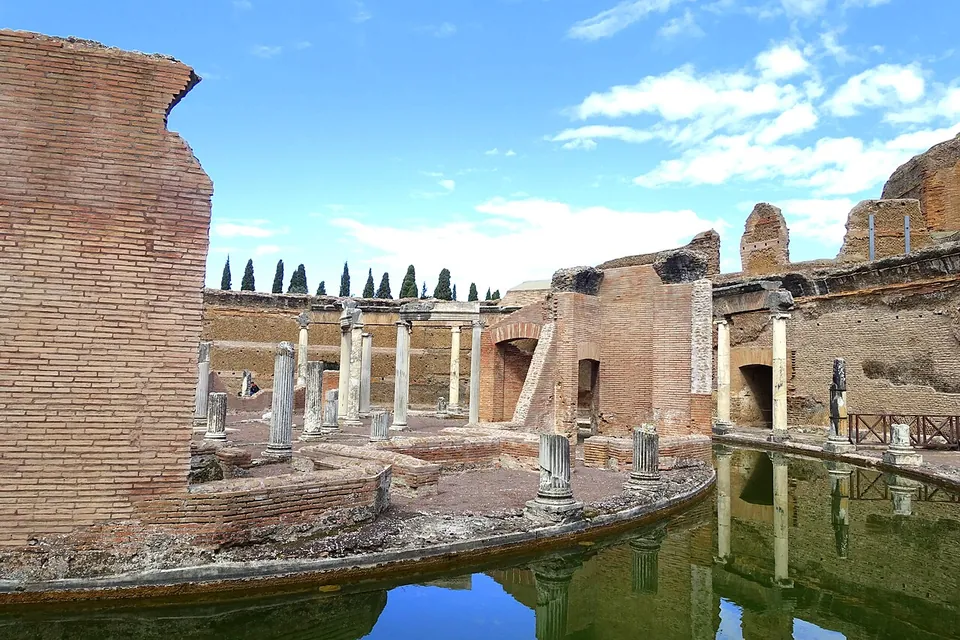
The set pieces are the Canopus, a long pool lined with columns and statues; the Maritime Theatre, a round island house inside a moat; the Pecile, a vast walled garden with a pool; the Piazza d’Oro, a garden court with a canal; and the Great and Small Baths. A scale model of the villa is on show at the site (the operator), and there are toilets, drinking fountains and a small refreshment point inside (the operator).
Is it worth the trip?
Yes. For anyone curious about how Rome’s rulers lived, this is the place, and it is an easy day out from Rome. UNESCO listed it in 1999 (en.wikipedia), and it combines well with Villa d’Este in Tivoli itself, run by the same operator and covered by the same three-day pass.
Know what you are walking into. Much of it is roofless brick and concrete, and of the imperial palace itself little remains beyond a few columns and fragments (it.wikipedia); its splendour has to be read from the scale of what is left. The site is large, the paths are unsurfaced with slopes, and in winter the gates close early: from November to January the last entry is at 15.30.
Getting there
The entrance is at Largo Marguerite Yourcenar in the village of Villa Adriana, part of Tivoli, about 3 km from Tivoli’s centre (OpenStreetMap). By car, take the A24 to the Tivoli exit and follow the Strada Maremmana Inferiore for about 2.5 km; there is a paid car park in front of the entrance. Without a car: metro line B to Ponte Mammolo, then a Cotral bus on the Via Prenestina route, which stops about 300 m from the entrance; or a train from Roma Termini or Tiburtina to Tivoli and the local CAT bus 4 or 4X, which stops at the gate. Cotral buses on the Via Tiburtina stop between 1 and 2 km away (the operator).
The villa opens every day except 1 January and 25 December. In October entry is from 08.30 to 17.00 and the site closes at 18.30 until the clocks go back, then entry to 16.00 and closing at 17.30; from November to January entry runs to 15.30 and the site closes at 17.00; from the clocks going forward in March to the end of September entry runs to 18.00 and closing is at 19.30 (the operator). A ticket is €15, a reduced ticket €2, and under-18s go free; everyone gets in free on the first Sunday of the month. The VILLÆ Pass, €30 or €4 for 18- to 25-year-olds, adds Villa d’Este and the Sanctuary of Hercules Victor in Tivoli within 72 hours (Ministry of Culture and the operator, read 14 October 2026; check before travelling, since hours change through the year).
Visiting details
- Opening hours
- Daily except 1 January and 25 December. Entry and closing change through the year: November to January entry 08.30–15.30, site closes 17.00; February entry 08.30–16.00, closes 17.30; March until the clocks go forward, and October until they go back, entry 08.30–17.00, closes 18.30; from the clocks going forward in March to the end of September entry 08.30–18.00, closes 19.30; October after the clocks go back entry 08.30–16.00, closes 17.30. The Mouseia exhibition space and the scale model open at 09.00 and close half an hour before the site.
- Tickets
- €15; reduced ticket €2; free under 18. Free for everyone on the first Sunday of every month, 25 April, 2 June and 4 November, and for women on 8 March. The VILLÆ Pass, €30 (€4 for visitors aged 18 to 25), covers Hadrian's Villa, Villa d'Este and the Sanctuary of Hercules Victor in Tivoli within 72 hours of the first entry. Tickets are sold at the gate and online.
- Parking
- A paid car park is in front of the entrance (the operator).
Before you go
- Paths through the site are unsurfaced and uneven, with changes of level; the operator asks for suitable shoes.
- Parts of the villa may be closed for restoration or other technical reasons; the ticket office says which.
- The site is only partly accessible to visitors with reduced mobility.
Hours and prices checked 14 October 2026 on the operator's own site. Confirm before travelling.
The Canopus
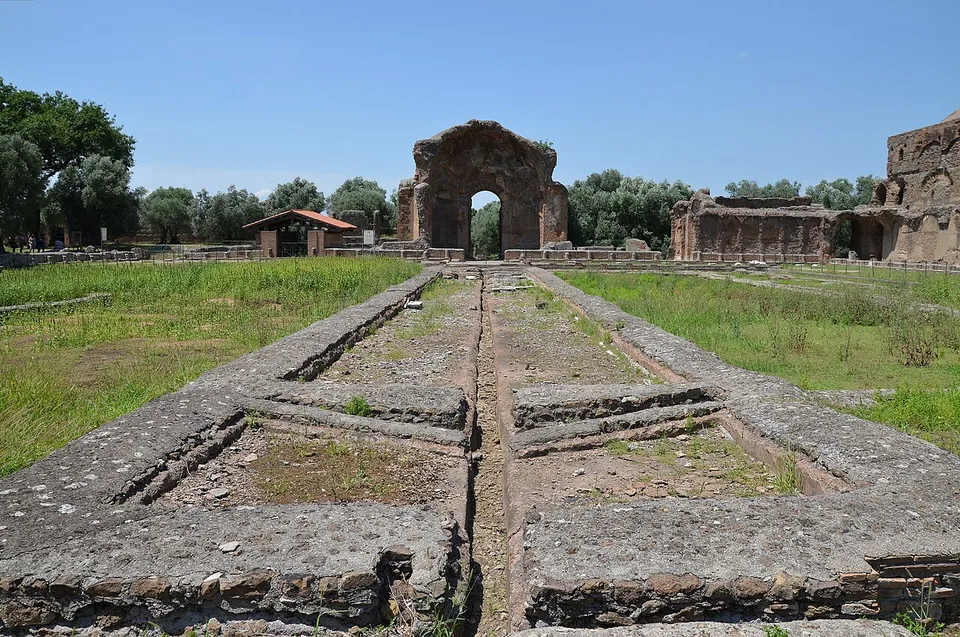
Named after the Egyptian city and the branch of the Nile that led to it, the Canopus is a long reflecting pool that stood for the Nile, ending in a huge domed exedra where diners lay on a semicircular masonry couch, the stibadium (en.wikipedia). Its sculpture is the most complete in the villa, and included Roman copies of the caryatids of the Erechtheion in Athens, turned to face the water (en.wikipedia, it.wikipedia). Identifying it with the Canopus named in the ancient sources goes back to the 16th-century architect Pirro Ligorio; brick stamps put the building before Hadrian’s journey to Egypt in 132, so it is better read as an exotic Nile scene than as a souvenir of that trip (it.wikipedia). The banqueting hall is often called the Serapeum, a name de.wikipedia calls unsuited to its function; its half-dome spans 16.75 m (de.wikipedia).
The Maritime Theatre
Not a theatre at all: the name comes from its round shape and from friezes of sea creatures (en.wikipedia). A circular portico on Ionic columns, about 40 m across, encloses a ring of water round an island, and on the island stood a small house, with an atrium, a library, a dining room and baths, reached by two drawbridges (en.wikipedia). Begun in 118, it was one of the first buildings of the villa and has been read as Hadrian’s first residence on the site and the private part of the palace (en.wikipedia, it.wikipedia).
Beside it lie the so-called Greek and Latin Libraries and their courtyard (en.wikipedia). The courtyard, a peristyle 48 by 72 m, dates from the Republican villa and is one of the oldest gardens on the site (Pleiades). The names are a misreading, and what the buildings were is debated: summer dining rooms, assembly halls or belvederes (en.wikipedia).
The Pecile and the Hundred Rooms
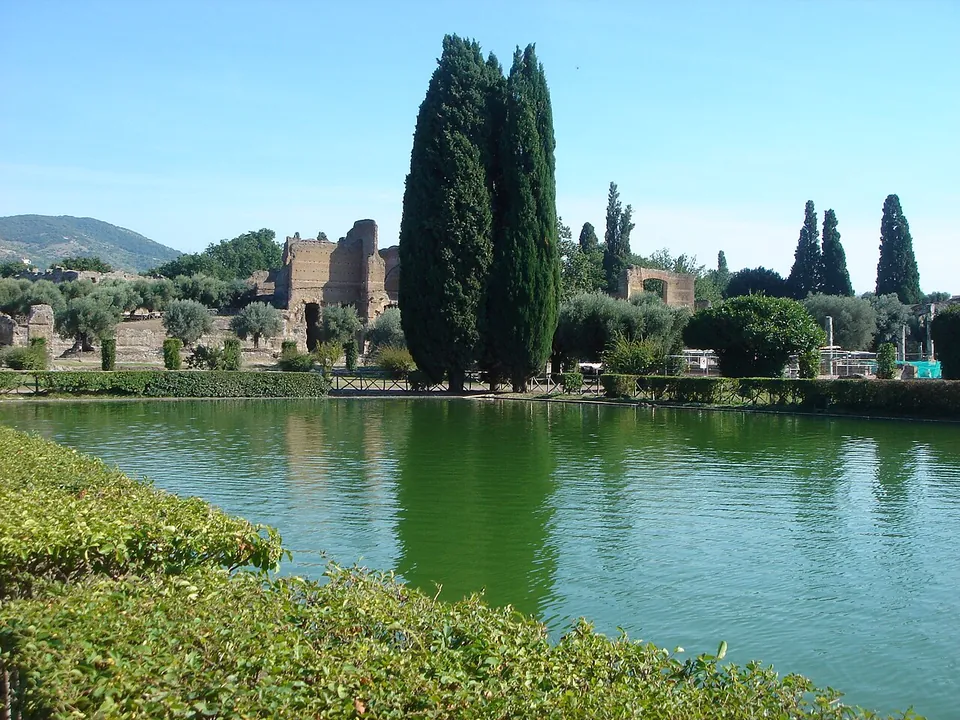
The Pecile takes its name from the Stoa Poikile, the painted portico in the agora of Athens (en.wikipedia, it.wikipedia). It is a huge garden on an artificial terrace, about 230 by 96 m (de.wikipedia), with a large pool in the middle and walls with colonnades along their inner side (en.wikipedia). The central wall of its double portico on the north side, 9 m high, survives in full; the portico let people walk under cover in bad weather (en.wikipedia).
Holding up the terrace is the Cento Camerelle, the “hundred rooms”: up to four floors of small identical rooms, reached from wooden balconies, which probably housed the villa’s humblest servants or slaves, or perhaps the guard (en.wikipedia).
The Piazza d’Oro
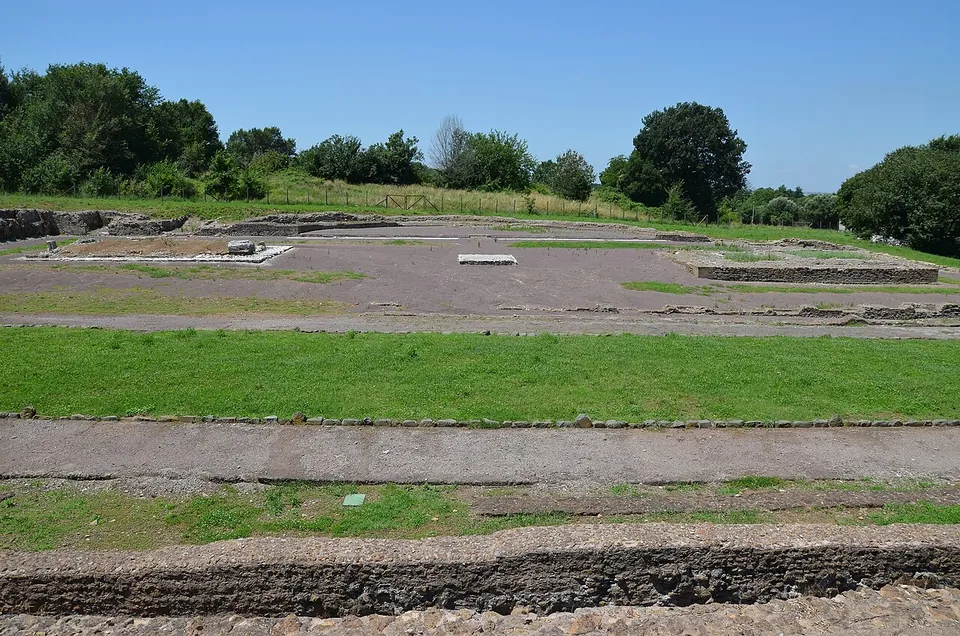
One of the largest and most luxurious complexes of the villa (Pleiades). A peristyle 61 by 51 m enclosed a garden with a central canal, flanked by flowerbeds and pools, behind a portico of columns in cipollino marble and Egyptian green granite (en.wikipedia). It was entered through a vestibule under an “umbrella” dome; at the far end, rooms with walls now concave, now convex, frame a semicircular nymphaeum (en.wikipedia, it.wikipedia). Its rich fittings made it a target of treasure hunters from the 16th century on (en.wikipedia).
The Winter Palace and the Stadium Garden
A garden shaped like a stadium, with a semicircular nymphaeum at its southern end, lies between the Building with Three Exedrae to the west and the Winter Palace to the east (Pleiades). The Winter Palace rose over three levels with heating under its floors; on its top level a 40-column courtyard surrounded a 28 m pool, once clad in white marble (en.wikipedia).
The baths
Two bath buildings stand on the axis of the Canopus valley, called the Great and the Small Baths for their size: the Small Baths, richly decorated, are thought to have served the emperor’s family and guests, the Great Baths the villa’s staff (it.wikipedia). The emperor’s own baths, begun around 118, included the Heliocaminus, a domed room heated by the sun as well as from below (en.wikipedia).
The Antinoeion
Along the road to the main vestibule, a sacred precinct for Antinous, Hadrian’s favourite, was uncovered around the turn of the millennium; published dates for the discovery range from 1998 to 2003 (en.wikipedia, de.wikipedia, it.wikipedia). The bases of two temples face each other across a square, and between them a foundation is thought to have carried the obelisk now on the Pincian Hill in Rome (it.wikipedia, en.wikipedia). Whether Antinous was buried here is argued both ways (en.wikipedia). What a visitor sees is foundations.
The theatres
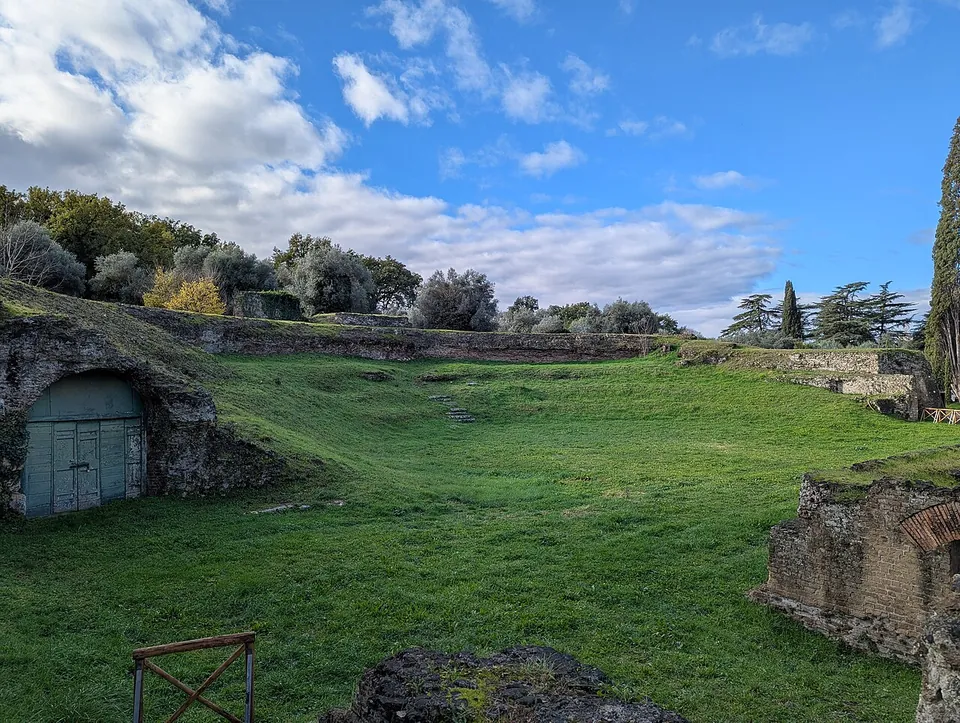
The so-called Greek Theatre, near the entrance (OpenStreetMap), keeps only a few of its steps and the outline of its seating; despite the name it is Roman in form, and it served private performances (it.wikipedia). A second theatre, the Odeon or South Theatre, lies at the far southern end of the villa (Pleiades); its brick stamps date from 137 (en.wikipedia). No source says whether it is on the visitor route.
History
Several villas of the Republic already stood on the site, and one of them, built in three phases from the time of Sulla to that of Augustus, became the core of Hadrian’s palace (en.wikipedia). It may have come to him through his wife Vibia Sabina (en.wikipedia, it.wikipedia). Building began at the end of 118 or early in 119 (en.wikipedia); brick stamps show three busy phases, 118 to 121, 125 to 128 and 134 to 138 (it.wikipedia). Hadrian spent much of his reign travelling; he is first documented at the villa in 125 and used it as his official residence from about 128 (en.wikipedia). A late Roman biography of him says he named parts of it after famous places, among them the Lyceum, the Academy, the Prytaneum, Canopus, the Poikile and the Vale of Tempe, and even made an underworld, and today’s names for its buildings still follow it (de.wikipedia, en.wikipedia), though de.wikipedia warns that the source is unreliable and that the names do not always fit what excavation has found.
His successors used the villa from time to time, and it was restored under Diocletian at the end of the 3rd century (en.wikipedia). By the 4th century at the latest the stripping of its statues and marble had begun, and in the Gothic War of 535 to 554 it served both sides as a camp (en.wikipedia, de.wikipedia). In the Middle Ages it was farmland and a quarry for building stone and lime (it.wikipedia).
Humanists rediscovered it in the 15th century: Ciriaco d’Ancona recognised it as an imperial residence in 1434, and Flavio Biondo wrote about it around 1450 (it.wikipedia). Popes, cardinals and landowners dug it for statues; Cardinal Ippolito II d’Este had much of its remaining marble and sculpture taken to his new Villa d’Este nearby (en.wikipedia, it.wikipedia). The state bought the land from its largest owners, the Braschi family, in 1870 (it.wikipedia; de.wikipedia gives 1871), and excavation and restoration followed, though parts remain in private hands and exploration is far from finished (it.wikipedia).
More photographs
Nearby
3 km · city · Lazio
Tibur – Tivoli
The postcard view is the acropolis at the east end of the old town, where two small temples stand side by side overlooking the falls and the gorge (en.wikipedia).
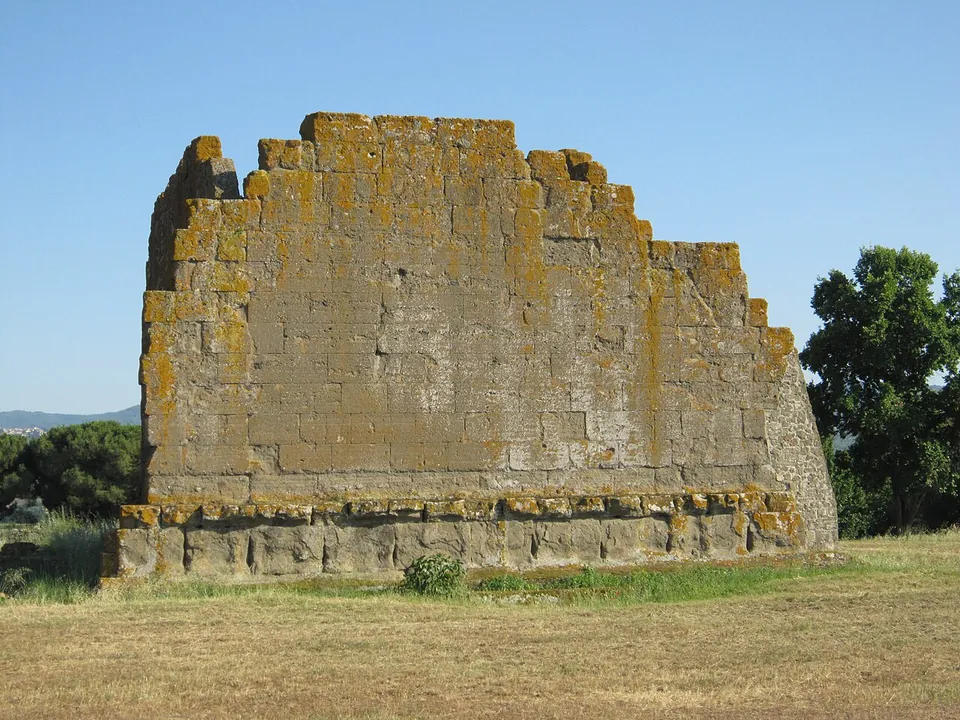
Photo: Carlomorino · CC BY-SA 3.0 · Commons
8 km · city · Lazio
Gabii
The park the state holds covers about 70 hectares on the southern rim of a volcanic crater whose lake was drained in the 19th century (the operator; en.wikipedia).
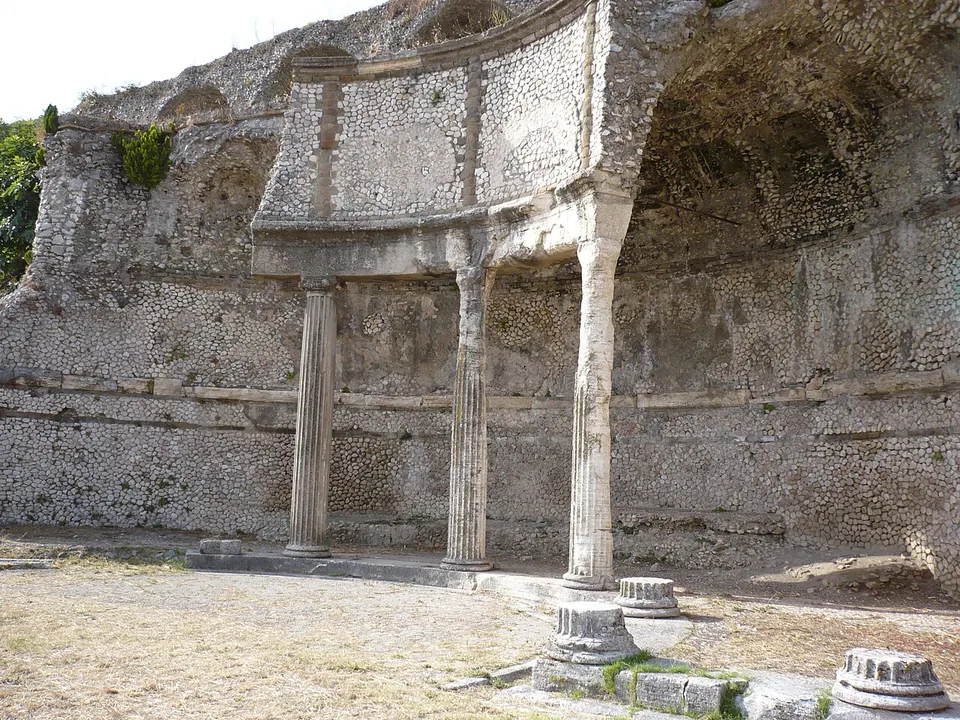
Photo: Zanner · Public domain · Commons
15 km · temple · Lazio
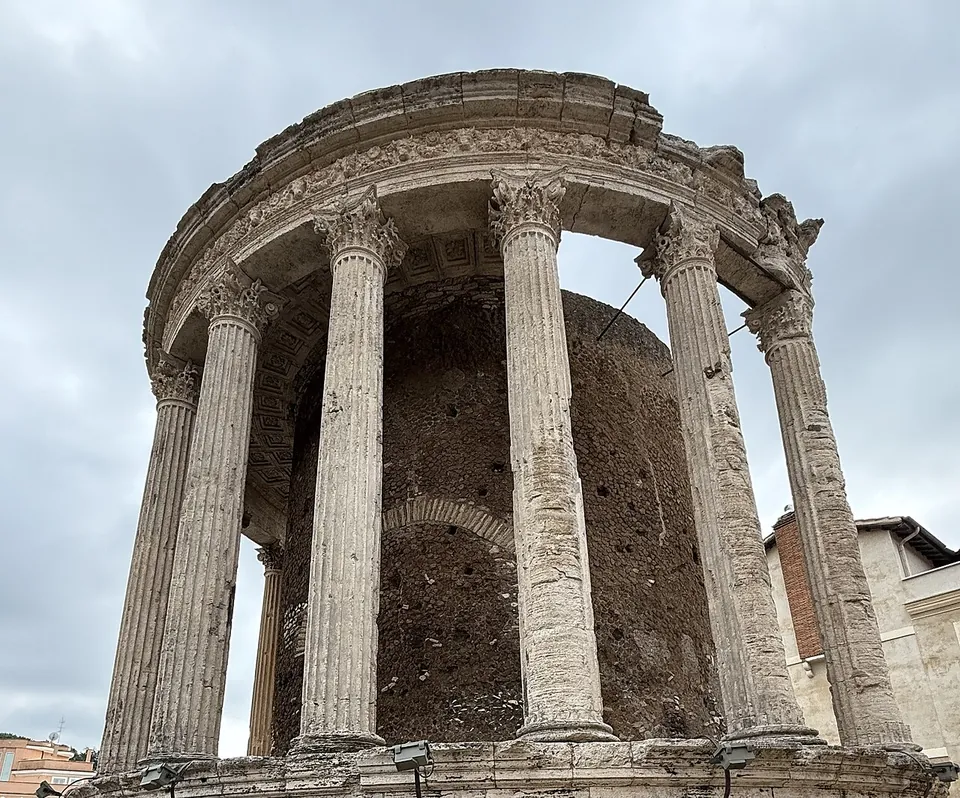
Sanctuary of Fortuna Primigenia
The sanctuary was built on the slope of Monte Ginestro as six artificial terraces linked by ramps and stairways (it.wikipedia; fr.wikipedia counts five, dividing them differently).


Straight-line distances.
Sources
Every fact on this page comes from the records below, each used under the licence noted.