

What is there today
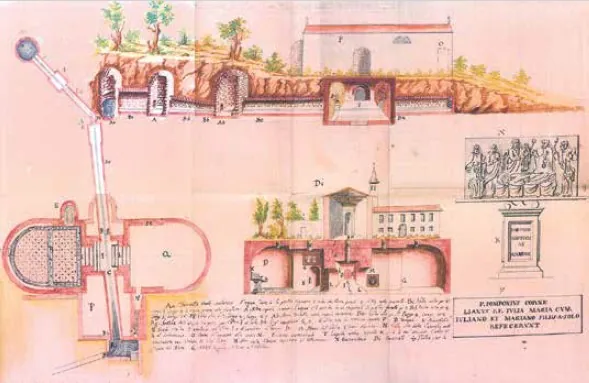
The water of an underground spring collects in a semicircular settling basin cut in the rock and runs on along a low, narrow, barrel-vaulted channel 100 m long, with four shafts along it. About a quarter of the way along, where fifteen steps come down from above, a small cross-shaped atrium opens off the channel on two facing rooms, each ending in an apse with a half-dome and a round opening at its centre (it.wikipedia).
The two rooms hold the decoration. Both have mosaic floors of the 4th–5th centuries: the one in the right-hand room is poorly preserved, the one on the left substantially intact, with dark-red patterns outlined in black on a white ground, inside a border of plant motifs. The left room’s wall paintings are almost complete - Old and New Testament scenes set between two red bands and divided by painted pilasters - and its half-dome is painted with concentric rings of cylinders in different colours. it.wikipedia counts the cycle among the most interesting of early Christian painting in northern Italy. The atrium vault has paintings of the same period with natural motifs. Later layers sit beside them: a Hand of God of the 8th or 9th century in the right-hand room, and a Virgin and Child between two angels on the starry vault of the left-hand room, a century later, which gave the chapel its name (and, says the operator, the village). A Roman altar of the 1st century, dedicated to an adopted daughter of the Pomponius family, stands in the right-hand room (it.wikipedia).
The visit is guided and lasts about 50 minutes: a 15-minute introduction, 25 minutes underground and 10 minutes around the village - the church above, with its own frescoes, the bell tower and the stone washing troughs (the operator). The lighting, installed in 2020, is switched by the guide to light one scene at a time (it.wikipedia).
Is it worth the trip?
If you are in Verona, have a car and can plan a week ahead, yes. This is a Roman underground building still vaulted and painted, with the Christian chapel it became on its walls, and it is shown to a handful of people at a time.
But it is rationed. No more than 20 visitors a day get in, in groups of five including the guide, on four weekend rounds and on weekdays only by arrangement, and every visit is booked by e-mail in advance. Without a booking there is no visit. The talk is in Italian unless you ask for English, and photography is not allowed underground, so you leave with what you remember.
Getting there
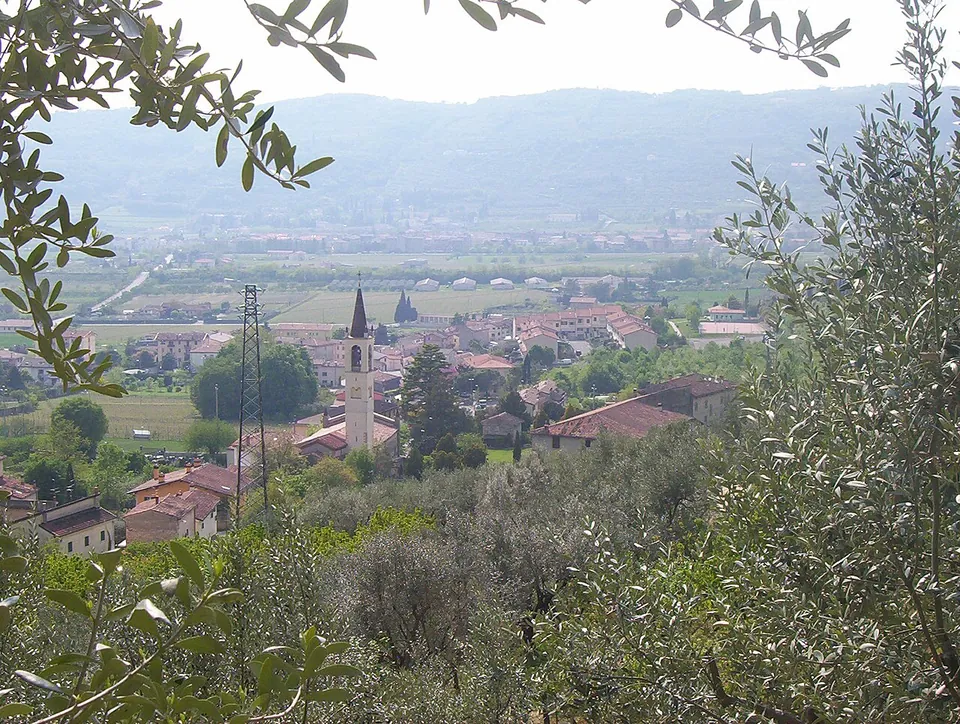
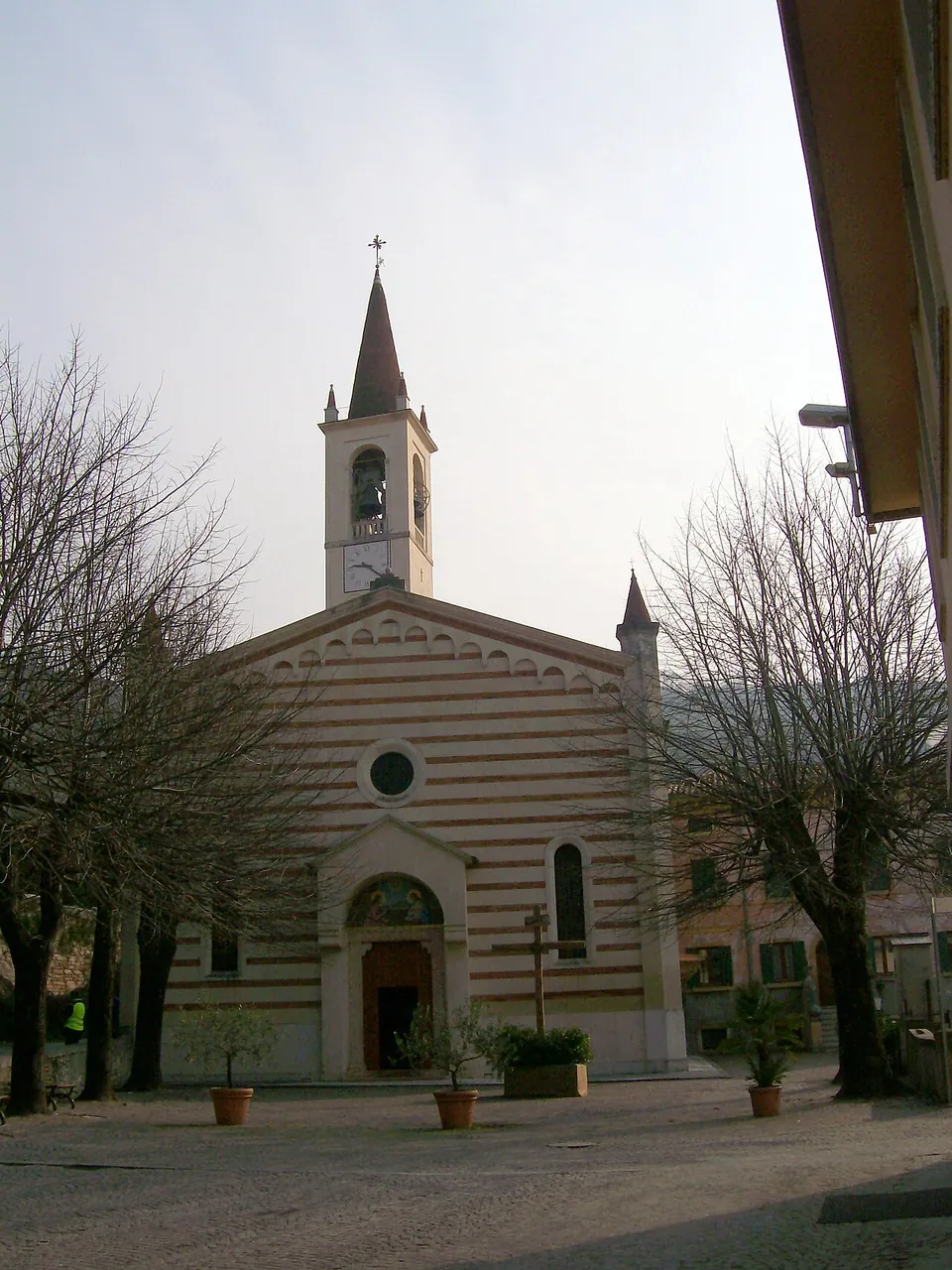
Santa Maria in Stelle is a village in the Valpantena, about 10 km from Verona (Visit Verona); the address is Via Pantheon 1. No bus stop is mapped near the site, so plan on a car; a car park is mapped about 130 m away (OpenStreetMap). The group meets on the square in front of the church of Santa Maria Assunta a few minutes before the agreed time.
Book by e-mail to [email protected], giving the day, the time and the number of people. The operator asks for at least five working days’ notice on its visiting page and at least two days’ on its booking page, and takes bookings up to three months ahead; allow at least a week. There is no ticket: visitors are asked for a free-will offering towards the cost of opening the site, which is run by volunteers from the parish. Rounds can move or be cancelled when the church holds a wedding, a funeral, a baptism or a feast-day service, because church and hypogeum connect. It is about 15 °C and damp below ground, and the steps down have a handrail: the operator does not recommend the visit for anyone with serious walking difficulties (ipogeostelle.it, read 24 October 2026).
Visiting details
- Opening hours
- Guided visits by booking only. The operator publishes rounds rather than clock times - one on Saturday morning, two on Saturday afternoon and one on Sunday afternoon, with weekdays on request; the day and time are agreed in the booking e-mail. Book by e-mail to [email protected] between three months and five working days ahead (another of the operator's pages asks for at least two days' notice). Rounds can change or be cancelled when the church above holds a wedding, funeral, baptism or feast-day service.
- Tickets
- No ticket; visitors are asked for a free-will offering, which pays for opening and maintaining the site.
- Parking
- A car park is mapped about 130 m from the site (OSM way/383447088). Visitors meet on the square in front of the church of Santa Maria Assunta, a few minutes before the agreed time.
Before you go
- No more than 20 visitors a day, in groups of at most five including the guide, so a visit without a booking is not possible.
- Visits are in Italian; English only on request.
- Photography and filming are not allowed underground. Backpacks, umbrellas, food and drink stay outside.
- The way down is several steps with a handrail, and the operator does not recommend the visit for anyone with serious walking difficulties; disabled visitors need to make specific arrangements with the association.
- It is about 15 °C and humid underground; bring a layer.
- No bus stop is mapped near the site; plan on a car.
Hours and prices checked 24 October 2026 on the operator's own site. Confirm before travelling.
History
What the building was first built for is uncertain. On it.wikipedia’s account, it was made in the 3rd century, probably as a funerary monument: an inscription on the lintel of the entrance names Publius Pomponius Cornelianus, a Roman notable who held public office around Verona and Vicenza, as having built it with his wife and children, and he is probably the man shown in a statue in one of its niches. The naming of the whole family suggests a cenotaph of the Pomponii, but the spring that rises inside makes an aqueduct or a nymphaeum - rooms for the cult of the water nymphs, to whom Cornelianus was devoted - credible too. The volunteer association that runs the site tells it differently: an aqueduct of the Pomponii in the 1st century AD, turned into a nymphaeum by Cornelianus in the 3rd (the operator).
In the second half of the 4th century the space became a Christian building, first still a funerary one and from the early 5th century a chapel, and the mosaics and paintings belong to that change; the Old and New Testament scenes in the left room have suggested a place for teaching those preparing for baptism (it.wikipedia). The operator goes further and holds that Zeno, bishop of Verona, consecrated it as the first baptismal font outside the city walls.
The chapel stayed in use through the Middle Ages: Pope Urban III consecrated it for the liturgy on 7 June 1187 (the operator), and in the 15th century, when the church above was enlarged, the old entrance from outside was closed and the present stairway built (it.wikipedia). The watercolour surveys Gaetano Cristofali made in the 18th century record its rediscovery (it.wikipedia). Damp had kept the hypogeum in a critical state for years; its painted surfaces were restored between 2016 and 2019 (it.wikipedia), and since June 2018 a volunteer group from the parish, now an association, has opened the site to visitors (the operator).
Nearby
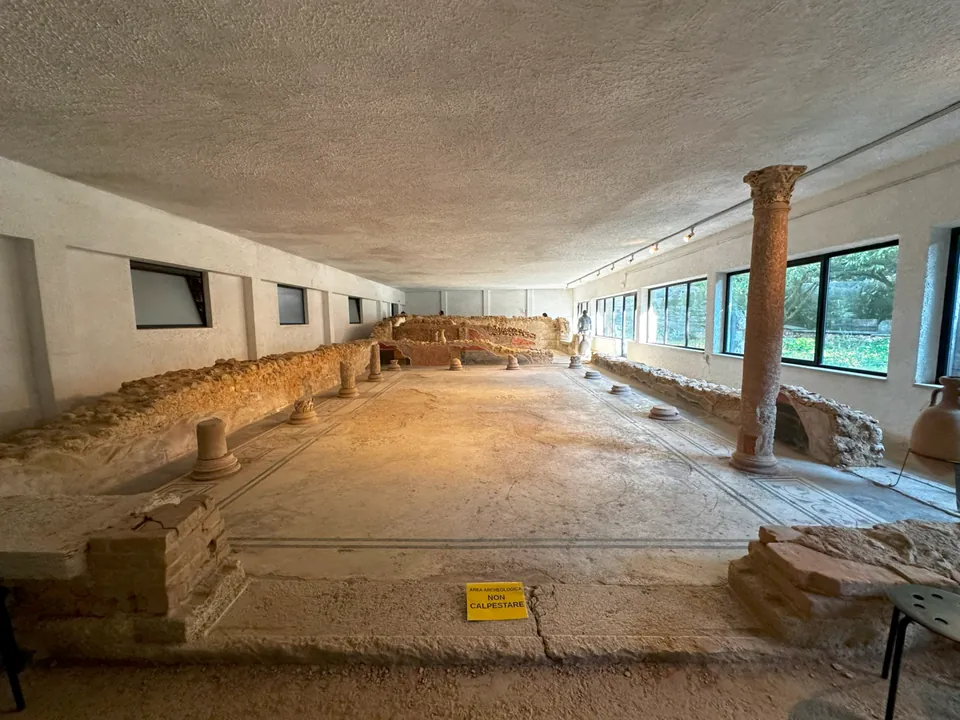
Photo: Kia93VR · CC BY-SA 4.0 · Commons
5 km · villa · Veneto
Valdonega Roman Villa
The house is small - about 17 by 11 m without its portico (the operator) - and what you see is its rooms at floor level, their walls standing low.
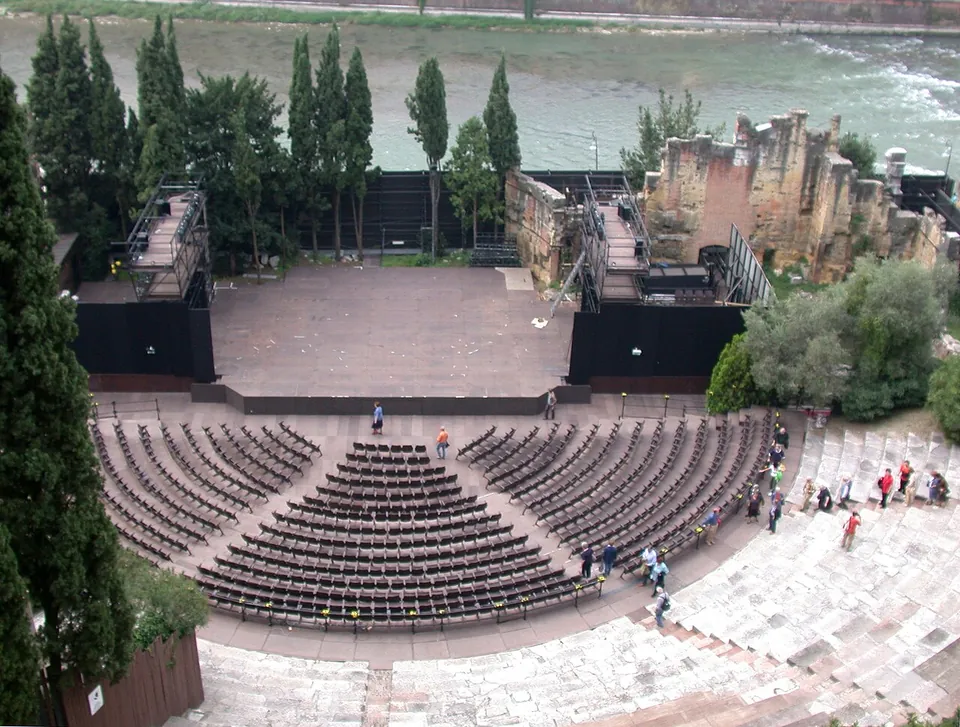
Photo: MM · Public domain · Commons
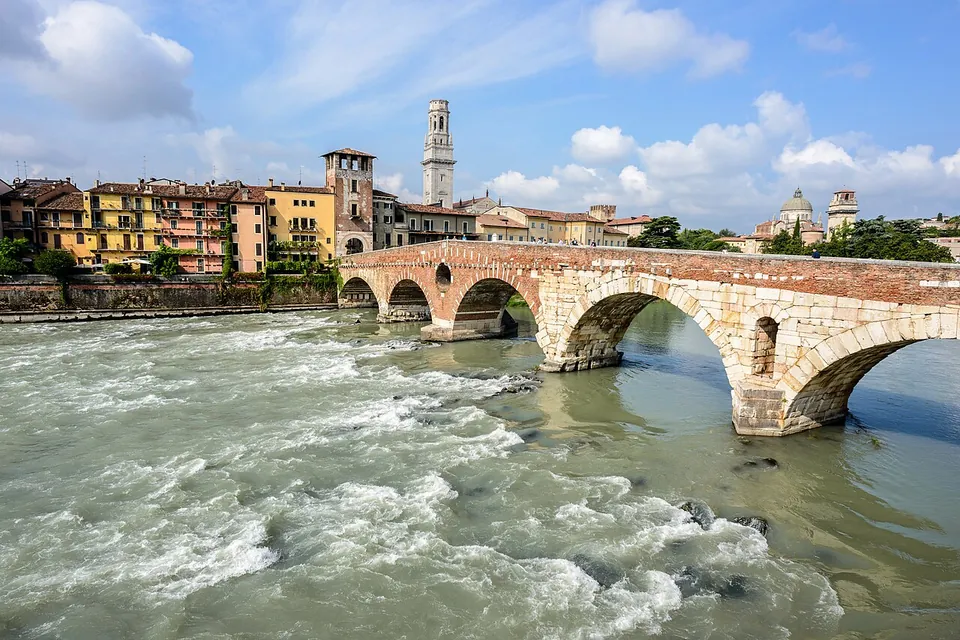
Photo: Nick Savchenko from Kiev, Ukraine · CC BY-SA 2.0 · Commons
6 km · bridge · Veneto
Ponte Pietra
A footbridge about 93 to 95 m long on five arches (it.wikipedia; fr.wikipedia), and you read its history from the materials.


Straight-line distances.
Sources
Every fact on this page comes from the records below, each used under the licence noted.
| Source | Licence |
|---|---|
| Wikidata Q3893449 | CC0 |
| OpenStreetMap way/138992381 | ODbL |
| Ipogeo di Santa Maria in Stelle — booking, rounds and offering (the operator) | licence not recorded |
| Ipogeo di Santa Maria in Stelle — the visit (the operator) | licence not recorded |
| Ipogeo di Santa Maria in Stelle — visiting rules (the operator) | licence not recorded |
| Ipogeo di Santa Maria in Stelle — history (the operator) | licence not recorded |
| ArcheoVeneto (Regione del Veneto, University of Padua) — Roman underground aqueduct and early Christian cults area in Santa Maria in Stelle | licence not recorded |
| Visit Verona — Ipogeo di Santa Maria in Stelle | licence not recorded |
| Wikipedia (it) — Ipogeo di Santa Maria in Stelle | CC BY-SA 4.0 |