What is there today
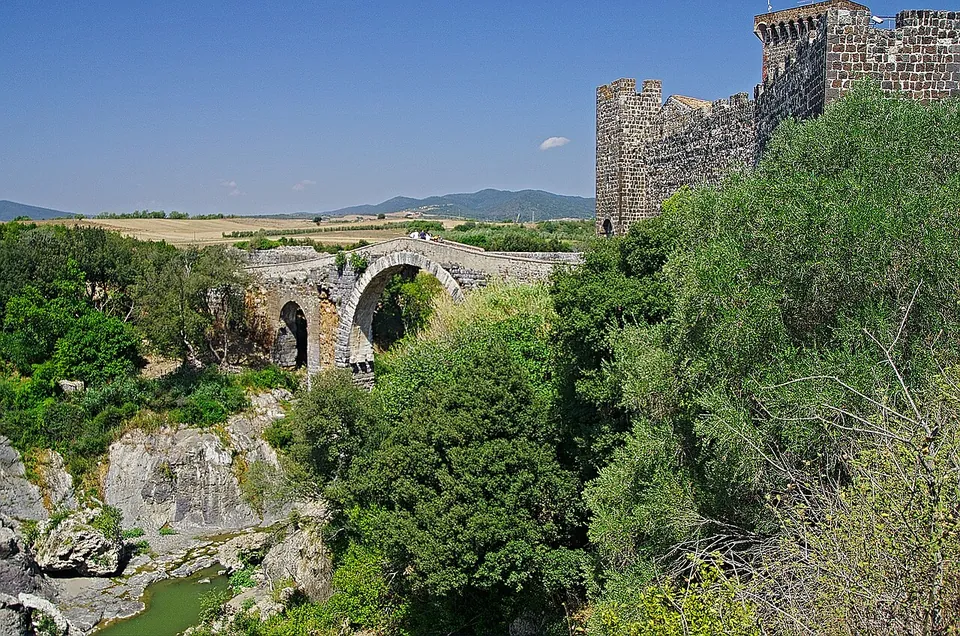
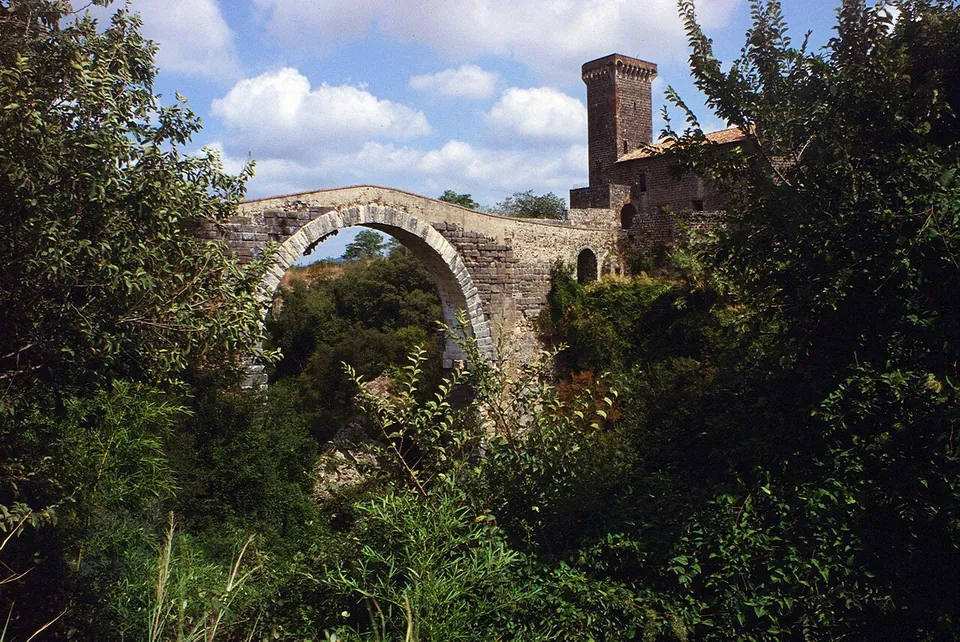
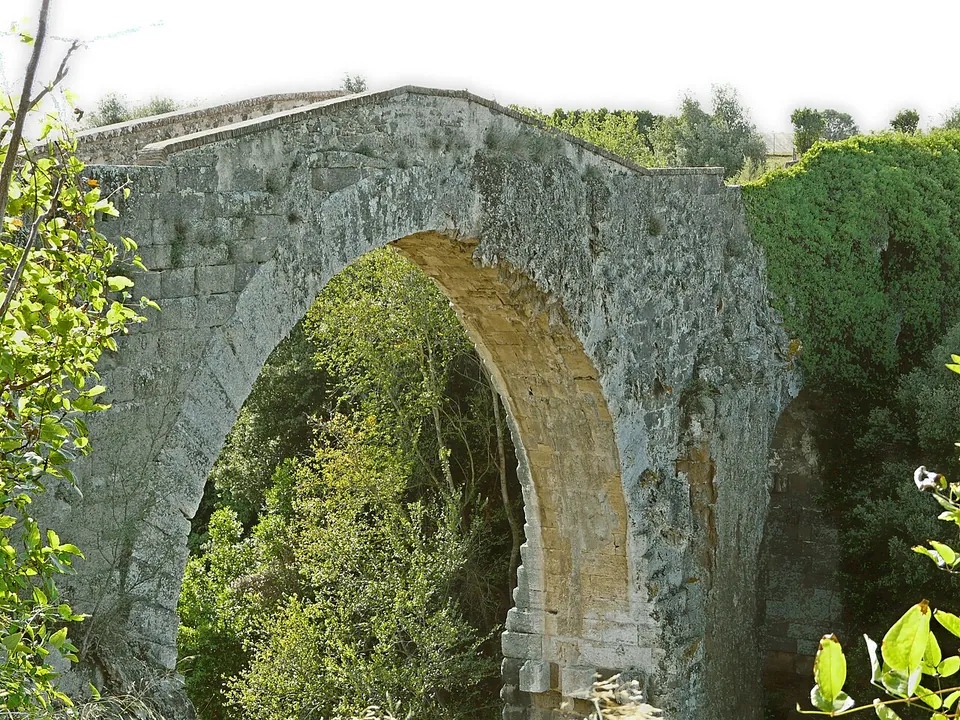
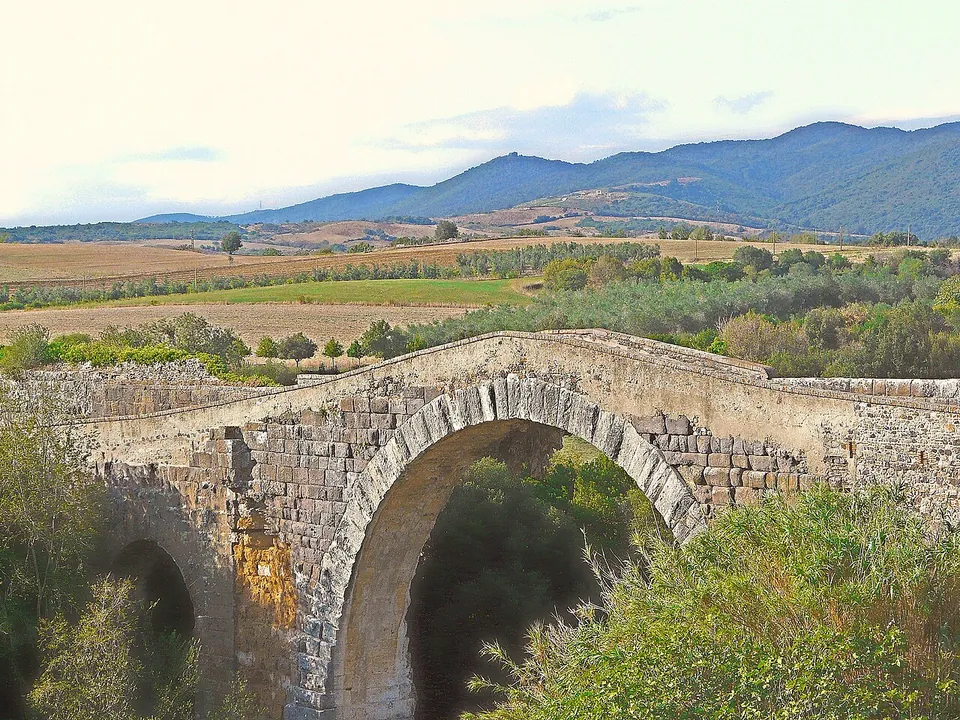
The bridge itself, standing and complete. Its main arch spans 20 m and rises 30 m above the river (en.wikipedia), built of large blocks of tufa (it.wikipedia), and a smaller arch closes its western end; the deck is paved and mapped as a footpath (OpenStreetMap). At its eastern end rises the Castello dell’Abbadia, a dark stone castle with six towers that now houses Vulci’s national archaeological museum (the operator). Below, the Fiora runs between pale rocks and pools, and the photographs that do the bridge justice are taken from the rim of the gorge or from among the trees above the river. A history board stands about 40 m from the bridge and a viewpoint is mapped about 100 m away (OpenStreetMap).
Is it worth the trip?
As part of a day at Vulci, yes: an arch of this height over a wild gorge, with a castle on the end of it, is a sight worth stopping for. On its own it is a short stop: there is one bridge, one view and a castle. It makes sense together with the archaeological park of the ancient city, about 1.2 km away across the river, and with the museum in the castle, which holds the finds from Vulci’s excavations. The museum is closed for renovation until 18 December 2026, so before then the bridge and the park are what there is to see.
Getting there
The bridge lies in open country, roughly 9 km north of Montalto di Castro and 10 km west of Canino in a straight line (OpenStreetMap). The operator says the site can be reached only by your own transport. There is a free car park about 160 m from the bridge, and footpaths paved with setts are mapped around it (OpenStreetMap).
No operator publishes hours or a charge for the bridge itself. The museum, once it reopens, is open Tuesday and Wednesday 08.30–13.30 and Thursday to Sunday 08.30–19.30, closed on Mondays; a ticket is €5, or €2 for visitors aged 18 to 25, and it is free on the first Sunday of the month (Direzione regionale Musei nazionali Lazio, read 24 October 2026). The archaeological park of the city charges €10, €6 reduced, and opens daily from 09.00, closing at 17.00 from October to March, 18.00 from April to June and in September, and 19.00 in July and August (Ministero della cultura). Check before travelling: the dates of the museum’s closure have already moved once.
Visiting details
- Opening hours
- No operator publishes hours for the bridge itself. The museum in the Castello dell'Abbadia at its eastern end is closed for renovation until 18 December 2026; in normal times it opens Tuesday and Wednesday 08.30–13.30 and Thursday to Sunday 08.30–19.30 (last entry an hour before closing), and is closed on Mondays, 1 January and 25 December.
- Tickets
- No operator records a charge for the bridge. The museum, when open, is €5, or €2 for visitors aged 18 to 25, and free on the first Sunday of the month, 25 April, 2 June and 4 November. The archaeological park of the ancient city across the river charges €10 (€6 reduced).
- Parking
- Free car park (Piazzale Bortoccini Renato e Moretto Mario, OSM way/93113715) about 160 m from the bridge.
Before you go
- The museum beside the bridge is closed for renovation until 18 December 2026 (the regional museum directorate).
- The site can be reached only by car or other own transport (the regional museum directorate).
Hours and prices checked 24 October 2026 on the operator's own site. Confirm before travelling.
History
The bridge is Roman work on an older Etruscan crossing, but its date is given differently. The German Wikipedia article dates it to about 90 BC, built on the foundations of an Etruscan predecessor; the Italian article on the castle calls it Etruscan-Roman and puts it in the 3rd century BC; and the English article on Vulci judges that the tufa buttresses are very probably Etruscan, the piers of the original bridge. Rome conquered Vulci in 280 BC (it.wikipedia).
The bridge carried the ancient road and, unusually, an aqueduct leading to Vulci, about 1.5 km away (en.wikipedia). From the river the aqueduct ran across the Osteria area to the city, and a substantial stretch of it survives in front of the West Gate (it.wikipedia). When the aqueduct fell into disrepair its overflow built up what George Dennis described as a “curtain of stalactites” hanging from the parapet, standing out about 2 m from the wall and hanging some 5 to 6 m down, as though a waterfall had turned to stone in mid-fall (en.wikipedia, quoting Dennis).
The bridge outlived the city. Vulci was abandoned gradually in the early Middle Ages (it.wikipedia), but the road across the Fiora stayed important, and the castle was raised to guard it. The site is attested from the 9th century, when a fortified Benedictine abbey of San Mamiliano stood there, which gives the place its name; the castle took its present form in the 12th century and was enlarged by the Farnese in the 16th (the operator). The castle later served as the papal customs post on the frontier with the Grand Duchy of Tuscany (the operator; it.wikipedia). The published accounts do not say how much of the bridge’s masonry was repaired in those later centuries. Lucien Bonaparte owned the castle from 1808, the Torlonia family from the 1850s, and the state from 1960; the museum opened in 1975 and its present display in 2016 (the operator). D. H. Lawrence came in 1927 and described the castle as blackened and half-ruined, built of the same tufa blocks as the bridge but more carefully squared (it.wikipedia).
More photographs
Nearby
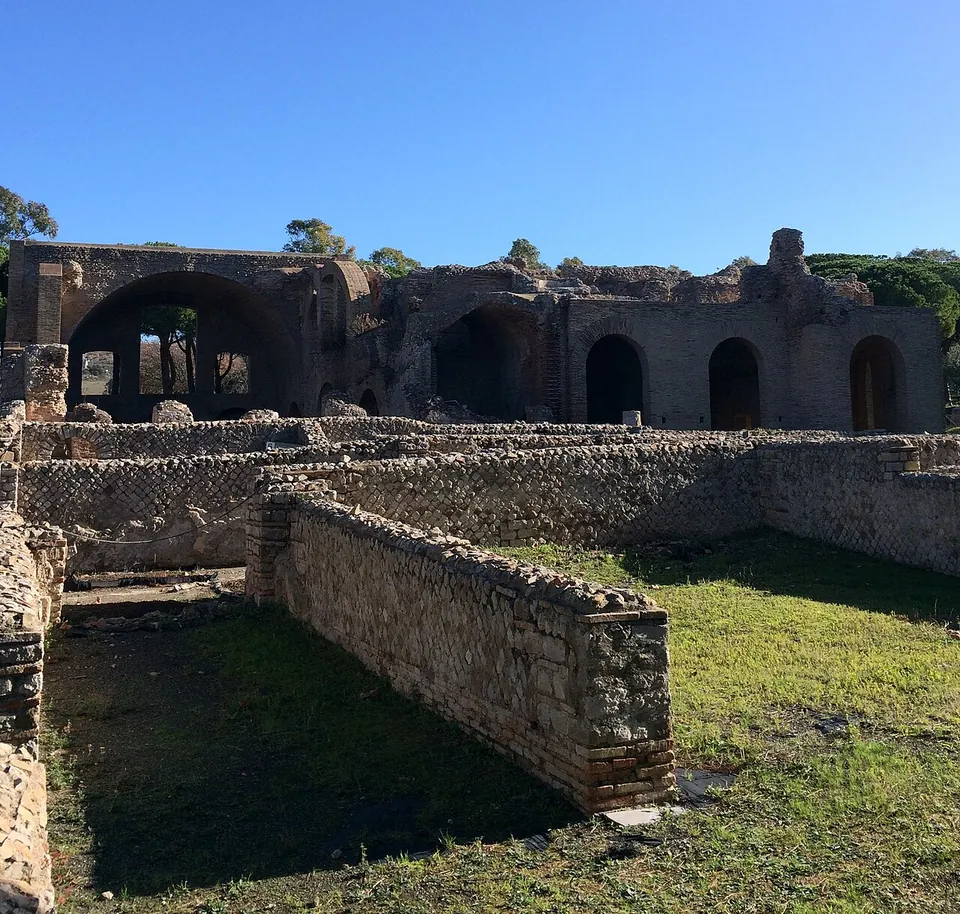
Photo: SamHolt6 · CC BY-SA 4.0 · Commons
39 km · bath · Lazio
Terme Taurine
The complex covers about two hectares (the operator) and has two parts side by side (it.wikipedia).
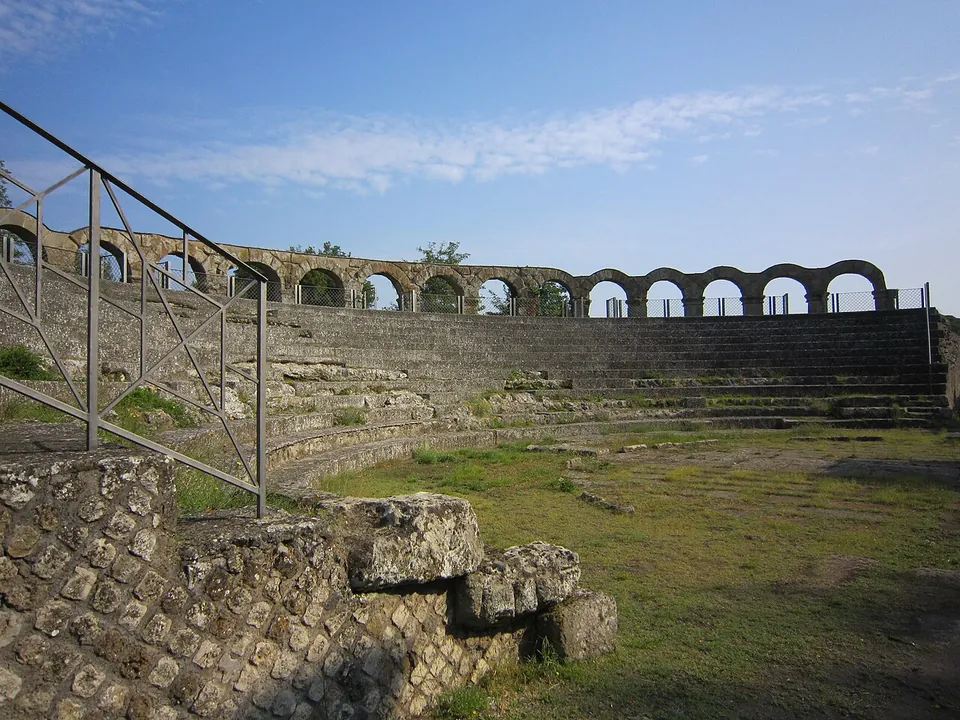
Photo: Carlomorino · CC BY-SA 3.0 · Commons
42 km · city · Lazio
Ferentium
Only a small part of the town has been excavated and can be visited; other areas were investigated and covered over again, the forum among them, which lies under a farm (it.wikipedia).


Straight-line distances.
Sources
Every fact on this page comes from the records below, each used under the licence noted.
| Source | Licence |
|---|---|
| Pleiades 414502 | CC BY |
| Wikidata Q1636337 | CC0 |
| Wikipedia (de) — Ponte dell'Abbadia | CC BY-SA 4.0 |
| Wikipedia (en) — Vulci, section "Ponte dell'Abbadia" | CC BY-SA 4.0 |
| Wikipedia (it) — Vulci | CC BY-SA 4.0 |
| Wikipedia (it) — Castello dell'Abbadia | CC BY-SA 4.0 |
| Direzione regionale Musei nazionali Lazio — Museo archeologico di Vulci e Castello dell'Abbadia (the museum's operator) | licence not recorded |
| Ministero della cultura — Museo archeologico di Vulci | licence not recorded |
| Ministero della cultura — Area della città etrusco-romana di Vulci | licence not recorded |