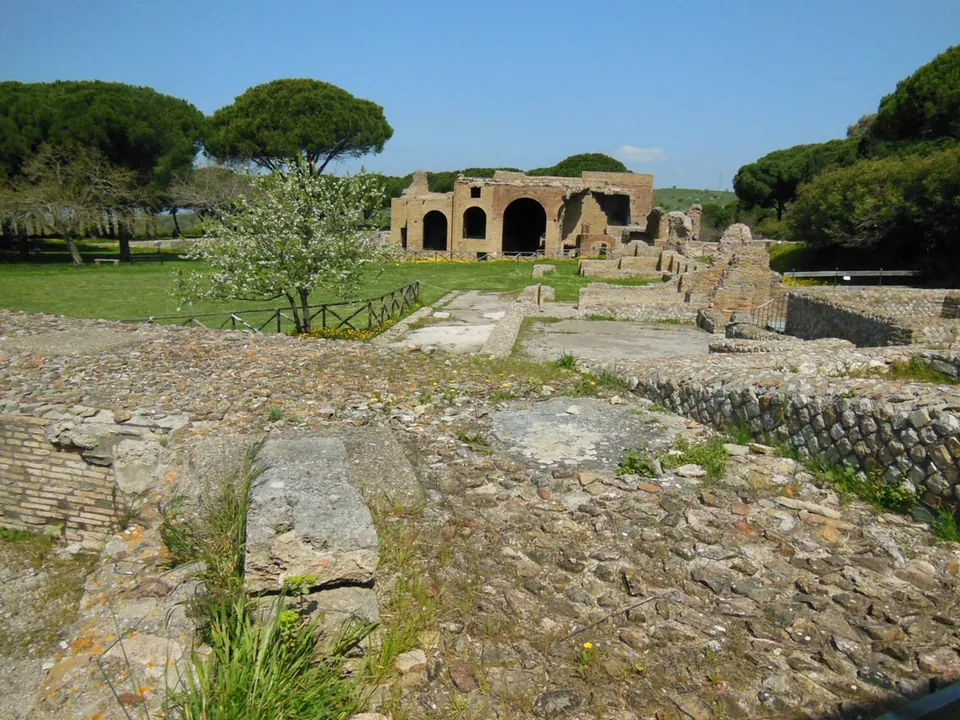
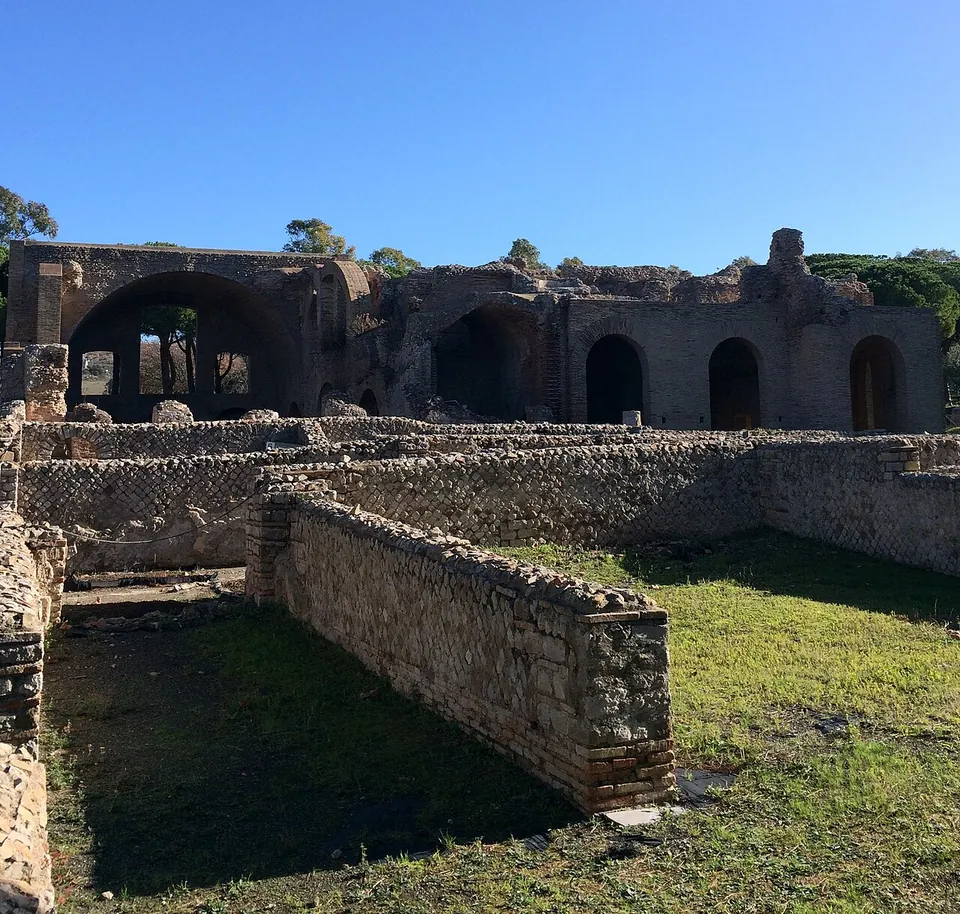


The Terme Taurine are the ruins of a large Roman spa on a hill about 4 km outside Civitavecchia, built over hot sulphurous springs in the 1st century BC and greatly enlarged in the 2nd century AD. Brick walls and vaults of its halls still stand, so you walk through rooms rather than over foundations.
What is there today
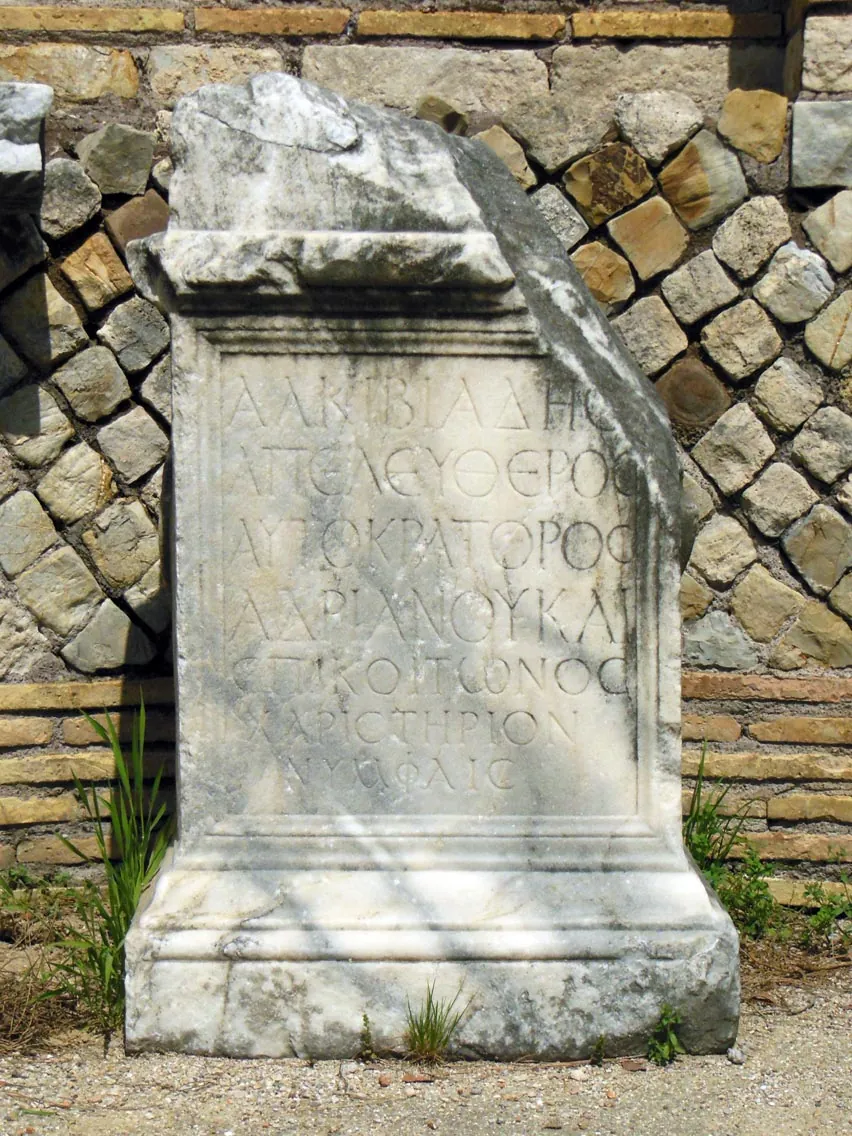
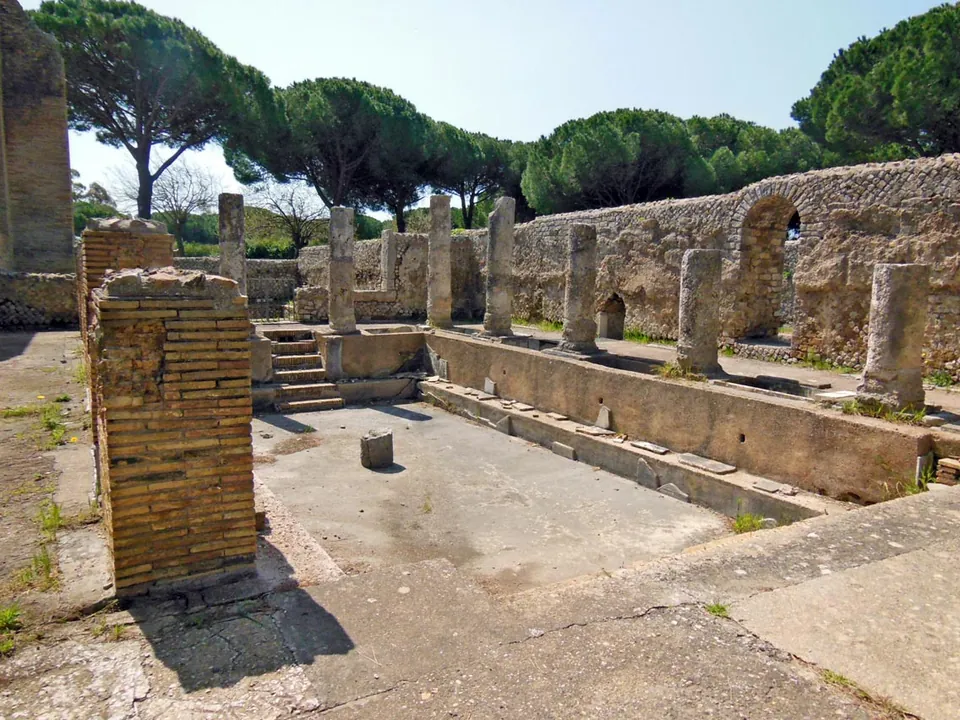
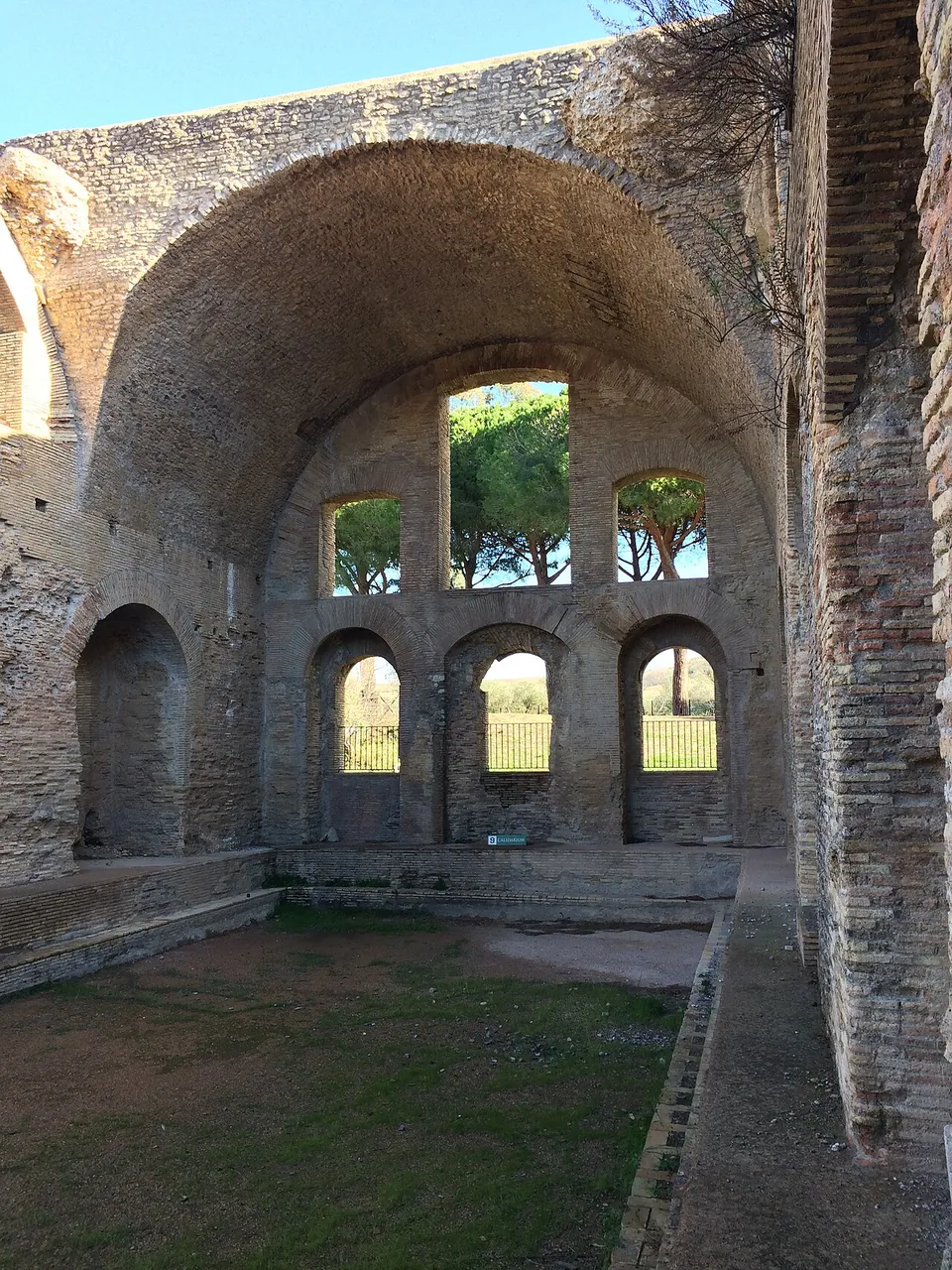
The complex covers about two hectares (the operator) and has two parts side by side (it.wikipedia). The older, republican baths keep their entrance peristyle, a tepidarium, a laconicum (a dry sweating room) and a caldarium, the hot room (Ministry of Culture). In the caldarium a central pool was flanked by rows of travertine columns, and in the apse at its end stands a marble altar with a Greek dedication to the Nymphs, set up by Alcibiades, a freedman of the emperor Hadrian (en.wikipedia).
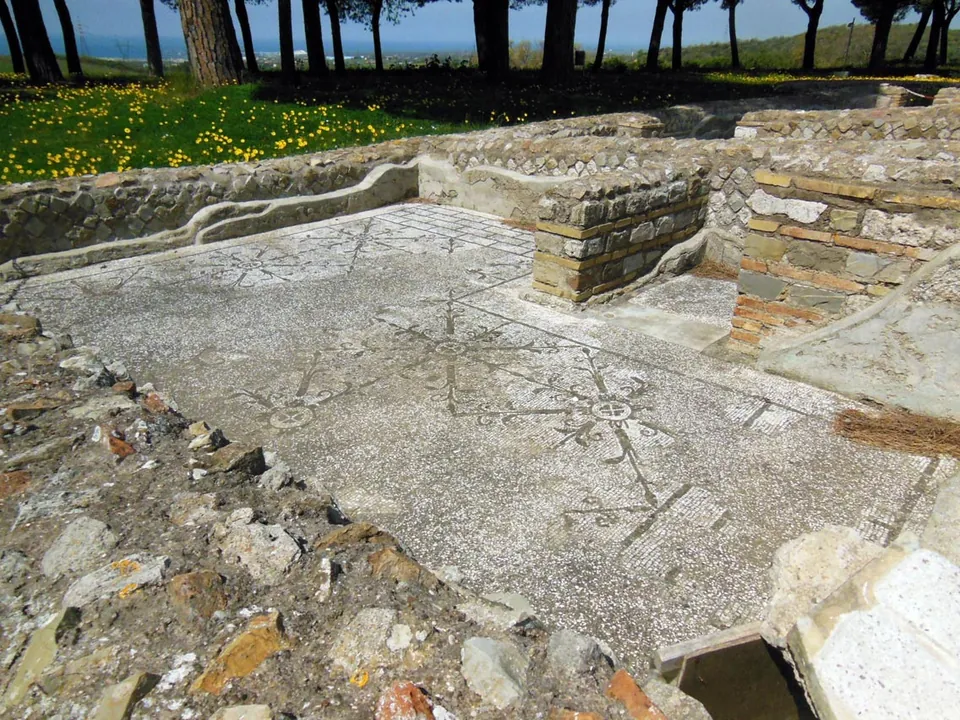
The imperial baths next door are larger. Most of their caldarium, 23 by 9 m, was taken up by a pool fed with thermal water at 47 °C; beyond it lay a suite of rooms for leisure and business, a library with a porphyry floor and niches for shelving, and a cryptoporticus, a covered gallery (en.wikipedia). Several of the pools and their mosaics can still be seen (en.wikipedia), and the vaults of the caldarium, the tepidarium, the cryptoporticus and the laconicum are among the structures that have been consolidated (fr.wikipedia). A garden planted with species the Romans knew lies within the area (the operator; fr.wikipedia).
Is it worth the trip?
When it is open, yes, if you are in or near Civitavecchia: this is a whole bath complex with walls and vaults still standing and its hot, warm and sweating rooms still identifiable, not a field of foundations.
The catch is getting in. The site was closed for restoration works through at least the end of August 2026, and no regular reopening had been published when this was checked, so contact the operator before you plan around it. Even when it is open, entry is on a booked guided tour only, and before the works it kept morning hours, with afternoons by booking. It is also outside the town with no bus stop mapped nearby, so you need a car or a taxi.
Getting there
The baths lie about 4 km from the centre of Civitavecchia, to the north, on the road towards Tolfa; the address is Via Terme di Traiano (the operator). There is a car park about 75 m from the site (OpenStreetMap).
The site is closed for consolidation, restoration and enhancement works. In March 2026 the operator said it would stay closed until June 2026; the Ministry of Culture’s listing, updated in July, gave 31 August 2026. Before the works it opened daily from 09.30 to 13.30, with afternoon visits by booking, and it closes on 1 January and 25 December. A ticket is €5 including the compulsory guided tour by the Pro Loco Civitavecchia, reduced €2, and entry is free on the first Sunday of the month, 25 April, 2 June and 4 November. Tickets are sold at the site only, and visits are booked on +39 351 344 0202 (Regional Directorate of National Museums of Lazio, as published in March 2026 — check before travelling).
Visiting details
- Opening hours
- Closed to the public for consolidation, restoration and enhancement works. In March 2026 the operator gave the closure as lasting until June 2026; the Ministry of Culture's listing, updated in July 2026, extended it to 31 August 2026. No regular opening hours after the works had been published when this was checked. Before the works the site opened daily, 09.30–13.30, with afternoon visits by booking; it closes on 1 January and 25 December.
- Tickets
- €5, which includes the compulsory guided tour by the Pro Loco Civitavecchia; reduced €2. Free on the first Sunday of the month, 25 April, 2 June and 4 November. Tickets are sold at the site's ticket office only, and visits are booked by phone on +39 351 344 0202.
- Parking
- Car park about 75 m from the site (OSM way/1290846592), off Via Terme di Traiano.
Before you go
- Closed for restoration works through at least August 2026, with no regular reopening published. Ask the operator ([email protected]) before planning a visit.
- There is no walk-in visit. Entry is on a guided tour run by the Pro Loco Civitavecchia, booked by phone.
- The site is about 4 km outside Civitavecchia and no bus stop is mapped near it; plan on a car or a taxi.
Hours and prices checked 9 March 2026 on the operator's own site. Confirm before travelling.
History
The baths were built on a hill over thermal sulphurous springs, a few kilometres from the port of Centumcellae that Trajan later developed, and about 1 km from the earlier baths of the settlement of Aquae Tauri (en.wikipedia). The republican sector dates to the 1st century BC (it.wikipedia). Under Hadrian the complex was enlarged with a monumental sector: a large pool under a cross vault, decorative niches and floors of fine marble (the operator), built between 123 and 136 (it.wikipedia); the ministry’s own description calls the enlargement Trajanic. The complex was once identified as Trajan’s villa itself (Ministry of Culture), which is where the name Baths of Trajan comes from (en.wikipedia). The ministry describes it as a bath building instead, though a link with an imperial villa nearby is still suggested (en.wikipedia; the operator).
The name comes, according to a legend told by the poet Rutilius Namatianus in AD 416, from a bull that pawed the ground before a fight and set the hot spring flowing (it.wikipedia). Rutilius visited the baths himself and praised the purity of their water (en.wikipedia).
Published accounts of the end differ. The Ministry of Culture says the baths were certainly in use to the end of the 5th century; en.wikipedia carries their use to the mid-6th century and notes that Pope Gregory the Great wrote of them in 593. The wars between the Goths and the Byzantine Empire brought looting, much of the marble facing was stripped, and the baths were abandoned (en.wikipedia; the operator).
Excavation began around the middle of the 18th century (Ministry of Culture); the republican baths were uncovered in campaigns from the 19th to the early 20th century, and consolidation has gone on since the 1950s (fr.wikipedia). The site reopened to the public in 2020 after restoration (en.wikipedia), before the present round of works closed it again.
More photographs



Nearby
Photo: G.Hagedorn · CC BY-SA 3.0 · Commons
Photo: Marco Ferrari · CC BY-SA 2.0 · Commons
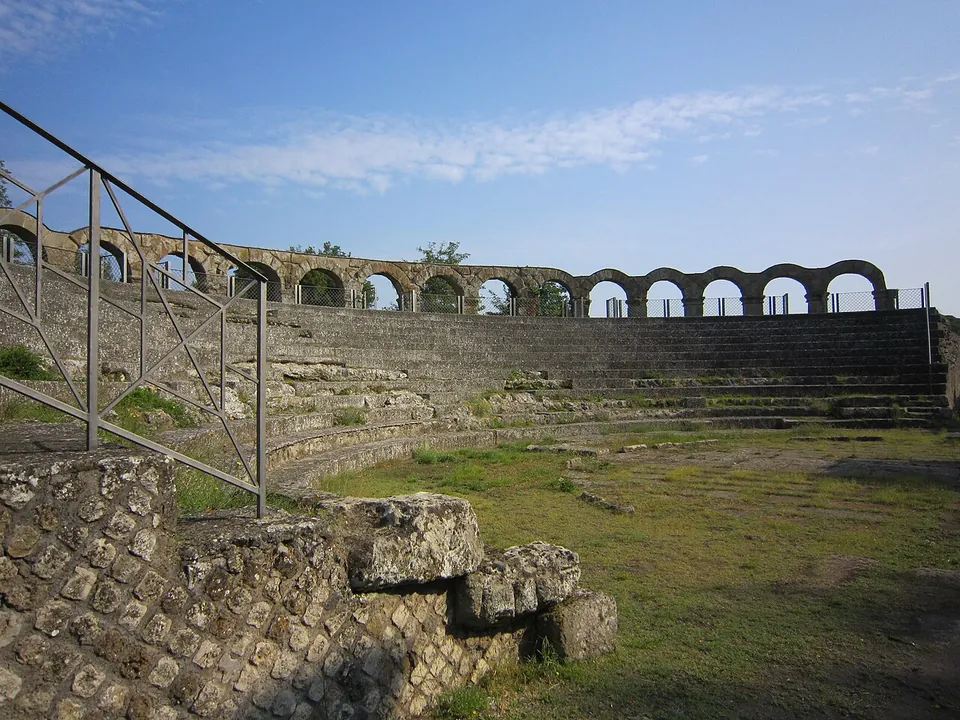
Photo: Carlomorino · CC BY-SA 3.0 · Commons
49 km · city · Lazio
Ferentium
Only a small part of the town has been excavated and can be visited; other areas were investigated and covered over again, the forum among them, which lies under a farm (it.wikipedia).


Straight-line distances.
Sources
Every fact on this page comes from the records below, each used under the licence noted.
| Source | Licence |
|---|---|
| Pleiades 413026 | CC BY |
| Wikidata Q3984387 | CC0 |
| OpenStreetMap way/271795346 | ODbL |
| Regional Directorate of National Museums of Lazio — Terme Taurine (the operator) | licence not recorded |
| Ministry of Culture — Terme Taurine o di Traiano | licence not recorded |
| Wikipedia (en) — Terme Taurine | CC BY-SA 4.0 |
| Wikipedia (it) — Terme Taurine | CC BY-SA 4.0 |
| Wikipedia (fr) — Thermes taurins | CC BY-SA 4.0 |