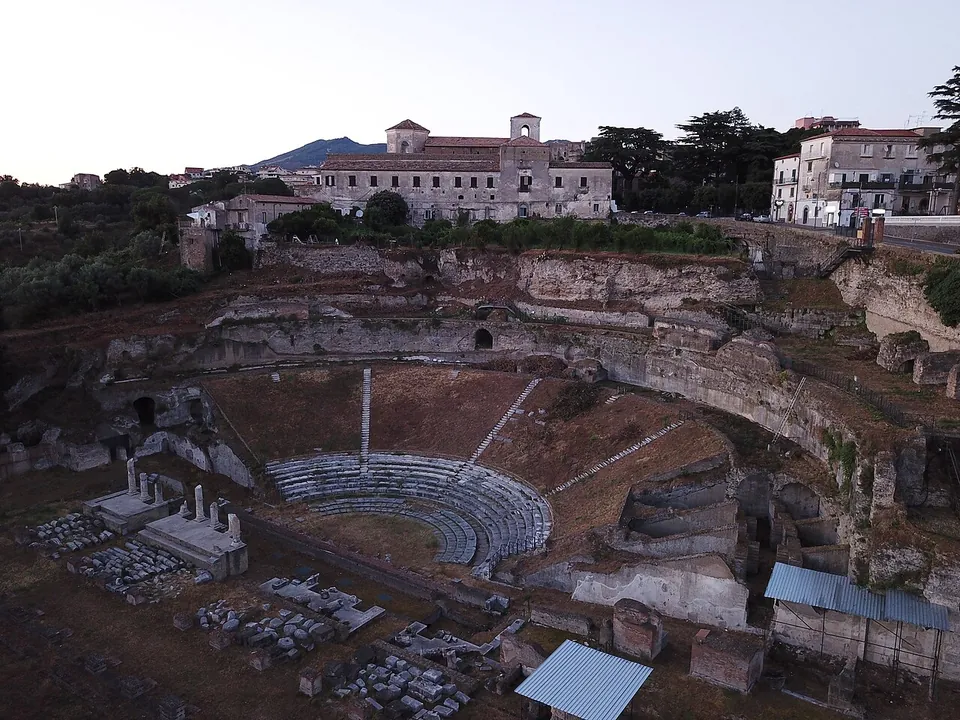
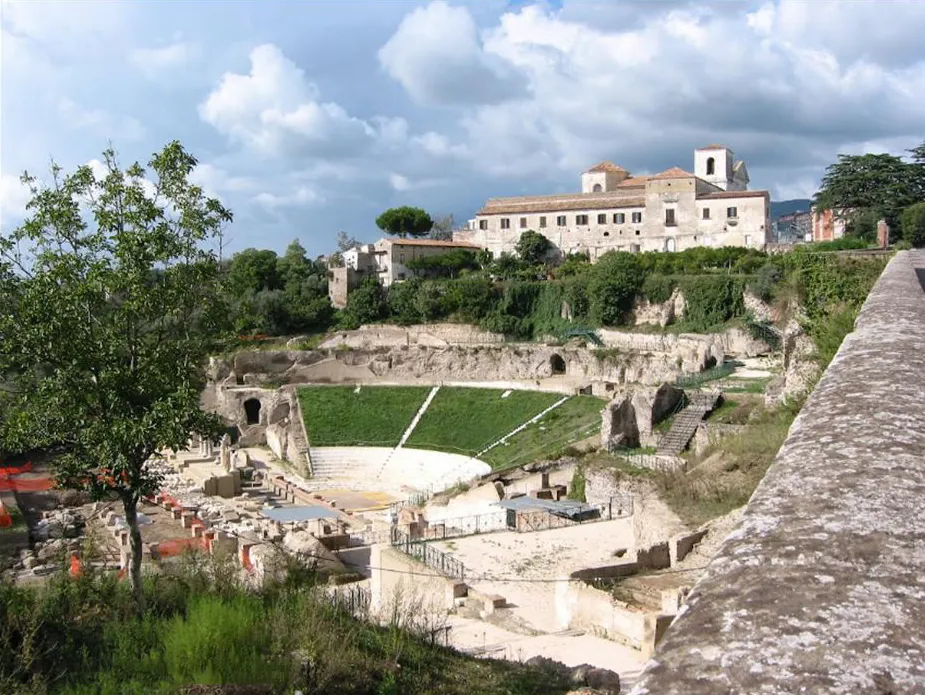
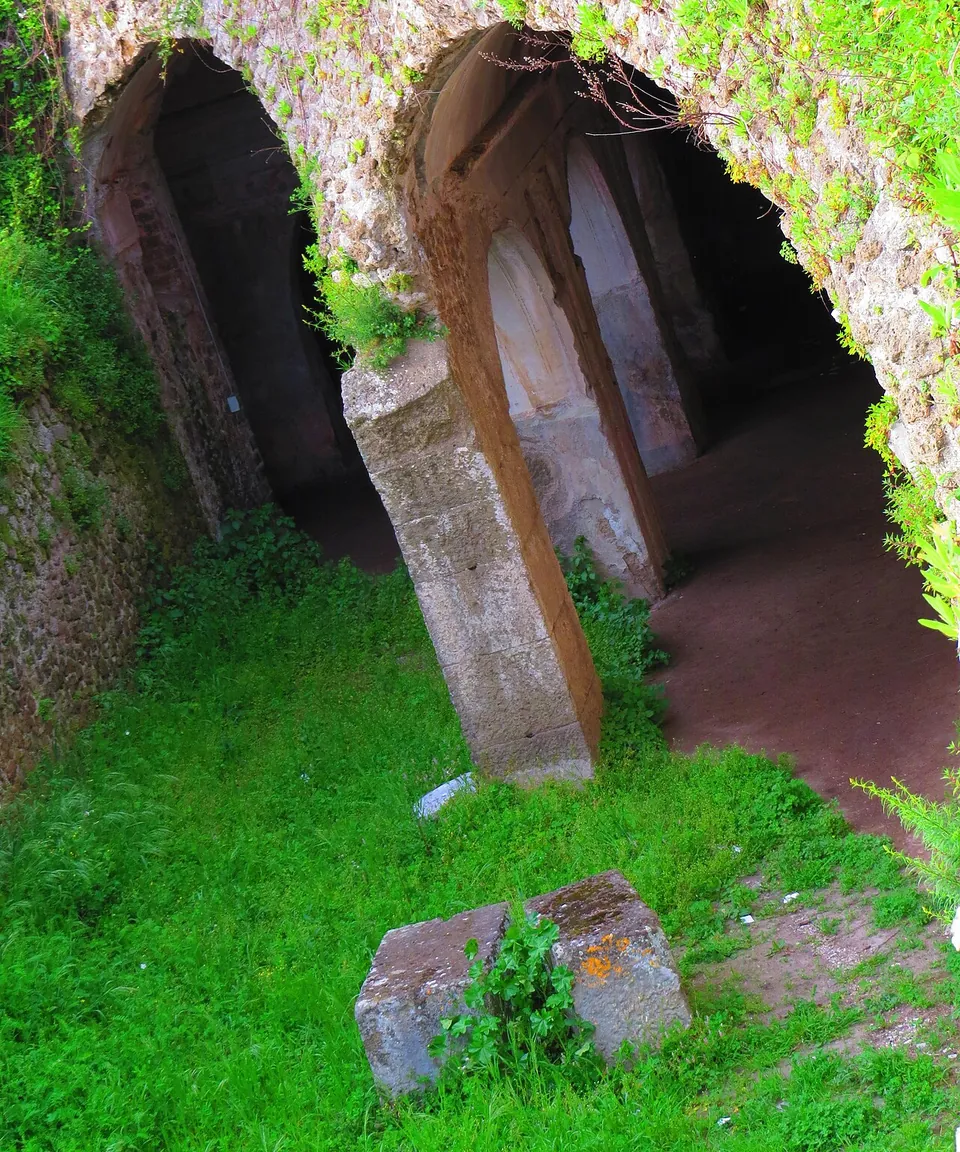


The Roman theatre of Sessa Aurunca is a large theatre dug into a hillside at the edge of the ancient town of Suessa, in the province of Caserta, with walls preserved up to 20 m high; about 90 m away is a vaulted Roman gallery, the cryptoporticus (the Ministry of Culture). The theatre has been closed for restoration since 17 November 2025, and no reopening date has been published.
What is there today
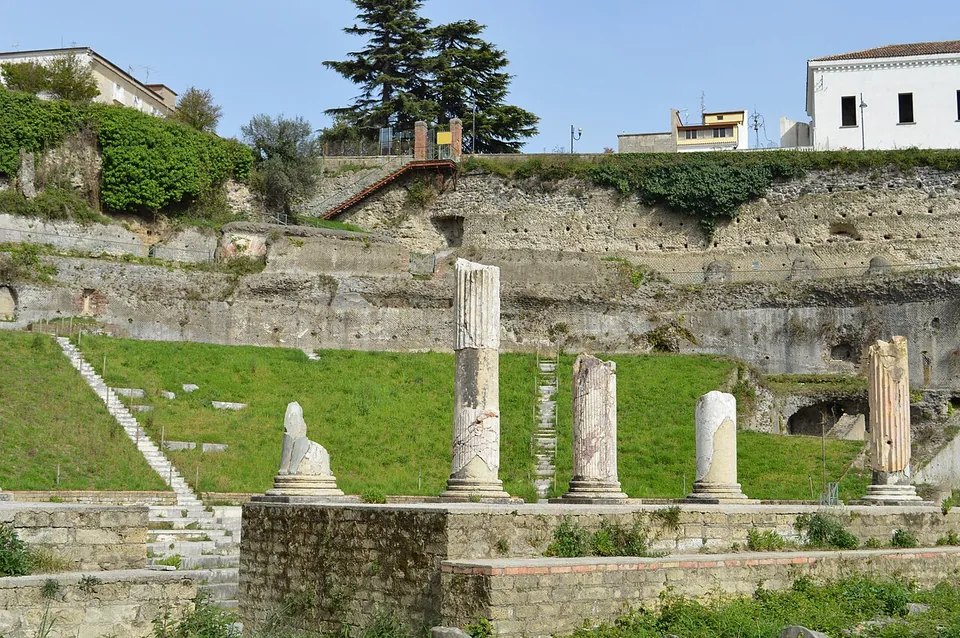
The theatre is one of the most imposing Roman public buildings found so far in Campania (the Ministry of Culture); it.wikipedia calls it the second-largest Roman theatre in the region after Naples. Its cavea, 110 m across, is dug into the hill and carried on galleries at the top, with three tiers of limestone seating for between 7,000 and 10,000 people. Remains survive of the structure that held the awning over the audience and of the stage building, 40 m long and originally 24 m high, which carried three stacked orders of 84 columns in coloured marble from the Greek islands, Numidia and Egypt. Behind the stage lay a portico where the audience waited between performances, flanked by two halls: the southern one frescoed and with a fountain (nymphaeum), the northern one with a small shrine at its entrance painted with the spirit of the place (Genius loci). Against it a latrine with a mosaic floor and marble-faced walls was built in the 3rd century (all the Ministry of Culture). Medieval builders quarried the theatre for stone, and the losses still show (it.wikipedia).
The cryptoporticus
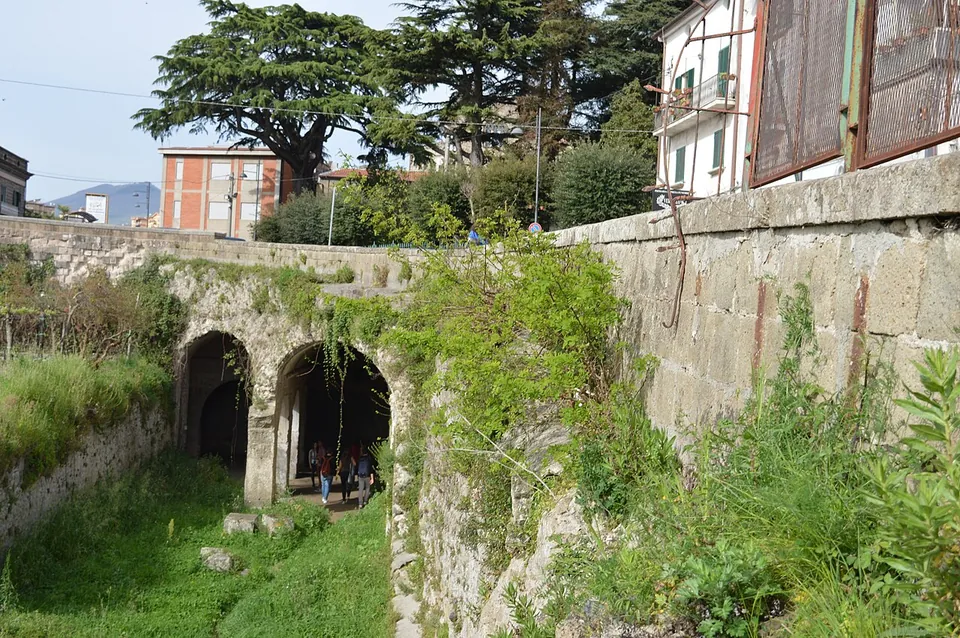
A short walk from the theatre, on the western terrace of the ancient town near the forum, stands the cryptoporticus: a covered gallery, probably public, that faced an open space paved in herringbone brick (the Ministry of Culture). It had three arms in a U, each divided into two aisles by piers of volcanic trachyte, roofed with barrel vaults and lit by splayed windows. The walls keep their white stucco with architectural mouldings in relief, from the first decades of the 1st century AD, scratched with graffiti naming poets and quoting Virgil (the Ministry of Culture), along with inscriptions in Greek and Latin and the scrawls of gladiator fans (it.wikipedia). Only the north arm, about 90 m long, can be visited: the west arm is built into a farmhouse and the east arm has collapsed (it.wikipedia).
Is it worth the trip?
Not until it reopens. The theatre is closed for restoration with no announced date, and no published schedule covers the cryptoporticus on its own. On 1 May 2025 the Ministry gave the theatre a special morning opening; since the closure its page has listed every day as closed.
Once the gates reopen, it is worth a detour: a large theatre with marble columns standing on its stage, and beside it a gallery whose stucco still carries Roman graffiti, verses of Virgil among them. Watch museicampania.cultura.gov.it for the reopening.
Getting there
The theatre lies about 0.4 km from the centre of Sessa Aurunca, with its entrance on Via Aldo Moro (the Ministry of Culture). A car park is mapped about 180 m from the theatre and 100 m from the cryptoporticus. No bus stop or railway station is mapped nearby, so plan on a car (OpenStreetMap).
The tariff listed while the site is closed is €5, reduced €2, and the ticket also covers the National Archaeological Museum of Sessa Aurunca. Tickets are sold online through Musei Italiani or at the ticket machine at the museum entrance, Piazza Castello 2 (cultura.gov.it, read 24 October 2026). The site’s telephone is +39 0823 936455.
Visiting details
- Opening hours
- Closed to the public since 17 November 2025 for restoration and enhancement works; no reopening date has been published. No schedule is published for the cryptoporticus on its own.
- Tickets
- €5, reduced €2 (the tariff listed while the site is closed); the ticket also admits to the National Archaeological Museum of Sessa Aurunca. Sold online through Musei Italiani or at the ticket machine at the museum entrance, Piazza Castello 2.
- Parking
- Car park about 180 m from the theatre and 100 m from the cryptoporticus (OSM way/388427017).
Before you go
- The theatre has been closed for restoration since 17 November 2025, with no reopening date announced. Check museicampania.cultura.gov.it or call the site (+39 0823 936455) before travelling.
- No bus stop or railway station is mapped near the site.
Hours and prices checked 24 October 2026 on the operator's own site. Confirm before travelling.
History
The cryptoporticus is the older building: its construction suggests the Sullan or late Sullan age, the early 1st century BC (the Ministry of Culture). Its use is not known. The graffiti suggest it also served as a school (the Ministry of Culture), and it.wikipedia adds a gymnasium, or a passage for actors moving from one place to another. No direct link to the theatre survives, though it.wikipedia holds that the two belonged together.
The theatre was built under Augustus and rebuilt and enlarged in the 2nd century AD under Antoninus Pius (the Ministry of Culture). The money came from Matidia the Younger, Hadrian’s sister-in-law, who held large estates at Suessa, paid for the theatre’s restoration, and had herself portrayed as Aura at the centre of the stage; she also gave the town a library and an aqueduct (it.wikipedia). Excavation has recovered dedicatory inscriptions and many fragments of the statues from the theatre’s gallery of the imperial family, among them Trajan, Hadrian, Plotina, Sabina and colossal figures of Livia and Agrippina the Elder (the Ministry of Culture).
An earthquake in 346 brought the structure down and it was abandoned. Left outside the walls of medieval Sessa, it was stripped in the 12th century for the cathedral and other buildings, then disappeared under vegetation (it.wikipedia). Amedeo Maiuri began digging in 1926 (it.wikipedia); the theatre was uncovered and restored between 1999 and 2003 (the Ministry of Culture). The cryptoporticus, partly dug in 1926 and then abandoned, was not fully restored until 2014; because part of it lies under private land, not all of it will ever be recovered (it.wikipedia).
More photographs


Nearby
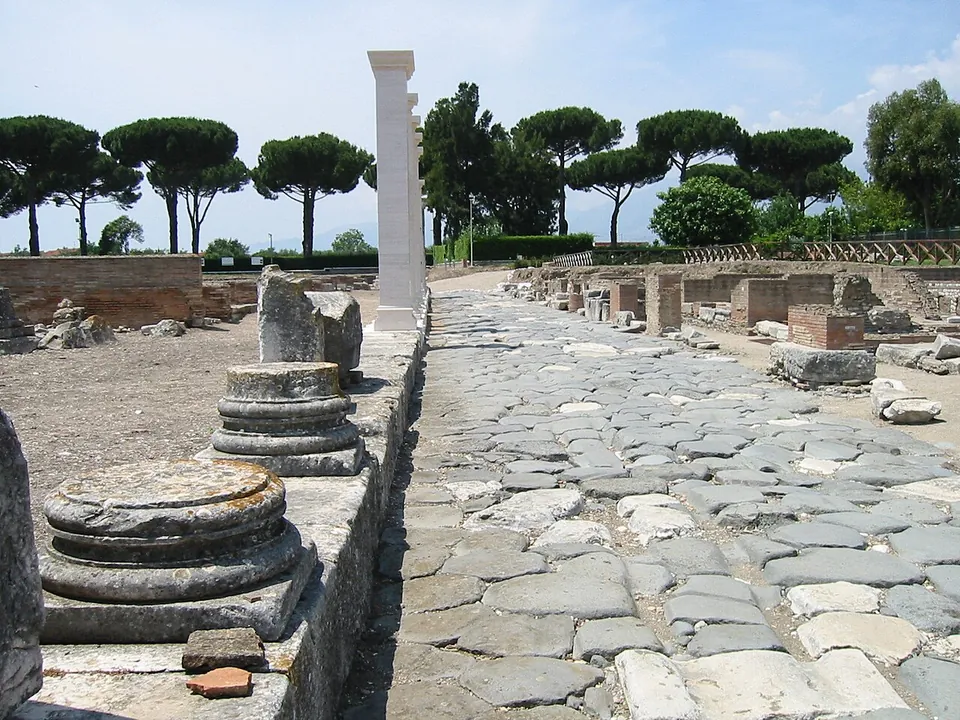
Photo: AlMare · Public domain · Commons
14 km · city · Lazio
Minturnae
The Via Appia crosses the park as the ancient town's main street, an original stretch paved in basalt blocks (it.wikipedia).
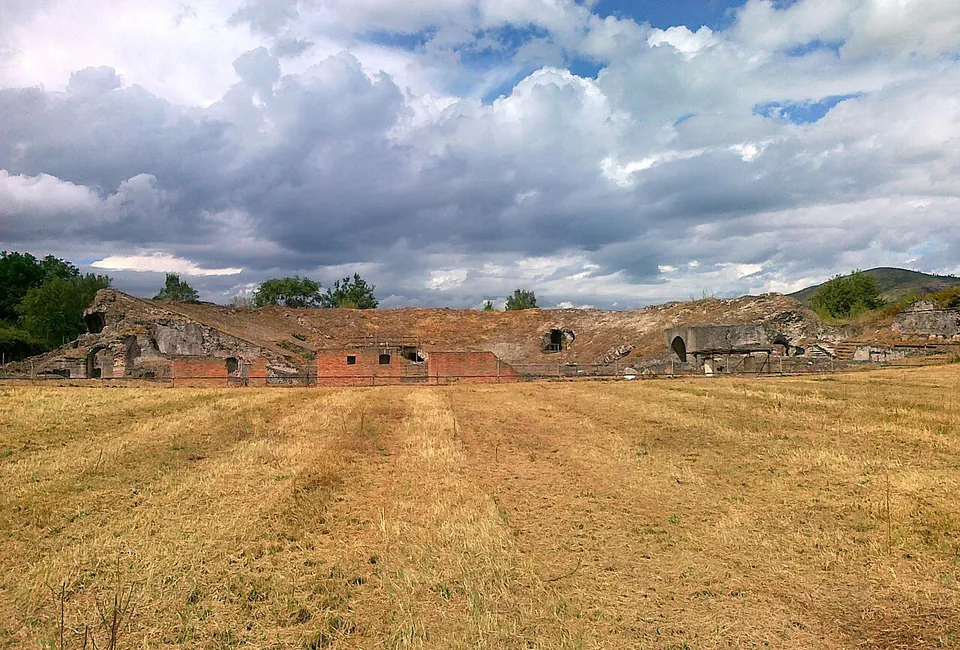
Photo: PietroCifone · CC BY-SA 3.0 · Commons
17 km · city · Campania
Cales
The ancient town survives across its whole extent, though the motorway runs through it, and the Ministry of Culture says plainly that its remains are not easy to read on the ground (cultura.gov.it).
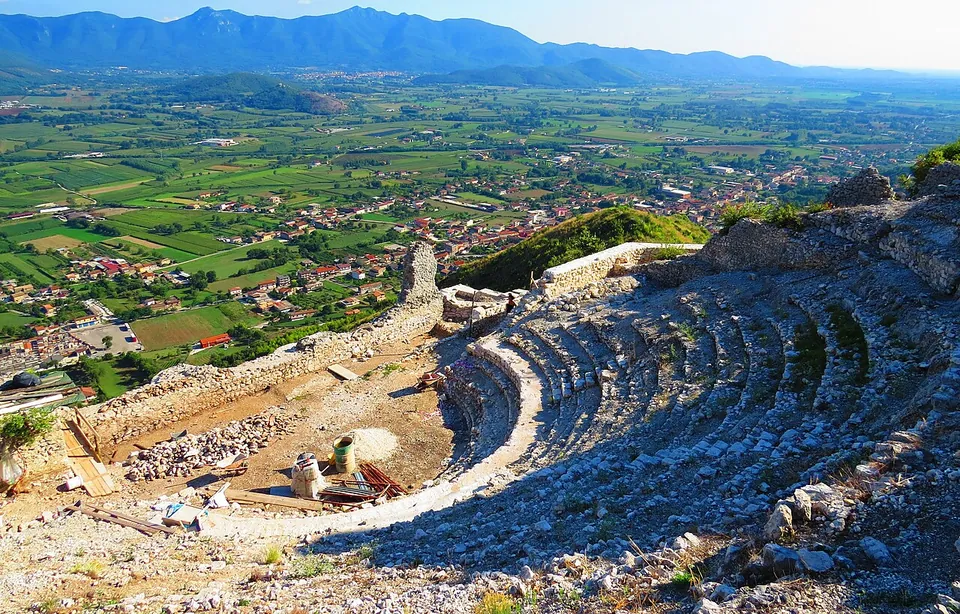
Photo: Gianfranco Vitolo from Sarno (Sa), Italia · CC BY-SA 2.0 · Commons


Straight-line distances.
Sources
Every fact on this page comes from the records below, each used under the licence noted.
| Source | Licence |
|---|---|
| Pleiades 895280110 | CC BY |
| Wikidata Q24571883 | CC0 |
| Vici.org 11392 | CC BY-SA (text), CC0 (metadata) |
| OpenStreetMap way/262438631 | ODbL |
| Ministero della Cultura — Teatro romano di Sessa Aurunca (the operator; hours, tickets and description of the theatre and cryptoporticus) | licence not recorded |
| Wikipedia (it) — Teatro romano di Sessa Aurunca | CC BY-SA 4.0 |
| Wikidata — Cryptoporticus of Sessa Aurunca (Q56258400) | licence not recorded |
| Pleiades — Suessa Aurunca | licence not recorded |
| Ministero della Cultura — special opening, 1 May 2025 (archived copy) | licence not recorded |
| Wikipedia (it) — Lucio Cornelio Silla | CC BY-SA 4.0 |