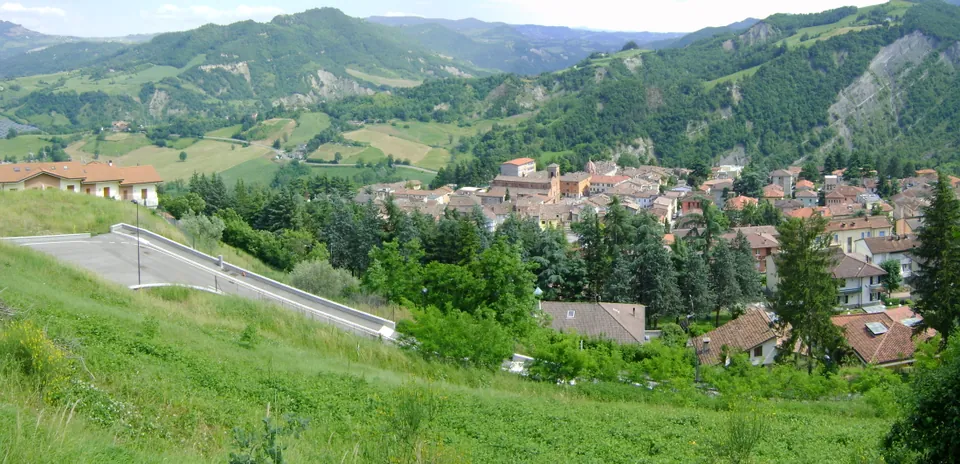


Sarsina is a small town in the Apennine valley of the Savio, 32 km from Cesena, that was a Roman municipium and the birthplace of the playwright Plautus. Its real draw is the national archaeological museum, where whole Roman tombs from the town’s cemetery have been put back together, including one more than 13 m tall.
What is there today
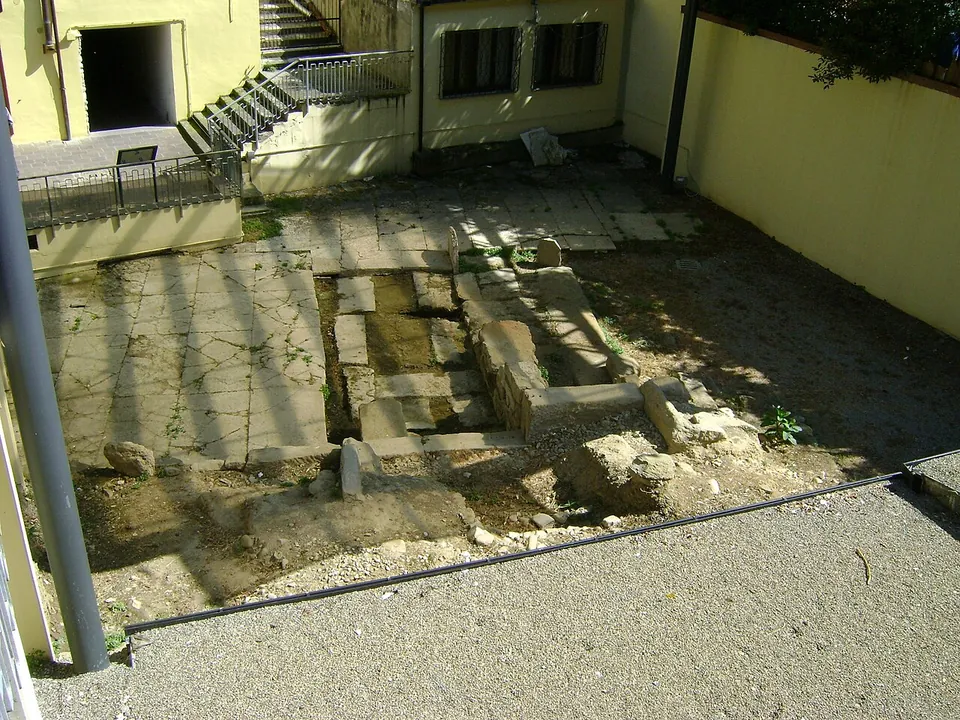
In the town itself the Roman remains are modest. Piazza Plauto, the main square, stands on the site of the forum, and behind the buildings on its north side a patch of the ancient paving is still exposed, with remains of 1st-century BC buildings, reached by a passage from the square (it.wikipedia). Published descriptions differ on the stone: the Ministry of Culture calls the slabs sandstone, it.wikipedia Verona marble. On the east side of the forum stood a building, probably a place of worship, whose remains can be seen from Via Aurigemma, and architectural pieces, sarcophagi, well-heads, capitals and lead pipes of the Roman aqueduct are kept in the courtyard of the bishop’s palace (it.wikipedia).
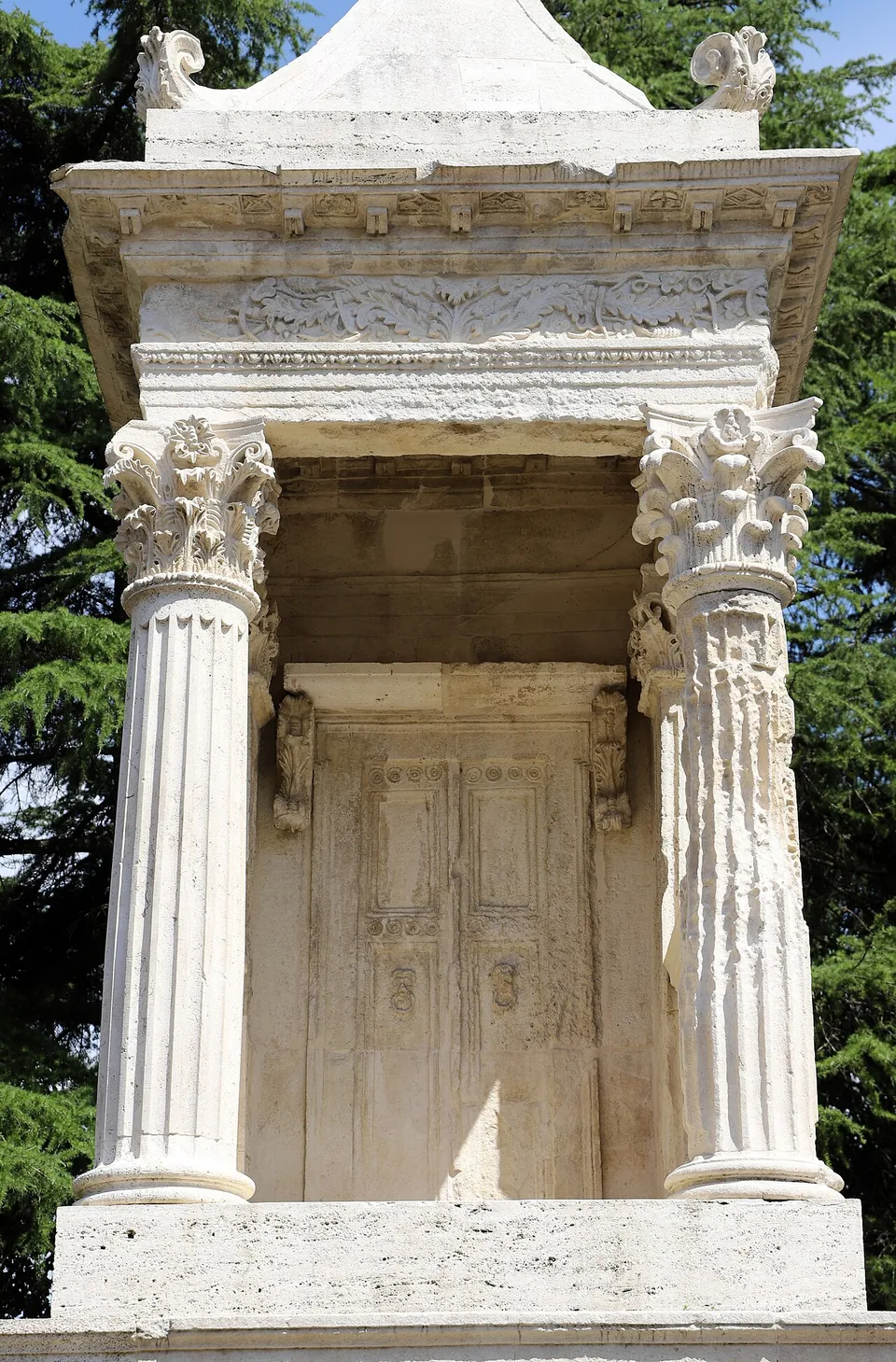
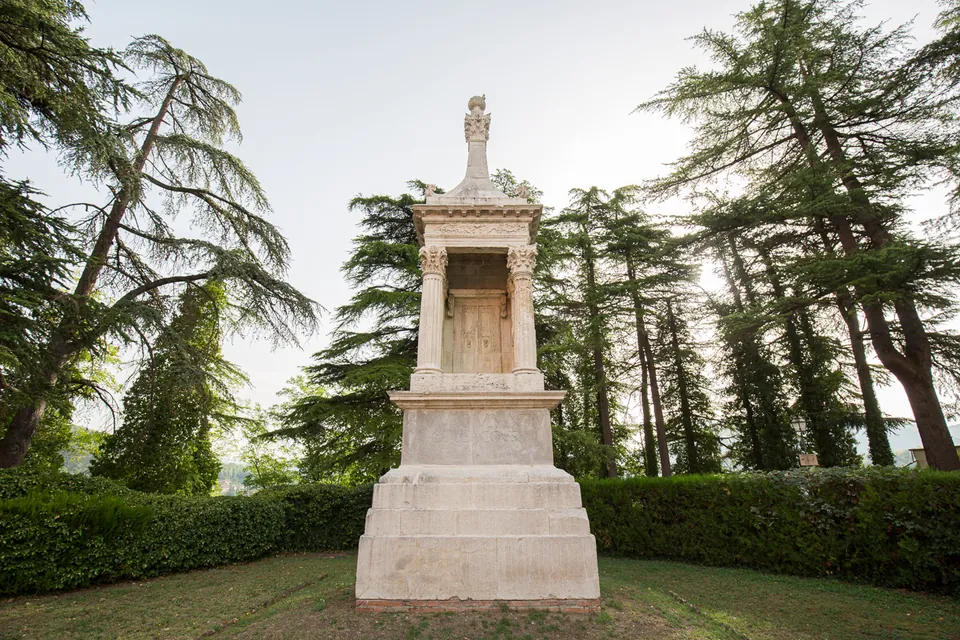
About 200 m east of the forum, in the Parco delle Rimembranze at the entrance to the town, stands the mausoleum of Obulacco, a 1st-century BC tomb with a pyramid-shaped top. It was found in the Pian di Bezzo cemetery in the 1920s, restored and set up in the garden in 1938 as a memorial to the dead of all wars (the Ministry of Culture).
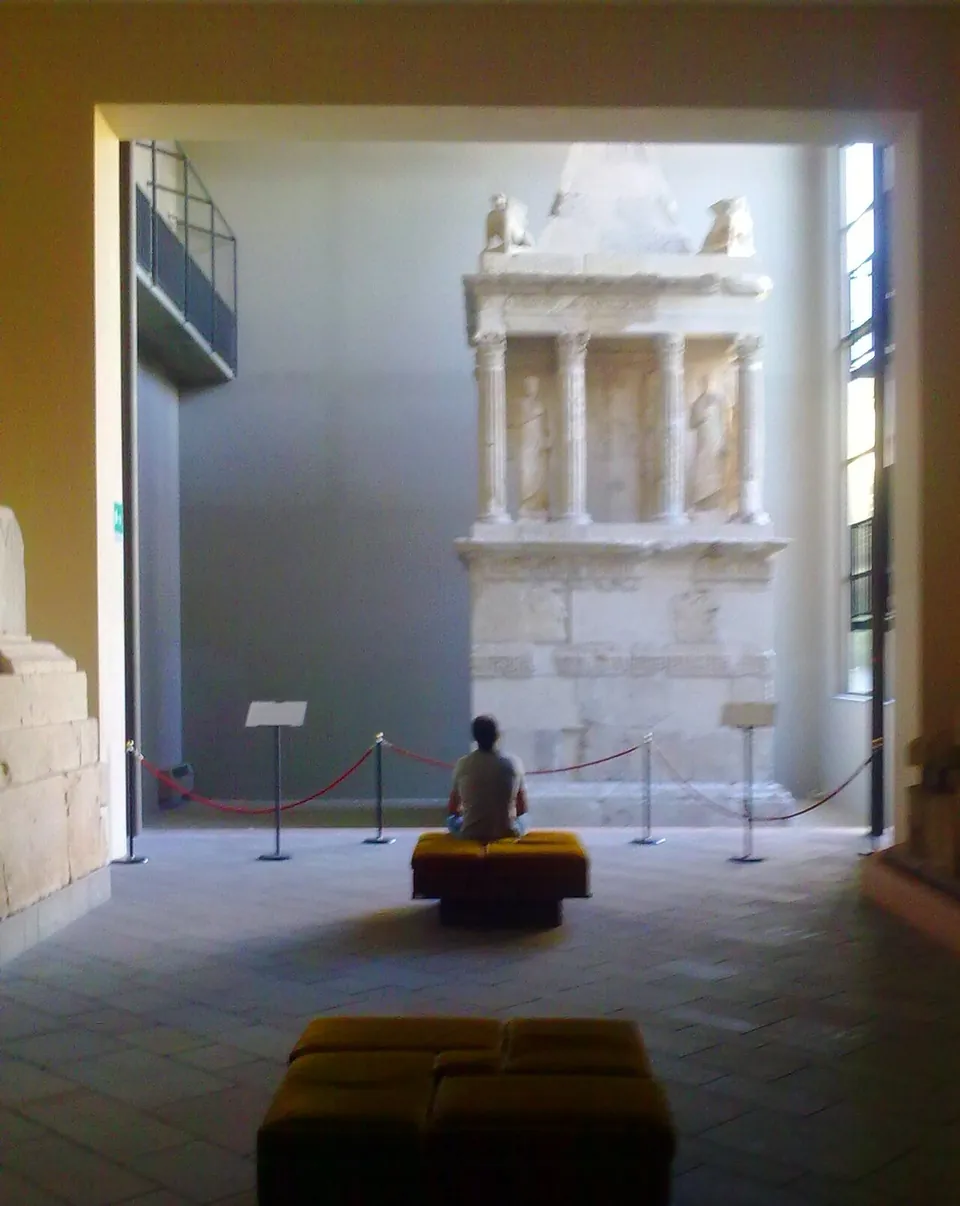
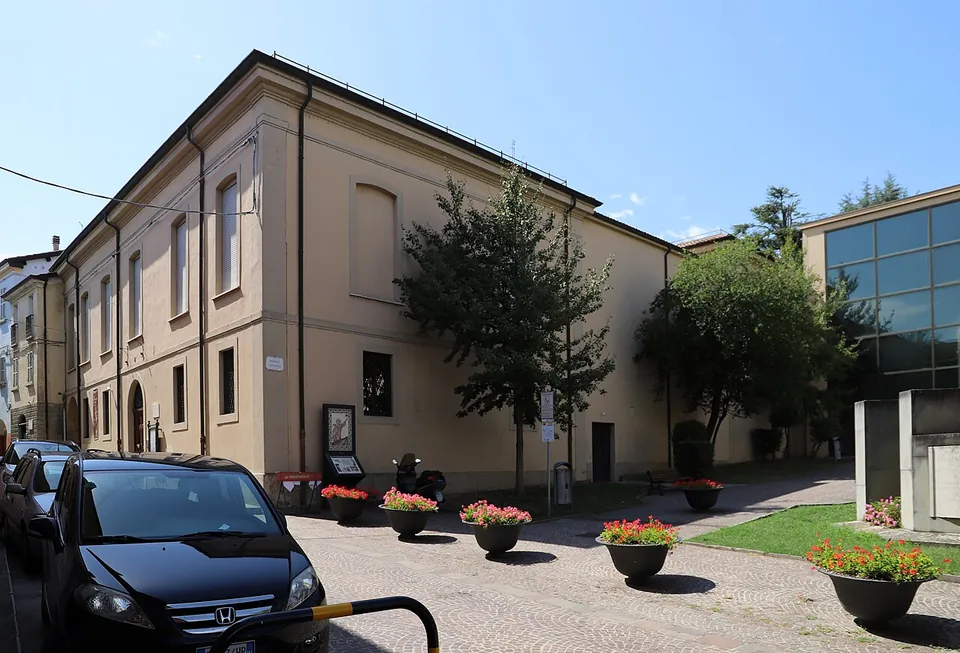
The museum on Via Cesio Sabino is the main event. Its collection is almost entirely local and mostly Roman, from the 1st century BC to the 2nd–3rd century AD, and a thorough reorganisation in 1990 allowed several of the large funerary monuments to be reassembled whole (the Ministry of Culture). The largest is the mausoleum of Rufus from the end of the 1st century BC, a square tomb 4.62 m on each side and 13.35 m high (it.wikipedia), with two male statues on the front and two female ones at the sides of its colonnaded storey (the Ministry of Culture). Other rooms hold the cube-shaped monument of Publius Verginius Paetus, about 3.5 m wide, and, in the same hall as Rufus, a large mosaic of the triumph of Dionysus, 6.3 by 8.9 m (it.wikipedia). The museum dates the mosaic to the early 3rd century AD, from a house west of the forum destroyed by a violent fire (the Ministry of Culture); it.wikipedia calls it Republican. The museum also has marble statues from a cult of eastern gods, among them Attis, Serapis and the Magna Mater, rooms of inscriptions, and a reconstructed dining room from a house in Via Finamore with its floor mosaic of a drunken Hercules (it.wikipedia; the Ministry of Culture).
In 2023 excavations ahead of replacing a municipal gym with a new multipurpose building uncovered what is almost certainly the town’s Capitolium: a podium of horizontal courses of sandstone blocks, faced with marble slabs, preserved up to 2.85 m high and dated provisionally to the 1st century BC (the Ministry of Culture). No source says it can be visited, and OpenStreetMap marks it closed to access.
Is it worth the trip?
For the museum, yes, if you are in Romagna or driving the Savio valley. The Ministry of Culture, which runs it, calls it one of the most important museums in northern Italy and the mausoleum of Rufus one of the best preserved Roman tombs of its kind in Cisalpine Italy. Plan around its hours, which are mornings from Tuesday to Thursday and afternoons from Friday to Sunday. Without the museum, Sarsina is not worth a detour for its ruins alone: what remains in place is a fragment of forum paving and one rebuilt tomb in a garden, seen in a short walk round the old centre.
Getting there
Sarsina lies in the valley of the Savio, 32 km from Cesena and 50 km from Forlì (it.wikipedia). Two car parks are mapped about 45 m from the forum, one of them free for two hours, and a paid underground car park lies about 170 m away; bus stops are mapped about 160 m from the forum (OpenStreetMap). The museum is at Via Cesio Sabino 39, a short walk from the square.
The museum is open Tuesday to Thursday 09.00–14.00 and Friday to Sunday 13.30–18.30, with the ticket office closing half an hour earlier; it is closed on Mondays, 1 January and 25 December. A ticket is €7, €2 for EU citizens aged 18 to 24, and free under 18. Entry is free for everyone on the first Sunday of each month and on several dates in the year, among them 28 August, the feast of the town’s patron saint (the Ministry of Culture, read 23 October 2026; check before travelling, since hours and prices change). The forum remains are in a public area (the Ministry of Culture) and cost nothing.
Visiting details
- Opening hours
- Museum: Tuesday to Thursday 09.00–14.00, Friday to Sunday 13.30–18.30; the ticket office closes half an hour earlier. Closed on Mondays, 1 January and 25 December. No booking needed. The forum remains are in a public area in the town centre.
- Tickets
- Museum €7; €2 for EU citizens aged 18 to 24; free under 18. Groups of more than 10 pay €5 each; a 12-month pass is €20. Free for everyone on the first Sunday of the month and on 25 April, 2 June, 12 June, 4 August, 28 August and 4 November.
- Parking
- Two car parks are mapped about 45 m from the forum, one free with a two-hour limit (OSM way/159524429) and one paid (way/1275783299); a paid underground car park is about 170 m away (way/1275787860).
Before you go
- The Capitolium, excavated in 2023, is not presented to visitors; OpenStreetMap marks it with no access, and no source gives a date for opening it.
Hours and prices checked 23 October 2026 on the operator's own site. Confirm before travelling.
History
Sassina was first settled by Umbrians who reached the Savio valley in the 4th century BC; the earliest traces of the town, beside today’s Piazza Plauto, are modest timber buildings with small workshops (it.wikipedia). Published dates for the Roman conquest differ: the Wikipedia articles give 266 BC and a triumph by the consuls of that year, Pleiades a capture by Cornelius Scipio in 271 BC. Either way the town became an allied city that paid tribute and supplied soldiers, and Plautus was born there a few years later (it.wikipedia; Pleiades). In 225 BC the Umbrians and the Sassinates were listed together as providing 20,000 men to Rome (en.wikipedia).
In the middle decades of the 1st century BC Sassina became a Roman municipium and was replanned, with new buildings and a town wall; under Augustus it was placed in Regio VI, Umbria (it.wikipedia). The town grew until the 3rd century AD on woodland and pasture and on trade with the port of Ravenna. Its tombstones name guilds of craftsmen, cloth makers, carpenters and muleteers (it.wikipedia), and it supplied recruits to the Praetorian Guard (en.wikipedia). Near the end of the 1st century Caesius Sabinus, as aedile, adorned the town with buildings of stone and marble; Via Cesio Sabino, the street of the museum, is named after him (it.wikipedia).
Towards the end of the 3rd century the town was devastated, perhaps by barbarian raiders, and fire marks survive on the floors of some houses. Further raids, perhaps by the Visigoths and the Heruli, followed between 409 and 470. By tradition its first bishop, Vicinius, was appointed between the 3rd and 4th centuries (it.wikipedia). The museum was founded in 1890 as a town collection, grew between 1927 and 1939 with the finds of the Roman cemetery discovered at Pian di Bezzo, and was bought by the state in 1957 (it.wikipedia; the Ministry of Culture).
More photographs



Nearby
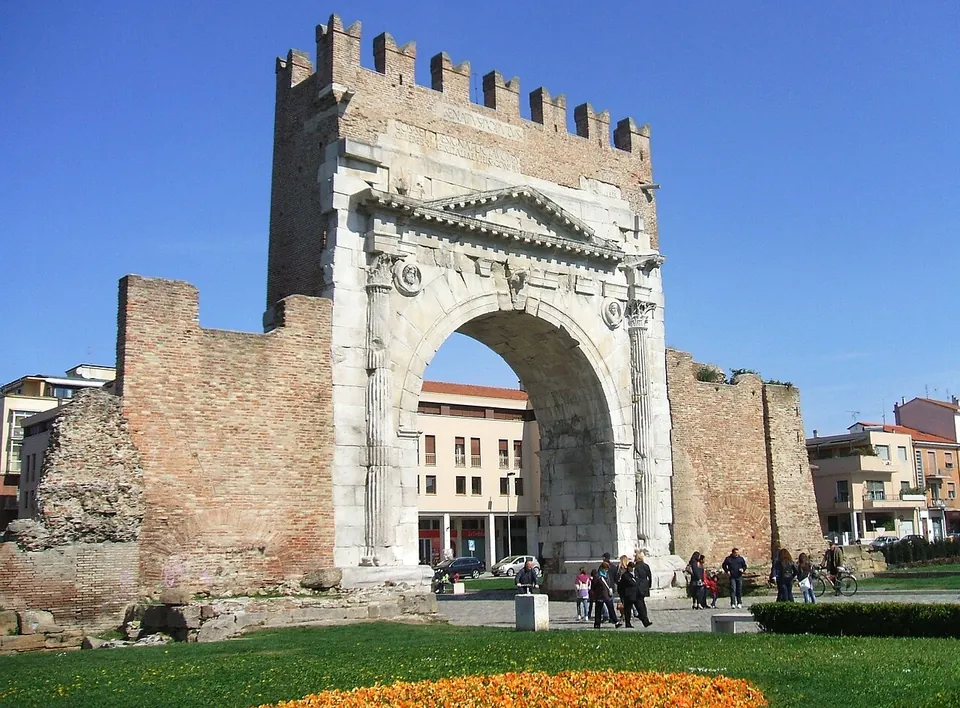
Photo: Il Malatestiano · CC BY-SA 4.0 · Commons
37 km · city · Emilia-Romagna
Ariminum – Rimini
The historic centre keeps the Roman town's street plan (en.wikipedia, Rimini), and its monuments are a short walk apart.
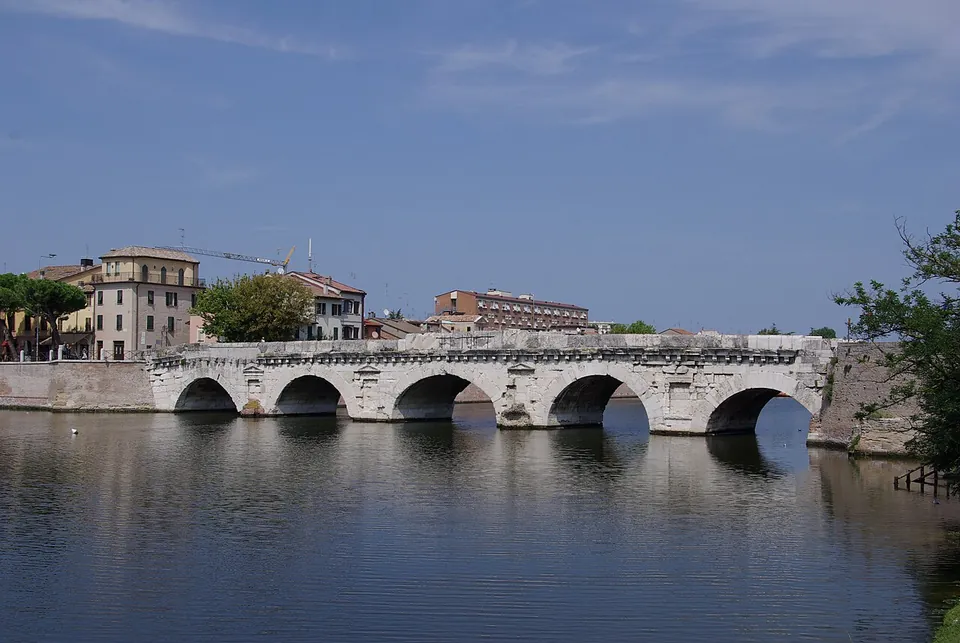
Photo: Flying Russian · CC BY-SA 3.0 · Commons
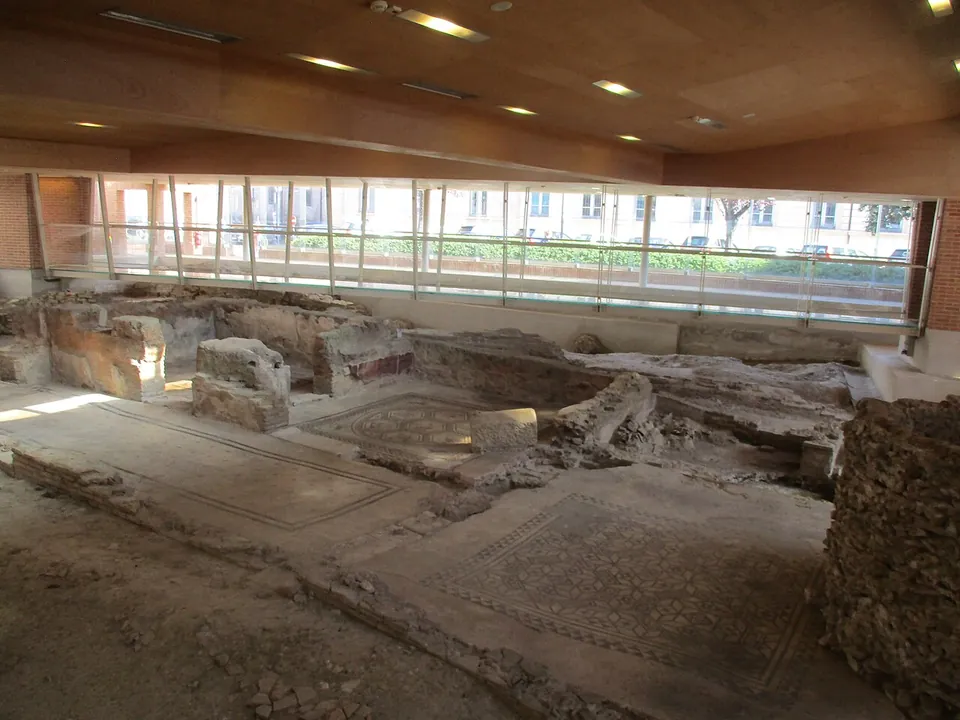
Photo: Capvalerio85 · CC BY-SA 4.0 · Commons
38 km · town house · Emilia-Romagna
Domus del Chirurgo
The excavation covers about 700 m², and the first mosaics lay some 2.5 m below the modern ground (it.wikipedia).


Straight-line distances.
Sources
Every fact on this page comes from the records below, each used under the licence noted.
| Source | Licence |
|---|---|
| Pleiades 413306 | CC BY |
| OpenStreetMap way/1275783310 | ODbL |
| Ministero della Cultura — Museo archeologico nazionale di Sarsina (hours, tariff, description) | licence not recorded |
| Ministero della Cultura — Archeologia, scoperto un tempio romano nella città di Plauto (2023) | licence not recorded |
| Ministero della Cultura — Alla ricerca del tempio perduto (2023) | licence not recorded |
| Pleiades — Roman forum of Sarsina | licence not recorded |
| Pleiades — Capitolium of Sarsina | licence not recorded |
| Wikidata — Roman forum of Sarsina (Q135159660) | licence not recorded |
| Wikidata — Capitolium of Sarsina (Q135160524) | licence not recorded |
| Wikipedia (it) — Sarsina | CC BY-SA 4.0 |
| Wikipedia (en) — Sarsina | CC BY-SA 4.0 |
| Wikipedia (it) — Museo archeologico nazionale di Sarsina | CC BY-SA 4.0 |