

The Temple of Minerva is a Roman sanctuary on the slopes of Monte Castelon in the Valpolicella hills north-north-west of Verona, where a temple to the goddess Minerva stood from the late 2nd century BC until late antiquity. It is a small, recently excavated site, open only on weekend afternoons from April to October, and free.
What is there today
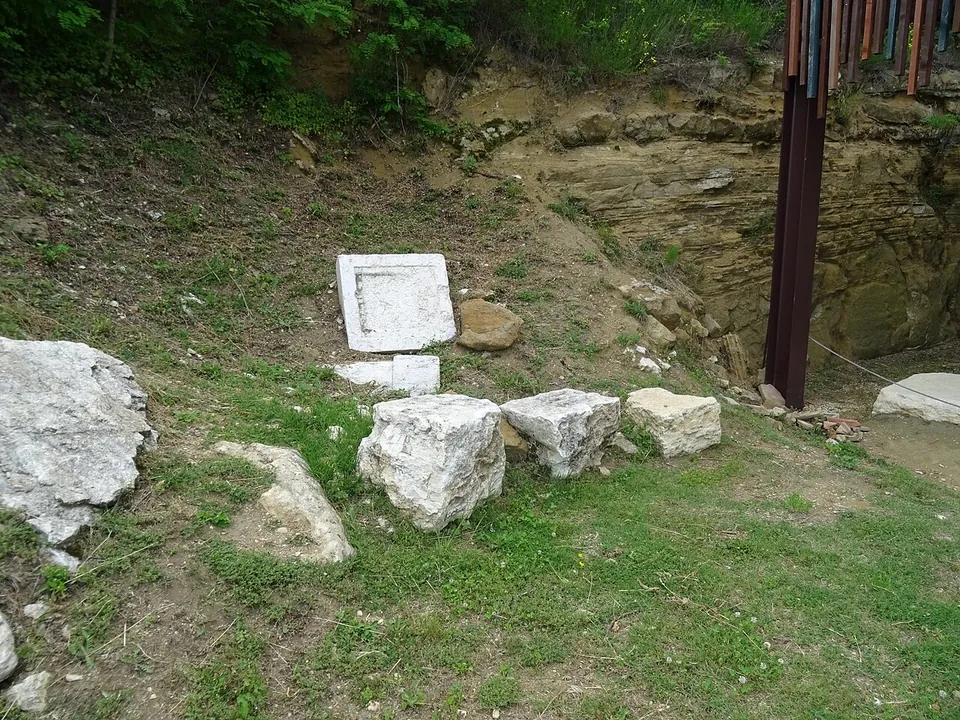
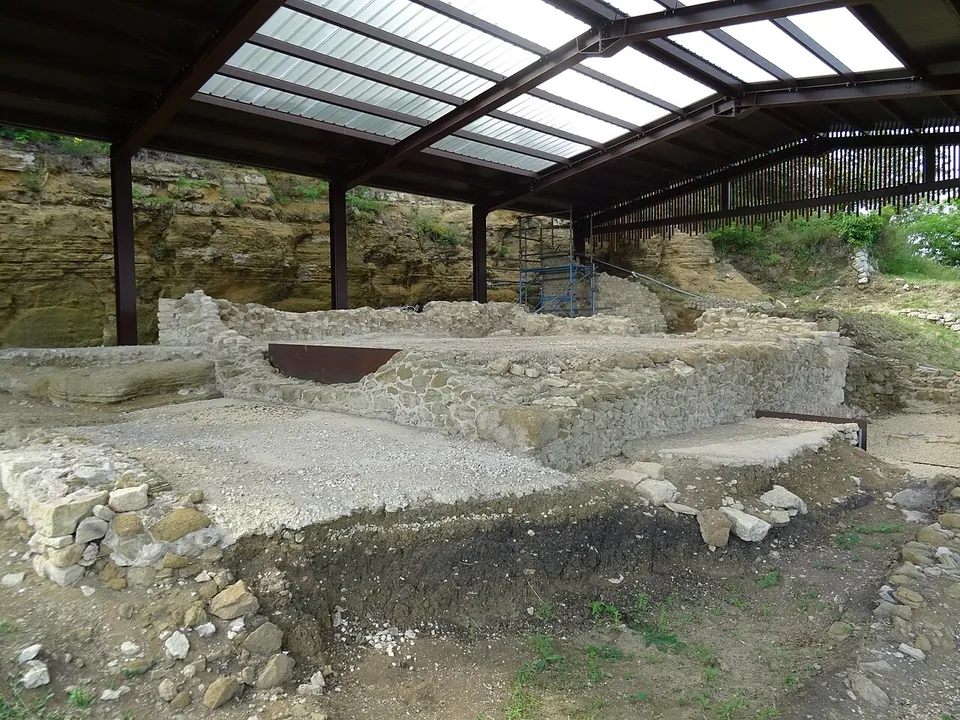
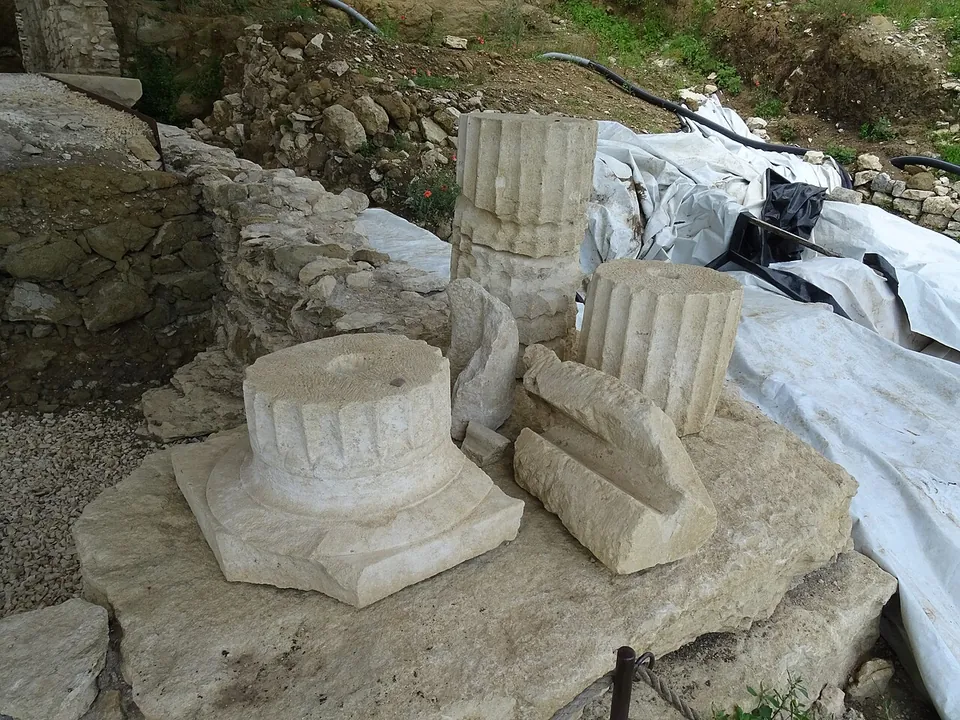
What you see are the remains of the temple rebuilt in the Augustan age: the walls of its four-sided central chamber (the cella) and of the galleries that ran round it, under a modern shelter roof set against the rock face of the hill (the operator). The cella once rose about 8–9 m; what survives now are its foundations and the lower courses of its walls, with fluted column drums and a column base set out beside them. Below the imperial building, the excavators found the floors of an earlier temple of the late 2nd century BC and a layer of burnt earth from an Iron Age votive pyre (it.wikipedia; the operator).
The plan is the thing to notice. The operator describes it as entirely unlike the usual Roman temple: a tall central chamber with lower galleries round it, a form unusual in Italy whose parallels are the so-called Gallo-Roman fana, temples of Celtic tradition found in Gaul, the Germanic provinces and Britain. Open galleries on the north, east and south had Doric columns, and part of the north side was closed by a wall faced in opus reticulatum, the net-pattern stonework; on the uphill side a channel about 1.6 m wide ran along the foot of the rock face (the operator). The site was laid out for visitors from 2015, with a path, a fence, the shelter and explanatory panels, and opened to the public in 2020 (the operator; it.wikipedia).
Is it worth the trip?
For someone staying in Verona or touring the Valpolicella with a car on a weekend, yes: it costs nothing, the walk in is about five minutes, and a temple with this northern, Celtic-style plan is a rarity in Italy. Book the Saturday guided tour if you can, because what is left is a ground plan rather than a building, and the story of the place makes more sense told on site.
It is not worth a long journey on its own. The remains are low walls under a modern roof, the guided tour of the whole site takes about 45 minutes, and it opens on only two afternoons a week (and public holidays) for seven months of the year. The area is fenced, so outside those hours it can only be visited by a guided tour booked in advance (the operator).
Getting there
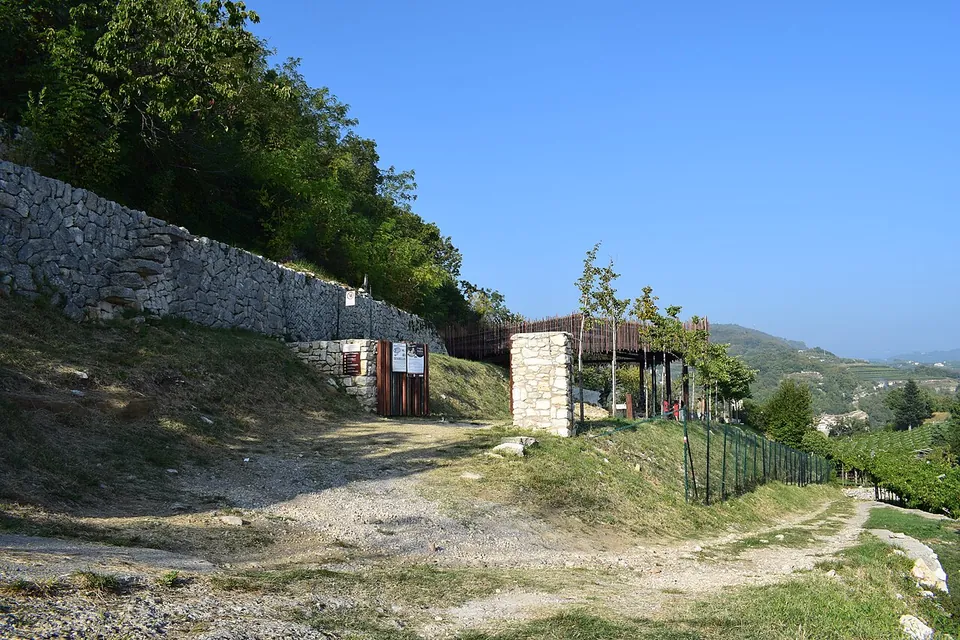
The site is on the eastern slopes of Monte Castelon, between the valleys of Fumane and Marano, in the municipality of Marano di Valpolicella (it.wikipedia). It can only be reached on foot. Drive to the Santuario di Santa Maria di Valverde, park in the open space in front of it and walk about five minutes north on the path signed “Tempio di Minerva”; or park in the square of the hamlet of San Rocco and walk about ten minutes following the same signs. Visitors with limited mobility are asked to contact the operator first (the operator). No bus stop is mapped near the site, so in practice it needs a car.
It is open on Saturdays, Sundays and public holidays, 15.00 to 19.00 from April to September and 14.00 to 18.00 in October; the operator publishes no opening from November to March. Entry is free. Volunteer guides from the CTG Valpolicella run a guided tour of about 45 minutes on Saturdays by booking, at 18.00 from April to September and at 16.00 in October; tours outside those times, and in English, German or French when a volunteer who speaks the language is available, can be requested, and a voluntary contribution is asked at the end (tempiodiminerva.it, read 23 October 2026).
Visiting details
- Opening hours
- Saturdays, Sundays and public holidays only, 15.00–19.00 from April to September and 14.00–18.00 in October. The operator publishes no opening from November to March.
- Tickets
- Free. A guided tour (about 45 minutes, by volunteer guides) runs on Saturdays by booking, at 18.00 from April to September and 16.00 in October; it is also offered in English, German and French on request, and a voluntary contribution is asked at the end.
- Parking
- Free parking in front of the Santuario di Santa Maria di Valverde, then about five minutes on foot north along the path signed "Tempio di Minerva"; or park in the square of San Rocco and walk about ten minutes, following the same signs.
Before you go
- The site can only be reached on foot; no vehicles go up to it. Visitors with limited mobility are asked to contact the operator beforehand.
- No bus stop is mapped near the site; it needs a car.
Hours and prices checked 23 October 2026 on the operator's own site. Confirm before travelling.
History
The place was a sanctuary long before Rome. There was probably a spring here, and a natural hollow where water collected; from at least the 6th century BC, in the Iron Age, worshippers burned offerings on a votive pyre, and excavation of the burnt earth it left has returned seeds, food remains, bronze rings, brooches and pottery (it.wikipedia).
Between the last quarter and the end of the 2nd century BC, work began on a masonry temple over the old pyre, in the land of the people the operator names as the Arusnates. Little of its plan is known, since it lies mostly under the later temple, but it had a central hall floored in pink concrete set with mosaic tesserae, and its walls were painted in the “first Pompeian style”, which imitated the stone and marble walls of Hellenistic palaces, with an unusual band of running waves along the base, perhaps a reference to the water on the site. The building technique and style point to Roman-Hellenistic patrons (it.wikipedia; the operator). The cult seems to have turned to Minerva at about this time (the operator).
In the Augustan age the old temple was demolished and the building whose remains are visible today was put up over it (the operator; it.wikipedia gives “the Augustan age or the first decades of the imperial age”). Around ten inscriptions and fragments of the marble cult statue (part of the left hand, a piece of the aegis and a piece of the helmet crest) identify the goddess as Minerva, and one inscription credits the rebuilding to magistrates of Verona, the fanorum curatores, which shows that the sanctuary answered to the city (the operator).
The temple was abandoned gradually in late antiquity, partly as Christianity spread. A fire brought the roof down, the building was never repaired, and earth and rock falling from the mountain buried it, which is what preserved it. Centuries later the church of Santa Maria di Valverde, formerly called Santa Maria Minerbe or Santa Maria sopra Minerva, was built nearby (it.wikipedia; the operator).
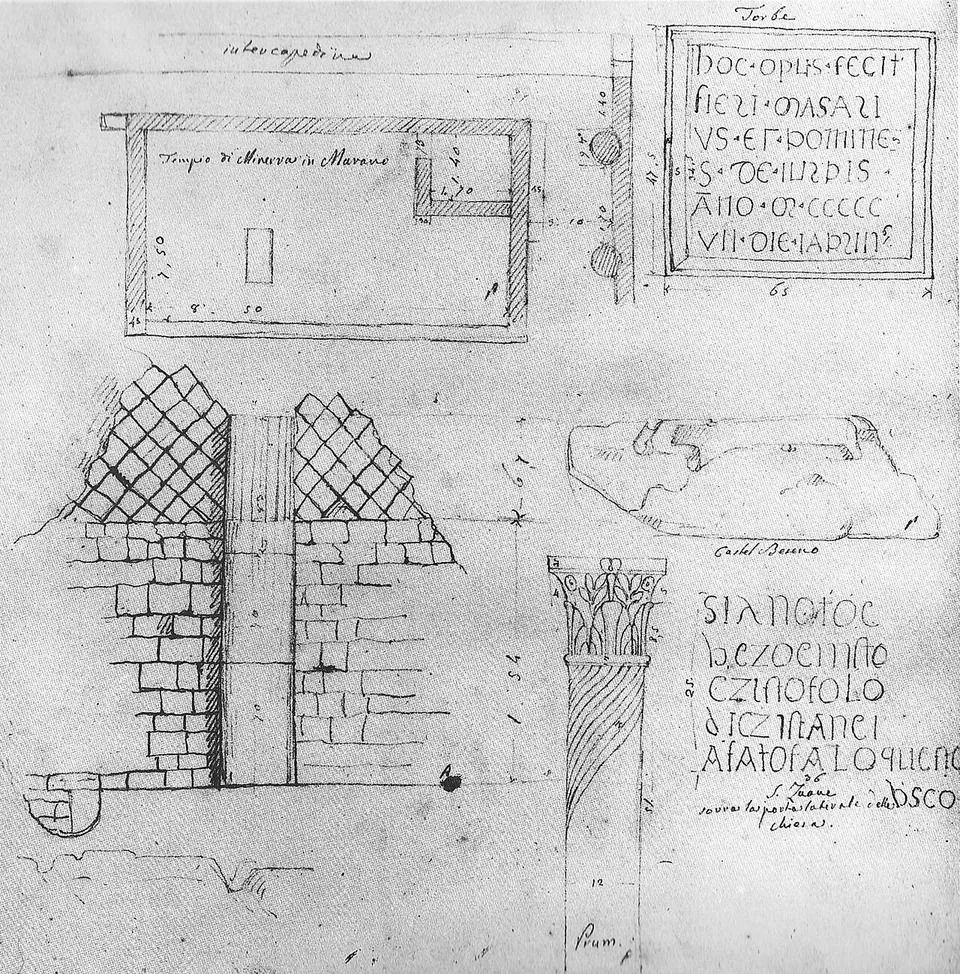
Girolamo Orti Manara excavated part of the temple in 1835, and Giuseppe Razzetti drew its finds and inscriptions. The walls he uncovered were lost again when the slopes were terraced with dry-stone walls in the years between the two world wars. In 2005 the Soprintendenza and the municipality set out to find the temple again, guided by the studies of Olindo Falsirol and the memory of the village’s elders; in 2007 it came back to light under about three metres of earth, and excavations in 2010 and 2013 uncovered the whole building and the earlier phases beneath it (the operator). A further campaign in 2023, inside the central chamber, exposed the floor and what is left of the plastered walls of the republican temple (it.wikipedia).
More photographs


Nearby
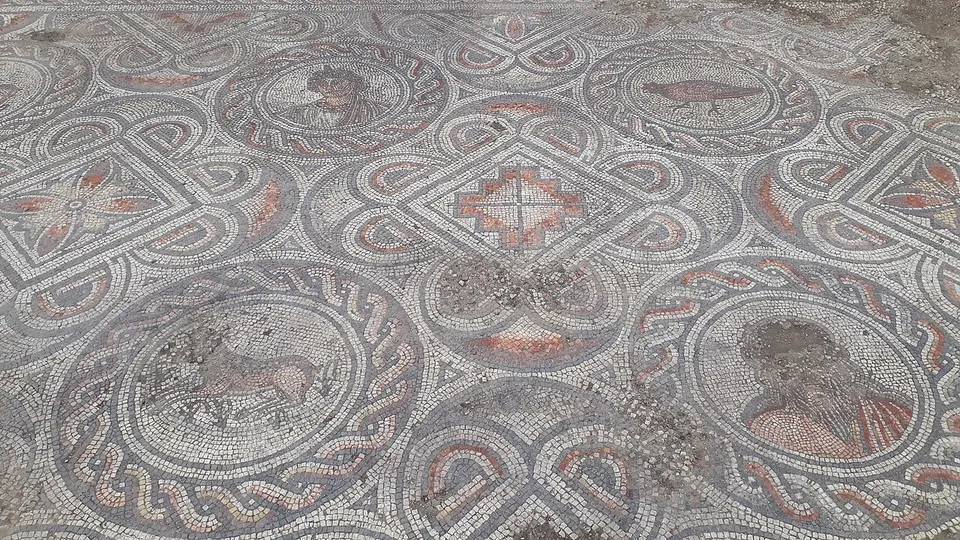
Photo: Piergiovanna Grossi · CC BY-SA 4.0 · Commons
4 km · villa · Veneto
Villa dei Mosaici
The villa has been brought to light almost entirely (it.wikipedia).
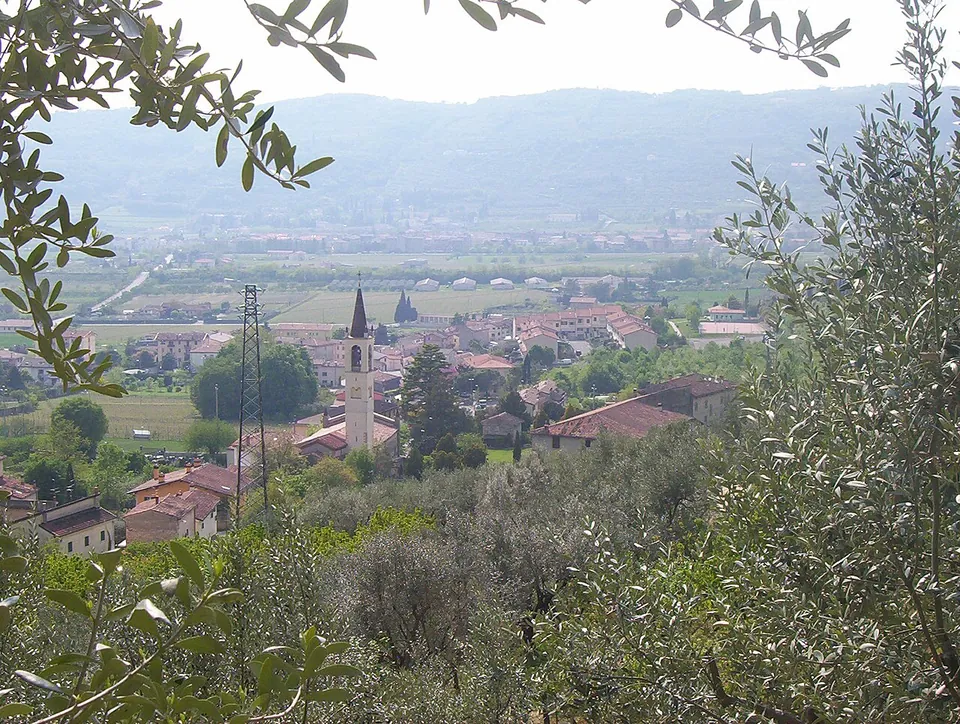
Photo: Adert · CC BY-SA 3.0 · Commons
12 km · site · Veneto
Ipogeo di Santa Maria in Stelle
The water of an underground spring collects in a semicircular settling basin cut in the rock and runs on along a low, narrow, barrel-vaulted channel 100 m long, with four shafts along it.
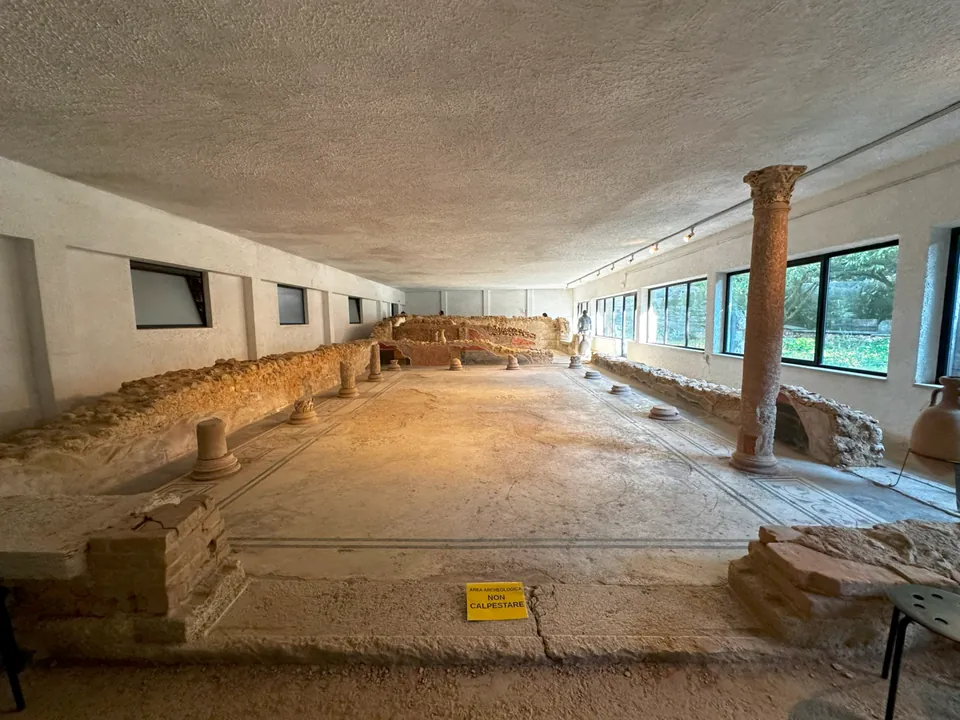
Photo: Kia93VR · CC BY-SA 4.0 · Commons
14 km · villa · Veneto
Valdonega Roman Villa
The house is small - about 17 by 11 m without its portico (the operator) - and what you see is its rooms at floor level, their walls standing low.


Straight-line distances.
Sources
Every fact on this page comes from the records below, each used under the licence noted.
| Source | Licence |
|---|---|
| Wikidata Q119059749 | CC0 |
| OpenStreetMap way/799227910 | ODbL |
| Wikipedia (it) — Tempio di Minerva (Marano di Valpolicella) | CC BY-SA 4.0 |
| Wikipedia (en) — Temple of Minerva (Marano di Valpolicella) | CC BY-SA 4.0 |
| Wikipedia (de) — Tempel der Minerva (Marano di Valpolicella) | CC BY-SA 4.0 |
| Tempio di Minerva — the visit (the site's own operator, Comune di Marano di Valpolicella) | licence not recorded |
| Tempio di Minerva — the imperial-age temple (the operator) | licence not recorded |
| Tempio di Minerva — the late-republican temple (the operator) | licence not recorded |
| Tempio di Minerva — the rediscovery (the operator) | licence not recorded |
| Tempio di Minerva — the presentation project (the operator) | licence not recorded |