

The Villa of Livia is the country house of Livia, wife of the emperor Augustus, on a rise above the Via Flaminia in Prima Porta, a district on the northern edge of Rome. It is where the marble Augustus of Prima Porta and the painted garden room now in Palazzo Massimo were found, and it is open only on days the operator announces.
What is there today
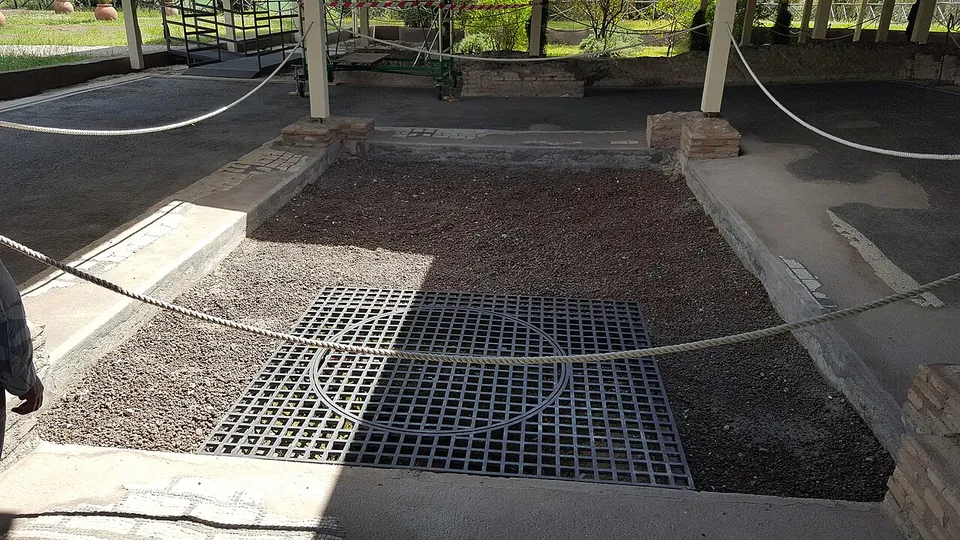
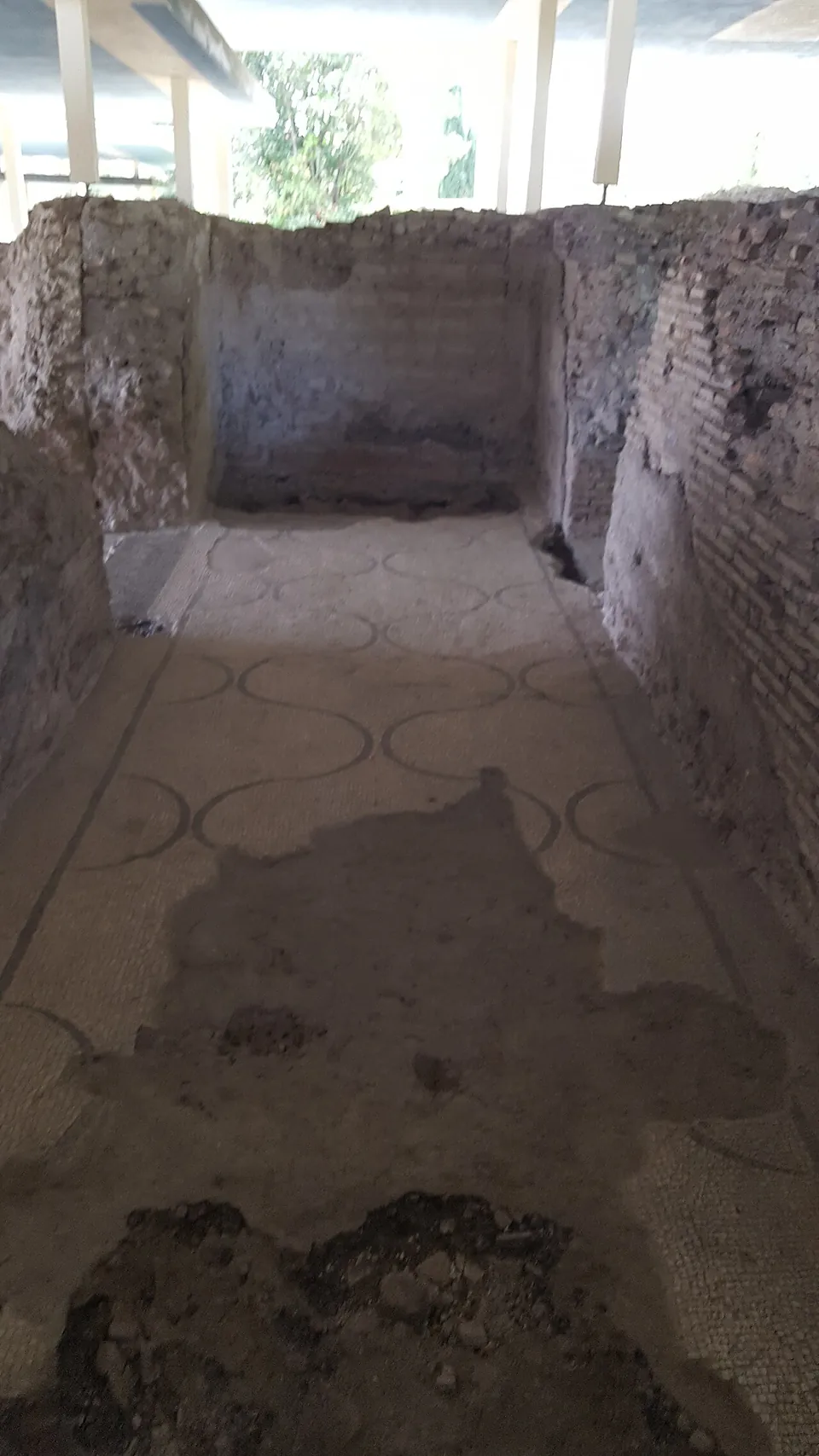
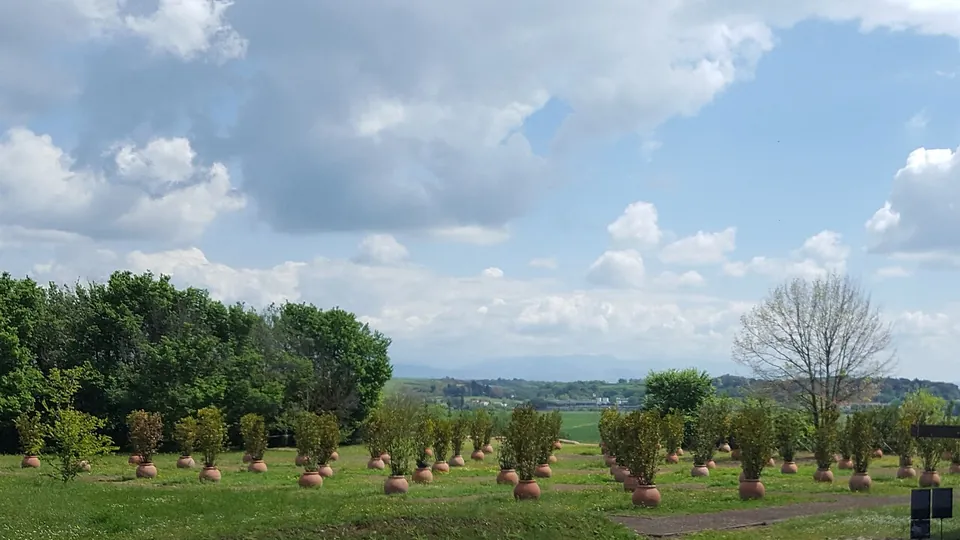
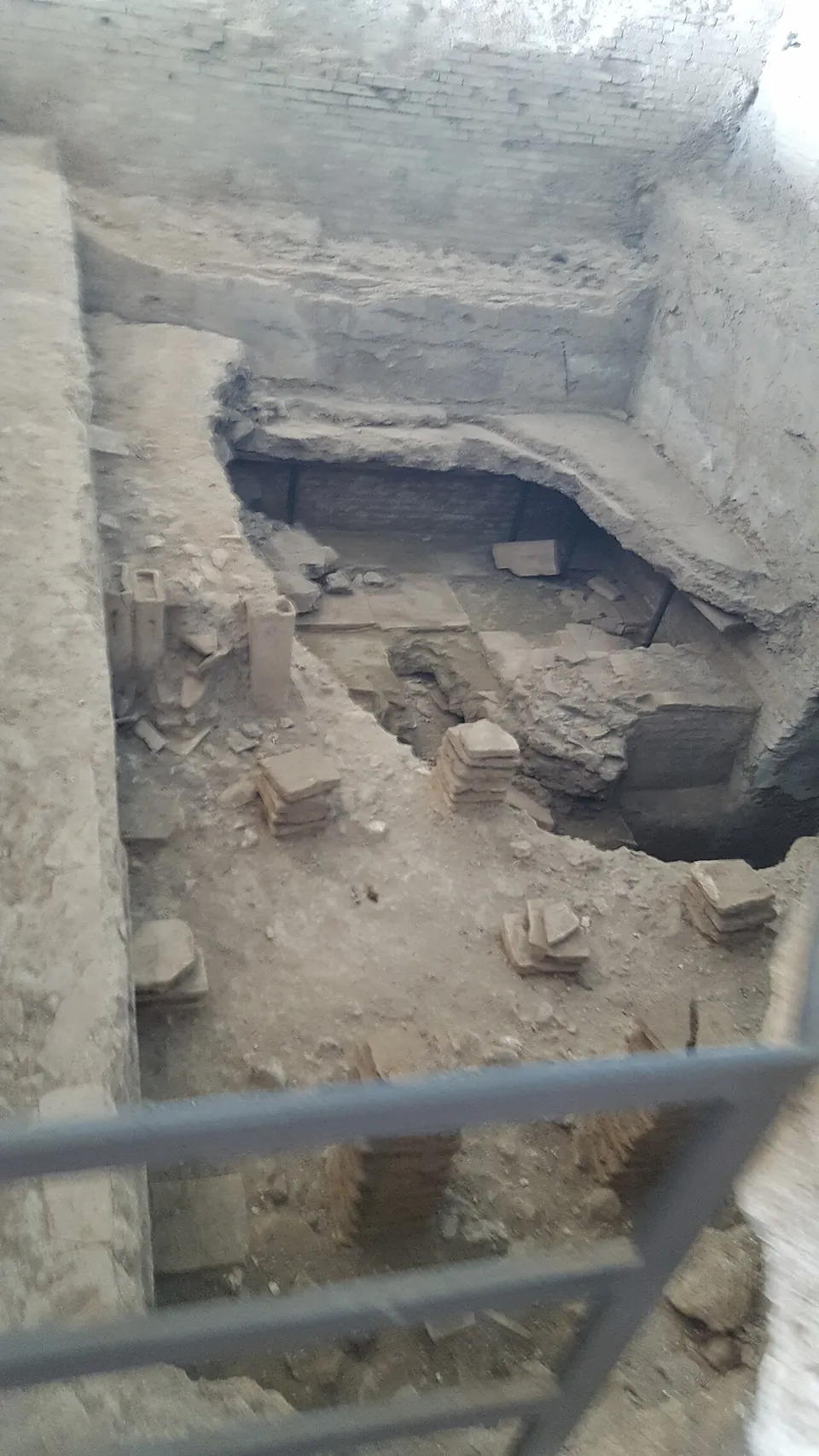
The operator describes the private wing with the bedrooms of Livia and the emperor, an atrium and a small inner garden, and the large reception rooms that open onto a peristyle; the rooms once had painted walls and floors of mosaic and cut marble (Soprintendenza Speciale di Roma). What a visitor sees are excavated walls and floors under modern shelter roofs, followed on walkways, with mosaic corridors and the brick stacks of heated rooms. A large bath complex fills the north side of the villa (Turismo Roma). On the east side a porticoed terrace garden looked over the Tiber; it has been replanted with more than 60 plants, 3 m tall, in clay jars, and is probably the laurel grove the ancient writers mention (Turismo Roma). An antiquarium by the entrance shows the most important finds from the site (the operator).
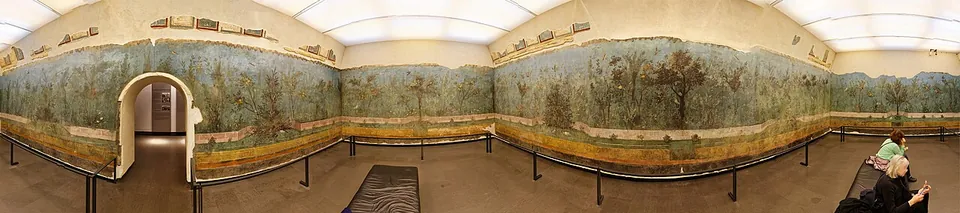
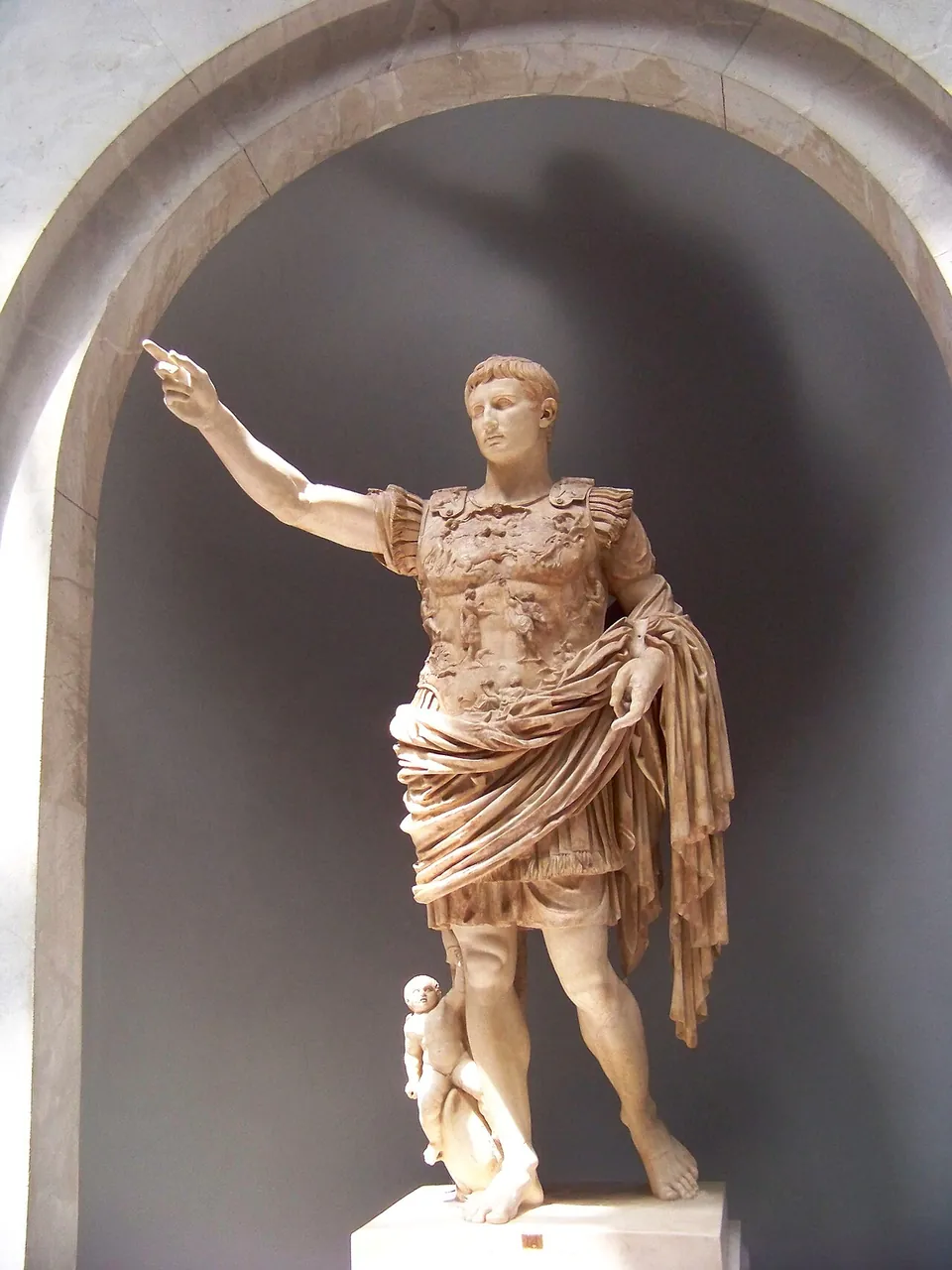
The two things that made the villa famous are elsewhere. The statue of Augustus is in the Vatican Museums, and the frescoes of the half-underground garden room were detached in 1951 and are shown at Palazzo Massimo alle Terme (the operator); it.wikipedia reports that faithful reproductions on panels have been put up on the original site.
Is it worth the trip?
On an open day, yes, if Augustus and Livia are why you are in Rome: this was Livia’s own country house, the counterpart of her house on the Palatine (en.wikipedia), the garden terrace looks down the Tiber valley, and it costs nothing. The catch is getting a day. Visits were suspended on 18 August 2025 for a restoration funded by Italy’s recovery plan (PNRR), the site reopened only for the weekend of 26–27 September 2026, and as of 21 October 2026 the operator had announced no further dates. Before the closure it opened on selected days each month.
If you cannot match an open day, see the garden room in Palazzo Massimo instead, in central Rome: it.wikipedia calls the paintings the site’s main attraction, and they are on show whenever the museum is open.
Getting there
The entrance is at via della Villa di Livia 187, inside Prima Porta’s municipal park; the operator recommends the Ferrovie Roma Nord urban train to the Prima Porta stop. The villa is 12–14 km north of Rome by the published figures, at the ninth mile of the Via Flaminia as Pliny put it (en.wikipedia; Pliny as quoted by the operator). OpenStreetMap maps surface car parks and a public-transport stop at Piazza Saxa Rubra 100–130 m from the site’s map point.
Entry is free and needs no booking; groups of more than ten are asked to write ahead. Opening days are announced on the operator’s page for the site: before the 2025 closure they ran 09.30–18.30 with last entry an hour before closing, and the September 2026 reopening ran on Saturday evening and Sunday afternoon (Soprintendenza Speciale di Roma and Ministry of Culture pages, read 21 October 2026 — check before going).
Visiting details
- Opening hours
- No regular opening calendar was published as of 21 October 2026. The operator suspended visits from 18 August 2025 for restoration works; the site reopened for the European Heritage Days on 26 and 27 September 2026 (Saturday 17.30–20.30, Sunday 16.30–19.30), and no later dates had been announced. Before the closure it opened on selected days announced month by month, 09.30–18.30, last entry one hour before closing.
- Tickets
- Free, without booking. Groups of more than ten are asked to write to the site in advance.
- Parking
- Surface car parks are mapped about 115 m from the site's map point (OSM node/10221115542 and two more beside it). The operator gives the entrance as via della Villa di Livia 187, inside the municipal park of Prima Porta.
Before you go
- Open only on days the operator announces. Check its page for Villa di Livia before travelling; since the restoration closure of August 2025 the only published opening has been the weekend of 26–27 September 2026.
- The famous garden-room frescoes are not here but in Palazzo Massimo alle Terme in central Rome, and the statue of Augustus is in the Vatican Museums.
Hours and prices checked 21 October 2026 on the operator's own site. Confirm before travelling.
History
The ancient writers call the place ad Gallinas Albas, “at the white hens”. Pliny tells how an eagle dropped a white hen into Livia’s lap, holding a laurel sprig in its beak; the soothsayers ordered the hen and its chicks to be raised and the sprig planted, and a grove grew from it at the villa of the Caesars above the Tiber (Pliny, Natural History XV, quoted by the operator). In the story, laurel for the emperors’ triumphs was cut from that grove (Turismo Roma; en.wikipedia). How Livia came to own the estate is uncertain: it may have been part of her dowry when she married Octavian in 39 BC, come from her first husband Tiberius Claudius Nero, or been a gift from Octavian (en.wikipedia).
After the Julio-Claudian house, recent excavation has found an early Flavian phase with two heated pools and a swimming pool, and a radical rebuilding under the Severans (the operator). Published counts of the building phases differ, from four to nine, with the last placed under Constantine or as late as the sixth century (fr.wikipedia; en.wikipedia). From the end of the Empire the massive terrace walls, always in view, exposed the site to repeated plundering (the operator). The name Prima Porta, “first gate”, is said to come from an aqueduct arch over the Via Flaminia that told travellers they had reached Rome; Pleiades dates that arch to the fourth century.
The site was explored as early as 1596 but recognised as Livia’s villa only in the 19th century (en.wikipedia). In 1863 a poorly documented dig found first the statue of Augustus in armour and then the half-buried room painted as a garden (the operator; Pleiades gives 1867 for the statue). The room, probably a summer dining room, is painted on every wall as a garden in which all the plants flower and fruit at once, under a sky of costly Egyptian blue (en.wikipedia; Turismo Roma). An explosion damaged it in 1944, and in 1951 the paintings were detached to save them (it.wikipedia; the operator). The land was expropriated from its private owners in 1973 to make a public park, restoration began in 1982 (it.wikipedia), and from 1995 the Soprintendenza worked on the site with the Swedish Institute in Rome under Gaetano Messineo (en.wikipedia). The restoration that closed it in 2025 was planned to consolidate the walls, restore the paintings and mosaics left on site, replace the decayed shelter roofs and repair the walkways (the operator’s PNRR project sheet).
More photographs



Nearby
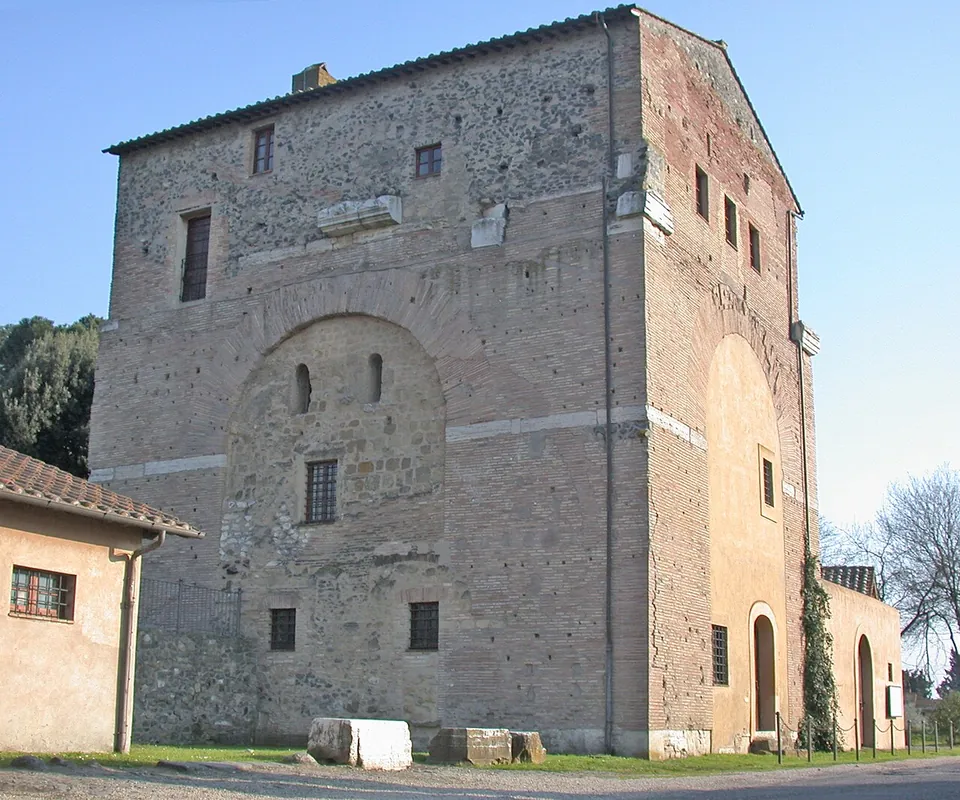
Photo: MM · Public domain · Commons
6 km · arch · Lazio
Arch of Malborghetto
At first sight you see an austere farmhouse rather than an arch (it.wikipedia).
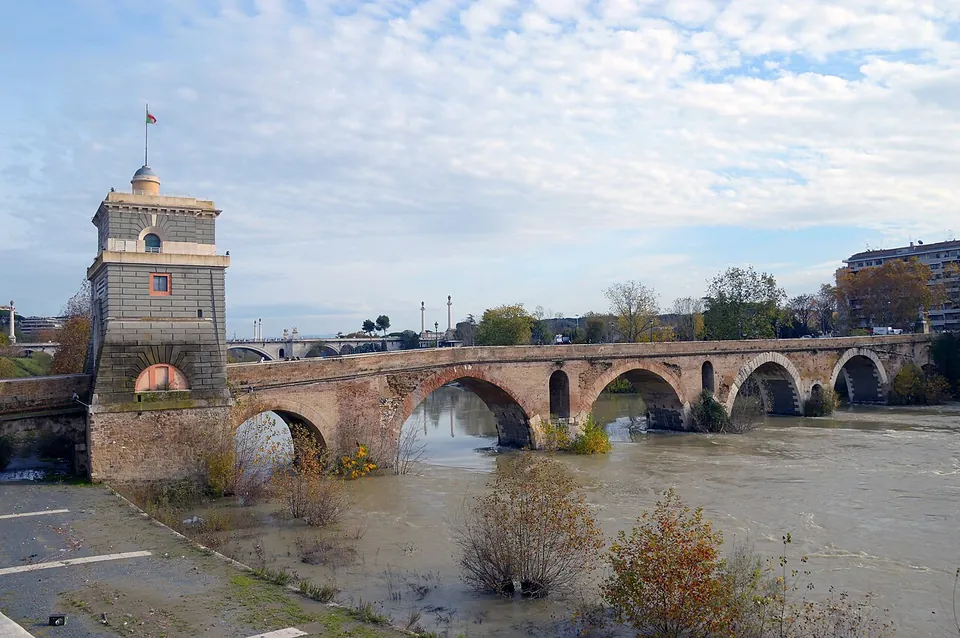
Photo: Livioandronico2013 · CC BY-SA 4.0 · Commons
8 km · bridge · Lazio
Ponte Milvio
A bridge of six arches, 136 m long, with four larger arches over the river and two smaller ones at the banks (de.wikipedia; Sovrintendenza Capitolina).
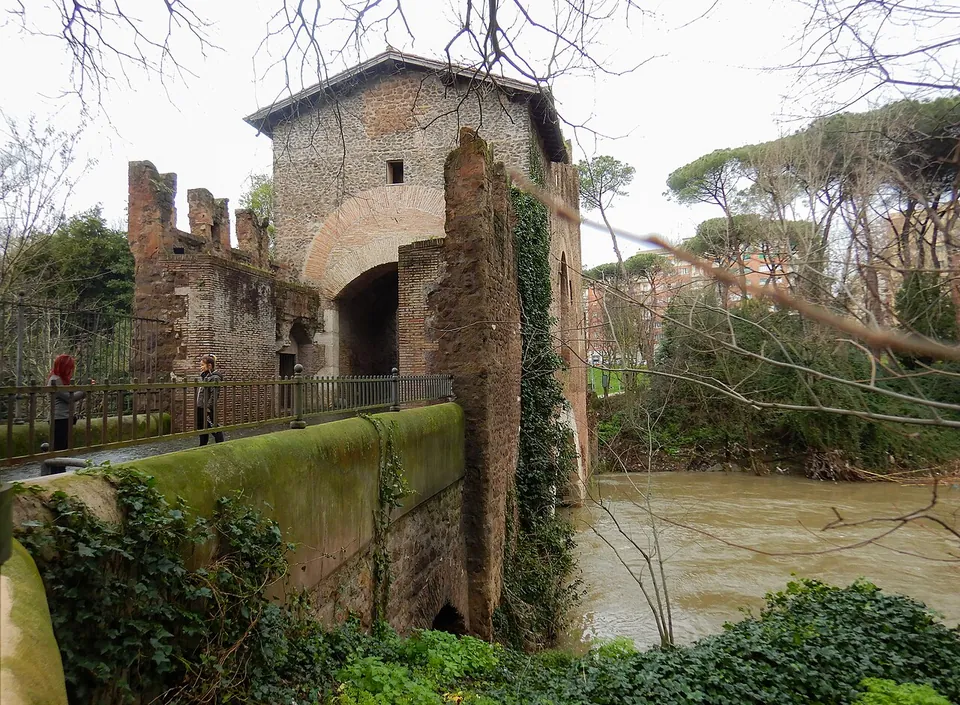
Photo: Albarubescens · CC BY-SA 4.0 · Commons
8 km · bridge · Lazio
Ponte Nomentano
The bridge is about 60 m long and 7.35 m wide, dimensions that have stayed practically unchanged since antiquity (en.wikipedia).


Straight-line distances.
Sources
Every fact on this page comes from the records below, each used under the licence noted.
| Source | Licence |
|---|---|
| Pleiades 423015 | CC BY |
| Wikidata Q639179 | CC0 |
| OpenStreetMap node/2074634919 | ODbL |
| Soprintendenza Speciale di Roma — Villa di Livia (the operator) | licence not recorded |
| Soprintendenza Speciale di Roma — opening calendar, August 2025 | licence not recorded |
| Soprintendenza Speciale di Roma — European Heritage Days 2026 programme | licence not recorded |
| Soprintendenza Speciale di Roma — PNRR project sheet 226, Villa di Livia (PDF) | licence not recorded |
| Ministero della Cultura — Gep 2026 alla Villa di Livia | licence not recorded |
| Turismo Roma (Roma Capitale) — Villa di Livia a Prima Porta | licence not recorded |
| Wikipedia (en) — Villa of Livia | CC BY-SA 4.0 |
| Wikipedia (it) — Villa di Livia | CC BY-SA 4.0 |
| Wikipedia (de) — Villa di Livia | CC BY-SA 4.0 |
| Wikipedia (fr) — Villa Livia | CC BY-SA 4.0 |