

What is there today
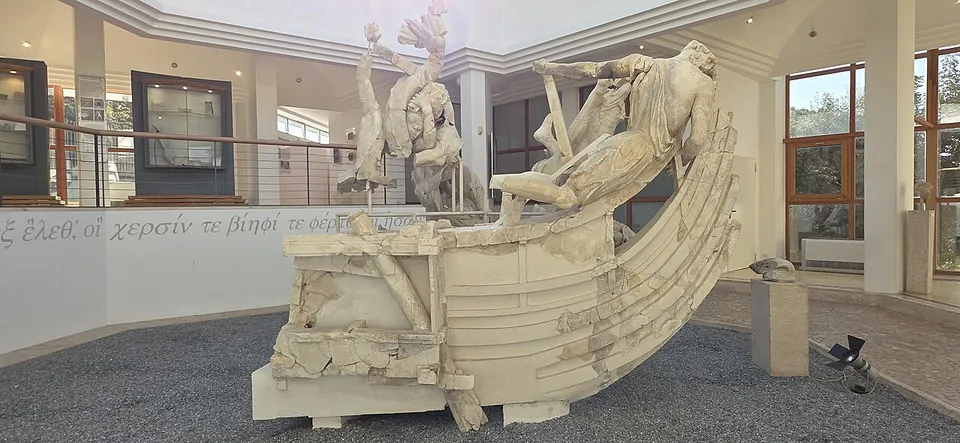
Two things, on one ticket. The museum, opened in 1963 for the finds, holds four large sculpture groups from the cave: the blinding of the Cyclops Polyphemus, the monster Scylla attacking Odysseus’s ship, the theft of the Palladium by Odysseus and Diomedes, and Odysseus dragging the body of Achilles, a version of the group known in Rome as the Pasquino. The head of Odysseus from the Polyphemus group is famous enough to have given this stretch of coast its name, the Riviera di Ulisse (the operator). Around them are other sculptures from the villa’s decoration, among them portrait heads of Trajan and of an emperor of the Tetrarchy (Ministry of Culture).
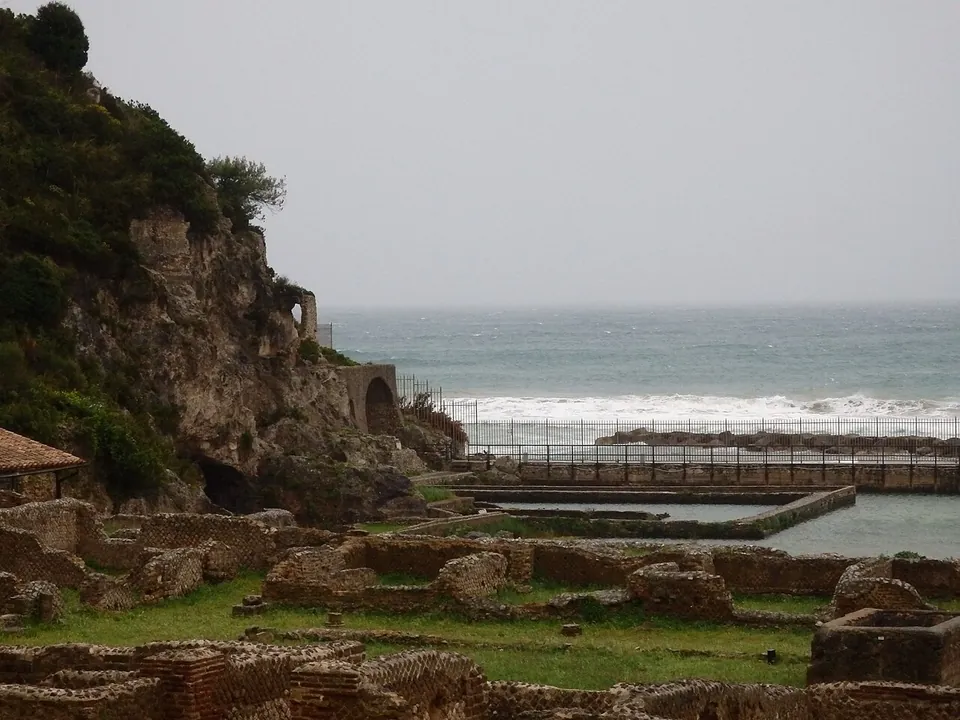
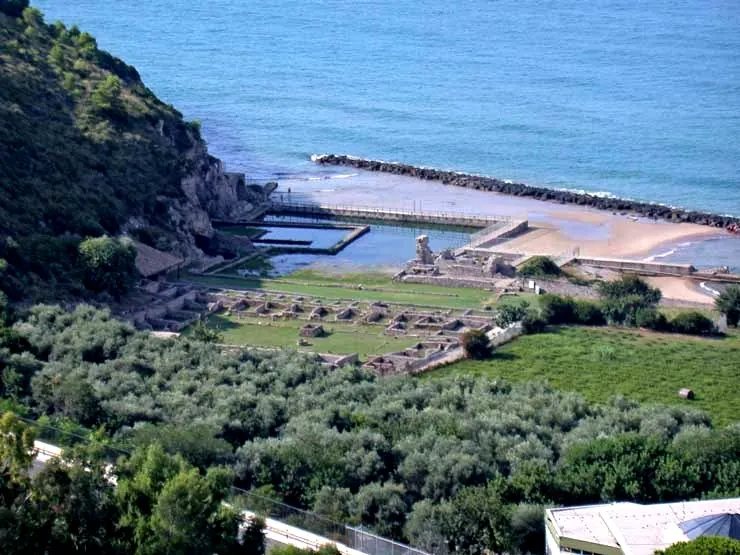
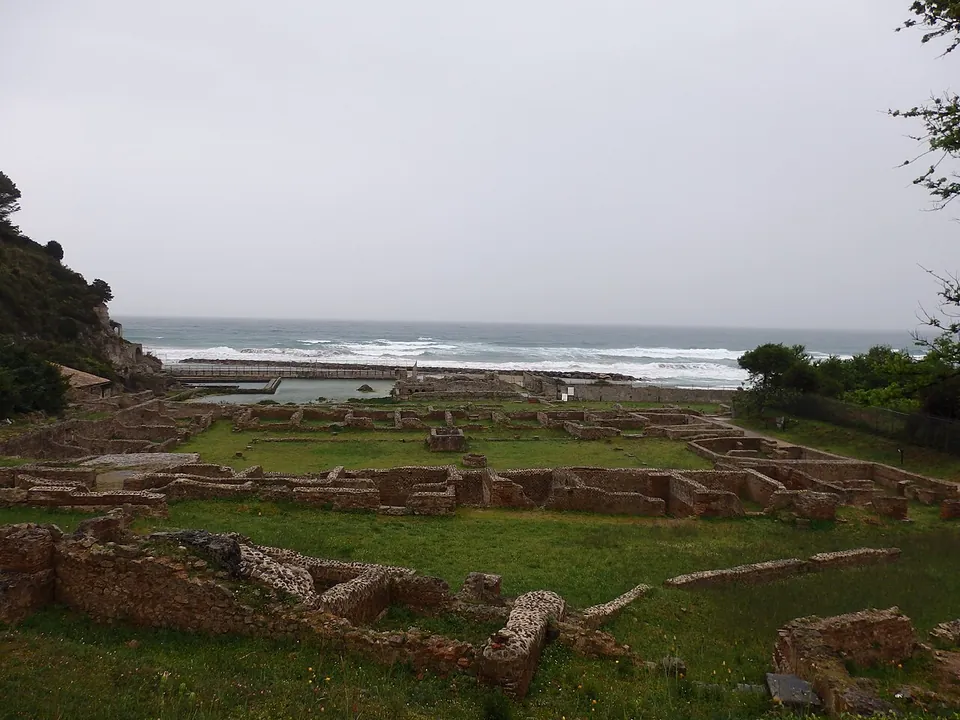
Outside, the villa itself survives as a plan: the lower walls of a series of rooms around a porticoed courtyard, including service rooms rebuilt several times, a kiln and a bread oven, on terraces facing the sea (it.wikipedia). Much of it has been worn away by the sea (fr.wikipedia). At the shore lies the cave the sculptures came from, fronted by a large rectangular fishpond of seawater with an artificial island in the middle that held a summer dining room, and joined to a circular pool 12 m across inside the cave, where the Scylla group stood (it.wikipedia). The cave is temporarily closed to the public for maintenance work, and the operator gives no date for its reopening.
Is it worth the trip?
Yes, for the sculptures. They are monumental marble groups that made headlines when they were found in 1957, and seeing them a few hundred metres from where they stood is the point of the visit. The ruins outside are low walls rather than standing rooms, so they are worth seeing for the setting on the bay rather than for the buildings. The operator puts a visit at an hour to an hour and a half, which makes it an easy addition to a day in Sperlonga.
Know before you go that the cave, the most evocative part of the site, is closed for now, and that the archaeological area does not open on Mondays or in bad weather. At €5, with everyone under 18 free, the price is no obstacle.
Getting there
The site is on the Via Flacca coast road at km 16.3, just outside the village; the entrance is on Via Valle Corsara. Sperlonga has no railway station (the nearest is Fondi), and the operator recommends coming by car. On foot, a laid-out path from the village reaches the museum in about 15 minutes. The museum has no car park of its own, but there are private paid car parks next to it in summer (the operator), and OpenStreetMap maps a paid car park about 150 m from the ruins.
It is open Tuesday to Sunday. The museum keeps 08.30–19.30 (last entry 19.00); the archaeological area closes at 16.30 in January, 17.00 in February and March, 19.00 from April to September, 18.00 in October and 16.00 in November and December, with last entry an hour before. It is closed on Mondays, 1 January and 25 December. A ticket is €5 (€5 also buys the museum alone when the archaeological area is shut), €2 for ages 18 to 25 and free under 18. A €10 ticket adds the Museo Archeologico Nazionale di Formia within 30 days, and a €12 ticket, valid for a year, covers Sperlonga, Formia, Minturnae and the Real Ferdinando bridge at Minturno. The archaeological area is not accessible to visitors with reduced mobility (Direzione regionale Musei nazionali Lazio, read 23 October 2026; check before travelling).
Visiting details
- Opening hours
- Tuesday to Sunday; closed Mondays, 1 January and 25 December. Museum 08.30–19.30 (last entry 19.00). The archaeological area closes at 16.30 in January, 17.00 in February and March, 19.00 from April to September, 18.00 in October and 16.00 in November and December, with last entry an hour before (the February–March and October times apply until the clock change). The archaeological area stays closed in bad weather. The grotto is temporarily closed to the public for maintenance work.
- Tickets
- €5 for the museum and archaeological area (the price applies until the site improvement works end); €5 for the museum alone when the archaeological area is closed; €2 for ages 18–25; free under 18. €10 combined ticket with the Museo Archeologico Nazionale di Formia, valid 30 days; €12 ticket for the state archaeological parks and museums of the province of Latina (Sperlonga, Formia, Minturnae and the Real Ferdinando bridge at Minturno), valid a year with one entry per site. Tickets can also be bought in the Musei Italiani app.
- Parking
- The museum has no car park of its own; in summer there are private paid car parks next to it (the operator). OSM maps a paid car park about 150 m from the villa point (way/841241850).
Before you go
- The sculpture grotto is temporarily closed for maintenance work; the operator gives no reopening date.
- Closed on Mondays, and the archaeological area does not open in bad weather.
- Sperlonga has no railway station (the nearest is Fondi) and no bus stop is mapped near the entrance; the operator says the car is the best way to come.
- The archaeological area is not accessible to visitors with reduced mobility (the operator).
Hours and prices checked 23 October 2026 on the operator's own site. Confirm before travelling.
History
The first buildings were a maritime villa of the 1st century BC (the operator), possibly owned by Aufidius Lurco, the maternal grandfather of Tiberius’s mother Livia (it.wikipedia); the operator says it may have reached Tiberius by inheritance from his mother’s family. Under Tiberius, emperor from AD 14 to 37, the residence was entirely rebuilt and the great natural cave became part of it (the operator). In the early 1st century AD a long two-aisled portico was added, and the cave was given an architectural front, masonry fittings and its sculptures (it.wikipedia).
The cave is probably where the episode told by Suetonius and Tacitus took place: in AD 26 rocks fell during a banquet, killing some servants, and Sejanus saved the emperor by shielding him with his own body (it.wikipedia). The villa went on being decorated with sculpture into the late imperial period (it.wikipedia), and the museum’s smaller finds, down to Christian oil lamps, show the site lived on into the post-classical period (Ministry of Culture). Pleiades records the cave and settlement as Speluncae, dated as late as 640. The sculptures were smashed into thousands of pieces, perhaps by monks who settled in the ruins in the early Middle Ages (it.wikipedia). In the 18th century a small cleft to the north was used as a chapel, which left the inscription “Ave Crux Sancta” (it.wikipedia).
The find came in 1957, during the building of the coast road from Terracina to Gaeta, when work in the cave, already known to local people, brought to light the sculptures; more than 15,000 marble fragments were recovered from the circular pool inside it (the operator). Fragments of an inscription found at Sperlonga carry the names of the sculptors Hagesandros, Athenodoros and Polydoros, the makers of the Laocoön in the Vatican Museums (it.wikipedia), which is why the discovery drew so much attention at the time (the operator).
More photographs

Nearby
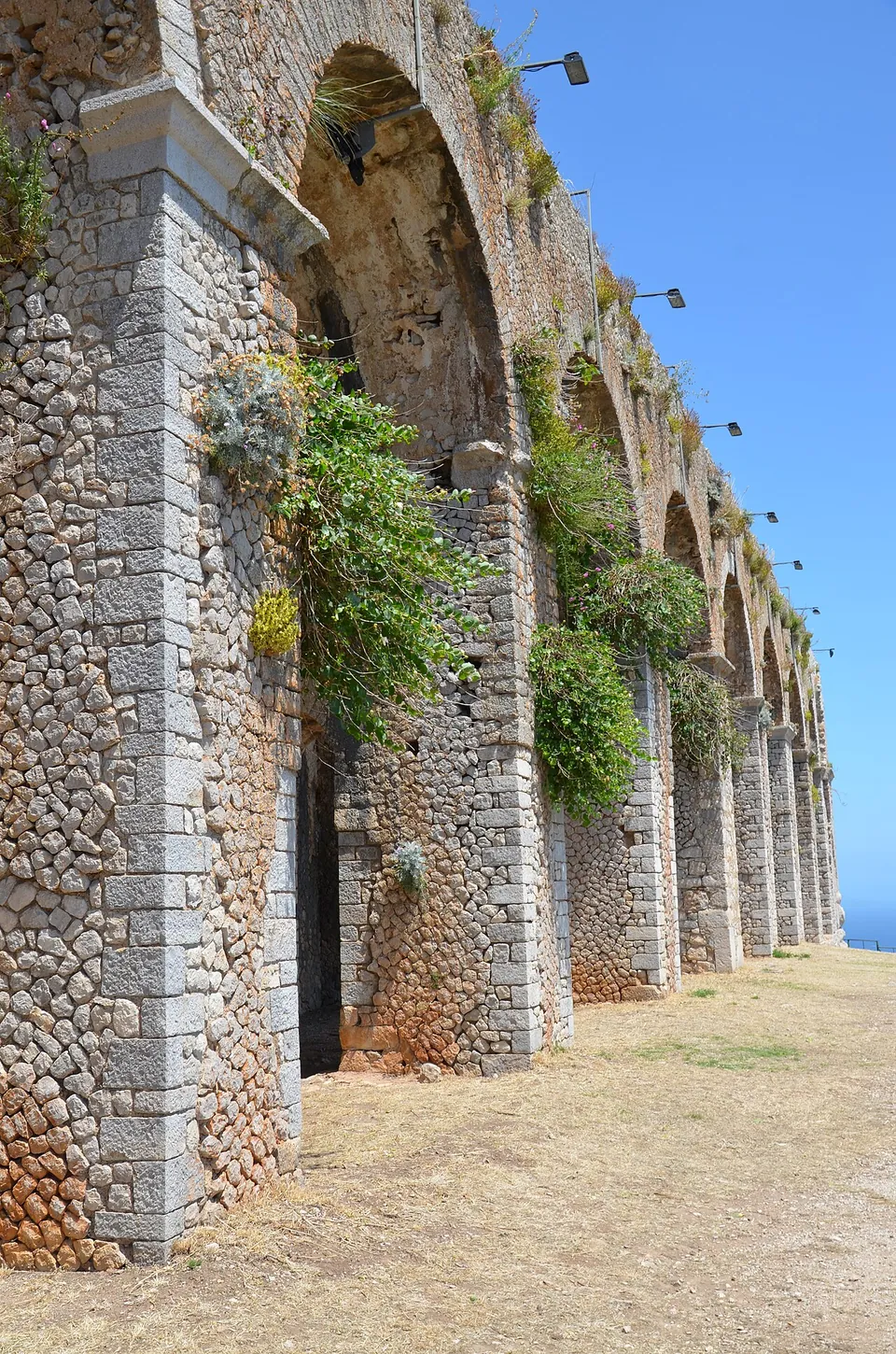
Photo: Carole Raddato from FRANKFURT, Germany · CC BY-SA 2.0 · Commons
17 km · temple · Lazio
Temple of Jupiter Anxur
The sanctuary as it survives is the rebuilding of Sulla's time, early in the 1st century BC (Pleiades), and it is laid out on three terraces (it.wikipedia).
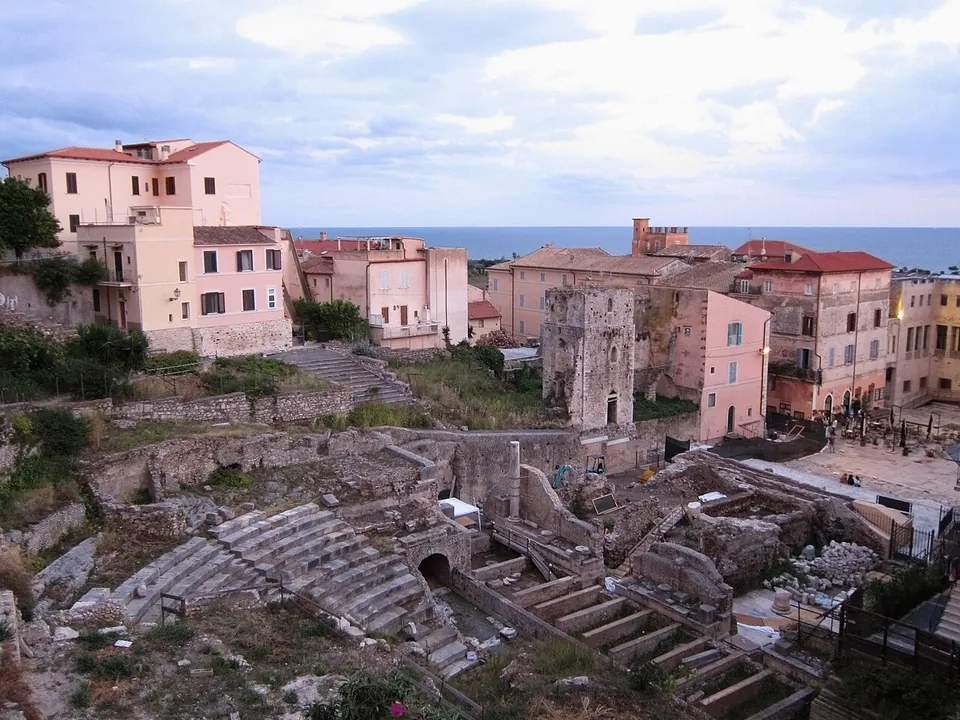
Photo: Mænsard vokser · CC BY-SA 4.0 · Commons
17 km · city · Lazio
Tarracina – Terracina
The Roman town has two levels, and they are visited separately.
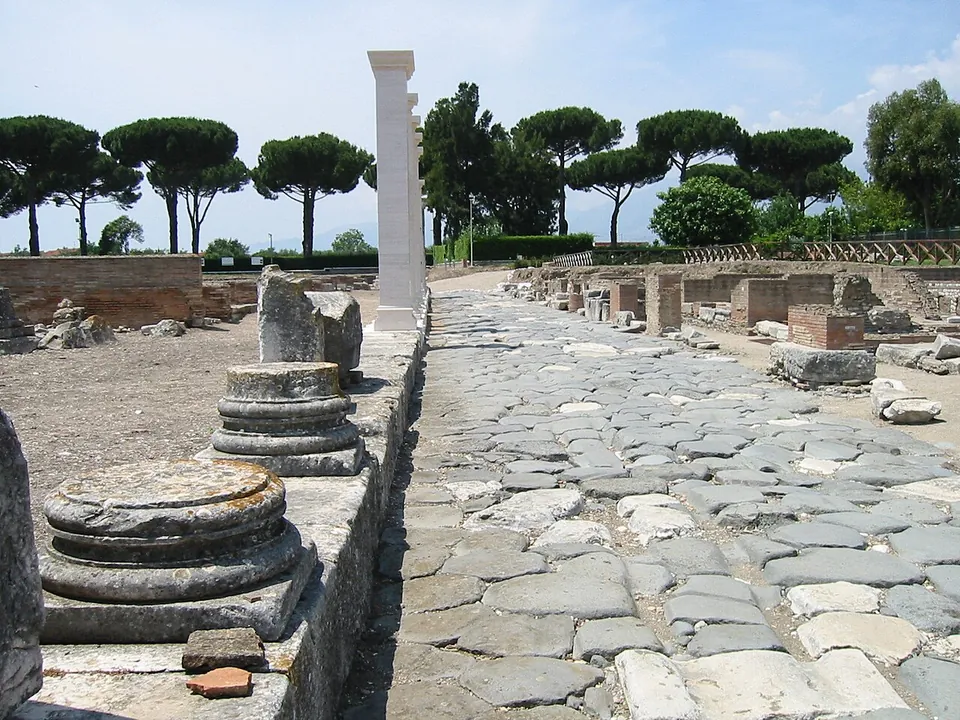
Photo: AlMare · Public domain · Commons
27 km · city · Lazio
Minturnae
The Via Appia crosses the park as the ancient town's main street, an original stretch paved in basalt blocks (it.wikipedia).


Straight-line distances.
Sources
Every fact on this page comes from the records below, each used under the licence noted.
| Source | Licence |
|---|---|
| Pleiades 433204 | CC BY |
| Wikidata Q3558833 | CC0 |
| OpenStreetMap way/59296209 | ODbL |
| Pleiades — Speluncae (the cave and settlement at the villa) | licence not recorded |
| Wikipedia (it) — Villa di Tiberio | CC BY-SA 4.0 |
| Wikipedia (de) — Villa di Tiberio (Sperlonga) | CC BY-SA 4.0 |
| Wikipedia (fr) — Villa de Tibère | CC BY-SA 4.0 |
| Direzione regionale Musei nazionali Lazio — Parco archeologico della Villa di Tiberio e Museo archeologico nazionale, Sperlonga (the operator) | licence not recorded |
| Ministero della Cultura — Museo archeologico nazionale di Sperlonga e Area archeologica | licence not recorded |