

What is there today
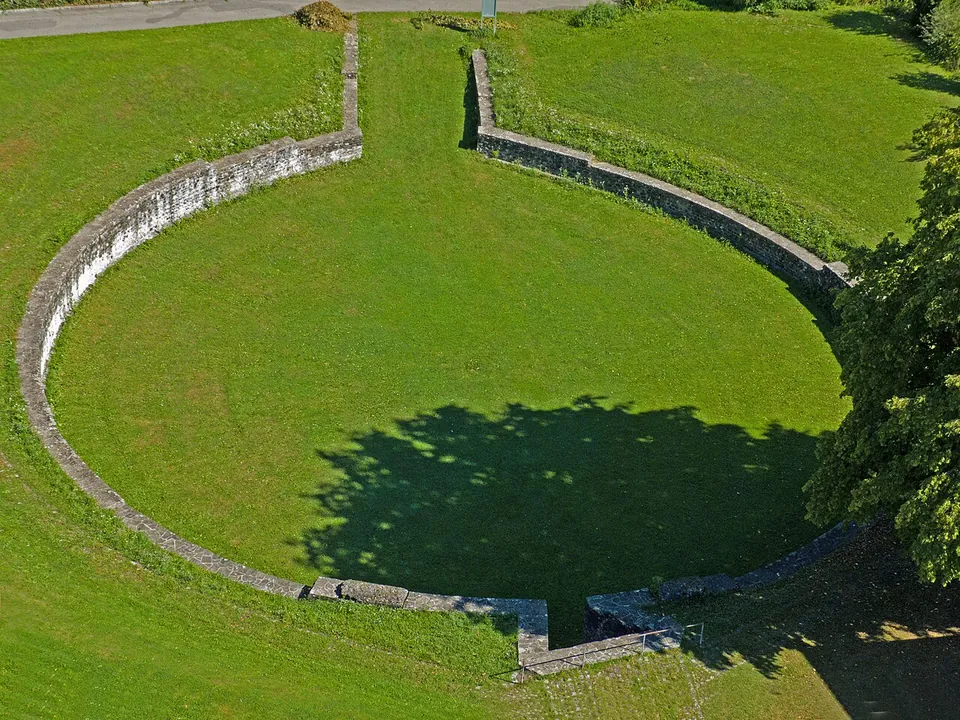
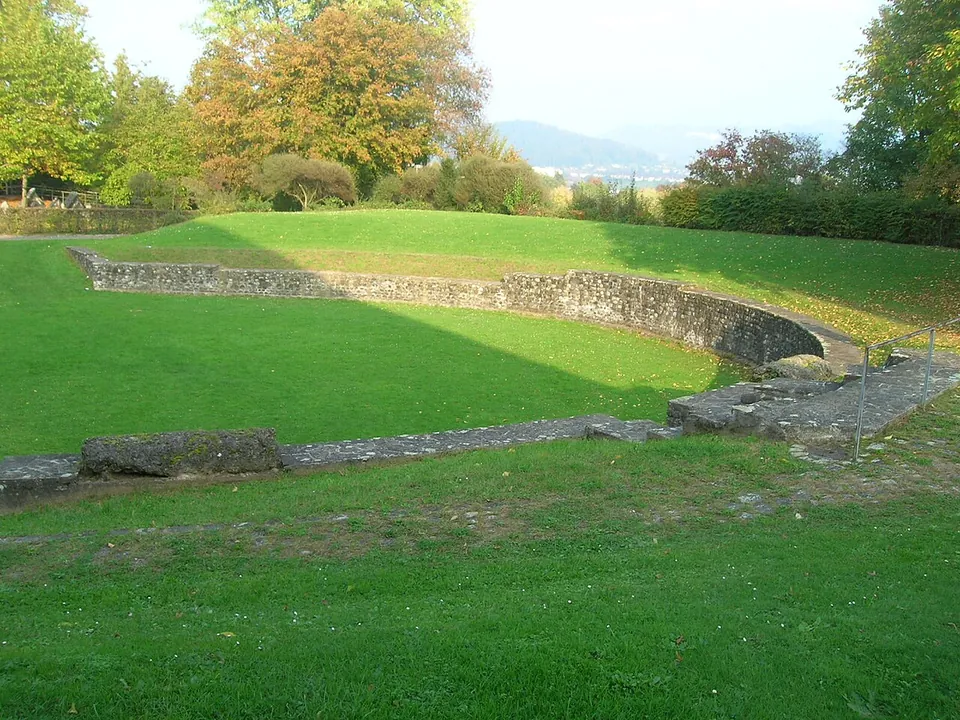
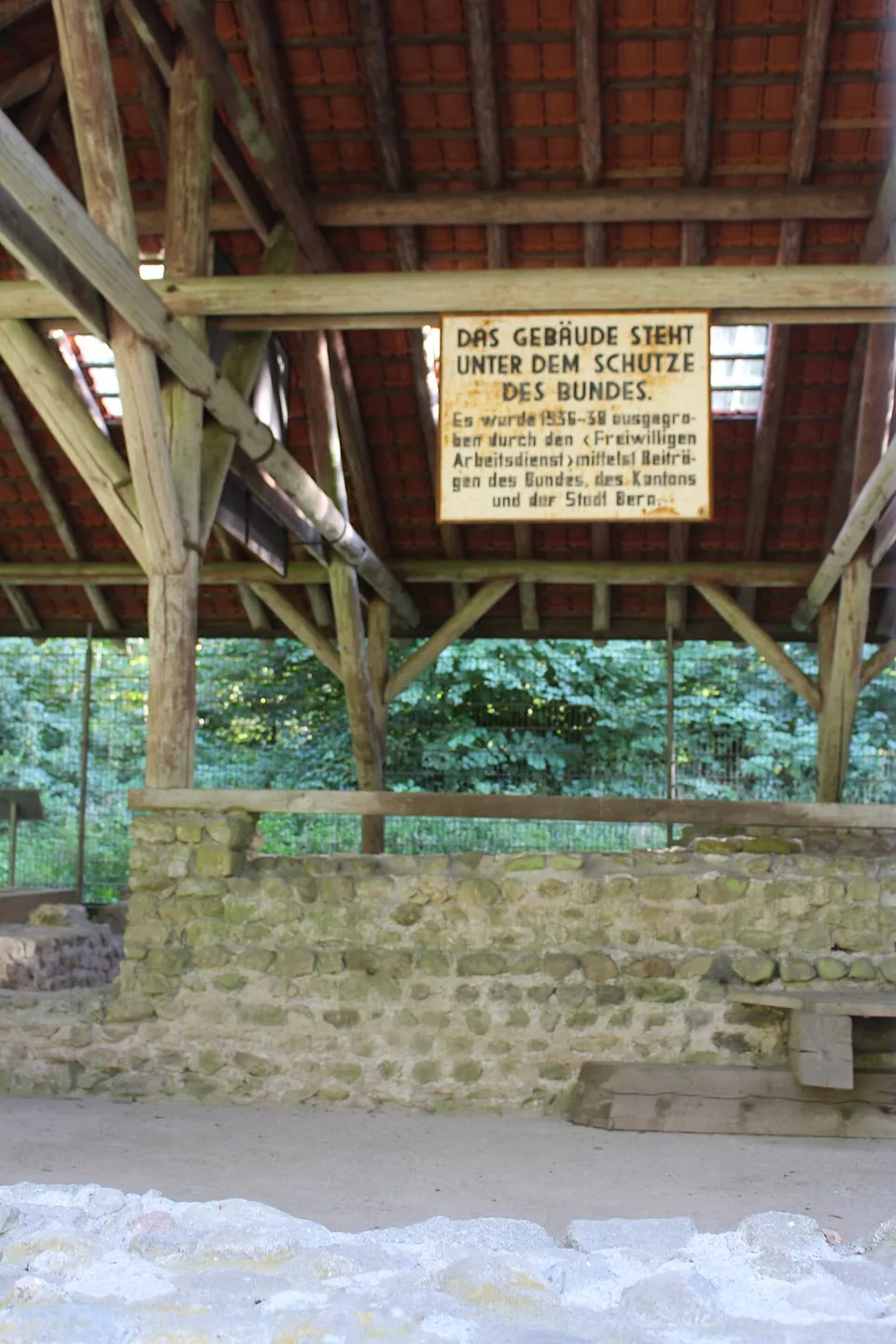
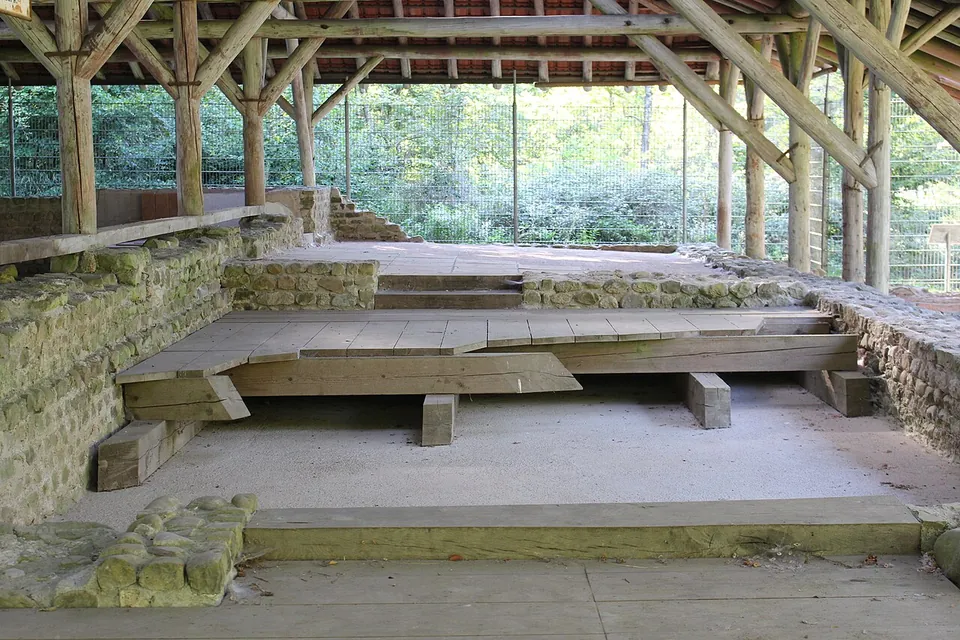
The canton’s archaeology service maintains a signposted trail whose Roman highlights are “the so-called arena” and the Roman baths (the operator). The arena is a small oval of grass inside a low stone wall; Pleiades gives it about 27.5 by 25.3 m. The baths, about 850 m to the north-west, stand under a timber roof and have been partly reconstructed: Commons photographs and their descriptions show the portico and changing room, the hot room with its underfloor heating, the cold pool and the furnace room. A sign over them records that the building is under federal protection and was excavated in 1936-38 by the voluntary labour service, paid for by the Confederation, the canton and the city of Bern.
A display case of finds from the settlements stands beside the Matthäuskirche, near the arena; the operator lists it as closed for renovation until summer 2026.
Is it worth the trip?
For anyone staying in Bern, yes: it is a free, unhurried walk on a green peninsula with two clear Roman monuments, and the canton’s archaeology service has put information boards along the way (OpenStreetMap). Neither monument is large, and they are some distance apart, so treat it as a walk with stops rather than a single sight.
Getting there
The Engehalbinsel is 3 km north of Bern’s old town (the operator). Bern Tiefenau station is mapped about 290 m from the arena, and a public car park, with a fee, about 130 m (OpenStreetMap). The monuments are accessible all year, and the canton’s archaeology service offers a map and a flyer; guided tours can be arranged through the Pro Brenodor association (the operator, read 7 October 2026).
Visiting details
- Opening hours
- The arena and the Roman baths are accessible all year (the operator).
- Tickets
- Free (no charge is published; OpenStreetMap tags the display case fee=no).
- Parking
- A public car park (fee) about 130 m from the arena (OpenStreetMap, way/72402225).
Before you go
- The display case of finds beside the Matthäuskirche is listed by the operator as closed for renovation until summer 2026; check that it has reopened.
- The arena and the baths are about 850 m apart.
Hours and prices checked 7 October 2026 on the operator's own site. Confirm before travelling.
History
In the late Iron Age, from the 3rd to the 1st century BC, the peninsula held an important town of the Helvetii, an oppidum of up to 140 hectares that probably bore the name Brenodor. Shortly before the turn of the era the Roman small town of Brenodurum grew up in the same place; it was used into the 3rd century and then abandoned (the operator).
More photographs

Nearby
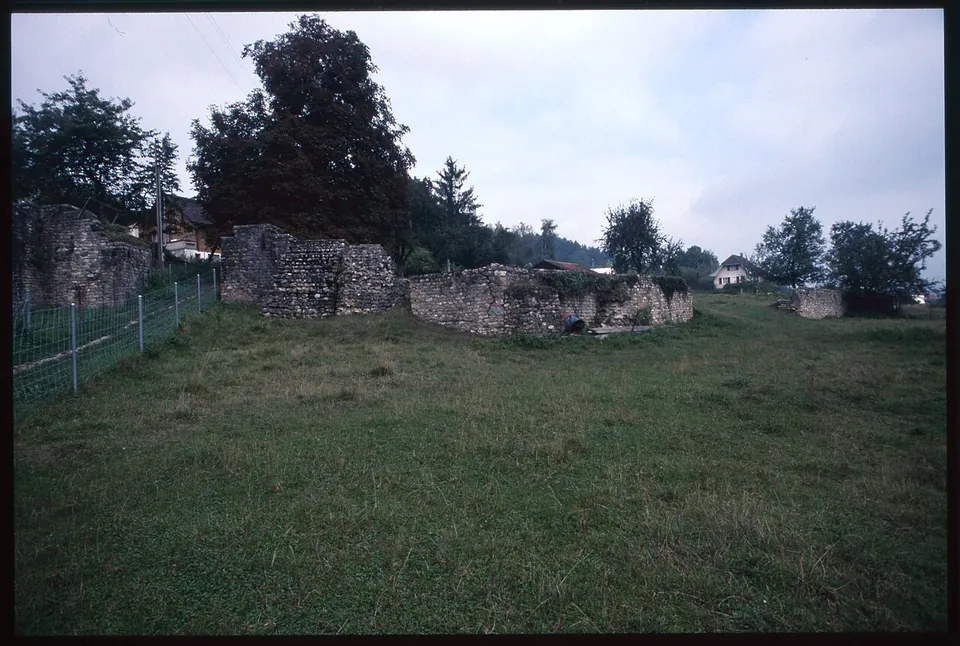
Photo: André Corboz · CC BY-SA 4.0 · Commons
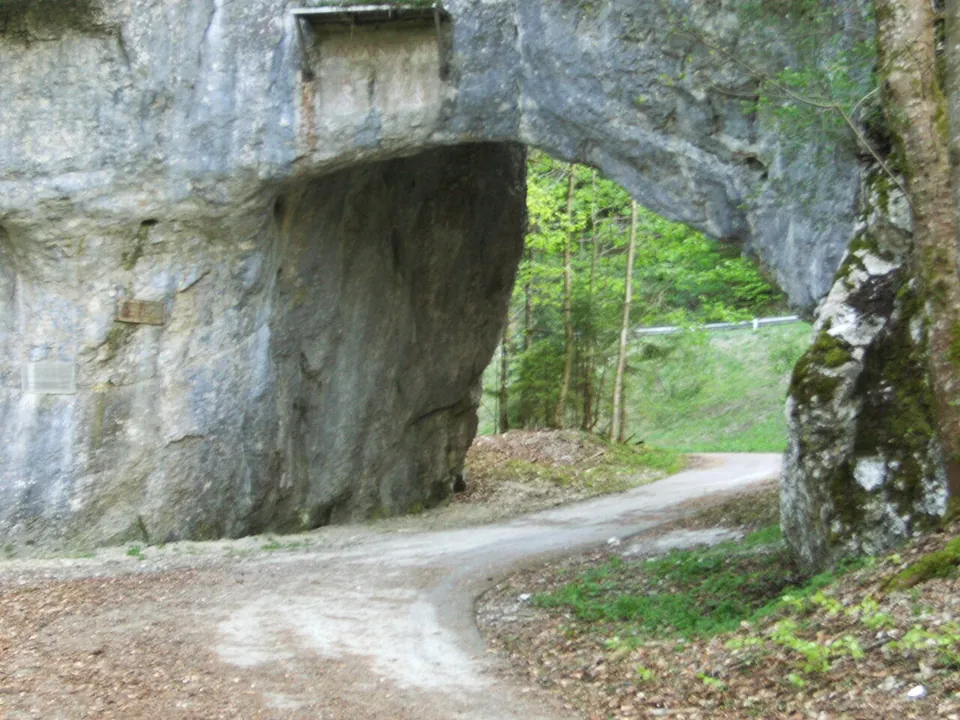
Photo: Oblic · CC BY-SA 3.0 · Commons
33 km · road · Bernese Jura, Bern
Pierre Pertuis
The passage is a short tunnel through the rock with a well-preserved Latin inscription (fr.wikipedia).
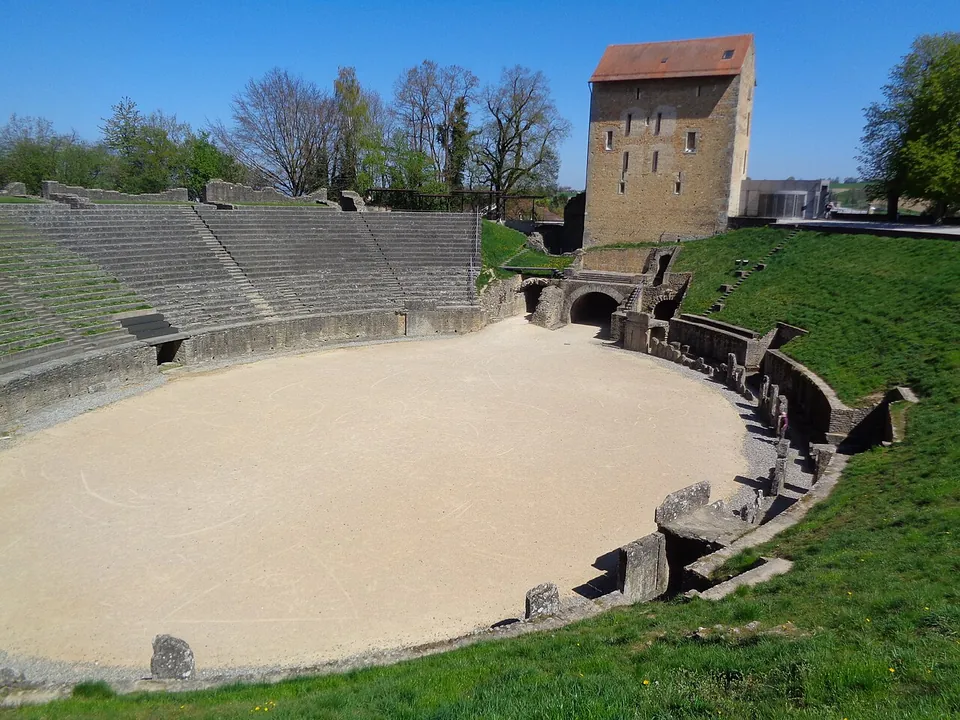
Photo: Nursangaion · CC BY-SA 4.0 · Commons
33 km · city · Broye-Vully District, Vaud
Aventicum
The ruins are not one enclosure but a set of monuments spread through the town and the fields beyond it.


Straight-line distances.
Sources
Every fact on this page comes from the records below, each used under the licence noted.
| Source | Licence |
|---|---|
| Wikidata Q1341754 | CC0 |
| OpenStreetMap relation/13646572 | ODbL |
| Pleiades — Roman amphitheater at Bern | licence not recorded |
| Wikidata — Roman amphitheatre of Bern (Q29001163) | licence not recorded |
| Wikidata — Roman baths on the Engehalbinsel (Q29651691) | licence not recorded |
| Wikipedia (de) — Engehalbinsel | CC BY-SA 4.0 |
| KGS inventory 620 — Engehalbinsel, keltisches Oppidum / BRENODURUM (?), römischer Vicus (BABS) | licence not recorded |
| Archäologischer Dienst des Kantons Bern — Bern, Engehalbinsel (the operator) | licence not recorded |