

What is there today
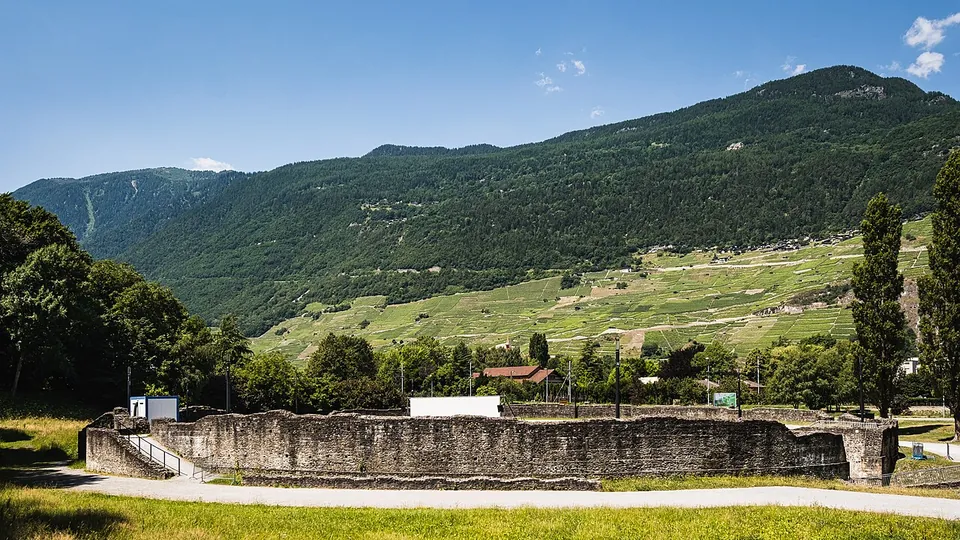
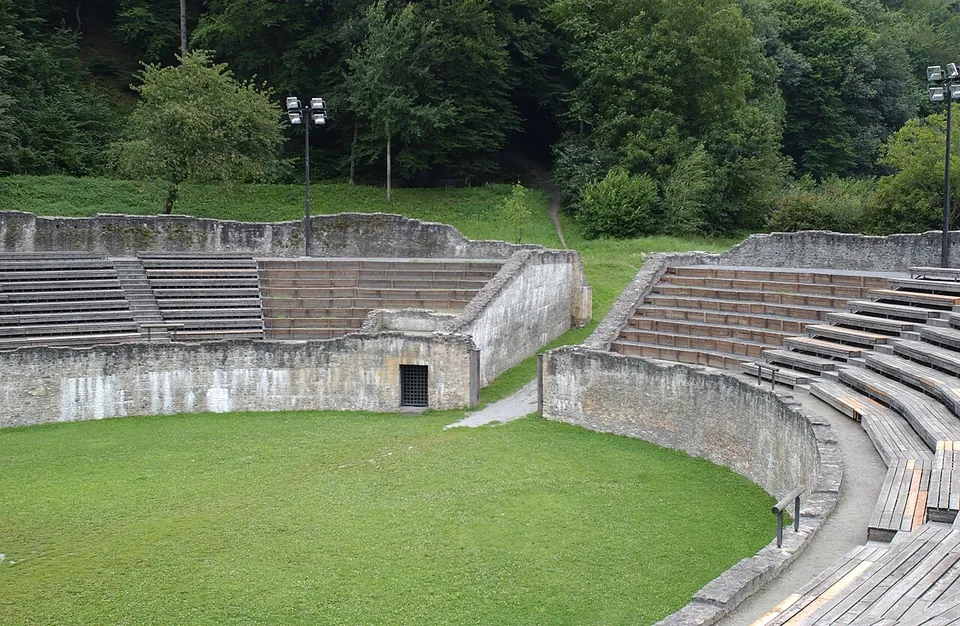
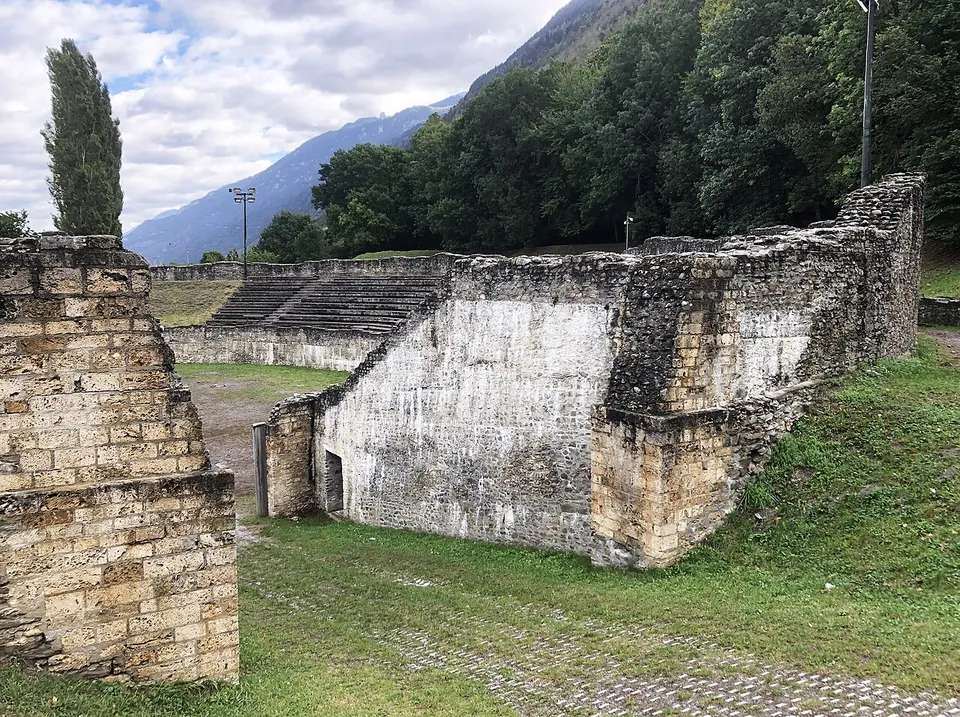
The arena measures 75.5 by 63.7 m and held about 5,000 spectators (de.wikipedia). Like every amphitheatre known in Switzerland it was built of earth: the walls you see held up the banks under the seating and framed the entrances, while the seating itself lay on the slope left by digging out the arena. On the south-east side a vaulted passage led to the magistrates’ box (de.wikipedia). The structure was studied and restored from the late 1970s (fr.wikipedia), and today it is used for open-air cinema in summer and for the cow fights of the Valais, the combats de reines (de.wikipedia, fr.wikipedia); the benches in the stands are temporary seating for these events (Wikimedia Commons).
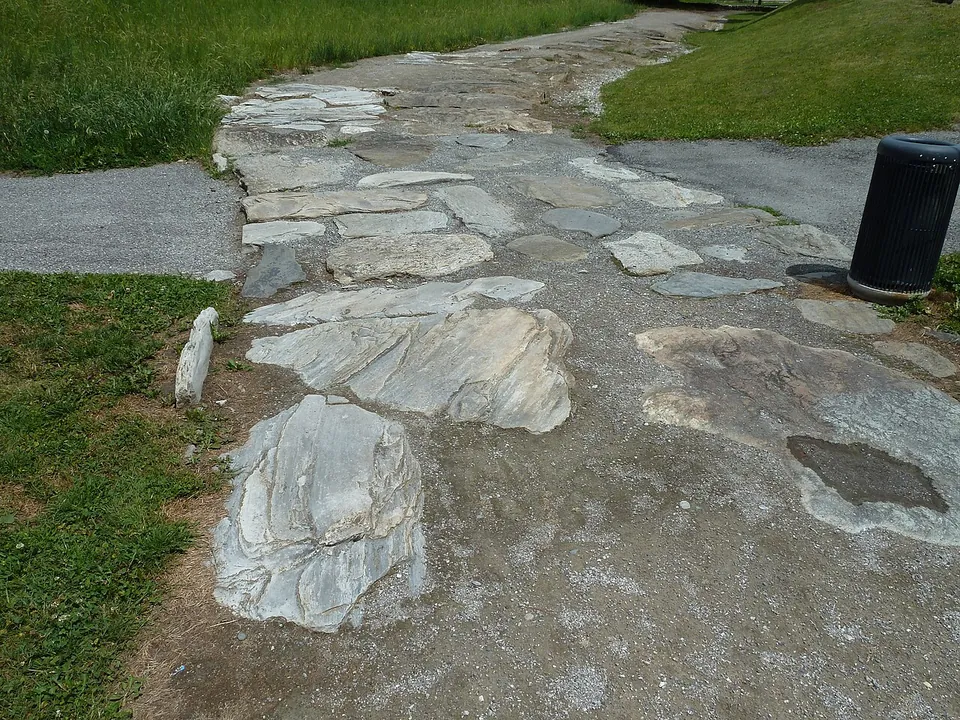
Beside the amphitheatre, a stretch of road paved with large flat stones is described on Wikimedia Commons as a Roman street, the Via per Alpis Poenina.
Is it worth the trip?
If you are in the Valais, yes: it costs nothing, the walls and entrances are well kept, and the setting, with vineyards and mountains above the arena, is half the pleasure. It is, though, a small amphitheatre, and the tourist office presents it as the chief remain of the ancient town rather than one sight among many; its 4 km archaeological walk through the town centre (about 1 hour 30, with commentary in the Guidigo app) adds the town’s history from the Roman era to the Middle Ages.
Getting there
The amphitheatre is about 1 km from the centre of Martigny. A public car park, with a fee, is mapped about 110 m away, and the nearest public-transport stop, Martigny-Bourg, about 280 m (OpenStreetMap). The tourist office lists the site as a free visit and gives no opening hours; guided tours are organised in summer (martigny.com, read 7 October 2026).
Visiting details
- Opening hours
- The tourist office lists it as a free visit ("Visite libre") and publishes no opening hours. Guided tours run in summer.
- Tickets
- Free.
- Parking
- A public car park (fee) about 110 m from the arena (OpenStreetMap, way/215310131).
Hours and prices checked 7 October 2026 on the operator's own site. Confirm before travelling.
History
Octodurus, also called Forum Claudii Vallensium, was a Celtic and then Roman town on the site of Martigny. Founded as a Roman town under Claudius, it had everything a Roman colony had - forum, basilica, baths and amphitheatre - and remained active until the end of the 4th century (fr.wikipedia, “Octodurus”); de.wikipedia calls it the chief town of the Vallis Poenina. The amphitheatre most probably dates from the reign of Trajan (Pleiades, de.wikipedia) and was abandoned with the rest of the town at the end of the 4th century (fr.wikipedia).
The painter Raphael Ritz began excavating in Martigny around 1883, but large-scale work came only in 1978, when the Swiss Confederation bought the ground. The restored amphitheatre was inaugurated in 1991, for the 700th anniversary of the Confederation, with Arthur Honegger’s oratorio Nicolas de Flue (de.wikipedia).
More photographs

Nearby
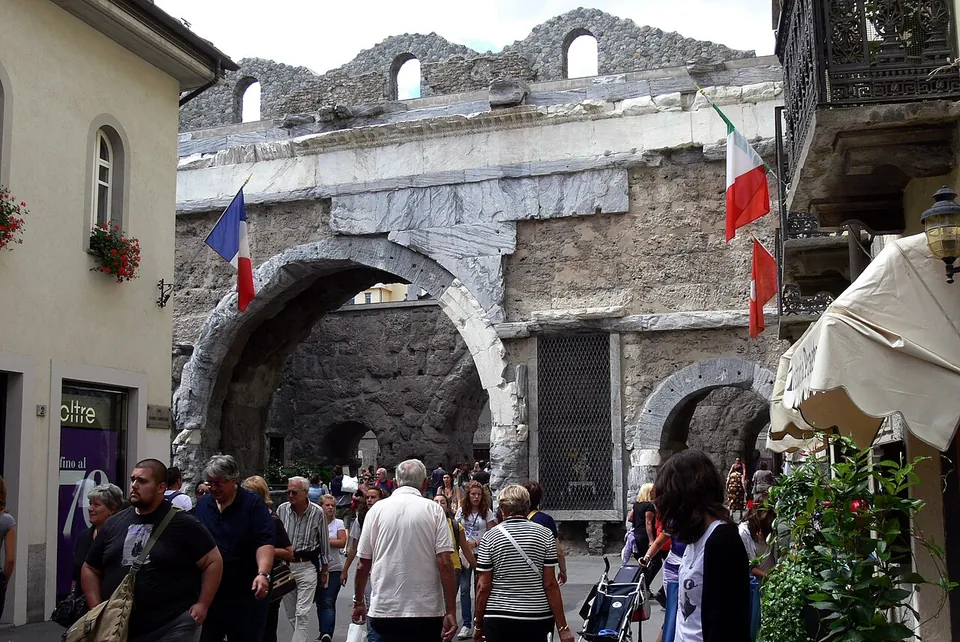
Photo: Wolfgang Sauber · CC BY-SA 3.0 · Commons
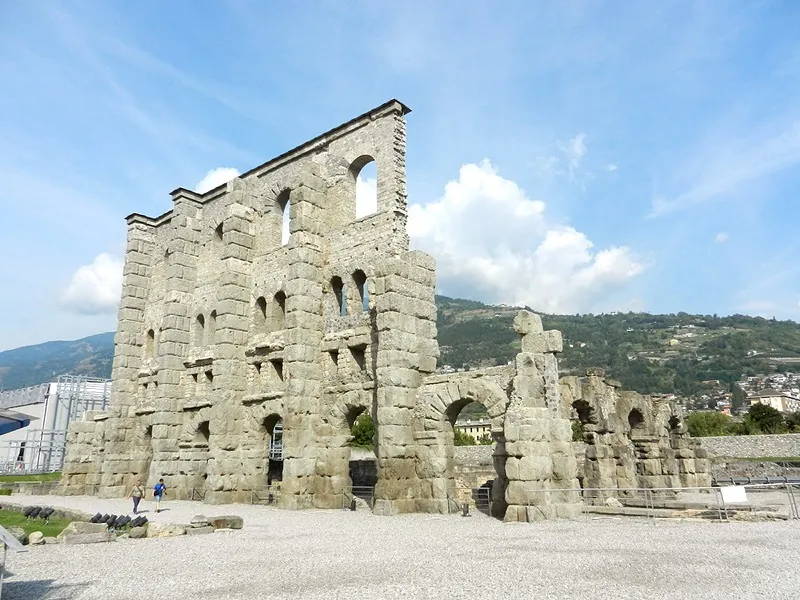
Photo: Geobia · CC BY-SA 3.0 · Commons
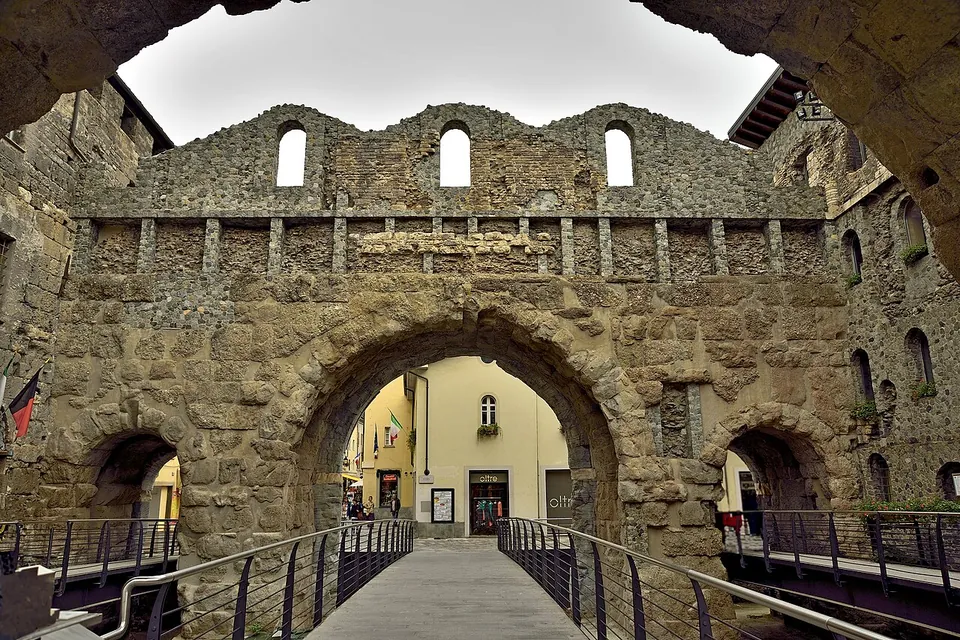
Photo: Carlo grifone · CC BY-SA 4.0 · Commons
44 km · gate · Aosta Valley
Porta Praetoria
The gate is two parallel rows of arches with a small square between them, which served as a parade ground for troops (it.wikipedia; Lovevda).


Straight-line distances.
Sources
Every fact on this page comes from the records below, each used under the licence noted.
| Source | Licence |
|---|---|
| Pleiades 747857719 | CC BY |
| Wikidata Q2844412 | CC0 |
| Vici.org 4306 | CC BY-SA (text), CC0 (metadata) |
| OpenStreetMap relation/2840414 | ODbL |
| Pleiades — Octodurus/Forum Claudii Vallensium | licence not recorded |
| Wikipedia (de) — Amphitheater von Martigny | CC BY-SA 4.0 |
| Wikipedia (fr) — Amphithéâtre de Martigny | CC BY-SA 4.0 |
| Wikipedia (fr) — Octodurus | CC BY-SA 4.0 |
| KGS inventory 9700 — Forum Claudii Vallensium, ville romaine (BABS) | licence not recorded |
| Martigny Tourism — Roman amphitheatre | licence not recorded |
| Martigny Tourism — archaeological walk | licence not recorded |