

What is there today
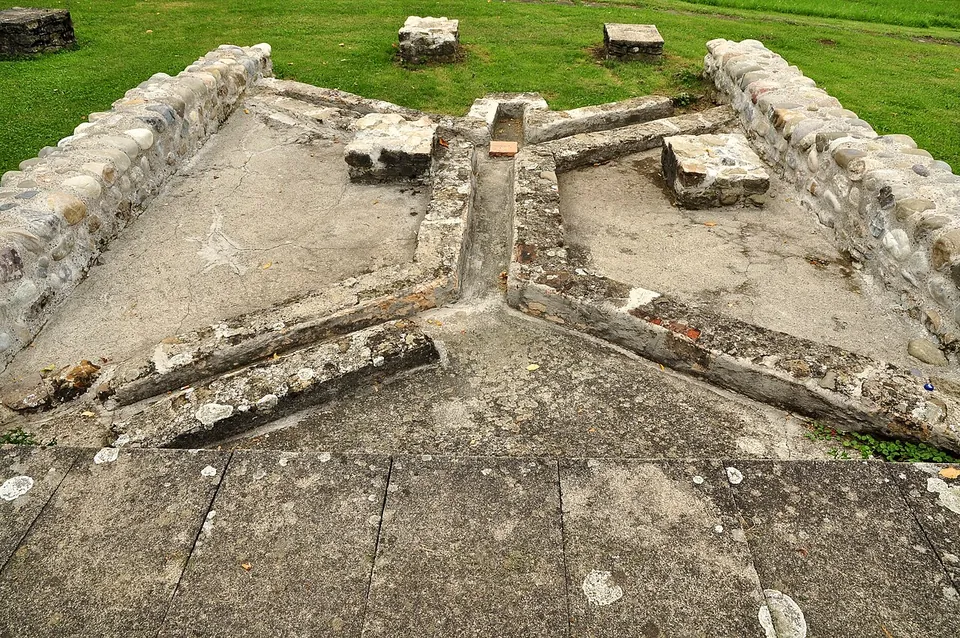
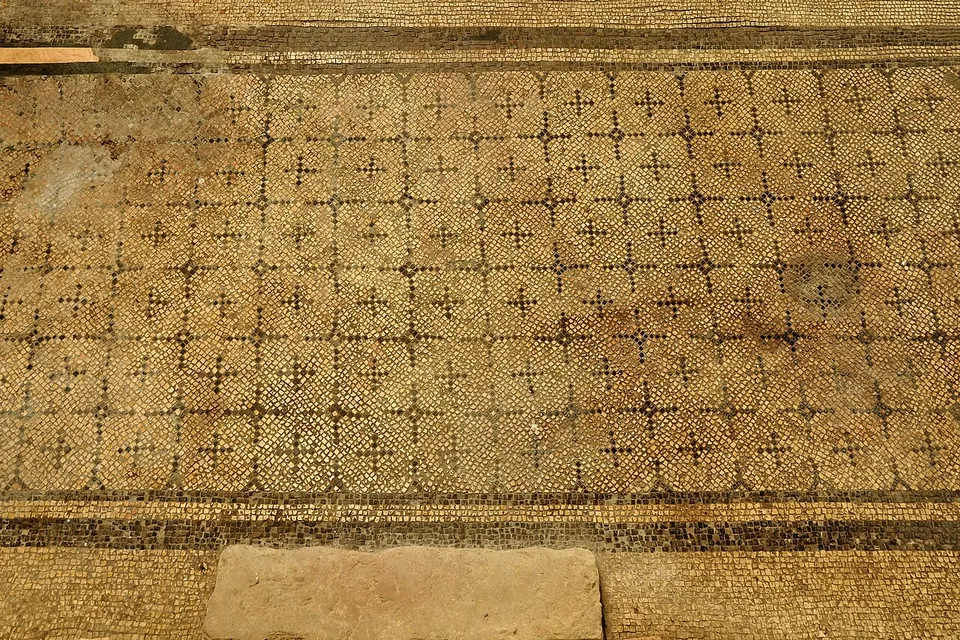
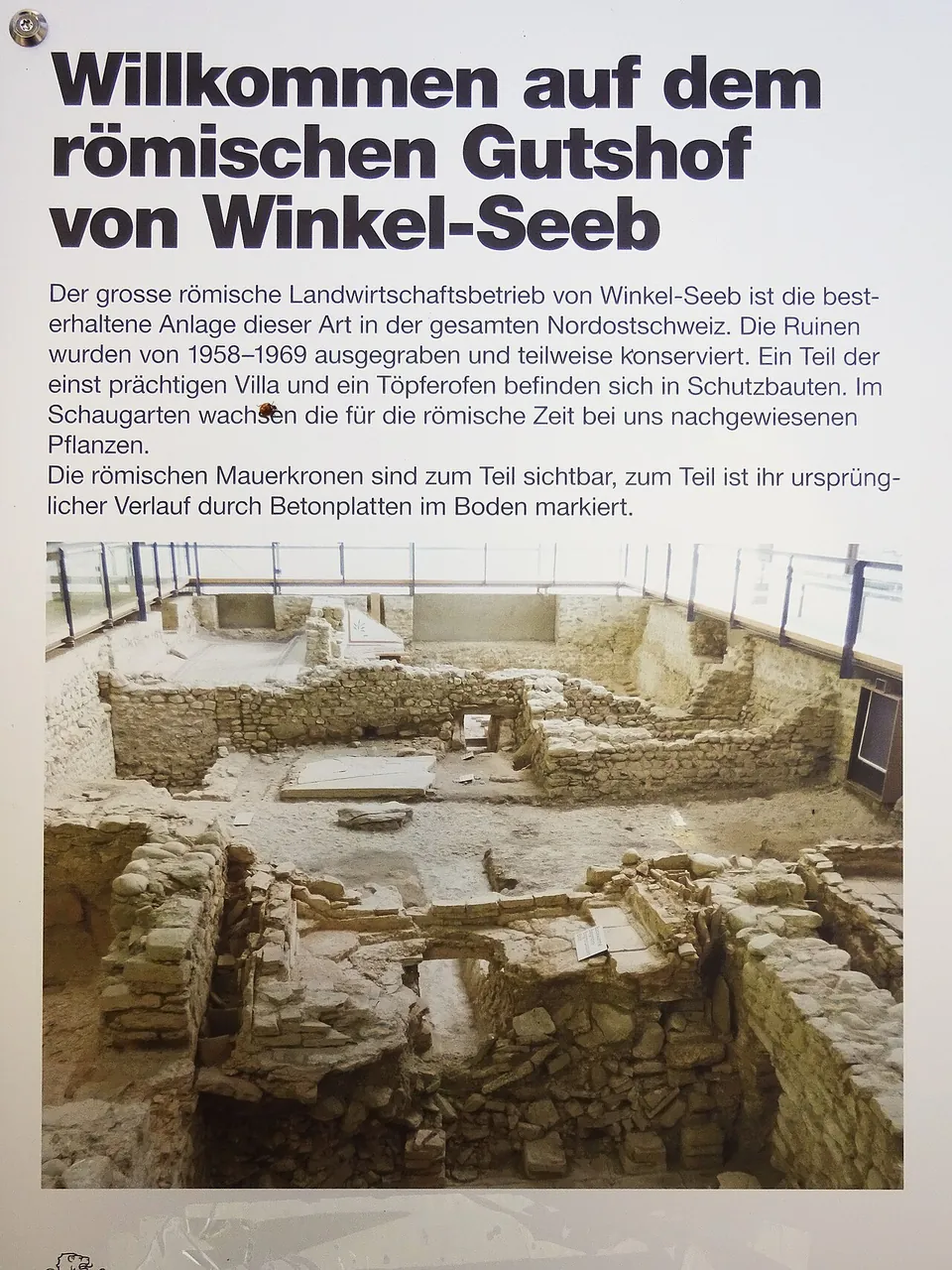
The ruins were excavated between 1958 and 1969 and partly conserved (the welcome board; it.wikipedia has systematic excavation from 1963 to 1970). The tops of the Roman walls are visible in places, and elsewhere their course is marked in the ground with concrete slabs; part of the once splendid villa and a pottery kiln are inside protective buildings, and a show garden grows the plants known from Roman times in the region (the welcome board). The canton describes many buildings, a well-preserved bath, wall paintings and mosaic floors, and calls the estate unique in the eastern Swiss lowlands (Canton of Zurich, July 2026).
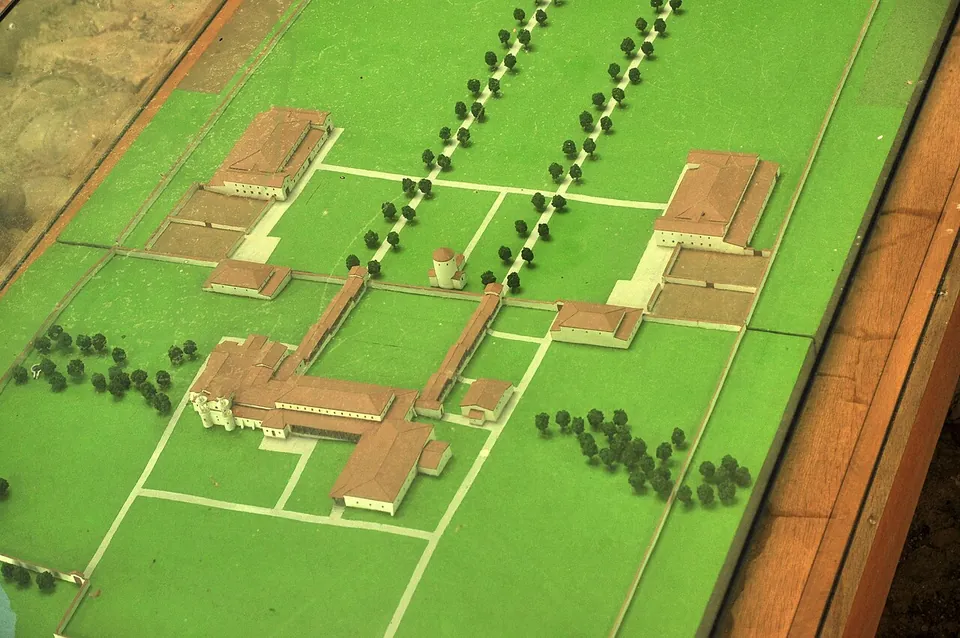
The villa began in the 1st century AD as a single rectangular room and grew in stages, wing by wing; one wing held the bath, now excavated under a roof. Barns, storerooms and housing for the workers stood in front of the house, inside an enclosure of walls, and a well under a tower was worked by a donkey to lift the water (it.wikipedia).
Is it worth the trip?
Yes, if you are near Zurich or Bülach: it is free, there is a good deal to read on the ground, from the heated rooms to the mosaic floors, and the canton has just announced plans to make more of it. It is a farm, not a town or a monument, so it makes a stop rather than a day out. Check before going whether the shelters over the bath and the kiln are open: they are not yet open all year round.
Getting there
The estate is near Winkel, about 2.6 km from the centre of Bülach; no car park or bus stop is mapped within 300 m (OpenStreetMap). The grounds are open to the public and free. The canton announced in July 2026 that the bath wing and the pottery kiln will in future be open to visitors all year round, with information panels, audio and stereoscopes showing reconstructions; no current opening times for the shelters are published (zh.ch, read 7 October 2026).
Visiting details
- Opening hours
- The grounds are publicly accessible. The roofed bath wing and pottery kiln are not yet open all year; the canton plans to change that, and no current opening times are published.
- Tickets
- Free.
Before you go
- No car park or public-transport stop is mapped within 300 m (OpenStreetMap).
Hours and prices checked 7 October 2026 on the operator's own site. Confirm before travelling.
History
Remains of the villa were known by the 19th century at the latest (it.wikipedia). By the 1st century AD it already had a bath (Pleiades), and its main house was decorated with wall paintings and, in part, mosaics (it.wikipedia). The estate is listed as a cultural property of national significance (KGS 7758), and today it is an open-air museum (it.wikipedia).
More photographs

Nearby
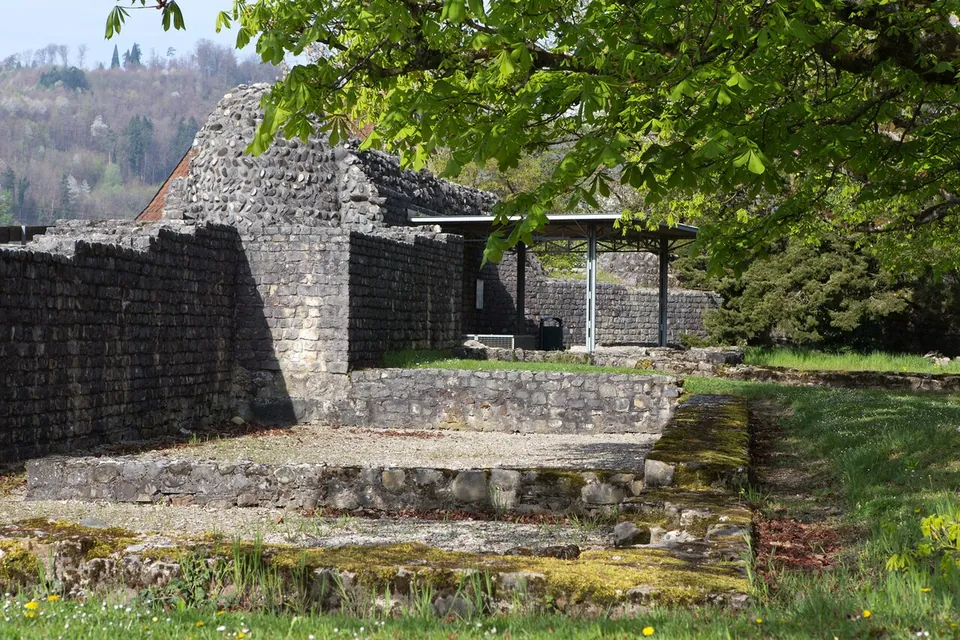
Photo: Roland Zumbuehl · CC BY-SA 3.0 · Commons
21 km · fort · Zurzach District, Aargau
Kirchlibuck fort, Bad Zurzach
On the Kirchlibuck a section of the fort's south wall has been rebuilt or restored and made freely accessible to visitors, and the foundations of the west tower survive; smaller pieces of Roman wall have also been made visible again on the buildings along the Burghaldenweg (de.wikipedia).
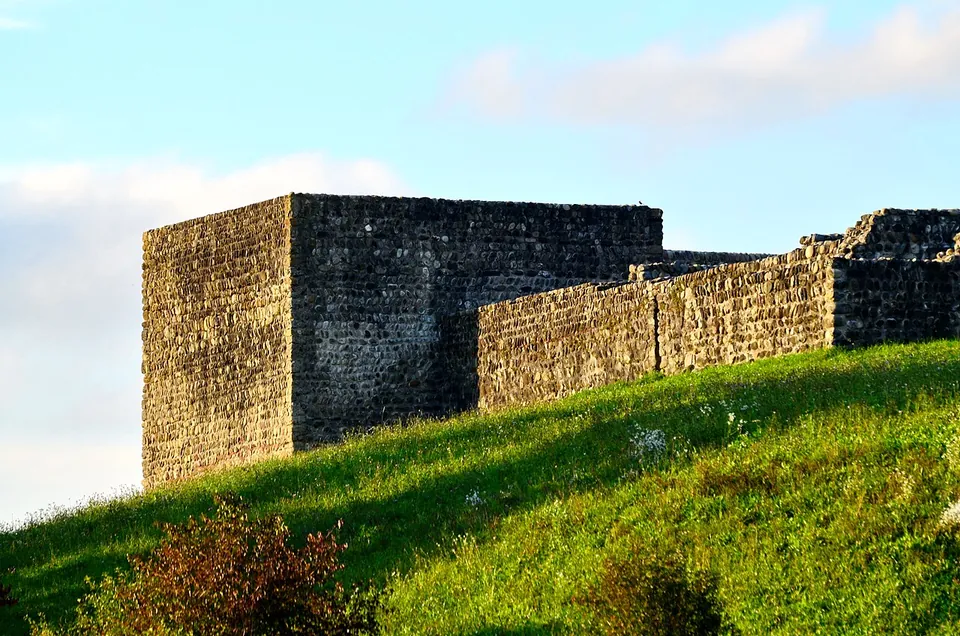
Photo: Roland zh · CC BY-SA 3.0 · Commons
24 km · fort · Pfäffikon District, Zurich
Irgenhausen Roman fort
The fort is a square about 60 m across, with four corner towers and three more towers along the sides; stone remains inside were probably a bath (en.wikipedia).
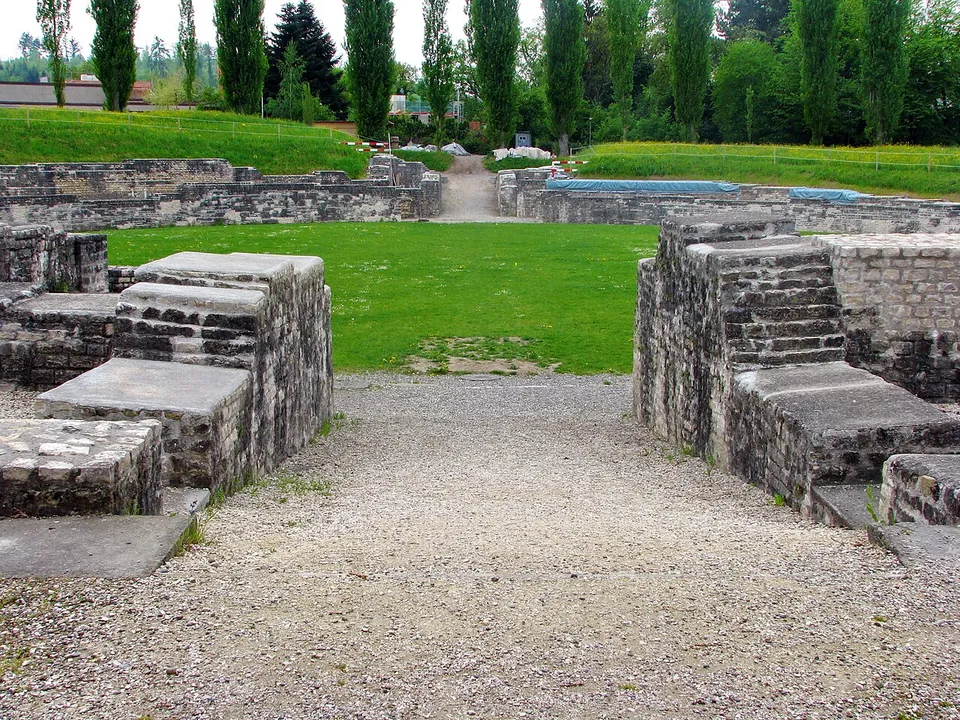
Photo: Roland zh · CC BY-SA 3.0 · Commons
24 km · fort · Brugg District, Aargau
Vindonissa
The Legionärspfad, run by Museum Aargau, is the way into the camp: eleven stations through its excavated sites, among them the amphitheatre, reconstructed legionaries' barracks, a gate, the baths and a Roman garden of 450 m² planted with some 40 species documented by archaeology (the operator).


Straight-line distances.
Sources
Every fact on this page comes from the records below, each used under the licence noted.
| Source | Licence |
|---|---|
| Pleiades 177667 | CC BY |
| Wikidata Q16919292 | CC0 |
| Vici.org 9926 | CC BY-SA (text), CC0 (metadata) |
| OpenStreetMap way/746222698 | ODbL |
| Wikipedia (de) — Villa Rustica (Seeb) | CC BY-SA 4.0 |
| Wikipedia (it) — Villa rustica di Seeb | CC BY-SA 4.0 |
| KGS inventory 7758 — Seeb, römischer Gutshof (BABS) | licence not recorded |
| Canton of Zurich — press release of 16 July 2026 on the planned open-air museum | licence not recorded |